
Why Understanding Home Appraisal Factors Matters More Than You Think
4 surprising factors that can affect a home appraisal go beyond obvious considerations like square footage. While most homeowners prepare for the basics, these unexpected elements can significantly impact your property’s valuation and potentially derail a real estate transaction.
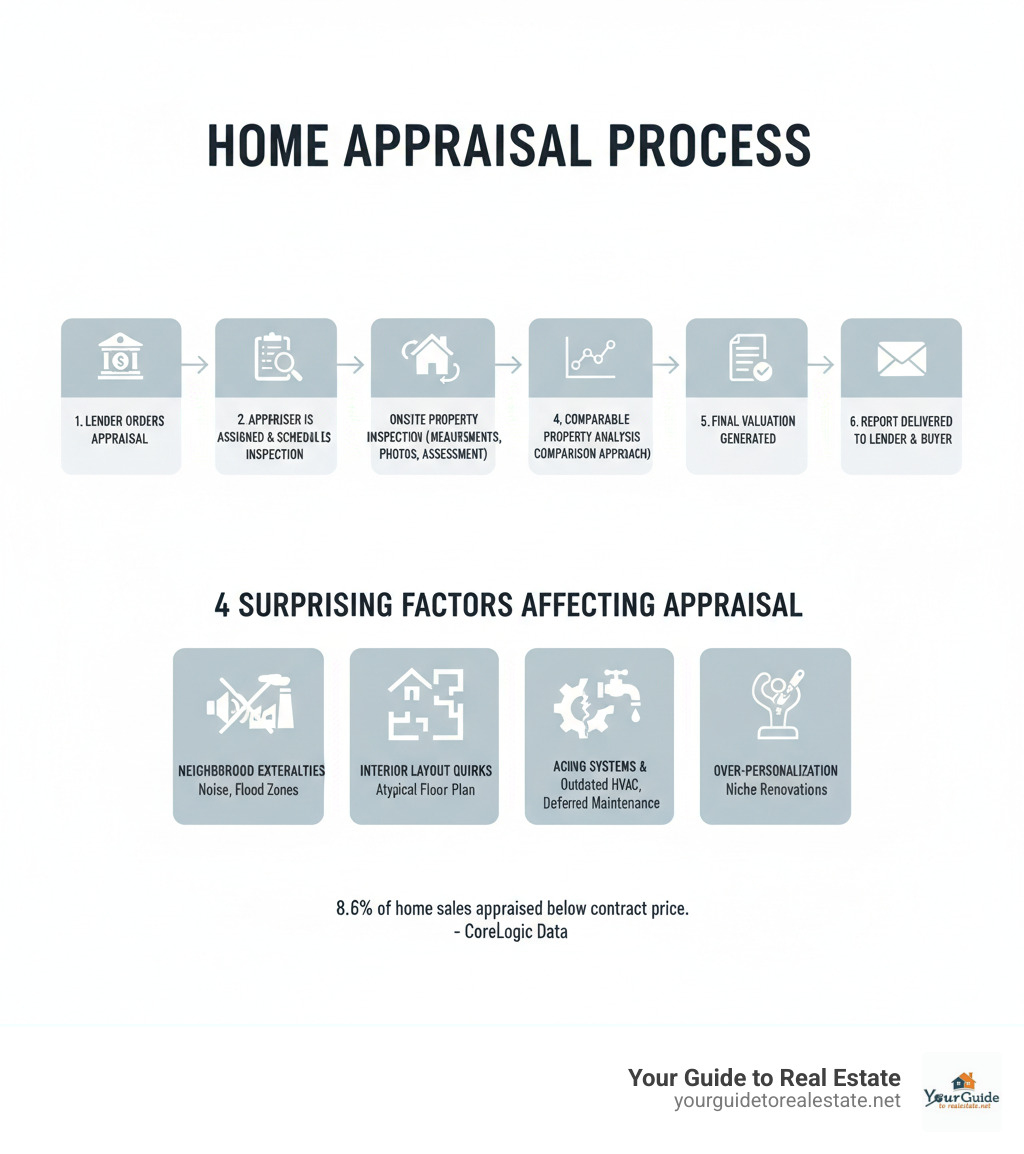
Quick Answer: The 4 Surprising Factors
- Neighborhood Externalities – Noise pollution, flood zones, nearby construction, and proximity to undesirable features
- Interior Layout Quirks – Functional obsolescence, atypical floor plans, and inadequate storage space
- Aging Systems and Materials – Outdated HVAC, hazardous materials like asbestos, and deferred maintenance
- Over-Personalization – Niche renovations and unique features that don’t appeal to broad market preferences
The stakes are real. According to CoreLogic data, 8.6% of all home sales are appraised below the contract price. This appraisal gap can force buyers to cover the difference in cash, renegotiate, or walk away from the deal.
When you apply for a home loan, the appraisal protects the lender from overvaluing the property and you from overpaying.
Most homeowners focus on curb appeal and major repairs, but appraisers dig deeper. Understanding these surprising factors helps you prepare better—whether you’re selling, buying, or refinancing.
4 surprising factors that can affect a home appraisal basics:
The 4 Surprising Factors That Can Affect a Home Appraisal

You’ve found the perfect house and made an offer, but the appraisal comes back lower than expected. What went wrong?
Determining a home’s market value is more than counting bedrooms. Appraisers primarily use the Sales Comparison Approach, comparing your property to recently sold homes (“comps”) to establish what buyers are willing to pay.
From an appraiser’s perspective, they aren’t just looking at obvious features. They are trained to spot details that could influence a typical buyer’s decision or affect the property’s long-term value as loan collateral.
That’s where the 4 surprising factors that can affect a home appraisal come into the picture. These are the elements that catch homeowners off guard but could significantly impact your final valuation.
Whether you’re a first-time buyer in Tulsa or an investor in Houston, understanding these hidden factors can save you from costly surprises. Our Competitive Market Analysis: Complete Guide dives deeper into how property comparisons work.
The key is thinking like an appraiser. They ask: “What would make a typical buyer hesitate?” and “Are there any red flags that could affect this property’s future marketability?” Sometimes the answer lies in unexpected places. Let’s explore these often-overlooked elements.
1. Neighborhood Externalities: How Your Surroundings Impact Value
While “location, location, location” often means good schools and safe neighborhoods, appraisers dig deeper into surprising neighborhood externalities.
Noise pollution is a sneaky value killer. Homes near major roadways, airports, or active train tracks can see values drop by 10-20% compared to similar properties in quieter areas. Your ears might have adapted, but potential buyers and appraisers notice.
Proximity to undesirable features like landfills, industrial zones, or high-tension power lines can be even more damaging, slashing property values by up to 24%. A beautiful home next to a waste treatment facility will face significant appraisal adjustments.
Even nearby construction projects can be a negative factor. While a new shopping center seems like a plus, the noise, dust, and traffic during construction can lower an appraisal. An industrial development can be even more detrimental.
Zoning changes represent another hidden threat. When residential areas are rezoned for commercial use, it alters the neighborhood’s character, signaling potential long-term changes in desirability that appraisers note.
Perhaps the most impactful surprise factor is flood zones. A home within a 100-year floodplain can see a value reduction of 4.4% to 13.3% compared to homes outside flood-prone areas. The combination of risk and mandatory flood insurance makes these properties less attractive. With floodplains projected to expand, this factor is increasingly important. You can verify a property’s current flood risk at the FEMA Flood Map Service Center. Learn more in our analysis of how homes in a 100-year floodplain are valued less.
Finally, distressed properties like vacant homes or foreclosures can signal neighborhood decline and drag down your appraisal value, even if your own home is immaculate. Understanding broader market trends, as outlined in our Real Estate Market Projections for 2025: Key Numbers to Watch, can help you prepare for these challenges.
2. Interior Quirks: Why Layout and Storage Are Surprising Factors That Can Affect a Home Appraisal
Your home’s quirky character might be what the industry calls “functional obsolescence”—features that were once practical but are now awkward to today’s buyers. Appraisers view these quirks through a different lens, making this one of the 4 surprising factors that can affect a home appraisal that regularly catches homeowners off guard.
Unusual floor plans, like needing to walk through one bedroom to reach another, are a prime example. While charming, they clash with modern expectations for privacy and open-concept living. Appraisers can flag properties with floor plans that are “atypical or functionally obsolete” on the Uniform Residential Appraisal Report. This means your home’s unique charm could be documented as a problem in the appraisal report can note obsolete floor plans.
Storage space presents another challenge. The tiny closets standard in older homes are inadequate by today’s standards, where buyers expect walk-in closets and ample storage. If your home falls short on storage compared to similar properties, appraisers will notice.
Finished basements are often misunderstood. While a finished basement adds value, appraisers typically assign its square footage about 70% of the value of equivalent above-ground living area. Your 800-square-foot finished basement won’t boost your appraisal at the same rate as an 800-square-foot main-floor addition.
Even bedroom sizes can be an issue. The International Residential Code sets clear standards appraisers must follow: a room smaller than 70 square feet cannot be counted as a bedroom. That cozy nook you use as a guest room won’t add to your home’s official bedroom count, directly impacting value. For ideas on maximizing layouts, our Bedroom Floor Plan guide offers practical solutions.
The key is understanding that appraisers think like the broader market, not like someone who loves your home’s unique personality. They ask whether most buyers would find these features appealing or problematic.
3. Aging Systems and Materials: The Hidden Costs Appraisers See
Appraisers act like detectives, looking for clues about hidden costs that affect value. This is where aging systems and materials become one of the 4 surprising factors that can affect a home appraisal.
Deferred maintenance tells a story. A small roof leak, peeling paint, or foundation cracks all signal that the house needs attention. Appraisers are trained to spot these warning signs because they directly impact the property’s condition rating. A well-maintained home will always appraise better than one where problems have been ignored.
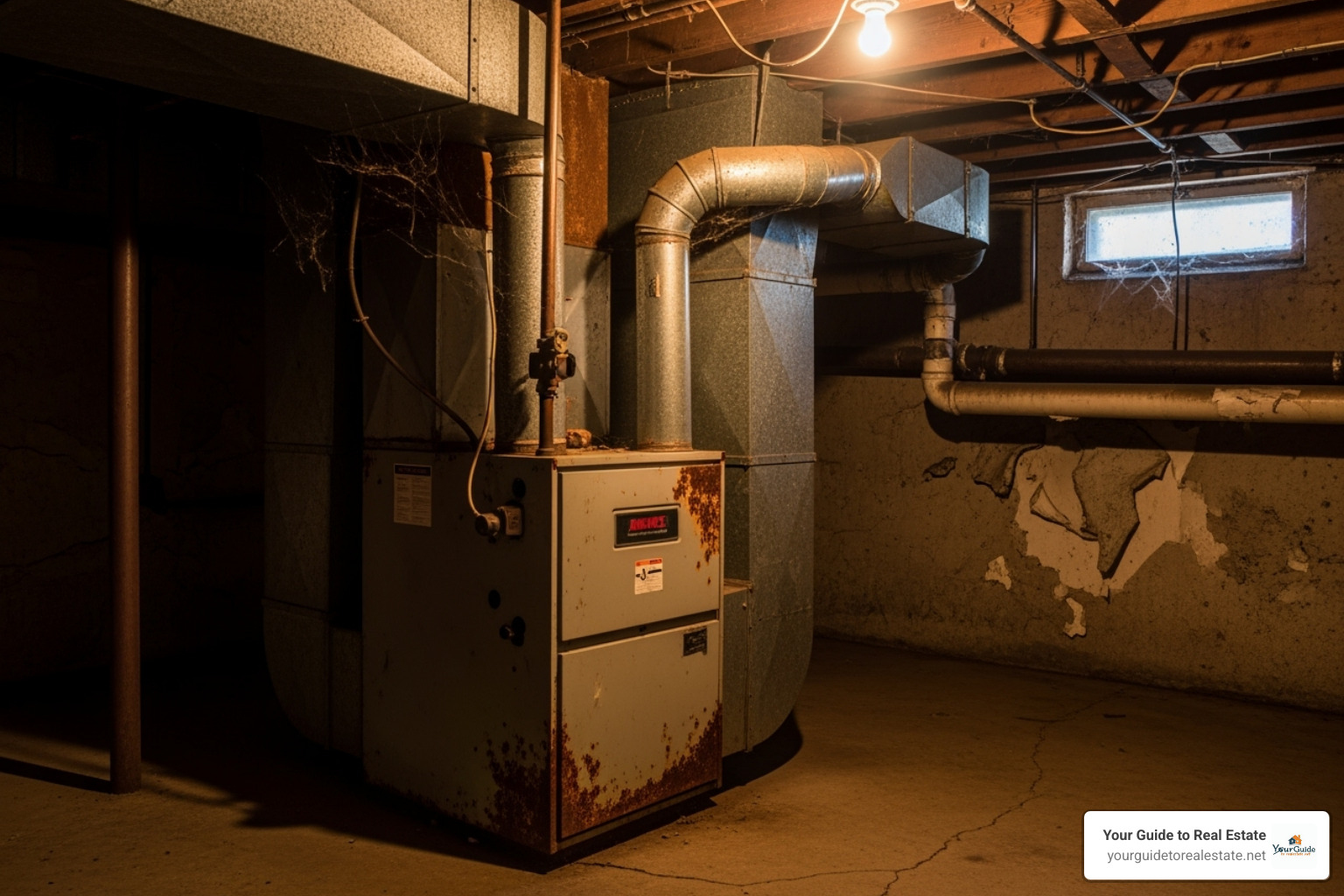
Major system failures can be costly surprises. An old HVAC unit is a ticking time bomb that could cost over $13,000 to replace. Our cost of a new HVAC system calculator shows how expensive these replacements can be. Appraisers factor in these future costs, especially when comparing your home to properties with newer systems. The same applies to outdated plumbing and electrical systems like knob-and-tube wiring, which are potential safety hazards requiring immediate replacement.
Energy efficiency is increasingly important. Single-pane windows, while perhaps charming, contribute to a lower quality rating when compared to more efficient properties.
The presence of hazardous materials like asbestos or lead-based paint can create serious appraisal challenges, especially with government-backed loans. FHA appraisers, following strict FHA loan requirements, will flag issues like chipped lead paint, water leaks, and roof problems, which may need to be fixed before financing is approved.
Structural integrity is the most serious concern. Foundation settling, wood rot, or termite damage are fundamental problems that require professional intervention and will significantly impact an appraisal.
4. Over-Personalization: When Upgrades Become a Surprising Factor That Can Affect a Home Appraisal
We all love making our homes uniquely ours. That bright turquoise accent wall, the custom wine cellar, or the elaborate home theater system feels like the perfect touch. But here’s where things get interesting – sometimes our most beloved personal touches become one of the 4 surprising factors that can affect a home appraisal.
The challenge lies in understanding that appraisers aren’t evaluating your home for you – they’re determining what the average buyer in your market would pay. When your renovations are overly personalized, they might actually limit your home’s broad market appeal rather than improve it.
Niche features can be particularly tricky. That Beatles-themed basement might bring you daily joy, but it could leave appraisers scratching their heads when trying to find comparable sales. Custom murals, unusual built-ins designed for very specific purposes, or architectural features that dramatically differ from neighborhood norms can make your home harder to value accurately.
Interior design choices that reflect strong personal taste can also impact appraisals. While you might adore those emerald green granite countertops or that bold wallpaper throughout the main floor, appraisers consider whether these choices would appeal to most buyers or require immediate changes for resale.
Let’s talk about outdoor amenities – this is where things get really interesting. Features like swimming pools can actually add significant value, typically boosting home worth by 5% to 7% according to industry data. Decks generally recoup 68% to 83% of their installation cost, while outdoor kitchens can return anywhere from 55% to 200% of their value. You can learn more about pool values in our guide on Pools can add 5% to 7% in value.
But here’s the catch – location matters enormously. A pool in Phoenix might be seen as essential, while the same pool in Minnesota could be viewed as a maintenance burden with limited seasonal use. Appraisers consider local preferences and climate when evaluating these features.
The key is finding the sweet spot between market appeal and personal taste. When considering renovations, think about your neighborhood’s standards and what typical buyers expect. A $50,000 kitchen renovation might not add $50,000 to your appraisal if it’s far beyond what’s common in your area.
ROI on renovations varies dramatically based on how well they align with local market expectations. Universal improvements like updated bathrooms and kitchens typically perform well, while highly specialized features might not translate to appraised value. Our How Much Does It Cost to Build a House? guide explores how construction costs relate to final property values.
The bottom line? Personalize thoughtfully, keeping one eye on your enjoyment and another on broad market appeal.
How Appraisers Determine Value: The Official Framework
Appraisals aren’t based on gut feelings. They follow a structured framework designed to eliminate bias and ensure consistency.
The foundation of this process is appraiser independence. According to the National Association of Realtors, appraisers must provide an “Independent and impartial analysis of real property.” They work for the lender to ensure the loan amount doesn’t exceed the property’s market value.
Most residential appraisers use the Uniform Residential Appraisal Report (URAR), Fannie Mae’s standard report, which evaluates neighborhood, site, and property improvements.

Within this framework, appraisers assign both a property condition rating and a quality of construction score. The most common valuation method is the Sales Comparison Approach, which involves analyzing recently sold comparable properties (“comps”). Understanding your local market through a How to Do a Competitive Market Analysis (Real Estate) can be invaluable, whether you’re in Dallas, Oklahoma City, or elsewhere.
What Appraisers Look For
Appraisers collect specific data points that impact market value, including:
- Year built, number of stories, and roof materials.
- Interior features: Floor/wall materials, bedroom/bathroom counts, and total square footage.
- Foundation type (slab, crawl space, basement) and condition.
- Practical features: Off-street parking, functional appliances, and recent home improvements.
- Structural integrity: A solid foundation without significant damage is critical.
A well-maintained home scores higher than one showing neglect.
What Appraisers Ignore
Conversely, appraisers are trained to ignore many things homeowners focus on:
- Cleanliness: While a tidy home makes a good impression, minor clutter doesn’t directly affect value.
- Furniture and decor: Appraisers evaluate the home’s structure, not your design taste.
- Personal items: Family photos and collections are irrelevant to the valuation.
- Most paint colors: Unless a color is so extreme it would require immediate repainting, it’s not a factor.
- Specific landscaping: General curb appeal matters, but individual plants or flowerbeds are not valued separately.
Understanding this framework helps explain why the 4 surprising factors that can affect a home appraisal are so impactful—they fall into categories appraisers are trained to evaluate.
Frequently Asked Questions about Home Appraisals
The appraisal process can feel overwhelming. A key term to know is appraisal contingency, your safety net making the sale conditional on the property appraising for at least the offer price. This connects to understanding What Does Contingent Mean in Real Estate? and how such protections work. Knowing your options can help you steer unexpected appraisal results with confidence.
What happens if the appraisal is lower than the offer?
When an appraisal is lower than the offer (an appraisal gap), which happens in 8.6% of sales, you have several options:
- Renegotiate the price: The seller may agree to lower the price to match the appraised value.
- Pay the difference: The buyer can pay the difference in cash, covering the gap out-of-pocket on top of the down payment.
- Split the difference: Both parties can compromise and meet somewhere in the middle.
- Cancel the contract: Thanks to the appraisal contingency, you can walk away and get your earnest money back. This protects you from overpaying.
Our Home Contingencies: Complete Guide covers these options in more detail.
What matters most in a home appraisal?
Beyond the four surprising factors, certain elements consistently carry the most weight in a final appraisal:
- Comparable sales (“comps”): Recent sales of similar properties in your immediate area are the most influential factor.
- Location: This includes the general desirability of the area, schools, amenities, and overall market strength.
- Property condition: The home’s physical state, structural integrity, and maintenance level are critical.
- Square footage: Above-grade living space is a primary baseline for comparison.
- Age and effective age: A well-maintained older home can have an “effective age” similar to a newer one if it has been updated.
Broader trends, discussed in our U.S. Housing Market Update 2025: Prices, Inventory, and Buyer Behavior, also influence how appraisers view individual properties.
Are home appraisals public record?
Home appraisals are not public records. Unlike a home’s sale price, the detailed appraisal report is confidential.
Appraisers follow strict confidentiality rules under The Confidentiality Section of USPAP (Uniform Standards of Professional Appraisal Practice). The report can only be shared with authorized parties, which typically includes the client (your lender), state enforcement agencies, and authorized review committees. The final sales price becomes public, but the appraiser’s specific notes and reasoning remain private.
Conclusion: Maximizing Your Home’s Appraised Value
Now that we’ve explored the 4 surprising factors that can affect a home appraisal, you’re equipped with insights that most homeowners never consider. These hidden elements – from neighborhood externalities like flood zones and noise pollution, to interior layout quirks that create functional obsolescence, aging systems that signal costly repairs, and over-personalization that limits market appeal – can make the difference between a smooth transaction and a stressful negotiation.
The beauty of understanding these factors is that knowledge puts you in control. When you know what appraisers are really looking for, you can take proactive steps to address potential issues before they become problems. Maybe that means documenting recent HVAC maintenance, researching your property’s flood zone status, or simply being realistic about how your bold design choices might appear to the average buyer.
Proactive maintenance is your best friend when it comes to appraisals. Regular upkeep of major systems, addressing deferred maintenance issues, and keeping detailed records of improvements all signal to appraisers that your home has been well-cared-for. This attention to detail often translates directly into higher valuations.
Staying aware of broader market conditions also helps you understand your property’s context. When you know what’s happening in your local market – whether you’re in Oklahoma, Dallas, or anywhere across the United States – you can better anticipate how current trends might influence your appraisal.
The key is preparation. An appraisal doesn’t have to be a mystery box that determines your real estate fate. By understanding what appraisers look for and addressing potential concerns ahead of time, you’re positioning yourself for success whether you’re buying, selling, or refinancing.
At Your Guide to Real Estate, we believe that informed homeowners make better decisions. These surprising factors might catch others off guard, but not you. With this knowledge in hand, you can approach your next appraisal with confidence, knowing you’ve done everything possible to showcase your home’s true value.
For deeper insights into how these principles work in practice, explore our comprehensive guide on Valuation and Market Analysis in Real Estate. Your home’s appraisal is just one piece of your real estate journey – but it’s a piece you now understand completely.