

Why Monthly Dividend Stocks Matter for Income Investors
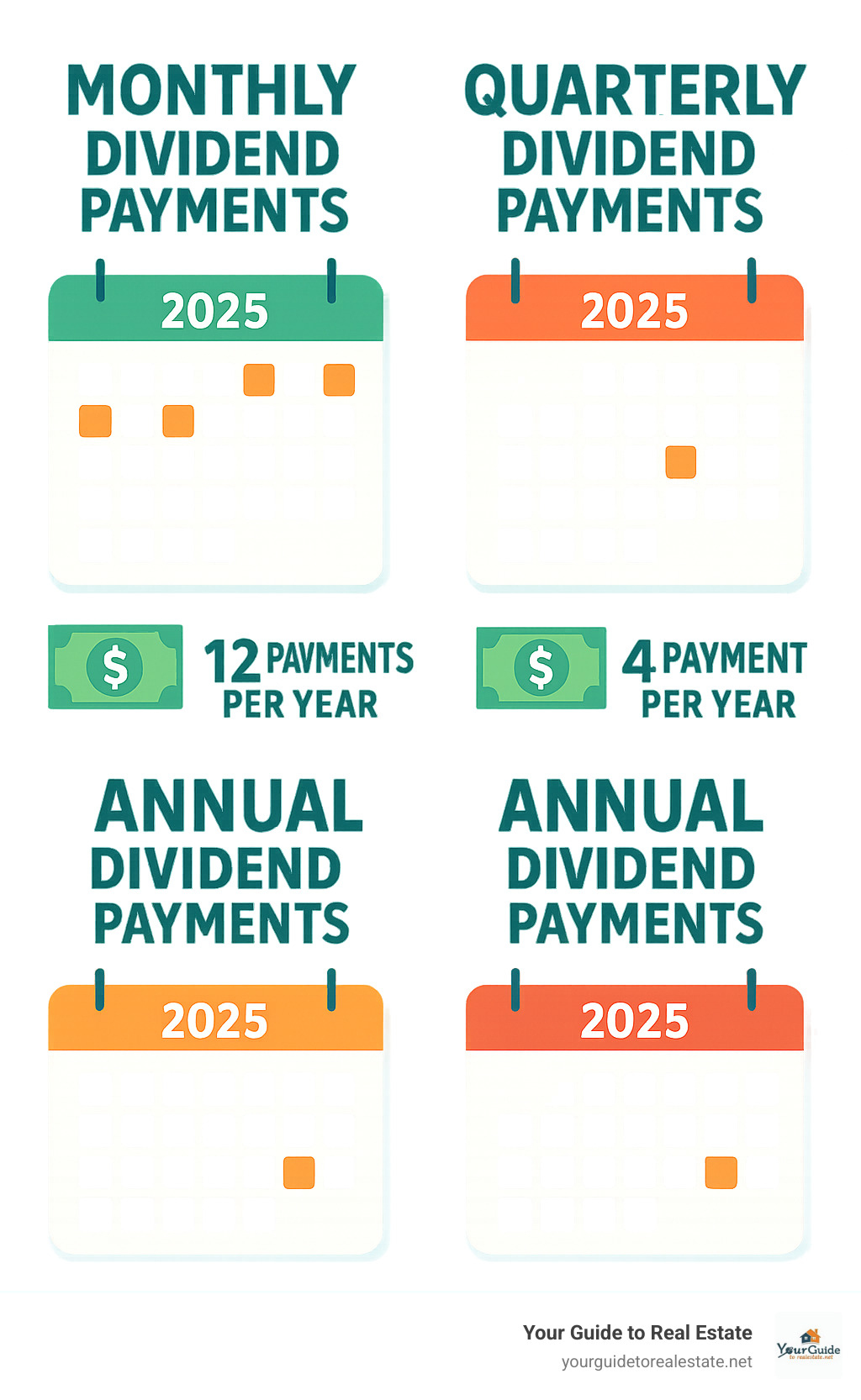
Monthly dividend stocks are securities that distribute cash payments to shareholders every month instead of the typical quarterly schedule. These stocks offer a unique solution for investors seeking consistent income flow.
Key Benefits of Monthly Dividend Stocks:
- Consistent Cash Flow – Receive payments 12 times per year instead of 4
- Better Budgeting – Align investment income with monthly expenses
- Faster Compounding – Reinvest dividends more frequently for potentially higher returns
- Income Matching – Perfect for retirees who need regular monthly income
Currently, there are 82 individual monthly dividend stocks available, with yields ranging from modest to over 20%. Many of these are Real Estate Investment Trusts (REITs) and Business Development Companies (BDCs) that generate steady cash flows.
The standout example is Realty Income Corporation (O), known as “The Monthly Dividend Company®.” This S&P 500 Dividend Aristocrat has paid 663 consecutive monthly dividends and recently declared its 132nd dividend increase since going public in 1994.
While monthly dividend stocks offer attractive yields – often more than twice as high as the 10-year Treasury note – they come with important considerations. Many carry liftd risks, high payout ratios, or operate in cyclical industries. The key is finding quality companies with sustainable business models rather than simply chasing the highest yields.
For income-focused investors, retirees, or anyone building a diversified portfolio, monthly dividend stocks can provide valuable cash flow predictability. However, thorough research into dividend safety, company fundamentals, and sector risks is essential before investing.
Explore more about monthly dividend stocks:
What Are Monthly Dividend Stocks and Why Do They Matter?
Think about your monthly bills for a moment. Your rent or mortgage, utilities, groceries, and car payment all come due every month like clockwork. Now imagine if your investment income arrived on the same schedule. That’s exactly what monthly dividend stocks offer – a steady paycheck from your portfolio that matches the rhythm of your real life.
Most stocks pay dividends quarterly, which means you get four payments per year. Monthly dividend stocks flip that script entirely, sending you cash twelve times annually. It’s like having a part-time job that requires no actual work – just smart investing.
The beauty of this frequent dividend schedule goes beyond simple convenience. When you receive dividends monthly, you’re essentially getting paid to own shares of profitable companies that have committed to sharing their success with you on a regular basis. This creates a powerful psychological benefit too – there’s something deeply satisfying about seeing investment income hit your account every single month.
For investors who use Dividend Reinvestment Plans (DRIPs), monthly payments mean faster compounding. Instead of waiting three months to reinvest your dividends, you’re putting that money back to work immediately. Over time, this can lead to meaningfully better returns.
The Advantage of Monthly Payouts
The most obvious advantage is consistent income flow. Your monthly expenses don’t wait for quarterly dividend payments, so why should your investment income? Monthly dividends create a much smoother cash flow management experience.
But there’s more to it than just timing. Monthly payouts enable a faster reinvestment cycle. Every month, you have fresh capital to put back into your investments. This accelerates compounding returns because your money is working harder, more often. Think of it like getting paid weekly versus monthly – the total amount might be the same, but the weekly payments give you more flexibility and opportunity.
This frequent reinvestment also supports dollar-cost averaging. When you’re buying shares every month with your dividend payments, you’re automatically spreading your purchases across different market conditions. Sometimes you’ll buy when prices are high, sometimes when they’re low. Over time, this tends to smooth out your average cost per share.
The matching of income to expenses is perhaps the most practical benefit. Most of us think in monthly terms when it comes to budgeting. Monthly dividends make it incredibly easy to see exactly how much your investments are contributing to your monthly cash flow.
Who Benefits Most from a Monthly Dividend Strategy?
Retirees are the obvious winners here. When your working days are behind you, monthly dividend payments can replace that steady paycheck you used to rely on. Instead of worrying about when the next dividend check will arrive, retirees can count on monthly income just like they did when they were working.
Income-focused investors also love monthly dividends. If your investment strategy centers on generating cash flow rather than just growing your account balance, monthly payments are incredibly appealing. You can see the tangible results of your investment choices every single month.
Individuals living off their investments find monthly dividends essential. Whether you’ve achieved financial independence or you’re supplementing other income sources, monthly payments make it much easier to budget and plan your expenses.
Financial independence seekers often build their entire strategy around monthly dividend stocks. There’s something powerful about knowing that every month, your investments are sending you a check. It makes the path to financial freedom feel more real and achievable.
The connection between investment income and real estate planning is stronger than you might think. Understanding how to generate consistent monthly income can help inform your decisions about how to invest in real estate. Whether you’re buying your first home or building a real estate portfolio, having predictable investment income makes financing decisions much clearer. This knowledge becomes especially valuable when you’re navigating the complexities covered in our First-Time Homebuyers Toolkit: Everything You Need to Know Before You Buy.
Top Monthly Dividend Stocks to Watch in 2025
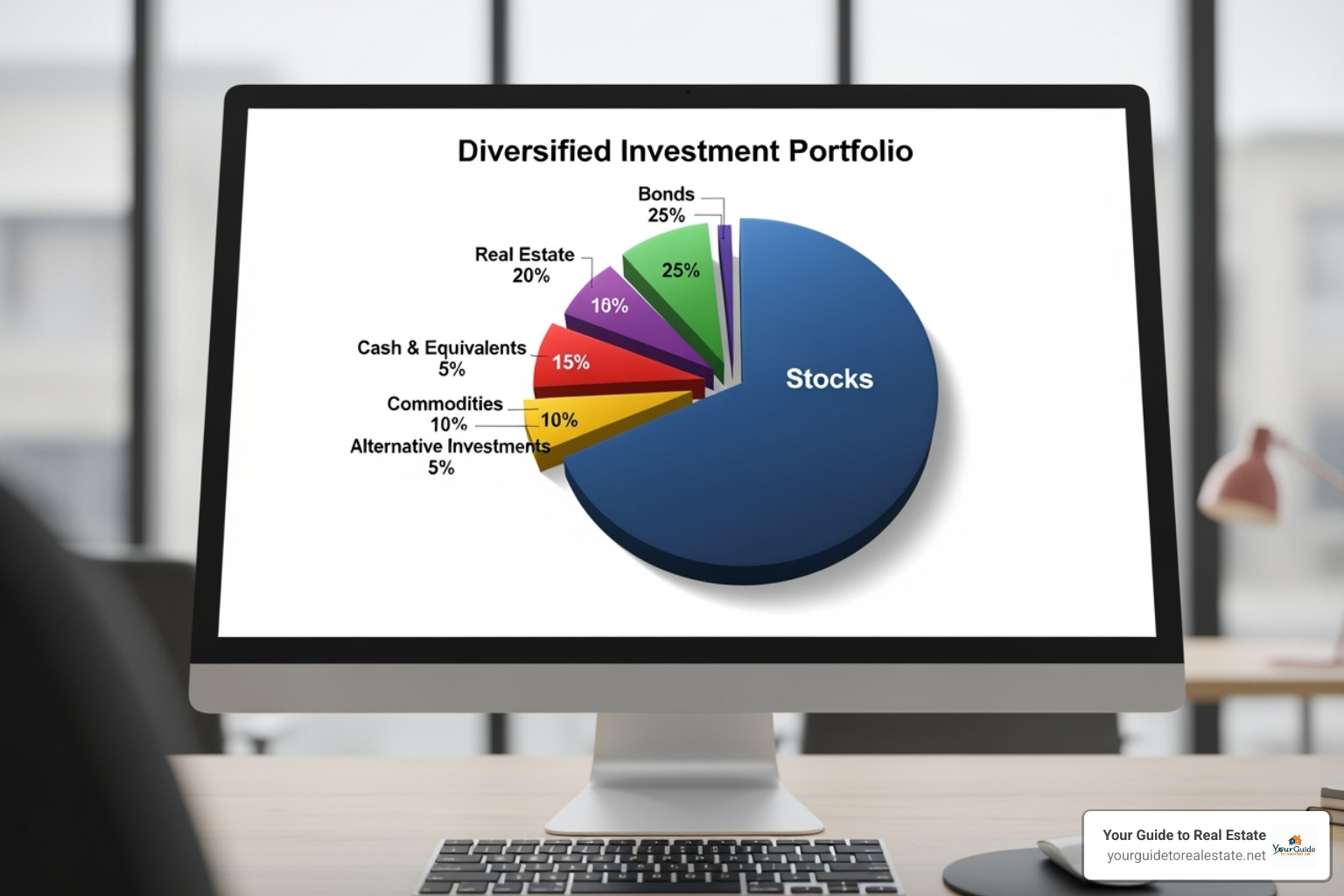
When you’re hunting for monthly dividend stocks, you’ll quickly notice that certain types of companies dominate this space. Real Estate Investment Trusts (REITs) and Business Development Companies (BDCs) are the most common monthly payers. Why? Their business structures are designed to pass most of their earnings directly to shareholders, making them natural candidates for frequent distributions.
But here’s the thing – not all high-yield monthly payers are worth your hard-earned money. Some companies offer tempting yields that turn out to be unsustainable. The secret is finding companies with solid business models, strong dividend histories, and healthy finances. Let’s look at some monthly dividend stocks that have caught our attention for 2025.
Realty Income (O)
You simply can’t talk about monthly dividend stocks without mentioning Realty Income. They’ve literally made it their brand – “The Monthly Dividend Company®” – and boy, do they live up to it! This isn’t just marketing fluff either. Realty Income has built an incredible track record that would make any income investor smile.
Picture this: 663 consecutive monthly dividends paid without missing a beat. That’s over 55 years of reliable monthly income! They’ve also declared 132 dividend increases since going public in 1994. Their latest move in 2025 shows they’re not slowing down, bumping their monthly dividend to $0.2695 per share from $0.2690. It might seem small, but consistency like this is golden for income investors.
What makes Realty Income so reliable? They own over 15,600 properties spread across all 50 U.S. states, the U.K., and seven other European countries. This massive, diversified real estate portfolio generates steady rental income that funds those monthly payments. They’re even part of the prestigious S&P 500 Dividend Aristocrats® index, having increased their dividend for over 30 consecutive years. You can read more about their recent 132nd Common Stock Monthly Dividend Increase Declared by Realty Income. Their approach can teach you a lot about Property Investment strategies too.
STAG Industrial (STAG)
If you’re excited about the e-commerce boom, STAG Industrial might be right up your alley. This REIT focuses on industrial real estate – think warehouses, distribution centers, and logistics facilities. Every time you order something online, there’s a good chance it passes through the type of property STAG owns.
STAG’s strategy is smart: they buy single-tenant properties across the United States, spreading their risk across different tenants and locations. With a dividend yield of 4.3% and a 5-year expected total return of 11.3%, they’re positioning themselves well in a growing industry. As online shopping continues to expand, the demand for efficient storage and distribution space only gets stronger.
AGNC Investment Corp. (AGNC)
Now, AGNC Investment Corp. is where things get interesting – and a bit more complex. This is a mortgage REIT (mREIT) that invests in agency mortgage-backed securities. These are essentially bundles of mortgages guaranteed by government-sponsored enterprises like Fannie Mae and Freddie Mac.
The big draw here is AGNC’s eye-catching 15.4% dividend yield. But before you get too excited, mREITs work differently than traditional REITs. Their profits depend heavily on the difference between what they earn on mortgages and what they pay to borrow money. This makes them sensitive to interest rate changes – when rates move unexpectedly, their profits can swing dramatically.
If you’re considering AGNC, it helps to understand how mortgages work in general. Our guide on Understanding Mortgages: A Beginner’s Guide to Home Loans can give you valuable background knowledge.
Apple Hospitality REIT (APLE)
Want a piece of the hotel industry in your monthly dividend stocks portfolio? Apple Hospitality REIT might be your ticket. They own a collection of upscale hotels, primarily operating under trusted brands like Hilton and Marriott across various U.S. markets.
With an 8.2% dividend yield, APLE offers solid monthly income from the hospitality sector. Their focus on geographic diversification and well-known hotel brands provides some stability in an industry that can be quite cyclical. Business travel, vacation patterns, and economic conditions all affect hotel performance, but established brands tend to weather storms better than independent properties.
The hotel business follows cycles, and APLE’s performance will ebb and flow with travel trends and economic conditions. However, for investors who appreciate the long-term approach to real estate – similar to strategies covered in Buy and Hold Real Estate – APLE provides an interesting way to participate in the hospitality sector’s income potential.
How to Research and Select the Best Monthly Dividend Stocks

Picking the right monthly dividend stocks isn’t like playing the lottery with high yields. It’s more like buying a house – you need to do your homework first. Just as we wouldn’t buy a property without checking the foundation and neighborhood, we shouldn’t invest in dividend stocks without understanding what makes them tick.
The key is looking beyond that tempting yield percentage. A 15% yield catches the eye, but if the company is struggling to pay it, you might end up with less money than you started with. That’s why thorough research and risk assessment are essential before putting your hard-earned money to work.
Key Metrics for Evaluating Monthly Dividend Stocks
When we evaluate a potential monthly dividend stock, we dig into several crucial numbers that tell the real story. The dividend yield is where most people start – it’s simply the annual dividend divided by the current stock price. While a high yield looks attractive, it can also signal trouble if the stock price has fallen because investors expect problems ahead.
The payout ratio is equally important and often overlooked. This shows what percentage of a company’s earnings (or Funds From Operations for REITs) gets paid out as dividends. When a company pays out 90% or more of its earnings, there’s little cushion for tough times. We prefer companies that keep their payout ratios reasonable, typically below 80-90%, so they can maintain payments even when business gets bumpy.
Dividend growth rate reveals a lot about management’s confidence and the company’s financial health. Companies like Realty Income, with their impressive track record of 132 dividend increases, show they’re not just paying dividends – they’re growing them over time. This helps your income keep pace with inflation and signals a business that’s thriving, not just surviving.
Don’t forget to check the debt-to-equity ratio either. High debt combined with high dividend payments can be a recipe for disaster. When too much cash goes toward paying creditors instead of shareholders, those monthly payments become vulnerable during economic downturns.
Understanding the company’s business model matters just as much as the numbers. How does this company actually make money? Is it in a stable industry with predictable cash flows, or does it depend on factors outside its control? For deeper analysis techniques, you might find our Valuation and Market Analysis in Real Estate guide helpful, as many of the same principles apply to evaluating any income-generating investment.
Understanding the Risks of High-Yield Stocks
Here’s where things get interesting – and potentially dangerous. Those eye-catching high yields often come with strings attached. Dividend cuts happen more frequently than many investors realize, especially when companies have been stretching to maintain unsustainable payments.
Yield traps are particularly sneaky. When a stock price falls dramatically, the dividend yield appears to skyrocket. But that high yield might be temporary if the company can’t maintain its payments. You could end up losing money on both the dividend cut and the falling stock price.
Many monthly dividend stocks, especially mortgage REITs, are sensitive to interest rate changes. When rates move against them, their business model can crumble quickly. Market volatility affects these stocks differently than growth companies, often making them more susceptible to sudden swings in investor sentiment.
Some high-yield companies also suffer from lack of growth potential or are over-leveraged. They might be mature businesses in declining industries, using high dividends to attract investors when their underlying business isn’t growing. These companies often struggle to adapt when market conditions change.
Individual Stocks vs. Diversified Real Estate Portfolios
While picking individual monthly dividend stocks can be rewarding, it’s worth considering whether a more diversified approach might serve you better. Diversification benefits become especially important with income investing, since you’re often depending on these payments for living expenses.
Professional management through ETFs or mutual funds takes the research burden off your shoulders, though you’ll pay for this convenience through expense ratios. The trade-off is often worth it for investors who don’t have time to analyze individual companies or prefer a more hands-off approach.
Even with professionally managed funds, you should still analyze the holdings to understand what you actually own. Some monthly dividend funds use complex strategies like covered calls to generate their payouts, which can behave very differently from straightforward dividend payments.
A lower risk profile often comes from combining quality monthly dividend stocks with other income-generating investments. This approach can provide more stable returns over time, especially during market downturns. For broader context on market trends that might affect your income investments, our Real Estate Market Projections for 2025: Key Numbers to Watch offers valuable insights into economic factors that influence both real estate and dividend-paying stocks.
Comparing Monthly Payouts: Stocks vs. Other Investments
When you’re building an income-focused portfolio, it’s natural to wonder how monthly dividend stocks measure up against other options. Think of it like shopping for a home – you want to compare all your choices before making a decision that’ll impact your financial future.
| Investment Type | Frequency | Typical Yield (Approx.) | Risk Level (General) |
|---|---|---|---|
| Monthly Dividend Stocks | Monthly | 4% – 15%+ | Medium to High |
| Quarterly Dividend Stocks | Quarterly | 1% – 5% | Medium |
| Bonds (Corporate/Govt) | Semi-Annual | 2% – 7% | Low to Medium |
| REITs (Direct) | Variable | 3% – 10%+ | Medium to High |
The beauty of comparing these investment types is seeing how each serves different needs. Just like choosing between a condo and a single-family home, each option has its place depending on your goals and circumstances.
Monthly vs. Quarterly Dividend Stocks
Here’s where the math gets interesting, even if it seems small at first glance. The compounding frequency advantage of monthly payments can add up more than you’d expect over time.
Let’s say you invest $10,000 at an 8% annual return. With monthly dividend reinvestment over 20 years, you’d end up with $49,268. Compare that to quarterly reinvestment at $48,754 – that’s an extra $514 just from getting paid more often! Stretch that timeline to 30 years, and the monthly advantage grows to over $1,700.
The average S&P 500 dividend yield currently sits around 1.6%, typically paid quarterly. Monthly dividend stocks often offer higher yields, but remember – we’re not just chasing numbers here. The real value comes from investor preference and how well the payment schedule fits your life.
If you’re like most people who pay bills monthly, having your investment income arrive on the same schedule just makes sense. It’s practical financial planning at its finest.
Monthly Dividend Stocks vs. Real Estate and REITs
As real estate experts, we get this question a lot: “Should I buy actual property or stick with REITs?” Both have their place, and understanding the differences helps you make the right choice.
Direct property ownership gives you something tangible – you can drive by and see your investment. You have complete control, potential for significant appreciation, and the satisfaction of being a “real” landlord. But let’s be honest about the downsides: it requires active management (unless you hire help), takes forever to sell when you need cash, and comes with hefty transaction costs and surprise repair bills.
REITs and real estate-focused monthly dividend stocks offer a completely different experience. These companies own and operate income-producing properties professionally, and they’re required by law to distribute at least 90% of their taxable income to shareholders. This is why many REITs pay monthly – they’re essentially pass-through income vehicles.
The REIT structure gives you several advantages: you can buy and sell shares instantly (hello, liquidity!), enjoy professional management without the 2 AM phone calls about broken water heaters, and gain exposure to property types you’d never afford individually – like shopping malls or cell tower networks.
Many of the monthly dividend stocks we’ve discussed are REITs focused on different sectors – industrial warehouses, healthcare facilities, or hotels. This lets you participate in real estate markets without the traditional headaches of property ownership.
One tax consideration: REIT dividends usually don’t qualify for the lower “qualified dividend” tax rates, so they’re often taxed as ordinary income. It’s a trade-off for that higher yield and convenience.
Understanding broader market trends, like those in our Housing Market Forecast, can help you decide whether direct property investment or REIT-focused monthly dividend strategies make more sense for your situation.
Performance vs. Broader Market
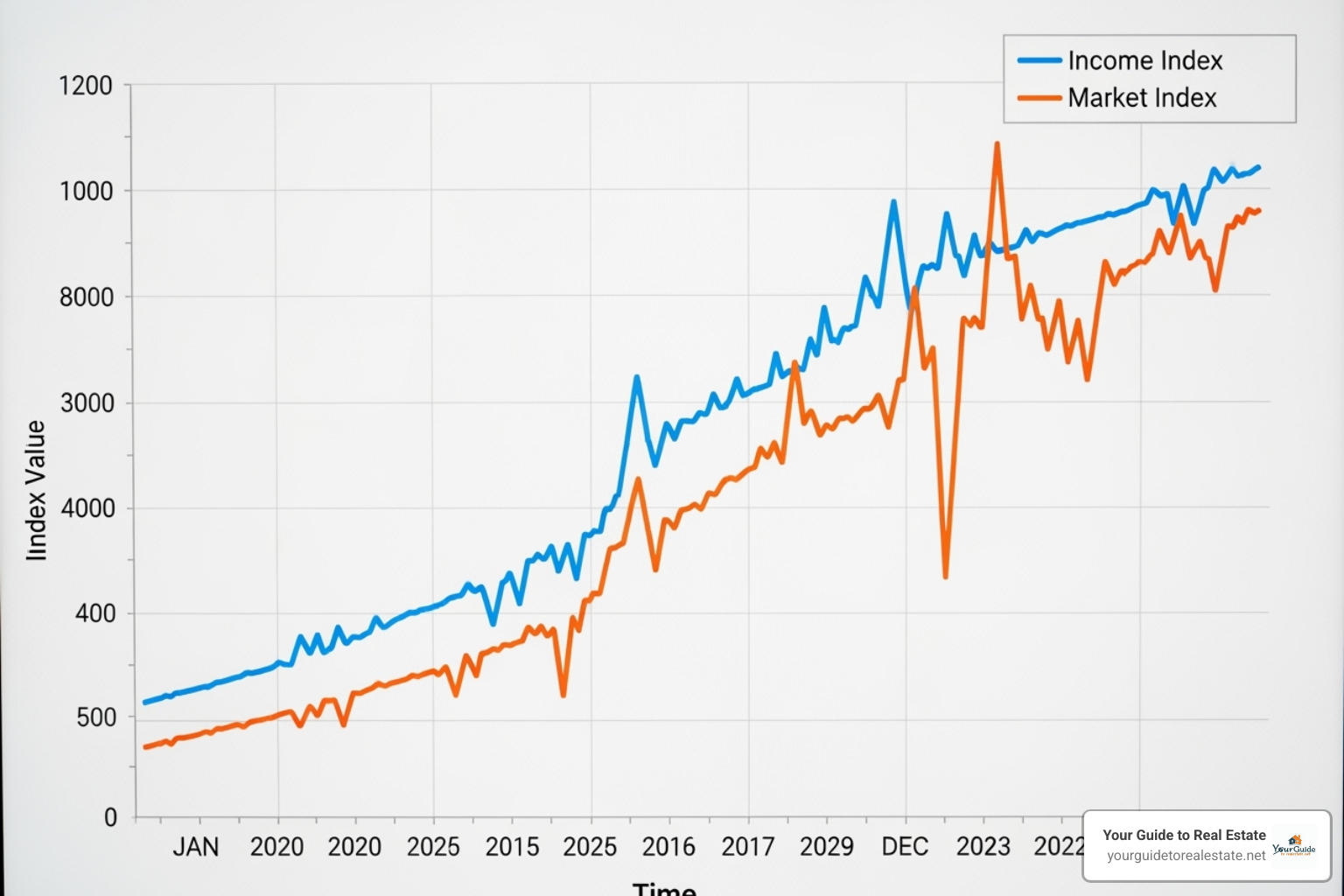
Here’s where we need to be realistic about what monthly dividend stocks can and can’t do for your portfolio. Looking at recent performance numbers tells an important story.
The Morningstar Dividend Leaders Index, which tracks 100 of the highest-yielding stocks with solid track records, gained 11.96% in the 12 months ending August 31st. The broader Dividend Composite Index posted 10.44% over the same period. Meanwhile, the US Market Index – representing nearly the entire stock market – gained 15.95%.
What does this tell us? Monthly dividend stocks and dividend-focused investments don’t always win the race for pure returns, especially during strong bull markets. But that’s missing the point entirely.
Think of dividend stocks like the steady, reliable friend who’s always there when you need them. During market downturns, that consistent income keeps flowing even when stock prices are bouncing around like a ping-pong ball. During periods of inflation, those regular payments help maintain your purchasing power.
The real strength of monthly dividend stocks isn’t necessarily beating the market every year – it’s providing stable income and potentially less volatility. They’re the financial equivalent of having a reliable tenant who pays rent on time every month, versus hoping for a big payday when you eventually sell the property.
Historical returns show that dividend-focused strategies often perform better during challenging economic periods, even if they lag during boom times. It’s about balancing your need for current income with long-term growth potential, understanding that different investments serve different purposes in a well-rounded portfolio.
Conclusion
After diving deep into monthly dividend stocks, it’s clear they offer something special for investors who value predictable income. Think about it – while most investments pay you quarterly, these companies put money in your pocket every single month, just like a regular paycheck. That alignment with your monthly bills and expenses isn’t just convenient; it’s genuinely life-changing for many retirees and income-focused investors.
The math works in your favor too. When you can reinvest those dividends twelve times a year instead of four, the compounding effect adds up over decades. It might not seem like much at first, but that extra $1,700 over thirty years from monthly versus quarterly compounding? That’s real money that can make a real difference.
We’ve seen how companies like Realty Income have built their entire reputation around this concept. Their 663 consecutive monthly payments and 132 dividend increases tell a story of reliability that’s hard to find elsewhere. But remember, not every high-yield stock is a Realty Income. The tempting yields of 15% or more often come with significant risks that can bite unwary investors.
The key takeaway? Do your homework. Look beyond the flashy yield numbers and dig into payout ratios, debt levels, and the company’s actual business model. A sustainable 5% yield from a financially healthy company will serve you far better than a risky 15% yield that gets cut in half during the next economic downturn.
Building a diversified portfolio of quality monthly dividend stocks isn’t about getting rich quick – it’s about creating steady, dependable income that grows over time. Whether you’re planning for retirement, seeking financial independence, or just want your investments to contribute to your monthly budget, these stocks can be valuable building blocks in your financial foundation.
At Your Guide to Real Estate, we believe in empowering you with the knowledge to make smart financial decisions. Just as we help you steer the complexities of buying and selling property, understanding income-generating investments like monthly dividend stocks is part of building your overall wealth strategy. Both require patience, research, and a long-term perspective.
Ready to take the next step in your financial journey? Whether you’re building an investment portfolio or planning your next real estate move, having the right professionals on your team makes all the difference. Learn how to select the best guidance for your needs at Choosing a Real Estate Broker.