Why Understanding Home Building Costs Matters
How much does it cost to build a house is one of the most important questions prospective homeowners ask when considering their options in today’s competitive real estate market. The answer isn’t simple – building costs vary dramatically based on location, size, materials, and countless other factors.
Quick Answer: Average Home Building Costs
- National Average (US): $150-300 per square foot
- Canada Average: $100-300 per square foot
- Total Cost Range: $150,000-$750,000+ depending on size and finishes
- Typical 1,700 sq ft home: $255,000-$510,000 (construction only)
- Additional costs: Land, permits, utilities can add $90,000-$200,000+
Building a custom home offers unique advantages that buying an existing property simply can’t match. You get to choose the exact location, layout, and finishes without compromising on someone else’s vision. Plus, everything comes with warranties and modern energy efficiency.
But here’s the reality – building costs have increased significantly due to labor shortages, supply chain issues, and rising material prices. What seemed affordable two years ago might stretch your budget today.
The process involves much more than just construction costs. You’ll need to budget for land acquisition, architectural plans, permits, and dozens of “extras” that many first-time builders don’t anticipate. A 1,700-square-foot home might cost $425,000 to build, but that can easily double with high-end finishes and a premium lot.
Smart budgeting is crucial. Most experts recommend adding 10-15% to your estimated costs for unexpected expenses. Without proper planning, cost overruns can quickly turn your dream home into a financial nightmare.
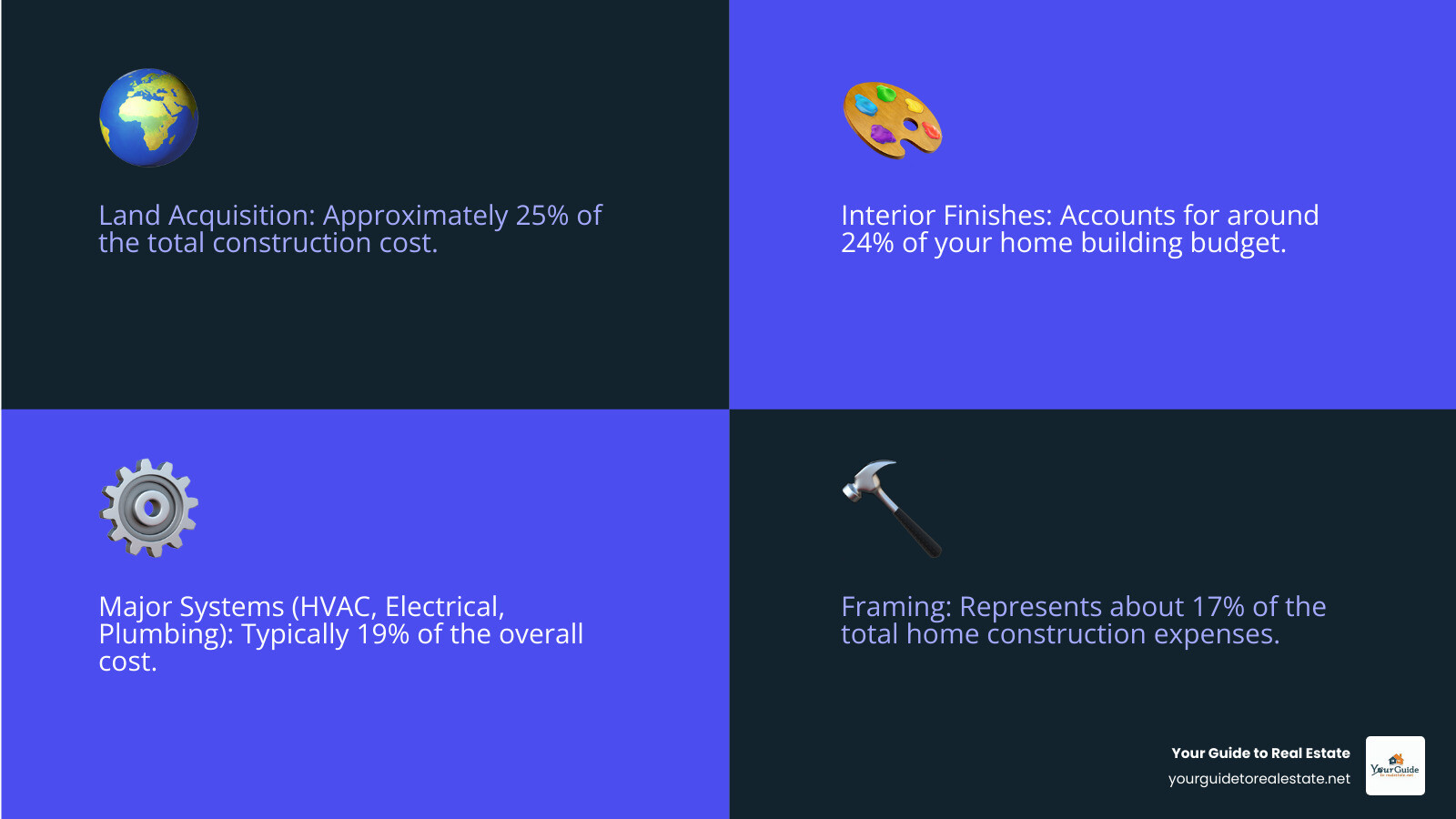
How much does it cost to build a house terms explained:
Understanding the Average Cost to Build a House
When you start dreaming about building your perfect home, the first reality check comes with understanding what you’ll actually pay. The how much does it cost to build a house question doesn’t have a simple answer because costs swing wildly based on where you’re building and what kind of builder you choose.
Let’s start with the basics. In the United States, you’re looking at roughly $150 per square foot for construction costs. That means a typical 1,500-square-foot home will run you between $150,000 and $300,000 – but that’s just for construction, not including your land purchase.
Here’s where it gets interesting though. If you want something truly custom and unique, those costs can jump to $550 per square foot or more. Suddenly, that dream home becomes a much bigger financial commitment.
Canadian costs paint a similar picture with a range from $100 to $300 per square foot. The massive spread reflects Canada’s diverse markets – building in Vancouver costs significantly more than constructing the same home in smaller Maritime communities.
The type of builder you choose makes a huge difference in your final bill. Production builders work with standardized designs and often own the land already, making them the more budget-friendly option. Custom builders give you complete control over every detail, but you’ll pay premium prices for that personalization.
Understanding your financing options is crucial before you get too far into planning. Construction loans work differently than regular mortgages, releasing funds as your home progresses through different stages. Our Understanding Mortgages: A Beginner’s Guide to Home Loans breaks down these financing differences in detail.
| Region/Type | Production Builder (per sqft) | Custom Builder (per sqft) |
|---|---|---|
| Winnipeg, MB | $200 – $250 | $400 – $500 |
| Vancouver, BC | $185 – $315 | $485 – $1,225 |
| Halifax, NS | $105 – $165 | $275 – $555 |
| Toronto, ON | $200 – $275 | $400 – $800+ |
| US Average | $150 – $300 | $350 – $550+ |
What is the Average Cost Per Square Foot to Build a House?
The $150 per square foot US average gives you a starting point, but regional differences will dramatically impact your actual costs. A 2,100-square-foot home might cost $287,670 in Mississippi, while the same house in Hawaii could hit $431,364 – and that’s before you even buy the land.
Location absolutely matters. Major metropolitan areas like Vancouver, Toronto, and high-demand US markets will push your per-square-foot costs much higher due to expensive labor, material transportation, and market demand. Rural areas typically offer more affordable construction costs.
In Winnipeg specifically, you’re looking at $200 to $500 per square foot depending on your builder choice. Standard builders keep costs around $200 per square foot, while custom builders can reach $500 per square foot for premium finishes and unique designs.
According to a survey by the National Association of Home Builders, these regional cost differences are significant enough to be your primary budget consideration. What seems affordable in one area might be completely out of reach in another market.
High-cost areas generally include major cities and desirable coastal regions where labor rates, permit fees, and material costs all run higher. Low-cost areas tend to be more rural locations with lower labor costs and fewer regulatory problems.
Average Costs by Home Size
Your home’s size directly determines your final construction bill. More square footage means more materials, more labor hours, and often more complex systems throughout the house.
A 1,000 square foot home represents the smaller end of new construction. In the US, expect costs between $100,000 and $200,000 for construction. In Winnipeg, that same size runs $165,000 to $250,000 depending on your finish choices.
Moving up to 1,500 square feet puts you in the $150,000 to $300,000 range for US construction costs. This size offers comfortable living without excessive costs.
A 1,700 square foot home is quite popular in markets like Winnipeg, where it typically costs around $425,000 with a standard builder. Choose high-end finishes and custom features, and that price can easily double.
At 2,000 square feet, you’re looking at $200,000 to $400,000 in the US, or $330,000 to $500,000 in the Winnipeg market. This size gives families plenty of room without going overboard.
Large 3,000 square foot homes range from $300,000 to $600,000 in the US, or $495,000 to $750,000 in Winnipeg. These homes offer luxury space but require serious budget planning.
These figures cover construction only. Your land purchase, permits, and site preparation add substantial costs on top of these numbers. If you’re still figuring out your ideal home size, you can use a square footage calculator to easily estimate home size and better visualize your space needs.
A Detailed Breakdown of How Much It Costs to Build a House
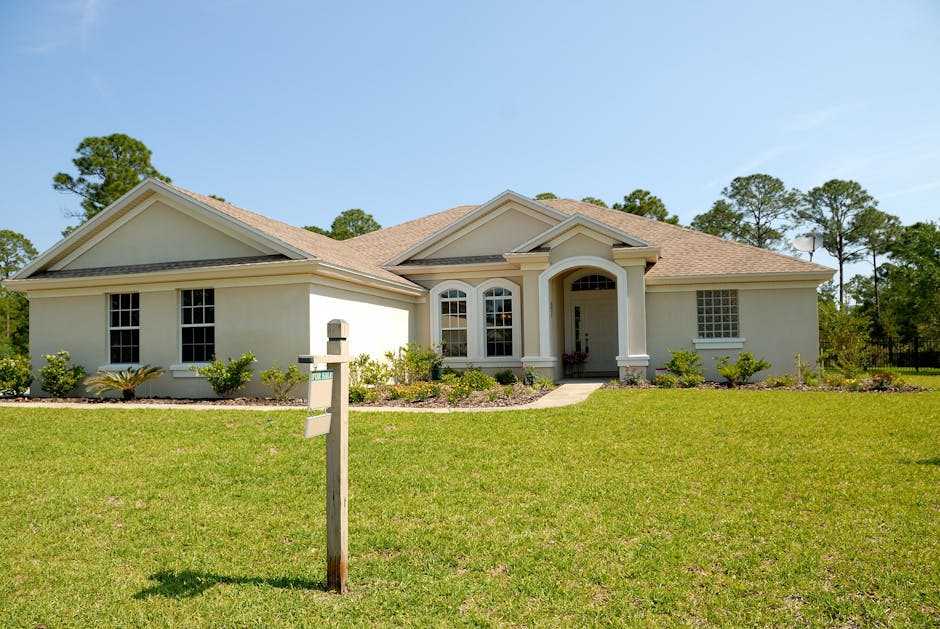
When people ask how much does it cost to build a house, they often expect a simple number. But the reality is much more complex – building a home involves dozens of different expenses spread across multiple phases, each with its own timeline and challenges.
Think of home construction like an orchestra. You have hard costs (the actual materials and labor for building) and soft costs (everything else that makes the project possible). Hard costs include lumber, concrete, roofing, and the workers who install everything. Soft costs cover permits, architectural plans, inspections, and financing fees.
Most homeowners hire a general contractor to conduct this complex process. Their fee typically runs 10% to 20% of your total construction cost, but they’re worth every penny. They coordinate subcontractors, manage schedules, handle inspections, and solve the inevitable problems that pop up during construction.
If you’re working with a real estate agent familiar with new construction, they can help you steer builder contracts and protect your interests throughout the process. Our guide on How to Choose the Right Real Estate Agent: A Complete Buyer’s Guide offers valuable insights for finding the right professional.
Pre-Construction Costs: Land, Plans, and Permits
Before any construction begins, you’ll face several significant expenses that many first-time builders underestimate. These pre-construction costs can easily represent 25-30% of your total project budget.
Land acquisition is usually your biggest single expense. In the United States, finished lots average around $91,057, but location makes all the difference. Here in Winnipeg, you’re looking at a much wider range depending on the neighborhood and lot features.
A standard lot in a new development might cost around $150,000, while a premium lakefront lot could jump to $250,000. If you’re dreaming of mature neighborhoods like River Heights or Tuxedo, expect to pay $350,000 for a standard lot. Premium riverfront lots in Tuxedo can approach $1 million – we’ve even seen lots there selling for $700,000!
Once you own the land, site preparation becomes your next concern. Raw land might need clearing, grading, and proper drainage installation. If there’s an existing structure to remove, demolition costs run $6,000 to $20,000, or up to $45,000 if hazardous materials are present. Preparing unfinished lots typically adds another $1,500 to $3,000.
Architectural plans vary dramatically in cost. Stock plans from a drafter might only cost $500 to $3,500, but custom architects typically charge 6% to 12% of your home’s total price, or $60 to $125 per hour. Good plans prevent expensive mistakes later.
Building permits and fees are unavoidable expenses that vary significantly by location. In the US, these average $2,200 but can exceed $7,500 in some municipalities. Water and sewer hookups add another $4,500 to $6,000. For detailed fee structures, the 2025 Canadian Cost Guide provides comprehensive information about various municipal charges.
Major Construction Stage Costs
Now we get to the exciting part – actually building your house! This phase represents the largest portion of how much does it cost to build a house and typically takes 6 to 16 months to complete.
Your foundation literally supports everything else, so it’s crucial to get it right. Foundation costs range from $5,000 to $35,000 in the US, with an average of $14,500. In Canada, a foundation with basement runs $22 to $26 per square foot, or roughly $40,000 to $48,000 total. The type of foundation – slab, crawl space, or full basement – significantly impacts your final cost.
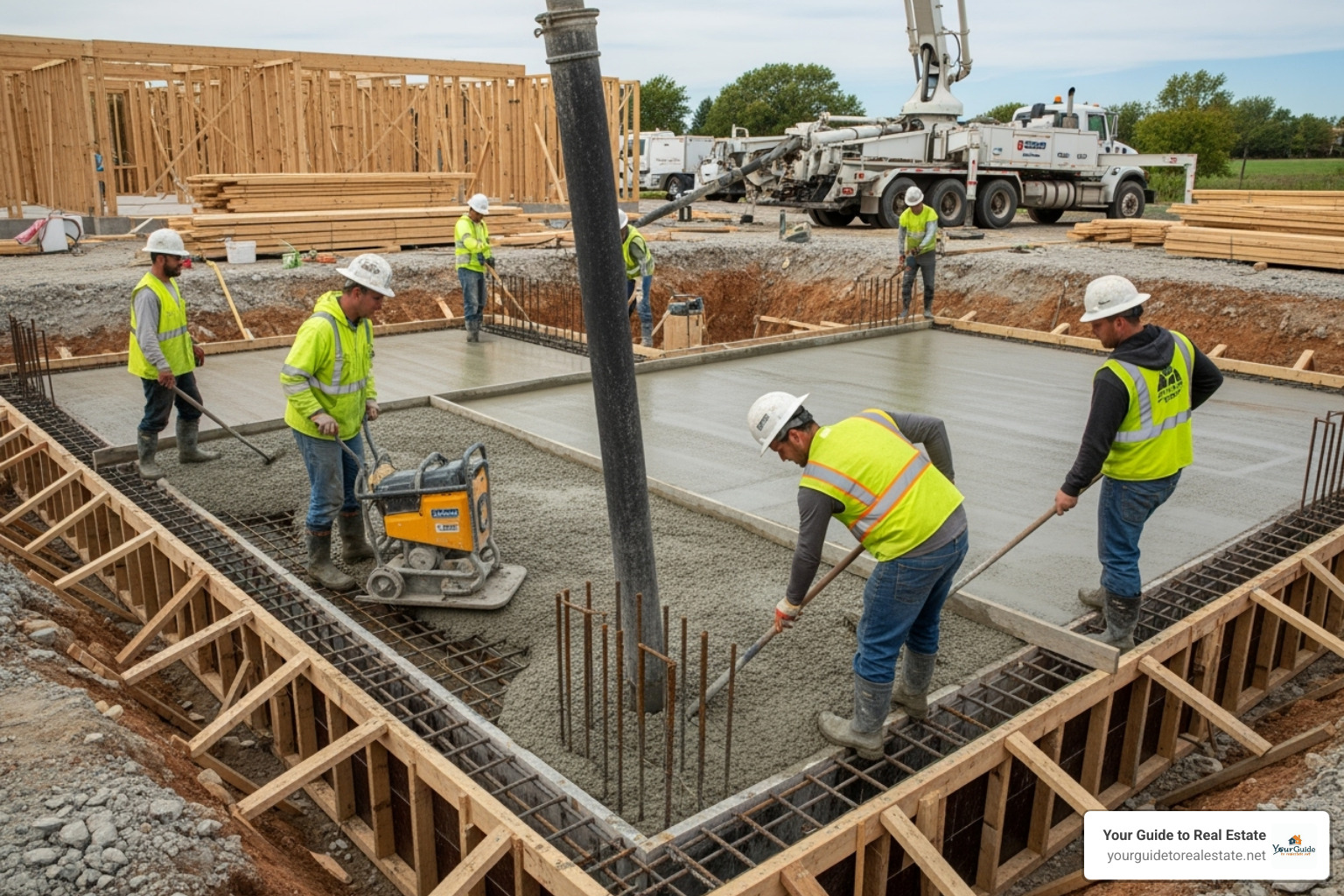
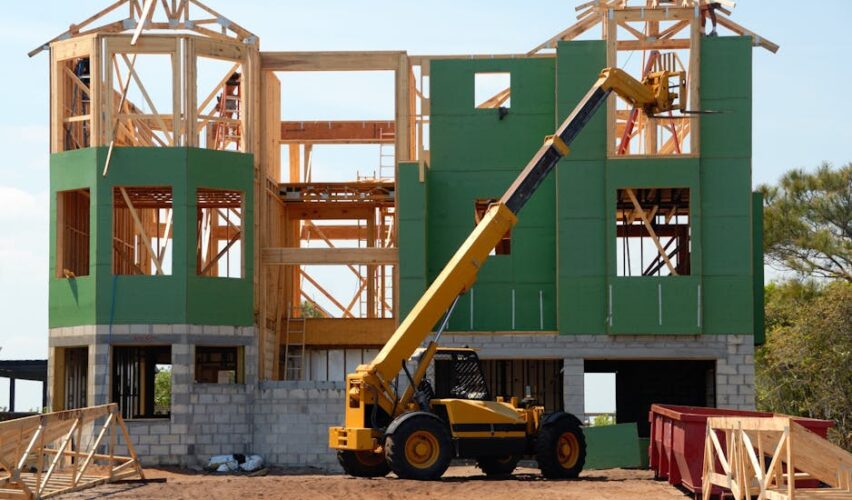
Framing creates your home’s skeleton and is one of the most visually dramatic phases. This stage typically costs $20,000 to $50,000 in the US, with an average of $35,000 including lumber and installation. Rising lumber prices have made this category particularly volatile in recent years.
Exterior finishes protect your investment and create curb appeal. Roofing installation runs $5,500 to $11,500 for a 2,000-square-foot roof. Siding averages $12 per square foot, with total costs between $8,000 and $20,000 depending on whether you choose vinyl, brick, wood, or other materials. Doors and windows typically cost $6,000 to $8,000 combined, with exterior doors running $400 to $3,500 each and windows averaging around $1,000 per opening. Total exterior element installation usually falls between $35,000 and $45,000.
Major systems – HVAC, electrical, and plumbing – are your home’s vital organs. HVAC installation costs $7,000 to $12,500 in the US or $13,000 to $17,000 in Canada. Electrical wiring averages $4 per square foot, or about $8,000 for a typical US home and at least $13,000 in Canada. Plumbing runs approximately $4.50 per square foot, with copper pipe installation costing around $9,000 for a 1,500-square-foot home and fixtures averaging $5,000. Combined plumbing and electrical installation typically costs $30,000 to $43,000 in the US.
Interior Finishes and Final Additions
This is where your house truly becomes a home. Interior finishes offer the most opportunity for both savings and splurging, depending on your priorities and budget.
Insulation and drywall provide comfort and define your interior spaces. Insulation averages $4,000, while drywall installation ranges from $15,000 to $25,000, or about $2.25 per square foot.
Flooring choices dramatically impact both cost and daily living experience. Hardwood costs around $7 per square foot, marble tile runs $15 per square foot, and carpet averages $4 per square foot. Total flooring costs typically fall between $1,500 and $4,500, though premium materials can push this much higher.
Cabinets and countertops define your kitchen’s functionality and style. Builder-grade cabinets average $6,500, while countertops add another $2,450. Custom options can easily triple these costs, but they also significantly impact your home’s value and your daily satisfaction.
Painting and trim provide the finishing touches that make everything look polished. Painting typically costs $5 per square foot or an average total of $7,000. Trim installation adds approximately $1,500.
Appliances bring modern convenience to your new home. New kitchen appliances average $3,750, and a washer and dryer set costs around $1,400. Energy-efficient models cost more upfront but save money long-term.
Landscaping and driveways complete your home’s exterior appeal. Simple landscaping runs about $2,000, while driveways average $4,500 for paving. Patios and decks can add $17,000 to $20,000 to your total cost, but they significantly expand your living space.
Overall, interior finishes generally cost around $75,000 in the US. This category offers the most control over your final budget – you can save money with builder-grade finishes or create a luxury experience with premium materials. The choice is yours, but quality finishes also boost your home’s resale value.
Key Factors That Influence Your Final Cost
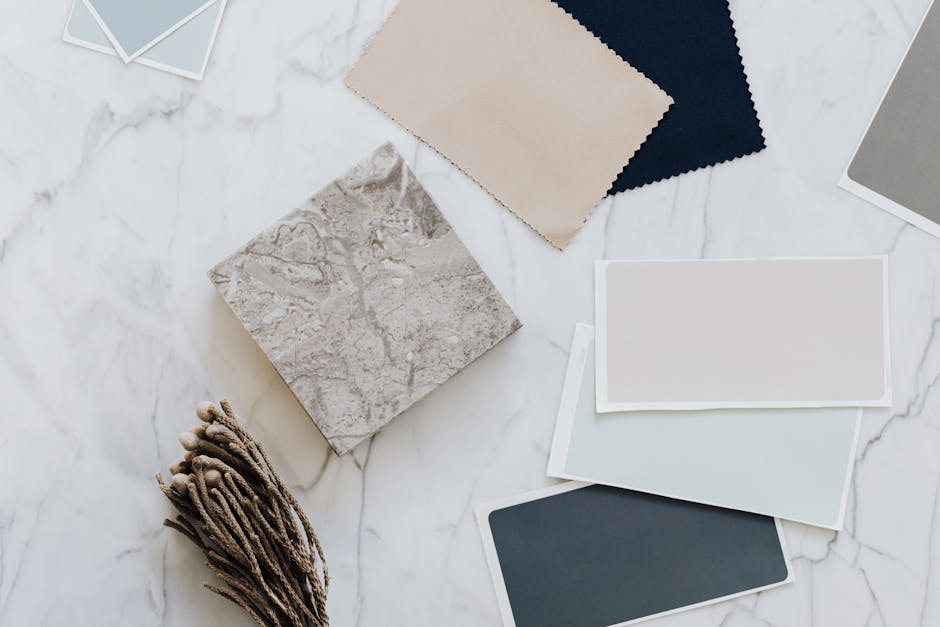
When you’re figuring out how much does it cost to build a house, the per-square-foot estimates we discussed are just your starting point. The reality is that several key factors can push your budget way up – or help keep it under control if you plan carefully.
Design complexity is probably the biggest budget driver you can actually control. That simple, rectangular ranch-style home with a straightforward roofline? It’s going to cost significantly less than a multi-story masterpiece with bay windows, dormers, and intricate angles. Every corner, every bump-out, and every architectural flourish adds both materials and labor hours. We’ve seen budgets balloon by 30% or more just because homeowners fell in love with a complex design.
The quality of materials you choose makes an enormous difference too. Builder-grade vinyl siding, laminate countertops, and standard carpeting will keep costs reasonable. But if you’re dreaming of natural stone exteriors, granite countertops, and hardwood floors throughout, be prepared for a significant jump in your final bill. The difference between basic and premium finishes can easily add $50,000 to $100,000 to your project.
Labor shortages have become a real challenge across North America, and they’re hitting construction particularly hard. Skilled tradespeople – electricians, plumbers, framers – are in high demand, which drives up wages. This isn’t just about higher hourly rates either. Delays caused by scheduling conflicts with overbooked contractors can extend your project timeline, potentially increasing financing costs and rental expenses if you’re waiting to move in.
Supply chain disruptions have shown us how vulnerable construction projects can be to global events. When lumber prices spiked or when certain fixtures became hard to find, project costs jumped overnight. These aren’t always predictable, but they’re becoming more common, which is why having a solid contingency fund is crucial.
The overall market conditions in your area play a role too. In hot construction markets, everyone from contractors to material suppliers can charge premium prices. Economic factors like tariffs on imported materials or rising interest rates can also impact your bottom line in ways you might not expect.
If you’re new to the home building process, our First-Time Homebuyer Tips can help you prepare for these financial realities and avoid common pitfalls.
Builder Contracts and Potential Pitfalls
Your builder’s contract isn’t just paperwork – it’s your financial protection plan. Understanding what you’re signing can be the difference between staying on budget and facing unexpected costs that could derail your entire project.
Standard builders typically work with pre-designed plans and established pricing structures, which usually means more predictable costs. Custom builders offer unlimited flexibility, but that freedom comes with less predictable pricing and more opportunities for scope creep. Both can work well, but you need to know what you’re getting into.
Escalation clauses are where many homeowners get caught off guard. These contract provisions allow builders to increase your agreed-upon price if material or labor costs rise during construction. While builders need some protection against market volatility, an open-ended escalation clause can leave you vulnerable to massive cost increases. We strongly recommend avoiding contracts with unlimited escalation clauses. If your builder insists on including one, make sure it has clear caps and specific conditions.
Getting your contract reviewed by a legal professional isn’t optional – it’s essential. They’ll spot ambiguous language, hidden fees, and clauses that could cost you thousands later. A realtor who specializes in new construction can also be invaluable during contract negotiations. They understand builder contracts and can advocate for your interests before you sign anything. This is where smart Real Estate Agent Selection really pays off.
You’ll also need to choose between fixed-price contracts and cost-plus contracts. Fixed-price gives you budget certainty – the builder completes your home for an agreed amount, period. Cost-plus contracts have you paying actual costs plus the builder’s fee, which can be more transparent but puts cost risk squarely on your shoulders. Fixed-price is usually better for most homeowners, especially first-time builders.
Building vs. Buying: A Cost and Benefit Analysis
The decision between building new and buying existing isn’t just about upfront costs – it’s about long-term value and lifestyle preferences. When we look at how much does it cost to build a house versus buying, the picture gets interesting.
Customization is the biggest draw for building new. You get exactly what you want, where you want it. No compromising on someone else’s outdated layout or questionable color choices. You can design your kitchen for how you actually cook, create the perfect home office space, or ensure you have enough storage for your family’s needs.
New home warranties provide real peace of mind. Everything from the foundation to the appliances is covered, protecting you from unexpected repair costs during those crucial first years. In places like Manitoba, these warranties are actually mandatory, giving you additional legal protection.
Energy efficiency in new homes can translate to substantial monthly savings. Modern insulation, windows, and HVAC systems can cut utility bills dramatically compared to older homes. We’re talking about potential savings of $100-300 per month, which adds up to thousands annually.
The potential for rapid equity growth is particularly strong in developing neighborhoods. As infrastructure improves and amenities are added, your home’s value can increase faster than in established areas. Plus, you won’t face any immediate repair costs – no surprise roof replacements, plumbing emergencies, or electrical updates.
For a complete overview of the home buying process, whether new or existing, check out our guide: Easy Steps to Buying Your First Home.
So, how much does it cost to build a house compared to buying one?
Here’s the honest answer: building new typically costs more upfront than buying existing. The median price for an existing home in the US was $414,500 in February 2025, while building a new single-family home averaged $665,298 including land. That’s a significant difference that can’t be ignored.
But this initial price gap doesn’t tell the complete story. When you buy an existing home, especially one that’s more than 20 years old, you need to budget for long-term repairs and upgrades. That charming 1980s kitchen might need a $30,000 renovation. The original roof might need replacement at $15,000. Old plumbing or electrical systems can require updates costing tens of thousands.
Market inventory levels also affect your options. In areas with limited housing supply, existing home prices get inflated, sometimes making new construction more competitive. However, according to CMHC data, Canadian housing starts have sharply slowed, with urban centers declining by 12.5% on an annualized basis. This slowdown affects both new construction availability and pressure on existing home prices.
The “better deal” really depends on your priorities and timeline. If you want customization, modern efficiency, and minimal maintenance headaches, building new might justify the higher upfront cost. If you need to move quickly and want to minimize initial expenses, buying existing could work better – as long as you’re prepared for potential future repair costs.
Saving Money and Managing Your New Home Build
Let’s be honest – building a house can feel like watching your bank account disappear one expense at a time. But here’s the good news: with smart planning and strategic choices, you can keep how much does it cost to build a house from becoming a financial nightmare.
The golden rule that every experienced builder will tell you? Always set aside a contingency fund of 10-15% of your total estimated cost. I know it sounds like a lot, but trust me on this one. That “perfect” soil might turn out to have drainage issues requiring extra foundation work. That lumber you ordered three months ago? The price just jumped 20%. These aren’t worst-case scenarios – they’re Tuesday in the construction world.
Getting multiple quotes is another game-changer that many first-time builders skip. Don’t just accept the first bid that lands on your desk. Shop around for everything from concrete to cabinet installation. The difference between quotes can be eye-opening, and you might find that contractor B offers the same quality work as contractor A for significantly less.
Choosing pre-designed plans instead of going fully custom can save you thousands in architectural fees while still giving you a beautiful home. Most builders have libraries of proven designs that they’ve built efficiently multiple times. You’re not settling – you’re being smart.
If you’re handy with tools, DIY labor for non-structural tasks can trim your budget nicely. Painting, installing light fixtures, or tackling some landscaping yourself can save on labor costs. Just be realistic about your skills and available time. A weekend warrior paint job that looks like it was done by a weekend warrior will cost more to fix than hiring a professional from the start.
Phased construction offers another path for budget-conscious builders. Build the essential structure first, then add the finished basement, deck, or pool when your finances recover. Your future self will thank you for not overextending initially.
How to Save Money on Your Home Build
When you’re trying to control how much does it cost to build a house, every decision matters. Here are the strategies that actually work without compromising your home’s quality or safety.
Building smaller remains the most effective way to save money. That extra bedroom that might become a storage room anyway? It could cost you $20,000 or more. Before adding square footage, ask yourself if you’ll really use the space or if you’re just building it because you can.
Choosing modest finishes doesn’t mean your home will look cheap – it means you’re investing wisely. Builder-grade or mid-range options for flooring, countertops, and fixtures can save tens of thousands of dollars. You can always upgrade your kitchen counters from laminate to granite in a few years when your budget has recovered.
Using reclaimed and recycled materials adds character while cutting costs. Salvage yards are treasure troves of unique doors, windows, and architectural details that cost a fraction of new items. Plus, you’ll have stories to tell about where each piece came from.
Acting as your own general contractor can save you that 10-20% contractor fee, but proceed with extreme caution. This isn’t just about managing a few subcontractors – you’re responsible for scheduling, quality control, building code compliance, and problem-solving when (not if) things go wrong. Unless you have construction experience and plenty of time, this money-saving strategy can quickly become expensive.
Keeping your design simple pays dividends throughout the build. A straightforward rectangular floor plan with a simple roofline costs less to frame, roof, and finish than a home with multiple angles and complex architectural features. Sometimes the most neat solution is also the most affordable one.
Shopping around for everything takes time but saves money. Get multiple quotes for excavation, plumbing, electrical work, and even smaller items like fixtures and appliances. Local suppliers often beat big box stores on bulk materials, and you’re supporting your community in the process.
What is the Typical Timeline for Building a New Home?
Building a house tests your patience almost as much as your budget. Understanding the typical timeline helps you plan realistically and avoid the frustration that comes with unrealistic expectations.
The pre-construction phase typically takes 1-6 months, though it can feel much longer when you’re eager to break ground. This stage includes working with architects or selecting plans, purchasing and preparing your land, and obtaining all necessary permits. Don’t underestimate permit approval time – some municipalities move faster than others, and complex designs or environmental considerations can add months to this phase.
The construction phase usually runs 6-16 months, with most homes taking 9-12 months to complete. The process follows a logical sequence: foundation and framing first, followed by roofing and exterior work, then rough-ins for plumbing, electrical, and HVAC systems. After insulation and drywall comes the fun part – interior finishes like flooring, cabinets, and paint. Finally, exterior finishes, driveways, and landscaping bring everything together.
Several factors can derail your timeline, and most are beyond your control. Weather plays a huge role – foundation work stops when temperatures drop below freezing, and heavy rain can halt exterior work for days. Municipal inspection schedules can create delays, especially during busy building seasons. Supply chain issues have become increasingly common, with specific materials sometimes delayed for weeks or months.
Labor availability significantly impacts timing. Skilled tradespeople are in high demand, and if your electrician gets pulled onto another project, your timeline shifts accordingly. Any changes you request once construction begins – called change orders – will add time and cost to your project.
Custom homes typically take longer than production homes built by larger builders. Production builders work with standardized designs and pre-ordered materials, creating more predictable timelines. Custom builders handle unique designs and specific material sourcing, which naturally takes more time but gives you exactly what you want.
The key to managing timeline stress? Build buffer time into your expectations and have a backup plan for temporary housing if needed. Your dream home will be worth the wait, but patience definitely becomes a virtue during the building process.
Frequently Asked Questions about Building a House
Building your dream home brings up so many questions, and we totally get it! The whole process can feel overwhelming when you’re trying to figure out how much does it cost to build a house. Let’s tackle some of the most common questions we hear from folks just like you.
Can I get a loan to build a house?
Absolutely, you can get financing for your new home build! The process works a bit differently than getting a regular mortgage for an existing house, but don’t worry – lenders are very familiar with construction projects.
The main type of loan you’ll be looking at is called a construction loan. Think of it as a short-term loan, usually lasting about a year, that’s specifically designed to cover your building costs. Here’s what makes it unique: instead of getting all the money upfront, funds are released in stages as your home progresses. These staged payments are called progress draws.
Your lender will send someone out to inspect the work at each major milestone – foundation complete, framing done, roof installed, and so on. Once they confirm the work meets standards, they’ll release the next chunk of money. This system protects both you and the lender by ensuring the money only goes toward actual completed work.
If you’re planning to act as your own general contractor, you might need what’s called a self-build mortgage. The application process is typically more involved since you’re taking on more responsibility, but it’s definitely doable for experienced folks.
One thing to prepare for: down payment requirements are usually higher for construction loans. While you might put down 5-10% for a regular mortgage, construction loans typically require 20-30% down. Lenders see these as higher risk since there’s no physical house to secure the loan against until construction is finished.
Want to dive deeper into the loan process? Check out our detailed guide on the Loan Process for Buying a House for more insights.
What are the most significant “hidden” costs?
Oh boy, the sneaky expenses that somehow didn’t make it into your original budget! These are the costs that can really catch you off guard when you’re calculating how much does it cost to build a house.
Landscaping is probably the biggest surprise for most people. You might budget for basic grass, but what about mature trees, flower beds, or a sprinkler system? Simple landscaping starts around $2,000, but if you want something that looks like it belongs in a magazine, you could easily spend $10,000 or more.
Window coverings might seem minor, but when you’re covering every window in a brand-new house, the costs add up fast. Blinds, curtains, and custom treatments can easily run into thousands of dollars.
Then there are those high-end appliances that weren’t in your original plan. You budgeted for a basic refrigerator, but then you see that gorgeous smart fridge with the built-in coffee maker. Before you know it, your appliance budget has doubled.
Driveway paving is another one. We mentioned an average of $4,500, but if you have a long driveway or fall in love with stamped concrete or fancy pavers, that number can climb quickly.
For our Canadian friends, GST/HST can sneak up on you. While new homes often qualify for rebates, extras like air conditioning, certain appliances, landscaping, and detached structures might be subject to full taxes. Always clarify with your builder what’s included and what taxes apply.
Don’t forget about utility hookup fees either. Getting electricity, water, sewer, and gas connected often involves separate fees from utility companies that aren’t included in your building permit costs.
And here’s one people often overlook: temporary housing costs. Where will you live while your house is being built? Whether it’s extending a lease or renting month-to-month, these costs need to factor into your overall budget.
These extras can easily add 10-20% to your total project cost, so always plan for them!
Is it cheaper to build a one-story or two-story house?
If you’re trying to maximize your square footage while keeping costs down, a one-story house is generally cheaper per square foot than a two-story house with the same total living space.
Here’s the thing about foundation and roof footprint: a single-story home needs a bigger foundation and roof to house the same square footage as a two-story. While that might seem more expensive, two-story homes actually need stronger, more complex foundations to support all that extra weight above. The roof situation is similar – single-story homes have larger roofs, but two-story homes often have more complex rooflines that cost more to build.
Framing complexity is where two-story homes really start adding costs. You need additional load-bearing walls, floor joists for that second story, and don’t forget about the staircase! Stairs are surprisingly expensive to build properly and safely.
The complexity of plumbing and HVAC systems also plays a role. Running pipes and ductwork vertically through two floors is typically more challenging and labor-intensive than spreading everything out horizontally on one level. While a ranch-style home might have longer horizontal runs, the vertical integration required for two-story homes often drives up costs.
You’ll also need more exterior materials like siding or brick to cover all that vertical wall space on a two-story home.
Now, there is one potential cost advantage to going up instead of out: land costs. A two-story home takes up less of your lot, which might allow you to buy a smaller, less expensive piece of land. But when we’re talking purely about construction costs, the single-story home usually wins on a per-square-foot basis.
So if you’re looking to get the most house for your construction dollar and you have the lot space for it, a well-designed one-story home is typically your most budget-friendly option.
Conclusion
Building a new home is one of the most exciting journeys you’ll ever start on, but as we’ve finded together, understanding how much does it cost to build a house requires careful consideration of countless moving parts. It’s not just about picking a number from thin air and hoping for the best!
Throughout our exploration, we’ve seen that costs vary dramatically – from around $150 per square foot in some US markets to $500 per square foot for custom builds in places like Winnipeg. Land acquisition alone can range from $76,500 on average in the US to over $1 million for premium lots in mature Canadian neighborhoods. Add in everything from foundation work ($5,000-$35,000) to interior finishes (averaging $75,000), and suddenly that dream home budget becomes much clearer.
Building versus buying isn’t just about the upfront costs either. Yes, the median existing home price of $414,500 looks appealing compared to the average $665,298 for a new build (including land). But remember – that charming older home might need a new roof, updated plumbing, or a kitchen renovation that could easily cost tens of thousands down the road.
The real magic of building new lies in the customization, energy efficiency, and warranties that come with your fresh start. You’re not just buying a house; you’re creating a home that fits your family perfectly, with modern systems that’ll keep utility bills low and maintenance headaches minimal.
Smart planning makes all the difference. That 10-15% contingency fund we keep mentioning? It’s not optional – it’s your safety net against the unexpected. Whether it’s supply chain delays, weather setbacks, or that moment when you decide you absolutely must have granite countertops instead of laminate, having that buffer keeps your project on track.
The key factors we’ve discussed – from design complexity and material choices to builder contracts and market conditions – all play crucial roles in your final costs. Understanding escalation clauses, choosing between fixed-price and cost-plus contracts, and working with experienced professionals can save you thousands and spare you major headaches.
At Your Guide to Real Estate, we believe that knowledge is your best tool for success. Our proven framework and stress-free guidance help you steer every aspect of real estate, whether you’re building your dream home or exploring other options. We’re here to provide the expert insights and practical tips that turn overwhelming decisions into confident choices.
Ready to move forward with your real estate goals? Get a professional analysis of your property’s value and market position through our valuation and market analysis service and make informed decisions about your next investment. Your dream home is waiting – let’s make it happen!