

Why Rent-to-Own Could Be Your Path to Homeownership
Rent to own homes near me offer a unique bridge to homeownership for buyers who aren’t quite ready for traditional financing. This arrangement lets you rent a property with the option or obligation to purchase it later, typically within 2-5 years.
Quick Answer: How to Find Rent-to-Own Homes Near You
- Search major real estate websites (Zillow, Realtor.com) using “rent-to-own” filters
- Contact experienced local real estate agents who specialize in alternative financing
- Work with dedicated rent-to-own companies like Divvy Homes or Pathway
- Use specialized rent-to-own portals and aggregator websites
- Check local classifieds and community boards for direct seller opportunities
Here’s what makes rent-to-own different from regular renting or buying:
- Building equity while renting – Part of your monthly payment goes toward a future down payment
- Locking in today’s price – You agree on a purchase price upfront, protecting against market increases
- Time to improve credit – Use the lease period to boost your credit score for better mortgage terms
- Test-driving homeownership – Experience the neighborhood and property before committing to buy
The numbers tell an interesting story. Despite 55% of Gen Zers and 37% of millennials expressing interest in rent-to-own agreements, these arrangements account for less than 2% of living situations. Success rates at major companies range from just 38% to 50%, meaning about half of participants don’t complete the purchase.
This gap between interest and availability makes knowing where to look crucial for your search.
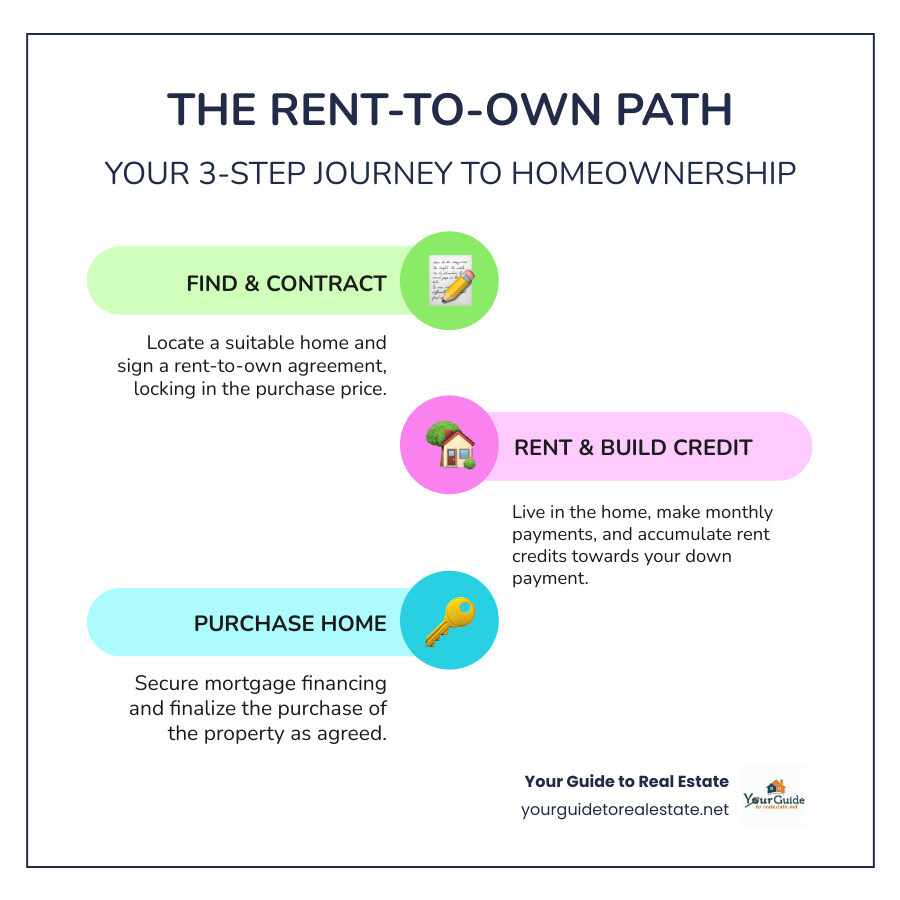
Common rent to own homes near me vocab:
Understanding the Rent-to-Own Agreement
Before you start searching for rent to own homes near me, it’s crucial to understand exactly what you’re getting into. Think of a rent-to-own agreement as a hybrid between renting and buying – you’re essentially test-driving homeownership while building toward your goal of owning the property.
At its core, a rent-to-own home arrangement lets you live in a house as a renter while securing the right (or sometimes the obligation) to buy it later. You’ll pay an option fee upfront – usually a few thousand dollars – that gives you this special privilege. Then, each month, part of your rent payment gets set aside as rent credits toward your future down payment.
The beauty of this setup is that you lock in the purchase price from day one. If home values skyrocket in your neighborhood over the next few years, you’re protected. You’ll still pay the original agreed-upon price, which can save you thousands.
Lease-Option vs. Lease-Purchase: Knowing the Difference
Here’s where things get interesting – not all rent-to-own deals are the same. You’ll encounter two main types, and understanding the difference could save you from a major headache down the road.
A lease-option agreement gives you flexibility. You have the right to buy the home when your lease term ends (typically 2-5 years), but you’re not forced to. Maybe your job situation changes, or you find the neighbors love hosting loud parties every weekend. With a lease-option, you can walk away – though you’ll lose your option fee and any rent credits you’ve built up.
A lease-purchase agreement is much more binding. You’re legally obligated to buy the home when the lease ends. This isn’t just about losing money if you change your mind – you could face a lawsuit if you can’t follow through with the purchase.
| Feature | Lease-Option | Lease-Purchase |
|---|---|---|
| Obligation | Right to buy (not obligated) | Obligated to buy |
| Flexibility | High (can walk away, but lose fees/credits) | Low (legally binding commitment) |
| Risk to Buyer | Lower (financial loss only) | Higher (potential legal action for non-purchase) |
| Option Fee | Non-refundable (typical) | Non-refundable (typical) |
| Rent Credits | Often applied to down payment if purchased | Often applied to down payment |
Most buyers prefer lease-option agreements because life happens. You might not qualify for a mortgage when the time comes, or your financial situation could change dramatically. The lease-option gives you an escape route, even if it costs you some money.
The financial structure of these agreements revolves around a few key components. Your option fee – that upfront payment – typically ranges from 1% to 5% of the home’s value. On a $200,000 house, you might pay $2,000 to $10,000 just to secure your option to buy.
Then there are those monthly rent credits. Let’s say you pay $1,800 in rent each month, and $300 of that goes toward your future purchase. Over three years, you’d accumulate $10,800 toward your down payment. It’s like a forced savings account that you can’t accidentally spend on vacation or a new car.
The lease term gives you breathing room to improve your credit score, save additional money, and prepare for traditional mortgage financing. This time is invaluable if you’re currently struggling to qualify for a conventional home loan.
One crucial piece of advice: never sign a rent-to-own agreement without having a lawyer review it first. These contracts aren’t standardized like typical rental leases. Each one is unique, and some heavily favor the seller. A good attorney can spot potential problems and negotiate better terms on your behalf.
As you prepare for this journey, understanding your future financing options becomes essential. Our guide on Understanding Mortgages: A Beginner’s Guide to Home Loans can help you prepare for that final step. And just like with traditional home purchases, working with an experienced professional makes a huge difference. Check out our insights on Reasons to work with a real estate professional to understand how they can protect your interests throughout this complex process.
Top 5 Ways to Find Rent to Own Homes Near Me
Finding legitimate rent to own homes near me can feel like searching for a needle in a haystack. With less than 2% of living situations being rent-to-own arrangements, they aren’t as common as traditional rentals or sales. However, with the right strategies, you can uncover promising opportunities. This section details the primary resources and strategies to begin your search, outlining the pros and cons of each approach.
1. Using Online Real Estate Search Tools
The easiest place to start your hunt for rent to own homes near me is right from your couch. Major real estate websites like Zillow, Realtor.com, and similar platforms have become the go-to resource for most home searches, and they can be surprisingly helpful for finding rent-to-own opportunities too.
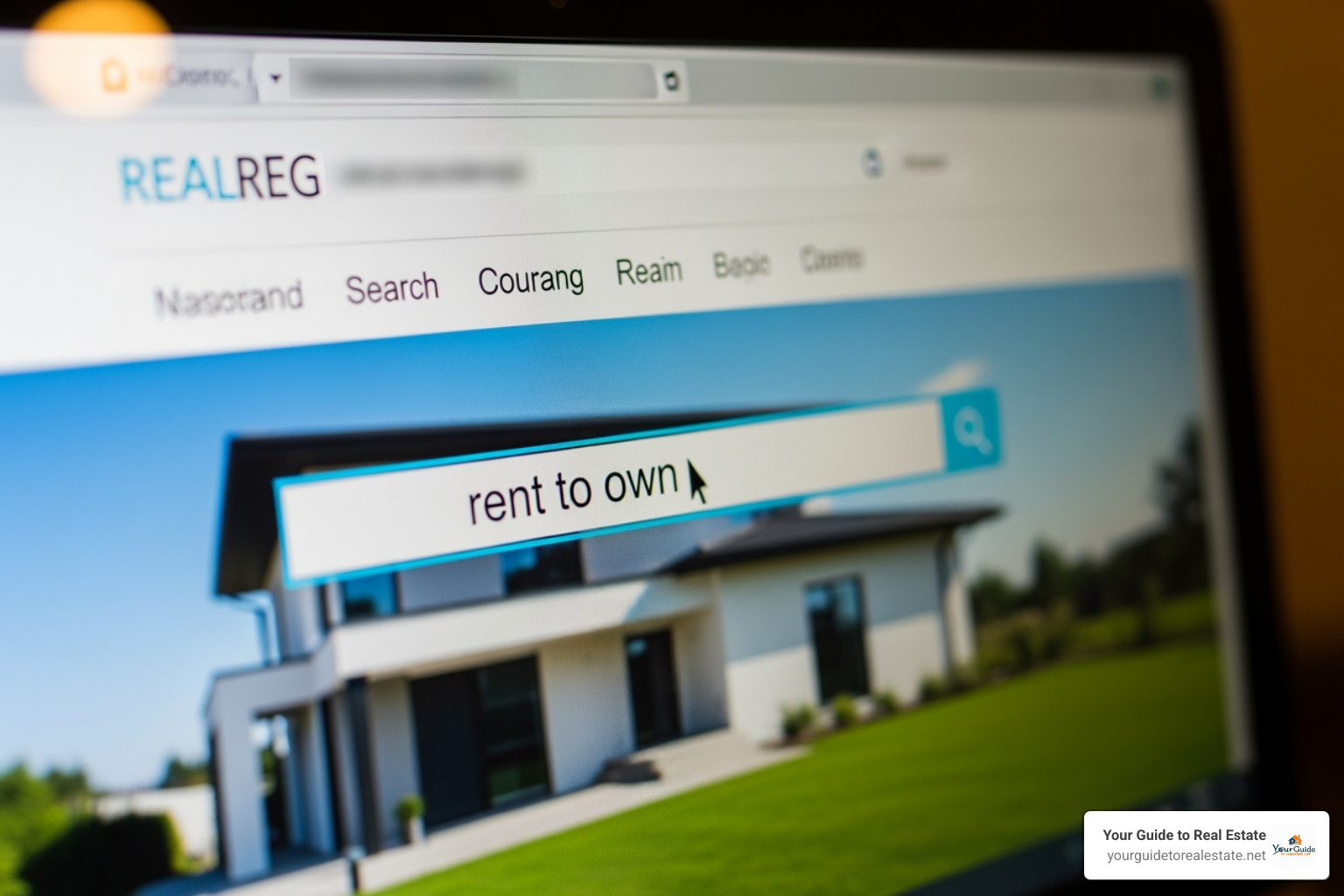
Here’s the thing about these platforms: they’re not perfect for rent-to-own searches, but they’re getting better. Start by typing “rent to own” directly into the search bar. Some sites now have dedicated filters for lease-to-own arrangements, while others might categorize them under “owner financing” or “alternative financing.”
Don’t just rely on the filters, though. Sometimes the best opportunities are hiding in plain sight. Look for rental properties with unusually high monthly payments – these might actually be rent-to-own deals in disguise. Properties that have been sitting on the market for months are another goldmine. Motivated sellers are often more willing to consider creative financing options.
Setting up email alerts is your secret weapon here. Most platforms let you save searches and get notified when new properties match your criteria. This way, you’ll be among the first to know about fresh listings.
The beauty of using these broad property search tools is the sheer volume of inventory they offer. You’re looking at thousands of properties across your area, which dramatically increases your chances of finding something that fits your needs and budget.
But here’s where things get tricky. Listings may be limited or mislabeled when it comes to rent-to-own arrangements. Many sellers don’t explicitly advertise their willingness to do rent-to-own deals, so you might need to dig deeper or reach out directly to inquire about flexible terms.
The convenience factor is hard to beat – you can search anytime, anywhere, and quickly narrow down your options. Just remember that what you see online is only the starting point. The real work begins when you start making those phone calls and asking the right questions about rent-to-own possibilities.
2. Exploring Specialized Rent-to-Own Resources
If you’re serious about finding rent to own homes near me, specialized platforms can be your secret weapon. These aggregator websites focus exclusively on rent-to-own properties, which means you won’t waste time sifting through thousands of traditional listings.
Sites like ZeroDown, HomeFinder, Hidden Listings, and Rent to Own Labs promise to make your search easier by curating rent-to-own opportunities in one place. The appeal is obvious – instead of hunting through general real estate sites, you get a focused search that should save you hours of time.
But here’s where things get tricky. These platforms aren’t all created equal, and some come with strings attached. Subscription fees are common, with some sites charging monthly access fees before you can even see their full inventory. Others use a lead generation model, where your contact information gets passed along to sellers or agents who may then contact you.
The bigger concern? Outdated listings can be a real problem. That perfect house you found might have been rented months ago, but the listing is still live to attract visitors to the site. It’s frustrating, but it happens more often than you’d like.
Due diligence becomes absolutely critical here. Before getting excited about any listing, verify that the property is actually available and that the seller is legitimate. Cross-reference the address with public records, and never pay any fees upfront without meeting the seller in person and seeing the property.
Some major companies like Divvy Homes and Home Partners of America operate their own rent-to-own programs directly. These aren’t listing aggregators – they actually own the properties and have structured programs with clear qualification criteria. While they may have stricter requirements, they often provide more transparency and even credit counseling resources to help you succeed.
The key to verifying listing accuracy is simple: pick up the phone. Call the number listed, ask specific questions about the property, and request to schedule a showing. Legitimate sellers will be happy to provide details and show you the home. If they’re evasive, pushy about fees, or refuse to meet in person, consider it a red flag.
3. Connecting with Local Real Estate Professionals
When you’re searching for rent to own homes near me, partnering with the right real estate professional can make all the difference. Think of them as your personal guide through what can be a confusing and risky process.
Most experienced agents have their finger on the pulse of the local market in ways that online searches simply can’t match. They often know about off-market opportunities before they ever hit the public websites. Maybe there’s a homeowner who’s been struggling to sell for months and would consider a rent-to-own arrangement, or a property in pre-foreclosure where the seller needs creative solutions.
Access to local listings is just the beginning. A good agent brings professional expertise that’s especially valuable in rent-to-own situations. They can help you assess whether that locked-in purchase price is actually fair market value, or if you’re potentially overpaying for a property that might not appreciate as expected.
But here’s where agents really earn their keep: contract negotiation. Rent-to-own agreements can be incredibly complex, with terms that heavily favor either the buyer or seller depending on how they’re written. An experienced professional knows which clauses to push for, what red flags to watch for, and how to structure the deal to protect your interests.
The key is finding an agent who actually understands alternative financing arrangements. Not every real estate professional has experience with rent-to-own deals, so don’t be afraid to ask specific questions about their background with these transactions.
When you’re ready to find the right professional for your situation, our comprehensive resource on How to Choose the Right Real Estate Professional: A Complete Buyer’s Guide can walk you through exactly what to look for and what questions to ask.
In a rent-to-own situation, you’re not just renting a home – you’re making a multi-year financial commitment that could affect your credit, your savings, and your path to homeownership. Having a knowledgeable advocate on your side isn’t just helpful, it’s essential.
4. Checking Community Boards and Local Classifieds
Don’t overlook your own neighborhood when searching for rent to own homes near me. Some of the best opportunities come from homeowners who prefer dealing locally rather than navigating big real estate websites.
Community bulletin boards at grocery stores, coffee shops, and community centers often feature handwritten notes from homeowners exploring flexible arrangements. You might spot a “for rent” flyer with a small “option to buy” mention tucked in the corner. These sellers typically want to avoid listing fees and prefer working with people from their own community.
Online classifieds like Craigslist can yield results, but they require extreme caution. Scammers love targeting hopeful homebuyers on these platforms, so verify everything before sharing personal information or sending money.
Social media groups dedicated to your local housing market can be goldmines. Many cities have Facebook groups where residents post rental opportunities or discuss real estate. Join groups like “[Your City] Housing” or “[Your Area] Real Estate” and keep an eye out for posts mentioning flexible purchase options.
The beauty of these local resources is the potential for unique deals that haven’t been picked over by dozens of other buyers. You’re also communicating directly with homeowners, which can make negotiations more personal and straightforward.
However, this approach requires extreme caution and patience. Scammers frequently post fake listings on community boards and classifieds, often asking for upfront fees or personal financial information. Always verify the property owner through public records before proceeding with any agreement.
The local approach works best when you have time to build relationships in your target neighborhood. Chat with neighbors, attend community events, and let people know you’re looking for a rent-to-own opportunity. Sometimes the perfect arrangement comes from a conversation at the local farmers market rather than a formal listing.
5. Networking and Word of Mouth
Sometimes the best rent to own homes near me opportunities come from the most unexpected places – a casual conversation at a barbecue, a chat with your neighbor, or a mention at your local coffee shop. Your personal network might be sitting on a goldmine of unlisted properties.
Start by spreading the word to everyone you know. Tell your friends, family members, colleagues, and even your current landlord that you’re actively searching for rent-to-own opportunities. You’d be surprised how many people know someone who owns rental property or is thinking about selling but hasn’t made the leap yet.
Your coworkers might have investment properties they’re considering transitioning from rentals to sales. That friend from college could have inherited a house they’re not sure what to do with. Even your hairdresser or mechanic might know of someone looking to sell without going through traditional channels.
Getting involved in your local community opens even more doors. Attend neighborhood association meetings, join local Facebook groups focused on housing or real estate, or participate in community events. These gatherings are natural places to strike up conversations about housing and real estate.
Real estate investment groups are particularly valuable networking opportunities. These meetups attract property owners, investors, and people involved in alternative financing arrangements. Many cities have monthly real estate investor meetups where you can connect directly with people who might own multiple properties and be open to creative financing solutions.
The beauty of networking is that it often leads to off-market opportunities – properties that aren’t advertised anywhere online. These situations can work in your favor because there’s less competition, and you’re dealing directly with the property owner rather than going through multiple intermediaries.
However, networking requires patience and persistence. Unlike searching online where you can browse hundreds of listings in an hour, building relationships and waiting for the right opportunity to surface takes time. You can’t control when someone in your network will have a property available, so this approach works best when combined with other search strategies.
The trust factor that comes with personal referrals can make negotiations smoother and give you more confidence in the legitimacy of the opportunity. When your trusted friend vouches for a property owner, it adds a layer of security that you won’t find with anonymous online listings.
Networking is a two-way street. Be genuine in your relationships and consider how you might help others in return. The person who connects you with your dream rent-to-own home might appreciate a referral to your favorite restaurant or help with their own housing search down the road.
Due Diligence: How to Vet a Rent-to-Own Opportunity
Finding a potential rent to own home near me is exciting, but don’t let that enthusiasm cloud your judgment. The real work begins now – protecting your investment through thorough vetting. Think of this as your financial detective work, and trust me, it’s time well spent.

The unfortunate reality is that rent-to-own arrangements can attract both legitimate sellers and opportunistic scammers. Without proper due diligence, you could lose thousands of dollars and still find yourself without a home. The good news? Most problems are preventable when you know what to look for.
Key Steps Before Signing a Rent-to-Own Contract
Before you commit to any rent to own homes near me, treat this like the major financial decision it is. Start with a professional home inspection – this isn’t optional. Hire a qualified inspector to examine everything from the foundation to the roof. You’re potentially buying this home in a few years, so you need to know about any hidden problems now, not after you’ve already invested your option fee and rent credits.
Next, get an independent appraisal to verify the home’s current market value. This protects you from agreeing to an inflated purchase price. If the seller balks at either of these requests, that’s your first red flag.
Verifying ownership through public records is absolutely crucial. Visit your county assessor’s website or courthouse to confirm the seller actually owns the property. This simple step prevents a common scam where fraudsters advertise homes they don’t own. While you’re checking records, make sure the property taxes are current and there are no liens against the property.
Understanding maintenance responsibilities can save you from nasty surprises. Some rent-to-own agreements make you responsible for all repairs, essentially treating you like an owner without the benefits. Get these details in writing before signing anything.
Ask where your option fee and rent credits will be held. Ideally, these funds should sit in an escrow account managed by a neutral third party, not in the seller’s personal account. This protects your money if something goes wrong.
Don’t forget about Understanding Title Insurance to protect against ownership disputes. It’s a small cost compared to the potential headaches it prevents.
How to Spot and Avoid Common Rent-to-Own Scams
Scammers love rent-to-own arrangements because they can collect upfront fees and disappear. Learning to spot their tactics keeps your money safe.
Excessive upfront fees should make you suspicious. While option fees are normal, be wary if someone demands thousands of dollars immediately or asks for payment before you’ve seen a proper contract. Legitimate sellers understand you need time to review everything.
Watch out for pressure tactics like “someone else is interested” or “this deal expires today.” Real opportunities don’t require split-second decisions. Take your time, do your research, and don’t let anyone rush you into signing.
Vague contracts are another major warning sign. A legitimate rent-to-own agreement should clearly spell out every detail – purchase price, rent credits, maintenance responsibilities, and what happens if you can’t secure financing. If the contract is missing key information or relies heavily on verbal promises, walk away.
If a seller refuses to allow inspections or appraisals, they’re hiding something. Period. No legitimate seller should object to you protecting your investment through professional evaluation.
Be especially careful with properties that seem too good to be true. Some scammers find vacant homes and advertise them as rent-to-own opportunities, collecting fees from multiple victims. Others might be trying to rent out homes in foreclosure, hoping to collect money before the bank takes possession.
If something feels wrong, trust your instincts. Report suspected fraud to the Federal Trade Commission and your local police. Your vigilance could prevent others from becoming victims too.
Legitimate sellers want qualified buyers who will successfully complete the purchase. They should welcome your due diligence efforts, not resist them. Taking these precautions might feel tedious, but they’re your best defense against costly mistakes in your journey toward homeownership.
Is Rent-to-Own the Right Path for You?
Before you start searching for rent to own homes near me, it’s worth taking a step back to honestly evaluate whether this path aligns with your financial situation and homeownership goals. The appeal is obvious—who wouldn’t want a chance to live in their future home while building toward ownership? But the reality is more complex than the marketing suggests.
Weighing the benefits against the risks is crucial before committing to a multi-year agreement. The Federal Trade Commission takes a cautious stance, often recommending that renters focus on saving money and improving their credit scores rather than entering these agreements. Why? Because the statistics tell a sobering story—many renters end up losing money when these deals don’t work out as planned.
The numbers don’t lie. Success rates at major rent-to-own companies hover between just 38% to 50%, meaning roughly half of all participants never actually buy the home they’re renting. That’s a coin flip with your financial future.
The Pros: Building a Bridge to Homeownership
Despite the risks, rent-to-own arrangements do offer genuine advantages for the right buyer in the right situation.
Test driving a home and neighborhood might be the most underrated benefit. You get to experience everything—from the morning commute to the weekend noise levels—before making a permanent commitment. Does the neighbor’s dog bark all night? Is the street busier than you expected? You’ll find out while you still have options.
Locking in today’s purchase price can be a game-changer in a rising market. If you agree on a $250,000 purchase price today and similar homes are selling for $280,000 when your lease ends, you’ve essentially saved $30,000. Of course, this protection works both ways—if values drop, you might be stuck paying above market value.
The time to improve your credit score is perhaps the most practical advantage. If you’re sitting at a 580 credit score today, those extra 2-3 years can make a dramatic difference in your mortgage options. Even a 50-point improvement can save you thousands in interest over the life of your loan.
Forced savings for a down payment appeals to many people who struggle with traditional saving methods. When part of your rent automatically goes toward your future purchase, it removes the temptation to spend that money elsewhere. For many first-time buyers, this structure provides the discipline they need. Our First-Time Homebuyer Tips can help you prepare for that eventual purchase.
The Cons: Potential Pitfalls and Financial Risks
Now for the less pleasant reality. The financial risks in rent-to-own agreements are real and often significant.
Losing your option fee hurts, but it’s just the beginning. This upfront payment—often several thousand dollars—disappears if you can’t or don’t buy the home. Think of it as an expensive lottery ticket that didn’t pay off.
Forfeiting rent credits can be even more painful. Imagine paying an extra $200 per month for three years, thinking you’re building toward ownership, only to lose that $7,200 when financing falls through. You’ve essentially paid above-market rent with nothing to show for it.
Speaking of paying above-market rent, this is almost guaranteed in rent-to-own agreements. Sellers need compensation for the risk they’re taking and the price protection they’re offering. That “forced savings” might just be you paying a premium for the privilege of maybe buying later.
Maintenance costs can blindside renters who suddenly find themselves responsible for repairs and upkeep. Your water heater breaks? That might be your problem now, even though you don’t own the home yet. Always clarify these responsibilities before signing.
Home values declining creates a particularly cruel situation in lease-purchase agreements. You could be legally obligated to buy a home that’s now worth less than your agreed price. Market downturns don’t care about your contract terms.
Our cautionary advice: it’s extremely important that you understand what you’re signing and whether the home is priced right and in good condition. These agreements can work, but they require careful planning, realistic expectations, and often a bit of luck with market timing.
The decision ultimately comes down to your specific situation. Do you have steady income but just need time to improve your credit? Are you confident about the local market? Can you afford to lose the upfront fees if things don’t work out? If you answered yes to these questions, rent-to-own might be worth exploring. If not, traditional saving and credit repair might serve you better in the long run.
Frequently Asked Questions about Rent-to-Own Homes
Navigating rent to own homes near me can feel overwhelming, especially when you’re trying to understand all the moving pieces. We get questions about these arrangements every day, and honestly, that makes perfect sense – there’s a lot to consider! Let’s walk through the most common concerns we hear from folks like you.
What happens if I can’t get a mortgage at the end of the lease?
This is probably the question that keeps most people up at night, and for good reason. Your outcome depends entirely on which type of agreement you signed.
With a lease-option agreement, you have more breathing room. You simply choose not to exercise your option to buy, and while that stings financially, you’re not in legal trouble. The downside? You’ll lose your upfront option fee and any rent credits you’ve built up over the years. Think of it as paying for the privilege of having that option – you used it, just not in the way you originally hoped.
Lease-purchase agreements are a different beast entirely. Since you’re legally obligated to buy, failing to secure financing puts you in breach of contract. Not only do you lose your option fee and rent credits, but the seller could potentially take legal action against you. It’s a much riskier position to be in.
Here’s a silver lining though: some sellers, especially if you’ve been a great tenant and maintained their property well, might be willing to extend your lease term. This gives you more time to improve your credit or save for a larger down payment. Just remember, this is entirely at their discretion – it’s not something you can count on.
What are the typical qualifications for a rent-to-own home?
The beauty (and sometimes frustration) of rent to own homes near me is that qualifications vary widely depending on who you’re dealing with. An individual homeowner might have completely different requirements than a large rent-to-own company.
Most sellers want to see stable income that can comfortably cover the monthly payments. Rent-to-own payments are often higher than regular market rent because part of it goes toward your future down payment. You’ll also need the upfront option fee in hand – this is usually non-negotiable and shows you’re serious about the arrangement.
Credit score requirements tend to be more flexible than traditional mortgages, which is often why people choose this route in the first place. Many sellers understand you’re using this time to improve your credit situation. Some companies even offer credit counseling services to help you get mortgage-ready by the end of your lease term.
Don’t skip the background check though. Sellers will typically review your rental history, check for any evictions, and run a basic criminal background check. They want to feel confident you’ll take care of their property and honor the agreement.
Should I use a real estate professional for a rent-to-own home near me?
Short answer? Absolutely. We can’t stress this enough – the complexity of rent-to-own agreements makes professional guidance invaluable, not optional.
Think about it this way: you’re essentially signing up for both a rental agreement and a future purchase contract rolled into one. A skilled real estate professional brings expertise in finding listings you might never find on your own, including those off-market gems where sellers are open to rent-to-own but haven’t advertised it that way.
The contract negotiation aspect alone is worth the investment. These agreements have no standard template, which means terms can vary wildly from one deal to the next. Your agent can help negotiate everything from the purchase price and option fee to who handles maintenance and repairs during the lease period.
Perhaps most importantly, they provide contract protection. A good agent will spot problematic clauses, ensure all necessary disclosures are included, and make sure the agreement actually protects your interests. They’re also your first line of defense against scams – their market knowledge helps them identify red flags you might miss.
This isn’t just about finding any rent-to-own home; it’s about finding the right one with terms that actually work in your favor. For detailed guidance on choosing the right professional for your situation, check out our comprehensive resource on Real Estate Agent Selection.
Conclusion
Finding rent to own homes near me can open doors to homeownership that might otherwise remain closed, but it’s a path that demands careful navigation. While this alternative route offers genuine benefits – like testing out a neighborhood before committing and building equity while you improve your credit – it’s definitely not without its pitfalls.
The statistics paint a sobering picture. With success rates hovering around 38% to 50% at major companies, roughly half of all participants don’t make it to the finish line. That’s a significant risk that deserves your full attention and respect.
The bottom line? Rent-to-own agreements can work, but only when you approach them with your eyes wide open. This means getting that home inspection, verifying the seller actually owns the property, and having a real estate attorney review every single clause in your contract. It means understanding exactly what happens to your option fee and rent credits if things don’t work out as planned.
We’ve seen too many people rush into these agreements without doing their homework, only to lose thousands of dollars when the deal falls through. Don’t let that be your story. Take the time to research thoroughly, ask the hard questions, and protect your investment at every step.
There’s no such thing as a “standard” rent-to-own contract. Every agreement is different, which makes professional guidance even more valuable. Whether you’re working with a real estate agent, an attorney, or both, having experienced advocates in your corner can make the difference between a successful purchase and a costly mistake.
At Your Guide to Real Estate, we’re committed to helping you make informed decisions throughout your homeownership journey. The rent-to-own path isn’t right for everyone, but when it is the right fit, proper preparation and due diligence are your best friends.
Ready to explore your financing options further? Get a full picture of home loans with our beginner’s guide to understanding mortgages. After all, knowledge is power – especially when it comes to one of the biggest financial decisions you’ll ever make.