
Introduction to the Shifting Dallas Market
The Dallas real estate market is experiencing its most significant shift in over a decade, moving from the frenzied seller’s market of the pandemic era to a more balanced landscape that’s catching both buyers and sellers off guard.
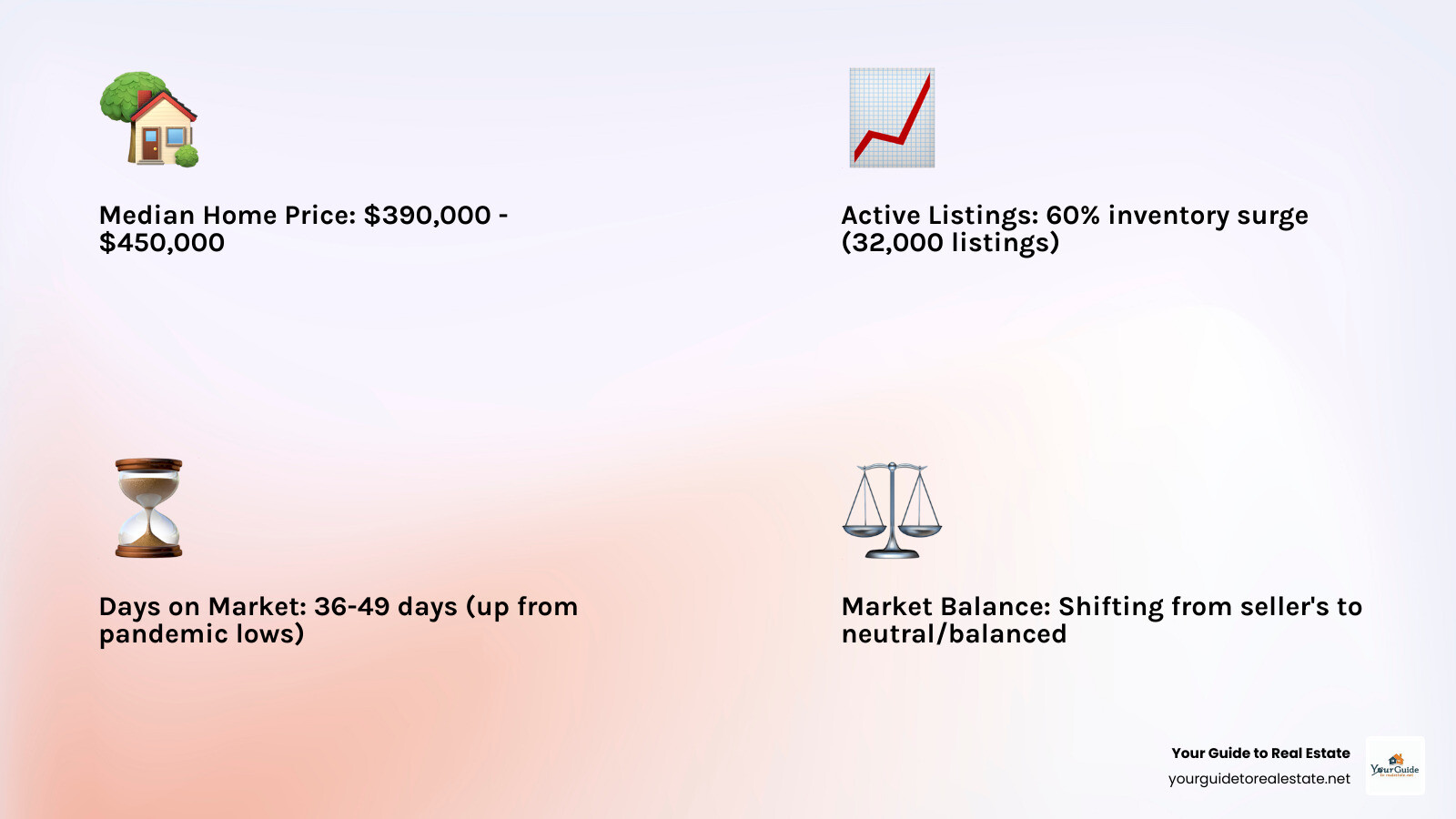
Current Dallas Market Snapshot:
- Median Home Price: $390,000 to $450,000 (varying by data source)
- Inventory Surge: Active listings jumped 60% compared to historical averages
- Days on Market: 36-49 days (up from pandemic lows)
- Price Changes: Mixed signals with some sources showing slight increases, others modest declines
- Market Balance: Shifting toward neutral territory with 3.9 months of supply
This change represents what experts call a market recalibration rather than a collapse. After years of bidding wars and record price growth between 2017 and 2025 – when home values surged from $185,000 to $331,000 – Dallas is settling into a more sustainable rhythm.
The driving forces behind this shift are clear: liftd mortgage rates hovering around 6.5-7%, a wave of new construction hitting the market, and affordability pressures that have pushed some buyers to the sidelines. Yet Dallas maintains its economic resilience, with job growth above the national average and continued population expansion of over 90,000 new residents in 2024.
For buyers, this means more choices and negotiating power. For sellers, it requires realistic pricing and patience. For investors, it presents opportunities in a market that’s cooling but not crashing.
Current State of the Dallas Real Estate Market

The Dallas real estate market is experiencing what experts call a market recalibration – and honestly, it’s about time! After years of white-knuckle bidding wars and homes disappearing faster than free donuts at an office meeting, we’re finally seeing some breathing room.
Think back to the pandemic era when buyers would tour a home at 10 AM and need an offer submitted by noon to have any chance. Those days feel like a fever dream now. The market has shifted from that intense seller’s paradise to something much more balanced and, frankly, more humane for everyone involved.
This cooling isn’t a dramatic crash – it’s more like Dallas real estate taking a well-deserved breather. Rising interest rates around 6.5-7% have certainly played their part, along with a surge of new construction finally hitting the market. The result? Buyers have choices again, and sellers need to be a bit more strategic about their approach.
The shift brings both challenges and opportunities. Affordability pressures remain real, especially with mortgage rates significantly higher than the 2-3% rates we saw during the pandemic. But for those who can steer these waters, there are genuine opportunities emerging in a market that’s cooling but still fundamentally strong.
Understanding these dynamics becomes crucial whether you’re buying your first home or your fifth investment property. A solid Valuation and Market Analysis in Real Estate can help you make sense of where we are and where we’re headed.
Key Price Trends in the Dallas Real Estate Market
When we dive into the numbers, the Dallas real estate market tells a story of stabilization rather than dramatic swings. The current median home price varies depending on the data source and measurement period, but most figures fall between $390,000 and $518,000.
Here’s where it gets interesting – and why you shouldn’t panic over conflicting headlines. Some reports show the median at $390,000 with a -2.3% year-over-year change, while others point to $450,000 with a +1.1% increase. More recent data shows figures as high as $518,320 with a 5.9% year-over-year jump.
These differences aren’t errors; they reflect different methodologies, timeframes, and whether they’re looking at listing prices versus actual sales. The key takeaway is that we’re seeing modest fluctuations rather than dramatic crashes or spikes.
The median price per square foot ranges from $228 to $265, with small year-over-year changes typically under 2%. This metric is particularly telling because it accounts for the mix of home sizes hitting the market, including new construction on smaller lots.
One number that really shows the market’s shift is the sale-to-list price ratio. Currently sitting at 96.29%, it’s down 1.3 percentage points from last year. Translation? Buyers have some negotiating power again! Only 12.7% of homes are selling above asking price now, compared to the 34% we saw at the market’s peak.
Perhaps most telling is that 38.69% of homes have had price reductions – a clear sign that sellers are adjusting their expectations to meet current market realities.
Inventory Levels and Days on Market
Here’s where the Dallas real estate market story gets really interesting. Active listings have surged to almost 32,000 – that’s a whopping 60% increase compared to the historical July average of 20,000 going back to 2017.
To put this in perspective, we haven’t seen inventory levels this high since 2011-12, during the tail end of the last major market downturn. It’s like going from a drought to having actual options again!
This inventory surge comes largely from new construction finally catching up with demand. Builders who ramped up during the pandemic are now delivering homes into a market that’s no longer desperate for every available property.
The impact on average days on market has been dramatic. Homes now spend 36 to 49 days on the market, depending on the source, compared to the pandemic lows when properties would go pending in under 22 days. The median days on market recently was 25.88 days, up from 19.79 days last year.
This extended timeline is actually healthy for everyone involved. Buyers can take their time with inspections, really think through their decisions, and even – imagine this – negotiate on price. For sellers, it means the importance of strategic pricing and proper presentation has returned with a vengeance.
The market is behaving more like, well, a normal market again. For deeper insights into these national trends affecting Dallas, check out our U.S. Housing Market Update 2025: Prices, Inventory, and Buyer Behavior.
Migration and Demographic Drivers
Despite the market cooldown, Dallas continues to be a population and job magnet – and that’s what keeps the Dallas real estate market fundamentally strong.
The economic foundation here is rock-solid. Major employers like AT&T, JPMorgan Chase, Southwest Airlines, and Texas Instruments provide stability that many other markets envy. The region’s diversified economy spans finance, technology, healthcare, logistics, and energy – meaning we’re not dependent on any single industry.
The job numbers tell an impressive story. Dallas posted 6.5% job growth in February 2024, crushing the national average of 1.7%. The metroplex added over 154,000 new jobs in 2023 alone. That kind of employment growth naturally translates into housing demand.
Population growth remains strong too. The Dallas metro welcomed over 90,000 new residents in 2024, pushing the projected population to 8.29 million by year’s end. About 2% of homebuyers are searching to move into Dallas from other metros, with Los Angeles, Washington, and San Francisco leading the pack.
Interestingly, while 29% of Dallas homebuyers look to move out of the metro, a strong 71% want to stay within the area. This shows the kind of local loyalty that keeps demand steady even when market conditions shift.
The challenge? Interest rates hovering around 6.5-7% have definitely impacted affordability. As one real estate broker notes, “In Dallas, affordability is becoming a serious concern. High home prices, paired with the current high rates, are leading to fewer buyers in the market.”
This affordability pressure explains much of the inventory increase and price moderation we’re seeing. But with Dallas’s strong economic fundamentals and continued population growth, the foundation remains solid even as the market adjusts to new realities.
Neighborhood Deep Dive: Where to Buy and Invest
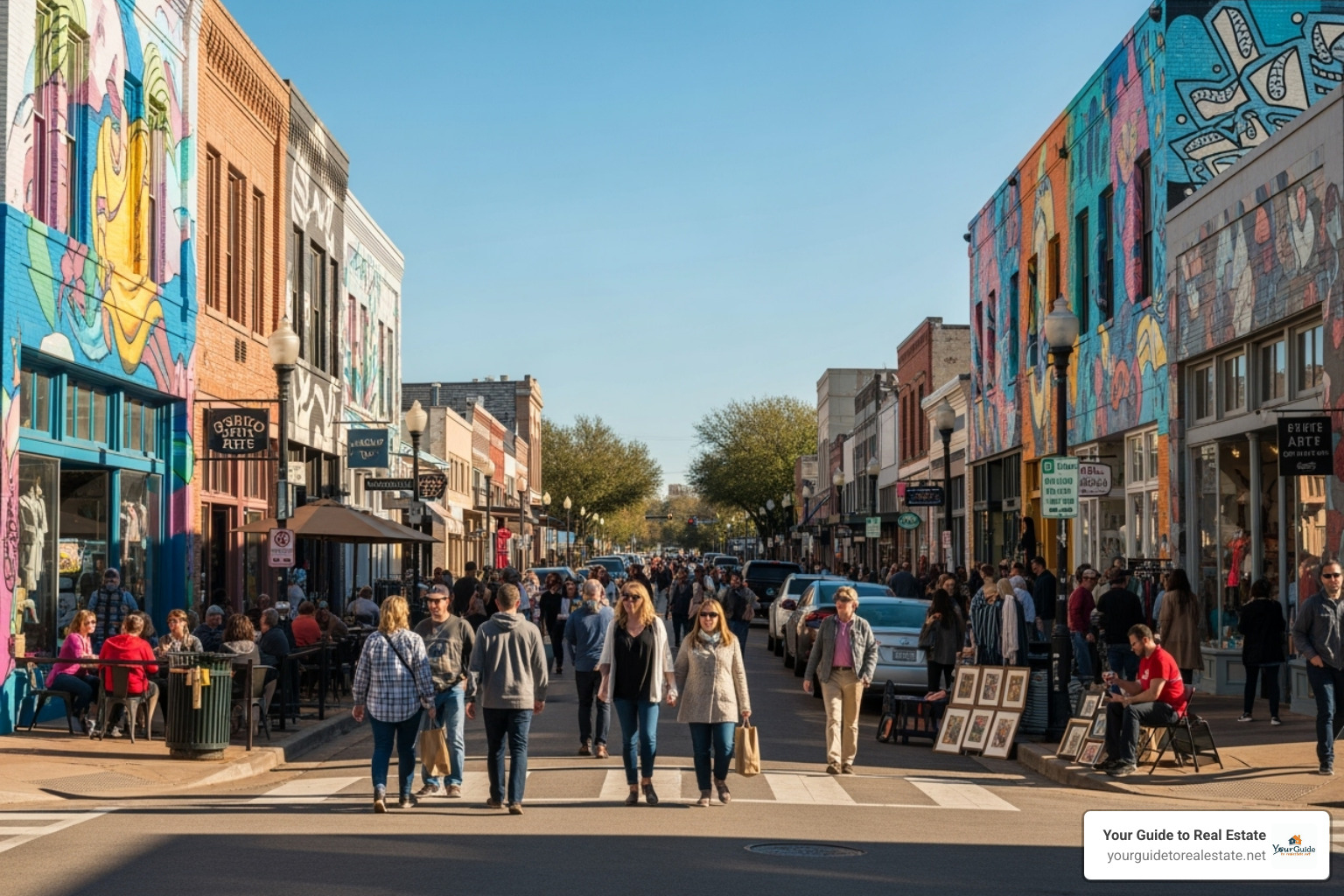
Here’s where the Dallas real estate market gets really interesting – the neighborhoods tell completely different stories. You could drive ten minutes in any direction and find yourself in a completely different world, with home prices that vary by hundreds of thousands of dollars.
This diversity is what makes Dallas so appealing to both buyers and investors. Whether you’re looking for a luxury estate, a trendy urban loft, or a family-friendly suburb, Dallas delivers. But here’s the thing – location truly is everything in this market.
School quality remains the golden ticket for property values. A home in a top-rated school district can command a 15-20% premium over similar properties in average districts. Walkability and transit access are increasingly important too, especially as younger buyers prioritize lifestyle over square footage. Areas with high walk scores and easy highway access tend to weather market shifts better than isolated suburbs.
For anyone considering their next move in real estate, understanding these neighborhood dynamics isn’t just helpful – it’s essential. Smart Property Investment starts with knowing where to look.
Hot, Pricey, and Up-and-Coming Areas
Let’s take a tour through Dallas’s most compelling neighborhoods, each with its own personality and price point.
Highland Park sits at the top of the luxury food chain, where average home prices exceed $2.2 million. This isn’t just expensive – it’s Dallas royalty. Think manicured lawns that look like golf courses, homes that could double as small hotels, and shopping districts where parking costs more than most people’s monthly coffee budget. For investors, Highland Park represents capital preservation at its finest.
Uptown pulses with urban energy and offers something completely different. At around $700,000 average, you’re buying into Dallas’s most walkable neighborhood. High-rise condos overlook busy streets filled with restaurants, bars, and young professionals. It’s perfect for investors targeting the rental market or buyers who want to walk to dinner instead of driving to the suburbs.
Just next door, Oak Lawn provides a slightly more affordable entry point at $550,000 average. It maintains that urban vibe while offering a stronger sense of community. The diversity here is remarkable, and you’re still close enough to downtown to make it work without a car.
The Bishop Arts District in North Oak Cliff has become Dallas’s cultural darling. At $420,000 average, it’s where artists, young families, and coffee enthusiasts have created something special. Independent shops, galleries, and restaurants give it a neighborhood feel that’s hard to find elsewhere. For buyers looking for character over cookie-cutter, this area delivers.
Far North Dallas offers the suburban dream with city convenience. Prices typically range $350,000 to $500,000, making it accessible for families who need good schools and reasonable commutes. It’s not flashy, but it’s consistently reliable – the steady performer of Dallas real estate.
The real excitement lies in emerging areas like West Dallas, The Cedars, and East Oak Cliff. These neighborhoods are changing thanks to infrastructure investments and zoning changes. West Dallas, once industrial, now attracts developers and young professionals looking for the next big thing. These areas offer the best potential for appreciation, though they require more research and risk tolerance.
School ratings from GreatSchools consistently predict home value stability. Families will pay extra for quality education, making these neighborhoods particularly resilient when markets shift.
Rental Market Dynamics in the Dallas Real Estate Market
The rental side of the Dallas real estate market tells an equally compelling story. While everyone focuses on home sales, the rental market often provides the clearest picture of where the city is headed.
Dallas maintains its cost-of-living advantage over coastal cities, even with recent increases. A studio apartment averages $1,345 monthly, while one-bedroom units run around $1,585. Two-bedroom apartments typically cost $1,935, and three-bedroom units average $2,395. These citywide averages mask significant neighborhood variations – that one-bedroom in Uptown might cost $2,075, while the same space in East Oak Cliff could be $1,325.
The year-over-year rent increase of 4.1% reflects steady demand without the explosive growth that makes headlines. It’s sustainable growth that benefits both landlords and the broader economy.
Vacancy rates hover around 5.0%, which signals a healthy market. Too low, and renters get squeezed. Too high, and landlords struggle. Dallas hits that sweet spot where supply and demand stay balanced.
Several forces drive this rental demand. The continuous population growth brings new residents who typically rent first. Rising home prices and interest rates keep many potential buyers in the rental pool longer. The large millennial demographic often chooses renting for flexibility, especially in urban areas. Most importantly, Dallas’s stable job market provides the income security that makes rental payments reliable.
For investors, this creates attractive opportunities. The rent-to-price ratios in Dallas often make more sense than in coastal markets, while long-term appreciation potential remains strong. There’s particularly strong demand for workforce housing – quality rentals for middle-income earners who keep the city running.
The luxury rental market deserves attention too, especially as high-end buyers adjust their strategies. For insights into what’s driving this segment, check out our analysis of Luxury Real Estate Trends in 2025: What High-End Buyers Want Now.
Market Outlook and Expert Forecasts for 2025-2026

Looking ahead, the Dallas real estate market is painting a picture that’s far more nuanced than the simple “crash or boom” narrative you might see in headlines. Think of it less like a dramatic cliff dive and more like a skilled pilot bringing a plane in for a smooth landing after years of soaring at high altitude.
The expert predictions for 2025-2026 tell an interesting story of divergent views. Some analysts are forecasting a 7.8 percent drop in Dallas-Fort Worth home values over the next 12 months. Others take a more conservative approach, projecting a decrease of 0.6% to 2.9% by mid-2025. But here’s where it gets really interesting – other market watchers are actually predicting the opposite, suggesting home prices could increase by 2% to 4% over the next year, potentially pushing the median to somewhere between $427,380 and $435,760 by early 2026.
What’s driving these mixed signals? It’s the classic tug-of-war between market forces. On one side, we have liftd interest rates, that dramatic 60% surge in inventory, and affordability challenges that are giving some buyers pause. On the other side, Dallas’s strong job growth, continuous population expansion of over 90,000 new residents in 2024, and that rock-solid diversified economy are providing steady support.
The reality is that Dallas isn’t experiencing a market collapse – it’s going through what economists call a healthy correction. After the wild ride of pandemic-era price growth, the market is finding its natural rhythm again. For a deeper understanding of the broader trends influencing this shift, our Top 7 Real Estate Trends Shaping 2025 and Beyond offers valuable insights.
Opportunities for Buyers
If you’ve been sitting on the sidelines waiting for your moment, the current Dallas real estate market might just be serving up the opportunity you’ve been hoping for. After years of feeling like you were competing in the real estate equivalent of The Hunger Games, buyers are finally getting some breathing room.
The most obvious advantage is that increased inventory we keep talking about. With nearly 32,000 active listings – remember, that’s 60% more than historical averages – you actually have choices now. No more settling for “good enough” because it was the only house available in your price range.
This inventory surge has created a beautiful ripple effect: reduced competition. Gone are the days when you’d show up to an open house and find yourself elbow-to-elbow with 20 other potential buyers, all clutching pre-approval letters and ready to bid over asking price. The frantic energy has cooled to a more manageable simmer.
Perhaps most importantly, buyers now have real negotiating power. With that sale-to-list price ratio sitting at 96.29% and only 12.7% of homes selling above asking price (compared to much higher percentages in recent years), you can actually negotiate on price, request repairs, or ask for closing cost assistance without being laughed out of the room.
The strategic approach now is to be well-prepared but patient. Get your financing in order, know your must-haves versus nice-to-haves, and be ready to move when you find the right property. But unlike the pandemic era, you don’t have to make life-changing decisions in 24 hours. If you’re just starting this journey, our First-Time Homebuyer Tips can help you steer these new market dynamics with confidence.
Challenges for Sellers
While buyers are enjoying their new advantages, sellers in today’s Dallas real estate market are facing a reality check that might feel a bit jarring if you remember the “good old days” of 2020-2022. The market hasn’t turned against you – it’s just demanding more strategy and patience.
The biggest shift revolves around pricing strategies. The “price it high and see what happens” approach that might have worked when inventory was scarce will now likely backfire. With 38.69% of homes experiencing price reductions, the market is clearly telling us that overpriced properties get punished quickly. You need to price your home competitively from day one, based on recent comparable sales, not wishful thinking or what your neighbor got last year.
Staging and presentation have become absolutely critical. When buyers have more choices, they become pickier. That means your home needs to shine brighter than the competition. Fresh paint, decluttered spaces, and strategic staging aren’t just nice-to-haves anymore – they’re essential for standing out in a crowded field.
The hardest part for many sellers is managing expectations. If you bought your home in 2019 and watched its value soar during the pandemic, it’s natural to expect that trajectory to continue indefinitely. But markets are cyclical, and what we’re seeing now is a return to more normal appreciation patterns rather than the unprecedented growth of recent years.
The key is embracing patience and flexibility. Your home will likely take longer to sell than it would have two years ago – remember, we’re seeing 36-49 days on market compared to pandemic lows of under 22 days. You might need to negotiate on price or terms. But with Dallas’s strong economic fundamentals and continued population growth, quality properties are still selling – they just require a more thoughtful approach.
For comprehensive guidance on navigating these new seller challenges, our The Ultimate Guide to Selling Your Home: Tips, Timelines, and Tools provides the strategic framework you need to succeed in today’s market.
Frequently Asked Questions about the Dallas Housing Market
Is Dallas currently in a housing bubble?
This is probably the most common question we hear about the Dallas real estate market right now, and honestly, it’s completely understandable why people are concerned. After watching home prices climb dramatically over the past few years, many folks are wondering if we’re headed for a dramatic crash.
The short answer is no, Dallas isn’t in a housing bubble. What we’re seeing instead is a market correction – think of it as the market taking a deep breath after running a marathon. While we do have higher supply levels and some price moderation happening, the fundamentals tell a different story than what we saw during the actual housing bubble of 2008.
Dallas’s economic foundation remains incredibly strong. We’ve got a diversified job market, continuous population growth, and major employers that aren’t going anywhere. The housing inventory, while higher than recent years, is still relatively manageable when you consider the long-term demand drivers. This suggests we’re experiencing a healthy recalibration rather than a bubble that’s about to burst.
Which Dallas neighborhoods offer the best investment potential?
If you’re looking at investment opportunities in the Dallas real estate market, there are some exciting areas worth considering. The emerging submarkets are where we’re seeing the most interesting action right now.
West Dallas, The Cedars, and East Oak Cliff are showing particularly strong appreciation potential, largely thanks to significant infrastructure investments happening in these areas. These neighborhoods are changing from overlooked areas into vibrant communities, and smart investors are taking notice.
For those seeking more stable, consistent returns, Far North Dallas offers excellent rental income potential with steady mid-tier growth. It’s not as flashy as some of the emerging areas, but it provides the kind of reliable performance that many investors appreciate.
We’re also seeing strong rental demand in areas like Oak Cliff and Lake Highlands, where home prices remain accessible but the fundamentals are solid. These neighborhoods attract tenants looking for value, which translates to consistent rental income for property owners.
Are home prices in Dallas expected to drop significantly?
This question keeps a lot of people up at night, whether they’re thinking about buying or selling. The honest answer is that forecasts are genuinely mixed, and that’s actually pretty normal in a transitioning market.
Some analysts are predicting a modest price correction of up to 7.8% over the next year, primarily due to affordability pressures and higher interest rates. On the flip side, other experts project a slight increase of 2-4%, suggesting the market will find its balance and continue growing at a more sustainable pace.
What’s important to understand is that most experts agree we’re looking at stabilization rather than a major crash. The Dallas real estate market has strong economic fundamentals supporting it – that job growth, population increase, and economic diversity we keep talking about. These factors create a foundation that’s very different from markets that experience dramatic price drops.
The reality is that we’re likely to see continued adjustments as the market finds its new normal, but the underlying strength of Dallas suggests these will be measured movements rather than dramatic swings.
Your Next Move in the Dallas Market
The Dallas real estate market is experiencing one of its most interesting chapters yet. We’re watching a fascinating transition unfold – from the wild, unpredictable seller’s market of recent years to something much more balanced and, frankly, manageable.
This shift isn’t something to fear. It’s actually creating some incredible opportunities that we haven’t seen in years. Buyers are finally getting a chance to breathe, compare options, and negotiate without feeling like they’re in a pressure cooker. Meanwhile, sellers who approach the market with realistic expectations and solid strategy are still finding success.
Investors are particularly well-positioned right now. The combination of increased inventory, emerging neighborhood growth, and strong rental demand creates a sweet spot for those looking to build long-term wealth through real estate.
What excites us most is how this market rewards informed decision-making. The days of throwing caution to the wind and hoping for the best are behind us. Now, success comes to those who understand the nuances – the neighborhood trends, the pricing strategies, the timing considerations that make all the difference.
At Your Guide to Real Estate, we’ve been helping people steer exactly these kinds of market transitions. Our proven framework takes the guesswork out of buying, selling, or investing, giving you the confidence to make moves that align with your goals. Whether you’re a first-time buyer finally seeing some breathing room, a seller who needs to price strategically, or an investor eyeing those emerging Dallas submarkets, we’re here to guide you through every step.
The Dallas real estate market isn’t just changing – it’s maturing into something more sustainable and opportunity-rich. For a deeper look at what’s ahead, explore our complete Housing Market Forecast.