
Understanding the True Real Estate License Cost Investment
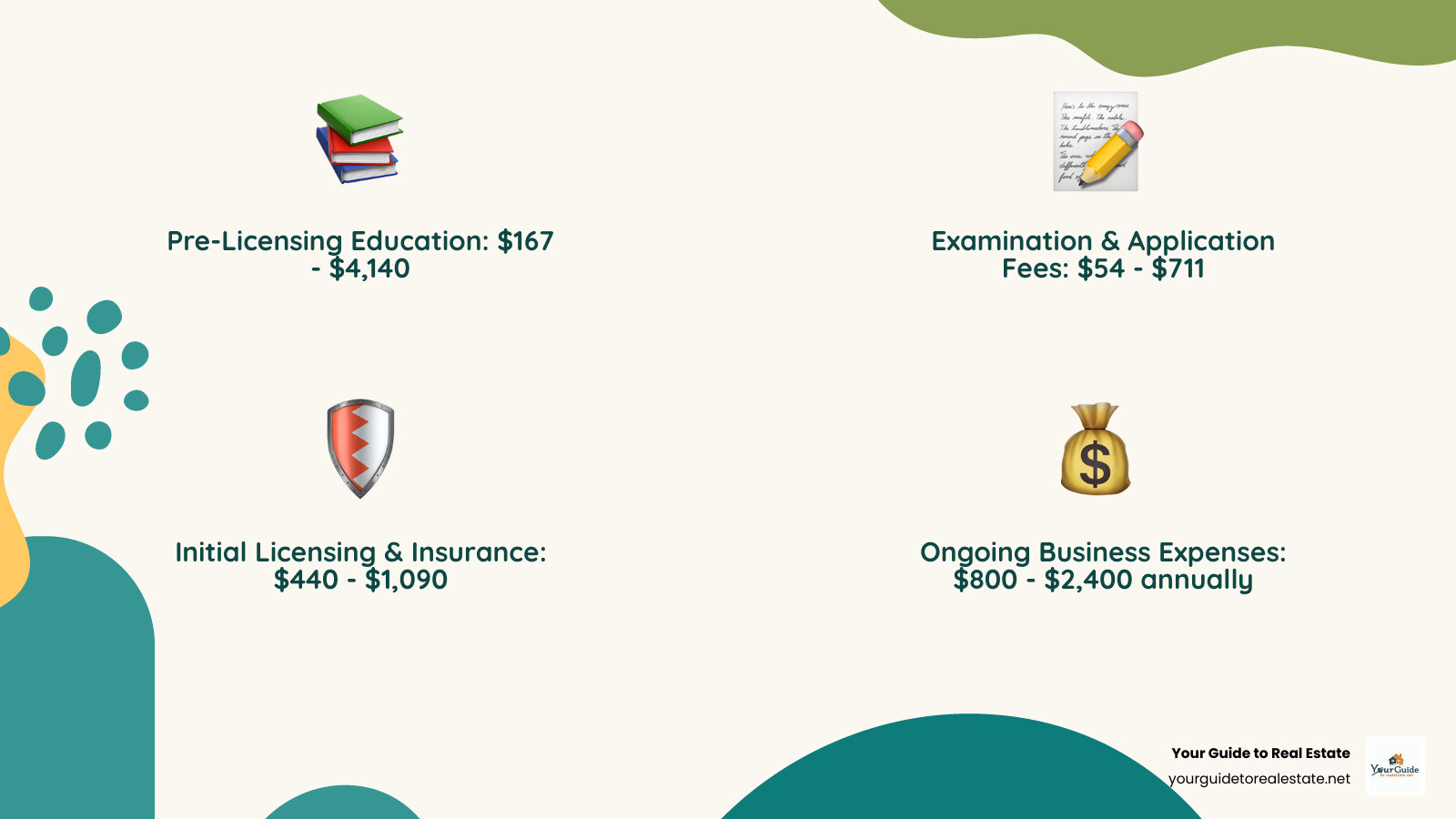
The real estate license cost varies significantly by location, but here’s what you can expect to invest:
Total Initial Investment Range: $325 – $7,500
- Pre-licensing education: $167 – $4,140
- Exam fees: $15 – $121 per attempt
- Application & licensing fees: $39 – $590
- Background checks: $22 – $58
- Initial insurance: $440 – $500
- First-year ongoing costs: $800 – $2,400
Real estate shows like Selling Sunset make the industry look glamorous and effortless. But the reality? Getting licensed requires a real financial investment, and the costs don’t stop once you pass your exam.
Many aspiring agents get shocked by hidden fees they never saw coming. Others underestimate the ongoing expenses needed to actually run a real estate business. Some think they’ll start earning six figures immediately after getting their license.
These misconceptions can derail your real estate career before it even starts.
The truth is that becoming a successful real estate agent requires understanding the full cost picture upfront. When you know what to expect, you can budget properly and avoid financial surprises that might force you to quit before you’ve given your new career a real chance.
Easy real estate license cost glossary:
- real estate valuation
- how much does it cost to build a house
- what does contingent mean in real estate
Myth #1: It’s Just One Upfront Fee
Here’s where many aspiring agents get their first reality check. The real estate license cost isn’t like buying a car or paying for a gym membership – it’s not one simple transaction. Instead, think of it more like going back to school. You’ll pay for courses, then exams, then applications, then insurance. Each step open ups the next one, and each comes with its own price tag.
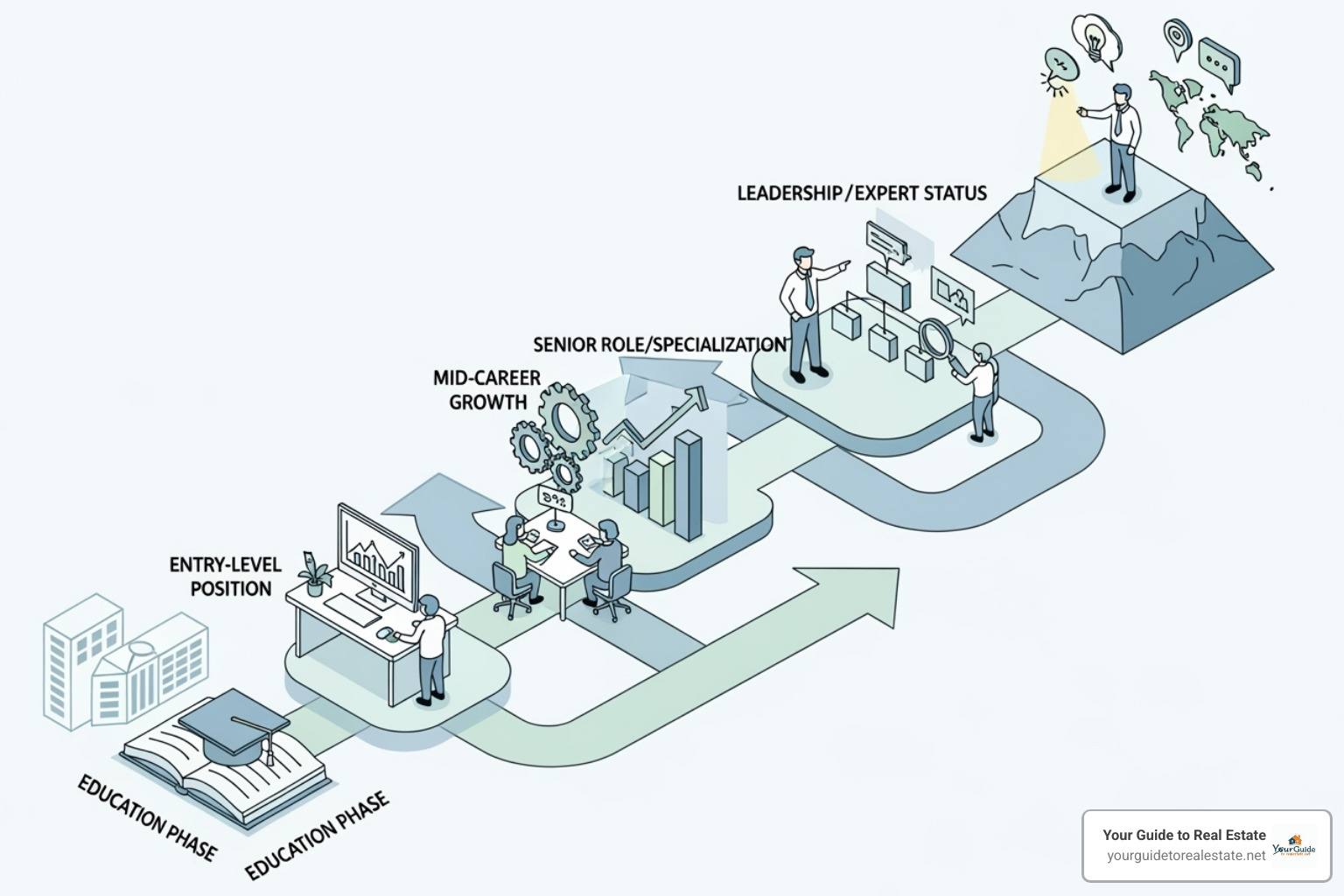
The good news? This phased approach actually makes budgeting easier once you know what’s coming. You can spread out the costs over several months instead of writing one huge check. Let’s break down what you’ll actually pay and when.
The Pre-Licensing Education Phase
Before you can help anyone buy their dream home, you need to learn the ropes. Pre-licensing education is usually your biggest upfront expense, but it’s also the foundation of your entire career.
Course costs vary dramatically depending on where you live. In Florida, you might pay as little as $167 for a 63-hour online course. But in Ontario, Canada, you’re looking at $3,590 to $4,110 for the complete pre-registration program through providers like Humber College.
Here’s what you might expect in different areas:
New York starts around $245 for online courses, though in-person classes can easily top $1,000. Tennessee requires 90 hours of education, with courses starting around $429. Pennsylvania typically ranges from $300 to $650, while Georgia courses start from about $200.
Many schools offer a pay-as-you-go model, which is a lifesaver for your cash flow. Instead of paying everything upfront, you can pay for each course as you take it. For example, Course 1 might cost $600, while a required simulation session could be $855.
When choosing your education provider, don’t just go with the cheapest option. Look at their pass rates and student reviews. A slightly more expensive course that helps you pass the first time is way better than a cheap course that leaves you unprepared. Plus, this is where you’ll start developing your real estate agent skills – make it count!
Examination and Application Fees
After all that studying, it’s time for the moment of truth: your licensing exam. Here’s something your course instructor probably mentioned but bears repeating – many people don’t pass on their first try. That’s totally normal, but it means you should budget for potential retakes.
Exam fees vary wildly by state. New York has one of the lowest fees at just $15 per attempt, while Georgia charges $121 each time you sit for the exam. Florida falls in the middle at about $58, Tennessee charges $43, and Pennsylvania is $40 per attempt. In Ontario, each theory exam costs around $100, with retake fees of $115.
Once you pass (and you will!), you’ll need to apply for your actual license. Application fees are separate from exam fees:
Florida charges about $39 for applications, New York is $65, Tennessee is $90 plus an extra dollar for their education and recovery fund, Pennsylvania combines application and licensing for $107, and Georgia charges $170.
Then comes the background check and fingerprinting. This step protects the integrity of the profession and costs between $22 in Pennsylvania to $58 in Florida. Tennessee typically charges $35, while Georgia is $30.
All these smaller fees add up quickly, turning that “one simple payment” myth into reality. For a complete walkthrough of what to expect, check out the licensing process in your region.
Initial Licensing and Insurance
You’re so close to the finish line! You’ve passed your exam, cleared your background check, and gotten approved. But there are still a few more costs before you can officially start showing homes.
First, you’ll pay your regulatory body fees. In Ontario, that’s a $356 RECO registration application fee, plus a $350 license fee that’s renewed every two years.
Here’s the big one that catches many new agents off guard: Errors & Omissions (E&O) insurance. This protects you if a client sues you for a mistake or oversight. It’s not optional – most states require it, and even if yours doesn’t, you’d be crazy not to have it.
E&O insurance typically runs $440 to $500 annually. Think of it as a safety net that lets you sleep soundly at night. One lawsuit could cost you everything, so this insurance is worth every penny.
Finally, you’ll need to join a brokerage to actually practice real estate. While many brokerages don’t charge new agents upfront fees, some have initial administrative costs or require immediate payment for certain resources. This is where doing your homework pays off – interview several brokerages and understand their complete fee structure before signing anything.
To learn more about choosing the right brokerage, read our guide on What is a Real Estate Brokerage? A Beginner’s Complete Guide.
The bottom line? Your real estate license cost is really an investment spread across multiple phases. Understanding this upfront helps you budget properly and avoid any nasty financial surprises along the way.
Myth #2: The Real Estate License Cost is Uniform Everywhere
Picture this: you’re shopping for the same textbook, but depending on which city you’re in, the price tag could be anywhere from $300 to $7,500. That’s essentially what happens with real estate license cost across different regions! There’s no “one-size-fits-all” price because each state, province, and country has its own unique set of rules, requirements, and fees.
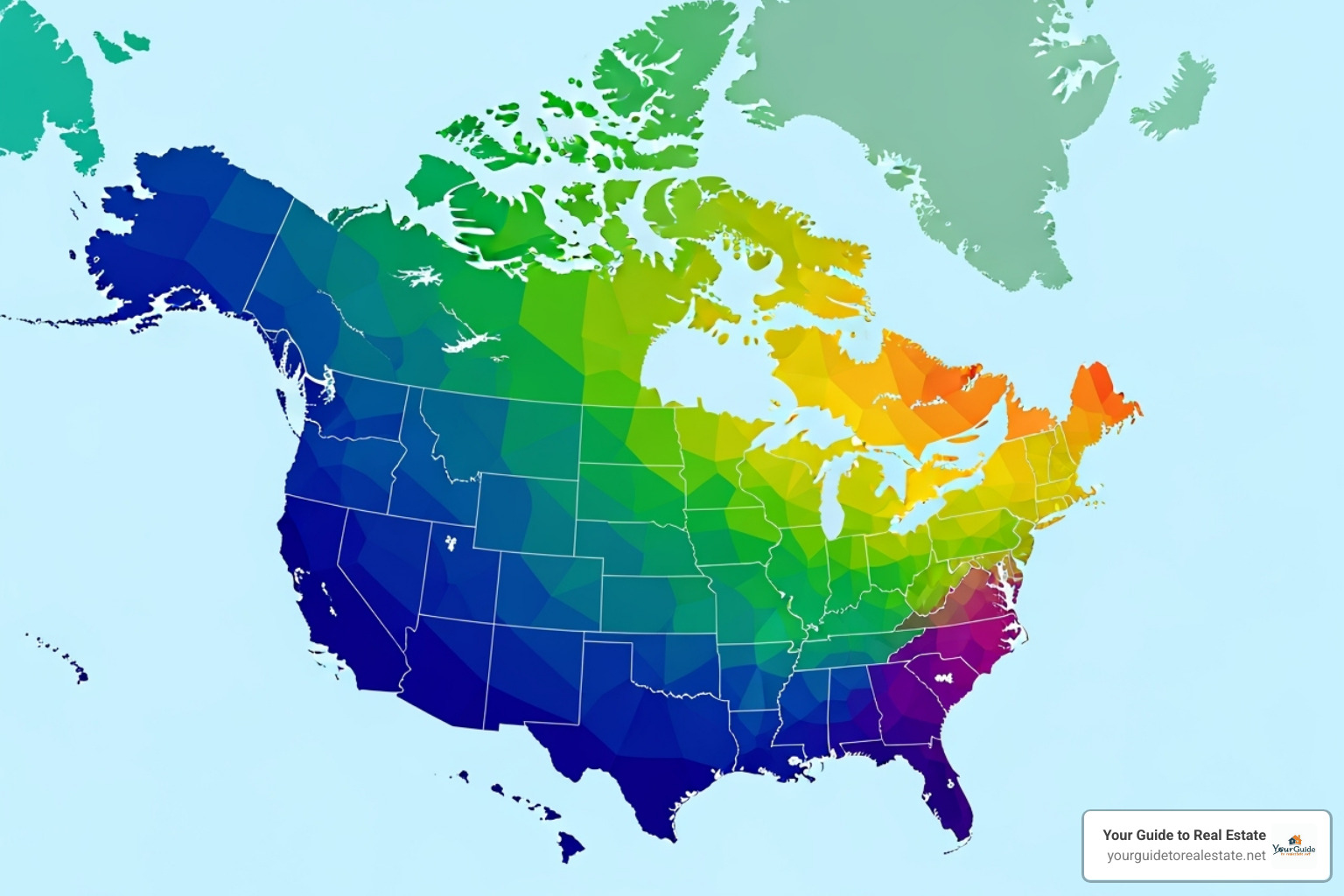
Whether you’re planning to get licensed in Dallas, Texas, or Oklahoma City, Oklahoma, you’ll find that geographic differences play a huge role in your final investment. Each regulatory body sets its own educational hour requirements, exam structures, and ongoing obligations. These decisions directly impact your wallet, creating a patchwork of costs that can surprise even the most prepared aspiring agents.
The regulatory impact goes beyond just fees too. Some areas require more classroom hours, others mandate specific continuing education courses, and many have different insurance requirements. Market factors also influence costs – areas with higher real estate activity might have more expensive MLS fees or association dues.
A Look at Local Licensing Costs
Let’s dive deep into Ontario, Canada, to see how all these pieces fit together. This comprehensive example shows just how detailed (and expensive) the licensing process can become in some regions.
Pre-Registration Phase – Your Educational Foundation:
This is where you’ll invest the most upfront. Through providers like Humber College, this phase ranges from $3,590 to $4,110. You’re not just paying for one course here – you’re investing in a complete educational journey that includes multiple courses and mandatory simulation sessions.
For instance, you’ll take courses like “Real Estate Essentials” and “Residential Real Estate Transactions,” each with their own costs. Then there are the invigilated theory exams at around $100-$115 each. The beauty of Humber’s approach? They offer a “pay as you go” model, so you don’t have to shell out thousands all at once. You can pay for each course and exam as you progress, which definitely helps with cash flow management!
Registration with RECO (Real Estate Council of Ontario) – Making It Official:
Once you’ve conquered your education, it’s time to register with the provincial watchdog. Here’s where you’ll pay:
- RECO Registration Application Fee: approximately $356
- RECO Insurance Fee: around $500 (this covers your mandatory Errors & Omissions insurance)
- RECO License Fee: about $350 (renewed every two years)
Post-Registration Phase – The Learning Continues:
Surprise! The education doesn’t stop once you get your license. Ontario requires a post-registration phase within your first two years. This includes a Compliance e-learning course and two elective courses, costing approximately $570 to $655.
Association Fees – Your Professional Network:
Most agents join organized real estate associations for MLS access and professional development. In Ontario, this typically includes:
- Toronto Regional Real Estate Board (TREB) Registration: around $460 (one-time fee)
- TREB Membership: approximately $859.65 annually
- Canadian Real Estate Association (CREA) / Ontario Real Estate Association (OREA) Registration: about $400 (one-time)
- CREA / OREA Annual Fee: around $400
When you add everything up, the total estimated cost to become a real estate agent in Ontario ranges between $6,910 and $7,500. That’s quite a bit more than some U.S. states!
Comparing the Real Estate License Cost in Different Areas
Now let’s see how Ontario stacks up against other regions, including some key areas we serve in the United States:
| Region | Estimated Total Initial Cost | Key Components |
|---|---|---|
| Ontario, Canada | $6,910 – $7,500 | Comprehensive education ($3,590-$4,110), RECO fees ($1,206), association fees ($1,719-$2,119), post-registration education ($570-$655) |
| British Columbia, Canada | $4,000 – $5,200 | First-time licensing application ($1,630), education varies by provider, mandatory insurance, association fees |
| Florida, USA | $325 – $600 | Pre-licensing course ($167), exam ($57.75), application ($39.37), background check ($58.12), plus insurance and association fees |
| New York, USA | $500 – $1,200 | Education ($245-$1,000+), exam ($15), application ($65), fingerprinting, insurance, and board fees |
| Texas (including Dallas area) | $650 – $1,500 | Education varies by provider, exam fees, application costs, background checks, insurance, and local association fees |
| Oklahoma (including Oklahoma City) | $400 – $900 | Generally lower education costs, standard exam and application fees, background checks, insurance requirements |
| Tennessee | $800 – $1,400 | 90-hour education requirement ($429+), exam ($43), application ($91), fingerprinting ($35), insurance, association fees |
| Pennsylvania | $600 – $1,200 | Education ($300-$650), exam ($40), application/license ($107), fingerprinting ($22), insurance, association fees |
| Georgia | $700 – $1,300 | Education varies, exam ($121), license ($170), background check ($30), insurance, association fees |
The differences are striking! While an aspiring agent in Florida might get started for under $600, someone in Ontario could easily invest over $7,000. These variations reflect different educational requirements, regulatory structures, and market conditions.
It’s worth noting that even within Canada, costs vary significantly. British Columbia’s licensing fees can reach $1,630 just for the initial application, while their renewal fees are $1,580. This shows that even neighboring provinces can have vastly different cost structures.
The key takeaway? Always research your specific area’s requirements before budgeting for your real estate license. What works in one market might be completely different just a few hundred miles away!