

Why Staying Updated on Social Security News Can Make or Break Your Financial Future
Social security news affects over 74 million Americans who receive benefits monthly, yet many people only pay attention when problems arise. Here’s what you need to know right now:
Current Social Security Updates (2025):
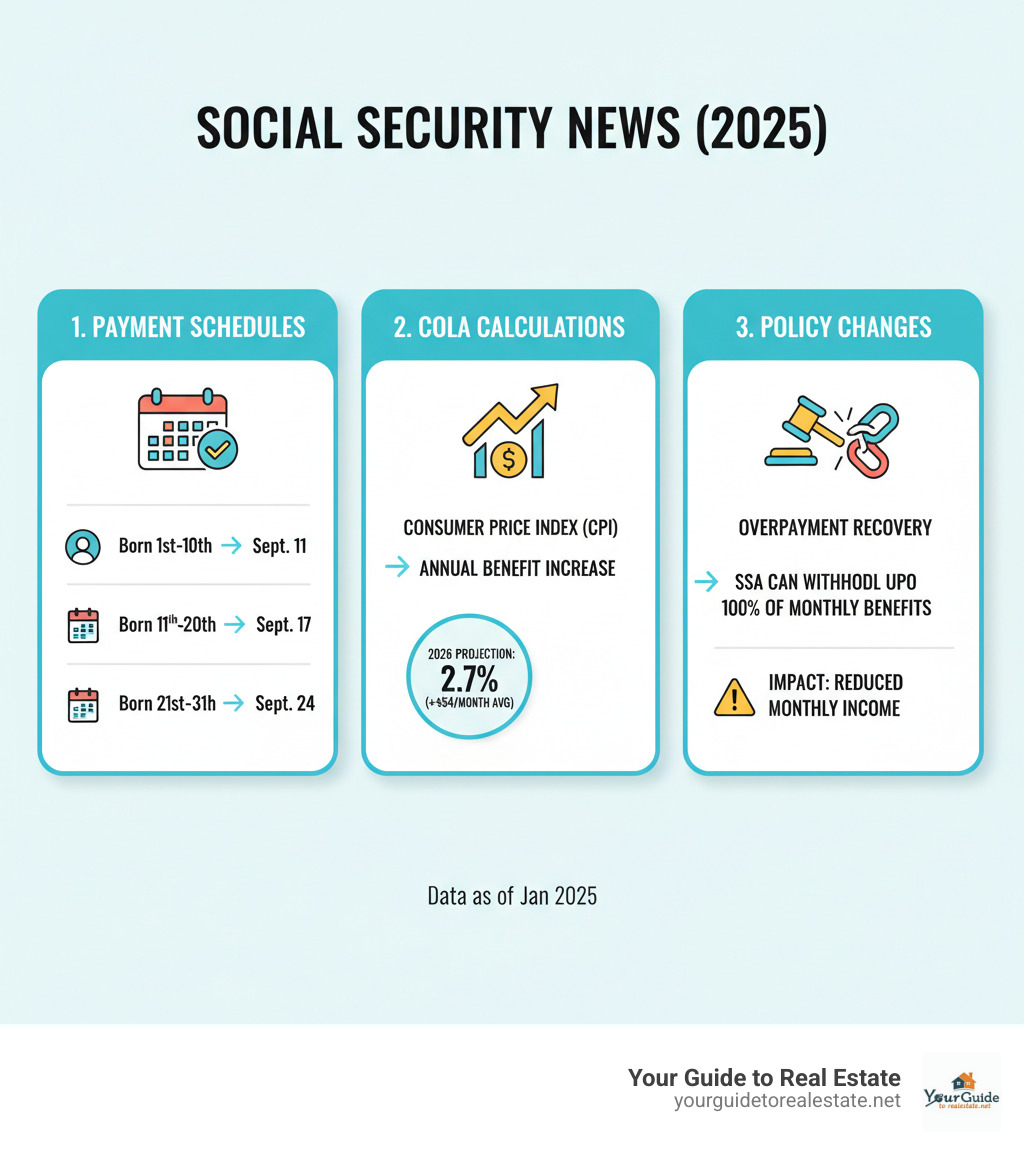
- September payments: Recipients born 11th-20th receive benefits on September 17th
- 2026 COLA projection: Expected 2.7% increase (about $54 more per month for average retiree)
- Overpayment policy: SSA can now withhold 100% of monthly benefits to recover overpayments
- Average benefit: $2,006.69 per month as of January 2025
- Key dates: COLA announcement expected in October 2025
Whether you’re planning to buy your first home, considering downsizing in retirement, or helping aging parents steer their housing options, Social Security changes directly impact your financial capacity.
The recent policy shift allowing the SSA to withhold entire benefit checks for overpayment recovery has caught many recipients off guard. As one advocacy group noted, “Losing a full Social Security check will bolster food insecurity, homelessness, and force individuals to cut back on medication or housing.”
Meanwhile, the projected 2026 COLA increase sounds promising, but experts warn it may not keep pace with rising costs. The buying power of a Social Security dollar has tumbled by 20% from 2010 to 2024, making it crucial to stay informed about these changes.
For real estate decisions, this information is especially important. Social Security benefits often represent the primary income source for retirees making housing choices – from mortgage qualification to property tax planning.
Basic social security news glossary:
Why Social Security News is Essential for Your Financial & Housing Plans
Picture this: You’re sitting at your kitchen table, calculator in hand, trying to figure out if you can afford that cozy retirement home you’ve been dreaming about. Your social security news isn’t just numbers on a government website – it’s the foundation of your entire housing strategy.

Your Social Security benefits represent far more than monthly spending money. For most retirees, these benefits form the backbone of retirement income, directly affecting every major housing decision you’ll make. Whether you’re considering downsizing to a smaller home, staying put and aging in place, or even buying your dream retirement property, Social Security changes ripple through your entire financial picture.
Think about it: your benefits influence mortgage affordability, help cover property taxes, and provide the steady income needed for ongoing home maintenance costs. When you’re planning for the long haul, understanding how these benefits might change becomes absolutely crucial.
Here’s the sobering reality we all need to face: The buying power of a Social Security dollar has fallen by 20% from 2010 to 2024. This isn’t just a statistic – it’s a wake-up call that affects real people making real housing decisions every day.
How COLA Impacts Your Housing Budget
The Cost-of-Living Adjustment (COLA) sounds like a good thing, right? It’s supposed to protect us from inflation and keep our purchasing power steady. But here’s where things get tricky.
While COLA increases are designed as inflation protection, they don’t always keep up with the real costs of living. This creates a frustrating gap between what we receive and what we actually need to maintain our lifestyle – especially when it comes to housing expenses.
The 2026 COLA situation perfectly illustrates this challenge. Even with a projected increase, many beneficiaries face what experts call A double whammy for beneficiaries. Here’s what happens: you get a COLA increase that looks promising on paper, but Medicare Part B premiums eat up most (or sometimes all) of that increase.
For 2026, Medicare Part B premiums are expected to jump by 11.5% to $206.20 per month. Since these premiums are automatically deducted from Social Security checks, your “raise” might actually leave you with less spending money than before. That’s less money available for your mortgage payment, property taxes, home repairs, or that kitchen renovation you’ve been planning.
This purchasing power erosion hits fixed incomes particularly hard. When you’re budgeting for housing on a relatively stable income, these seemingly small changes can force major adjustments to your plans.
Understanding Benefit Amounts and Your Financial Capacity
Let’s talk real numbers. As of January 2025, the average retirement benefit sits at about $2,006.69 per month. But averages only tell part of the story – your actual benefit depends on your work history, lifetime earnings, and when you decide to claim.
The maximum benefits vary dramatically based on your retirement age:
- $2,831 per month if you claim at age 62
- $4,018 per month at full retirement age (67 for most people)
- $5,108 per month if you wait until age 70
These numbers aren’t just interesting facts – they’re the building blocks of your financial planning for real estate. When you’re assessing mortgage affordability, lenders look at your total monthly income, and Social Security benefits play a major role in that calculation.
For income considerations for homeownership, even small changes matter. The projected 2026 increase of about $54 per month for the average retiree might seem modest, but it could be the difference between qualifying for a mortgage and having to adjust your housing dreams.
Understanding these benefit amounts helps you make realistic decisions about what you can afford, whether you’re buying, selling, or simply planning for future housing needs. After all, your home should be a source of comfort and security – not financial stress.
Current Social Security Headlines: Payments, COLA Projections, and Overpayment Rules
The social security news landscape changes constantly, and staying informed helps us make better financial decisions. Whether we’re planning a home purchase or managing our retirement budget, these current headlines directly affect our daily lives and long-term financial stability.

September Payment Schedule and Eligibility
For most of us, the most pressing piece of social security news each month is simply knowing when our payment will arrive. It might seem straightforward, but the Social Security Administration uses a specific system based on our birth date to determine payment timing.
If we were born between the 1st and 10th of any month, our Social Security payment arrives on the second Wednesday of each payment month. Those born between the 11th and 20th receive their benefits on the third Wednesday – which means if this describes you, your September payment arrived on Wednesday, September 17th. Finally, if we were born after the 20th, our payment comes on the fourth Wednesday.
There are a couple of important exceptions to remember. If we started receiving Social Security benefits before May 1997, our payment schedule is different – we get paid on the third day of each month, regardless of when we were born. Also, if we receive Supplemental Security Income (SSI), those payments typically arrive on the first of the month, with adjustments made for weekends and holidays.
The Official SSA payment calendar is always our best resource for accurate dates. If a payment doesn’t show up when expected, the SSA suggests waiting three business days before calling, since weekends and federal holidays don’t count as processing days.
The Latest Social Security News on the 2026 COLA
The 2026 Cost-of-Living Adjustment is generating significant buzz in social security news circles, and for good reason – it directly impacts how far our dollars will stretch next year. While the official announcement won’t come until October, early projections are already helping us plan ahead.
Current estimates suggest we might see a 2.5% COLA increase for 2026. If this projection holds true, the average retired worker would see their monthly benefit increase by approximately $50. For those receiving disability benefits or survivor benefits, the increase would be around $40 per month.
The calculation process itself is quite methodical. The Social Security Administration compares the Consumer Price Index for Urban Wage Earners and Clerical Workers (CPI-W) from the third quarter of this year (July through September) with the same period from last year. If prices have gone up, our benefits get adjusted accordingly. You can dive deeper into this process by reading How Social Security’s COLA is calculated.
However, there’s a catch that affects many of us. The projected Medicare Part B premium increase of 11.5% means we’ll be paying $206.20 per month in 2026, up from the current rate. Since Medicare premiums are automatically deducted from our Social Security checks, this increase could easily wipe out most or all of our COLA benefit. It’s frustrating, but understanding this reality helps us plan our housing and living expenses more accurately.
Navigating the SSA’s Overpayment Recovery Policy
Perhaps the most alarming recent development in social security news involves changes to how the Social Security Administration recovers overpayments. This policy shift has caught many beneficiaries off guard and deserves our careful attention.
Here’s what happened: The SSA is legally required to recover any money it accidentally overpaid to recipients. Previously, after public pressure and stories of severe hardship, the agency had reduced its default withholding rate to just 10% of monthly benefits. This meant if we owed money back, they’d typically take only a small portion of our check each month.
That’s changed dramatically. The SSA has now reinstated the 100% withholding rule, meaning they can take our entire monthly Social Security payment to recover overpayments. This policy went into effect around July 2025, and advocacy groups are understandably concerned about the potential for severe financial hardship.
The good news is that we’re not powerless if we face an overpayment situation. If we receive an overpayment notice, we can call the SSA at 1-800-772-1213 to request a lower recovery rate based on our financial circumstances. We can also appeal the decision entirely if we believe the overpayment was an error or wasn’t our fault.
It’s worth noting that overpayments can happen for various reasons – changes in income we didn’t report promptly, errors in calculating benefits, or even administrative mistakes on the SSA’s part. The key is to respond quickly and know our options. The SSA provides more details about this policy change in their blog post: SSA to reinstate overpayment recovery rate.
Legitimate SSA communications come by mail, not through threatening phone calls or demands for immediate payment via gift cards. Stay vigilant and always verify any suspicious communications directly with the SSA.
5 Smart Ways to Get Reliable Social Security Updates
In an age of information overload and rampant scams, knowing where to find trustworthy social security news is paramount. We need official sources and reputable outlets to ensure we’re making informed decisions about our benefits, especially when our housing plans depend on them.
1. Bookmark the Official SSA Website and Blog
When it comes to social security news, there’s no substitute for going straight to the horse’s mouth. The Social Security Administration’s official website at SSA.gov should be your first bookmark and your most trusted source for accurate information.
Think of SSA.gov as your one-stop shop for everything Social Security. Here’s where you’ll find comprehensive information about benefits, eligibility requirements, and helpful calculators to estimate your future payments. The site also houses all the official press releases – those important announcements that can affect your financial planning.
One of the most valuable features is the SSA Blog, which takes complex policy changes and explains them in everyday language. For example, when you need your annual benefit statement, the blog offers step-by-step guidance on how to Get your benefit statement online. No more waiting for mail or wondering if you’ve received the right information.
The website also provides dedicated online resources for claimants, including their recently redesigned “Representing Claimants” webpage. This is particularly helpful if you’re assisting aging parents or family members with their Social Security matters.
By making SSA.gov your primary source for social security news, you’re protecting yourself from the flood of misinformation that circulates online. When major changes happen – like COLA announcements or policy shifts – you’ll get the facts directly from the source, not filtered through potentially unreliable third parties.
When it comes to decisions that could affect your housing budget or retirement planning, accuracy matters. The official SSA website ensures you’re working with the most current and reliable information available.
2. Subscribe to Official Email Newsletters
Getting social security news delivered straight to your inbox is one of the smartest moves you can make. Think about it – instead of remembering to check websites or wondering if you missed something important, the information comes to you automatically.
The SSA makes this easy with their official email newsletters. These aren’t generic updates filled with fluff. They’re direct communications from the source, giving you the exact information you need when policy changes happen or new announcements are made.
The Social Security Update newsletter covers the big picture stuff – general updates, program changes, and those important reminders that can save you from headaches later. It’s perfect if you want to stay informed without getting overwhelmed by too much detail.
For those who want the full story behind major announcements, the Press Office subscription delivers official press releases. These give you the formal, detailed look at policy shifts and major changes. While they might sound a bit more official, they’re incredibly valuable when you’re trying to understand exactly how changes might affect your benefits or financial planning.
You can subscribe to Social Security Update and subscribe to the Press Office directly through the SSA’s official subscription pages.
Having these updates arrive in your inbox means you’ll never be caught off guard by changes that could impact your housing decisions or retirement planning. It’s like having a personal assistant keeping track of all the important social security news for you – except it’s completely free and comes directly from the official source.
3. Create a ‘my Social Security’ Account
Think of your personal ‘my Social Security’ account as your digital command center for all things related to your benefits. If you haven’t set one up yet, you’re missing out on one of the most powerful tools for managing your social security news and staying informed about changes that affect your financial future.
Creating this free, secure account gives you 24/7 access to your personal Social Security information. No more waiting on hold or making trips to the local office for basic questions. You can handle most tasks right from your kitchen table – the same place where you’re probably planning your next real estate move.
Your online account puts you in control of essential services that directly impact your housing decisions. You can view your complete Social Security Statement, which shows your entire earnings history and provides estimated future benefits based on different retirement scenarios. This information is gold when you’re trying to figure out if you can afford that dream retirement home or whether downsizing makes more sense.
The benefit estimation tools are particularly helpful for real estate planning. You can see exactly how retiring at 62 versus 67 or 70 would affect your monthly income. When you’re considering a mortgage or calculating whether you can afford higher property taxes in that great school district, these numbers make all the difference.
Need your tax documents? Your account lets you instantly access and print your SSA-1099 or SSA-1042S forms. No more waiting weeks for replacements in the mail, especially handy during tax season or when your mortgage lender needs income verification.
If you’re still working while receiving benefits, the account makes it easy to report your wages and avoid those dreaded overpayment situations we discussed earlier. You can also update your personal information like your address or direct deposit details whenever you move – perfect for our clients who are relocating in retirement.
Setting up your account takes just a few minutes, but the peace of mind and control it provides lasts a lifetime. It’s like having a direct line to your financial future, helping you make confident decisions about your housing plans based on real, personalized data rather than guesswork.
4. Follow Reputable News Outlets for Social Security Updates
While the official SSA sources give us the facts, trusted news outlets help us understand what those facts actually mean for our daily lives. Think of it this way – the SSA might announce a 2.7% COLA increase, but it’s the financial journalists who explain why that increase might not cover your rising grocery bills.
Good financial reporting does the heavy lifting for us. When economists debate whether inflation will continue rising or policy experts analyze proposed legislation, reputable news sources translate that complex information into language we can actually use. They’re especially helpful when we’re trying to figure out how social security news might affect our housing decisions.
Expert analysis is where these outlets really shine. They bring in Social Security specialists, retirement planners, and economists who can spot trends and implications that might not be obvious from reading a government press release. For instance, when the SSA announced the return to 100% overpayment recovery, news outlets were quick to interview advocacy groups and explain what this could mean for vulnerable beneficiaries.
Legislative tracking is another area where quality journalism makes a real difference. Bills like the Social Security Fairness Act can seem confusing when you’re reading the actual legislative text. News outlets follow these proposals through Congress, explain who would be affected, and keep us updated on whether they’re likely to pass.
The economic context piece is crucial too. When we see headlines about inflation rates or Consumer Price Index changes, financial news sources help us understand how these numbers connect to our Social Security benefits. They explain why a seemingly good COLA might actually leave us with less spending power after Medicare premiums increase.
The key is choosing outlets known for objective reporting rather than sensationalized headlines. Look for sources that cite their information, interview multiple experts, and acknowledge uncertainty when forecasting future changes. This balanced approach helps us make informed decisions about our benefits and housing plans without getting caught up in unnecessary worry or false optimism.
5. Attend Community Briefings and Educational Events
There’s something special about learning alongside your neighbors, especially when it comes to understanding how social security news affects your daily life. Community briefings and educational events offer a personal touch that you simply can’t get from reading articles online.
Local organizations know this, which is why AARP chapters, senior centers, and community libraries regularly host Social Security seminars. These aren’t stuffy corporate presentations – they’re friendly gatherings where real people share real concerns about their benefits and housing plans.
Expert Q&A sessions are often the highlight of these events. You can finally ask that burning question about how your part-time work affects your benefits, or get clarification on confusing overpayment notices. The experts leading these sessions have heard it all before, and they’re genuinely there to help you understand your options.
Informational seminars dive deep into topics that matter most to people like us. You might attend a session on claiming strategies one month, then learn about Medicare changes the next. These presentations often include real-world examples that make complex social security news much easier to grasp.
The networking aspect shouldn’t be overlooked either. You’ll meet neighbors who are facing similar decisions about downsizing, aging in place, or helping elderly parents steer their benefits. These conversations often lead to valuable insights you won’t find in any official publication.
Localized resources make these events particularly valuable for homeowners. You might find property tax assistance programs for seniors, or learn about local housing counselors who understand how Social Security benefits factor into mortgage applications and refinancing decisions.
Staying engaged through these community events means you’re not just passively reading social security news – you’re actively participating in understanding how these changes affect your ability to make smart housing choices. Plus, there’s usually coffee and cookies, which never hurts when you’re learning about government policies.
Protecting Your Future: Understanding Scams and Proposed Legislation
Staying informed about social security news goes beyond tracking our monthly checks. We also need to protect ourselves from scammers who target Social Security recipients and keep an eye on legislative changes that could affect our benefits. Both directly impact our financial security and our ability to maintain our homes comfortably.

How to Spot and Report Social Security Scams
Unfortunately, Social Security recipients are prime targets for scammers. These criminals know we depend on our benefits and use fear tactics to trick us into giving away money or personal information. The good news? Once we know what to look for, these scams become much easier to spot.
Government imposters are the most common threat. These scammers call pretending to be from the Social Security Administration, often claiming our Social Security number has been “suspended” or that we owe money. They might threaten arrest or say our benefits will stop unless we act immediately. Here’s the truth: the SSA will never threaten us with arrest or demand immediate payment.
Phishing emails and texts are another red flag. We might receive messages claiming there’s a problem with our benefits or asking us to “verify” our information by clicking a link. Real SSA communications come from official .gov addresses, and the agency primarily communicates through regular mail for important matters.
Watch out for fake benefit applications too. Scammers create websites that look official but are designed to steal our personal information. Always go directly to SSA.gov when we need to access our accounts or apply for services.
The biggest warning sign? Demands for unusual payments. The SSA will never ask for payment through gift cards, wire transfers, cryptocurrency, or apps like Cash App. If someone asks for these payment methods, it’s definitely a scam.
Last year, government imposter scams cost Americans $577 million, with about 61% involving Social Security numbers or benefits issues. National ‘Slam the Scam’ Day on March 6th helps raise awareness about these tactics.
If we encounter a suspected scam, we should hang up or delete the message immediately and Report scams to the Office of the Inspector General. Never give out our Social Security number or financial information to unsolicited callers or emails.
Key Legislation to Watch: The Social Security Fairness Act
Legislative changes can significantly impact our benefits, making it important to track key proposals in social security news. The Social Security Fairness Act is one piece of legislation that could mean real money for many public service workers and their families.
This act aims to eliminate two provisions that currently reduce benefits for over 3.2 million people: the Windfall Elimination Provision (WEP) and the Government Pension Offset (GPO). These rules primarily affect teachers, police officers, firefighters, and other public servants who receive pensions from jobs that didn’t pay into Social Security.
The Windfall Elimination Provision reduces Social Security benefits for people who also receive a pension from work that wasn’t covered by Social Security taxes. The Government Pension Offset cuts spousal or survivor benefits for those receiving government pensions from non-covered employment.
Recent positive movement on this legislation has already begun helping some affected individuals. Retroactive payments and increased monthly benefits started flowing to those impacted by WEP and GPO, with most people receiving their one-time retroactive payment by the end of March. The SSA advises beneficiaries to wait until after receiving their April payment before contacting them with questions about their new monthly benefit amounts.
For those affected, passage of the Social Security Fairness Act could mean a significant boost to monthly income. This extra money can make a real difference when it comes to managing housing costs, property taxes, and home maintenance expenses. That’s why tracking this legislative progress is so important for our long-term financial planning.
Frequently Asked Questions about Social Security News
When it comes to social security news, we get a lot of the same questions from folks trying to steer their benefits. These are the answers to the most common concerns we hear, especially from those planning their housing decisions around their Social Security income.
What is the quickest way to get my annual Social Security Benefit Statement (SSA-1099)?
The fastest route is definitely through your personal ‘my Social Security’ account on the SSA’s official website. No waiting around for the mail carrier or worrying about lost documents – you can view, print, and save your statement instantly.
This online approach is particularly helpful when you’re working with mortgage lenders or real estate professionals who need income verification quickly. Having immediate access to your SSA-1099 can speed up the home buying or refinancing process significantly.
If you haven’t set up your online account yet, it’s worth doing. The process is straightforward, and once you’re in, you’ll have 24/7 access to all your Social Security information.
How is the annual Cost-of-Living Adjustment (COLA) calculated?
The COLA calculation might seem mysterious, but it’s actually quite straightforward. The Social Security Administration looks at the Consumer Price Index for Urban Wage Earners and Clerical Workers (CPI-W) – that’s a mouthful, but it’s basically a measure of how much everyday goods and services cost.
Here’s how it works: They compare the CPI-W from the third quarter (July through September) of the current year to the same period from the previous year when a COLA was last determined. If prices have gone up, benefits get adjusted accordingly. If there’s no increase in the CPI-W, there’s no COLA – it’s that simple.
The challenge for many of us is that the CPI-W doesn’t always reflect how seniors actually spend their money. We tend to spend more on healthcare and housing than the average urban wage earner, which means the COLA might not fully keep up with our actual cost increases.
What should I do if I receive a suspicious call or email about my Social Security benefits?
Don’t engage – period. Hang up the phone immediately or delete that email without clicking anything. This is one area where being rude is actually the smart move.
Remember these key facts: The SSA will never threaten you, demand immediate payment, or ask you to pay with gift cards, wire transfers, or cryptocurrency. These are classic scam tactics that unfortunately catch many people off guard.
If you get a suspicious contact, report it to the SSA Office of the Inspector General right away. You’re not just protecting yourself – you’re helping protect others from falling victim to the same scam.
The real SSA communicates primarily through official mail for important matters. When in doubt, hang up and call the official SSA number directly, or visit your local Social Security office. It’s better to be safe than sorry, especially when your financial security and housing stability are on the line.
Conclusion
When we think about social security news, it’s easy to see it as just another government program update. But the truth is, staying informed about these changes is one of the most important things we can do for our financial future – especially when it comes to making smart decisions about our homes.
Throughout this guide, we’ve seen how everything connects. That 2.7% COLA increase might sound great until we realize Medicare premiums could eat up most of it. The new overpayment recovery policy could suddenly leave us without our entire monthly check. Even something as simple as knowing our payment date becomes crucial when we’re timing a mortgage payment or property tax bill.
At Your Guide to Real Estate, we’ve watched countless clients steer these waters. The ones who succeed – who buy their dream homes, downsize comfortably, or age in place with confidence – are the ones who stay informed. They know their exact benefit amounts. They understand how policy changes affect their budgets. They protect themselves from scams that could derail their entire financial plan.
The five strategies we’ve outlined aren’t just suggestions – they’re your lifeline to staying ahead of changes that could impact your housing decisions. Whether you’re bookmarking SSA.gov, creating that my Social Security account, or attending local seminars, each step builds your financial confidence.
Knowledge really is power when it comes to social security news. The more we understand about our benefits, the better equipped we are to make housing choices that align with our actual financial reality – not what we hope it might be.
Your real estate journey deserves a solid foundation, and that foundation starts with understanding exactly where your Social Security benefits stand today and where they’re headed tomorrow. When we stay proactive about this information, we’re not just managing a benefit – we’re taking control of our entire financial future.
For more info about financial planning for your home, we’re here to help you connect all these pieces into a plan that works for your unique situation.