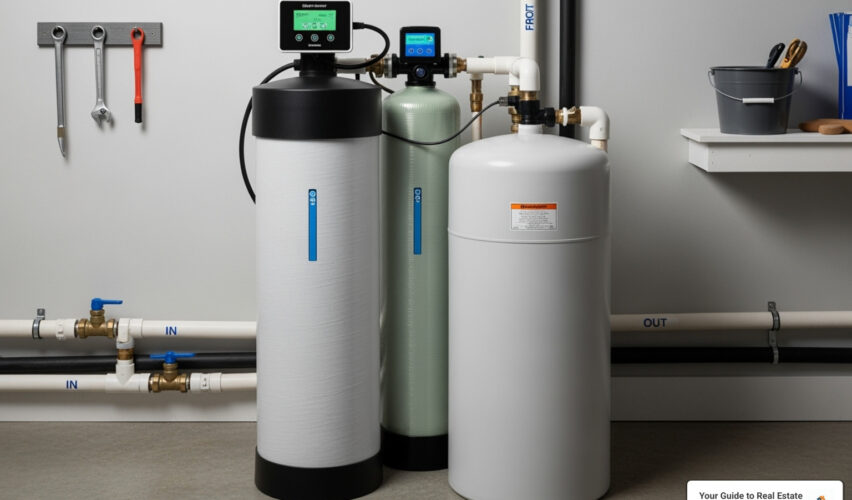
Why Water Softener Maintenance Protects Your Home Investment
Water softener maintenance is essential for protecting your home’s plumbing, appliances, and overall value. Like any home system, water softeners need regular care to function properly and last their full 10-20 year lifespan.
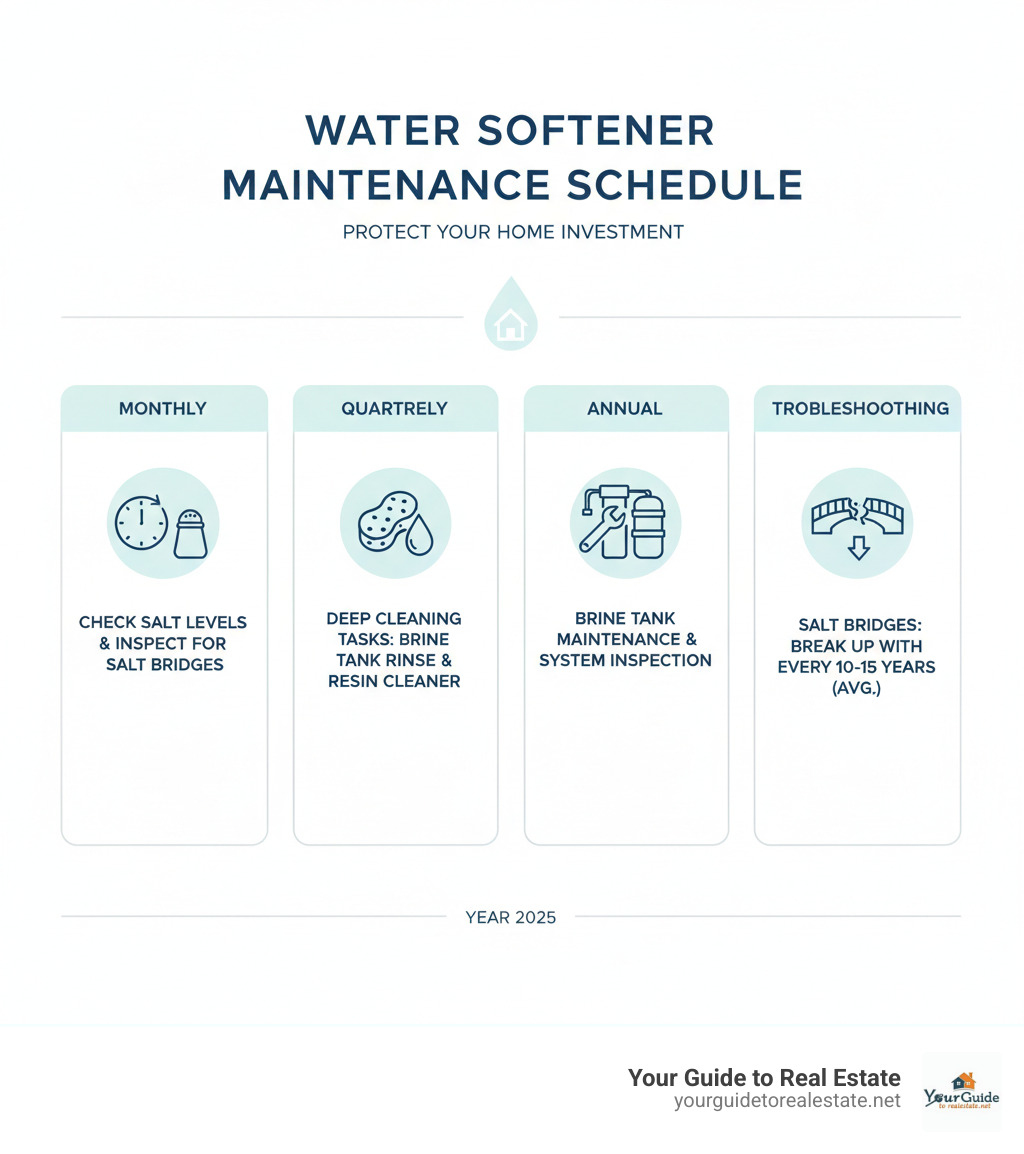
Quick Water Softener Maintenance Schedule:
- Monthly: Check salt levels, inspect for salt bridges
- Every 2-4 months: Refill salt as needed
- Every 4-6 weeks: Test water hardness
- Annually: Clean brine tank and inspect system components
- Every few months: Use resin cleaner if needed
Hard water affects over 85% of American homes, causing limescale buildup that damages appliances, clogs pipes, and reduces efficiency. A properly maintained water softener removes calcium and magnesium minerals through ion exchange, preventing these costly problems.
The average water softener lasts 10-15 years with proper maintenance, but can reach 20 years with excellent care. Regular upkeep saves money on repairs, extends appliance life, and maintains your home’s value – making it a smart investment for any homeowner.
Most maintenance tasks take just minutes to complete. As one homeowner noted: “In appliances, water softeners are wonderfully low-key. With the exception of initially entering your water hardness level, any regeneration timing parameters and refilling the salt, they just hum along and do their job.”
Glossary for water softener maintenance:
Why Regular Maintenance is a Smart Home Investment
Your home is likely your biggest investment, and protecting it means taking care of all its systems – including the ones tucked away in your utility room. Water softener maintenance might not be glamorous, but it’s one of the smartest financial moves you can make as a homeowner.
Think about what happens when hard water runs through your home day after day. Those calcium and magnesium minerals aren’t just making your shower doors spotty – they’re quietly damaging expensive appliances. Your dishwasher, washing machine, and water heater all suffer from limescale buildup that can cut their lifespan in half. With proper water softener maintenance, you’re potentially saving thousands in premature appliance replacements.
Your plumbing system gets the same protection. Hard water minerals build up inside pipes, creating restrictions that reduce water pressure and can eventually cause costly leaks. A well-maintained water softener keeps your pipes clear and your water flowing freely throughout your home.
The energy savings add up quickly too. When your water heater is coated with mineral buildup, it has to work much harder to heat water. Clean, soft water helps appliances run efficiently, which shows up as lower utility bills each month.
You’ll notice immediate benefits in your daily routine as well. Soft water means using up to 50% less soap and detergent for everything from laundry to washing dishes. Your clothes come out brighter, your glassware sparkles without water spots, and your skin and hair feel noticeably softer without those drying minerals.
If you live in areas with particularly hard water – like Phoenix, where levels can reach 17 grains per gallon according to scientific research on water hardness in Phoenix – regular water softener maintenance becomes even more critical. Your system works overtime in these conditions, so proper care ensures it can keep up with the demand.
The bottom line? Consistent water softener maintenance means fewer repair calls, longer-lasting appliances, and a more comfortable home. It’s a small investment of time that pays dividends in protecting your property’s value and your family’s comfort.
Your Quick Water Softener Maintenance Checklist
Taking care of your water softener doesn’t have to eat up your entire weekend. In fact, most water softener maintenance tasks are surprisingly simple and quick. Think of it like checking your car’s oil – a few minutes of attention now can save you from major headaches later.
I’ve organized everything into bite-sized chunks: monthly checks that take less than 15 minutes, and an annual deep clean that you can knock out in under 45 minutes while catching up on your favorite podcast.
Monthly Checks (Under 15 Minutes)
These quick monthly inspections are your first line of defense against water softener problems. Set a reminder on your phone for the first Saturday of each month, and you’ll never have to worry about forgetting.
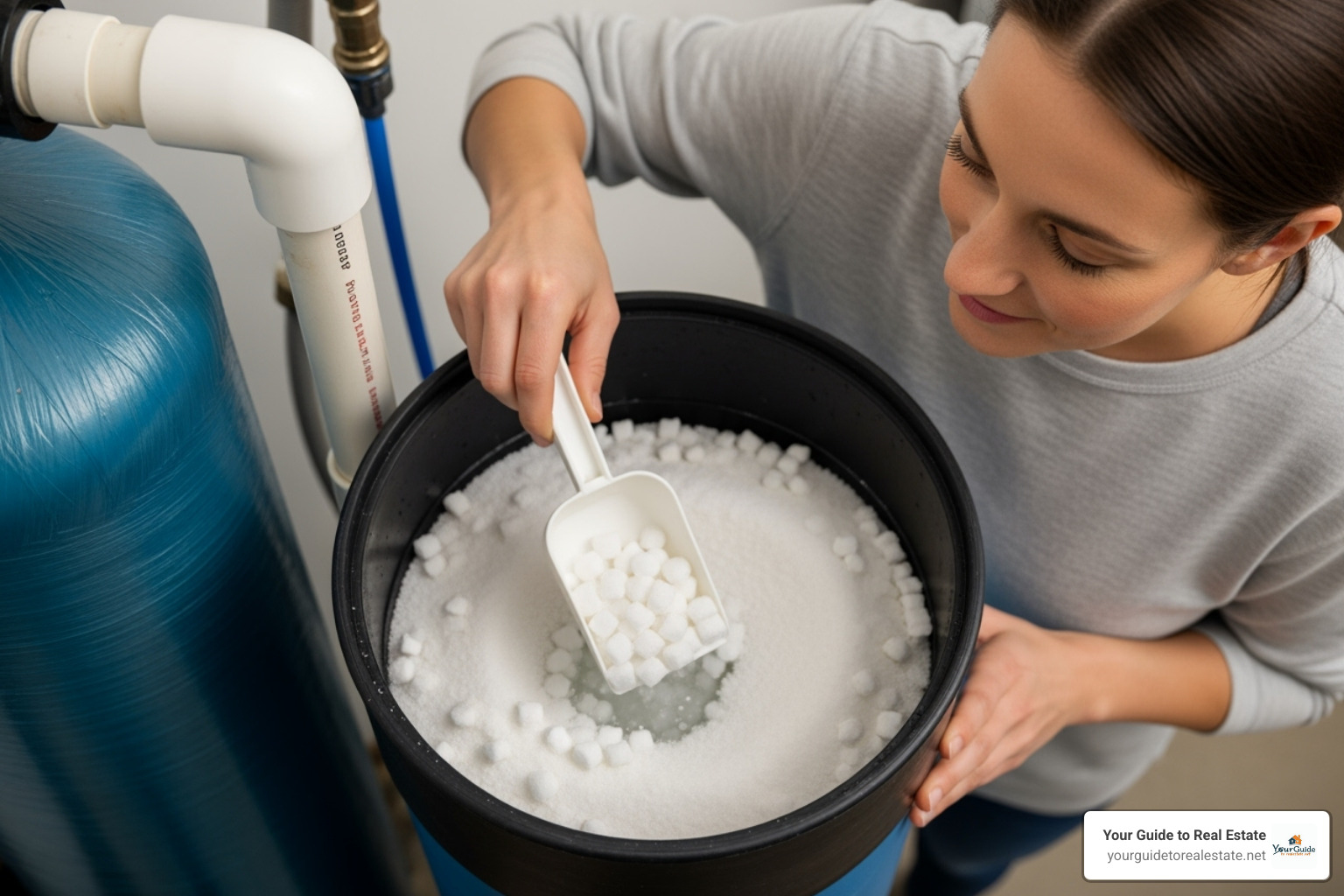
Salt level checking is the most important task on your monthly list. Pop open that brine tank lid and take a look inside. You should see salt covering any visible water – if water is peeking above the salt line, or if your salt level has dropped below the halfway mark, it’s refill time.
Most families need to add salt every two to four months, depending on how much water they use and how hard their water is. For a typical four-person household, you’re probably looking at refilling every couple of months. Just don’t let that salt run completely dry – your equipment won’t appreciate it, and neither will your morning shower when the hard water returns.
While you’re checking salt levels, inspect for salt bridges by gently poking a broom handle or similar tool down into the salt. If it hits something solid before reaching the bottom, you’ve got a salt bridge forming. It’s like a crusty layer that prevents new salt from dissolving properly.
Testing your water softness tells you whether all this maintenance is actually working. You can grab simple test strips or hardness test kits to check if your water measures between 0-3 grains per gallon (that’s the sweet spot for soft water). If you’re consistently reading above 3 gpg, your system might need some attention.
The soap lather test is my favorite old-school method for checking water softness. Wet your hands, grab a bar of soap, and try to work up a good lather. Soft water creates lots of bubbly suds easily, while hard water makes the soap feel slimy and refuses to foam up properly. It’s not as precise as test strips, but it’s a great quick check.
Annual Deep Clean (Under 45 Minutes)
Once a year, your water softener deserves a spa day. This deeper cleaning prevents salt buildup, keeps components running smoothly, and catches small problems before they become expensive ones.
Brine tank cleaning is the main event of your annual maintenance routine. Start by putting your system into bypass mode and unplugging it – you’ll still have water in your home, just not softened water for a bit.
Scoop out any remaining salt, then use a wet/dry vacuum to remove the water and any salt mush that’s accumulated at the bottom. This sludgy stuff can interfere with your system’s performance if left alone.
Clean the inside of the tank with warm water and mild detergent, or mix up a solution of ¼ cup bleach with 2-3 gallons of water. Let it sit for about 15 minutes to kill any bacteria or organic buildup. If you’re on a septic system, stick with soap and water to avoid disrupting your septic bacteria.
Rinse everything thoroughly, reconnect your clean tank with fresh salt, take the system out of bypass mode, and run a manual regeneration cycle to get things flowing again.
Venturi valve cleaning might sound technical, but it’s actually straightforward. This little component draws brine into your resin tank, and when it gets clogged with sediment, your whole system suffers.
Turn off the water supply and unplug your unit, then locate the venturi valve on the control head. Carefully remove the cover and take out the screen, flow plugs, and gasket. Clean everything with running water and a small brush – even a toothpick works great for stubborn debris.
Resin vessel inspection gives you a chance to peek inside and look for any debris or wear. You might spot tiny particles called “fines” – these indicate your resin beads are starting to break down, which is normal after many years of service.
Checking hoses and connections takes just a few minutes but can save you from water damage. Look for drips, leaks, or loose fittings around your system. Tighten anything that seems loose, and make note of any persistent leaks that might need professional attention.
You’ll need a few basic tools for your annual cleaning: a wet/dry vacuum or siphon hose, a bucket, mild detergent or bleach, a scrub brush, a small brush or toothpick for detailed cleaning, a flashlight for seeing inside the tank, and a non-metallic pole or broom handle.
How to Clean a Water Softener: 2025 Guide
Choosing the Right Salt for Your System
Not all salt is created equal when it comes to water softener maintenance. The type you choose can make the difference between smooth operation and constant troubleshooting.
| Salt Type | Purity | Solubility | Cost | Maintenance Impact |
|---|---|---|---|---|
| Evaporated Salt | 99.99% Sodium Chloride | Very High | Highest | Leaves least residue, reduces salt bridges/mushing, optimal efficiency |
| Solar Salt | 99.5% Sodium Chloride | High | Moderate | More soluble than rock salt, good for most systems, fewer impurities than rock |
| Rock Salt | 98-99% Sodium Chloride | Moderate | Lowest | Contains higher impurities, can lead to mushing/residue, messier |
| Potassium Chloride | 99.9% Potassium Chloride | High | Highest | Salt-alternative, environmentally friendly, good for sodium-restricted diets |
Evaporated salt is the gold standard for water softeners. At 99.99% pure sodium chloride, it leaves almost no residue in your brine tank and dramatically reduces salt bridges and mushing problems. Yes, it costs more upfront, but it saves you time and frustration in the long run.
Salt pellets work better than crystals for most systems. Their uniform shape and lower impurity levels prevent the sludgy buildup that makes cleaning such a chore. Rock salt might be the cheapest option, but its higher impurity content often creates more mess than the savings are worth.
Preventing salt problems comes down to using quality salt and maintaining proper levels. Keep your tank at least half full but don’t overfill it – too much salt limits movement and causes older salt to stick to the walls, creating exactly the problems you’re trying to avoid.
Troubleshooting and Advanced Water Softener Maintenance
Even the most well-maintained water softener can sometimes throw you a curveball. Don’t worry – most issues are easier to fix than you might think! Knowing how to spot trouble early and tackle common problems can save you from expensive service calls and keep your system running smoothly.
The most obvious signs that your softener needs attention are pretty straightforward. If your water softener maintenance routine has been on point but you’re suddenly dealing with hard water again, spotty dishes, or that familiar soap scum buildup, something’s definitely amiss. You might also notice low water pressure throughout your home, mysterious leaks around the unit, or unusual grinding or clicking noises during regeneration cycles.
Fixing Common Salt-Related Issues
Here’s the thing about salt-related problems – they’re incredibly common, but they’re also some of the easiest issues to fix yourself. Most homeowners can handle these with just a few basic tools and a little patience.
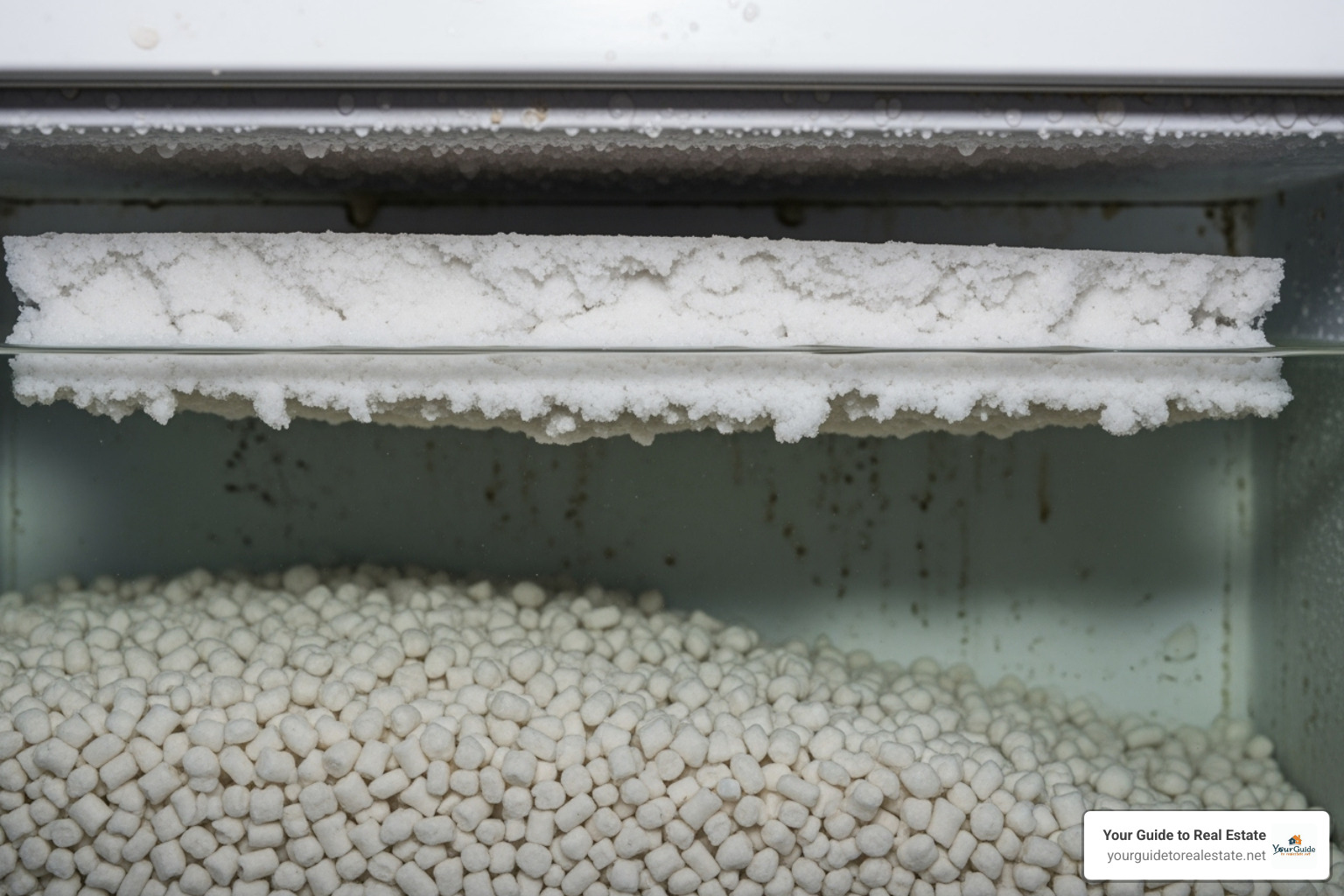
Salt bridges are probably the most frustrating issue you’ll encounter. Picture this: you open your brine tank expecting to see loose salt, but instead there’s a hard, crusty layer that looks like it could support your weight. That’s a salt bridge, and it’s preventing your system from making the brine solution it needs to work properly.
These pesky bridges usually form when humidity gets too high around your softener, or when temperature swings cause the salt to expand and contract. If you’re storing your softener in a hot garage or humid basement, you’re basically asking for trouble. Using cheap, impure salt can also create the perfect conditions for bridging.
The fix is surprisingly satisfying – grab a broom handle or any long, non-metal tool and gently poke down through the salt. When you hit that hard crust, carefully break it up until the salt falls freely to the bottom. Sometimes pouring a gallon of warm water around the edges helps dissolve stubborn spots. Give it about four hours to form fresh brine, then run a manual regeneration cycle.
Salt mushing is the evil twin of salt bridges. Instead of a hard crust on top, you get a thick, sludgy mess at the bottom of your tank that looks like wet concrete. This happens when low-quality salt dissolves partially, then recrystallizes into an impenetrable mush that blocks proper brine flow.
Unfortunately, mushing requires more elbow grease to fix. You’ll need to put your system in bypass mode, unplug it, and completely empty the brine tank. That means scooping out all the old, mushy salt and cleaning the tank thoroughly before starting fresh with high-quality salt pellets.
The good news? Both problems are totally preventable. Stick with high-purity evaporated salt, keep your tank about half full (not constantly topped off), and try to control humidity around your softener. If you live somewhere particularly humid, consider filling the tank less often with smaller amounts of salt.
Advanced Components and When to Call a Pro
While we love empowering you to handle basic water softener maintenance yourself, some components deserve a deeper understanding – and sometimes, professional respect.
Resin beads are the unsung heroes of your water softener. These tiny, BB-sized spheres do all the heavy lifting, swapping out hard minerals for sodium through ion exchange. They’re remarkably durable, typically lasting 10 to 15 years, though exceptional care can push that to 20 years.
The catch? High iron levels or chlorine in your water can break them down faster. You’ll know your resin is struggling if you start seeing small, bead-like particles in your tap water, or if your system regenerates normally but doesn’t produce soft water anymore.
Resin cleaners can work wonders for extending bead life. Every few months, pour the recommended amount into your brine well and run a manual regeneration. These cleaners flush out iron, silt, and other nasties that can coat the beads and reduce their effectiveness.
Adding a pre-filter to your setup is like giving your water softener a personal bodyguard. It catches sediment, iron, sand, and other particles before they reach your softener’s delicate internals. This simple addition can significantly extend your resin’s lifespan and reduce overall maintenance needs. Just remember to replace the pre-filter every six to nine months.
When it comes to the repair versus replace decision, age matters a lot. If your softener is under 8-10 years old and you’re dealing with common issues like salt bridges or a clogged venturi valve, repair almost always makes financial sense. But once you hit that 10-15 year mark, especially if you’re facing major component failures or consistently seeing resin particles in your water, replacement often becomes the smarter investment.
Here’s when you should definitely call a professional: persistent problems after you’ve tried troubleshooting, motor malfunctions, resin beads appearing in your tap water, systems that won’t regenerate despite proper salt levels, or any repair that makes you uncomfortable. A good rule of thumb? If you need specialized tools or you’re second-guessing yourself, it’s worth the service call.
Many homeowners also benefit from annual professional inspections to optimize settings and catch potential issues before they become expensive problems. Think of it as preventive care for a system that protects your entire home’s plumbing and appliances.
Purchasing and Maintaining A Water Softener | Department of Energy
Frequently Asked Questions about Water Softener Maintenance
We get a lot of questions from homeowners about their water softeners, and honestly, that makes perfect sense! These systems work quietly in the background, so it’s natural to wonder if they’re doing their job properly. Let’s explore the most common concerns we hear about water softener maintenance.
How often should a water softener regenerate?
This is probably the question we hear most often, and the answer isn’t as straightforward as you might hope. Your regeneration frequency depends on a few key factors working together.
Water hardness plays the biggest role. If you’re dealing with extremely hard water like Phoenix’s 17 grains per gallon (GpG), your resin beads will get saturated much faster than someone with moderately hard water. Think of it like a sponge – the more minerals it has to absorb, the quicker it fills up.
Water usage is the other major factor. A busy household where everyone’s taking long showers, running the dishwasher daily, and doing multiple loads of laundry will exhaust the resin beads faster. The average person uses about 75 gallons of water per day, but families with teenagers might laugh at that number!
System size matters too. A properly sized softener for your household should regenerate efficiently – typically every four to seven days for most homes. If your system is too small, it’ll regenerate constantly (and drive up your salt costs). Too big, and you’re wasting salt with each regeneration cycle.
The type of regeneration system you have makes a real difference in efficiency. Metered systems are the smart choice – they track actual water usage and only regenerate when the resin beads are nearly exhausted. These demand-initiated systems are perfect if your water usage varies, like when you go on vacation or have guests staying over.
Timed systems regenerate on a preset schedule regardless of how much water you’ve actually used. While they’re simpler, they can waste salt and water by regenerating when it’s not needed, or leave you with hard water if you’ve used more than expected.
Many modern softeners now feature smart technology that monitors resin condition and regenerates only when necessary, which optimizes both efficiency and your wallet.
What’s the difference in maintenance for salt-free water softeners?
Salt-free water softeners – which are technically water conditioners – are like the low-maintenance cousin of traditional salt-based systems. The maintenance differences are pretty significant and might surprise you.
No salt refills is the obvious big difference. You’ll never have to lug heavy salt bags from the store or worry about checking salt levels monthly. No salt also means no salt bridges, no salt mushing, and no brine tank cleaning. That eliminates about 80% of typical water softener maintenance tasks right there!
Instead of salt management, filter changes become your main maintenance task. Most salt-free systems use specialized media or filters that need replacing every 6-12 months, depending on your water quality and how much water your household uses. It’s similar to changing your HVAC filter – simple but important.
Here’s something important to understand: salt-free systems work differently than traditional softeners. They don’t actually remove hard minerals from your water. Instead, they condition those minerals by changing their structure so they can’t form scale on your appliances and fixtures. This scale prevention approach works well for many homes, but it’s not the same as the complete mineral removal you get with salt-based systems.
If you have extremely hard water or deal with iron contamination, you might still notice some mineral spotting with a salt-free system. The technology includes options like template assisted crystallization (TAC), electromagnetic systems, or polyphosphate treatment – each with their own specific maintenance needs, but none involving salt.
Overall, salt-free systems are definitely lower maintenance, focusing mainly on filter replacement and occasional system checks rather than the ongoing salt management that traditional systems require.
How do I know if my water softener resin needs replacing?
The resin beads in your water softener are like the engine in your car – when they start failing, you’ll definitely notice. Most resin lasts 10 to 15 years, but several warning signs can tell you when replacement time is approaching.
Reduced water softness is usually the first red flag. If you start seeing spots on your dishes again, notice your hair feeling flat and lifeless, or see limescale building up on fixtures – even though your softener has plenty of salt and is regenerating normally – your resin might be losing its effectiveness.
Small resin particles in your water is a more serious warning sign. These tiny, sand-like particles might show up in your toilet bowl, get caught in your showerhead, or appear in a glass of tap water. When resin beads start breaking down and escaping the tank, it usually means significant internal damage that often requires professional attention.
Watch for frequent regeneration cycles too. If your softener suddenly starts regenerating much more often than usual, the resin beads might be losing their capacity and getting saturated quickly. It’s like having a bucket with holes – it fills up fast but can’t hold much.
Age is a major factor in resin failure. If your system is pushing 10-15 years old and showing performance issues, the resin is a likely culprit. High levels of chlorine in your municipal water or iron contamination can also shorten resin lifespan significantly.
Cost analysis becomes important at this point. Replacing resin is possible as a DIY project, but it requires selecting the right type (like 8% or 10% crosslink depending on your water conditions) and careful attention to detail. If your entire system is approaching 15 years old, you’ll want to weigh resin replacement costs against investing in a brand-new, more efficient softener. Sometimes the new system is actually the smarter financial choice for long-term peace of mind.
Conclusion
There’s something deeply satisfying about knowing your home’s systems are running smoothly behind the scenes. Water softener maintenance might not be the most glamorous home care task, but it’s one of those small investments that pays dividends in comfort, savings, and peace of mind.
Throughout this guide, we’ve walked through everything from those quick monthly salt checks that take just minutes, to the annual deep cleaning that keeps your system humming along for years. We’ve tackled the mysteries of salt bridges and mushing, helped you choose the right salt for your system, and shown you when it’s time to call in the pros.
The beauty of a well-maintained water softener lies in its quiet efficiency. It’s working around the clock to protect your appliances from limescale buildup, keep your plumbing flowing freely, and ensure your morning shower leaves your skin feeling soft instead of tight and dry. Those sparkling glasses coming out of your dishwasher? That’s your water softener doing its job.

We’re not just talking about maintenance for maintenance’s sake. Every time you check those salt levels or clean that brine tank, you’re protecting your home investment. You’re extending the life of expensive appliances, preventing costly plumbing repairs, and maintaining the value that makes your house not just a home, but a smart financial decision.
The best part? Most of these tasks are surprisingly simple once you know what to look for. A monthly peek into your brine tank, an annual cleaning session, and staying alert to the signs your system might need attention – that’s really all it takes to keep things running smoothly.
Proactive home care like this is what separates homeowners who stress about unexpected repairs from those who sleep soundly knowing they’ve got everything covered. Your water softener will reward your attention with years of reliable service, and your future self will thank you for the money saved on repairs and replacements.
Whether you’re a first-time homeowner learning the ropes or a seasoned pro looking to optimize your home’s systems, taking care of your water softener is one of those wins that keeps on giving.
Find expert real estate agents in your area