
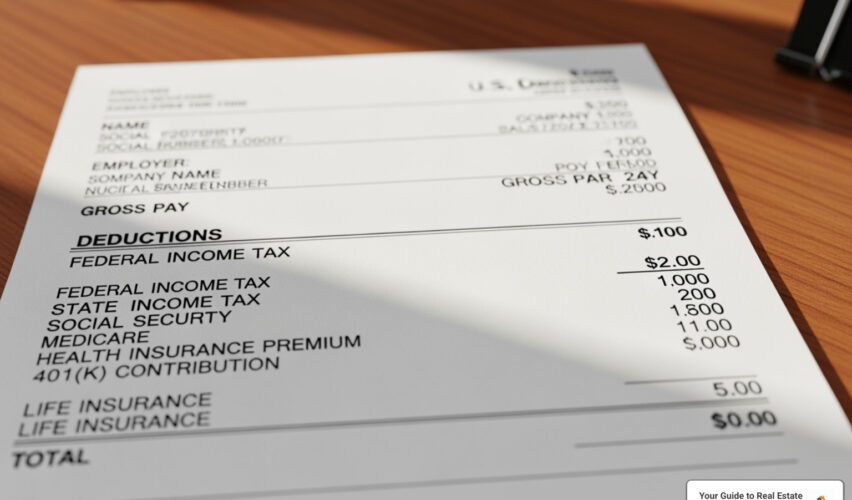
Understanding OASDI: The Social Security Tax on Your Paycheck
What is OASDI is a question many people ask when they see this mysterious deduction on their paycheck. OASDI stands for Old-Age, Survivors, and Disability Insurance – it’s simply the formal name for Social Security.
Here’s what you need to know about OASDI:
- What it is: The federal Social Security program that provides benefits to retirees, disabled workers, and survivors
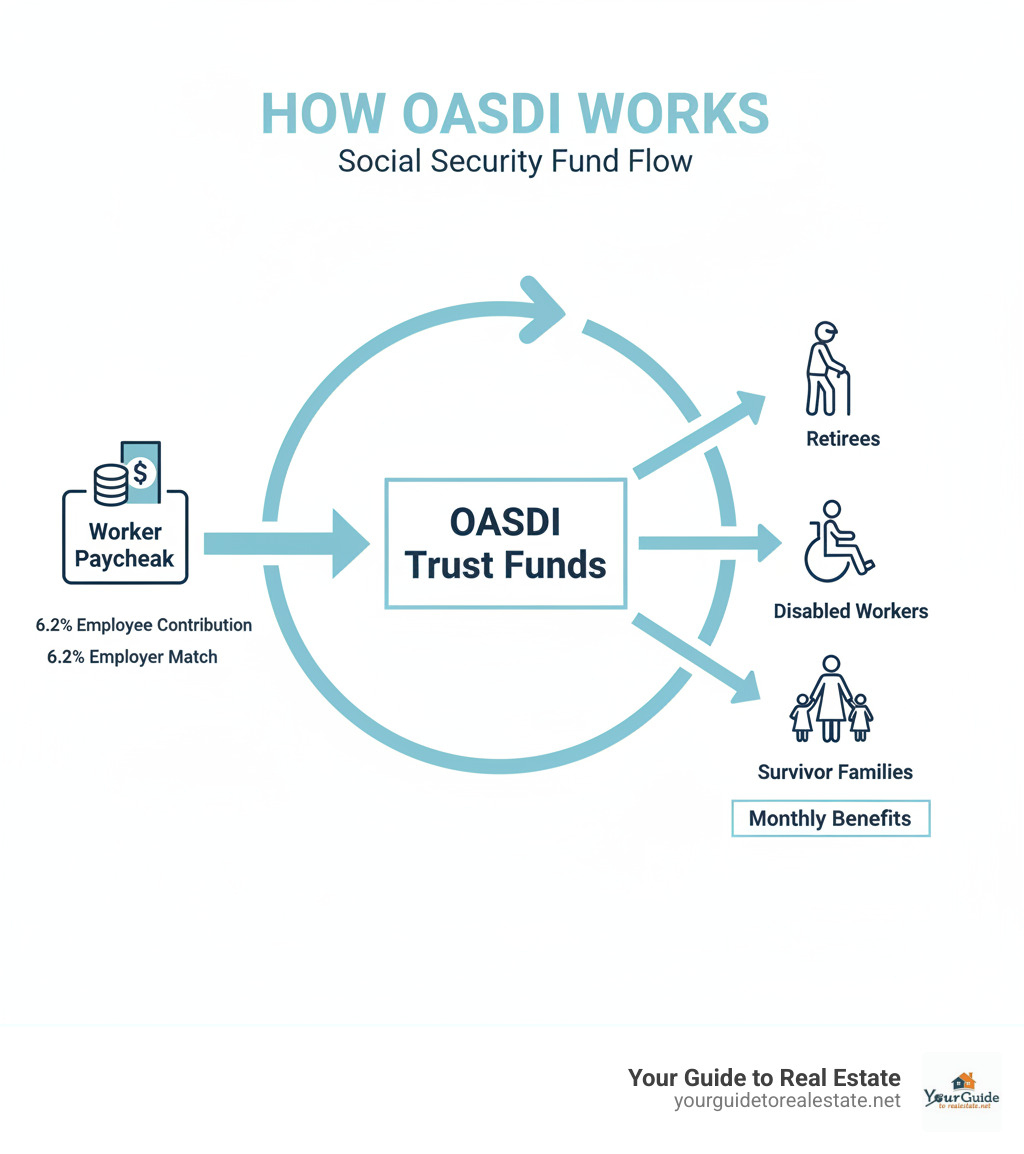
- Tax rate: 6.2% for employees, 6.2% for employers (12.4% total)
- 2025 taxable maximum: $176,100 in wages
- Purpose: Funds retirement, disability, and survivor benefits through payroll taxes
Nearly everyone who works pays this tax. In fact, over 183 million workers contributed approximately $1.3 trillion to OASDI trust funds in 2023 alone.
Have you ever looked at your paycheck and wondered why so much money gets taken out? That OASDI deduction you see is actually an investment in your future financial security. Whether you’re a real estate professional earning commissions or a salaried employee, understanding how this system works helps you plan for retirement and know what benefits you’ve earned.
The money flows from your paycheck to Social Security trust funds, then gets distributed as monthly benefits to current retirees, disabled workers, and families who’ve lost a breadwinner. When your time comes, you’ll receive benefits based on your lifetime earnings and contributions.
Explore more about what is oasdi:
- social security fairness act update
- ssdi benefits suspension termination 2025
- when will biden sign the social security fairness act
What is OASDI and What Is Its Purpose?
If you’ve ever wondered what is OASDI means when you see it on your paycheck, you’re looking at the backbone of America’s retirement system. OASDI stands for Old-Age, Survivors, and Disability Insurance – the official name for what we all know as Social Security.
Think of OASDI as a giant safety net that catches you when life throws curveballs. Whether you’re planning to retire someday, worried about what happens if you become disabled, or concerned about your family’s financial security if something happens to you, this program has your back.
The program works through the Federal Insurance Contributions Act (FICA), which requires most workers to contribute a portion of their earnings. Every time you see that OASDI deduction on your paycheck, you’re essentially buying insurance for your future self and your family. The money goes into dedicated trust funds that are separate from the government’s general budget.
Here’s what makes OASDI so powerful: it’s been providing financial security for over 80 years. In 2024 alone, the program distributed about $1.4 trillion in benefits to nearly 67 million Americans. That’s roughly one in five people in the entire country receiving some form of Social Security benefit.
The Old-Age, Survivors and Disability Insurance program isn’t just about retirement – it’s a comprehensive financial safety net that protects workers and their families throughout their lives.
So, what is OASDI in simple terms?
OASDI is simply Social Security – they’re the same thing with different names. When you see “Social Security tax” or “FICA” on your paycheck, that 6.2% deduction is funding OASDI. The Social Security Administration manages the whole program, making sure benefits get paid on time every month.
Most employees pay through FICA taxes, where both you and your employer contribute equally. If you’re self-employed, you pay through SECA (Self-Employed Contributions Act) and cover both portions yourself – but don’t worry, you can deduct half of it on your taxes.
The beauty of this system is its simplicity. You work, you pay in, you earn credits toward future benefits. The Social Security Administration keeps track of everything, so you don’t have to manage investment accounts or worry about market crashes affecting your basic retirement security.
Whether you’re a real estate agent earning commissions or working a steady 9-to-5 job, the payroll tax system treats everyone fairly. You contribute based on what you earn, and your future benefits reflect your lifetime earnings history.
What benefits are funded by the program?
OASDI funds three main types of benefits that protect you and your family throughout life’s journey.
Retirement benefits are what most people think about first. After working for at least 10 years and reaching retirement age, you’ll receive monthly payments for the rest of your life. The amount depends on how much you earned and when you start collecting – wait until full retirement age, and you get more than if you start early.
Disability benefits kick in if you become unable to work due to a severe medical condition. This isn’t just for obvious disabilities – it covers everything from heart disease to mental health conditions that prevent you from earning a living. The key is that the condition must be expected to last at least a year or result in death.
Survivor benefits protect your family if you pass away. Your spouse, children under 18 (or up to 19 if still in high school), and even dependent parents might qualify for monthly payments. This can be a lifeline for families dealing with the loss of their primary breadwinner.
The program also provides dependents’ benefits for spouses and children of retired or disabled workers. This means your family can receive payments based on your work record, even if they never worked themselves.

What makes OASDI special is that these aren’t temporary assistance programs – they’re earned benefits. You pay in during your working years, and you’re entitled to benefits when you need them. It’s like having a insurance policy that follows you your entire career, no matter how many jobs you change or where life takes you.
How OASDI Tax Works: Rates, Limits, and Payments
When you look at your paycheck and wonder “what is OASDI” and why it’s taking a chunk of your hard-earned money, you’re looking at one of the most important investments in your financial future. This Social Security tax isn’t just another government fee – it’s your ticket to retirement security and a safety net for life’s unexpected turns.
The OASDI tax system operates on a straightforward principle: we all contribute a percentage of our earnings, and those contributions fund benefits for current retirees while building our own future benefit credits. Think of it as a massive, nationwide retirement and insurance plan that we’re all part of.
What makes this system particularly interesting is how it balances fairness with sustainability. The tax rates are set to ensure adequate funding, while the income limits prevent the burden from becoming overwhelming for high earners. These limits also get adjusted each year to keep up with how much Americans are earning on average.

This steady climb in the taxable maximum reflects our growing economy and wages. It’s actually a good sign – it means American workers are generally earning more over time. If you’re curious about other changes coming to Social Security, check out What Changes Are Coming to Social Security in 2025?.
Current Tax Rates for Employees, Employers, and Self-Employed
Here’s where the magic of OASDI tax really shines: you’re not paying this alone. If you’re an employee, you pay 6.2% of your wages toward OASDI, but your employer matches that with another 6.2%. That means for every dollar you contribute, your employer adds another dollar, creating a total contribution of 12.4% of your wages.
Let’s say you earn $50,000 this year. You’ll pay $3,100 in OASDI taxes (6.2% of $50,000), and your employer will contribute another $3,100 on your behalf. That’s $6,200 total going toward your future Social Security benefits – not bad for an investment you might not even notice day-to-day.
Now, if you’re self-employed, you wear both hats. You pay the full 12.4% yourself since you’re both the employee and the employer. Before you panic about this seemingly unfair arrangement, you get to deduct half of your self-employment taxes when filing your income tax return. This deduction helps level the playing field between employees and self-employed workers.
It’s worth noting that OASDI is separate from Medicare tax, which adds another 1.45% for employees (2.9% for self-employed). The key difference? Medicare tax has no income limit – you pay it on every dollar you earn. For detailed information about these rates, the IRS tax topic on FICA/SECA breaks it all down.
The OASDI Taxable Maximum
Here’s some potentially good news: there’s a ceiling on how much of your income gets hit with OASDI taxes. The taxable maximum means that once your earnings reach a certain level, you stop paying OASDI taxes for the rest of the year.
For 2025, that magic number is $176,100. If you’re fortunate enough to earn more than this amount, you’ll only pay OASDI taxes on the first $176,100 of your income. That works out to a maximum OASDI contribution of $10,918.20 for employees (or $21,836.40 if you’re self-employed).
In 2024, the taxable maximum was $168,600, which meant a maximum employee contribution of $10,453.20. The year before that, in 2023, the limit was $160,200. Notice the pattern? This limit increases almost every year based on the national average wage index.
This annual adjustment isn’t random – it’s carefully calculated to keep the Social Security system funded while reflecting how American wages change over time. When wages across the country go up, the taxable maximum goes up too. It’s the Social Security Administration’s way of keeping the program relevant and financially healthy.
You can track these changes and see historical data on the SSA’s Contribution and Benefit Base page. Whether you’re planning your finances or just satisfying your curiosity about how the system works, understanding these limits helps you see the bigger picture of your paycheck deductions.
Eligibility for OASDI: Who Pays and Who Benefits?
Understanding what is OASDI eligibility means grasping a simple concept: this program operates like insurance you earn through work. Most of us pay into the system during our working years, and in return, we earn the right to benefits when life throws us curveballs – whether that’s reaching retirement age, becoming disabled, or losing a family breadwinner.
The key to open uping these benefits lies in earning work credits. Think of these credits as your ticket to financial security later in life. The Social Security Administration uses these credits to measure how much you’ve participated in the system and whether you qualify for benefits.
The beauty of this system is that it’s truly earned. The benefits you receive aren’t charity or government handouts – they’re based on your contributions over time. Whether you’re a real estate agent earning commissions or working a traditional job, every dollar you earn (up to the annual limit) helps build your future security.
How Benefits Are Calculated Using Work Credits
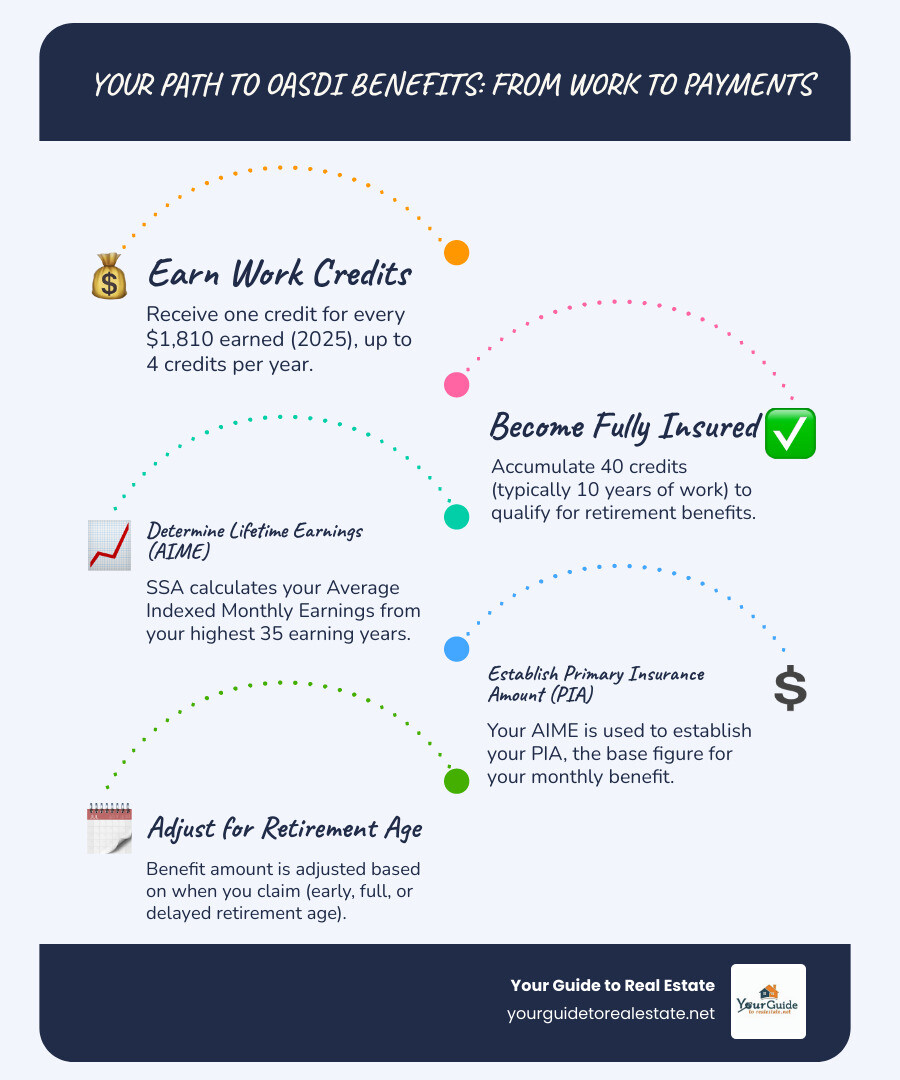
Here’s how the credit system works in practical terms. In 2025, you earn one work credit for every $1,810 you make. You can earn up to four credits per year, which means if you make at least $7,240 in 2025, you’ve maxed out your credits for that year.
For most retirement benefits, you need 40 credits total – that’s roughly 10 years of work. Once you hit this milestone, you’re considered “fully insured” and eligible for benefits. It’s like reaching the finish line of a very long race, except the prize keeps paying you for the rest of your life.
But here’s where it gets interesting: your actual benefit amount isn’t just about hitting that 40-credit minimum. The Social Security Administration looks at your Average Indexed Monthly Earnings (AIME) – typically your highest-earning 35 years. This gets converted into your Primary Insurance Amount (PIA), which becomes the foundation for your monthly check.
Timing matters enormously too. Your Full Retirement Age varies based on when you were born (it’s 67 if you were born in 1960 or later). Start collecting at 62, and your monthly benefit drops by up to 30%. Wait until age 70, and you can boost your benefit significantly through delayed retirement credits.
The math can feel overwhelming, but the SSA provides helpful tools to estimate your benefits. Check out their guide on Earning Social Security credits for more details.
Who is exempt from paying OASDI taxes?
While most of us pay OASDI taxes throughout our careers, there are some exceptions to the rule. These exemptions are quite limited and apply to specific groups:
Certain religious groups like the Amish and some Mennonite communities can opt out if they have sincere religious objections to receiving public insurance benefits. They must file IRS Form 4029 to claim this exemption – but remember, no payments in means no benefits out.
Some non-resident visa holders working in the U.S. are also exempt. This includes employees of foreign governments (A-visas), certain crew members on foreign ships or aircraft (D-visas), and some students, teachers, or researchers on temporary visas. The rules here get quite technical, so if this applies to you, check the IRS guidelines for aliens employed in the U.S..
Historically, some state and local government employees were exempt if they had alternative retirement systems, though most are now covered by Social Security. Non-U.S. citizens working abroad for foreign employers generally don’t pay U.S. Social Security taxes either, unless they work for a U.S. employer or under special international agreements.
The key thing to remember: if you’re exempt from paying OASDI taxes, you’re also generally ineligible for Social Security benefits from that work. It’s an all-or-nothing deal.
What is OASDI’s impact on the self-employed?
If you’re self-employed – whether you’re flipping houses, working as a real estate agent, or running any other business – what is OASDI becomes a bit more complicated. You get to wear two hats: you’re both the employee and the employer for tax purposes.
This means you pay the full 12.4% OASDI rate on your net self-employment earnings, up to the annual taxable maximum. While employees split this cost with their employers, you’re flying solo on this one. Add in the 2.9% Medicare tax, and you’re looking at 15.3% total in self-employment taxes.
Before you panic about that hefty rate, there’s good news. You can deduct half of your self-employment taxes when calculating your adjusted gross income. This helps level the playing field somewhat and reduces your overall tax burden.
The timing is different too. Instead of having taxes automatically withheld from each paycheck, you typically make quarterly estimated tax payments throughout the year. This requires discipline and good financial planning – you need to set aside money regularly to cover these obligations.
It’s governed by the Self-Employed Contributions Act (SECA), but the end goal remains the same: earning those precious work credits that will qualify you for benefits down the road. The path might be different, but the destination – financial security in retirement or during disability – is just as valuable.
Frequently Asked Questions about OASDI
Understanding what is OASDI can feel overwhelming at first, but you’re not alone in having questions. After learning about payroll taxes, work credits, and benefit calculations, it’s natural to wonder how all these pieces fit together. Let’s address the most common questions we hear from people just like you.
What is the difference between OASDI and Supplemental Security Income (SSI)?
Here’s where things can get confusing – both programs are run by the Social Security Administration, but they’re completely different beasts. Think of OASDI as the program you earn through working and paying taxes, while SSI is a safety net for people with very limited income and resources.
The key difference comes down to how you qualify. For OASDI, you earn your benefits by working and paying those payroll taxes we’ve been talking about. You need those work credits we discussed earlier. But SSI? That’s based purely on financial need – whether you’ve worked or not doesn’t matter.
Here’s what makes each program unique:

OASDI is work-based – you pay in through those FICA taxes, and you (or your family) get benefits based on your earnings history. It’s funded entirely by payroll taxes from workers and employers. SSI is needs-based – it helps people who are aged, blind, or disabled and have very little income or resources. This program gets its funding from general tax revenue, not from Social Security taxes.
Some people actually qualify for both programs. If your OASDI benefits are quite low, you might also be eligible for SSI to bring your total income up to a basic level. It’s like having a backup safety net under your safety net.
For more detailed information about SSI, check out the SSA’s comprehensive guide on Supplemental Security Income (SSI).
How can I track my OASDI contributions and future benefits?
Keeping track of your contributions and knowing what to expect in benefits is crucial for planning your financial future. The good news is that the Social Security Administration makes this surprisingly easy.
Your best move is to create your own Social Security account online. This free, secure portal gives you access to your complete Social Security statement, which is like a report card of your entire working life. You’ll see every year you worked, how much you earned, and exactly how much you contributed to the system.
But here’s the really cool part – you can get personalized benefit estimates that show you what your monthly payments might look like at different retirement ages. Thinking about retiring at 62? The calculator will show you that reduced amount. Want to see what happens if you wait until 70? Those delayed retirement credits really add up, and you’ll see exactly how much.
Your online account also tracks your work credits so you know exactly where you stand toward qualifying for benefits. Plus, if you spot any errors in your earnings record (and trust me, they do happen), you can contact the SSA to get them fixed.
Setting up your account takes just a few minutes, and it’s one of the smartest financial moves you can make. Head over to the SSA website and start creating an account today. Your future self will thank you.
What happens if I overpay OASDI tax?
Don’t worry – if you overpay OASDI tax, you’re not out of luck. This typically happens when you have multiple jobs in the same year and your combined earnings push you over that annual taxable maximum we talked about earlier.
Here’s the scenario: Let’s say you earn $100,000 at your first job, then switch to another company where you make another $100,000. Both employers will withhold OASDI tax from your full wages, even though your total earnings of $200,000 exceed the 2025 taxable maximum of $176,100.
Each employer has to withhold taxes independently – they don’t know about your other job. So you end up paying OASDI tax on more income than you should.
The fix is simple though. When you file your tax return using Form 1040, you can claim the excess OASDI tax as a tax credit. The IRS will refund that overpayment right back to you. It’s just like getting back any other tax refund.
If you’re self-employed and accidentally overpay through your quarterly estimated taxes, the same principle applies – you’ll get that money back when you file your annual return.
The system is designed to catch these situations, so you won’t lose a penny of what you’ve overpaid. It’s just one more reason to keep good records of your earnings throughout the year.
Conclusion
Understanding what is OASDI goes far beyond recognizing another deduction on your paycheck. It’s about grasping how this vital system shapes your financial future and provides security for millions of American families.
Throughout this guide, we’ve uncovered that OASDI – Old-Age, Survivors, and Disability Insurance – is simply the formal name for Social Security. This program touches nearly every working American’s life, collecting 6.2% from employees and employers alike (or 12.4% for self-employed individuals) on earnings up to $176,100 in 2025.
The beauty of OASDI lies in its simplicity and reliability. You work, you contribute, you earn credits. After accumulating 40 work credits over roughly 10 years of work, you’ve secured your place in this safety net. Your future benefits depend on your lifetime earnings and when you choose to retire, giving you control over your financial destiny.
We’ve also explored the important distinctions between OASDI and SSI, how to track your contributions online, and what happens if you overpay. These details matter because they help you make informed decisions about your retirement timing and financial planning strategy.
The reality is that OASDI faces challenges ahead. The trust funds are projected to experience shortfalls by 2034, potentially reducing benefits to 80% of scheduled amounts. This makes understanding your benefits even more crucial for long-term financial planning.
At Your Guide to Real Estate, we believe financial literacy extends beyond property investments. Whether you’re buying your first home, planning for retirement, or building wealth through real estate, understanding your OASDI benefits helps you see the complete picture of your financial security.
Just as we help you steer the complexities of homeownership with our proven framework, we’re committed to helping you understand every aspect of your financial well-being. For more guidance on making major financial decisions, including homeownership, check out our comprehensive resource: Understanding Mortgages: A Beginner’s Guide to Home Loans.
Your OASDI contributions aren’t just taxes – they’re investments in your future peace of mind.