Why Understanding Real Estate Listing Statuses Matters
When you’re hunting for your dream home, pending vs contingent statuses can make or break your house-hunting strategy. These two terms appear on nearly every real estate listing, but most buyers don’t know what they actually mean – or more importantly, whether they can still make an offer.
Quick Answer:
- Contingent = Offer accepted, but conditions must be met before closing
- Pending = All conditions met, sale moving toward closing
- Both = You might still be able to make a backup offer
The difference between these statuses isn’t just real estate jargon. It determines whether that perfect house you found is truly off the market or if you still have a chance to snag it.
Here’s what makes this confusing: according to industry data, 67% of buyers had offers contingent on home inspections, while 61% needed financing approval. Yet many buyers walk away from contingent homes thinking they’re unavailable.
The reality? Both contingent and pending homes sometimes fall through. In fact, 5% of purchase agreements were terminated before closing in recent data from the National Association of Realtors.
Understanding these statuses helps you spot opportunities other buyers miss. It also protects you from making costly mistakes – like submitting offers on homes that aren’t actually available, or missing out on backup offer opportunities.
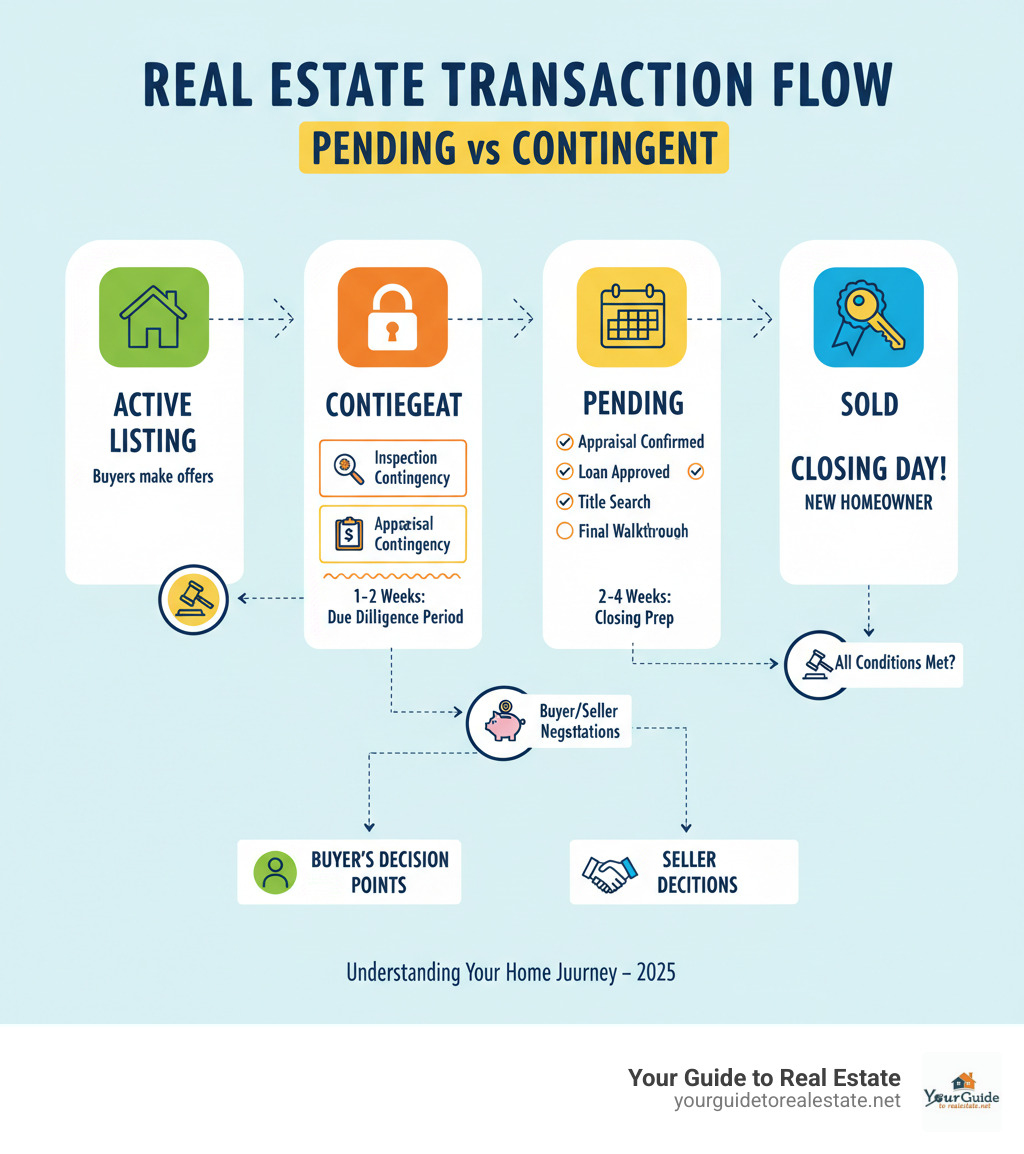
Quick pending vs contingent definitions:
What Does ‘Contingent’ Mean in a Real Estate Listing?
Picture this: you’re scrolling through listings and find your dream home, but it’s marked “contingent.” Your heart sinks, thinking it’s off the market. But here’s the thing – contingent doesn’t mean the door is completely closed.
When a listing shows “contingent,” it means the seller has accepted a buyer’s offer, but the sale isn’t final yet. Think of it as a conditional yes – the deal moves forward only if certain requirements are met first.
These conditions, called contingencies, act like safety nets for buyers. They’re built into the contract to protect you during what real estate pros call the due diligence period. This is your chance to make sure everything about the house checks out before you’re legally bound to buy it.
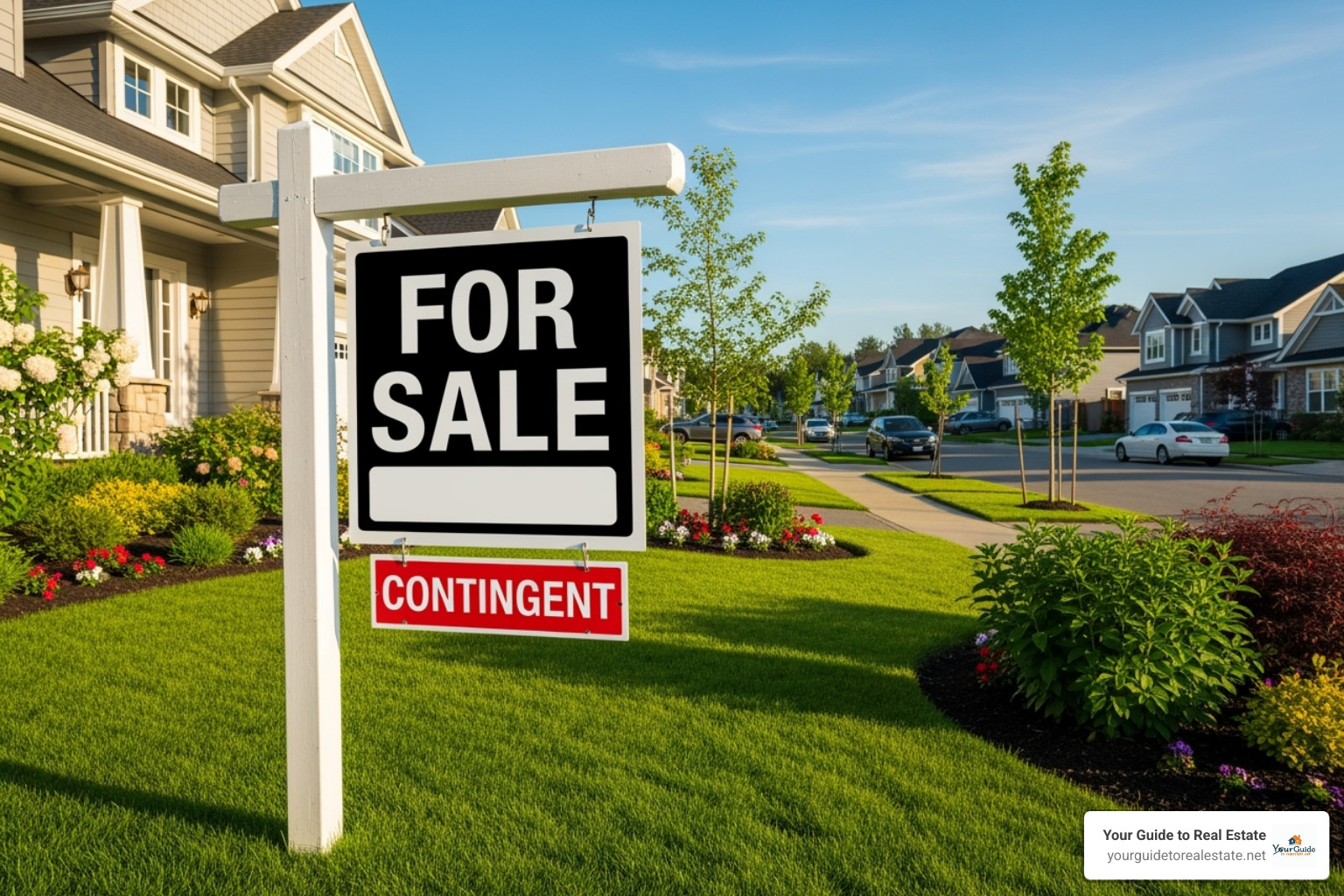
For sellers, a contingent status means they have an accepted offer in hand, but they often keep some flexibility. Depending on the specific contingencies, they might even continue showing the home to other potential buyers.
The beauty of contingencies is that they give buyers legitimate ways to back out without losing their earnest money deposit. If the conditions aren’t met, the contract conditions allow you to walk away. For a deeper understanding of how this works, check out our comprehensive guide on What Does Contingent Mean in Real Estate?
Common Types of Contingencies
Every contingency serves a specific purpose, and understanding them helps you steer the pending vs contingent landscape more confidently. Here are the most common types you’ll encounter:
Inspection contingency tops the list, with 67% of buyers using it. It allows you to hire a professional to inspect the home for hidden problems. If major issues like a bad roof or foundation cracks are found, you can ask the seller for repairs, negotiate a lower price, or walk away from the deal.
Financing contingency protects buyers who need a mortgage. Included by 61% of buyers, it makes the offer conditional on getting loan approval. If your financing falls through, you can cancel the contract and recover your earnest money.
Appraisal contingency ensures the home is worth the price you’ve agreed to pay. A lender-ordered appraisal must meet or exceed the sale price. If it comes in low, you can renegotiate, pay the difference, or cancel the contract.
Title contingency verifies that the seller legally owns the property and can transfer it to you. A title search uncovers any liens or claims against the property. If serious issues surface that can’t be resolved, you can back out.
Home sale contingency is common for the 49% of repeat buyers who need to sell their current home first. This contingency makes your offer dependent on that sale, which can make it less attractive to sellers due to the added uncertainty.
Homeowners insurance contingency ensures you can get insurance coverage for the property. It protects you from buying a home that’s uninsurable due to its location or condition.
Decoding Different ‘Contingent’ Statuses
Here’s where the pending vs contingent distinction gets interesting. The term “contingent” isn’t standardized across all markets. With approximately 800 different MLS systems across the United States, each can have slightly different rules and sub-categories.
Contingent Continue to Show (CCS) or Active Under Contract means the seller has an offer but is still allowing showings and accepting backup offers. It’s a clear signal that you still have a chance to submit a competitive offer.
Contingent No Show indicates the seller is confident the deal will close and has stopped all showings. They are not actively seeking backup offers, so your chances of getting the home are much lower.
Kick-Out Clause situations give sellers extra flexibility. If they receive a stronger, non-contingent offer, they can give the original buyer a short timeframe (usually 24-48 hours) to either remove their contingency or walk away.
Contingent Short Sale means the accepted offer depends on the lender agreeing to accept less than what’s owed on the mortgage. These deals are complex and time-consuming, with no guarantee of approval.
Contingent Probate indicates the sale requires court approval as part of settling a deceased homeowner’s estate, which adds significant time and uncertainty.
Understanding these nuanced statuses helps you strategize your approach. For more guidance on entering the market successfully, explore our First Time Homebuyer Tips.
What Does ‘Pending’ Mean in a Real Estate Listing?
When you see a home marked as “pending,” it’s like watching a train that’s already left the station and is heading straight to its destination. This status means the seller has accepted an offer, and here’s the crucial part – all contingencies have been satisfied or removed. The buyer has jumped through all the hoops, and now they’re in the home stretch toward closing.
Think of pending vs contingent this way: if contingent is like being engaged with a prenup, pending is like standing at the altar saying “I do.” The deal has moved from conditional to committed.
At this stage, the buyer has typically secured their financing, completed their home inspection, resolved any repair negotiations, and received a favorable appraisal. What’s left are mainly the final administrative tasks – the last round of paperwork, final loan underwriting, title transfer preparation, and scheduling the closing.
Now, “pending” doesn’t mean “sold” just yet. The property isn’t officially sold until everyone signs the closing documents, money changes hands, and the deed gets recorded. But here’s the thing – pending sales are much more likely to close than contingent ones. The average time to close is currently around 42 days, so when you see that pending status, the finish line is in sight.
For a detailed look at what happens during this final phase, check out our guide on Understanding Escrow Process.
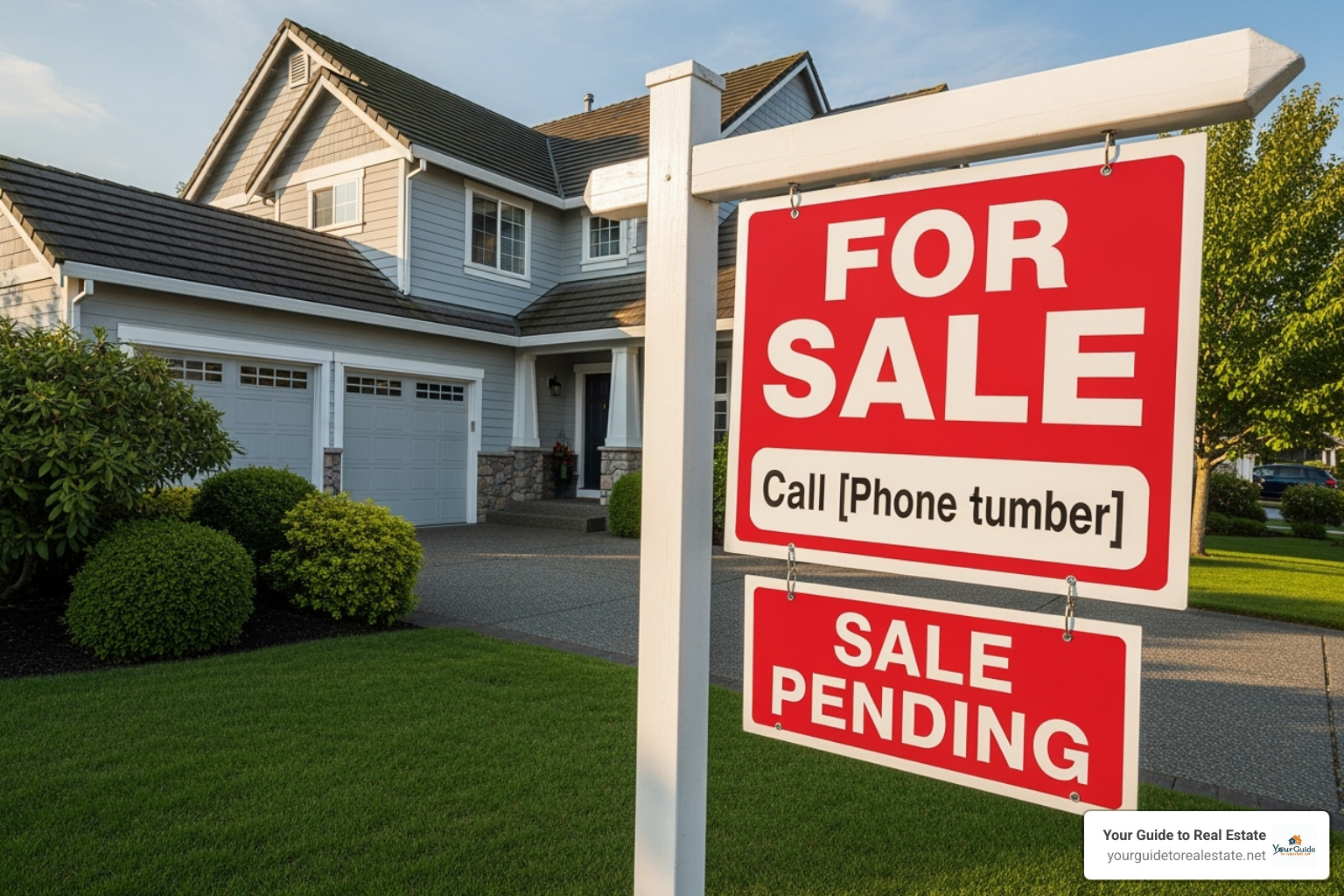
Understanding Different ‘Pending’ Statuses
Just like contingent listings, pending properties come with their own flavor of sub-statuses. These little details can make a big difference in whether you still have a shot at the home or should keep looking elsewhere.
Pending: Taking Backups is music to a buyer’s ears. All the contingencies are resolved and the primary buyer is moving toward closing, but the seller is still willing to consider backup offers. Maybe they’re being extra cautious, or perhaps there’s a tiny lingering concern about the buyer’s ability to close. Either way, this green light means you can still throw your hat in the ring with a backup offer.
Pending: No Show is the most common and definitive pending status you’ll encounter. The seller has complete confidence in their buyer and has stopped all showings. They’re not entertaining backup offers because they believe this deal is rock solid. Your chances here are about as slim as finding a parking spot at the mall on Black Friday – technically possible, but don’t hold your breath.
Pending: Short Sale indicates that the complex lender approval process for a short sale has been completed, and all other contingencies are satisfied. While more secure than a contingent short sale, these transactions can still hit unexpected bumps in the road.
Pending: More Than 4 Months is the oddball of pending statuses. When a sale has been stalled for this long, something unusual is happening – maybe legal complications, financing hiccups, or simply an outdated listing. It’s worth having your agent investigate because sometimes these extended pending periods lead to deals falling apart, creating unexpected opportunities.
Understanding these nuances helps you read the market like a pro. For more insight into the financing side of things, our Loan Process for Buying a House guide breaks down what buyers go through to reach that pending status.
The Key Differences in the Pending vs Contingent Timeline
The journey from contingent to pending marks a major shift in certainty and timeline.
The contingency period (typically 30 to 60 days) is for due diligence. This includes:
- Inspections: Usually 7-14 days for the inspection and any repair negotiations.
- Financing & Appraisal: Often 30-45 days for the lender to approve the loan and confirm the home’s value.
- Home Sale: Can extend the timeline significantly if the buyer must sell their current home.
During this phase, the deal has a higher risk of falling through.
Once all contingencies are cleared, the status becomes pending. The focus shifts to final closing tasks, with most homes closing in about 42 days from the start. This period involves final loan underwriting, title company preparations, and the buyer’s final walk-through. The key difference is certainty—pending deals are much more secure and on a clear path to closing. For professionals guiding clients, understanding these phases is key, as detailed in our guide How Long Does It Take to Become a Real Estate Agent.
The Ultimate Pending vs Contingent Comparison for Buyers and Sellers
Understanding the pending vs contingent difference isn’t just about real estate vocabulary – it’s about knowing where you stand in one of life’s biggest financial decisions. These two statuses represent completely different levels of security, opportunity, and risk for everyone involved.
Think of it this way: contingent is like being engaged with a long engagement period, while pending is like having your wedding invitations already mailed out. Both mean commitment, but one is much more likely to actually make it to the altar.
For buyers, a contingent listing opens doors that many people think are already closed. You’re looking at a home where the first buyer still has homework to do – inspections to complete, financing to secure, maybe even their own house to sell. That creates opportunities for backup offers that could pay off big time.
A pending listing? That’s a different story entirely. The first buyer has already done their homework and passed with flying colors. Your chances of swooping in are much slimmer, but not impossible if the listing specifically says they’re taking backups.
For sellers, these statuses represent two very different stress levels. When your home is contingent, you’re in a “cautiously optimistic” phase. You’ve got an offer, but you know things could still go sideways. Many sellers keep showing their home during this phase because, frankly, they want a Plan B.
Once your home hits pending status, you can finally exhale. The major problems are behind you, and you can start planning your moving truck with confidence. The transaction security jumps dramatically at this point.
Here’s the reality check though: even pending deals aren’t bulletproof. According to the National Association of Realtors, 5% of purchase agreements were terminated before closing. Another 12% faced delays, with 7% held up by appraisal issues. Life happens, even in the final stretch.
This is exactly why understanding these statuses matters so much. Whether you’re buying or selling, knowing what pending vs contingent really means helps you make smarter decisions about backup offers, timing, and expectations. For sellers looking to steer these waters successfully, our comprehensive guide The Ultimate Guide to Selling Your Home: Tips, Timelines, and Tools breaks down everything you need to know.

Can You Make an Offer on a Contingent or Pending Home?
Here’s the question that keeps buyers up at night: “Can I still make an offer on that perfect house even though it shows contingent vs pending?” The answer might surprise you – yes, you absolutely can in many situations!
Making offers on contingent homes is actually a smart strategy that many buyers overlook. Sellers with contingent offers often welcome backup offers because they know their current deal isn’t guaranteed. If the primary buyer can’t get financing approved, fails the inspection negotiations, or can’t sell their own home in time, guess who’s next in line? You are.
Pay special attention to listings marked “Contingent: Continue to Show” or “Active Under Contract.” These are basically neon signs saying “backup offers welcome!” The seller is telling you they want options in case their first deal falls through.
Even regular contingent listings without the “continue to show” language might accept backup offers. The worst they can say is no, and the best case scenario is you land your dream home when someone else couldn’t make it work.
Pending homes are trickier, but not impossible. If you see “Pending: Taking Backups,” go for it! The seller still has some concerns about their current buyer’s ability to close, even though all contingencies are met.
For regular pending listings, your chances drop significantly. Most sellers at this stage are confident their deal will close and aren’t looking for alternatives. But here’s the thing – even pending deals can fall apart. Maybe the buyer’s job situation changes, or they get cold feet, or there’s a last-minute financing hiccup.
Your real estate agent can reach out to the seller’s agent to ask if they’d consider a backup offer. Sometimes they’ll say yes just to have insurance, especially if your offer is particularly strong.
The key is working with an experienced agent who knows how to steer these situations diplomatically. They can gather intelligence about the current contract and position your offer strategically. Our guide on how to Find Buyers Agent Complete Guide can help you find someone who excels at these challenging scenarios.
How to Make a Competitive Offer on a Pending vs Contingent Home
Making an offer on a home that’s already under contract requires serious strategy. You’re not just competing with other potential buyers – you’re trying to convince a seller to either activate their backup plan or consider you as their safety net.
Get your financing rock-solid first. This isn’t the time for a basic pre-qualification letter. You need full mortgage pre-approval from a reputable lender, complete with income verification and credit checks. When sellers are weighing backup offers, financial strength trumps everything else.
Price aggressively, but smartly. Your backup offer might need to exceed the current accepted offer to grab attention. Your agent can help you research comparable sales and estimate what the current buyer likely offered. Sometimes going $5,000 to $10,000 above asking price makes all the difference.
Minimize your contingencies carefully. While we never recommend throwing away important protections, strategic contingency management can make your offer irresistible. Maybe you shorten your inspection period from 10 days to 7, or reduce your financing contingency timeline. Just don’t waive inspections entirely unless you’re extremely confident about the property’s condition.
Offer flexibility on timing. Some sellers need to close quickly, others want more time to find their next home. Ask your agent to find out what the seller prefers and match it. Being the “easy” buyer can be just as valuable as being the highest bidder.
Write a personal letter to the seller. This old-school technique still works. Share why you love their home, what it would mean to your family, and why you’d be perfect caretakers of their property. Emotional connections can tip the scales when offers are financially similar.
Increase your earnest money deposit. A larger deposit shows serious commitment. Instead of the typical 1-2% of the purchase price, consider 3-4%. It signals that you’re not just fishing – you’re ready to buy.
Work with a top-notch agent who knows how to position backup offers effectively. They should understand your local market dynamics and have relationships with other agents that can provide crucial insights. Finding the right representation is crucial – check out our guide on How to Select the Best Real Estate Agent for tips on choosing someone who can steer these complex situations.
Making an offer on a contingent or pending home is playing the long game. You might not win immediately, but positioning yourself as the obvious choice when deals fall through can land you a home that other buyers gave up on too early.
Frequently Asked Questions about Contingent and Pending Statuses
We know understanding pending vs contingent can still leave you with a few lingering questions. These are the questions we hear most often from buyers and sellers who are trying to decode these confusing real estate terms. Let’s clear up the confusion once and for all.
Does pending mean a house is sold?
No, pending doesn’t mean sold. A home is pending when all contingencies are met and the sale is moving toward closing. However, the sale is not final until the closing process is complete. This involves signing all final paperwork, transferring funds, and officially recording the deed. Until the title transfer is complete, the seller still legally owns the property. The pending status indicates the sale is very likely to close, but it’s not official yet.
Can a seller back out of a contingent or pending offer?
A seller’s ability to back out is very limited and depends on the status.
- Contingent: Sellers generally cannot back out unless the buyer fails to perform on their contractual obligations (e.g., missing a deadline). The exception is if the contract includes a kick-out clause, which allows the seller to accept a better offer and give the original buyer a short period to remove their contingencies or void the contract.
- Pending: It is extremely difficult for a seller to back out. With all contingencies removed, the contract is legally binding. Attempting to do so can lead to serious legal implications, including being sued by the buyer.
As a deal moves from contingent to pending, the seller’s commitment becomes much stronger.
How long does a house stay contingent before going pending?
A house typically stays contingent for 30 to 60 days, but the exact contingency timeline varies by contract. The duration depends on the specific conditions that need to be met. For example, an inspection contingency may only take 7-14 days, while a financing contingency often requires 30-45 days. A home sale contingency can extend the period even longer. The status only changes to pending once all conditions are met or waived by the buyer. Until then, the deal is conditional and could still fall through.
Conclusion
Understanding the difference between pending vs contingent listings isn’t just about mastering real estate vocabulary – it’s about recognizing real opportunities in today’s competitive housing market. Throughout your home-buying journey, these two simple words can mean the difference between finding your dream home and missing out entirely.
We’ve finded that contingent homes are far from off-limits. They represent properties where deals are still conditional, creating genuine opportunities for savvy buyers willing to submit backup offers. The inspection period, financing approval, and other contingencies create natural exit points where primary buyers might walk away – and that’s where you step in.
Pending homes, while more challenging, aren’t completely out of reach either. When all contingencies have been satisfied and the sale moves toward closing, your chances decrease significantly. But remember, even pending sales can fall through, especially when marked “Taking Backups.”
For sellers, these statuses represent different levels of security and planning. A contingent offer gives you breathing room but requires patience. A pending sale lets you confidently plan your next move while keeping that small safety net of backup offers when appropriate.
The real estate market doesn’t have to feel overwhelming when you understand its language. Every contingent vs pending listing tells a story about timing, opportunity, and transaction security. Armed with this knowledge, you can spot chances other buyers miss and make strategic decisions that protect your interests.
At Your Guide to Real Estate, we believe knowledge is power in your home-buying journey. Our proven framework and stress-free guidance are designed to help you succeed, whether you’re deciphering listing statuses or navigating complex negotiations. For more comprehensive insights into the financial aspects of homeownership, be sure to explore our guide: Understanding Mortgages: A Beginner’s Guide to Home Loans.
Every closed sale started as an active listing that moved through contingent and pending phases. Your perfect home might be waiting behind one of these statuses right now.