The Leap from Agent to Broker: Why Upgrade Your License?
A real estate broker license represents the next level of professional achievement, offering greater autonomy, higher earning potential, and the ability to lead other agents or start your own firm. Making the leap from agent to broker is a career-defining move with benefits that last a lifetime.
Brokers enjoy several key advantages, including professional independence, larger commission splits, leadership roles, deeper market expertise from advanced education, and the option for business ownership.
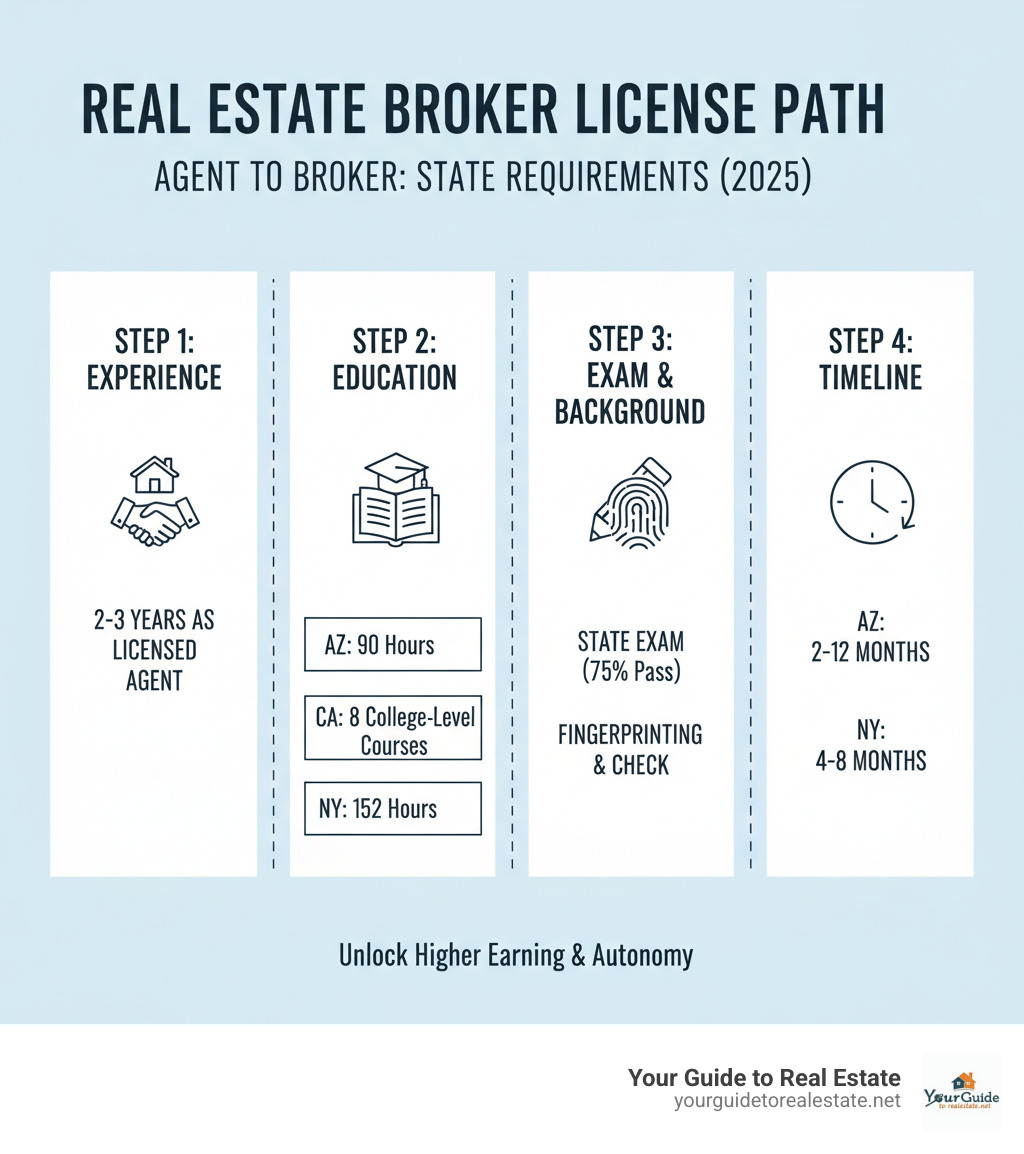
While requirements vary by state, the general path involves:
- Experience: 2-3 years as a licensed salesperson.
- Education: 90-150+ hours of pre-licensing courses.
- Exam: A state licensing examination.
- Background Check: Fingerprinting and criminal history review.
The investment is significant but manageable. In a state like Arizona, for example, the total cost is around $1,000, and the process can take as little as two to three months. The educational commitment varies widely, from 90 hours in Arizona to 152 in New York and eight college-level courses in California.
Whether you aim to become an Associate Broker within a firm or a Designated Broker running your own, understanding your state’s requirements is the first step toward this exciting milestone.
Real estate broker license definitions:
- choosing a a real estate broker
- what is a real estate brokerage?
- top 5 things to look for when choosing a real estate brokerage
The Broker License Process: An Arizona Case Study
To understand the licensing journey, let’s use Arizona as a detailed example. The Arizona Department of Real Estate (ADRE) oversees the entire process, setting high standards for education, experience, and professional conduct. Their online portal is the central hub for applications and license verification.
Prerequisites: Experience and Education
Before applying, candidates in Arizona must be at least 18 years old and provide proof of legal U.S. presence. The state also enforces strict honesty and character standards, as outlined in A.R.S. §32-2124. Any criminal convictions, especially felonies or crimes of moral turpitude (e.g., theft, forgery), could lead to license denial.
The core requirements are:
- Experience: You need three full years of actual experience as a licensed real estate agent or broker within the past five years. This active experience must be documented on the Broker Candidate Experience Verification Form (LI-226), available on the ADRE website.
- Education: You must complete a 90-hour broker pre-licensing course at an ADRE-approved real estate school. This advanced coursework covers brokerage management, complex real estate law, and high-level contract issues.
The Exam, Application, and Background Check

After your education, the next step is the state exam. In Arizona, you schedule it through the state’s testing partner, Pearson VUE. The exam costs $125 and is a comprehensive test of 195 questions with a 315-minute time limit. A passing score of 75% is required.
Once you pass, you have one year to submit your application package via the ADRE online portal. This includes your exam score, education certificate, and other required forms.
As part of the process, you must obtain a Fingerprint Clearance Card (FCC) from the Arizona Department of Public Safety (DPS). The process costs $67 and can take eight to ten weeks, so it’s wise to start early. You must also disclose any past disciplinary actions or criminal convictions on the Disciplinary Actions Disclosure Form (LI-214/244). Honesty is essential, as the ADRE conducts a thorough criminal history review.
Post-Licensing and Out-of-State Applicants
Before your Arizona broker license can be activated, you must complete the Broker Management Clinic. This consists of three 3-hour classes (nine hours total) covering trust account management, advertising compliance, and agent supervision. This mandatory training ensures you are prepared for the responsibilities of a broker.
For out-of-state applicants moving to Arizona, the state offers a license recognition process under A.R.S. §32-4302. This generally requires Arizona residency, at least one year of active licensure in your previous state, and a clean disciplinary record. Military spouses may qualify for special considerations and should contact the ADRE Licensing Division for details.
Broker License Requirements: A Multi-State Comparison
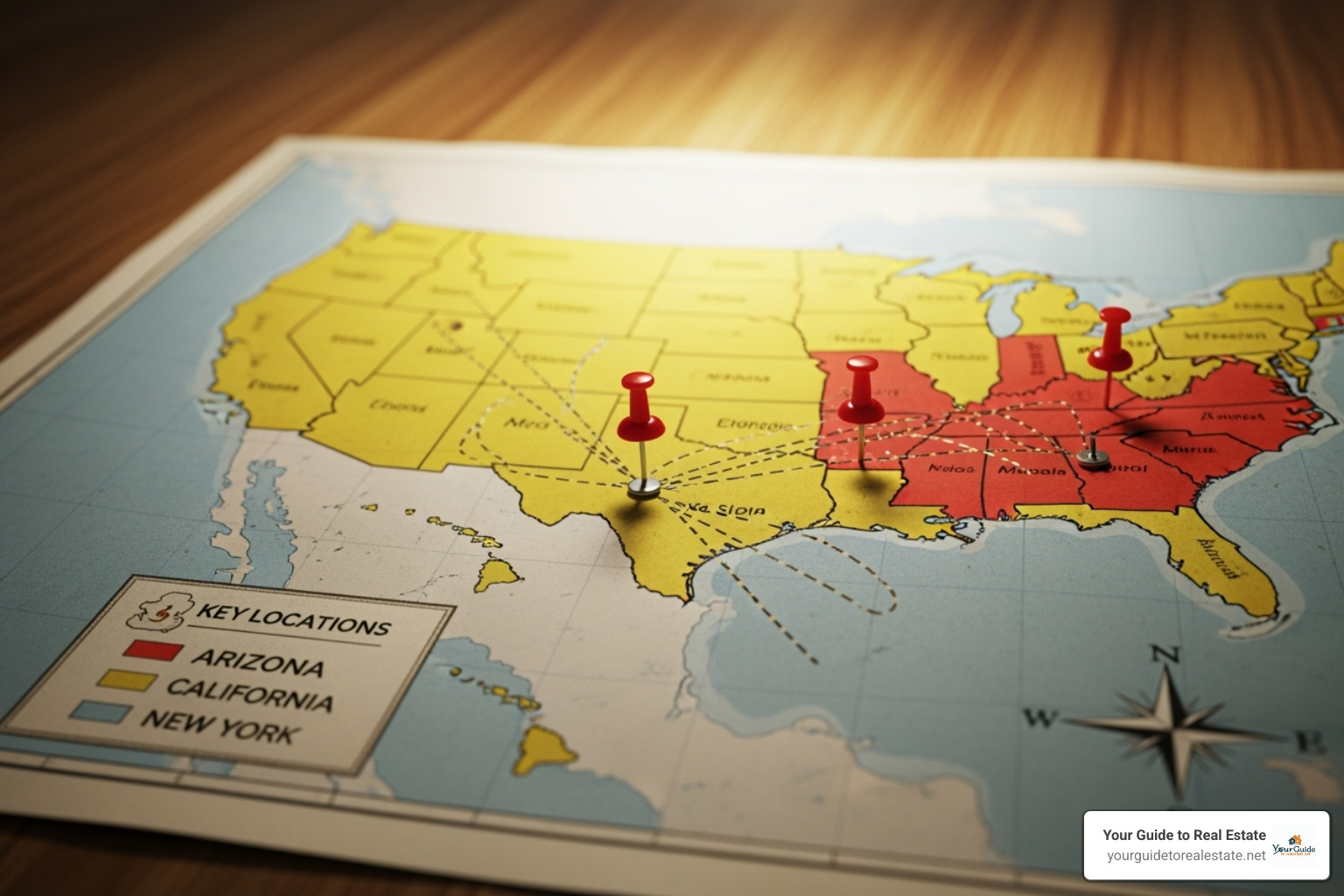
No two states handle broker licensing the same way, and the variations can be dramatic. Experience, age, and education requirements are all over the map. Furthermore, there is no universal reciprocity; your license from one state won’t automatically work in another without meeting additional state-specific requirements.
For professionals in other regions, the variations continue. In Texas, for instance, applicants need four years of active experience and 270 hours of qualifying courses plus a bachelor’s degree. Oklahoma requires two years of experience and 90 hours of advanced instruction. These differences highlight why it’s crucial to research the specific rules in your target state.
Here’s how three major states compare:
| Requirement | Arizona | California | New York |
|---|---|---|---|
| Minimum Age | 18 years | 18 years | 20 years |
| Experience | 3 years active licensed experience in last 5 years | 2 years full-time licensed salesperson experience in last 5 years OR 2 years equivalent unlicensed experience OR 4-year degree with real estate major/minor. | 2 years as a licensed salesperson OR 3 years in the general real estate field (or combination, point system applies). |
| Education | 90 hours pre-licensing education (45 units) | 8 college-level courses (Real Estate Practice, Legal Aspects, Finance, Appraisal, Economics/Accounting + 3 electives; 45 hours each). | 152 hours of approved qualifying education. |
| Exam Cost | $125 | Varies (part of application fee) | $15 |
| Application Fee | Varies (part of total cost) | Varies (part of total cost) | $185 (Initial application) |
| Exam Questions | 195 questions | 200 questions | 75 questions |
| Exam Time | 315 minutes | 4 hours | 2.5 hours |
| Passing Score | 75% | 75% | 70% |
| Other Key Req. | Broker Management Clinic, Fingerprint Card | Fingerprinting, honesty/truthfulness, specific course content for implicit bias/fair housing (effective Jan 2024). | Fingerprinting, business name approval, eAccessNY account. |
California’s requirement of eight college-level courses is notably intensive. New York offers flexibility with a point system for experience, while Arizona’s exam is a true endurance test at over five hours. The bottom line is that requirements differ significantly, impacting your timeline, budget, and strategy. Understanding these differences is key to making informed career decisions.
The Investment: Costs and Timeline for Your Real Estate Broker License
Pursuing a real estate broker license requires an investment of time and money. Viewing it as an investment in your career, with the potential for higher earnings and business ownership, helps put the costs into perspective. Brokers typically earn substantially more than agents, allowing them to recoup their initial investment quickly.
Breaking Down the Costs
The total cost varies by state, but we can use Arizona as a clear example. The largest expense is typically education fees for the pre-licensing course. Other costs include the exam fee ($125 in Arizona), fingerprinting fees ($67 for the clearance card), and license application fees, which differ by state (e.g., $185 in New York).
In total, it costs approximately $1,000 to get a broker license in Arizona. This covers education, exams, background checks, and application costs. While this may seem significant, brokers often recover this cost within their first few transactions. For the most current information, always check your state’s official licensing fee schedule, like the one provided by the Arizona Department of Real Estate.
How Long Does It Take to Get a Real Estate Broker License?
The timeline depends on your dedication and state processing times, but it can be faster than you think. In Arizona, the entire process can take as little as two to three months.
Key timeline factors include:
- Coursework Duration: The 90-hour pre-licensing requirement can be completed in a few weeks with an intensive schedule or spread out over a longer period.
- Exam Preparation: This varies by candidate, but adequate preparation is crucial for passing a comprehensive exam on the first try.
- Background Check Processing: This is often the longest wait. In Arizona, the Fingerprint Clearance Card process can take eight to ten weeks, so starting this step early is highly recommended.
- Application Approval: Once all documents are submitted, the state licensing board needs a few weeks for review and processing.
A realistic timeline to plan for is 3-4 months from start to finish. This accounts for all steps and potential delays. A well-planned approach leads to better results and less stress.
Keeping Your License Active: Renewal and Continuing Education

Earning your real estate broker license is the starting line, not the finish. To maintain your credentials, you must stay on top of renewal cycles and continuing education (CE) requirements. Think of CE as your professional lifeline in a fast-moving industry; it ensures you are up-to-date on changing laws, market trends, and best practices.
In most states, like Arizona, broker licenses are issued for a two-year term. Renewal must be completed by the deadline to avoid penalties or suspension. Most states, including Arizona, offer a convenient online renewal portal through their Department of Real Estate website.
Arizona Broker Continuing Education Requirements
CE requirements vary, but let’s look at Arizona’s model. Brokers need 24 total hours of CE every two years. However, the focus is on broker-specific duties.
- Broker Management Clinic: Before initial license activation, new brokers must complete 9 hours of Broker Management Clinic classes. These cover critical topics like trust accounts, supervision, and compliance. Designated brokers have ongoing Broker Management Clinic requirements.
- Required Subjects: CE coursework must include 3 hours each in Agency Law, Contract Law, and Fair Housing.
It is your responsibility to track your CE credits and submit them before the renewal deadline. Staying organized is key. The most successful brokers view continuing education not as a chore, but as an investment in their expertise and earning potential.
Frequently Asked Questions about the Real Estate Broker License
We know the path to earning your real estate broker license can feel overwhelming. Let’s tackle the most common questions from aspiring brokers.
Can I become a broker right after getting my salesperson license?
No. Every state has a significant experience requirement for a reason. Becoming a broker involves serious legal and supervisory responsibilities that demand real-world practice. You’ll need to prove you have spent time navigating complex transactions and developing sound judgment.
Experience requirements are substantial everywhere. Arizona requires three years of active licensed experience, while California and New York require at least two years. This period is essential for building the expertise needed to lead and protect clients effectively.
What happens if I have a criminal conviction?
The short answer is that you must disclose everything on your real estate broker license application. Honesty is critical. Licensing boards like Arizona’s ADRE will review your criminal history to assess your character and fitness to practice.
Certain convictions, such as felonies or crimes involving theft, fraud, or “moral turpitude,” raise serious red flags. However, failing to disclose a conviction is often considered worse than the conviction itself, as it demonstrates dishonesty. Each case is reviewed individually, and many people with past convictions successfully obtain their licenses. If you have concerns, consider consulting an attorney specializing in professional licensing before you apply.
Do I have to open my own brokerage as a broker?
Not at all. This is a common misconception. A broker license gives you options; it doesn’t force you down a single path. Many licensed brokers work as “Associate Brokers” under another Designated Broker. This allows you to leverage your advanced credentials for higher commission splits and leadership roles without the administrative burden of running a company.
The responsibilities of running a brokerage—managing trust accounts, ensuring compliance, supervising agents, and maintaining insurance—are significant. Many brokers prefer to focus on working with clients and closing deals. Starting your own firm is a great option your license provides, but it’s just one of many.
Conclusion
Congratulations! You now have a comprehensive overview of what it takes to earn your real estate broker license. This isn’t just another milestone; it’s a gateway to a transformed career with greater autonomy, higher earning potential, and the respect that comes with advanced expertise.
The path requires dedication, but the investment of time and money is a strategic move for your future. The potential returns through higher commission splits, leadership opportunities, or even starting your own brokerage make the effort worthwhile.
You now have a clear roadmap. You understand the core requirements, the costs and timeline, and the importance of continuing education. Becoming a broker doesn’t mean you have to open your own firm immediately; many thrive as Associate Brokers within established companies. The choice is yours, and that’s the beauty of this achievement.
Ready to take the next step in your real estate career? Having the right guidance makes all the difference. Check out our comprehensive guide on choosing a real estate broker to help you find the perfect fit for your newly liftd career goals.