
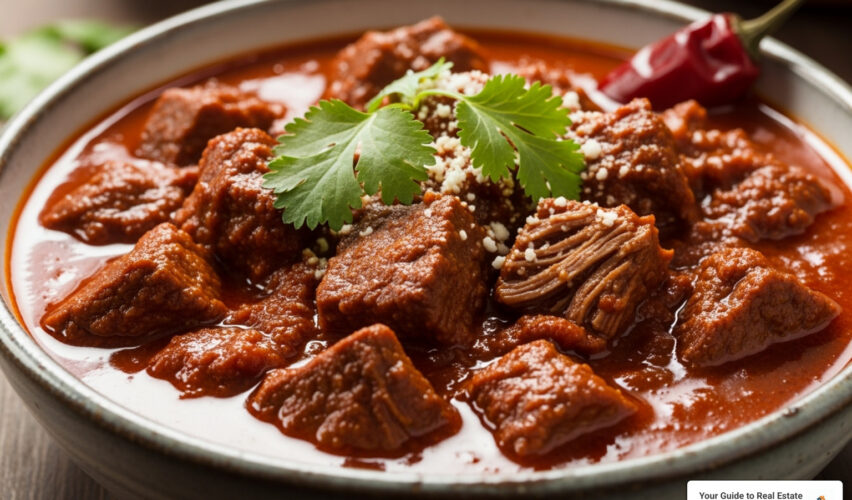
What Chile Colorado Really Is and Why You Need to Try It
Chile Colorado is a traditional Mexican stew featuring tender chunks of beef simmered in a rich, red chile sauce made from dried peppers. Here’s what you need to know:
Quick Facts:
- Origin: Chihuahua region of Mexico
- Name meaning: “Colorado” means “colored red” in Spanish (not related to the US state)
- Main ingredients: Beef chuck, dried chiles (guajillo, ancho, árbol), onion, garlic, spices
- Cooking time: 2-3 hours total
- Serves: 6-8 people
This isn’t your typical American chili with beans and ground meat. Chile Colorado is all about chunks of beef that become fork-tender after slow simmering in a smooth, flavorful sauce made from rehydrated dried chiles.
The dish originated in northern Mexico and has become a beloved comfort food across Mexican-American households. One home cook shared that their father believed “you can judge the overall quality of food in any Mexican restaurant by their Chile Colorado” – that’s how important getting this recipe right really is.
What makes Chile Colorado special is its simplicity and depth. Unlike complex moles with dozens of ingredients, this stew relies on just a few key components working together perfectly. The dried chiles provide smoky, earthy flavors that you simply can’t get from powder.
The best part? It tastes even better the next day, making it perfect for meal prep or feeding a crowd.
Glossary for chile colorado:
Gathering Your Authentic Ingredients
Getting the right ingredients for Chile Colorado is like choosing the perfect foundation for your dream home – you want quality materials that will create something truly special. This isn’t a dish where you can cut corners or make too many substitutions. The magic happens when authentic ingredients come together in perfect harmony.
Let me walk you through exactly what you’ll need to create this soul-warming stew:
For the Chile Sauce:
- 5-8 dried guajillo chiles
- 4-5 dried ancho chiles
- 1-3 dried árbol chiles (for heat)
- 4-6 cups beef or chicken broth
- 1 medium onion, roughly chopped
- 4 cloves garlic, peeled
- 2 teaspoons dried Mexican oregano
- 1½ teaspoons ground cumin
- Salt and black pepper to taste
- 1/8 tablet Mexican chocolate (optional)
For the Beef:
- 3 pounds beef chuck roast, cut into 2-inch cubes
- 2 tablespoons vegetable oil
- 2 tablespoons all-purpose flour
- 1 teaspoon salt
- ½ teaspoon black pepper
- 2 bay leaves
Choosing the Right Dried Chiles
Here’s where Chile Colorado gets its authentic soul – the dried chiles. You simply can’t achieve the same depth of flavor using chili powder from a jar. Trust me on this one.
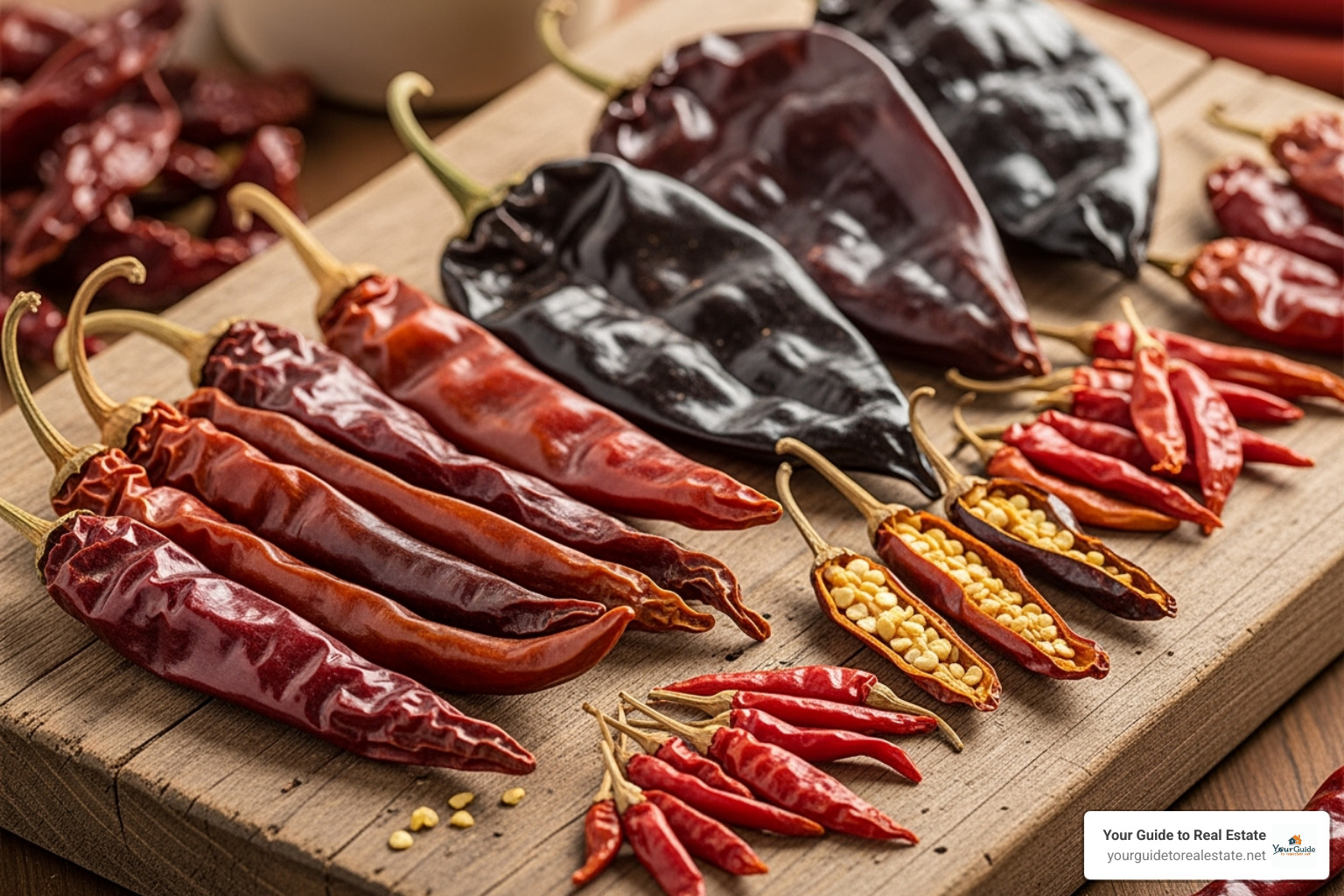
Guajillo chiles are your workhorses here. These smooth, burgundy-colored beauties bring a mild heat with fruity, slightly tangy notes. They’re responsible for that gorgeous red color that gives the dish its name.
Ancho chiles are dried poblano peppers that add sweetness and smokiness without much heat. Think of them as the gentle giants of the chile world – they provide incredible depth and earthiness that forms the backbone of your sauce.
Árbol chiles are the firecracker of the bunch. These small, bright red chiles pack serious heat, so use them sparingly. Start with just one if you’re heat-sensitive, or skip them entirely for a milder version.
You’ll find these dried chiles in most grocery stores’ Mexican sections, but Latin markets often have the freshest selection. If you’re shopping online, this guide to dried chiles will help you choose quality options.
The difference between using whole dried chiles versus powder is like comparing fresh herbs to dried – there’s just no contest in terms of flavor complexity.
Selecting the Best Beef
For Chile Colorado, you want beef that gets better with time – just like a good relationship. The best cuts are the ones that seem tough at first but become incredibly tender with patience and slow cooking.
Beef chuck roast is your best friend here. This cut comes from the shoulder area, which means it has plenty of connective tissue and marbling. When you see those white streaks running through the meat, don’t worry – that’s pure gold for stew-making.
Beef shoulder or pre-cut stew meat also work beautifully, as long as they’re from the chuck or shoulder area. Avoid lean cuts like sirloin – they’ll just turn into expensive shoe leather.
Here’s the beautiful science behind it: those tough connective tissues slowly break down during the long simmer, turning into gelatin that makes the meat fork-tender and adds body to your sauce. It’s like culinary alchemy.
When prepping your beef, trim off any huge chunks of fat, but don’t go crazy – some fat adds flavor. Cut everything into uniform cubes about 1 to 2 inches across so they cook evenly.
Essential Spices and Aromatics
The supporting cast of ingredients might seem simple, but each one plays a crucial role in building the complex flavor profile that makes Chile Colorado so special.
Onion provides the sweet, savory foundation that every great stew needs. Here’s a kitchen hack that’ll save your eyes: pop that onion in the freezer for 15 minutes before chopping. The cold stops those tear-inducing chemicals from escaping. You’re welcome!
Fresh garlic brings pungent, earthy notes that complement the chiles perfectly. Don’t even think about using the pre-minced stuff from a jar – fresh is the only way to go.
Ground cumin adds that warm, earthy flavor that screams “Mexican comfort food.” It’s one of those spices that makes everything smell like home.
Dried Mexican oregano is completely different from the Mediterranean variety you might have in your spice rack. It’s got citrusy, floral notes that pair beautifully with chiles. Dried Mexican oregano is worth seeking out for authentic flavor.
Bay leaves might seem old-fashioned, but they add a subtle herbal note that rounds out the sauce. Just remember to fish them out before serving!
Beef broth forms the liquid base of your sauce. Choose a good-quality broth since it’ll concentrate as the stew simmers.
Salt and black pepper are your flavor improvers – don’t skimp on good-quality versions of these basics.
For something extra special, try adding a small piece of Mexican chocolate. It won’t make your stew taste like dessert, but it adds an subtle richness and depth that’s absolutely magical. Think of it as the secret ingredient that’ll have people asking, “What makes this taste so amazing?”
With these carefully chosen ingredients, you’re ready to create a Chile Colorado that would make any Mexican grandmother proud. The key is respecting each component and letting them work together to create something greater than the sum of their parts.
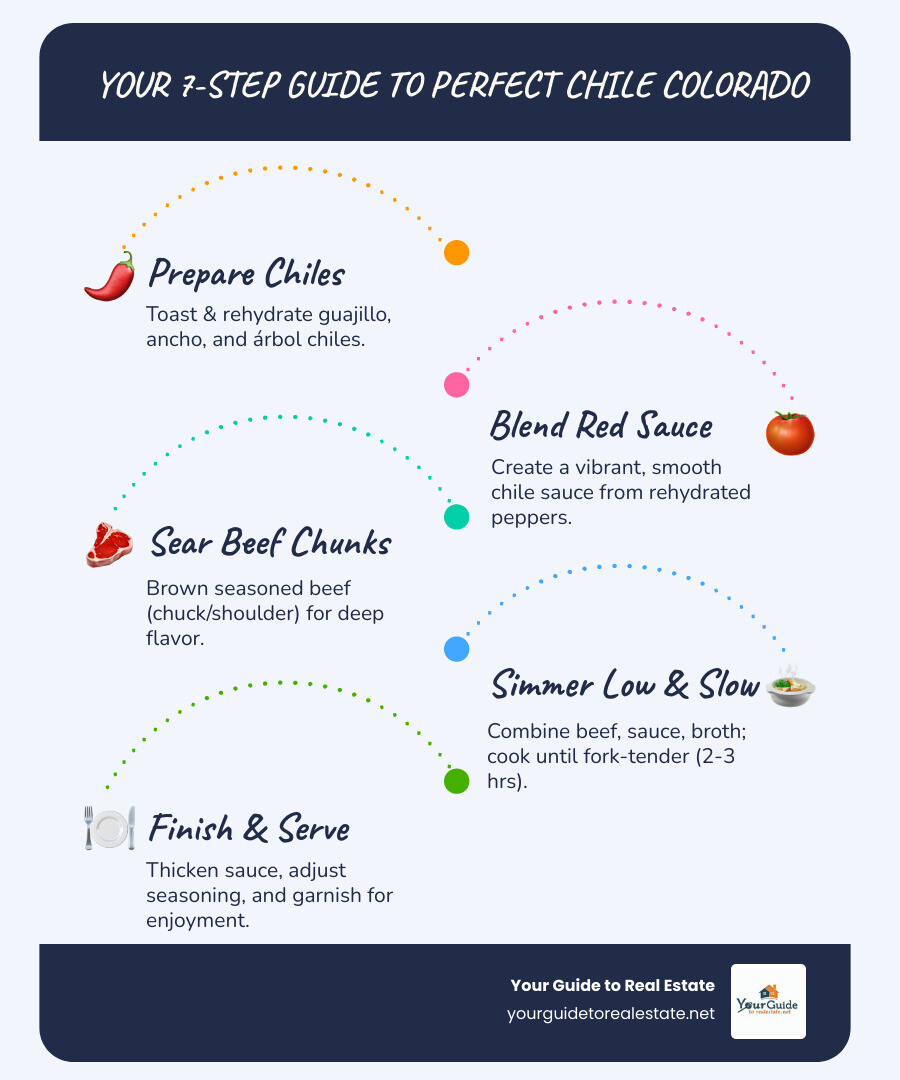
The 7-Step Guide to Perfect Chile Colorado
Now that we’ve gathered our stellar ingredients, it’s time to bring them to life. Making Chile Colorado is truly a labor of love, and I promise you’ll find the process as rewarding as the final result. Your kitchen will fill with incredible aromas that’ll have your neighbors wondering what magic you’re working in there!
The beauty of this dish lies in building flavor at every single step. We’ll walk through seven straightforward steps together, from preparing those gorgeous dried chiles to achieving that perfect fork-tender beef. Depending on your cooking method, you’re looking at anywhere from 1 hour 45 minutes to 3 hours 30 minutes total time. Trust me, every minute is worth it when you taste that first spoonful.
Step 1 & 2: Create the Sauce and Sear the Beef
These first two steps are where we lay the foundation for our Chile Colorado. Think of it like building a house – you want a strong base that everything else can build upon.
Step 1: Crafting the Rich Red Chile Sauce
First, we’re going to toast the chiles in a dry skillet over medium heat for about 1-2 minutes per side. You’ll know they’re ready when they become fragrant – it’s an amazing smell that signals we’re awakening all those sleeping flavors. Just watch them carefully because burnt chiles will make your sauce bitter, and nobody wants that!
Here’s a pro tip: wear plastic gloves when handling these beauties, especially those spicy árbol chiles. Your eyes will thank you later if you accidentally touch them.
Next, we remove the stems and seeds from our toasted chiles. This step also helps control the heat level – more seeds mean more spice. Place the cleaned chiles in a saucepan along with your roughly chopped onion and garlic cloves. Cover everything with 2-3 cups of hot chicken or beef broth, bring it to a boil, then remove from heat. Let this mixture steep for 20-30 minutes until the chiles are nice and soft.
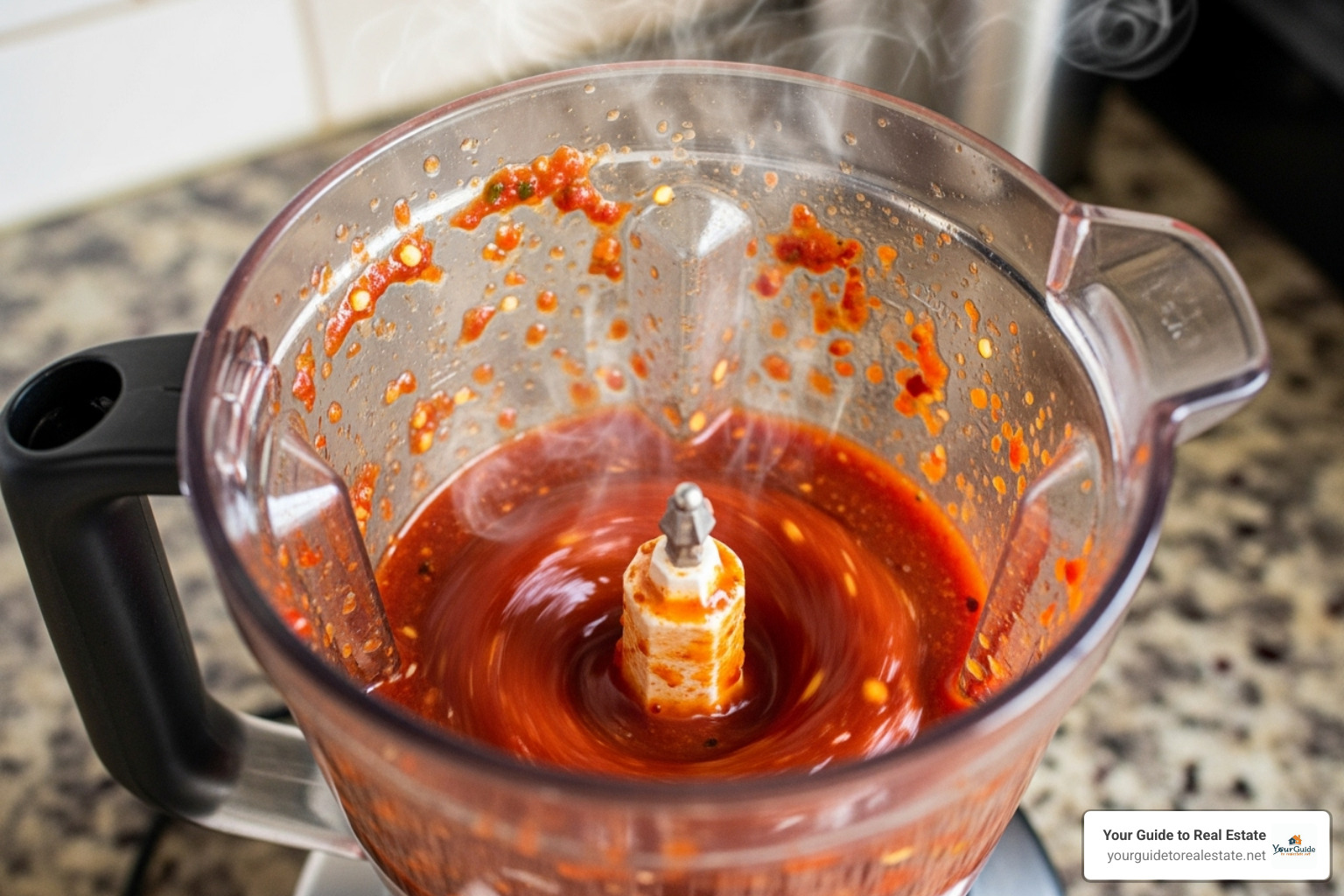
Now comes the fun part – blending the sauce. Transfer those softened chiles, onion, garlic, and about 1-2 cups of that flavorful steeping liquid into your blender. Add the dried Mexican oregano, ground cumin, optional garlic powder, smoked paprika, and that little piece of Mexican chocolate if you’re using it.
When blending hot liquids, always place a towel over the blender lid to let steam escape safely. A powerful blender like the Cuisinart Hurricane Blender will give you that super smooth consistency we’re after.
For restaurant-quality texture, strain the sauce through a fine-mesh sieve. Use a spoon to push the pulp through and discard any tough bits. This extra step makes all the difference in achieving that silky smooth sauce.
Step 2: Searing the Flavorful Beef
While our sauce is resting, let’s give our beef some love. Pat those cubed pieces dry with paper towels – this is crucial for getting a good sear. In a large bowl, toss the beef with 2-3 tablespoons of flour, 1 teaspoon of kosher salt, and 1/2 teaspoon of black pepper. The flour creates a beautiful crust and helps thicken our sauce later.
Heat 2-3 tablespoons of neutral oil in your heavy-bottomed Dutch oven over medium-high heat. Here’s where patience pays off – sear the beef in batches. I know it’s tempting to dump everything in at once, but overcrowding will steam the meat instead of giving us that gorgeous brown crust we want.
Each piece should develop a rich, dark exterior – that’s the Maillard reaction working its magic and building incredible depth of flavor. Don’t forget to scrape up those browned bits from the bottom of the pot after each batch. Those little flavor nuggets are pure gold!
Step 3 & 4: Combine and Cook Low and Slow
This is where our Chile Colorado really starts coming together. We’re about to witness the beautiful change that happens when tough cuts of beef meet time and gentle heat.
Step 3: Bringing it All Together
Return all that beautifully seared beef to your Dutch oven. Pour that vibrant red chile sauce right over the top – isn’t that color just stunning? Add your remaining beef broth (you’ll need 2-3 more cups to mostly cover the beef) and toss in those bay leaves. Give everything a good stir to make sure all the flavors are getting acquainted.
Step 4: The Art of Slow Cooking
Here’s where the magic really happens, and honestly, this is my favorite part of making Chile Colorado. The long, gentle simmer is what transforms those tough pieces of chuck roast into melt-in-your-mouth perfection.
You have several options for this crucial step, and each has its own advantages. Traditional stovetop cooking takes 1 hour 30 minutes to 3 hours on a low simmer with the pot covered. Stir occasionally and keep cooking until the beef is fork-tender. Some recipes suggest covering for 45 minutes, then uncovering for the last 15 minutes to help thicken the sauce.
If you prefer oven braising, set your oven to 325°F and cook covered for about 3 hours. The even heat distribution in the oven is fantastic for consistent results. For those who love their slow cooker, you can cook on high for 3-4 hours or low for 6-8 hours – just make sure you’ve prepared the sauce and seared the beef first.
The Instant Pot offers the fastest route to tender meat. Use the stew/meat setting for 35 minutes, followed by a natural pressure release for 10-15 minutes.
No matter which method you choose, you’re looking for fork-tender beef – meat that easily pulls apart with a fork, showing that all those connective tissues have completely broken down into silky gelatin.
Step 5, 6 & 7: Thicken, Season, and Serve
We’re in the home stretch! These final steps ensure your Chile Colorado has the perfect consistency and flavor balance.
Step 5: Achieving the Perfect Consistency
After that long, patient simmer, your beef should be incredibly tender and your flavors deeply developed. If your sauce seems thinner than you’d like, we have a couple of traditional solutions.
A cornstarch slurry is simple and effective. Whisk 1 tablespoon of cornstarch with 1 tablespoon of cold water until smooth, then stir it into your simmering stew. Cook for another 2-3 minutes, stirring constantly, until you reach the perfect consistency.
For a truly authentic approach, try masa harina – that fine corn flour used in tortilla making. Create a slurry with 1-2 tablespoons of masa harina and equal parts cold water, then stir it into your stew. Cook for 5-10 minutes while stirring. This adds a subtle, earthy corn flavor that’s characteristic of traditional Mexican stews.
Step 6: The Final Flavor Adjustments
This is your moment to shine as the chef! Taste your creation carefully and make any needed adjustments. Does it need more salt? Maybe a pinch more cumin or oregano? Don’t be shy about seasoning – the flavors will continue to develop as the dish cools and reheats.
A squeeze of fresh lime juice at the end works wonders, brightening all those deep, rich flavors with a lovely tang. And don’t forget to remove those bay leaves before serving – they’ve done their job beautifully.
Step 7: Plating and Garnishing
Your magnificent Chile Colorado is ready to shine! Ladle generous portions into bowls, making sure each serving gets plenty of that tender beef swimming in that gorgeous red sauce. The anticipation at this point is almost unbearable – you’ve created something truly special.
This is where you can have fun with garnishes and really make the dish your own. The contrast of fresh toppings against that rich, deeply flavored stew is absolutely perfect.
Serving, Storing, and Customizing Your Dish
One of the most wonderful things about Chile Colorado is how it transforms into so many different meals. This isn’t just a one-trick pony – it’s like having a culinary chameleon in your kitchen! Whether you’re feeding the family on a busy weeknight or meal prepping for the week ahead, this versatile stew adapts beautifully to whatever you need.

Perfect Pairings and Toppings for Chile Colorado
The beauty of Chile Colorado lies in its ability to be both a complete meal and a fantastic building block for other dishes. Think of it as the star of the show that plays well with a supporting cast of traditional Mexican sides and fresh toppings.
The most classic way to serve Chile Colorado is simply ladled into bowls with warm flour or corn tortillas on the side. There’s something magical about using a soft tortilla to scoop up that rich, red sauce and tender beef – it’s comfort food at its finest.
But don’t stop there! This stew makes incredible burrito filling when combined with Mexican rice and refried beans. The tender beef practically melts in your mouth, while the sauce keeps everything moist and flavorful. You can also use it as filling for enchiladas, topping them with extra sauce and cheese before baking, or shred the beef slightly for amazing soft tacos.
For a more modern approach, try serving Chile Colorado as a bowl meal over rice with beans on the side – it’s perfect for those who love customizable dining experiences.
The real magic happens when you add fresh toppings that brighten and balance all those deep, rich flavors. A sprinkle of fresh cilantro adds an herbaceous pop, while diced white or red onion provides a crisp, pungent contrast that cuts through the richness. Cotija cheese brings a salty, crumbly texture that’s absolutely divine, and a dollop of sour cream or Mexican crema adds cooling creaminess.
Don’t forget the lime wedges – that bright citrus squeeze at the table makes everything sing! For an extra touch of freshness and crunch, try adding thinly sliced radishes with their peppery bite.
If you’re feeling inspired to explore more authentic Mexican flavors, check out more traditional Mexican recipes for your next culinary adventure.
Storage and Reheating Instructions
Here’s where Chile Colorado really shines – it’s practically made for leftovers! In fact, many home cooks swear that it tastes even better the next day as all those flavors continue to meld and deepen.
Once your stew has cooled completely, transfer it to an airtight container and store it in the refrigerator for up to 5 days. The sauce might thicken as it cools, but that’s completely normal and actually makes for great burrito filling consistency.
For longer storage, Chile Colorado is a freezer superstar. Cool it completely before portioning into freezer-safe bags or containers – don’t forget to label with the date! It will keep beautifully frozen for up to 3 months. Pro tip: we often make a double batch, enjoying one portion fresh and freezing the other. It’s like having a homemade frozen dinner that’s actually good for you!
When it’s time to reheat, thaw overnight in the refrigerator for best results. Then gently warm it on the stovetop over low to medium heat, stirring occasionally until heated through. If the sauce seems too thick, just add a splash of water or broth to loosen it up. If you’re reheating from frozen (we’ve all been there on busy nights!), use very low heat and stir frequently, adding liquid as needed until it’s thawed and warmed through.
How to Customize Your Chile Colorado
One of the joys of home cooking is making dishes your own, and Chile Colorado welcomes experimentation with open arms. Whether you need to dial down the heat for sensitive palates or want to try different proteins, this recipe is wonderfully forgiving.
Adjusting the spice level is easier than you might think. The “Colorado” refers to the red color, not the heat level! For a milder version, simply remove all the seeds and veins from your chiles before rehydrating them, and reduce or completely omit the Árbol chiles – they’re the main heat contributors. For those who like it hotter, leave some seeds in the Árbol chiles or add a few extra.
The protein possibilities are exciting too. While beef chuck is traditional and delicious, pork shoulder works beautifully and creates something reminiscent of rich carnitas stew. Just cut it into similar-sized cubes and follow the same braising process. Chicken thighs are another great option for a quicker-cooking version, though you’ll need to reduce the braising time significantly.
For our vegetarian friends, Chile Colorado adapts beautifully to plant-based proteins. Cubed Yukon gold potatoes become incredibly tender and flavorful in the sauce. Nopales (cactus paddles) add authentic Mexican flair with their unique texture. Chickpeas provide protein and heartiness, while vegetables like carrots, mushrooms, or winter squash create satisfying variations. Just remember to use vegetable broth instead of beef or chicken broth for these versions.
A comforting meal is the heart of a home, and understanding what makes a house a home is key. As you plan your kitchen adventures, you might also be interested in the Top 7 Real Estate Trends Shaping 2025 and Beyond. Just like we customize recipes to fit our tastes and needs, creating the perfect home environment requires the same thoughtful approach and attention to detail.
Frequently Asked Questions about Chile Colorado
Making Chile Colorado for the first time can feel like stepping into unfamiliar territory, especially when you’re working with ingredients like dried chiles that might be new to your kitchen. Don’t worry – we’ve all been there! Over the years, we’ve heard the same questions pop up again and again from home cooks eager to master this incredible dish. Let’s tackle the most common concerns so you can cook with confidence.
What’s the difference between Chile Colorado and Texas Chili?
This question comes up constantly, and honestly, it’s no wonder people get confused. Both dishes are red, both are called “chili” in English, and both are absolutely delicious. But they’re actually from completely different culinary traditions with distinct personalities.
Chile Colorado is the traditional Mexican approach we’ve been exploring together. Picture this: tender chunks of beef swimming in a smooth, velvety red sauce made from carefully selected dried chiles like guajillo, ancho, and árbol. The magic happens when those whole chiles are toasted, rehydrated, and blended into liquid gold. You won’t find beans or chunky tomatoes here – it’s all about that pure chile flavor coating every piece of meat. The result is earthy, smoky, and rich with just the right amount of heat.
Texas Chili, on the other hand, is America’s take on the concept. It typically starts with ground beef (though some versions use cubes) and builds flavor using chili powder – that pre-mixed blend you find in the spice aisle. Tomatoes often make an appearance, either diced or as sauce, giving it a more acidic, bright flavor profile. While purists might argue about beans, many popular Texas chili recipes accept them wholeheartedly.
Think of it this way: Chile Colorado is like listening to a solo violin – pure, focused, and deeply expressive. Texas chili is more like a full band – lots of different flavors playing together to create something entirely different but equally wonderful.
Can I use chili powder instead of whole dried chiles?
We get it – hunting down specific dried chiles can feel like a treasure hunt, especially if you don’t have a Latin market nearby. The temptation to reach for that familiar jar of chili powder is real. But here’s the thing: taking that shortcut would be like trying to paint a sunset with just one color instead of the whole palette.
Those whole dried chiles are absolutely essential for authentic Chile Colorado. When you toast them in that dry skillet, their oils wake up and release aromas that will make your kitchen smell like a traditional Mexican cocina. The rehydrating and blending process extracts flavors and creates a depth that simply cannot be replicated with powder.
Most store-bought chili powders are actually blends containing cumin, oregano, garlic powder, and sometimes salt. Using them would throw off our carefully balanced recipe and give you something that tastes more like Texas chili than the Mexican masterpiece we’re after.
If you’re truly stuck and cannot find whole dried chiles anywhere, you could try using high-quality ground ancho or guajillo chile powder specifically (not the blended stuff). Start with about 1 tablespoon of each and taste as you go. But we’ll be honest – the result won’t have that same vibrant, complex flavor that makes Chile Colorado so special.
Trust us, the extra effort to source those dried chiles is worth every minute. Your taste buds will thank you!
Why is my beef tough after cooking?
Nothing breaks a cook’s heart quite like spending hours on a dish only to find the meat is still tough. If this has happened to you, take a deep breath – you’re definitely not alone, and it’s almost always fixable!
The most common culprit is not cooking long enough. We know it sounds counterintuitive, but those “tough” cuts of beef like chuck roast need time to work their magic. All that connective tissue and collagen that makes them chewy when quickly cooked actually transforms into silky gelatin during long, slow braising. It’s like a beautiful metamorphosis happening right in your pot.
Your beef needs to reach that fork-tender stage where it practically falls apart when you touch it. This usually takes 2-3 hours of gentle simmering on the stovetop, or 6-8 hours in a slow cooker. Don’t rush it – this is where patience becomes your best cooking tool.
The other possibility is using the wrong cut of meat. Lean cuts like sirloin or round steak might seem like good choices, but they’ll just get drier and tougher the longer you cook them. They don’t have enough connective tissue to break down into that luxurious, tender texture we’re after. Stick with chuck roast or beef shoulder – those well-worked muscles are exactly what we need.
If your beef is still tough after what you thought was enough cooking time, simply keep going! Cover that pot and continue simmering, checking every 30 minutes or so. Make sure you’re maintaining a gentle simmer, not a rolling boil, which can actually toughen the meat. Keep the pot covered to maintain that steamy environment that helps break down all those tough fibers.
Great Chile Colorado isn’t about speed – it’s about giving time and heat the chance to transform simple ingredients into something truly extraordinary.
Conclusion
What a delicious journey we’ve taken together through Chile Colorado! From selecting those beautiful dried chiles to watching tough chunks of beef transform into fork-tender perfection, we’ve finded that this traditional Mexican stew is so much more than just a recipe – it’s a celebration of authentic flavors and time-honored techniques.
The magic of Chile Colorado lies in its simplicity and patience. We’ve learned that there are no shortcuts to that rich, velvety red sauce made from whole dried chiles, and no rushing the slow simmer that creates melt-in-your-mouth beef. These lessons extend far beyond the kitchen, teaching us that the best results often come from taking the time to do things right.
Every time you prepare this hearty stew, you’re not just making dinner – you’re connecting with generations of Mexican home cooks who understood that food is love made visible. Whether you’re serving it with warm tortillas for a cozy family meal or freezing portions for busy weeknights ahead, Chile Colorado brings comfort and satisfaction to any table.
Mastering a recipe like Chile Colorado gives you a framework for success in the kitchen, building confidence through understanding quality ingredients and proven techniques. At Your Guide to Real Estate, we believe in providing that same kind of reliable framework for your property journey. Just as we’ve walked you through each step of creating this perfect stew, we’re here to guide you through every aspect of buying, selling, or investing in real estate with expert insights and stress-free guidance.
The patience you’ve learned while simmering this stew, the attention to detail in selecting the right ingredients, and the satisfaction of mastering something new – these same qualities will serve you well in real estate decisions. To learn more about how we can help you steer the property market with the same confidence you now have in the kitchen, explore our guide to the virtual real-estate brokerage.
Now go forth and create some culinary magic – your family and friends are in for a real treat!