
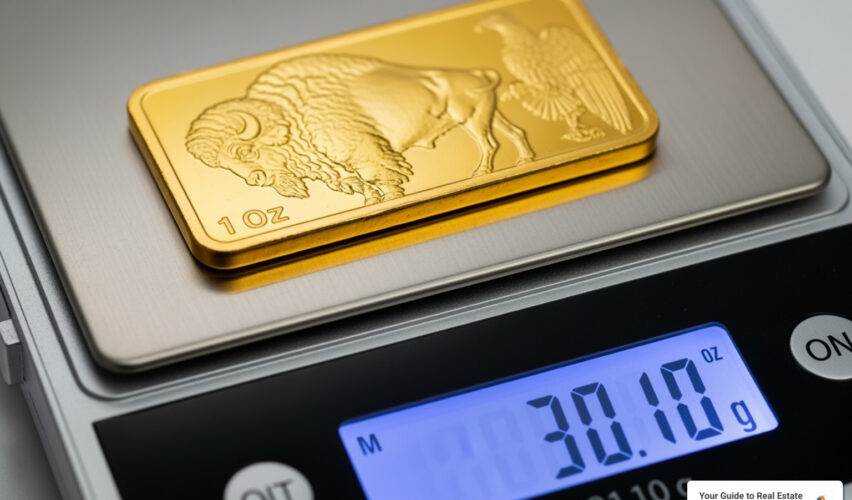
Introduction: The Gold Standard of Measurement
When you ask how many grams in an ounce of gold, you’re diving into a specific world of measurement. This isn’t your kitchen-scale ounce. For gold and other precious metals, a special unit is used: the troy ounce.
Here is the quick answer you need:
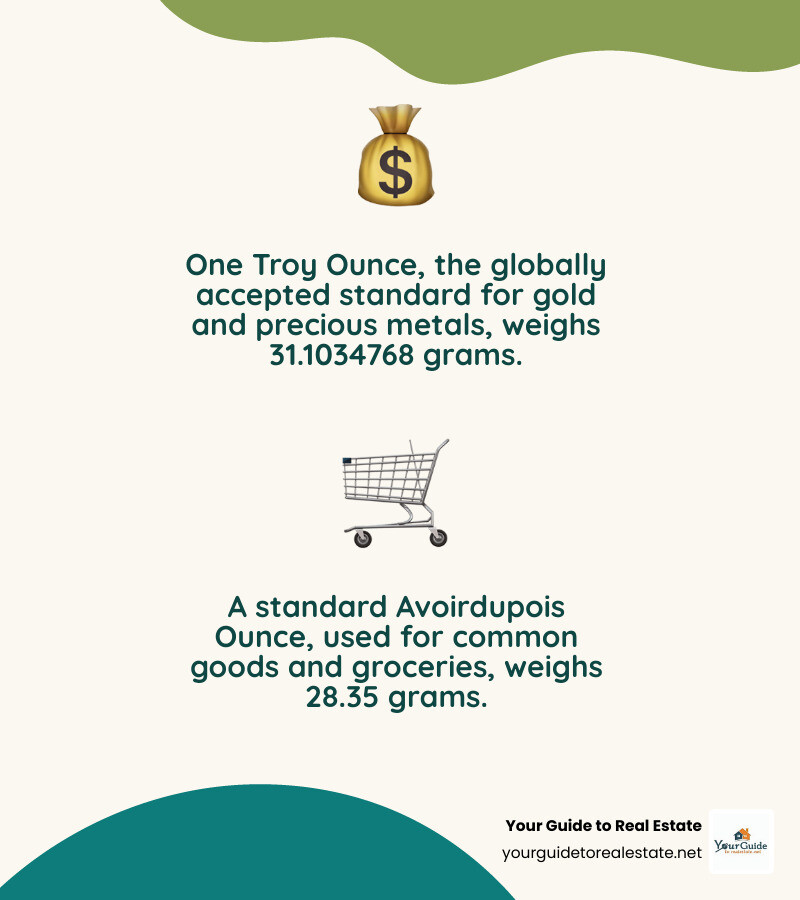
- One troy ounce of gold is precisely 31.1034768 grams.
- For everyday calculations, one troy ounce is roughly 31.1 grams.
Understanding this difference is key. It ensures you accurately value gold, whether you’re buying, selling, or just tracking its price. This precision matters for anyone dealing with asset values, including those in real estate. Let’s explore why gold uses this unique “troy ounce” and what it means for you.
Easy how many grams in an ounce of gold glossary:
The Essential Conversion: How Many Grams in an Ounce of Gold
Here’s where things get interesting. When someone asks how many grams in an ounce of gold, they’re actually stepping into a world with two different types of ounces. And trust me, mixing these up can cost you real money.
The gold world uses something called a troy ounce, not the regular ounce you’d use to measure flour in your kitchen. That everyday ounce? It’s called an avoirdupois ounce, and it’s lighter than what precious metals dealers use.
Think of it this way: if you walked into a gold shop expecting to buy an “ounce” of gold based on your kitchen scale knowledge, you’d actually be getting about 10% more gold than you anticipated. Not a bad surprise, but it shows why understanding this conversion matters for anyone serious about precious metals or asset investments.
| Feature | Troy Ounce (ozt) | Avoirdupois Ounce (oz) |
|---|---|---|
| Weight in Grams | 31.1034768 grams | 28.349523125 grams |
| Items Measured | Gold, silver, platinum, palladium, gemstones | Groceries, spices, everyday goods |
| Ounces in a Pound | 12 troy ounces in a troy pound | 16 avoirdupois ounces in a standard pound |
| Usage | Precious metals industry, historical apothecary weights | General commerce, imperial system |
The troy ounce has been the gold standard (pun intended) for centuries, and every serious precious metals market worldwide uses it. From New York to London to Hong Kong, when traders talk about gold, they’re speaking in troy ounces.
The Precise Answer
Let’s cut straight to the chase. How many grams in an ounce of gold? The exact answer is 31.1034768 grams. Not 31, not “about 31,” but precisely 31.1034768 grams.
This isn’t some arbitrary number dreamed up by bureaucrats. It’s the internationally recognized standard that organizations like the London Bullion Market Association (LBMA) use to ensure fair trading worldwide. When you buy that shiny one-ounce gold coin or investment-grade bullion bar, you’re getting exactly this amount of precious metal.
The precision matters more than you might think. In the gold market, even tiny differences add up quickly, especially when you’re dealing with larger quantities or higher gold prices.
A Simple Trick for Quick Mental Math
Now, I know what you’re thinking. Nobody wants to remember 31.1034768 when they’re trying to do quick calculations at a coin shop or checking if they’re getting a fair deal.
Here’s your lifesaver: just use 31 grams for quick mental math. Sometimes I even round it to 31.1 grams if I want to be a bit more precise. This approximation works beautifully for on-the-spot valuations.
Want to convert troy ounces to grams? Multiply by 31. Got 3 ounces of gold? That’s roughly 93 grams. Need to go the other way? Divide by 31. Have 155 grams of gold? That’s about 5 troy ounces.
This trick has saved me countless times when I needed quick estimates without pulling out my phone calculator.
Online Conversion Tools
For those moments when you absolutely need precision (and let’s face it, that’s most of the time when real money is involved), online conversion tools are your best friend. They eliminate human error and give you exact figures instantly.
I always recommend double-checking your calculations with these tools, especially for larger transactions. A small mistake in conversion can mean hundreds or even thousands of dollars in difference.
Here are some reliable calculators that I trust: Grams to Troy Ounces Converter and this g to t oz calculator. Keep these bookmarked – they’re invaluable whether you’re buying your first gold coin or managing a larger precious metals portfolio.
Why Gold Uses a Different Ounce: A Tale of Two Systems
Ever wondered why figuring out how many grams in an ounce of gold gets confusing? It’s because gold doesn’t play by the same rules as your kitchen scale! While you might weigh flour using standard ounces, gold marches to the beat of its own drum with something called the “troy ounce.”

This isn’t just some quirky tradition that stuck around to make life difficult. There’s actually a fascinating story behind why we have two completely different “ounces” – and understanding it helps explain why precision matters so much when dealing with valuable assets.
The troy ounce weighs about 10% more than a regular ounce. That might not sound like much, but when you’re dealing with gold prices, that difference can cost you real money. It’s like the difference between getting a full cup of coffee versus getting shorted – except with gold, we’re talking about potentially hundreds of dollars.
The Troy Ounce: A Tradition in Precious Metals
Picture medieval France, busy with merchants from across Europe. In the city of Troyes, traders gathered to buy and sell the most valuable goods of their time – gold, silver, precious spices, and fine textiles. But there was a problem: everyone had their own way of measuring things.
Chaos, right? You can imagine the arguments. “My gold weighs this much!” “No, it weighs that much!” Something had to give.
The solution came from establishing a standardized weight system that everyone could trust. This became known as the troy system, likely named after that busy French trading city. The system actually had roots going back to the Roman weight system, where “uncia” meant one-twelfth of something – which explains why a troy pound has 12 ounces instead of 16.
What made this system special was its focus on accuracy and consistency. When you’re dealing with gold and silver, every tiny bit matters. Medieval apothecaries also adopted this system for measuring medicines, because precision could literally be a matter of life and death.
Fast forward to today, and the troy ounce remains the global standard for all precious metals. Whether you’re buying gold in New York, London, or Tokyo, everyone speaks the same language. The US Mint officially adopted this system in 1828, and it’s been the rule ever since for gold, silver, platinum, and palladium.
The Avoirdupois Ounce: The Everyday Measurement
Now let’s talk about the ounce you know and love – the one you use for everything else. The avoirdupois ounce (try saying that five times fast!) comes from Old French meaning “goods of weight.” Basically, it was designed for weighing regular stuff that people bought and sold every day.
This system made sense for groceries, bulk goods, and common items where you didn’t need quite the same level of precision. When you’re buying a pound of apples, being off by a fraction doesn’t break the bank. But when you’re buying gold? That’s a different story entirely.
The avoirdupois ounce weighs about 28.35 grams – noticeably lighter than the troy ounce’s 31.1 grams. This is the ounce that became part of the Imperial system and the one most Americans use without thinking about it.
Here’s the thing that trips people up: both are called “ounces,” but they’re completely different measurements. It’s like having two different rulers that both claim to measure inches, but one is actually longer than the other. The key is knowing which one you’re using when it matters most – and with gold, it always matters.
Understanding this historical distinction helps explain why precision is so crucial when you’re dealing with valuable assets, whether that’s gold or real estate investments. Just like knowing the exact square footage of a property can make or break a deal, knowing exactly how many grams in an ounce of gold ensures you’re making informed financial decisions.
Practical Applications for Smart Investors
Understanding how many grams in an ounce of gold isn’t just academic trivia – it’s essential knowledge that can make or break your investment decisions. Think of it like knowing square footage when buying real estate. You wouldn’t purchase a home without understanding its true size, and the same principle applies to gold investments.
The difference between getting this conversion right and getting it wrong can cost you serious money. Just as we help our clients steer complex real estate valuations, mastering gold measurements empowers you to make smart decisions in precious metals investing.
Why is knowing how many grams in an ounce of gold crucial for investors?
Here’s the reality: gold prices are quoted per troy ounce on international markets. When you see “$2,000 per ounce,” that’s for 31.1034768 grams of gold – not the 28.35 grams in your kitchen measuring cup. This distinction matters more than you might think.
Avoiding costly mistakes is the biggest reason to nail this conversion. Imagine buying what you think is an ounce of gold, only to find you actually purchased less because you confused the two ounce types. On a $2,000 transaction, that mix-up could cost you about $200. Scale that up to larger investments, and we’re talking thousands of dollars in potential losses.
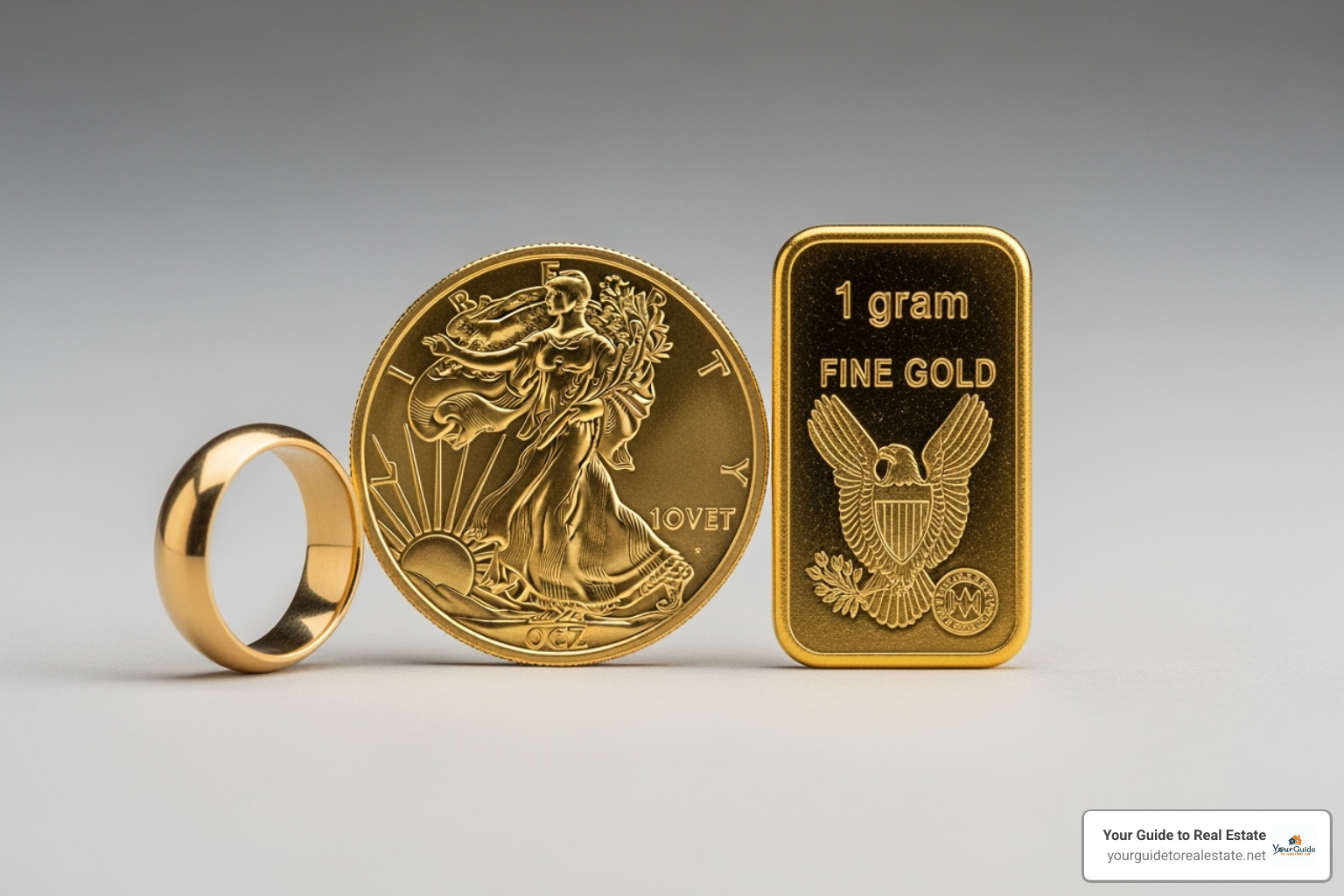
Accurate price comparisons become possible once you understand the true weight. Gold comes in many forms – from tiny 1-gram bars perfect for beginners to substantial 1-kilogram bricks for serious investors. Knowing that 31.1 grams equals one troy ounce lets you compare prices across different product sizes and find the best deals.
Fractional gold pieces make even more sense when you grasp these conversions. Many new investors start with quarter-ounce or tenth-ounce coins. Understanding that a quarter-ounce contains about 7.78 grams helps you evaluate whether you’re paying a fair premium for these smaller denominations.
The same careful analysis we apply to choosing an expert in real estate applies here – knowledge protects you from expensive mistakes.
How Gold Coins and Bars Are Weighed
Walk into any reputable precious metals dealer, and you’ll see products measured in both troy ounces and grams. Each has its place in the market.
Troy ounce coins dominate the bullion world. The American Gold Eagle contains exactly one troy ounce of pure gold, though the coin itself weighs slightly more due to copper and silver alloys that make it more durable. The Canadian Gold Maple Leaf takes a different approach, using 99.99% pure gold with minimal alloying. Both give you that full 31.1034768 grams of gold content you’re paying for.
Gram-denominated bars offer flexibility for smaller budgets. You’ll find these in 1-gram, 5-gram, 10-gram, and larger sizes. They’re perfect when you want to dollar-cost average into gold or need precise amounts for specific investment goals.
The Chinese Gold Panda coin creates an interesting twist – it’s measured in grams rather than troy ounces. A 30-gram Panda contains about 0.965 troy ounces, making price comparisons with other coins a bit trickier but still manageable once you know how many grams in an ounce of gold.
For serious investors, kilogram bars represent the most cost-effective way to buy gold. One kilogram equals approximately 32.15 troy ounces, and the per-ounce premium on these large bars is typically much lower than smaller denominations.
Calculating how many grams in an ounce of gold for jewelry (karats)
Gold jewelry throws another variable into the mix: purity levels. Unlike investment-grade bullion that’s typically 99.9% pure, jewelry uses gold alloys for durability and color variation.
24-karat gold represents pure gold – what you get in investment bars and some coins. One troy ounce of 24k gold contains the full 31.1034768 grams of pure gold content.
22-karat gold contains 91.67% pure gold mixed with other metals. This is what you’ll find in American Gold Eagle coins. While the coin’s total weight exceeds one troy ounce due to the copper and silver content, it still contains exactly 31.1035 grams of pure gold.
18-karat gold drops to 75% purity, meaning a troy ounce of 18k gold jewelry contains only about 23.3 grams of actual gold. The remaining weight comes from copper, silver, or other alloy metals.
Lower karat gold like 14k (58.3% pure) or 10k (41.7% pure) contains even less actual gold per troy ounce. A troy ounce of 10k gold gives you only about 13 grams of pure gold content.
When evaluating gold jewelry for investment purposes, always focus on the Actual Gold Weight (AGW) – the pure gold content – rather than the total weight of the piece. This calculation tells you the true intrinsic value, separate from any craftsmanship premiums you might pay.
Understanding these purity differences helps you make informed decisions whether you’re buying gold jewelry, inheriting family pieces, or considering gold in any form as part of your investment strategy.
Frequently Asked Questions about Gold Measurements
It’s completely normal to have questions when you’re navigating gold measurements! The different units and historical traditions can certainly feel a bit like a puzzle. But don’t worry, we’re here to clear things up and make these concepts as straightforward as possible, just like we aim to do with real estate guidance. Let’s tackle some of the most common inquiries to ensure you’re always making informed decisions.
What are other common units for measuring gold?
While the troy ounce and gram are your mainstays when talking about how many grams in an ounce of gold and its value, gold is a global commodity. This means you’ll encounter other units, especially if you’re exploring international markets or specialized products. Understanding them helps you speak the language of gold wherever you go.
For those dealing in larger quantities, Kilograms (kg) are a widely used unit, especially for institutional trading and large bullion bars. Think of it as the “bulk buy” unit for gold. One kilogram is exactly 1,000 grams, which works out to about 32.15 troy ounces. It’s a standard you’ll see in major financial hubs around the world.
Then there’s the Tola, a fascinating traditional unit primarily used in South Asia, including countries like India, Pakistan, and Bangladesh. If you’re exploring gold markets in these regions, you’ll hear “tola” quite often. One tola is equivalent to 11.6638 grams, or roughly 0.375 troy ounces. It carries a rich history and is still very relevant in those local markets.
For jewelers and those working with finer details, smaller units like Pennyweights (dwt) and Grains (gr) come into play. A pennyweight is a unit within the troy system, often used for weighing scrap gold or smaller jewelry components. There are 20 pennyweights in one troy ounce, with each pennyweight being about 1.555 grams. Even smaller are Grains, which are used for incredibly precise measurements, especially in older systems or for tiny amounts of precious metals. You’ll find 480 grains in a troy ounce, meaning one grain is a mere 0.0648 grams. Knowing these can give you a deeper appreciation for the meticulous nature of the gold industry.
Is a troy pound heavier than a standard pound?
This is a fantastic question and a common point of confusion that trips many people up! Given that a troy ounce is indeed heavier than a standard (or avoirdupois) ounce, it’s natural to assume the same would apply to pounds. But here’s the fun twist: a troy pound is actually lighter than a standard pound.
Why the flip-flop? It all comes down to how many ounces make up each type of pound.
- A troy pound is made up of 12 troy ounces. Since each troy ounce is about 31.1035 grams, a troy pound weighs roughly 373.24 grams (12 x 31.1035).
- A standard (avoirdupois) pound, the one you’d use for groceries, consists of 16 avoirdupois ounces. With each avoirdupois ounce weighing around 28.35 grams, a standard pound comes in at approximately 453.59 grams (16 x 28.35).
So, while each individual troy ounce packs more punch, the troy pound contains fewer of them, making it lighter overall. This just goes to show how important precision is in measurements, especially when dealing with valuable assets!
How does this conversion apply to other precious metals?
Here’s some excellent news that simplifies things for investors: the troy ounce isn’t just for gold. It acts as the universal standard of weight for all precious metals. This means that the exact same conversion factors and principles we’ve explored for how many grams in an ounce of gold also apply to silver, platinum, and palladium.
- When you see silver prices quoted per ounce, that’s always a troy ounce (31.1035 grams). Silver coins and bars, much like their gold counterparts, are typically minted in troy ounce denominations.
- The same goes for platinum. If you’re looking at a 1-ounce platinum coin or bar, you can rest assured it contains 31.1035 grams of pure platinum.
- Palladium, another valuable member of the precious metals family, also adheres strictly to the troy ounce standard for its weight and pricing.
This consistent approach across all precious metals is a huge benefit for investors. Once you’ve mastered the troy ounce and its conversion to grams for gold, you’ve essentially got a solid grasp on the weight measurements for the entire precious metals market. It’s like learning a foundational principle in real estate that then applies across various property types—it makes navigating the whole landscape much more manageable and stress-free.
Conclusion: Weighing Your Options in Asset Investment
So, we’ve journeyed through the fascinating world of gold measurement, and hopefully, you now feel much more confident about how many grams in an ounce of gold. It’s much more than just a number; it’s a fundamental piece of knowledge for anyone looking to steer the precious metals market wisely. We’ve finded that the troy ounce, with its deep roots in medieval trade, is the unwavering standard for gold, silver, platinum, and palladium. This specialized ounce, which weighs precisely 31.1034768 grams, stands distinct from the lighter, everyday avoirdupois ounce we use for groceries.
The importance of this precision simply can’t be overstated. For investors, it’s the bedrock of accurate valuation, allowing you to make informed price comparisons and avoid costly errors that could easily arise from mistaking one type of ounce for another. Whether you’re carefully evaluating gold coins and bars, or trying to understand the actual gold content in a beautiful piece of karat jewelry, knowing this conversion empowers you. It helps you make smarter, more confident decisions with your valuable assets.
Here at Your Guide to Real Estate, we truly believe that clarity and accurate information are paramount in all forms of asset investment. Just as we emphasize the importance of a proven framework and stress-free guidance for success in the real estate market, we know these principles apply equally to your gold holdings.
Whether you’re considering gold as a hedge against inflation, a reliable store of value, or a smart way to diversify your asset portfolio, a solid understanding of its measurement units is your very first step. It’s the foundation for building a resilient and well-informed investment strategy.
For those eager to deepen their understanding of asset valuation and market dynamics, not just in gold but across various investment landscapes, we invite you to learn more about asset valuation and market analysis with us. Because when it comes to your investments, solid knowledge truly is golden.