Why Real Estate Photography Jobs Are in High Demand
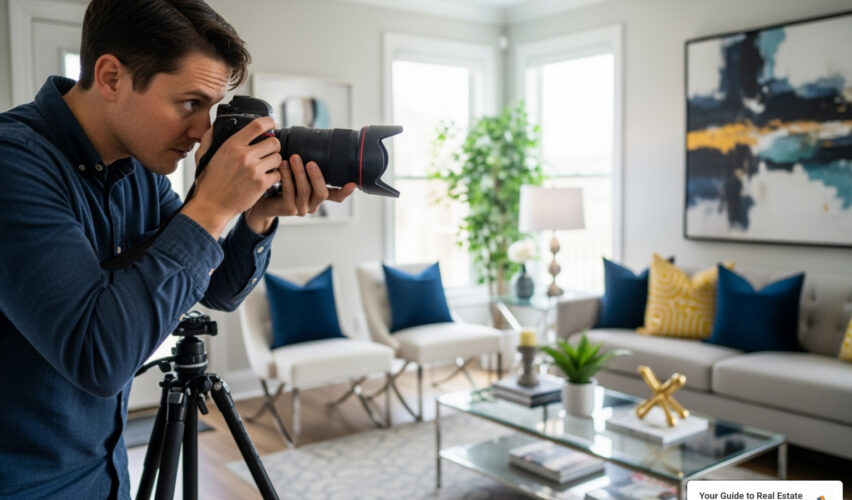
Real estate photography jobs are booming as the housing market relies on high-quality visuals to sell properties. The rise of social media and online listings has made professional photography essential for marketing success.
Quick Answer: How to Find Real estate Photography Jobs
- Job Boards – Search LinkedIn, Indeed, and ZipRecruiter.
- Photography Companies – Apply to firms like VHT Studios and HomeJab.
- Freelance Platforms – Join networks earning $40-$80+ per hour.
- Portfolio Building – Create a professional website and social media presence.
- Direct Networking – Contact local real estate agents and brokerages.
- Service Diversification – Offer photos, videos, virtual tours, and drone work.
- Local Marketing – Use Google My Business and local SEO.
Research shows that real estate photographers can earn between $40-$80+ per hour on platforms like HomeJab. These companies often handle the business side, letting photographers focus on their craft. Technology and social media have dramatically increased demand, making professional visuals a key differentiator in real estate marketing. Whether you seek steady employment or flexible freelance work, this visual-first industry offers multiple paths to a successful career.
Know your eal estate photography jobs terms:
What to Know Before You Start Your Job Search
Before searching for real estate photography jobs, it’s crucial to be prepared. Understanding the daily responsibilities, necessary skills, and required equipment will set you up for success.

Typical Responsibilities of a Photographer
As a real estate photographer, you’re a visual storyteller. Key duties include:
- Client Communication: Coordinating schedules with agents and homeowners, understanding their vision, and managing expectations.
- On-Site Shoots: Capturing interior and exterior photos of diverse properties, from small homes to luxury estates.
- Home Staging Assistance: Providing guidance on decluttering, adjusting furniture, and fluffing pillows to make each space look its best.
- Photo and Video Capture: Taking wide-angle shots to show flow, detailed close-ups of features, and shooting smooth video walkthroughs for an immersive viewer experience.
- Editing and Post-Processing: This varies by role. Freelancers often edit their own work, while some companies have in-house teams. Understanding post-production is key to quality control.
Your work is a partnership with real estate agents. To learn more, see More info about the agent’s perspective.
Essential Skills and Qualifications
Success requires a blend of technical, artistic, and interpersonal skills:
- Technical Photography Skills: Mastery of aperture, shutter speed, and ISO is non-negotiable for handling challenging indoor lighting.
- Composition and Lighting: Frame shots to showcase room size without distortion and use natural and artificial light to create bright, welcoming images.
- Software Proficiency: Knowledge of Adobe Lightroom and Photoshop is often required for post-processing.
- Communication and Professionalism: Clear communication is vital for client interactions. Reliability and a respectful demeanor build trust and lead to repeat business.
- Time Management: Juggling multiple shoots with tight deadlines is common in the real estate market.
- Willingness to Learn: The industry evolves, so a teachable attitude is crucial for staying competitive.
These skills complement the broader skill set of real estate professionals. Explore more at A look at complementary skills.
Must-Have Equipment and Software
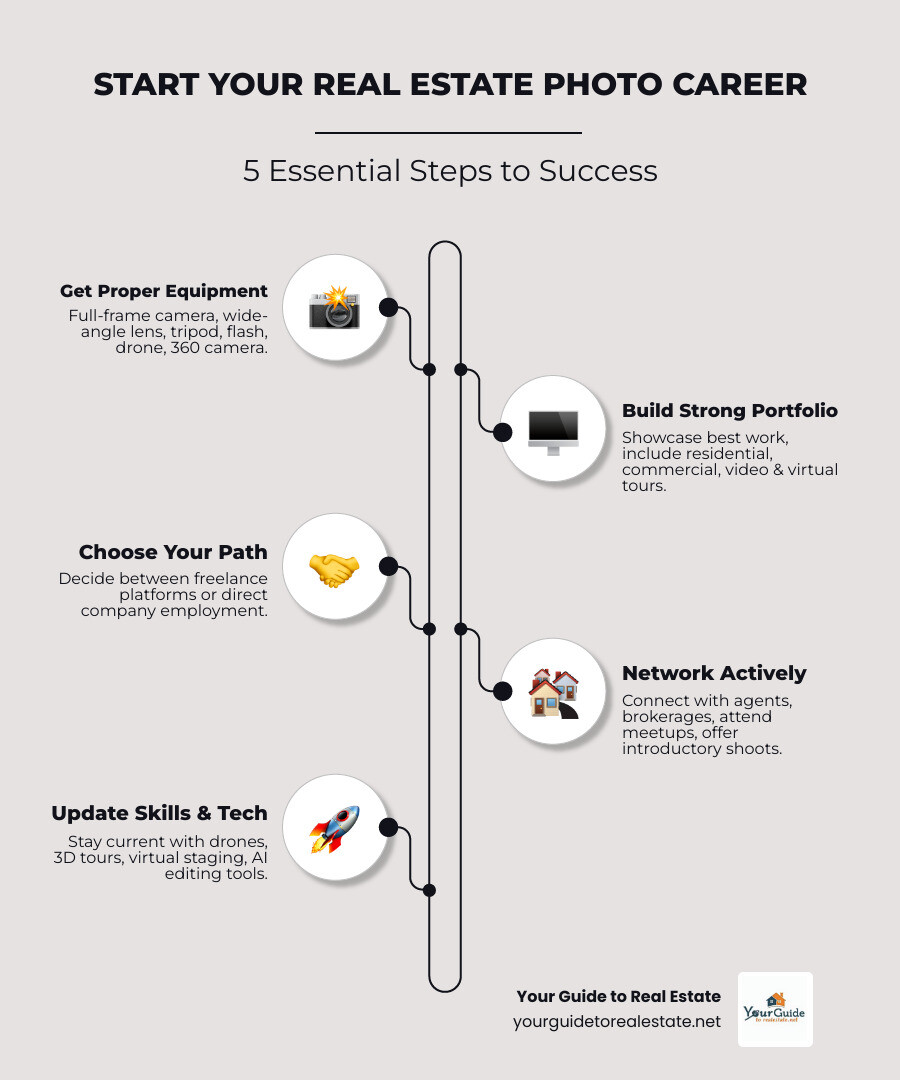
Investing in quality gear is essential for professional results. Your kit should include:
- A full-frame or high-quality crop sensor camera with at least 20 megapixels for crisp, detailed images.
- A wide-angle lens (14-17mm range) to capture entire rooms and make spaces feel expansive.
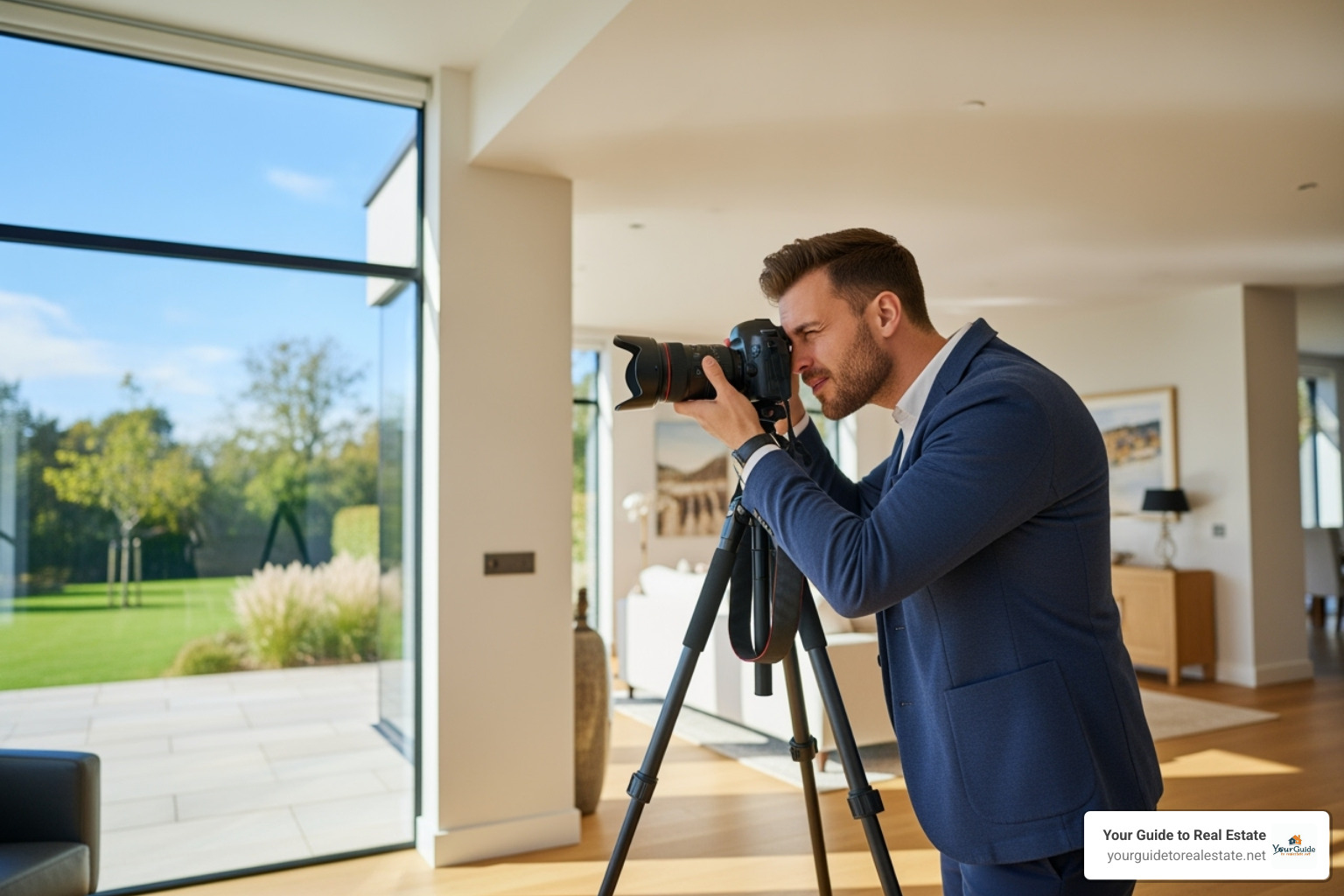
- A sturdy tripod to ensure sharp images, especially when using HDR techniques.
- External flash equipment to conquer difficult lighting and eliminate harsh shadows.
- A drone for aerial shots, which adds tremendous value by showcasing the property and its surroundings.
- A 360-degree camera (like a Matterport) for creating the immersive virtual tours that buyers now expect.
- Post-processing software like Adobe Lightroom and Photoshop, run on a powerful computer.
For tips on using your gear, check out Get our top home photography tips.
7 Methods for Finding Real Estate Photography Jobs
Now that you’re prepared, let’s explore how to land real estate photography jobs. A strategic approach using multiple methods is your roadmap to success.
1. Scour Major Job Boards and Aggregators
Start with job boards like LinkedIn, Indeed, and ZipRecruiter. Use specific keywords like “real estate photographer,” “property photographer,” or “Matterport technician” to find relevant roles. Set up job alerts for your desired locations (e.g., Dallas, Oklahoma City) to get new listings sent directly to your inbox. Use filters for job type (full-time, freelance) to narrow your search. For an overview, See current listings on LinkedIn.
2. Target Real Estate Photography Companies Directly
Go straight to the source by contacting companies that specialize in real estate visual marketing. National firms like VHT Studios and smaller local studios are often hiring. Regularly check the “Careers” pages on their websites for openings. Don’t hesitate to send a speculative application with a strong portfolio, as proactive candidates stand out. Following these companies on social media also keeps you informed about hiring news. See an Example of a company careers page.
3. Join On-Demand Freelance Platforms
For flexibility without the business admin, consider platforms like HomeJab. They operate on an on-demand model, connecting photographers with agents via app-based assignments. You accept jobs that fit your schedule, show up to shoot, and upload the raw files. The platform handles sales, scheduling, client communication, and post-production. Photographers on these platforms can earn $40-$80+ per hour, with reliable payments. Learn about the freelance platform model.
4. Build a Strong Portfolio and Online Presence
Your portfolio is your most powerful sales tool. Create a professional website that is clean, easy to steer, and showcases your best real estate photos, videos, and virtual tours. Quality trumps quantity. Use Instagram to share your work and engage with agents. Differentiate between residential and commercial work to show clients relevant examples. Your online presence is a reflection of your professionalism. For more tips, see Tips for building your business systems.
5. Network Directly with Real Estate Professionals
Building relationships with real estate agents is invaluable. Contact local agents and brokerages to introduce yourself and share your portfolio. Brokerages often have preferred vendor lists, so getting on their radar can lead to consistent work. Attend local real estate meetups and industry events to make face-to-face connections. Consider offering a discounted introductory shoot to prove your value and build long-term client relationships. Understand what agents look for.
6. Offer a Diverse Range of Visual Services
Increase your value by becoming a one-stop shop for visual marketing. Beyond standard HDR photos, offer services that are in high demand:
- Cinematic video walkthroughs
- 3D virtual tours (Matterport)
- Aerial drone imaging
- Virtual staging
- Digital floor plans
Offering a full suite of services makes you more attractive to agents and increases your earning potential per project. The demand for services like drone work is growing. Learn more about The value of drone photography.
7. Leverage Local Marketing and Self-Promotion
Clients can’t hire you if they don’t know you exist. Create a Google My Business profile to appear in local searches like “real estate photographer near me.” Optimize your website with local SEO keywords (e.g., “Dallas real estate photography”). Use email marketing to share your work with local agents, and encourage word-of-mouth referrals from satisfied clients. Partnering with related businesses like home stagers and interior designers can also expand your network.
Freelance vs. Employed: Choosing Your Career Path
For real estate photography jobs, you can go freelance or seek traditional employment. Both paths have unique pros and cons, and the right choice depends on your goals and lifestyle.
| Feature | Freelance Real Estate Photographer | Employed Real Estate Photographer |
|---|---|---|
| Schedule Flexibility | Complete control over your schedule – work when you want, where you want | Fixed schedule set by employer, typically 9-5 or assigned shifts |
| Income Potential | Higher earning potential ($40-$80+ per hour), but income varies month to month | Steady, predictable paycheck with potential for overtime |
| Benefits | No traditional benefits – you handle your own health insurance, retirement, etc. | Full benefits package including health insurance, paid time off, retirement plans |
| Business Responsibilities | Handle all aspects: marketing, client relations, equipment maintenance, taxes | Focus purely on photography – company handles business side |
| Equipment Costs | You purchase and maintain all equipment | Company typically provides equipment or reimburses purchases |
| Career Control | Choose your clients, set your rates, build your brand | Limited control over assignments and pricing structure |
| Work Consistency | Feast or famine – busy seasons vs. slow periods | More consistent workload throughout the year |
Freelancing offers freedom and higher earning potential but requires you to run a business, handling marketing, taxes, and income fluctuations. Traditional employment provides stability, benefits, and lets you focus solely on photography, but with less control over your schedule and projects.
Consider your personality. Do you prefer independence or the security of a regular paycheck? Many photographers start as employees to gain experience before going freelance. There’s no wrong choice, only what’s best for you.
Navigating Challenges and Advancing in the Field
Every career has its problems. Understanding the common challenges and growth opportunities in real estate photography jobs will prepare you for long-term success.
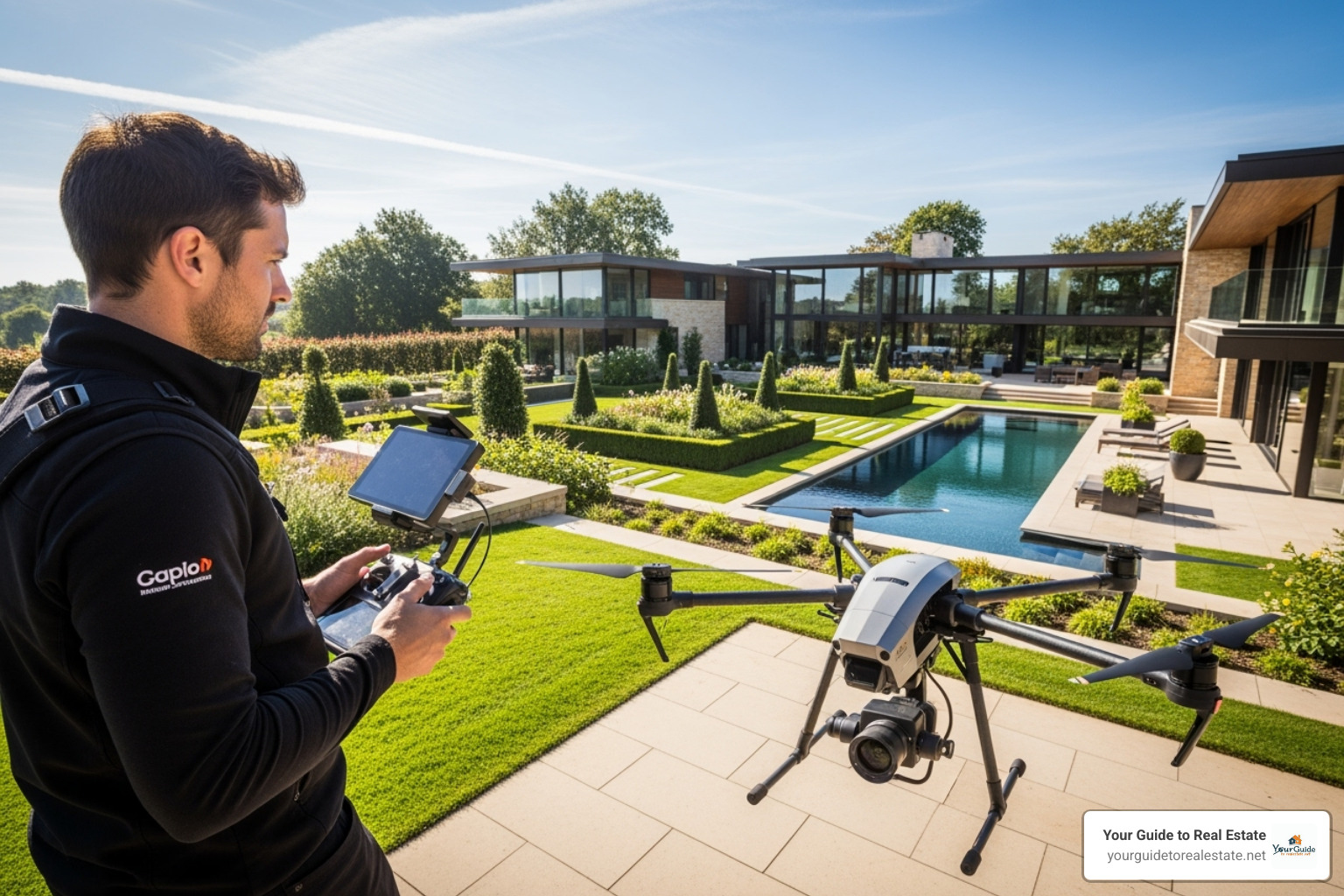
Overcoming Common Challenges in real estate photography jobs
Prepare to face a few common issues:
- Managing Client Expectations: Set clear expectations upfront about what’s possible to avoid misunderstandings.
- Difficult Lighting: Master your flash and HDR techniques to handle dimly lit rooms and harsh sunlight.
- Unprepared Properties: Build buffer time into your schedule for homes that aren’t photo-ready and offer gentle staging suggestions.
- Tight Deadlines: Develop an efficient workflow to deliver quality work quickly in a market.
- Seasonal Fluctuations: Plan for slower winter months by diversifying your services or saving during busy seasons.
Understanding Legal and Licensing Requirements
Protect your business by handling the legal details:
- Drone License: You must have an FAA Part 107 Remote Pilot Certificate to fly a drone commercially.
- Business License & Insurance: Obtain local business licenses and carry professional liability insurance for protection.
- Contracts: Use clear, written contracts for every job to outline services, fees, and usage rights.
- Copyright: Your contract should specify how clients can use your photos, as you typically retain the copyright.
For more on licensing, see Related info on professional licensing.
Career Paths and Advancement Opportunities
Real estate photography offers multiple paths for growth:
- Specialize: Focus on luxury or commercial properties to command higher rates.
- Move into Management: Become a team lead or manager at a larger photography company.
- Start Your Own Agency: Scale your business by hiring other photographers once you have a solid client base.
- Teach and Train: Offer workshops or online courses to create an additional income stream.
- Accept New Technology: Stay ahead of the curve by offering advanced services like 3D scanning or virtual reality experiences.
Frequently Asked Questions about Real Estate Photography Jobs
Here are answers to some of the most common questions about starting a career in real estate photography jobs.
What is the typical salary for a real estate photographer?
Income varies widely. While the national average for an employed photographer is around $35,000, freelancers often earn much more. Platforms like HomeJab report rates of $40-$80+ per hour, including travel. Many photographers charge on a per-property basis, with packages ranging from $150 for basic photos to $500+ for a full suite of services (video, drone, etc.). Your income depends on your market, skills, and service offerings. For context, see Comparing real estate salaries.
Do I need to edit my own photos for real estate photography jobs?
It depends on the job. If you’re a freelancer working directly with agents, you’ll almost certainly handle your own editing in software like Adobe Lightroom and Photoshop. However, many larger companies and freelance platforms like HomeJab and VHT Studios have in-house editing teams. You simply shoot and upload the raw files. While not always required, knowing how to edit is a valuable skill that gives you more career flexibility and helps you shoot better photos.
How is technology changing the industry?
Technology is creating huge opportunities. Drones for aerial shots and 3D virtual tours (e.g., Matterport) have become standard expectations, not just add-ons. Virtual staging allows you to digitally furnish empty rooms, while AI-powered editing tools are streamlining post-production workflows. The biggest change is that agents now expect a comprehensive package: photos, cinematic video, drone footage, 3D tours, and floor plans. Photographers who accept these technologies and offer a full suite of services will be in high demand.
Conclusion
The field of real estate photography jobs is a growing, dynamic industry full of opportunity. We’ve covered seven key methods for finding work, from using job boards to joining freelance platforms that can pay $40-$80+ per hour. Success hinges on building a strong portfolio, mastering your technical skills, and deciding between the flexibility of freelance work and the stability of employment.
Technology is a driving force, with drones, 3D tours, and virtual staging becoming essential tools. While challenges like tight deadlines and seasonal lulls exist, they are manageable with proper planning and legal protections, like an FAA Part 107 drone license.
At Your Guide to Real Estate, we provide stress-free guidance for success. Just as great photos help buyers envision a property, we want to help you envision a thriving career. The future of real estate marketing is visual, and skilled photographers are in a prime position to succeed. To learn how modern real estate businesses are leveraging these tools, explore our guide: Explore how to build a modern, virtual real estate business.