

The Key Differences Between Condos and Apartments Explained
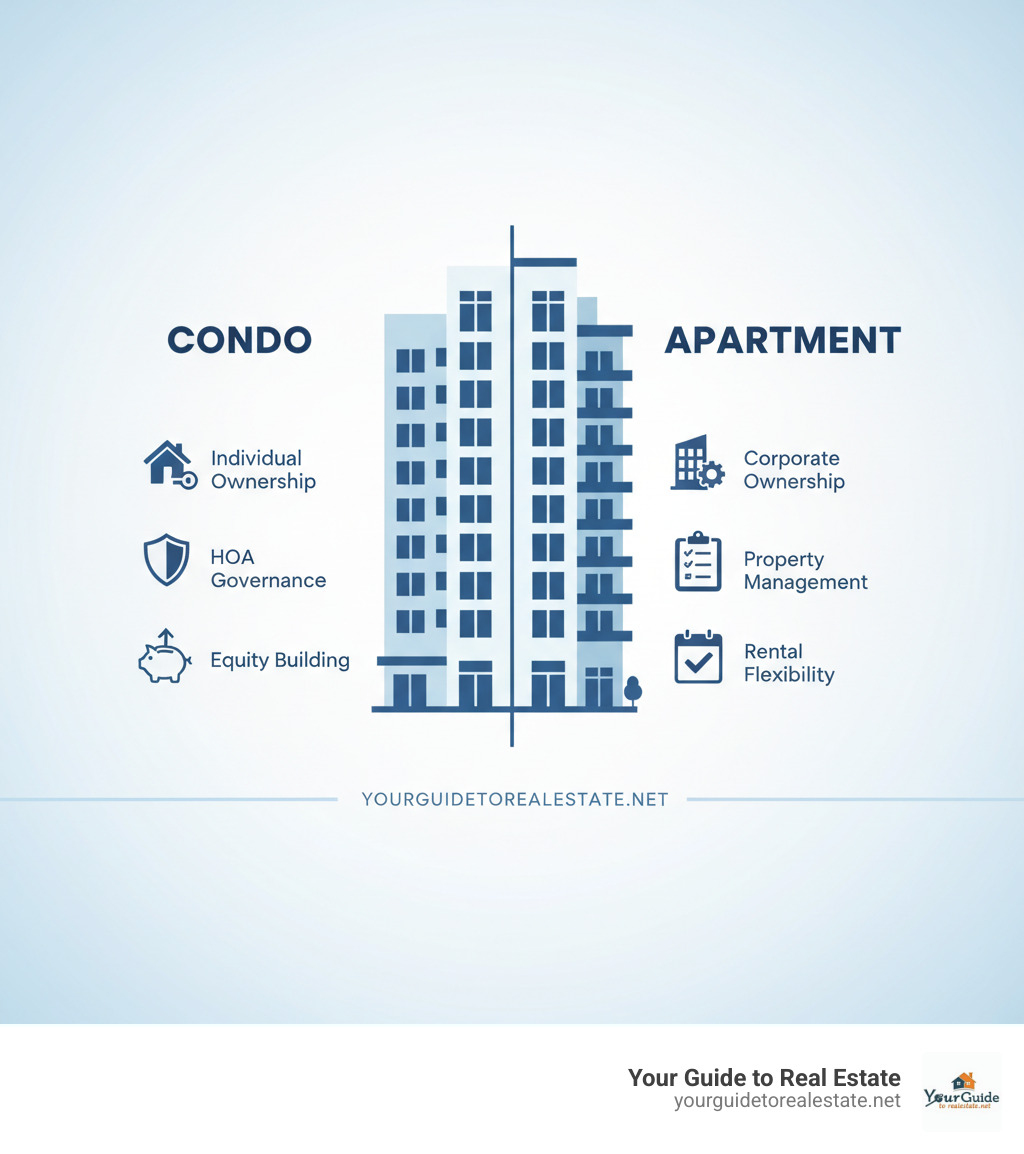
What is the difference between a condo and an apartment? The main difference comes down to ownership: condos are individually owned units that you can buy or rent from the owner, while apartments are rental units owned by a property management company or landlord.
Here’s the quick breakdown:
| Condo | Apartment |
|---|---|
| Ownership: Individual owners | Ownership: Property management company |
| You can: Buy or rent | You can: Only rent |
| Maintenance: Owner handles interior repairs | Maintenance: Landlord handles all repairs |
| Fees: HOA dues (average $243/month) | Fees: Just rent and utilities |
| Rules: Set by HOA and individual owner | Rules: Set by management company |
Understanding these differences matters because it affects everything from your monthly costs to how much control you have over your living space. According to the National Association of Realtors, the median condo price was $335,100 in February 2025, making condos an attractive entry point into homeownership.
Whether you’re looking to build equity through ownership or want the flexibility of renting, knowing these distinctions will help you make the right choice for your lifestyle and financial goals.
Essential what is the difference between a condo and an apartment terms:
Ownership & Management: Who’s in Charge?
The heart of what is the difference between a condo and an apartment really comes down to one simple question: who actually owns your home? This isn’t just a technicality—it shapes everything from who fixes your leaky faucet to whether you can paint your walls purple (if that’s your thing).

Difference #1: Individual vs. Corporate Ownership
Think of a condo building like a giant apartment cake where each slice belongs to a different person. When you buy a condo, you get the deed and title to your specific unit—it’s yours, just like owning a house. You can sell it, rent it out to someone else, or even leave it to your kids someday. Condo ownership means you’re building equity with every mortgage payment instead of just paying someone else’s bills.
Apartment rental works completely differently. The entire building typically belongs to one company or landlord. You’re essentially borrowing space from them in exchange for monthly rent. Your landlord might be a big corporation managing hundreds of units, or it could be an individual property owner with just a few apartments.
This ownership difference is huge because it determines whether you’re building wealth or just covering housing costs. If you’re curious about other ownership options, check out the Difference Between Condo and Townhouse to see how condos stack up against other property types.
Difference #2: HOA Governance vs. Property Management
Here’s where things get interesting. HOA responsibilities in condos mean you actually get a say in how your building runs. The Homeowner’s Association is basically a mini-government made up of your neighbors who are also owners. They handle the common areas, make rules (called CC&Rs—Covenants, Conditions & Restrictions), and decide how to spend those monthly dues everyone pays.
As a condo owner, you can vote on the condo board members and even run for a position yourself. Want better landscaping? Propose it at the next HOA meeting. Tired of the gym equipment? Rally your neighbors to upgrade it. You have a voice because you have skin in the game.
Property management in apartments is much more straightforward—and much less democratic. One property manager or superintendent makes all the decisions. They set standardized rules that apply to everyone, handle maintenance requests, and basically run the show. It’s efficient, but you don’t get to vote on whether the lobby needs new furniture.
The monthly costs work differently too. Condo owners pay monthly dues to the HOA to cover shared expenses like insurance, landscaping, and building maintenance. Apartment renters just pay rent, and the landlord handles everything else behind the scenes.
Understanding these governance differences is crucial when considering what is the difference between a condo and an apartment. It also affects insurance needs—condo associations carry master policies that might impact your personal coverage. Learn more about this at Condo Association Insurance.
The Financial Breakdown: What is the difference between a condo and an apartment cost-wise?
Let’s talk money – because that’s usually what it comes down to when you’re choosing between a condo and an apartment. What is the difference between a condo and an apartment from a financial standpoint? The answer isn’t just about monthly payments. It’s about understanding the complete picture of upfront costs, ongoing expenses, and long-term financial impact.

Difference #3: Costs, Fees, and Property Taxes
When you buy a condo, you’re signing up for homeownership with all its financial responsibilities. You’ll need a down payment (typically 3.5% to 20% of the purchase price) plus closing costs that can add another 3-4% to your total. According to the National Association of Realtors, the median condo price hit $335,100 in February 2025, making condos more affordable than single-family homes.
Your monthly expenses as a condo owner include your mortgage payment, property taxes, and HOA dues. Those HOA fees are particularly important to understand – according to Census data, the average runs about $243 per month, though they can range from $100 to $700 or more depending on amenities. These fees cover common area maintenance, landscaping, and building reserves for major repairs.
Don’t forget about special assessments – those surprise bills when the building needs a new roof or elevator repairs that exceed the reserve fund. You’ll also need condo insurance for your unit’s interior and belongings. For details on what this might cost, check out Condo Insurance Cost.
Apartment living keeps things simpler financially. Your main expense is monthly rent, which can increase annually based on market conditions and local laws. You’ll pay a security deposit upfront (usually one month’s rent) plus any application fees or pet fees. The landlord handles property taxes – they’re built into your rent – and you just focus on utilities and renter’s insurance.
Difference #4: Building Equity vs. Financial Flexibility
Here’s where the rubber meets the road in understanding what is the difference between a condo and an apartment financially.
When you own a condo, every mortgage payment builds equity in your property. You’re essentially paying yourself instead of a landlord. As your condo appreciates in value over time, you’re building wealth. Plus, you get tax benefits like deducting mortgage interest and property taxes – perks that renters don’t enjoy. If you ever decide to sell quickly, there are options like Sell Condo for Cash to streamline the process.
Apartment living offers something equally valuable: financial flexibility. Your upfront costs are dramatically lower – just a security deposit and first month’s rent versus thousands in down payments and closing costs. If your job relocates you or life changes direction, you can move with just 30-60 days’ notice. No worrying about selling in a down market or being tied to a mortgage.
The trade-off is clear: condos help you build long-term wealth while apartments give you short-term freedom. Your choice depends on whether you’re ready to plant financial roots or prefer keeping your options open.
Lifestyle & Responsibilities: How You’ll Live Day-to-Day
Beyond the financial aspects, what is the difference between a condo and an apartment profoundly impacts your daily life. From who fixes that annoying dripping faucet to whether you can paint your bedroom walls teal, these differences shape your comfort, convenience, and sense of home.

Difference #5: Maintenance and Repairs
Picture this: your kitchen sink starts leaking at 10 PM on a Sunday. What happens next depends entirely on whether you’re in a condo or an apartment.
Living in a condo means you’re the captain of your own ship—at least inside your unit. When you own a condo, interior maintenance falls squarely on your shoulders. That leaky faucet, broken garbage disposal, or flickering light fixture? You’ll need to fix it yourself or hire someone to handle it. This responsibility extends to appliances, flooring, paint, and anything else within your four walls.
The upside? You get to choose your contractors, decide on repair timelines, and upgrade to your heart’s content. The downside? You need to budget for unexpected repairs and spend time managing these issues. Water damage situations can be particularly tricky, which is why understanding Does Condo Insurance Cover Water Damage? becomes important for condo owners.
However, exterior maintenance and common areas are handled by the HOA. That means no worrying about roof repairs, landscaping, or maintaining the pool. Your monthly HOA fees cover these shared responsibilities, so you can enjoy the amenities without the headaches.
Apartment living offers a completely different experience. When that same sink starts leaking, you simply call your property manager or landlord. All maintenance and repairs are typically the landlord’s responsibility, from minor fixes to major appliance replacements. Many apartment complexes even offer 24/7 maintenance services, meaning your Sunday night leak becomes someone else’s problem to solve.
This convenience is one of the biggest draws of apartment living. You get the peace of mind knowing that maintenance costs and hassles aren’t your concern, freeing up both your time and budget for other priorities.
Difference #6: Rules, Regulations, and Customization
Every community needs rules, but the source and flexibility of those rules create another key distinction in what is the difference between a condo and an apartment.
Condo communities operate under CC&Rs (Covenants, Conditions, and Restrictions) established by the HOA. These rules can be quite detailed, covering everything from pet policies (including breed restrictions and size limits) to noise regulations, parking assignments, and even rental caps that limit how many units can be rented out at once.
The interesting twist? As a condo owner, you actually have a voice in these rules through HOA meetings and voting. Don’t like the current pet policy? You can work with your neighbors to change it. This democratic approach means rules can evolve, but it also means they might change in ways you don’t prefer.
When it comes to customization, condo owners enjoy significant freedom inside their units. Want to install hardwood floors, paint an accent wall, or renovate your kitchen? Generally, you can make these changes without asking permission. Major structural modifications might require HOA approval to maintain building integrity, but day-to-day personalization is usually yours to control.
For those dealing with unique condo situations, understanding concepts like Non-Warrantable Condo properties can be helpful when navigating ownership complexities.
Apartment rules are much more straightforward—they’re set by the property management company and applied uniformly across all units. These standardized regulations typically cover similar areas as condo rules but come from a single authority rather than a community vote.
The trade-off for this simplicity is limited customization freedom. Most apartment leases restrict painting, renovating, or making significant changes to your unit. The goal is maintaining consistency for easy turnover when tenants move out. While some landlords might allow minor changes with permission, the general expectation is that you’ll live with the space as-is.
Difference #7: Amenities and Community
The amenities and community atmosphere can dramatically impact your quality of life, and there are notable differences between condos and apartments.
Condo amenities often lean toward the luxurious side. Because owners pay HOA fees and want to protect their property values, there’s strong incentive to invest in high-quality shared spaces. You might find resort-style pools, state-of-the-art fitness centers, rooftop terraces, concierge services, or even private parks and dog runs.
The diversity of amenities can be impressive too. Some condo buildings blur the lines with hospitality services, offering experiences similar to luxury hotels. For more on these unique properties, explore the concept of a Condo Hotel.
Condo communities also tend to foster stronger resident engagement. Since everyone has a financial stake in the property, owners are more likely to participate in community events, serve on committees, and build lasting relationships with neighbors. There’s a shared investment in making the community thrive.
Apartment amenities are typically more standardized but still valuable. Larger complexes might offer fitness centers, pools, clubhouses, and business centers, though they’re usually designed for functionality rather than luxury. The amenities tend to be consistent across properties managed by the same company, which means you know what to expect.
The apartment community atmosphere is often more transient. With residents moving in and out regularly, the focus is less on long-term community building and more on providing convenient, comfortable living. While friendships certainly form, the temporary nature of renting creates a different social dynamic than the invested ownership community found in condos.
Understanding these lifestyle differences helps clarify what is the difference between a condo and an apartment beyond just the financial aspects. Your daily experience, responsibilities, and sense of community will vary significantly based on which path you choose.
Making Your Choice: A Side-by-Side Comparison
Deciding between a condo and an apartment is a deeply personal choice that touches every aspect of your daily life and financial future. There’s no universally “right” answer—only what’s right for you at this moment in your life. Think of it like choosing between a car and a bicycle. Both get you where you need to go, but they offer completely different experiences along the way.
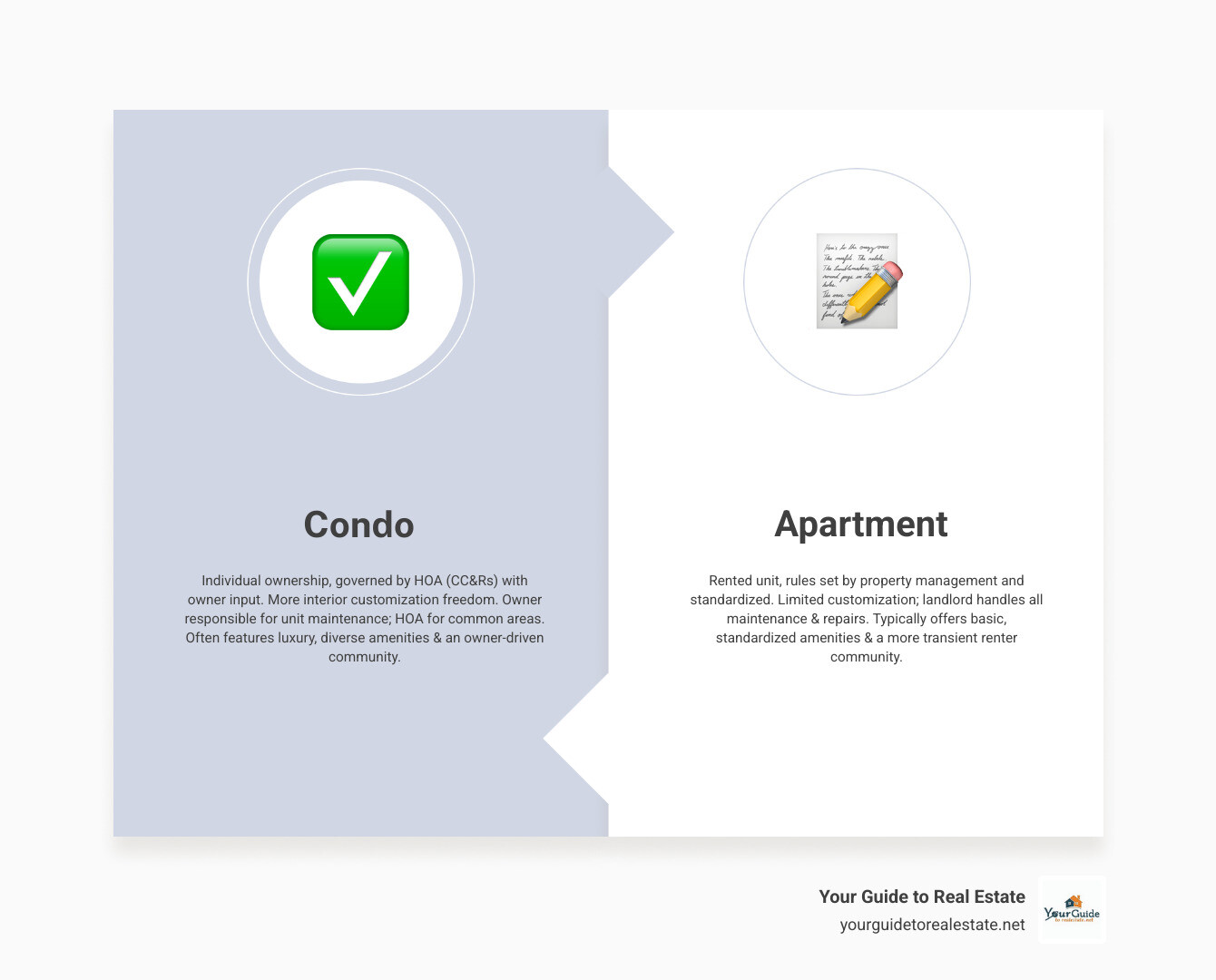
Understanding what is the difference between a condo and an apartment becomes clearer when you see how each option serves different life stages and priorities. A condo might be perfect for someone looking to plant roots and build wealth, while an apartment could be ideal for someone prioritizing flexibility and lower upfront costs.
The key is honestly assessing where you are in life right now—not where you think you should be, but where you actually are. Your housing choice should support your current reality while keeping future possibilities open.
What to consider when deciding between a condo and an apartment
Making this decision becomes much easier when you ask yourself the right questions. These aren’t just practical considerations—they’re insights into what kind of lifestyle will make you happiest.
How long do I plan to live here? If you’re thinking short-term (one to three years), apartments offer incredible flexibility. You can test out neighborhoods, change your mind, and move without the hassle of selling property. But if you’re ready to settle down for five years or more, buying a condo lets you build equity instead of just paying someone else’s mortgage.
Do I want to build equity? This question cuts to the heart of your financial goals. Every month you pay rent, that money is gone forever. Every month you pay a mortgage, part of that payment becomes your money through equity. It’s like the difference between renting a car and buying one—both get you around, but only one leaves you with an asset.
How much maintenance am I willing to do? Be honest here. Some people love fixing things and take pride in maintaining their space. Others would rather spend weekends doing literally anything else. Condo owners handle interior repairs themselves, while apartment renters just call the landlord. Neither approach is better—they’re just different.
How important are custom renovations to me? Do you dream about that perfect kitchen backsplash or have strong opinions about paint colors? Condo owners typically have much more freedom to personalize their space. Apartment renters usually live with whatever the landlord chose, which can be limiting if you have specific tastes.
What’s my budget for upfront costs? This is often the deciding factor. Apartments require a security deposit and first month’s rent—maybe a few thousand dollars. Condos require a down payment, closing costs, and moving expenses that can easily reach tens of thousands of dollars. Both paths are valid, but they require very different financial situations.
What is the difference between renting a condo and renting an apartment?
Even if you’re not ready to buy, the rental experience differs significantly between condos and apartments. It’s like the difference between staying at a boutique hotel versus a chain hotel—both provide shelter, but the experience feels completely different.
The landlord relationship shapes everything about your rental experience. Apartment management companies operate like well-oiled machines. They have standardized applications, online rent payment systems, and professional maintenance crews. Everything is predictable and efficient, though sometimes impersonal.
Condo landlords are individual people, which creates a more personal dynamic. You might be able to negotiate rent, work out flexible lease terms, or even become friends. But you’re also dependent on one person’s availability, financial situation, and management skills. Some individual landlords are amazing—others, not so much.
Unit uniqueness becomes apparent the moment you walk through the door. Apartment units within the same complex look remarkably similar because they’re designed for easy turnover. Condo rentals often feel more like homes because individual owners have invested in upgrades, personal touches, and quality finishes that reflect their taste.
Rules and predictability vary considerably between the two. Apartments have straightforward rules set by the management company. Condo rentals involve both the landlord’s rules and the HOA’s regulations, which can sometimes conflict or create confusion. It’s more complex, but it can also mean more amenities and a stronger sense of community.
For those interested in exploring other ownership structures beyond traditional condos, understanding the differences with cooperatives can be helpful: Condo vs Coop.
The choice between renting a condo versus an apartment often comes down to whether you value predictability and professional management or prefer a more personal relationship with unique living spaces. Both have their place in the housing market, and both can provide excellent homes—just in different ways.
Frequently Asked Questions about Condos and Apartments
Let’s tackle some of the most common questions we hear when people are trying to understand what is the difference between a condo and an apartment. These questions come up time and again, so you’re definitely not alone if you’re wondering about these details!
Is it cheaper to rent a condo or an apartment?
Here’s the honest answer: it depends on your local market, but there are some patterns worth knowing about.
The rent itself can swing either way. In some cities, you’ll find condos renting for significantly more than apartments—we’ve seen differences as high as $700 per month in markets like Toronto. In other areas, the prices are surprisingly similar, or sometimes condos even rent for less because individual owners might be more flexible with pricing than big property management companies.
HOA fees play a hidden role in condo rental prices. While you don’t pay these fees directly as a renter, your landlord (the condo owner) definitely factors them into your rent. So those amenities and building maintenance costs are baked into what you pay each month.
Location and amenities make a huge difference too. Condos often come with more luxurious features—think granite countertops, updated appliances, or access to that rooftop pool. These upgrades typically mean higher rent. Apartments might offer more basic finishes but could save you money if you don’t need all the bells and whistles.
Market conditions also shift the balance. In hot rental markets, condo owners might charge premium prices because they can. In slower markets, they might be more negotiable than large apartment complexes with standardized pricing.
Can you get a mortgage for a condo?
Absolutely! Buying a condo works much like buying a house—you’ll need a down payment, good credit, and a mortgage. For many first-time buyers, condos are actually an attractive entry point into homeownership because they’re often more affordable than single-family homes.
The process has a few extra steps though. Your lender won’t just look at your finances; they’ll also examine the entire condo building’s financial health. They want to see that the HOA has adequate reserve funds, that most units are owner-occupied rather than rentals, and that there aren’t any major legal issues brewing.
Down payment requirements are typically the same as for houses—anywhere from 3.5% to 20% depending on your loan type and financial situation. Some government programs like FHA loans work great for condos, though the building needs to be on the approved list. You can check this through the FHA Condo Approval List.
The key is working with experienced professionals who understand condo financing. It’s slightly more complex than a traditional home purchase, but definitely doable for qualified buyers.
Who has better amenities, condos or apartments?
This is where condos often shine, though you’ll find exceptions on both sides.
Condos typically offer more luxurious amenities because owners are investing in their property values. Think resort-style pools, state-of-the-art fitness centers, concierge services, rooftop decks, and sometimes unique features like wine storage or pet spas. Since HOA fees fund these amenities, owners often vote for higher-quality options that boost their property values.
Apartment complexes focus on consistency and broad appeal. You’ll find practical amenities like fitness rooms, pools, and community spaces, but they’re usually more standardized. Large apartment communities can definitely compete with condos on amenities, especially newer developments, but the emphasis is often on serving the widest range of tenants efficiently.
The HOA budget matters for condos. A building with higher HOA fees might offer incredible amenities, while a budget-conscious condo community might keep things simpler. With apartments, the management company’s investment strategy determines what you get.
Your personal priorities should guide this decision. If you want luxury amenities and don’t mind paying for them (either through purchase price or higher rent), condos often deliver more variety and quality. If you prefer solid, reliable amenities without the premium price tag, a well-managed apartment complex might be perfect.
The bottom line? Both can offer great amenities, but condos tend to lean toward the luxury side while apartments prioritize practical value.
Conclusion
Housing decisions are deeply personal, and understanding what is the difference between a condo and an apartment gives you the foundation to make a choice that truly fits your life. Throughout our exploration, we’ve finded that while these two housing types might share similar hallways and elevators, their differences run much deeper than appearances suggest.
The heart of the distinction comes down to ownership as the main factor. When you buy a condo, you’re investing in your future and building equity with every mortgage payment. When you rent an apartment, you’re prioritizing flexibility and freedom from the responsibilities that come with ownership. Neither choice is inherently better—it’s all about what aligns with your current situation and future goals.
Your personal choice should reflect where you are in life right now. Are you a recent graduate who might relocate for career opportunities? An apartment’s flexibility could be perfect. Are you ready to put down roots and start building wealth through real estate? A condo might be calling your name.
The lifestyle fit matters just as much as the financial considerations. Some people thrive on the control and customization that comes with condo ownership, while others prefer the simplicity of calling a property manager when something breaks. Some love having a voice in their community through HOA participation, while others appreciate the hands-off approach of apartment living.
Financial readiness plays a crucial role too. If you have the down payment, closing costs, and emergency fund needed for homeownership, plus the stability to handle unexpected repairs and HOA fees, condo ownership becomes a viable path. If you’re still building your savings or prefer to keep your money liquid for other investments or life goals, apartment rental makes perfect sense.
At Your Guide to Real Estate, we understand that these decisions can feel overwhelming. That’s why we’re committed to providing you with clear, honest information that cuts through the confusion. Our proven framework helps you steer these choices without the stress that often comes with major housing decisions.
Ready to move forward with confidence? Whether you’re leaning toward condo ownership or apartment rental, having the right professional guidance can make all the difference in your journey.
Find the right real estate professional for your journey