

Understanding the Condo Definition: What You Need to Know
A condo definition is a form of property ownership where you own your individual unit and share ownership of common areas with other residents.
Quick Answer – Condo Definition:
- Individual Ownership: You own the interior space of your unit (the “airspace”).
- Shared Ownership: You co-own common areas like hallways, pools, and landscaping.
- HOA Membership: You automatically become part of a homeowners association.
- Monthly Fees: You pay dues to maintain shared spaces and amenities.
The term “condominium” comes from Latin, meaning “co-ownership,” which perfectly captures the concept. As one real estate expert puts it: “Technically speaking, when you buy a condo, you only own the airspace within the walls of your unit.”
This ownership structure makes condos different from apartments (which you rent) and single-family homes (where you own the land too). You’re not just buying a place to live; you’re joining a community with shared responsibilities and benefits.
Understanding this definition is crucial because it affects your budget and lifestyle. Whether it’s a high-rise unit or a detached house structured as a condominium, the ownership principles are the same.

Simple guide to condo definition:
The Core Condo Definition: What Do You Actually Own?
Here’s where the condo definition gets interesting. When you buy a condo, you’re buying into a unique ownership structure that’s part private, part shared. Think of it like owning a slice of a cake, but also having a stake in the bakery itself.
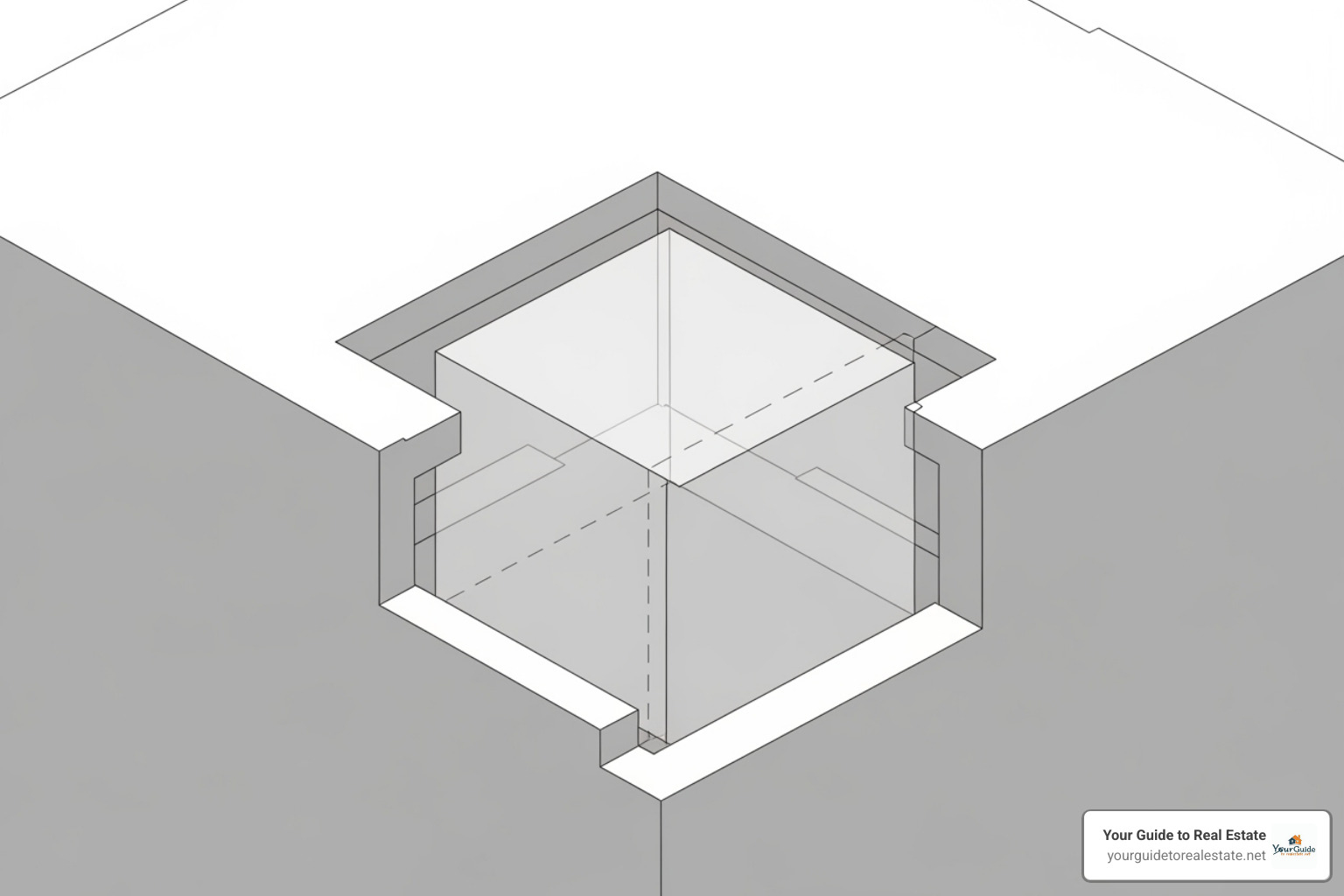
The legal definition is quite straightforward. A condominium is “an estate in real property” where you have two types of ownership: a separate interest (your actual unit) plus an undivided interest in all the common areas.
Real estate professionals often describe condo ownership as owning a “cube of air”—you own everything within the four walls of your unit, from floor to ceiling. This is called “walls-in” ownership. Everything beyond those boundaries is where shared ownership begins.
What is the legal condo definition?
Legally, when you buy a condo, you’re getting real property estate with a twist. You receive title to your unit, which is the separate interest part. This gives you complete ownership of your interior space, much like owning a house.
However, you also get a common property interest. This means you jointly own a piece of everything else—the land, the roof, the lobby, and the pool. Unlike co-ops where you own shares in a corporation, condo ownership means you hold title to your specific unit. It’s real ownership of real property.
A Practical Condo Definition for Buyers
Let’s cut through the jargon. When you purchase a condo, your private space is everything inside your unit’s walls. This is your domain to customize (within HOA rules, of course).
Step outside your front door, and you’re in shared territory. The hallway, elevator, building exterior, landscaping, and amenities like the gym or rooftop deck are all co-owned by you and every other resident.
This shared ownership comes with automatic HOA membership. The HOA is the management body for everything you co-own. They handle maintenance, set rules, and collect monthly fees to keep things running.
The beauty of this arrangement is getting homeownership benefits (equity, tax advantages) without the hassle of exterior maintenance. The trade-off is being part of a community with shared decisions and costs. For many, that’s exactly what makes condo living so appealing.
The Role of the Condo Association (HOA): Shared Responsibilities and Fees
When you buy a condo, you’re not just getting a home; you’re joining a community with its own governing body: the condo association, or Homeowners’ Association (HOA). The HOA is what makes the “co-ownership” part of the condo definition work.
Your condo association is run by a board of directors elected by you and your fellow owners. These are typically volunteers from your community who make decisions on everything from landscaping to major repairs. They’re your neighbors, not a faceless corporation.
Before buying, you must review the CC&Rs (Covenants, Conditions, and Restrictions). This document is the community’s rulebook. It outlines what you can and can’t do with your unit, how common areas are used, and the HOA’s responsibilities. Some CC&Rs are relaxed, while others might dictate everything from paint colors to pet policies.
Owner vs. HOA Responsibilities
Understanding who handles what can save you headaches and money.
As a condo owner, you’re responsible for everything inside your unit. This includes interior maintenance like fixing leaky faucets, replacing appliances, and painting walls. If your dishwasher breaks or you want to renovate your kitchen, that’s on you.
The HOA takes care of the big-picture items. They handle exterior upkeep like roof repairs, building maintenance, landscaping, and keeping shared amenities running. When the elevator needs servicing or the parking garage needs new lighting, the HOA coordinates and pays for it.
This division of labor is a major perk of condo living. You enjoy a beautiful pool without cleaning it and admire maintained landscaping without doing the gardening.
Understanding Condo Fees and Special Assessments
Let’s talk about monthly HOA dues, which you’ll pay as long as you own your condo.
These fees cover more than you might think. Building insurance is a big one; the HOA’s master policy covers the structure and common areas. Your dues also fund the reserve fund, a savings account for major future expenses like a roof replacement.
Day-to-day expenses are also covered: landscaping, common area utilities, maintenance staff, and amenity operations.
But sometimes, unexpected costs arise. That’s where special assessments come in. These are additional fees levied when a major repair or improvement exceeds the budget. This could be for a new roof or city-mandated safety upgrades.
Special assessments can be substantial, potentially thousands of dollars. This is why it’s crucial to review the HOA’s financial health before buying. A well-funded reserve account is your best protection against surprise assessments.
Condo vs. Other Housing Types: A Head-to-Head Comparison
The best way to grasp the condo definition is by comparing it to other housing options. What looks the same on the outside can be completely different in terms of ownership, responsibilities, and cost.
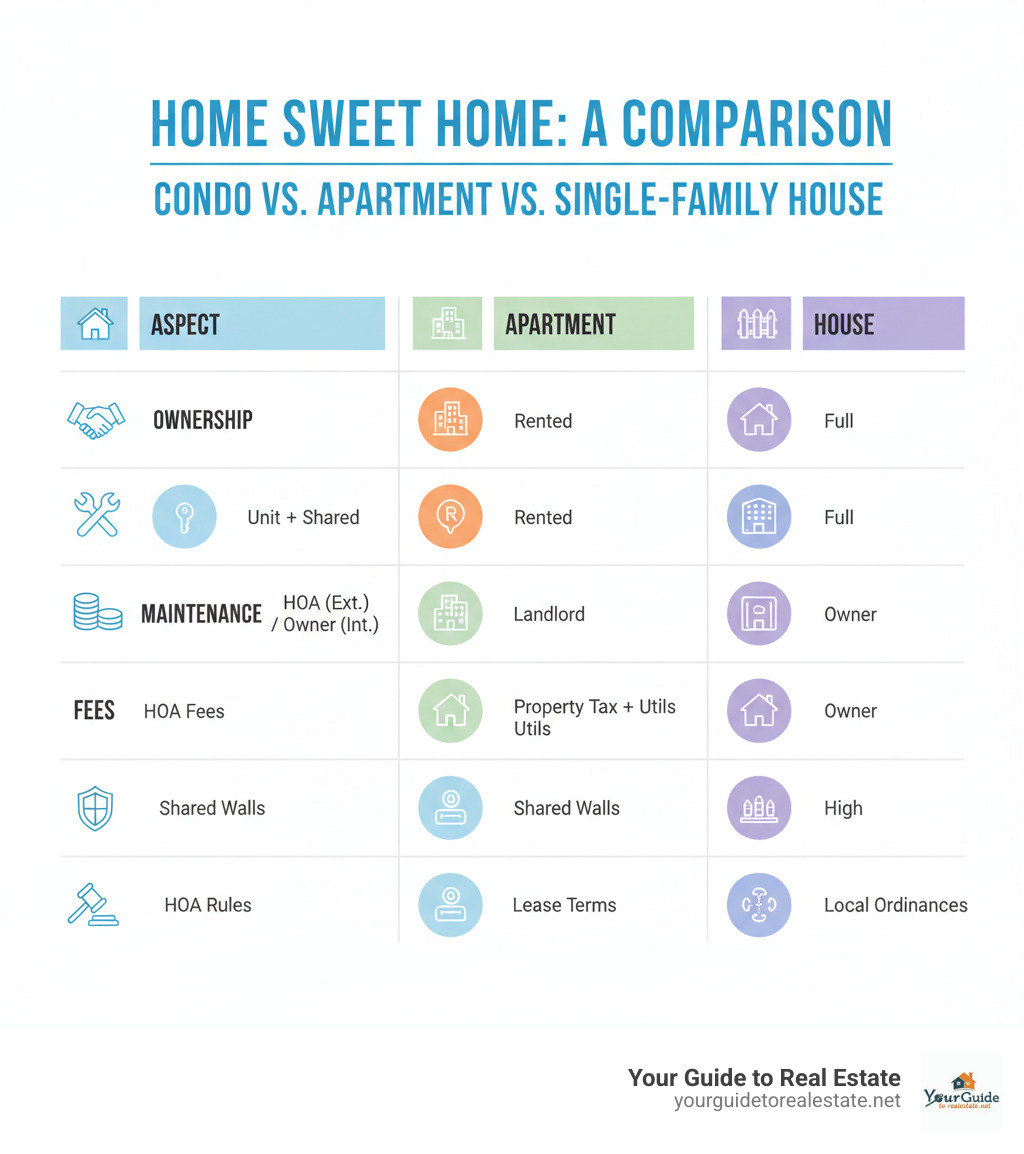
Depending on whether a unit is structured as a condo, apartment, or townhouse, your experience as a resident will be totally different.
Condo vs. Apartment
Here’s where the condo definition is clearest. The biggest distinction: you own a condo, but you rent an apartment. The implications are huge.
When you rent an apartment, you pay a landlord and don’t build any wealth. Major repairs are the landlord’s problem, but you have no ownership stake.
With a condo, every mortgage payment is an investment. You build equity you can tap into later. Plus, you can make the space your own. Want to install new floors? As long as it follows HOA rules, you can. That’s not an option in a rental.
The trade-off? You’ll pay HOA fees on top of your mortgage, but you also get a say in how your building is managed. For more insights, check out our detailed Condo vs Apartment Ultimate Guide.
Condo vs. Single-Family House
This comparison is about independence versus convenience. Buying a single-family house gives you the house, the land, and complete control. Want to paint your front door neon green? No one can stop you.
But this control comes with total responsibility. Every maintenance task, from a leaky roof to a dead furnace, is yours to handle and pay for.
Condos flip this equation. You give up some control but hand off many headaches to the HOA. No more weekend yard work or worrying about roof repairs. The HOA handles exterior maintenance, landscaping, and major building systems.
Financially, condos often have a lower purchase price than single-family homes in the same area, making them great for first-time buyers. However, monthly HOA fees are a long-term cost to factor into your budget. Our Condo vs House comparison dives deeper into these trade-offs.
Condo vs. Townhouse
This one is confusing for many. A townhouse describes a building’s style, while a condo describes the ownership structure. They aren’t mutually exclusive; you can have a townhouse that is legally a condo.
In a traditional townhouse, you own the structure and the land directly under it. You’re responsible for your own roof and exterior. You might have an HOA, but it typically covers less than a condo association.
However, some townhouses are condos in disguise. In these cases, you own the interior space, but the land and exterior are owned collectively. The HOA manages everything outside your walls, just like in a high-rise condo.
When shopping, always ask about the ownership structure. Are you buying the land under your feet or just the airspace within the walls? The answer determines your responsibilities and costs. For a thorough breakdown, read our Condo vs Townhouse Ultimate Guide.
Exploring the Different Types of Condominiums
Here’s something that surprises many about the condo definition: it’s not about what the building looks like. Condominium describes how you own property, not what the property is.
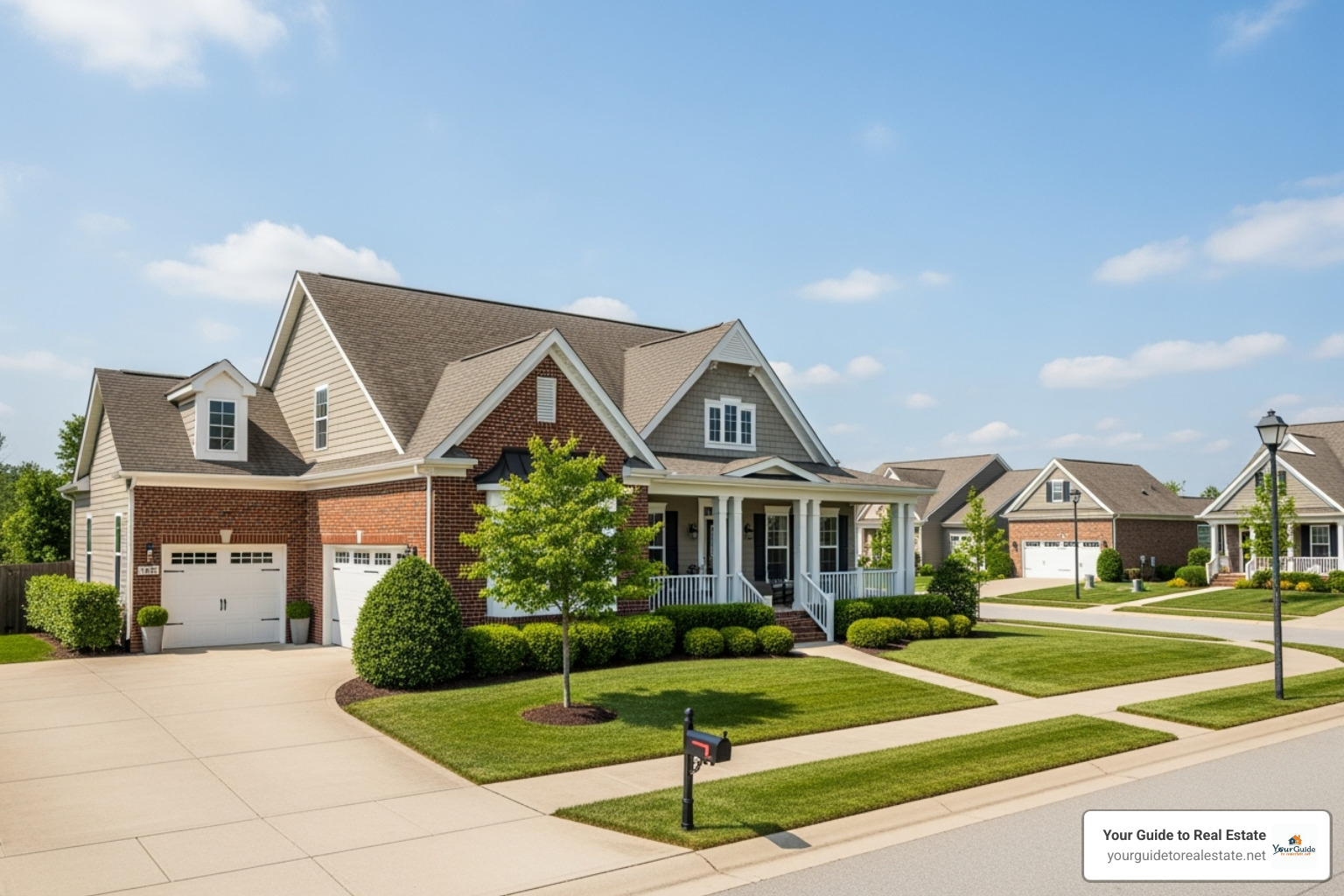
This means you could own a detached house that’s legally a condominium, or live in what looks like an apartment but is owned as a condo. The ownership form is separate from the building style, which opens up many possibilities.
Regional differences add another layer. In some areas, “condo” means any apartment you can buy. In others, it might refer to a high-rise or even a single-family home in a planned community. Understanding this flexibility is helpful when house hunting.
Common Condo Styles
High-Rise, Mid-Rise, and Low-Rise buildings are what most people picture. These are classic apartment-style units. Low-rise condos are 2-3 stories, often without an elevator. Mid-rise buildings are 4-8 stories with elevators and parking. High-rise condos are nine stories or higher, common in cities like Dallas and Oklahoma City, and often feature luxury amenities.
Townhouse condos look like regular townhouses but differ in ownership. You own the interior space, while the HOA handles the exterior and land. It’s a “house feel” with condo convenience.
Detached condos sound like a contradiction, but they exist. Picture a standalone house where you own the building but not the land. The HOA owns the land and handles all exterior maintenance. You get privacy while someone else mows the lawn.
Loft conversions transform old industrial buildings into unique living spaces. These condos often feature high ceilings, exposed brick, and open floor plans, perfect for an urban, artistic vibe.
Specialty condos get creative with the ownership concept. Dockominiums let boat lovers own their marina slip. Condo-hotels are units in hotel buildings you can own and use part-time, then rent out. There are even concepts for horse stall condominiums.
This variety shows how flexible the condo definition is. Whether you want a penthouse view or a boat slip, a condominium structure probably exists to fit your lifestyle. The key is understanding you’re buying into a community and shared ownership model, regardless of the building’s appearance.
The Pros and Cons of Condo Living
Choosing condo living is about balancing independence and community. It’s not just about the condo definition; it’s about how that ownership structure plays out in daily life. Some love the lifestyle, while others find it too restrictive. Let’s explore the pros and cons.

The Advantages of Owning a Condo
Affordability is a major draw. Condos typically have a lower upfront cost than single-family houses in the same neighborhood, making homeownership more accessible.
The amenities factor is where condo living shines. Features like pools, fitness centers, and clubhouses, which are expensive to maintain privately, are available to all residents for a fraction of the cost.
Maintenance freedom is another huge plus. The HOA handles all exterior upkeep, landscaping, and major repairs. This is ideal if you travel, work long hours, or prefer not to spend weekends on home maintenance.
Many condo communities offer improved security features. Gated entrances, security cameras, and on-site personnel can provide peace of mind that’s hard to replicate in a standalone home.
The community atmosphere can be wonderful. Shared spaces create opportunities to meet neighbors, and HOA involvement helps you stay connected. It’s great for anyone seeking built-in social opportunities.
The Disadvantages of Owning a Condo
Of course, condo living isn’t perfect. Those HOA fees are mandatory and permanent. Even after your mortgage is paid off, you’ll still have these monthly dues, which tend to increase over time.
Special assessments can be real budget-busters. When the building needs a major repair that exceeds the reserve fund, every owner gets a bill. This can amount to thousands of dollars you may not have planned for.
The rules and restrictions that maintain community standards can also feel limiting. The CC&Rs may restrict everything from front door colors to pet breeds, limiting your freedom compared to owning a house.
Privacy concerns are real when sharing walls, ceilings, and floors. You might hear your neighbors, and they might hear you. If you value quiet, this shared living situation might not be for you.
Finally, condos can have slower appreciation potential compared to single-family homes. While not always the case, it’s a factor to consider if real estate wealth-building is a primary goal.
Frequently Asked Questions about Condo Meaning
When people explore the condo definition, they often have similar questions. Let’s tackle the most common ones.
What is the main difference between an apartment and a condo?
The key difference is ownership. You own a condo, building equity with each mortgage payment. When you rent an apartment, you pay a landlord and build no equity. As a condo owner, you handle interior repairs but share the cost of major building maintenance through your HOA. You also get a say in how the building is managed, which renters rarely do.
Are condos cheaper than houses?
Usually, yes—at least upfront. Condos typically have lower purchase prices than single-family homes in the same area, making them a popular entry point for first-time buyers.
However, you must compare the total cost. Those monthly HOA fees are mandatory. A condo might cost $300,000 compared to a $400,000 house, but a $400 monthly HOA fee adds up to $4,800 per year. You must also budget for potential special assessments for major repairs.
The real comparison depends on what you value. If you want amenities and fewer maintenance chores, the HOA fees might be worth it. If you prefer complete control and potentially lower long-term costs, a house might be a better fit.
What does the word “condominium” mean?
“Condominium” comes from Latin, combining two words that perfectly capture the concept.
“Con” means “together” (like “connect” or “community”). “Dominium” means “ownership” or “domain.” Put them together, and you get “co-ownership,” which is exactly what a condo is.
The term reflects that you own your space together with others who own their spaces, all sharing the common areas and responsibilities of community living. It’s a concept that dates back to ancient times but perfectly describes the modern condo.
Conclusion
So, what is the condo definition at its heart? A condominium is a form of ownership, not a type of building. This is the key insight for understanding condos.
When you buy a condo, you’re entering a unique partnership. You get complete ownership of your private unit—that “airspace” within your walls. At the same time, you share ownership of everything else with your neighbors.
This co-ownership structure is managed by the homeowners’ association (HOA), which you automatically join. The monthly fees you pay are investments in maintaining your shared spaces and amenities.
We’ve found that condos come in all shapes and sizes, from high-rises to detached homes. The physical building doesn’t define the condo; the ownership structure does. Whether it’s a downtown loft or a suburban townhouse, if you own your unit and share common areas, it’s a condominium.
The trade-offs are real: you get reduced maintenance and great amenities but accept HOA rules and fees. You build equity like a homeowner but share walls and decisions with neighbors. It’s a lifestyle choice that works beautifully for some.
At Your Guide to Real Estate, we know understanding these nuances is critical. Our mission is to provide you with the proven framework and stress-free guidance for confident real estate decisions.
Ready to explore your condo options? Get expert help navigating your purchase with our virtual real estate brokerage services. We’re here to turn your real estate dreams into reality.