Why Land Loan Interest Rates Are Higher and How to Find the Best Deal
Land loan interest rates currently range from 4.875% to 9.50%, significantly higher than traditional mortgage rates. This is because lenders view vacant land as riskier collateral, leading to higher rates (often 1-1.5% more than mortgages), larger down payments (20-50%), and stricter terms.
When you’re ready to buy land for your dream home, investment, or recreation, understanding how to compare rates can save you thousands. While some borrowers pay 8.75% for raw land, others secure rates as low as 4.875% through specialized programs.
The challenge is that land financing is more complex than a regular mortgage. However, smart shoppers who know where to look and how to present themselves as low-risk borrowers can find much better deals. This guide will show you how.
Land loan interest rates terms to know:
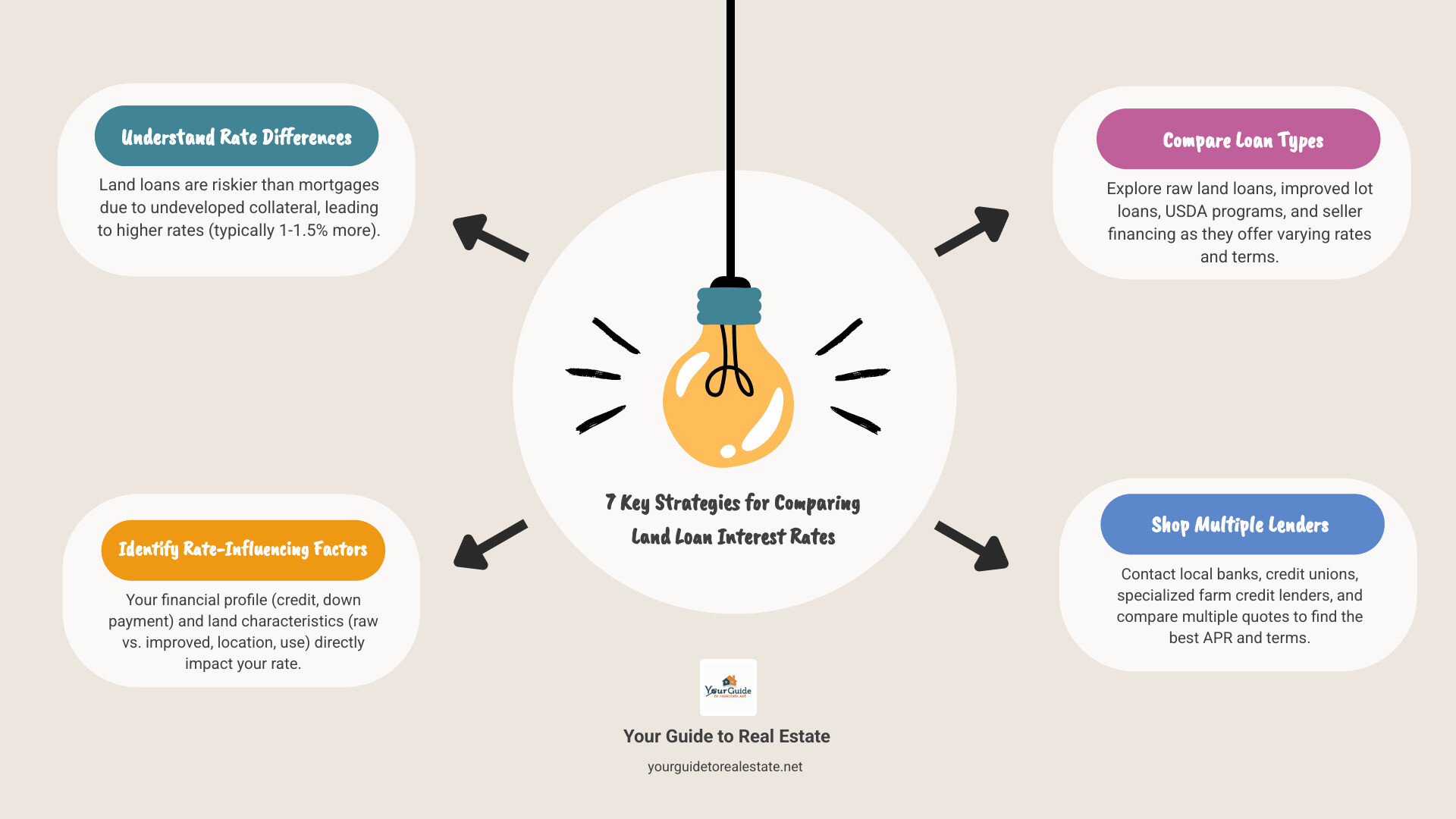
1. Understand Why Land Loan Rates Differ from Mortgages
If you’ve shopped for land financing, you’ve likely noticed that land loan interest rates sit 1% to 1.5% higher than regular mortgage rates. This isn’t an accident; it reflects the higher risk lenders take on when financing vacant land versus a complete home.
How Land Loan Rates Compare to Mortgages
Land loan interest rates are typically 1% to 1.5% higher than conventional mortgages. If a home mortgage is 6-7%, a land loan might be 7.5-9.5%. This difference is a “risk premium.”
A mortgage is backed by a complete house, which is easier to sell if foreclosed. Raw land is a less liquid asset, meaning it can take much longer to sell. Land values can also be more volatile than home prices, especially in undeveloped areas.
This increased risk is also why lenders require higher down payments (20-50% for land vs. 3-20% for homes) and offer shorter terms. For a baseline comparison, our guide on understanding mortgages: a beginner’s guide to home loans explains how traditional home loans work.
Key Risks That Increase Rates
Several key risks drive up rates for land loans:
- No existing home as collateral: If you default, the lender is left with undeveloped land, which is harder to sell than a move-in-ready home.
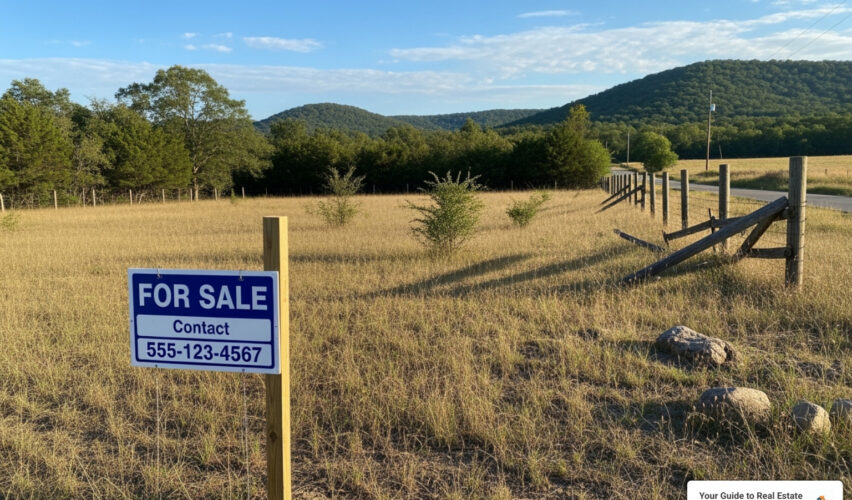
- Raw land challenges: Property without utilities, road access, or septic systems is the highest risk. Developing it requires time, money, and permits, making the investment less predictable.
- Zoning issues: The land may have restrictions that prevent your intended use, such as agricultural zoning on a lot you want for a home. Lenders are wary of these legal problems.
- Access to utilities: The cost to bring water, power, and sewer lines to a property can be substantial, affecting its true value and development potential.
- Your intended use: Lenders prefer borrowers with clear, immediate plans for development. Speculative investments or vague ideas make them nervous and can lead to higher rates or rejection.
These factors contribute to a higher default likelihood, which is why land loan interest rates are higher. Understanding this helps you build a stronger loan application.
2. Identify the Key Factors That Influence Your Rate
Now that you know why land loan interest rates are higher, let’s focus on what affects your specific rate. Your personal lending profile and the characteristics of the land you want to buy create a unique risk profile that lenders will evaluate.

How Your Financial Profile Affects Land Loan Interest Rates
Your financial health is a key factor. A stronger profile means better land loan interest rates.
- Credit History: A high credit score (780+) shows responsible debt management and can secure you a better rate. Check your credit report to know where you stand.
- Down Payment: This is a major factor. Land loans require 20-30% down for improved lots and 30-50% for raw land. A larger down payment reduces the lender’s risk and can lower your rate.
- Debt-to-Income (DTI) Ratio: Lenders prefer a low DTI, as it shows you can comfortably afford a new loan payment.
- Financial Assets: Savings, investments, and other assets demonstrate stability and reassure lenders you can handle unexpected costs.
How Land Characteristics Impact Land Loan Interest Rates
The property itself is also heavily scrutinized by lenders.
- Raw Land vs. Improved Lots: Raw, undeveloped land is riskiest and has higher rates (e.g., 8.75%). Improved lots with utility access are safer for lenders and have lower rates (e.g., 7.75%).
- Location and Zoning: Land in a desirable, growing area with appropriate zoning for your plans will receive more favorable rates than remote land with unclear potential.
- Regional Variations: Local market conditions, like high demand in parts of Texas, can influence how lenders in that region price their loans.
- Intended Use: A clear plan to build immediately is viewed more favorably than long-term speculation. Detailed plans might qualify you for a construction-to-permanent loan with better terms.
3. Compare Different Types of Land Loans
Understanding different loan types is key to finding the best land loan interest rates, which can range from over 9% to under 2%. Each loan has unique requirements based on the land’s condition and your plans.
Rates for Raw vs. Improved Land
The land’s condition is a primary driver of your land loan interest rates.
- Raw Land Loans: For undeveloped property without utilities, lenders see high risk. For example, a lender might offer a rate of 8.750% for a 10-year term on raw land.
- Improved Lot Loans: For land with existing infrastructure like utilities and road access, the risk is lower. The same lender might offer 7.750% for a 15-year term on an improved lot.
Beyond rates, improved lots often require smaller down payments (20-30%) and have longer repayment terms than raw land (30-50% down).
Here’s how the major loan types stack up:
| Loan Type | Typical Interest Rates | Down Payment Range | Typical Term Length |
|---|---|---|---|
| Raw Land Loan | 8.50% – 9.50%+ | 30-50% | 5-10 years |
| Improved Lot Loan | 7.50% – 8.75% | 20-30% | 10-15 years |
| Construction Loan | 9.50% (often variable) | 20-25% | 12-24 months (initial) |
| USDA Farm Ownership | 1.875% – 5.875% | 0-5% | Up to 40 years |
| Seller Financing | Highly variable | Highly variable | Highly variable |
Construction loans, such as a construction-to-permanent loan, are ideal if you plan to build soon. They often start with higher rates but convert to permanent financing once your home is built.
Government and Alternative Financing
Don’t overlook non-traditional financing, which can offer some of the best land loan interest rates.
- USDA Farm Ownership Loans: If you’re buying agricultural land, these government-backed loans are a game-changer. Rates can be as low as 1.875% for down payment loans or 5.875% for direct ownership loans, far below commercial rates. Check the current FSA Loan Interest Rates for the latest details.
- Seller Financing: Here, the property seller acts as the lender. This option offers flexibility in interest rates and down payments, as terms are negotiated directly between buyer and seller. However, it requires caution. Often, the deed isn’t transferred until the loan is fully paid, so it’s crucial to understand the legal structure before agreeing.
The takeaway is to explore all options beyond traditional banks. Government programs and seller financing can offer significant savings.
4. Analyze the Current Market and Economic Outlook
Understanding where land loan interest rates are headed is as important as finding the best current deal. Rates are deeply connected to the broader economy, from Federal Reserve decisions to inflation trends.
Current Average Land Loan Rates
Here’s a snapshot of current rates, which vary based on your profile and the land:
- Azura Credit Union: Rates start at 7.50% (5-year term) and go up to 9.50% (15-year term).
- AgSouth Farm Credit: Offers variable rates at 7.50% and attractive fixed rates from 5.90% (3-year) to 6.60% (10-year).
- First Fed: A 20-year fixed loan (with a 5-year balloon) is offered at 8.500% for ideal borrowers.
- Country Bank: Highlights the land type difference, with building lot loans at 7.750% and raw land loans at 8.750%.
- EastRise Credit Union: Features competitive adjustable rates, starting at 4.875% for a 1/1 ARM.
Many rates are tied to benchmarks like SOFR, so they fluctuate with the economy.
Future Interest Rate Trends
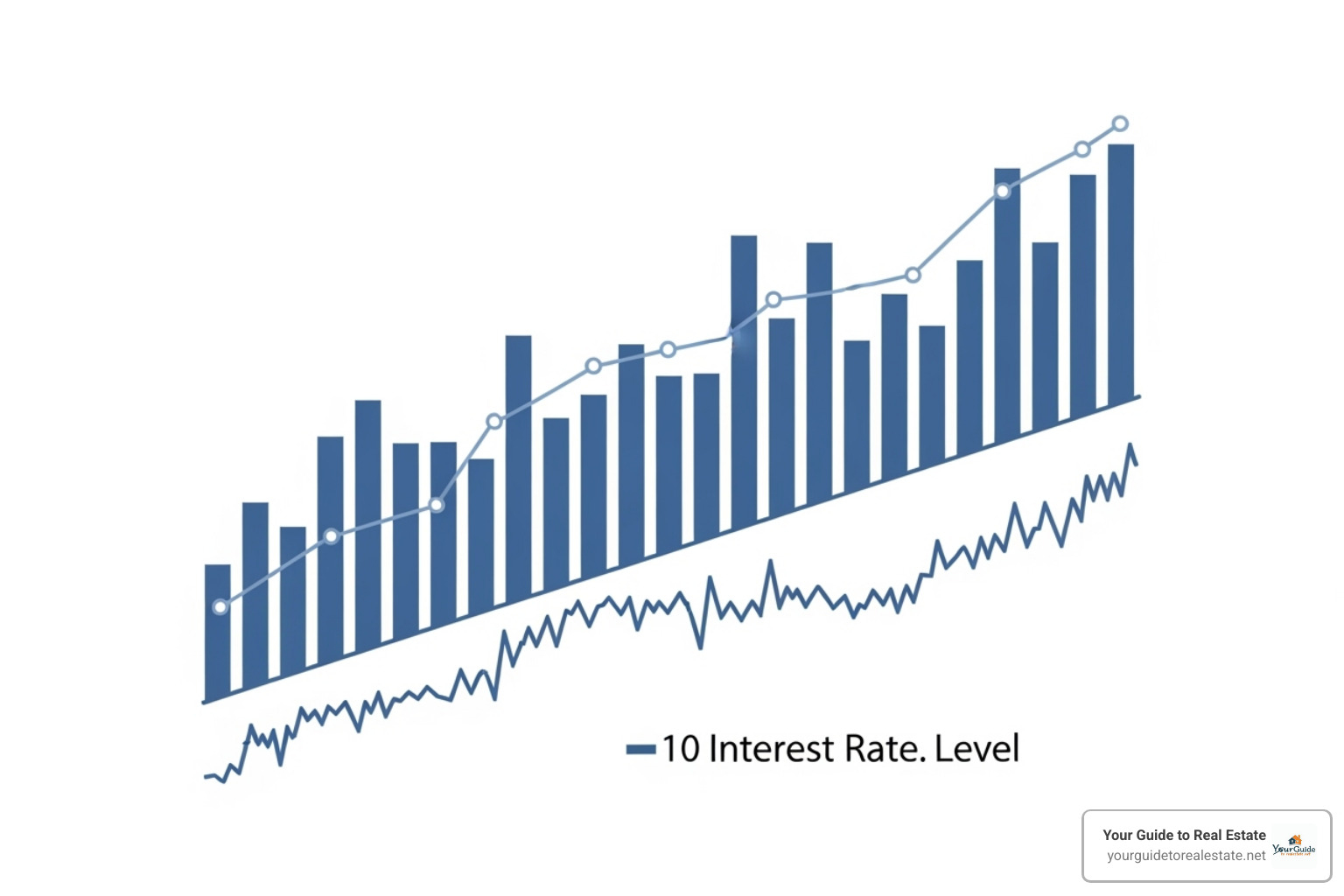
Timing your loan can be tricky. Federal Reserve policy is a major driver; when the Fed fights inflation by raising rates, borrowing costs increase for all loans, including land loans. You can learn more about why are mortgage rates going up? to understand these forces.
The economic outlook offers some hope. The Congressional Budget Office expects inflation to fall and interest rates to decline over the next few years, which could lead to better land loan interest rates in 2025 and beyond.
However, forecasting is not a guarantee. While the consensus is that we can ask will interest rates go down? and expect a “yes,” the timing is uncertain. If you find a good rate now, it may be wise to take it.
5. Shop Smart: Where to Find the Best Rates
Finding the best land loan interest rates requires knowing where to look and how to compare offers. Not all lenders specialize in land loans, but those that do often compete for your business.
Specialized Lenders for Land
For the most competitive land loan interest rates, focus on lenders who specialize in land.
- Farm Credit System Lenders: These are ideal for rural or agricultural properties. Lenders like AgSouth Farm Credit and Capital Farm Credit are experts in land financing and may offer unique benefits like patronage distributions that lower your effective rate. You can find your Farm Credit Association online.
- Local Banks and Credit Unions: These institutions, such as Azura Credit Union and EastRise Credit Union, have deep knowledge of local land values. They often provide personalized service and competitive rates for their members.
Specialized lenders understand the nuances of land value (like timber or water rights) that national banks might overlook, which can lead to better terms for you.
Getting Multiple Quotes
Always get multiple quotes and compare them carefully to understand the total loan cost.
- Look at the APR, not just the interest rate. The Annual Percentage Rate (APR) includes fees and gives a truer picture of the loan’s cost.
- Use the Loan Estimate form. Lenders must provide this standardized document, making it easy to compare closing costs, penalties, and other terms side-by-side.
- Negotiate. With multiple offers, you have leverage. Ask a preferred lender to match or beat a competitor’s rate.
- Watch for hidden fees. A low advertised rate can be offset by high processing fees or other charges. The principles in our guide on how to compare mortgages apply here as well.
Frequently Asked Questions about Land Loan Financing
Navigating land loan interest rates and financing can be complex. Here are answers to some of the most common questions.
What is a typical down payment for a land loan?
Expect to need more cash upfront for a land loan than a mortgage. The required down payment depends on the land type:
- Improved Lots: For land with existing utilities and road access, expect to put 20-30% down.
- Raw Land: For undeveloped land, lenders require 30-50% down due to higher risk.
A larger down payment reduces the lender’s risk, shows you’re a serious buyer, and can help you secure better land loan interest rates.
Are land loan interest rates fixed or variable?
Both fixed and variable rates are available, but terms differ from traditional mortgages.
- Fixed Rates: Offer predictable payments for a set period (e.g., 3-10 years). Some longer-term loans may include a balloon payment.
- Adjustable-Rate Mortgages (ARMs): Start with a low introductory rate for a fixed period (e.g., 1 or 3 years) before adjusting based on the market. They offer initial savings but come with future uncertainty.
- Balloon Payments: Be aware of these. Some loans require the entire remaining balance to be paid in a single lump sum after a set term, requiring you to refinance or pay it off.
Choose based on your risk tolerance and plans. A fixed rate is safer if you expect rates to rise, while an ARM could save you money if rates are expected to fall.
Can I get a land loan to build a house later?
Yes, you can. The right financing depends on your timeline.
- Raw Land Loan: If you plan to build in the future, you’ll start with a raw land loan. These have higher rates and down payments but give you time to prepare.
- Lot Loan: For build-ready improved lots, these loans offer better rates than raw land loans.
- Construction-to-Permanent Loan: This is ideal if you plan to build soon. It combines the land and construction financing into a single loan, like a construction-to-permanent loan, that converts to a standard mortgage after the home is built. During construction, you often make interest-only payments.
Having clear plans, blueprints, and a contractor can strengthen your application and help you secure better land loan interest rates, even if you aren’t building immediately.
Conclusion: Securing Your Piece of the Dream
Navigating land loan interest rates can be challenging, but with the right strategies, you can secure a great deal. Rates are higher for land (typically 1% to 1.5% more than mortgages) due to lender risk, but you have the power to find favorable terms.
To succeed, focus on these key takeaways:
- Strengthen Your Profile: Improve your credit score, save for a large down payment (20-50%), and have a clear plan for the land.
- Shop Smart: Get quotes from specialized lenders like Farm Credit associations and local credit unions, not just big banks. Explore government programs like USDA loans for potentially rock-bottom rates.
- Perform Due Diligence: Compare the full loan offer (APR, fees, terms), not just the advertised interest rate. Use multiple offers to negotiate.
Understanding the nuances between raw and improved land, and keeping an eye on economic trends, will help you set realistic expectations. With preparation and persistence, you can turn a complex financing process into a successful land purchase.
At Your Guide to Real Estate, we provide the insights to put you in control. Ready to learn more? Our beginner’s guide to home loans can build an even stronger foundation for your property journey.