

What is Appraised Value in Real Estate?
The appraised value of a property is a licensed professional’s objective opinion of its worth at a specific point in time. This valuation is a critical step in the real estate process, especially when securing a mortgage.
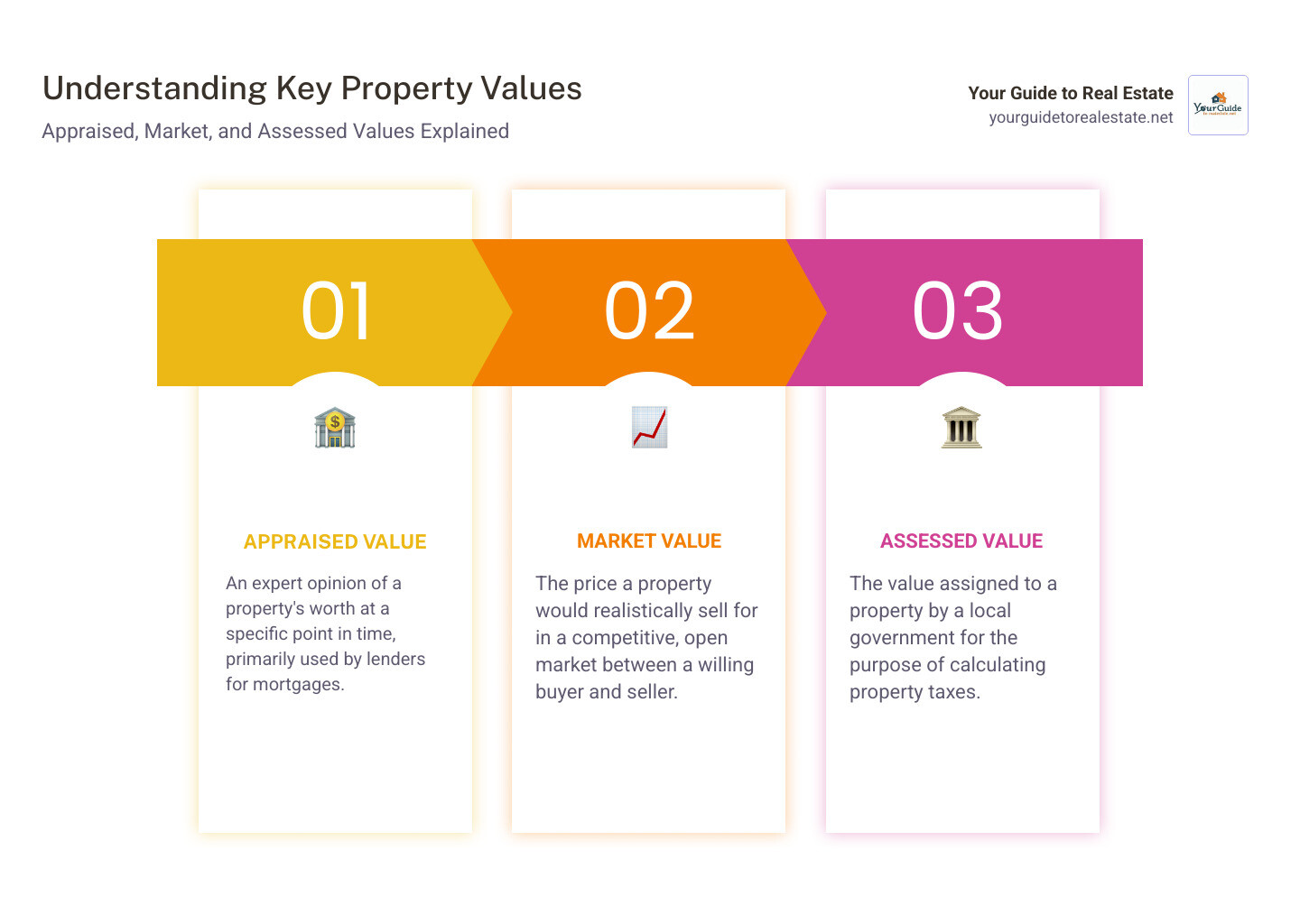
Lenders require an appraisal to ensure the loan amount doesn’t exceed the property’s actual value, protecting both their investment and the buyer. This appraised value can differ from the market value (what a buyer is willing to pay) and the assessed value (used for property taxes). Understanding this figure is key to making smart real estate decisions.
How the Appraised Value of a Property Is Determined
When you apply for a mortgage, your lender will order a property appraisal. While the lender initiates the process, the buyer typically pays for it as part of the closing costs. A state-certified appraiser then provides an unbiased, expert opinion of the home’s value.
The appraiser conducts a thorough property inspection, examining the home’s structure, systems, and overall condition. Following the inspection, the appraiser researches local market data, focusing on recent sales of similar properties, known as “comparables” or “comps.” Using established methodologies, they arrive at a final appraised value, which the lender uses to determine your loan terms.
For a deeper understanding, the National Association of Realtors offers A Guide to Understanding A Residential Appraisal.
The Three Core Appraisal Methods
Appraisers use three established methods, choosing the most appropriate one for the property type.

The Sales Comparison Approach is most common for residential homes. The appraiser finds recently sold, similar properties (comps) and makes value adjustments based on differences in features, size, and condition. This method reflects what buyers are currently willing to pay.
The Cost Replacement Approach calculates the cost to rebuild the property from scratch, subtracts depreciation, and adds the land’s value. It’s useful for new or unique properties with few comps.
For income-producing properties, the Income Approach analyzes the property’s value based on the income it generates versus its operating expenses.
Key Factors That Influence a Property’s Appraisal
Several key factors significantly impact a property’s appraised value:
- Location: Proximity to good schools, parks, and shopping boosts value.
- Property Size: This includes the home’s square footage and lot size. More functional space generally means higher value.
- Age and Condition: A well-maintained home will appraise well. Deferred maintenance and outdated systems will lower the value.
- Home Improvements: Kitchen and bathroom renovations typically offer the best return. Energy-efficient updates are also valued.
- Layout and Functionality: Open floor plans and efficient use of space are positive factors.
- Curb Appeal: A well-maintained exterior and attractive landscaping create a strong first impression.
- Market Conditions: Supply and demand, interest rates, and the local economy all influence a property’s value.
For more insights, check out our guide to competitive market analysis in real estate.
Appraised Value vs. Market Value vs. Assessed Value
In real estate, the terms “appraised value,” “market value,” and “assessed value” have distinct meanings. Understanding them is key to making smart decisions as a buyer or seller.
Let’s explain these terms with a straightforward comparison:
| Feature | Appraised Value | Market Value | Assessed Value |
|---|---|---|---|
| Purpose | Primarily for mortgage lending, refinancing, and investment decisions. | To determine the actual selling price in an open, competitive market. | To calculate property taxes. |
| Who Determines | Licensed, professional appraiser. | Buyers and sellers (influenced by supply, demand, and economic conditions). | Local government tax assessor. |
| How Determined | Detailed inspection, comparable sales, cost, and income approaches. | What a willing buyer will pay and a willing seller will accept in a free market. | Mass appraisal techniques, often a percentage of market value, based on periodic valuations. |
| Key Characteristic | Objective, point-in-time estimate, lender-focused. | Fluid, dynamic, reflects current buyer willingness and market forces. | Often lower than market or appraised value, used solely for tax purposes. |
For a closer look at these distinctions, dive into our guide on understanding the difference between assessed and appraised value.
Why Appraised Value and Market Value Can Differ
It’s common for a property’s appraised value to differ from its market value. Appraised value is an objective, data-driven snapshot for a lender. Market value is dynamic, representing what a buyer is willing to pay, influenced by competition and emotion.
Here are common reasons for the difference:
- Market Fluctuations: A surge in buyer demand can push market values up faster than the historical sales data used for appraisals can reflect.
- Bidding Wars: In a hot market, competition can drive a sale price far above what an appraiser, using past comps, deems justifiable.
- Emotional Factors: A seller’s sentimental attachment or a buyer’s urgent need to move can push a price higher than the objective appraised value.
- Unique Properties: A one-of-a-kind home may be difficult to appraise if there are no truly comparable sales, potentially leading to a conservative valuation.
To understand more about what drives market prices, take a peek at our guide on what is market value?
Why Understanding the Difference Is Crucial for Buyers and Sellers
Knowing the distinction between these values is essential for a smooth transaction.
For Buyers:
- Informed Offers & Financial Planning: Understanding that a lender will only finance based on the appraised value helps you make a smart offer. If you offer above the asking price, be prepared to cover any potential “appraisal gap” with cash.
- Protection from Overpaying: The appraisal is a financial safeguard. If it comes in low, it’s a red flag that you might be overpaying and gives you a chance to renegotiate.
For Sellers:
- Realistic Pricing: Pricing your home in line with what it’s likely to appraise for can prevent deals from falling apart due to a low appraisal.
- Negotiation & Preparation: If an appraisal comes in low, be prepared to negotiate. You can also be proactive by documenting all home improvements for the appraiser.
The Role of Appraised Value in Getting a Mortgage
When you apply for a mortgage, the appraised value of a property is a critical factor. Lenders use it to assess the risk of the loan and to ensure the home is adequate collateral for the money they are lending. This protects both the bank and you, the buyer.
How the Appraised Value of a Property Is Used to Secure a Loan
The appraisal is the lender’s primary tool for assessing their investment. Here’s how it works:
- Collateral Assessment: The home serves as collateral for the mortgage. The appraisal confirms the property’s value, assuring the lender that the asset is sufficient to back the loan.
- Determining the Loan Amount: Lenders use the lower of the home’s sale price or its appraised value to calculate the maximum loan amount. If you agree to a $350,000 price but the home only appraises for $340,000, the loan will be based on the $340,000 figure.
- Loan-to-Value (LTV) Ratio: This ratio (loan amount divided by appraised value) affects your mortgage terms. A lower LTV can lead to better interest rates. If your LTV is above 80%, you’ll likely have to pay Private Mortgage Insurance (PMI).
- Refinancing and Home Equity Loans: When you refinance or apply for a home equity loan, a new appraisal is needed to determine your home’s current value and the amount of equity you can borrow against.
For even more insights, explore our article on understanding appraisals and why they matter.
How Appraisals Affect a Buyer’s Ability to Get a Mortgage
The appraisal outcome can be a make-or-break moment for your home purchase:
- Loan Approval Contingency: Most purchase contracts include an appraisal contingency. This clause allows you to back out of the deal without losing your earnest money if the home appraises for less than the agreed-upon price.
- Lender’s Risk Mitigation: The appraisal is the lender’s defense against over-lending. It ensures they are not financing a property for more than it’s worth, reducing their financial risk.
- Maximum Loan Amount: A low appraisal can create a gap between the sale price and what the bank will lend. This may require you to bring more cash to closing, renegotiate with the seller, or cancel the purchase.
- Safeguard for the Buyer: While a low appraisal can be disappointing, it protects you from overpaying by providing an objective, professional opinion on the property’s worth.
A smooth appraisal is a critical step toward homeownership. For more on the purchasing process, read our U.S. Housing Market Update: Prices, Inventory, and Buyer Behavior.
Improving Your Appraisal and Handling a Low Valuation
As a homeowner, you can take proactive steps to ensure the appraised value of a property is as accurate and strong as possible. And if the appraisal comes in low, it’s important to know your options.

What Homeowners Can Do to Improve Appraised Value
While you can’t change the market, you can present your home in its best light and ensure all its features are accounted for.
- Boost Curb Appeal: A well-maintained exterior, tidy landscaping, and a clean facade signal a well-cared-for property.
- Complete Repairs: Fix any outstanding issues like leaky faucets or peeling paint. Ensure major systems (HVAC, electrical, plumbing) are in good working order.
- Focus on High-ROI Upgrades: Kitchen and bathroom renovations typically provide the best return on investment. Energy-efficient updates and smart home technology are also attractive to appraisers.
- Document Everything: Prepare a detailed list of all significant improvements and renovations, including dates, costs, and permits. Provide this packet to the appraiser to help them justify a higher value.
- Communicate Politely: You can provide your documentation and point out any unique features or recent comparable sales that support your home’s value.
What Happens When the Appraised Value of a Property Is Low
If the appraisal comes in lower than the purchase price, it creates an “appraisal gap.” This is a common issue, but you have several options:
- Renegotiate the Price: The buyer can ask the seller to lower the price to match the appraised value. This is often the first step.
- Buyer Pays the Difference: The buyer can bring extra cash to closing to cover the gap between the loan amount and the higher purchase price.
- Challenge the Appraisal: If you believe the appraisal contains errors or overlooked key information, you can formally contest it with the lender.
- Cancel the Contract: The appraisal contingency in the purchase agreement allows the buyer to walk away from the deal and recover their earnest money if a solution can’t be reached.
Frequently Asked Questions about Appraised Value
Here are quick answers to some of the most common questions about property appraisals.
How long is a home appraisal valid?
An appraisal is generally considered valid by lenders for about six months. However, in a rapidly changing real estate market, a lender may require a new appraisal in as little as three to four months to ensure the valuation is still accurate.
Who pays for the appraisal in a real estate transaction?
Even though the lender orders the appraisal, the buyer (borrower) pays for it. The cost, typically between $400-$800, is usually included in the buyer’s closing costs. It’s a necessary expense that also protects the buyer from overpaying.
Can I give the appraiser my own list of comparable sales?
Yes, and it’s a smart idea. Prepare a packet for the appraiser that includes a list of recent, relevant comparable sales you or your agent have found. Most importantly, provide a detailed list of all improvements and upgrades you’ve made, including costs and dates. This helps the appraiser see the full picture and justify the home’s value.
Your Next Step in Understanding Property Valuation
We’ve covered what the appraised value of a property is, how it’s determined, and its critical role in any real estate transaction. Understanding this figure is fundamental to making smart, confident decisions, whether you’re buying, selling, or investing.
The appraised value of a property is more than a number; it’s an expert opinion that safeguards your financial interests. Here at Your Guide to Real Estate, we are committed to providing the clear insights you need to succeed.
Ready to dig deeper into how property values can shape your real estate goals?
Learn more about Valuation and Market Analysis in Real Estate