

Understanding Virtual Real Estate Agents: The New Way to Buy and Sell Property
A virtual real estate agent is a licensed professional who operates primarily online, using digital tools to serve clients remotely without a traditional office. This model is defined by:
- No physical office: Working from home or co-working spaces.
- Lower overhead: Reduced costs lead to higher potential commission retention.
- Digital-first operations: Using video conferencing, virtual tours, and e-signatures for all transactions.
- Geographic flexibility: Serving clients across wider areas and working from anywhere.
- Technology dependence: Relying on CRMs, virtual tour platforms, and transaction software.
The real estate industry has shifted online, with 100% of home buyers beginning their property search on the internet. This trend has fueled the rise of virtual agents who meet clients in the digital space.
Virtual agents perform the same core duties as traditional agents—providing market knowledge, negotiation, and transaction management—but through a different operational model. They partner with cloud-based brokerages that offer support without requiring a physical presence. This benefits agents with better work-life balance and income, while clients get convenient, tech-savvy service without sacrificing expertise.
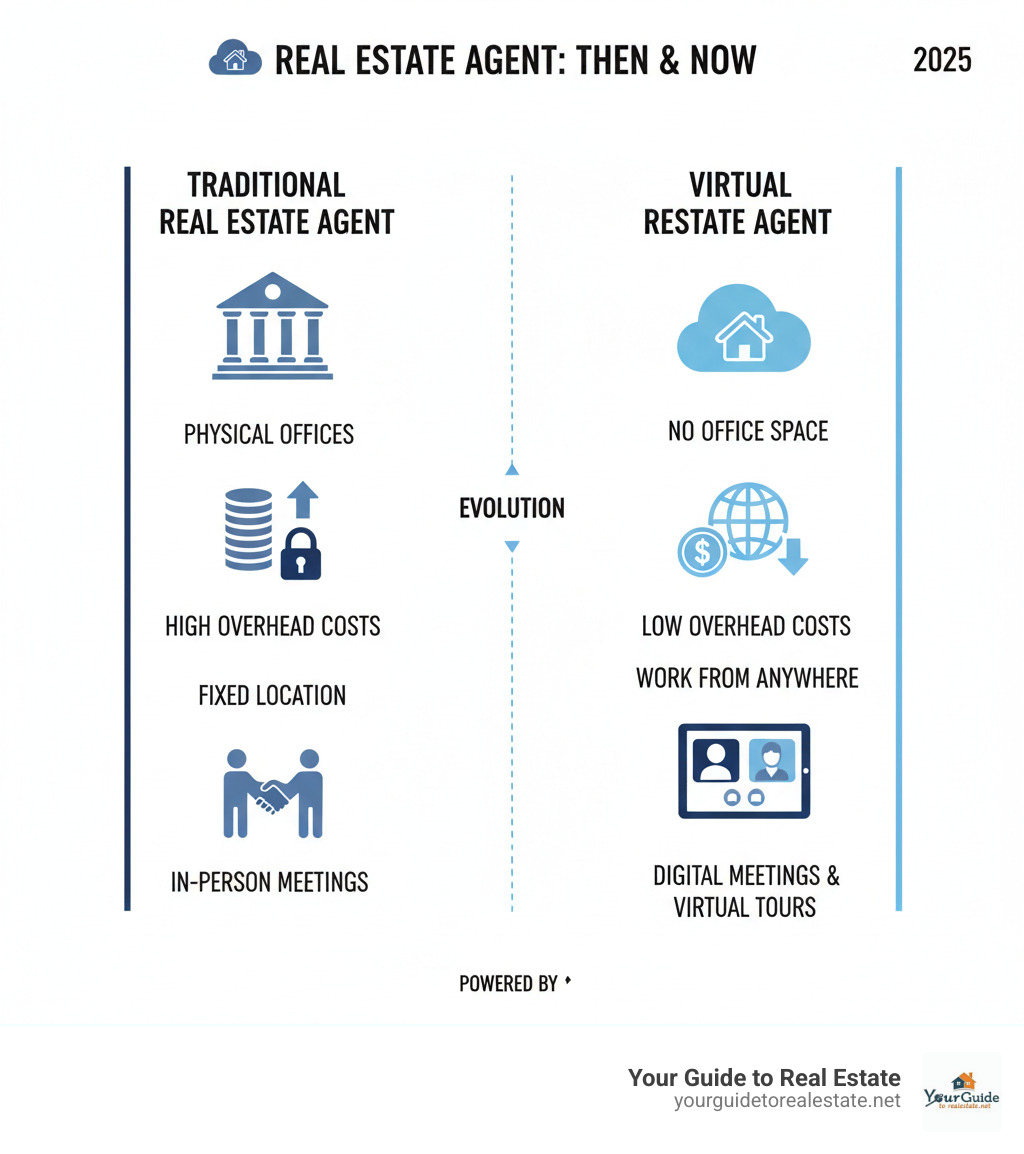
Learn more about Virtual real estate agent:
The Rise of the Virtual Real Estate Agent: A Modern Approach
A virtual real estate agent performs the same role as a traditional agent but without a brick-and-mortar office, leveraging technology to work from anywhere. This strategic shift is reshaping the industry by eliminating the high costs of physical offices.
By joining a cloud-based brokerage, agents avoid high commission splits that cover office overhead. This model provides greater financial rewards, flexibility, and autonomy. Furthermore, studies show remote workers can be up to 47% more productive by eliminating commutes and office duties, allowing more focus on clients.
| Feature | Traditional Real Estate Agent | Virtual Real Estate Agent |
|---|---|---|
| Office Costs | High (rent, utilities, maintenance, staff) | Low to none (home office, co-working space fees) |
| Commission Splits | Often higher splits to cover office overhead | Typically lower splits, higher take-home commission for agents |
| Geographic Flexibility | Limited by office location and local market presence | Broadened scope, can serve clients across wider areas |
| Technology Reliance | Uses technology, but supplemented by in-person processes | Heavily reliant on digital tools for all operations |
| Work-Life Balance | Can be challenging due to fixed office hours and commutes | Improved flexibility, better control over schedule |
| Client Interaction | Mix of in-person meetings, phone, and email | Primarily digital (video calls, messaging), with in-person as needed |
The virtual model works across any market, from Dallas to Oklahoma City, as geography is less of a barrier when your office is your laptop.
For more information on choosing the right brokerage model for your career, explore our guide on choosing a real estate broker.
Advantages for Agents and Clients
The virtual model offers tangible benefits. For agents, financial advantages come from lower overhead and better commission splits, leading to higher income and improved work-life balance. For clients, the benefits include the convenience of digital communication and a wider selection of tech-savvy professionals. Since 100% of home buyers start their search online, working with a digital-native agent is a logical choice.
When you’re ready to find an agent who can guide you through your buying journey with both expertise and modern efficiency, check out our guide on how to find the best buyers agent for you.
Disadvantages and How to Overcome Them
While the virtual model has challenges, they are manageable. For agents, potential isolation and the need for self-discipline are real concerns. For clients, building trust without in-person meetings can be a hurdle.
Successful virtual agents and brokerages address these issues proactively by fostering online community through video calls and forums, encouraging structured work routines, and using high-quality video to build rapport. A flexible, hybrid approach that combines digital efficiency with in-person meetings for key milestones is often the most effective strategy.
The Virtual Agent’s Playbook: Tools, Tech, and Tactics

A successful virtual real estate agent relies on smart technology and strategic communication. This playbook covers the essentials for running a modern real estate business without a traditional office.
Essential Tools and Technologies
A virtual agent’s digital toolkit is their office. These are the essential platforms:
- Customer Relationship Management (CRM): To track leads, manage client data, and automate follow-ups (e.g., HubSpot, Follow Up Boss).
- Transaction Management Platforms: To streamline paperwork, track deadlines, and manage compliance (e.g., Paperless Pipeline).
- E-signature Services: To allow clients to sign documents securely from any device (e.g., DocuSign).
- Video Conferencing: For face-to-face client consultations (e.g., Zoom, Google Meet). A good webcam and microphone are crucial.
- Virtual Tour Technology: To create immersive 3D walkthroughs (e.g., Matterport) or conduct live video tours.
- Lead Generation Tools: To find potential clients and keep the sales pipeline full (e.g., REDX).
- Cloud Storage & Automation: To keep files accessible (e.g., Google Drive) and automate repetitive tasks (e.g., Zapier).
For a comprehensive look at the specific gadgets and software that empower today’s agents, explore our complete real estate agent tools guide.
Mastering Remote Communication and Transactions
In the virtual world, communication is paramount for building trust and closing deals. A virtual real estate agent must excel at remote interaction.
Establish rapport with high-quality video consultations and maintain trust with consistent, prompt communication. Conduct comprehensive virtual property tours using a mix of 3D walkthroughs and live video. Securely manage all digital paperwork with e-signature services and transaction management platforms, ensuring a compliant and transparent process. Coordinate effectively with lenders, inspectors, and title companies to keep every transaction on track.
We believe in empowering our clients with knowledge, which is why we encourage you to review our guide on questions to ask your realtor to ensure you’re fully prepared for your real estate journey.
Marketing Yourself as a Virtual Real Estate Agent

Without a physical office, your online presence is your storefront. For a virtual real estate agent, marketing is the lifeblood of the business.
Build a personal brand with a professional website that showcases your niche and testimonials. Use content marketing—like blog posts on market trends in Dallas or Oklahoma City—to demonstrate expertise. Engage with your audience on social media by sharing virtual tours and market updates. Since 100% of home buyers begin their property search online, being visible where they are is essential. Finally, use SEO to ensure your website appears in local search results.
By combining these strategies, a virtual real estate agent can build a thriving business. If you’re looking to expand your reach, our resources on real estate business growth can provide the guidance you need.
How to Become a Virtual Real Estate Agent: A Step-by-Step Guide
Starting a career as a virtual real estate agent offers flexibility and high earning potential. Here is a step-by-step guide to entering the digital real estate space.
Key Steps to Becoming a Successful Virtual real estate agent
Success as a virtual real estate agent requires licensing, the right brokerage, tech skills, and a strong online brand.
- Obtain Your Real Estate License: Complete your state’s pre-licensing education and pass the exam. Requirements vary by state (e.g., Texas for Dallas, or Oklahoma for Oklahoma City). For a comprehensive overview, consult our Real Estate License School Complete Guide.
- Choose a Virtual or Cloud-Based Brokerage: A virtual brokerage operates without a physical office, offering agents better commission splits and tech support. Choose one with a strong online community and robust training.
- Master Essential Technology: Your tech stack is your office. Become proficient in CRMs, transaction management platforms, e-signature tools, and video conferencing.
- Develop a Strong Online Presence: Your website and social media are your digital storefront. Create a professional site and use valuable content to attract clients. Since 100% of home buyers begin their search online, a strong digital footprint is vital.
To learn more about the initial steps, read our guide on how to become a realtor.
Navigating Legal and Ethical Considerations
Operating virtually comes with unique legal and ethical duties.
- State Licensing Laws: You must be licensed in the state where the property is located. Verify your state’s rules for remote work with the local real estate commission.
- Data Privacy and Security: Protect sensitive client data with robust cybersecurity, including strong passwords, two-factor authentication, and encrypted communications.
- E-Signature Legality: The U.S. E-SIGN Act gives electronic signatures legal standing. Use reputable services with a secure audit trail.
- Professional Standards: The NAR Code of Ethics applies to all agents. Uphold duties of transparency, honesty, and confidentiality in all digital interactions.
Developing strong real estate agent skills that encompass legal and technological literacy is key to success.
The Future is Now: AI, Automation, and the Next Wave of Virtual Real Estate
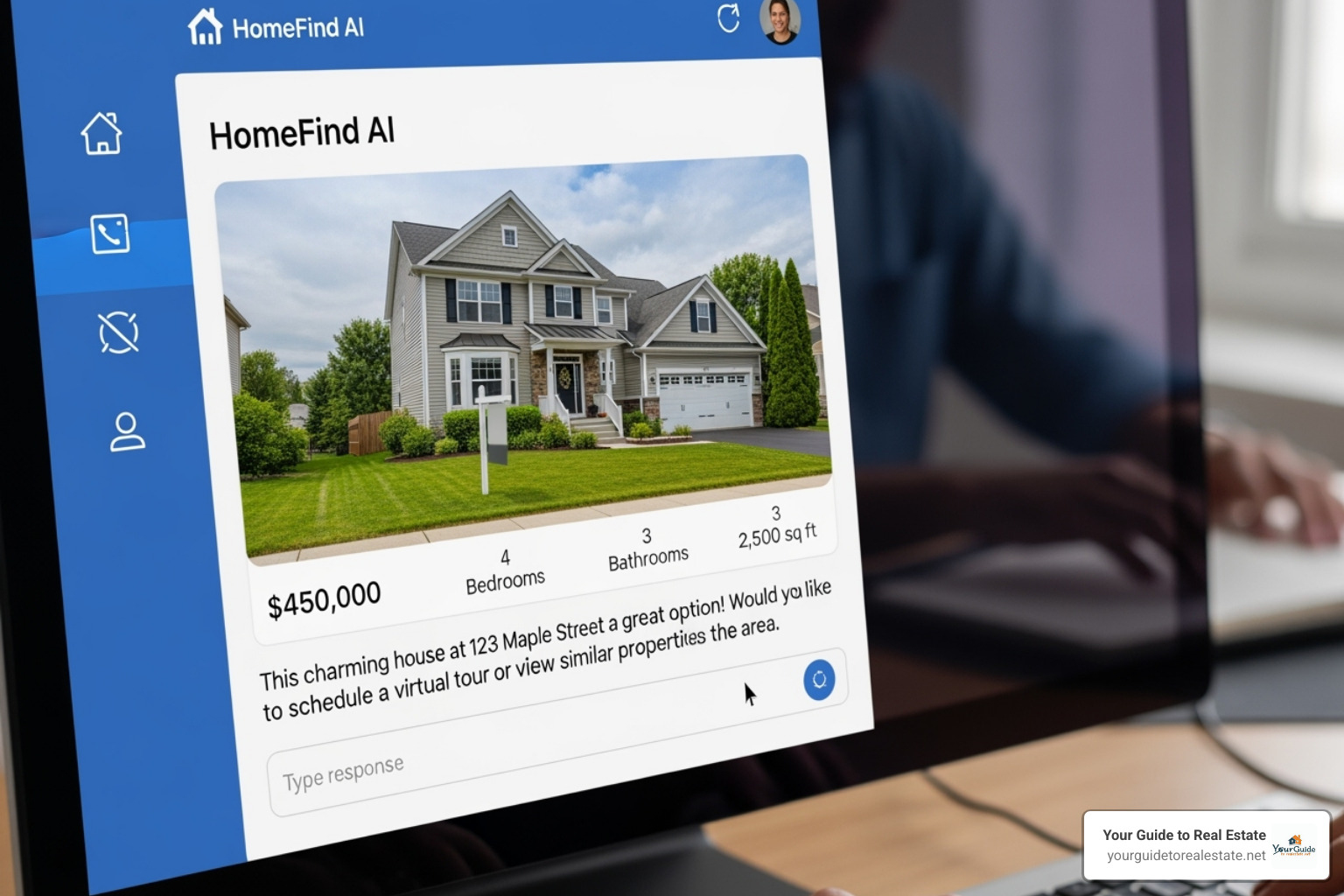
The real estate industry is evolving rapidly, with Artificial Intelligence (AI) and automation set to revolutionize how a virtual real estate agent works by augmenting their capabilities.
The Impact of AI and Automation
AI and automation are becoming indispensable tools for the modern virtual real estate agent.
AI-powered assistants provide 24/7 lead engagement, handling inquiries and qualifying prospects around the clock. This frees up human agents to focus on high-value, relationship-building tasks. Automation also handles repetitive administrative work, boosting efficiency. Furthermore, predictive analytics powered by AI can analyze market data to forecast trends, helping agents provide clients with superior advice on pricing and timing.
AI empowers the human virtual real estate agent to be more productive and strategic. To dive deeper into this shift, explore our article on how AI and automation are changing the real estate workforce in 2025.
Evolving Client Expectations and Market Trends
Staying competitive as a virtual real estate agent means understanding evolving client expectations.
Today’s clients demand instant information and prefer digital-first experiences. With 100% of home buyers beginning their search online, they expect immediate responses and seamless digital communication. New frontiers like the metaverse and virtual property are also emerging.
Despite this digital shift, a hybrid approach remains crucial. A successful virtual real estate agent blends digital convenience with in-person availability for critical moments like showings or signings, especially in markets like Dallas or Oklahoma City. This combination of high-tech efficiency and high-touch service is the future.
To learn more about how technology is reshaping our industry, read our article on how technology is revolutionizing real estate.
Frequently Asked Questions about Virtual Real Estate Agents
How do virtual agents show houses?
Virtual real estate agents use digital tools to showcase properties, including high-definition photos, video walkthroughs, and immersive 3D tours. They also conduct live video calls from the property to provide an interactive, personalized viewing experience from anywhere.
Is a virtual agent cheaper for the client?
While virtual real estate agents have lower overhead, their commission rates are generally comparable to traditional agents. The value they offer is primarily through efficiency, tech-savviness, and flexibility, not a reduced commission.
Can I trust a real estate agent I’ve never met in person?
Yes. Trust with a virtual real estate agent is built through professionalism, transparent communication, and a strong online presence with client testimonials. Video calls allow for face-to-face interaction, and trust is earned through responsiveness and delivering on promises, just as with any professional.
Conclusion
The shift to virtual real estate is a fundamental evolution of the industry. The virtual real estate agent stands at the forefront, offering a modern, efficient, and flexible approach to property services.
Technology empowers agents to offer superior service by breaking down geographical barriers and streamlining transactions. For clients, this means convenient access to tech-savvy professionals. Whether you are an agent or a client, the virtual model opens up new possibilities. At Your Guide to Real Estate, we provide the framework for success in this dynamic market. For a deeper dive, we invite you to explore our complete guide to virtual real estate brokerages. The future of real estate is virtual.