
Understanding What You’re Really Paying For
The cost of title insurance is a misunderstood but crucial closing cost that protects your property ownership. If you’re buying or refinancing, you may wonder if the price is justified.
Quick Answer: What Does Title Insurance Cost?
- Average range: $500 to $3,500 per policy
- Typical percentage: 0.5% to 1% of your home’s purchase price
- For a $400,000 home: Expect to pay between $2,000 and $4,000
- Payment frequency: One-time fee at closing (not an annual premium)
- Average national cost: Research shows 0.42% of the purchase price (about $1,337 for a $318,000 home)
Unlike many closing costs, this isn’t an arbitrary fee—it’s insurance that protects you from legal challenges to your ownership.
Title insurance is unique: it protects against past problems, not future ones. While homeowners insurance covers future events like a storm, title insurance shields you from issues that occurred before you bought the property, such as unpaid taxes from a previous owner, forged deeds, or unknown heirs.
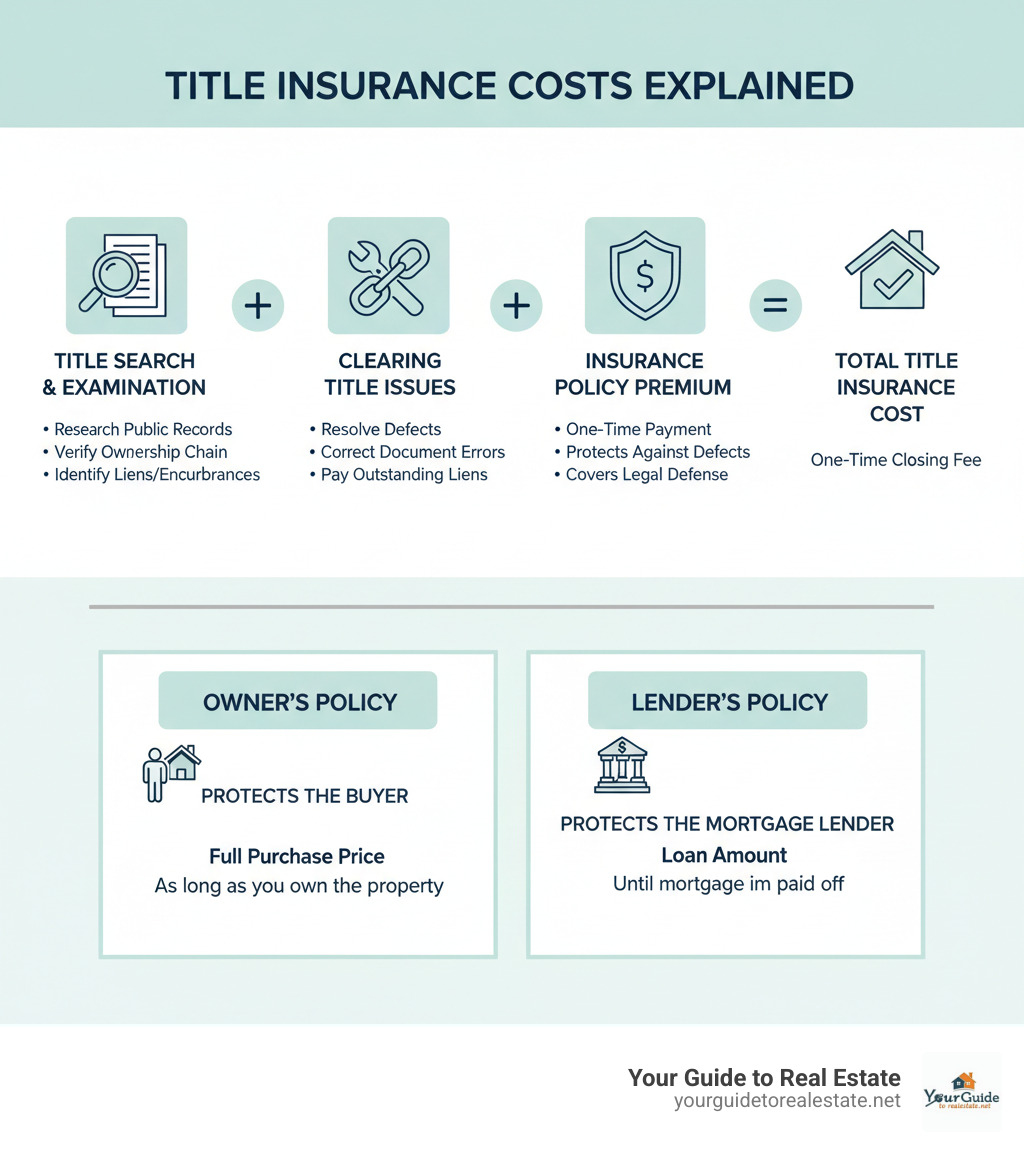
The cost combines two things: the title search (investigating the property’s history) and the insurance policy itself. Title companies spend significant time researching a property’s history to clear up problems before you take ownership.
You’ll encounter two types of policies. The lender’s policy protects your mortgage company and is usually required for a loan. The owner’s policy protects you and your heirs and is optional but highly recommended.
Let’s break down what goes into the cost, who pays, and how you can save money.
Breaking Down the Cost of Title Insurance
Understanding what you’re paying for makes the cost of title insurance feel less random and more reasonable. The cost is typically 0.5% to 1% of your home’s purchase price. It’s a one-time fee paid at closing, with no recurring premiums. Your actual cost depends on factors like property value, loan amount, and state regulations, which can either set rates or allow for price competition.
In real numbers, the cost usually falls between $500 and $3,500. For a $400,000 home, you can expect to pay roughly $2,000 to $4,000. According to Fannie Mae’s research on mortgage costs as a share of housing costs, planning for about half a percent of your home’s price is a safe estimate.
Title Insurance Premium vs. Title Service Fees
Your closing paperwork will list both a “title insurance premium” and “title service fees.” It’s important to know the difference.
The title insurance premium is the cost of the actual insurance policy that protects you or your lender from future ownership challenges.
Title service fees cover the work done before the policy is issued. These often include the title search fee, closing fees for administrative work, endorsement fees for special coverages, and notary fees. The Consumer Financial Protection Bureau breaks down these charges in helpful detail: What are title service fees?
On your Loan Estimate and Closing Disclosure, pay attention to section C, as these are services you can shop for to save money.
Owner’s vs. Lender’s Policy: What’s the Difference and Who Pays?
The term “title insurance” on your closing documents actually refers to two different policies: a lender’s policy and an owner’s policy. Understanding the difference is key to protecting yourself and negotiating a better deal.
Both policies protect against the same types of title defects, but they differ in who they protect and for how long.

Lender’s Title Insurance
If you’re getting a mortgage, lender’s title insurance is required. It protects your lender’s investment in the property. The coverage amount matches your loan balance, decreasing as you pay down the mortgage, and stays active until the loan is paid off. If you refinance, you’ll need a new lender’s policy, though you may get a discounted “reissue rate.” Even though this policy protects the lender, the buyer typically pays the premium at closing.
Owner’s Title Insurance
The owner’s title insurance policy protects you. While technically optional, skipping this coverage is a major risk. An owner’s policy covers the full purchase price of your home and lasts as long as you or your heirs own the property. You pay a one-time fee at closing for lifetime protection.
So who pays? The buyer almost always pays for the lender’s policy. Who pays for the owner’s policy is more negotiable. In many states, like Texas, the seller traditionally pays. In other areas, the buyer pays, or the cost is split. You can negotiate this point when making an offer on a home.
Potential Consequences of Not Purchasing Owner’s Title Insurance
Skipping the owner’s policy to save money is a significant risk. If a title issue arises—like a claim from a previously unknown heir—you would be on your own. You would have to pay for your own attorney, which can cost tens of thousands of dollars, and could potentially lose your home and all the equity you’ve invested.
The lender’s policy only protects the lender, not you; you could lose your home and still owe the mortgage. This is not a theoretical risk, as title companies handle thousands of claims each year for issues like liens, fraud, and ownership disputes. The one-time cost of title insurance for an owner’s policy is a small investment compared to the potential for total financial loss.
What Does Your Title Insurance Policy Actually Cover?
Title insurance is unique: it protects you from problems that happened before you bought your home, not after. Unlike homeowners insurance, which covers future events like a fire or theft, title insurance covers past events that could threaten your ownership today.
A crucial part of the process is the title search, where professionals research public records to trace the property’s legal history. This proactive approach is why the cost of title insurance is more about prevention than claims. As research from the American Land Title Association shows, clearing a title is a complex process: More than pushing a button: Estimating the time and complexity of clearing title.
The Role of the Title Search
The title search is detective work for your property. Professionals examine deeds, mortgages, tax records, and other documents to build a complete ownership history. This verifies the seller’s right to sell and uncovers hidden issues. While the search itself might cost under $200 by itself, it’s a vital step. If the title company finds a problem, like an old lien, they work to resolve it before closing in a process called “clearing the title.”
Common Title Defects That Can Cloud Your Ownership
Even the most thorough search can miss hidden issues like fraud or clerical errors, which is why the insurance policy itself is essential.
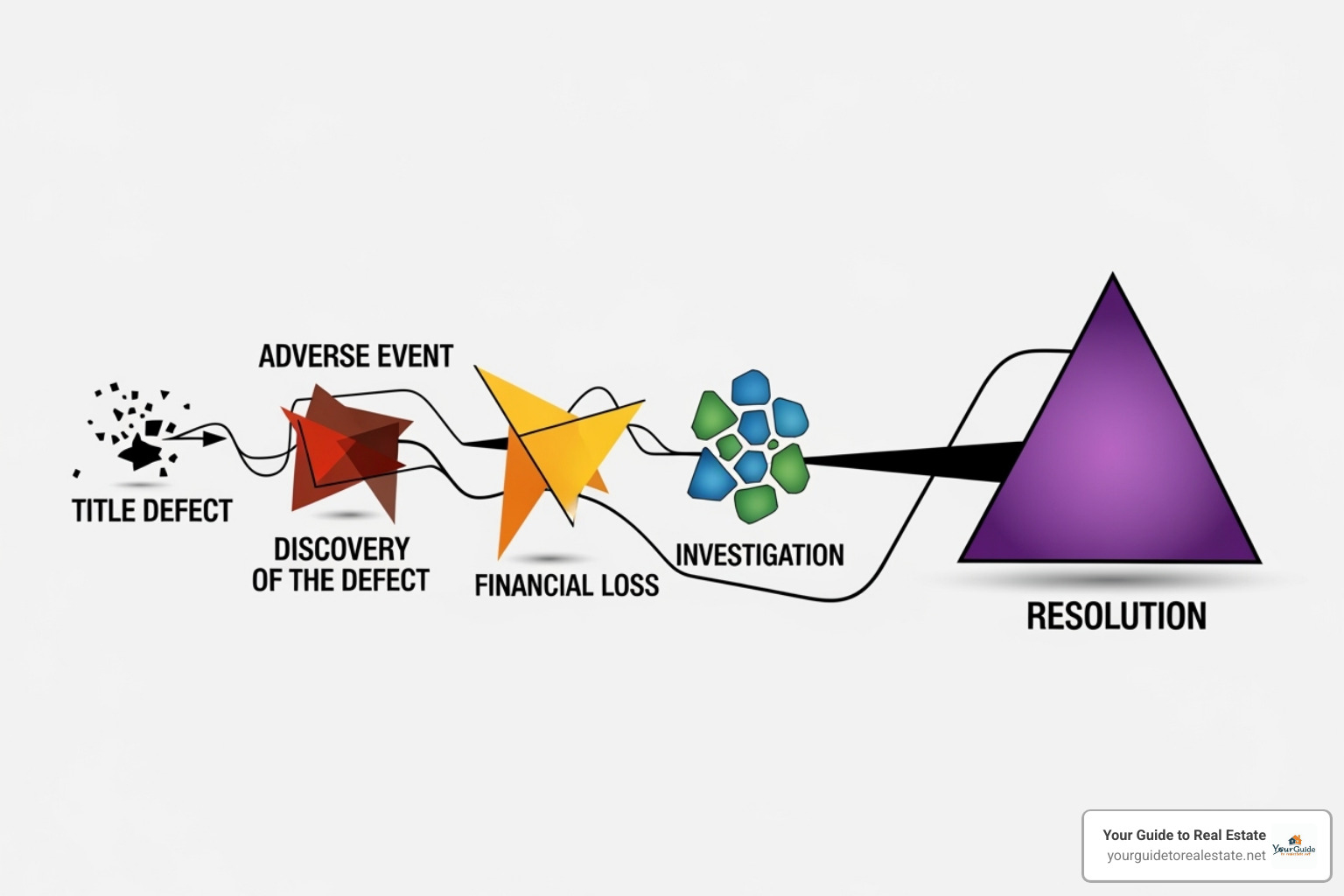
Your policy typically protects you against a range of issues, including:
- Unpaid property taxes from previous owners.
- Contractor’s liens for unpaid work done by a previous owner.
- Ownership disputes from unknown heirs or a previous owner’s ex-spouse.
- Forgery and fraud, including forged signatures on deeds or modern scams like wire transfer fraud.
- Errors in public records, such as misspelled names or incorrect legal descriptions.
- Encroachments (a neighbor’s structure on your land) and easement issues (another party’s right to use part of your property).
Title insurance covers not just the financial loss from these defects but also the legal fees to defend your ownership, turning a potential nightmare into a manageable issue.
How to Save Money and Shop for Title Insurance
The good news is you have more control over the cost of title insurance than you might think. With a little effort, you can save hundreds or even thousands of dollars.
The Consumer Financial Protection Bureau (CFPB) strongly recommends shopping for title services. Your Loan Estimate and Closing Disclosure identify which services you can shop for, so don’t feel pressured to use the company your lender or agent suggests. CFPB strongly recommends consumers shop.
Understanding State-Regulated Rates (e.g., Texas)
In some states, like Texas, premium rates are regulated. The Texas Department of Insurance (TDI) sets the basic rates, meaning all title companies charge the same base premium, so you can’t shop for a lower rate. Texas Title Insurance Basic Premium Rates. However, you can still save. In Texas, the simultaneous issue discount dramatically reduces the cost of the lender’s policy (often to around $100) when you buy it with an owner’s policy. Even in regulated states, you can still shop around for unregulated title service fees.
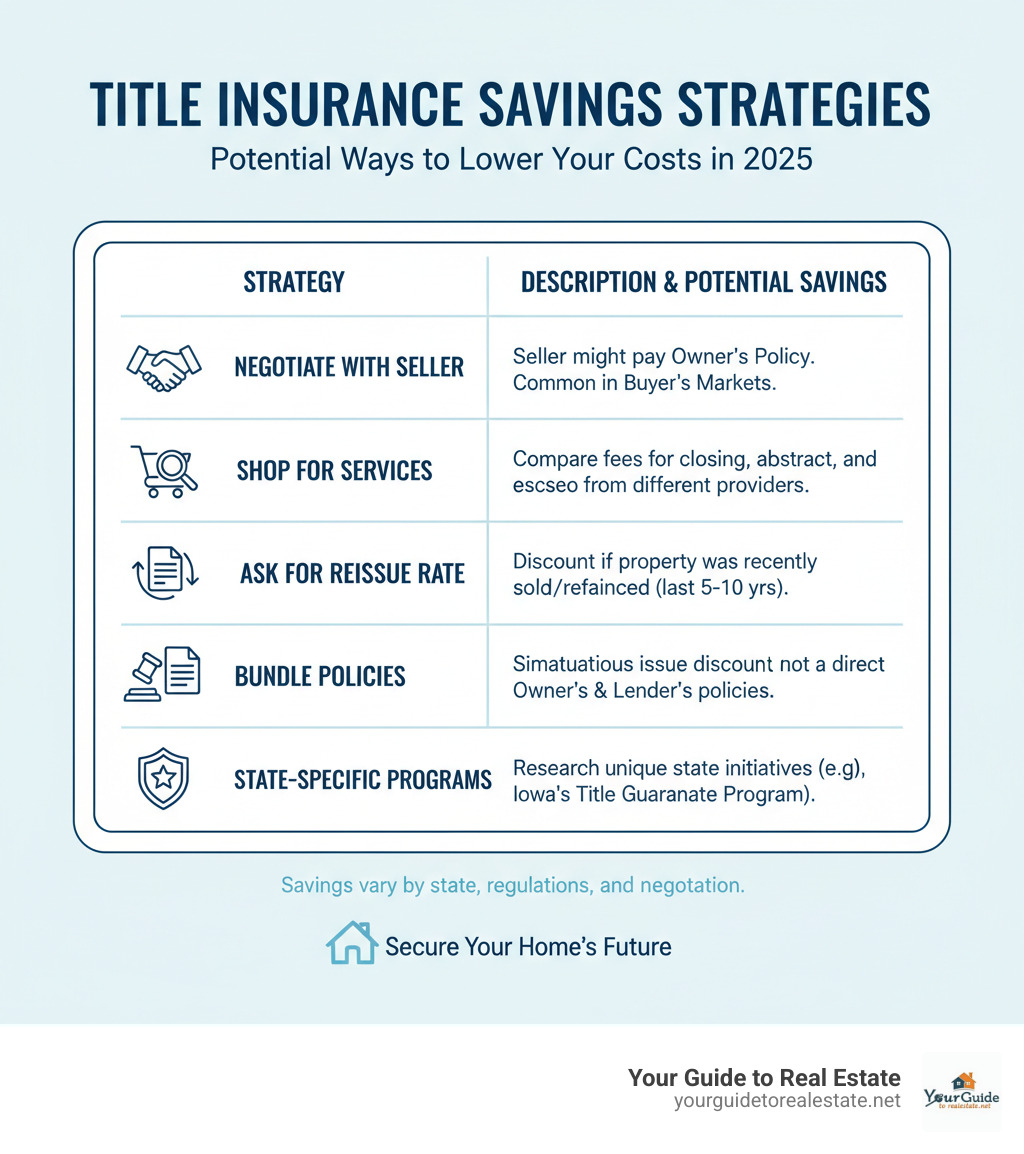
How to Lower Your Cost of Title Insurance
Whether you’re in a regulated state or a competitive market, several strategies can help reduce your overall title insurance expenses:
- Negotiate with the seller. In many markets, it’s common for the seller to pay for the owner’s policy. Even if it’s not customary, everything in real estate is negotiable.
- Compare quotes from multiple title companies. Get itemized quotes from at least three companies to compare unregulated service fees like closing and administrative costs, which can vary significantly.
- Ask about reissue rates. If the property was sold or refinanced in the last 5-10 years, you may qualify for a “reissue rate.” This discount can be substantial (30-40%) because less title search work is needed.
- Bundle your policies together. Buying the owner’s and lender’s policies from the same company at closing almost always provides a “simultaneous issue” discount on the lender’s policy.
At Your Guide to Real Estate, we believe knowledge is power. Understanding these strategies puts you in the driver’s seat during your transaction.
Frequently Asked Questions about Title Insurance
We hear these questions all the time from homebuyers. Let’s clear up some of the confusion around title insurance.
Is title insurance required when buying a home?
A lender’s title insurance policy is almost always mandatory if you have a mortgage, as lenders require it to protect their financial interest.
An owner’s title insurance policy, on the other hand, is technically optional. However, optional doesn’t mean unimportant. Our team at Your Guide to Real Estate strongly recommends an owner’s policy to protect your own investment.
Why does title insurance seem expensive compared to other insurance?
Title insurance seems expensive because it works differently than other insurance. Instead of covering future risks (like car insurance), it protects against past events. The bulk of the cost of title insurance pays for the extensive preventative work done before closing—the title search and curative actions to clear the title.
This approach is so effective that, according to the Government Accountability Office, only 5 percent of the premium is paid out in claims, compared to 70% or more for other insurance. You’re paying to eliminate risk upfront, not to cover future claims.
Can I buy owner’s title insurance after closing?
Technically, you may be able to buy owner’s title insurance after closing, but we strongly advise against it. It is often more complicated, more expensive, and can leave you with gaps in coverage.
The best time to buy owner’s title insurance is at closing. This ensures you get immediate, complete protection at the most competitive price, as the title work is already being done for the lender’s policy.
Conclusion: Securing Your Investment with Confidence
You now understand what goes into the cost of title insurance—from the detailed title search to the policy premium. While it adds to your closing costs, this one-time payment protects what is likely your biggest financial investment.
Just as you wouldn’t drive a car without insurance, your home deserves the same level of protection. Title insurance shields you from real risks from the property’s past, such as forgeries, unknown heirs, or unpaid taxes.
You know that a lender’s policy protects the bank, while an owner’s policy protects you. The beauty of title insurance is its one-time payment for lifetime protection for you and your heirs—a single investment in lasting peace of mind.
At Your Guide to Real Estate, we believe understanding these details transforms you into a confident homeowner. Knowing what you’re paying for and why it matters makes the closing process less intimidating and more empowering.
Ready to dive even deeper? For a complete overview of title insurance, explore our comprehensive guide: Understanding Title Insurance. We’re here to help you steer every step of your real estate journey with confidence and clarity.