

What is Accounts Receivable and Why It Matters
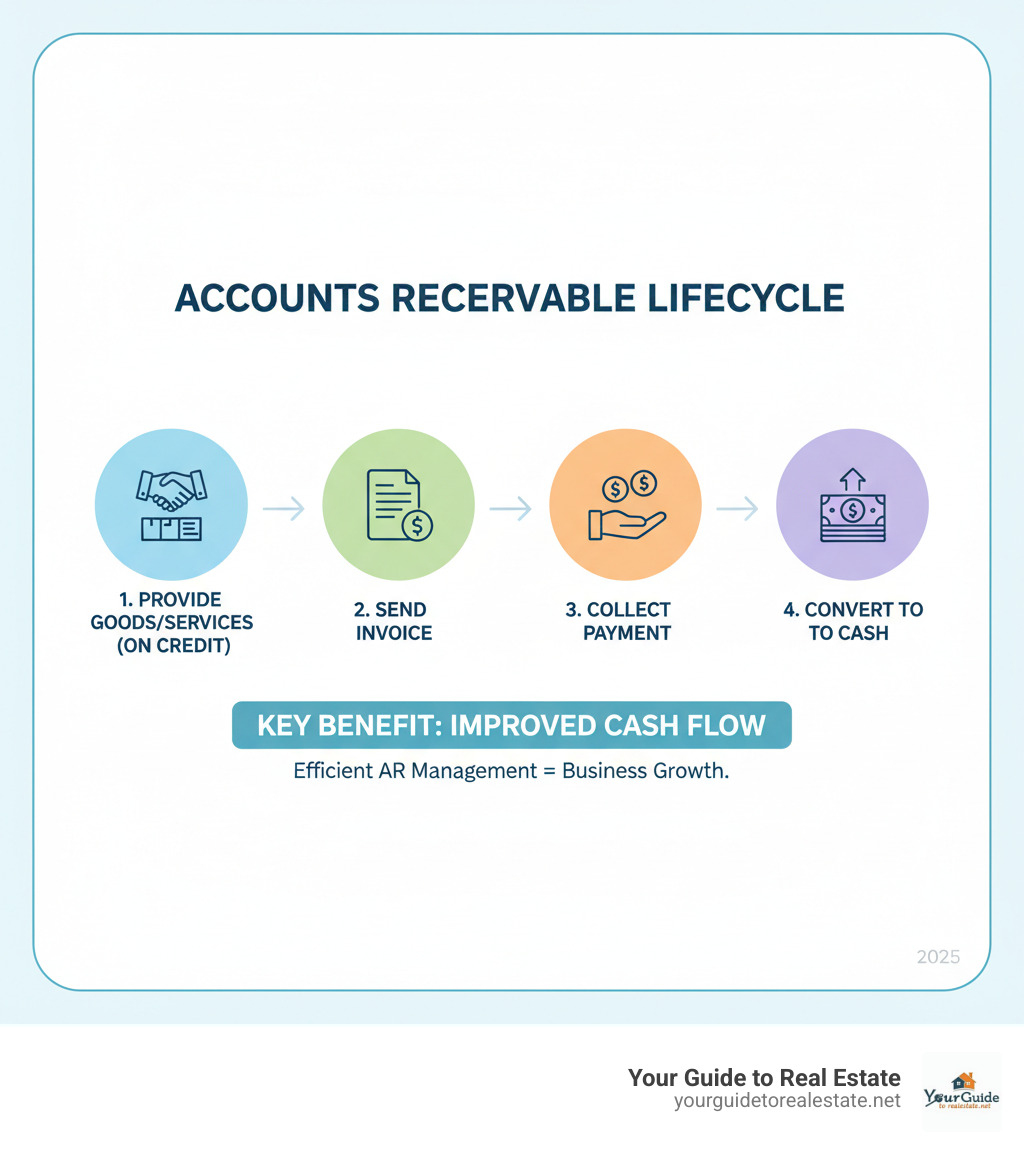
Accounts receivable (AR) is money customers owe your business. This is for goods or services you have already provided. But they haven’t paid yet. It’s a key part of your business’s financial health.
Here’s a quick overview:
- What it is: Money owed to your business by customers for goods or services delivered on credit.
- Where it sits: It’s a current asset on your company’s balance sheet.
- When it’s due: You expect to collect this money within one year (or one operating cycle).
- Why it matters: It directly affects your cash flow and overall financial stability. Poor management of AR can lead to cash shortages, a common reason businesses fail.
This guide will break down what accounts receivable means. We’ll show you how it works and why managing it well is crucial.
Key accounts receivable vocabulary:
The Fundamentals of Accounts Receivable
Getting comfortable with accounts receivable basics is like learning the foundation of a house – everything else builds on top of it. Whether you’re running a real estate brokerage waiting for commission checks or managing properties and billing clients monthly, understanding AR will keep your business financially healthy.
What is Accounts Receivable (AR)?
Think of accounts receivable as your business’s “promise jar.” When you provide a service or sell something on credit, your customer essentially gives you an IOU. That promise to pay? That’s your accounts receivable.
Let’s say you’re a real estate agent who just helped someone buy their dream home. You’ve earned your commission, but the payment won’t hit your account for another 30 days. That outstanding commission sitting in limbo? That’s accounts receivable for your brokerage.
Here’s what makes AR special: it’s not just hope – it’s a legally enforceable claim. Your customers are actually obligated to pay you within the timeframe you agreed upon. Pretty reassuring, right?
On your balance sheet, accounts receivable shows up as a current asset. Why current? Because you expect to collect this money within a year (or within your normal business cycle). It’s considered one of your most liquid assets – basically cash that’s just taking its time to arrive.
The faster you can turn these receivables into actual cash, the healthier your business becomes. It’s like having money in the pipeline instead of money stuck in traffic.
For the technical folks who want the official definition, Cornell Law School’s legal definition of “Accounts Receivable” breaks it down in legal terms.
Accounts Receivable vs. Accounts Payable
Here’s where things get interesting – and where many business owners get confused. Accounts receivable and accounts payable are like two sides of the same coin, but they’re completely different animals.
| Feature | Accounts Receivable (AR) | Accounts Payable (AP) |
|---|---|---|
| Definition | Money owed to your business by customers. | Money your business owes to suppliers or vendors. |
| Classification | Current Asset (represents a future cash inflow). | Current Liability (represents a future cash outflow). |
| Impact | Increases your assets and future cash inflows. | Increases your liabilities and future cash outflows. |
| Role | Reflects sales made on credit that are yet to be collected. | Reflects purchases made on credit that are yet to be paid. |
| Example | A real estate brokerage is owed commission from a recent home sale. | The real estate brokerage owes money for office supplies or marketing services. |
Think of it this way: accounts receivable is money flowing toward you, while accounts payable is money flowing away from you. One makes you smile (incoming cash), the other makes you budget carefully (outgoing cash).
Both are crucial for understanding your short-term financial health. You want enough money coming in through AR to comfortably cover what’s going out through AP. It’s like making sure your income can handle your monthly bills – but for your business.
How AR is Recorded in Accounting
Don’t worry – recording accounts receivable isn’t as scary as it sounds. If you’re using accrual accounting (which most businesses do), you record revenue when you earn it, not when the cash actually shows up in your bank account.
Here’s the simple two-step dance:
Step 1: When you make a credit sale
You increase your Accounts Receivable account (that’s a debit) because someone now owes you money. At the same time, you increase your Revenue account (that’s a credit) because you’ve officially earned that income.
Let’s say your real estate brokerage just earned a $10,000 commission, but you won’t get paid for 30 days:
- Debit: Accounts Receivable $10,000
- Credit: Commission Revenue $10,000
Step 2: When the payment finally arrives
You increase your Cash account (debit) because money just hit your bank. You decrease your Accounts Receivable account (credit) because that customer no longer owes you anything.
When that $10,000 commission check finally arrives:
- Debit: Cash $10,000
- Credit: Accounts Receivable $10,000

This process keeps your financial statements honest and accurate. On your cash flow statement, accounts receivable changes tell an important story. When AR goes up, it means you made more sales on credit but haven’t collected the cash yet – so your cash from operations looks lower temporarily. When AR goes down, it means you collected more of those outstanding payments, boosting your actual cash position.
Understanding this relationship helps you manage your business’s liquidity like a pro.
The Accounts Receivable Process from Start to Finish
Managing accounts receivable isn’t just about sending an invoice and then hoping for the best. Think of it more like a well-choreographed dance! It’s a systematic process that, when done right, ensures a steady, predictable flow of cash into your business. A well-defined accounts receivable process actually starts long before you even send that first invoice and continues all the way until the payment is safely in your bank account. It’s all about turning your hard work into usable funds.
Key Components of an Effective AR Process
To keep your cash flowing smoothly, your accounts receivable process needs to hit several key notes. Each step is super important for success. And remember, for any business, building robust business systems is truly the secret ingredient for efficiency.
First up, it’s all about Customer Onboarding and Credit Policy. Before you even provide a service or product on credit, it’s smart to get a good sense of your client’s ability and willingness to pay. For those in real estate, this might mean checking a developer’s past projects or looking into a property management client’s financial stability. Establishing clear credit terms right from the start is absolutely fundamental. This includes how long clients have to pay (like Net 30 or Net 60 days), what payment methods you accept, and any clear penalties for late payments or juicy discounts for paying early.
Next, we move to Invoicing. This is where you officially ask for your money! Your invoices should be super accurate, crystal clear, and include all the important details: your contact information, the client’s details, a clear description of the goods or services provided, the exact amount due, the payment due date, and simple payment instructions. Sending invoices promptly after you deliver the goods or services, ideally electronically, can really speed up the process and boost your chances of getting paid on time. Handy tools like QuickBooks, for example, can even help you automate invoice generation.
Then comes Collections. This is the active part where you gently (but firmly!) nudge those outstanding payments along. It involves sending reminders (often automated, which is a lifesaver!), following up on accounts that are past due, and smoothly resolving any payment disputes that pop up. Did you know that in 2022, a whopping 78% of executives believed better communication could have solved accounts receivable disputes? That just goes to show how important clear and consistent conversations with your clients are!
Sometimes, things don’t go exactly to plan, and that’s where Deductions and Exception Management come in. Clients might dispute an invoice or even take unauthorized deductions. Managing these exceptions means investigating any discrepancies quickly and resolving them efficiently. Doing so is crucial to prevent payment delays and, just as importantly, to keep those good customer relationships strong.
Once the money finally arrives, it’s time for Cash Posting. This step is all about making sure the payment is accurately recorded and applied to the correct outstanding invoice. Doing this correctly clears the accounts receivable balance for that specific transaction, essentially closing the loop on that sale.
Finally, we have Reporting and Analysis. Regularly generating and reviewing key reports, like aging reports (which we’ll chat about in more detail soon!), helps you keep a close eye on outstanding invoices. This allows you to spot potential issues early and get a clear picture of the overall health of your accounts receivable.
This entire cycle, from your very first interaction with a client to the final cash posting, ensures that your sales are successfully converted into cash. And really, for any business, that’s the ultimate goal!
Mastering Your Accounts Receivable Management
Getting your accounts receivable management right isn’t just about keeping your books tidy. It’s about creating a financial foundation that lets your business thrive. Think of it this way: every dollar sitting in receivables is a dollar that could be working harder for you.
Why Managing Accounts Receivable is Important
Your accounts receivable is like the bridge between making a sale and actually having money in the bank. When that bridge works smoothly, everything flows beautifully. When it doesn’t? Well, that’s when profitable businesses suddenly find themselves scrambling to pay the bills.
Cash flow is king in any business, especially in real estate where commission payments and service fees can take weeks to process. The faster you collect what’s owed to you, the more breathing room you have for everything else. You can pay your team, invest in better marketing, or even take advantage of new opportunities when they pop up. One sobering statistic shows that 82% of failed companies pointed to cash flow problems as their downfall. That’s not a coincidence.
Working capital gets a boost when your accounts receivable management is on point. Working capital is simply the difference between what you own (current assets) and what you owe (current liabilities). When money isn’t sitting around in receivables for months, you have more financial flexibility to grow your business.
Speaking of growth, efficient receivables management directly fuels business expansion. With steady cash flow, you can confidently invest in new real estate listings, hire additional team members, or expand your service offerings. For more insights on scaling your operations, check out our guide on real estate business growth.
Here’s something that might surprise you: good accounts receivable management actually strengthens customer relationships. When your payment process is clear, professional, and fair, clients respect that. They know what to expect, and there are fewer misunderstandings. On the flip side, a messy collection process can damage relationships faster than you’d think.
Finally, proactive management helps you minimize bad debt. Not every invoice will get paid – that’s just reality. But when you stay on top of your receivables, you can spot problem accounts early and take action before small issues become big losses.
How to Improve Your Accounts Receivable Management
Improving your accounts receivable management doesn’t require a complete overhaul. Often, small changes can make a big difference in how quickly you get paid.
Start with clear credit terms that everyone understands. Before you provide any service on credit, spell out exactly when payment is due. Terms like “Net 30” (payment due in 30 days) should be crystal clear on every invoice and contract. In real estate, this might mean setting clear payment schedules for consulting fees or property management services upfront.
Prompt and accurate invoicing is your next win. Send that invoice the moment you finish the work, not next week when you remember. Make sure every detail is correct because even small mistakes can give clients an excuse to delay payment. Many businesses find that automated invoicing systems save time and reduce errors.
Technology can be your best friend here. Automated reminders take the awkwardness out of following up on payments. A gentle email reminder a few days before the due date, followed by polite notices for overdue accounts, often does the trick without any direct intervention from you.
Make paying you as easy as possible by offering multiple payment options. Credit cards, bank transfers, online payment portals – the more choices you give clients, the fewer excuses they have for delayed payments.
Consider offering early payment discounts to encourage faster payments. A small discount (like 2% off for payment within 10 days) might seem like lost revenue, but getting cash faster often makes up for it through improved working capital.
On the flip side, late payment penalties can motivate timely payments. Just be careful here – you don’t want to damage relationships over fees. 78% of executives believe better communication could have solved accounts receivable disputes, so try talking first.
Communication strategies matter more than you might think. When an invoice goes overdue, a friendly phone call often works better than another automated email. Sometimes clients have legitimate issues that can be resolved quickly with a simple conversation. This is especially true in real estate, where relationships are everything.
Finally, be realistic about collections. Plan for doubtful accounts by periodically reviewing your past-due accounts and setting aside an allowance for accounts you don’t expect to collect. This helps you forecast cash flow more accurately and keeps your financial statements honest. For more details on this process, check out this resource on the allowance for doubtful accounts.
These improvements work together to create a system that protects your cash flow while maintaining the professional relationships that keep your business growing.
Key Metrics, Risks, and Reporting
Managing accounts receivable effectively means more than just sending invoices and hoping for the best. You need to track how well your system is working, spot problems early, and protect your business from financial surprises. Think of it like checking your car’s dashboard while driving – you want to know your speed, fuel level, and if any warning lights are flashing.
The Accounts Receivable Aging Report
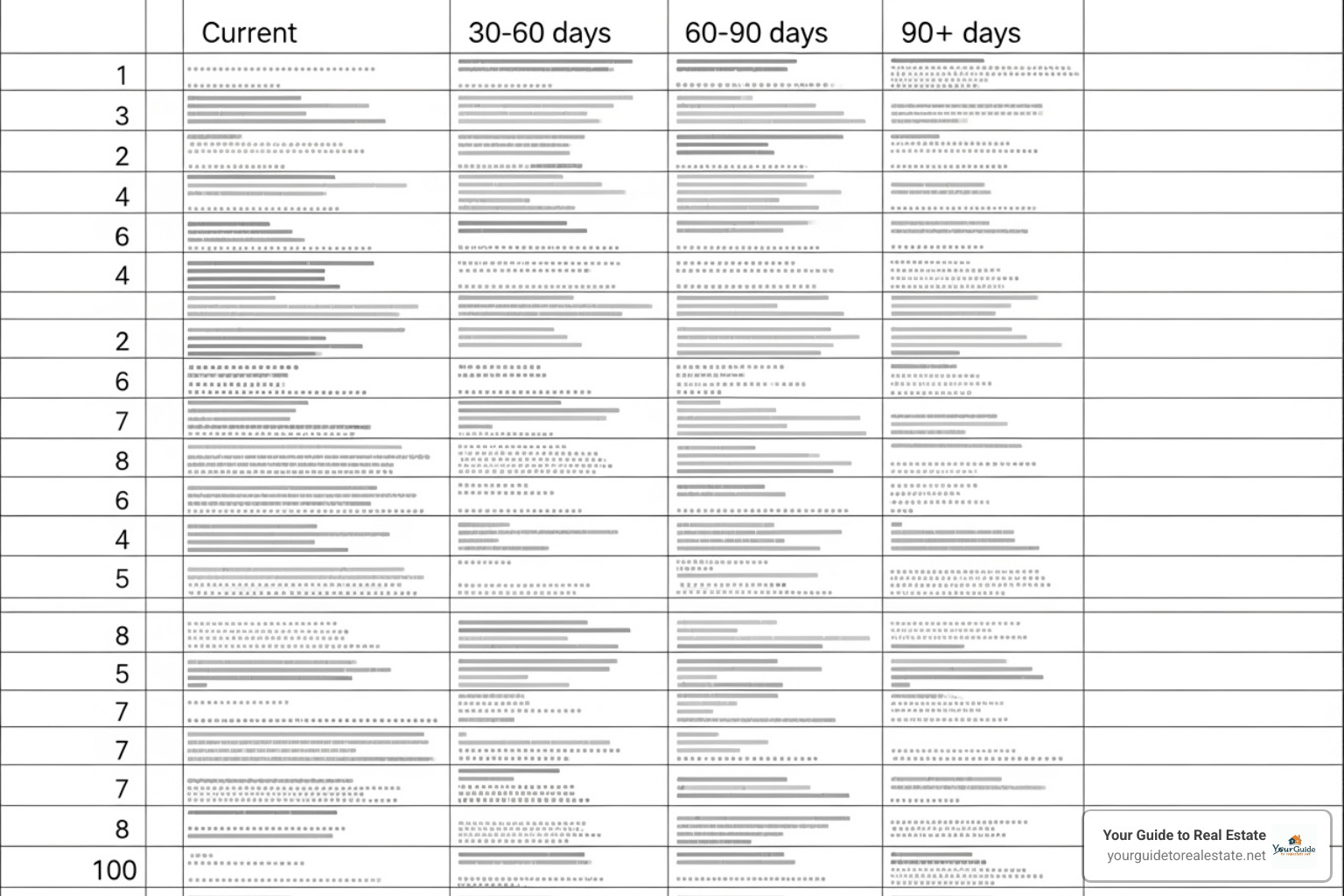
Your accounts receivable aging report is like a medical chart for your outstanding invoices. It shows you exactly which payments are healthy and current, which ones are getting a bit sick, and which ones might need emergency care.
This report breaks down all your unpaid invoices into time buckets based on how long they’ve been sitting in your system. The standard categories are 0-30 days (these are current and nothing to worry about), 31-60 days (starting to get a little stale), 61-90 days (definitely overdue and needing attention), and 91+ days (these are the problem children that might never pay).
The beauty of this report lies in its ability to help you prioritize your collections efforts. Instead of randomly calling customers, you can focus your energy on the oldest or largest outstanding amounts first. It’s like triage in a hospital – you treat the most urgent cases first.
Here’s something important to remember: the longer an invoice sits unpaid, the harder it becomes to collect. An invoice that’s been outstanding for three months is much more likely to become a bad debt than one that’s only 15 days old. That’s why regular review of your aging report isn’t just helpful – it’s essential for protecting your cash flow.
Key Metrics for Tracking Accounts Receivable
Numbers tell stories, and when it comes to accounts receivable, two key metrics can tell you whether your collection process is running like a well-oiled machine or limping along like a rusty bicycle.
The Accounts Receivable Turnover Ratio measures how many times during a year you collect your average accounts receivable balance. The formula is simple: divide your net credit sales by your average accounts receivable. If your ratio is 10, that means you’re collecting your receivables 10 times per year, or roughly every 36 days. A higher ratio is generally better because it means you’re collecting money faster and more efficiently.
The Days Sales Outstanding (DSO) flips this around and tells you the average number of days it takes to collect payment after you make a sale. You calculate it by dividing your average accounts receivable by net credit sales, then multiplying by the number of days in your period. If your payment terms are Net 30, you’d ideally want your DSO to be close to 30 days.
Both metrics are powerful tools, but they do have limitations. If your business has seasonal ups and downs, these ratios might not paint the full picture. A real estate brokerage, for example, might see big swings depending on market activity. Also, these numbers don’t tell you anything about customer satisfaction or whether clients will do business with you again.
The real value comes from tracking these metrics over time and comparing them to your industry. If your DSO is creeping upward month after month, that’s a red flag that your collection process needs attention.
Potential Risks and How to Mitigate Them
Let’s be honest – not every customer will pay what they owe. Understanding the risks that come with accounts receivable and having a plan to deal with them can save your business from serious financial trouble.
Bad debt is your biggest enemy. These are past-due accounts that you’ve given up hope of ever collecting. When a real estate client skips out on paying for your consulting services, or a property management client disappears without paying their fees, that becomes bad debt. You have to write it off as an expense, which directly hits your bottom line.
The best defense against bad debt is prevention. Check new clients’ creditworthiness before extending payment terms. Set clear policies about when and how you’ll pursue collections. Use your aging report religiously to catch problems early. And yes, sometimes you’ll need to bring in the big guns – collection agencies or lawyers – though this should be your last resort.
Since you can’t realistically expect to collect 100% of what you’re owed, smart businesses create an allowance for doubtful accounts. This is basically setting aside money for invoices you don’t expect to collect. It helps you forecast cash flow more accurately and keeps you from overestimating the value of your assets. You can learn more on the allowance for doubtful accounts to understand how this works in practice.
Cash flow shortages are another major risk. When too much of your money is tied up in outstanding accounts receivable, you might struggle to pay your own bills or invest in growth opportunities. This is especially dangerous in real estate, where deals can be time-sensitive and opportunities don’t wait around.
The solution involves speeding up your collections through better processes and communication. In extreme cases, some businesses sell their accounts receivable to factoring companies for immediate cash, though this comes at a cost.
Don’t forget about administrative costs either. All that time spent tracking invoices, sending reminders, and making collection calls adds up. The key is finding the right balance between thorough follow-up and efficient operations. Technology can be your friend here – automated reminders and streamlined processes can cut down on manual work while keeping your collections on track.
The impact on financial health from poor accounts receivable management can be devastating. But with the right systems, regular monitoring, and proactive approach, you can turn your receivables into a reliable source of cash flow that supports your business growth.
Frequently Asked Questions about Accounts Receivable
We get a lot of questions about accounts receivable from real estate professionals and business owners. Whether you’re a property manager tracking rental payments or a broker waiting on commission checks, these concepts can sometimes feel confusing. Let’s clear up the most common questions we hear.
Is accounts receivable considered an asset?
Yes, accounts receivable is definitely an asset! Specifically, it’s what we call a current asset on your balance sheet. Think of it this way – when someone owes you money that you expect to collect within the next year, that’s essentially money in the bank (just not quite yet).
Accounts receivable represents a future economic benefit that’s coming your way. Just like owning a rental property gives you future rental income, having outstanding invoices means you have cash flowing to your business soon. The key difference from other assets is that you expect to convert these receivables into actual cash within one year or one operating cycle, whichever is longer.
This classification matters because it shows lenders, investors, and even yourself how much liquidity your business has. The more current assets you have, the better positioned you are to handle short-term expenses and opportunities.
What is a good accounts receivable turnover ratio?
Here’s where things get interesting – a higher accounts receivable turnover ratio generally means you’re doing a great job collecting payments quickly. It shows you’re converting those credit sales into cash efficiently, which is exactly what you want.
But here’s the catch: there’s no magic number that works for every business. What’s considered “good” varies dramatically by industry. A restaurant might collect payments immediately, while a construction company might have much longer payment cycles. In real estate, commission payments might follow different timelines than property management fees.
The best approach is to compare your ratio to industry benchmarks first. Look at what similar businesses in your sector typically achieve. Then, track your own historical performance over time. Are you improving? Staying steady? Getting worse?
A truly “good” ratio is one that aligns with your business’s credit terms and keeps your cash flow healthy. If you’re consistently hitting your targets and have enough cash to operate smoothly, you’re probably in good shape.
How does technology impact accounts receivable management?
Technology has completely transformed how we handle accounts receivable. What used to be a mountain of paperwork and phone calls is now much more streamlined and strategic.
Automation is probably the biggest game-changer. Modern systems can automatically generate invoices, send payment reminders, and even post payments when they arrive. This cuts down on human errors and frees up your time for more important tasks. No more forgetting to send that follow-up email or accidentally applying a payment to the wrong account.
The improved insights are incredible too. You can see in real-time which invoices are outstanding, spot payment patterns among your clients, and track important metrics like your Days Sales Outstanding. This visibility helps you make better decisions about credit terms and collection strategies.
Better communication happens naturally when technology handles the routine stuff. Automated systems send personalized reminders at just the right times. Some platforms even offer customer portals where clients can view their invoices and pay online – making it easier for everyone involved.
Looking ahead, predictive analytics using AI and machine learning are helping businesses identify which customers might have trouble paying. This means you can adjust your approach before problems arise, potentially saving relationships and reducing bad debt.
Most importantly, these systems integrate seamlessly with your existing accounting software. Everything flows together smoothly, giving you a complete picture of your financial health without jumping between different programs.
The bottom line? Technology makes managing accounts receivable less stressful and more effective, leading to better cash flow and stronger customer relationships.
Conclusion
So, we’ve walked through the ins and outs of accounts receivable – that vital money your customers owe you. It’s much more than just a bookkeeping task; it’s a cornerstone of your business’s financial health and growth, especially in a dynamic field like real estate. From understanding what it is (your current asset, remember?) to putting smart management strategies into action and even using cool technology, every step you take helps build a stronger financial foundation.
A smooth and easy accounts receivable process means that the money due to you flows into your business like a steady stream. This helps you avoid tricky situations like bad debt and ensures you have enough cash for daily operations and future plans.
Just as managing these incoming payments is crucial for your business’s well-being, understanding your financing options is equally important for success in property investment. Here at Your Guide to Real Estate, we believe in giving you clear, stress-free guidance. Want to learn more about how to finance your property dreams? Dive deeper into our guide: Understanding Mortgages: A Beginner’s Guide to Home Loans.