

Why Choosing the Right Real Estate Broker Is Your Most Important Career Decision
Choosing a real estate broker is the foundation of your entire real estate career. According to industry research, 89% of sellers work with real estate agents, and the brokerage you select will determine your training, support, commission structure, and ultimately your success in the field.
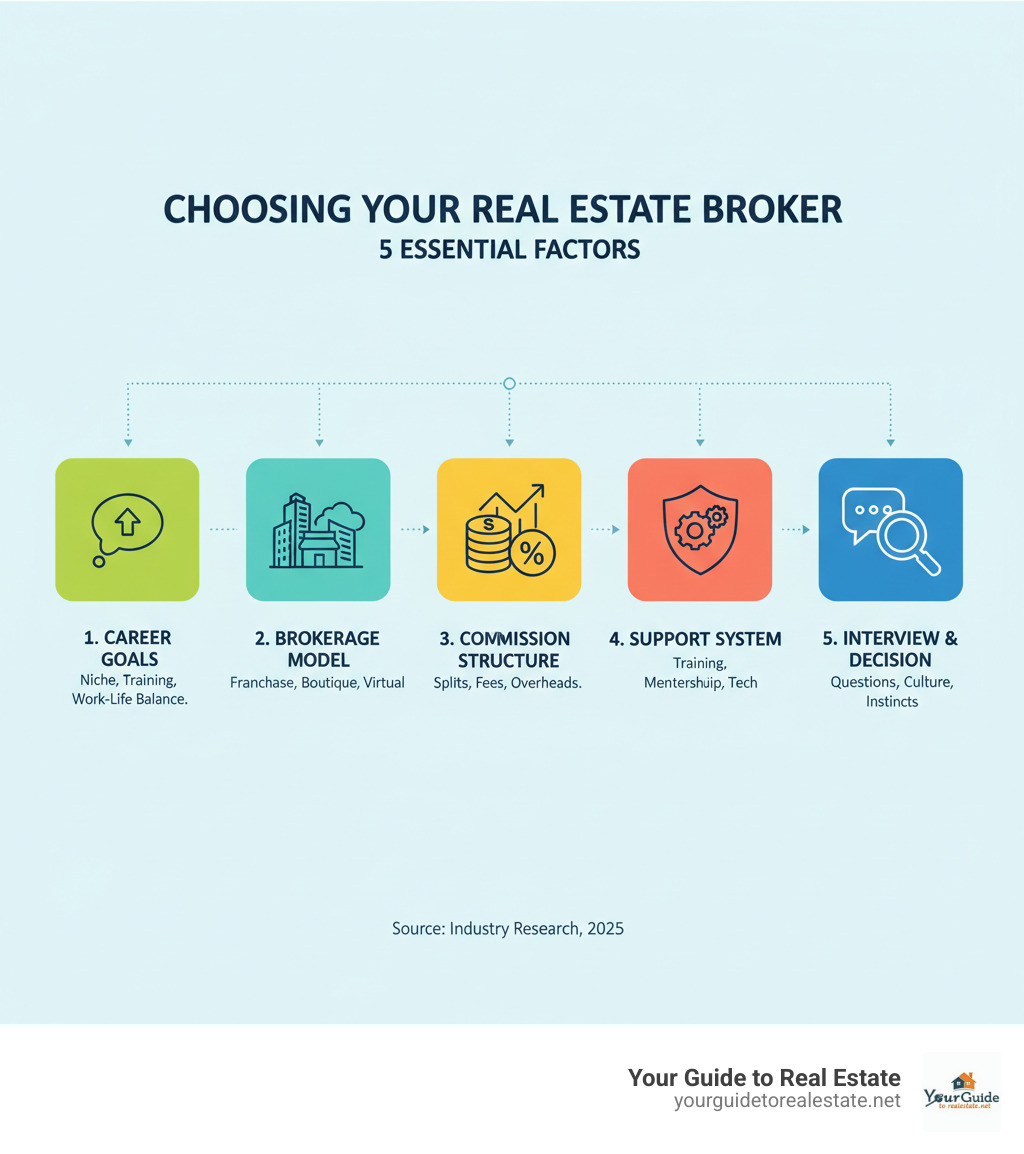
Quick Answer: The 5 Essential Steps for Choosing a Real Estate Broker
- Define your career goals and needs – Identify your niche, training requirements, and work-life balance preferences
- Research different brokerage models – Compare national franchises, boutique firms, and virtual brokerages
- Analyze commission splits and fees – Look beyond the split percentage to understand all costs involved
- Evaluate support systems – Assess training programs, mentorship opportunities, and technology resources
- Interview brokers and trust your instincts – Ask the right questions and choose based on cultural fit
As one new agent finded during their search: “The first step to success in pursuing a real estate career is making a good business decision” – and that decision starts with selecting the right sponsoring broker.
Why This Choice Matters So Much
Real estate agents cannot work independently – you must affiliate with a licensed broker to activate your license and conduct business. This relationship will shape everything from your daily operations to your long-term earning potential.
The research shows that 59% of sellers only contact one agent, which means your brokerage’s reputation directly impacts your credibility with potential clients. When you’re starting out without an established track record, your broker’s reputation becomes your reputation.
What Makes This Decision Complex
With over 481,000 real estate establishments operating in the U.S., the options can feel overwhelming. Different brokerages offer vastly different commission structures (ranging from 60/40 to 100% splits), support systems, and company cultures.
Some focus on high-volume lead generation, others emphasize personalized mentorship. Some charge minimal fees but offer basic support, while others provide comprehensive training programs and marketing resources for higher costs.
Handy choosing a real estate broker terms:
Step 1: Define Your Needs and Career Goals

Think of this first step as looking in the mirror before you start shopping for clothes. You wouldn’t buy a suit without knowing your size, and you shouldn’t start choosing a real estate broker without understanding what kind of agent you want to become.
Self-Assessment: Know Where You Stand
Are you brand new to real estate, still figuring out which end is up? Or maybe you’ve been in the business for a while and know exactly what you need to succeed. Your experience level changes everything when it comes to finding the right brokerage fit.
New agents typically need more hand-holding – think structured training programs, patient mentors, and clear systems to follow. Experienced agents often want the opposite: higher commission splits, more independence, and fewer meetings about the basics.
Career Goals: Dream Big, Plan Smart
Here’s where you get to think about your real estate future. Do you want to close your first deal within three months? Are you dreaming of becoming the go-to agent for luxury homes in your area? Maybe you see yourself leading a team or even opening your own brokerage someday.
Your goals should directly influence your brokerage choice. If you want to specialize in commercial real estate, joining a residential-focused boutique firm won’t help much. If your dream is to work with first-time homebuyers, a luxury-focused brokerage might not be the best match.
Niche Specialization: Find Your Sweet Spot
Real estate isn’t one-size-fits-all, and neither should your career be. Maybe you’re passionate about helping first-time buyers steer their biggest purchase ever. Perhaps luxury properties with their unique challenges and high-end clients excite you. Or you might be drawn to commercial real estate with its complex deals and investor relationships.
Some agents thrive working with specific neighborhoods they know inside and out. Others love the variety of working across different price points and property types. There’s no wrong answer – just what’s right for you.
Mentorship Needs: Learning the Ropes
If you’re new to real estate, having someone show you the ropes can make or break your first year. Some brokerages offer formal mentorship programs where experienced agents are assigned to guide newcomers. Others have a more informal approach where help is available if you ask for it.
Think honestly about your learning style. Do you need someone checking in on you regularly, or do you prefer figuring things out independently? A high commission split means nothing if you don’t know how to earn it.
Training Requirements: Never Stop Learning
Real estate is constantly evolving. New technologies, changing market conditions, updated regulations – there’s always something to learn. Some brokerages invest heavily in ongoing education, offering regular workshops, advanced courses, and training on the latest tools.
Others expect you to handle your own professional development. Neither approach is wrong, but you need to know which one matches your needs and learning preferences.
Desired Work-Life Balance: Success on Your Terms
Real estate can be demanding – clients call at all hours, weekends get busy, and deals don’t always respect your dinner plans. But that doesn’t mean you have to sacrifice your entire personal life.
Some brokerages promote a hustle-at-all-costs culture where being busy equals being successful. Others understand that sustainable careers require balance and boundaries. Think about what kind of lifestyle you want your real estate career to support.
Understanding your Real Estate Agent Skills and how different brokerages can help develop them is crucial for making this important decision.
The time you spend on this self-assessment isn’t wasted – it’s an investment in making the right choice for your future. Once you’re clear on what you need, you’ll be ready to evaluate which brokerages can actually deliver it.
Step 2: Research Brokerage Models and Reputations

Now that you’ve taken a good look at what you need from your career, it’s time to explore what’s actually out there. Choosing a real estate broker means understanding the different types of brokerages available and doing your homework on their reputations. Think of this step as shopping for your career home – you want to know the neighborhood before you move in.
The brokerage landscape offers three main flavors, each with its own personality and approach to doing business. Let’s walk through what makes each one tick.
Understanding Different Brokerage Models
National franchise brokerages are the household names you see everywhere – the ones with recognizable logos and consistent branding across the country. These firms bring serious brand power to the table, which can open doors with clients who already trust the name. They typically offer structured training programs and extensive resources, perfect if you like having systems and processes clearly laid out.
The trade-off? You might face higher fees and a more corporate environment where individual flexibility takes a back seat to company standards. For new agents, though, that instant credibility can be worth its weight in gold when you’re competing for your first listings.
Independent and boutique brokerages operate more like local family businesses. These firms often specialize in specific markets or property types, building deep expertise in their chosen niche. You’ll likely have direct access to the owner or principal broker, and decisions happen faster without layers of corporate bureaucracy.
The personal touch extends to how they treat their agents too. Many agents find the family-like atmosphere refreshing, especially if they’re coming from larger, more impersonal environments. The downside? You won’t have that instant brand recognition, so you’ll need to work harder to establish credibility with new clients.
Virtual brokerages represent the newest evolution in real estate. These firms operate primarily online, allowing agents to work from anywhere while keeping overhead costs low. If you’re comfortable with technology and prefer the flexibility of working from home, virtual brokerages can offer an appealing mix of independence and support.
The challenge lies in building relationships and getting mentorship when most interactions happen through screens rather than face-to-face conversations.
Here’s how these models stack up across key areas:
| Feature | National/Franchise | Independent/Boutique | Virtual |
|---|---|---|---|
| Brand Recognition | High nationwide visibility | Strong local presence | Primarily online presence |
| Fees | Higher franchise and marketing fees | More flexible fee structures | Lower overhead costs |
| Support | Standardized training programs | Personalized, direct mentorship | Technology-focused, remote support |
| Technology | Established proprietary systems | Varies widely by firm | Cutting-edge digital tools |
| Culture | Corporate structure | Family-oriented community | Independent, self-directed |
For a deeper dive into making this choice, check out our guide on Independent vs. Franchise Real Estate Brokerages: Which One Is Right For You?.
How to Evaluate a Brokerage’s Reputation
Once you’ve identified which type of brokerage appeals to you, it’s time to put on your detective hat. A brokerage’s reputation becomes your reputation, especially when you’re just starting out and don’t have your own track record yet.
Start with online reviews, but read them with a critical eye. Look for patterns rather than focusing on individual complaints or praise. Are multiple people mentioning excellent training programs? Do several reviews highlight poor communication from management? Pay special attention to reviews from other agents, not just clients.
You can get a sense of our approach to client feedback by checking out our Client Reviews page, which shows the kind of detailed, honest feedback that matters most.
Talk to current agents – this is where you’ll get the real story. Don’t just rely on the agents the brokerage puts you in touch with during your interview process. Seek out agents at open houses or networking events and ask about their experiences. Most agents are happy to share insights about what it’s really like to work at their firm.
Pay attention to agent turnover rates. A brokerage where agents stick around for years typically indicates good support and fair treatment. High turnover often signals underlying problems with management, support, or commission structures. You can often gauge this by looking at agent profiles on the company website or LinkedIn.
Verify credentials and check for disciplinary actions. This step is crucial but often overlooked. Research the brokerage and its principal broker through your state’s real estate commission or regulatory body. In Canada, organizations like the Real Estate Council of Ontario maintain public records of any disciplinary actions or license issues.
Assess their market presence. How visible is the brokerage in your target area? Do you see their signs in yards? Are their listings prominent on major real estate websites? A strong market presence often translates to more opportunities and better brand recognition for you as their agent.
The research phase takes time, but it’s an investment in your future success. For additional guidance on this crucial step, explore our comprehensive guide on How To Choose a Real Estate Broker To Work With.
You’re not just joining a company – you’re choosing the foundation for your entire real estate career. Take the time to get it right.
Step 3: Analyze Commission Splits and Hidden Fees
Let’s be honest – when you’re choosing a real estate broker, the commission split is probably one of the first things that catches your eye. It’s natural to gravitate toward the highest percentage, especially when you’re starting out and every dollar counts. But here’s the thing: focusing solely on commission splits when you’re new can actually hurt your career more than help it.
Think about it this way – a high commission split of nothing is still nothing. If a brokerage offers you 90% but provides no training, no leads, and no support, you might struggle to close any deals at all. Meanwhile, an agent at a brokerage with a 60% split but excellent mentorship and lead generation might be closing deals consistently and earning significantly more.
Understanding How Commission Structures Work
Most brokerages use traditional splits, which typically range from 60/40 to 70/30. This means you keep 60-70% of your commission, while the brokerage takes 30-40%. In return, they usually cover your office space, provide administrative support, and offer some marketing resources.
Tiered splits are becoming more popular, especially for motivated agents. You might start at 60/40 as a new agent, but once you hit certain sales targets, your split improves to 70/30 or even 80/20. This structure rewards production and gives you something to work toward.
Then there are 100% commission models, which sound amazing on paper. You keep every penny of your commission! But before you get too excited, these brokerages need to make money somehow. They typically charge monthly desk fees, transaction fees per sale, or require you to pay for your own errors and omissions insurance.
The Hidden Costs That Can Surprise You
When analyzing the financial side of choosing a real estate broker, you need to look beyond the headline commission split. Many brokerages have additional fees that can significantly impact your take-home income.
Desk fees are monthly charges for office space and amenities. Even if you rarely use the physical office, you might still be required to pay this fee. E&O insurance protects you from lawsuits, and while some brokerages cover this cost, others will charge you directly.
Marketing fees can be tricky to understand. Some brokerages charge a monthly fee to contribute to their overall marketing efforts, while others charge per-use fees for specific marketing tools. Transaction fees are flat fees charged every time you close a deal, regardless of the commission amount.
If you’re considering a franchise brokerage, ask about franchise fees. These can be a percentage of your commission or a flat fee that goes to the national brand. Some brokerages offer commission caps, meaning once you’ve paid a certain amount to the brokerage in a year, you keep 100% of your commission for the rest of that year.
The Importance of the Commission Split When Choosing a Real Estate Broker
The real estate industry standard commission is typically around 6% of the sales price, usually split between the listing agent’s brokerage and the buyer’s agent’s brokerage. The seller typically pays this entire commission. Understanding how this money flows and what your actual take-home will be requires looking at all the associated costs, not just the split percentage.
For new agents, education, marketing, mentorship, and leads are usually more important than commission split. A brokerage that provides comprehensive training might offer a lower initial split, but if they help you close more deals and build a stronger foundation, you’ll likely earn more in the long run.
When you’re interviewing brokerages, always ask about both the commission split and the complete benefit package. Don’t be shy about requesting a breakdown of all potential fees. Some brokerages are transparent about costs upfront, while others might not mention certain fees until you’re already committed.
While you might not have much negotiating power as a new agent, understanding the full financial picture helps you make an informed decision. The goal isn’t just to find the highest split – it’s to find the structure that will help you build a successful, sustainable career.
For a deeper understanding of real estate agent earnings and what you can realistically expect, check out our detailed analysis in How Much Do Real Estate Agents Really Make? With Real Numbers. And to better understand how commission flows through the entire transaction, our guide on How Real Estate Commission Gets Divided Among Agents provides valuable insights.
Step 4: Evaluating Support Systems When Choosing a Real Estate Broker

Here’s where choosing a real estate broker gets really personal. You’re not just picking a place to hang your license – you’re choosing a partner who will either lift you up or leave you struggling on your own.
Think of it this way: even the most talented agents need the right tools and support to succeed. The culture of a brokerage can significantly impact your job satisfaction and success, especially when you’re just starting out.
What Support Really Means
Support isn’t just about having someone to call when things go wrong (though that’s important too). It’s about having systems in place that make your daily work smoother, more efficient, and ultimately more profitable.
Some brokerages talk a big game about support but deliver little more than a pat on the back and a desk. Others create comprehensive ecosystems designed to help their agents thrive. The difference becomes crystal clear once you start working.
Assessing Training and Mentorship
Let’s be honest – real estate school teaches you enough to pass the exam, but it doesn’t prepare you for the real world. That’s where your brokerage’s training programs become absolutely crucial.
New Agent Onboarding sets the tone for everything that follows. Does the brokerage have a structured plan that covers contract writing, lead generation, and client communication? Or do they hand you a business card and wish you luck?
The best programs include continuing education that goes beyond state requirements. Regular workshops, online modules, and skill-building sessions keep you sharp and competitive in a changing market.
Mentorship programs can be career-changing, especially for new agents. A solid mentorship program will accelerate your growth and help you avoid common pitfalls that could cost you deals or clients. Look for brokerages that formally pair new agents with experienced ones – not just for a week or two, but for months.
Team environments offer another level of support. Joining a real estate team within a brokerage gives you immediate access to shared leads, built-in mentorship, and collaborative problem-solving. Yes, you might give up some commission split for this support, but the learning curve is much gentler.
Don’t underestimate the value of accessible owners and management. When the managing broker actually knows your name and is available to provide guidance, it makes a world of difference. Accessible owners can provide valuable insights, guidance, and support that you simply can’t get from a corporate help desk.
Understanding what your daily life will actually look like can help you appreciate why this support matters so much. Our guide on The Day-to-Day Life of a Real Estate Agent: What You Didn’t Know shows just how many moving parts you’ll be juggling.
Gauging Technology and Marketing Resources
Here’s a reality check: more than 95% of buyers search online. If your brokerage is stuck in the past with outdated technology, you’re fighting an uphill battle from day one.
A tech-savvy brokerage can provide cutting-edge tools and training, helping agents stay ahead of the competition. But technology isn’t just about having the latest gadgets – it’s about having tools that actually make your life easier.
CRM systems are your lifeline for managing leads and client relationships. A good CRM helps you track interactions, automate follow-ups, and never let a potential client slip through the cracks. Without one, you’re basically trying to run a business with sticky notes and good intentions.
Transaction management software handles the mountain of paperwork that comes with every deal. These tools streamline the administrative side, reduce errors, and free up your time for what really matters – working with clients.
Your online presence is often the first impression potential clients get. Does the brokerage provide you with a professional website? Is their main website something you’d be proud to direct clients to? A lack of professional online presence is a major red flag in today’s market.
Digital marketing tools have become essential, especially since 49% of buyers are confident enough to make an offer after only taking a virtual tour. Access to virtual tour technology, professional photography resources, and social media templates can dramatically improve your marketing without requiring a design degree.
Lead generation systems are particularly important for new agents who don’t yet have a referral network. Some brokerages provide leads, referral programs, or floor time opportunities that give you a head start.
The administrative support question is equally important. Will you have access to clerical help for paperwork? Legal counsel for complex situations? Management support can help agents overcome challenges, stay motivated, and achieve career goals.
When choosing a real estate broker, you’re looking for a true business partner. The right support systems don’t just make your job easier – they make your success more likely. For more specific guidance on what new agents should prioritize, check out our Top 5 Things to Look For When Choosing a Real Estate Brokerage as a New Agent.
Step 5: Interview Brokers and Make Your Final Choice
The final step in choosing a real estate broker is where all our research comes together: the interview. This isn’t just about them interviewing us; it’s our opportunity to interview them. We’re essentially vetting our future business partner, so we need to approach this with confidence and a clear understanding of what we’re looking for.
Interview Preparation: Turning the Tables
Think of this meeting like a job interview where we are the employer. We’ve done our homework, and now it’s time to see if this brokerage truly aligns with our needs. Prepare a list of specific questions based on our career goals and the research we’ve completed. Most importantly, “interview with the real estate broker or owner” directly – not just a recruiter or assistant. This is our chance to assess if the brokerage shares our values and offers the work environment where we can thrive.
Assessing Management Style: Our Future Support System
During the interview, pay close attention to the managing broker’s approach. Are they supportive and encouraging, or do they seem more hands-off? Do they genuinely seem invested in agent success, or are they just looking to fill desks? “Strong management support can help agents overcome challenges, stay motivated, and achieve career goals.” Ask about their business philosophy and what type of agent they’re looking for – this tells us a lot about whether we’d be a good fit.
Evaluating Office Culture and Facilities: Our Professional Home
Before the interview, “drive by potential brokerage offices to assess location and appearance.” Is this a place we’d be proud to bring clients? During our visit, look beyond the physical space to gauge the culture. Do we get a positive “vibe” from the people working there? Is the atmosphere collaborative and supportive, or does it feel overly competitive? The office culture significantly impacts our daily job satisfaction and long-term success.
Reviewing the Independent Contractor Agreement: Understanding the Fine Print
Most real estate agents work as independent contractors, which means we’re responsible for our own taxes, health insurance, and often certain business expenses. During the interview, clarify our employment status and ask for a copy of the independent contractor agreement to review at home. We need to understand “what our obligations would be to the brokerage” and ensure we’re comfortable with all the terms. If a brokerage pressures us to sign an agreement on the spot, consider that a red flag.
Trusting Your Gut: The Intangible Factor
After all the spreadsheets and questions, sometimes the best indicator is our intuition. Do we feel comfortable and supported? Do we genuinely like the people we’d be working with? As one piece of advice suggests, “find someone you like” – after all, real estate is fundamentally a relationship business, and that includes our relationship with our broker.
For a comprehensive guide on navigating this crucial conversation, our article How to Choose a Broker as a Real Estate Agent offers additional insights and strategies.
Key Questions for Choosing a Real Estate Broker During the Interview
Here are the essential questions we should ask during our brokerage interviews:
Training & Mentorship Questions: Start by asking “is there a training plan in place for new agents?” Find out what it covers and how long it lasts. Ask about mentorship programs and whether we can speak with a current mentor. Inquire about ongoing education opportunities and specialized training for luxury, commercial, or specific technologies.
Support System Questions: Understand what administrative and clerical support is available – things like transaction coordination and listing input. Ask how accessible management is for guidance on complex deals or client issues, and what legal and compliance support they provide.
Financial Questions: Get clarity on the commission split structure and whether there are tiered or capped systems. Ask about all associated fees including desk fees, E&O insurance, marketing fees, transaction fees, and franchise fees. Find out what the typical take-home percentage is for agents at different production levels.
Lead Generation & Marketing Questions: Ask how they help agents generate leads and build their client base. Do they provide leads or referral systems? What technology tools and marketing resources do they offer – CRMs, websites, social media templates, virtual tour technology? Inquire about their market share in our target areas and how they’ll help us market our listings effectively.
Culture & Expectations Questions: Ask directly “what is the office culture like?” Find out if it’s collaborative, competitive, or independent. Understand “what are your expectations for new agents” regarding sales volume, office hours, and participation. Clarify “what are my obligations to the brokerage” as an independent contractor, and ask for references from current agents we can speak with.
Reputation Questions: Finally, ask about agent retention rates – how long do agents typically stay? What’s the company’s local and national reputation? These answers reveal a lot about long-term satisfaction and success at the brokerage.
Frequently Asked Questions about Choosing a Brokerage
What are the biggest differences between a large national brokerage and a small boutique firm?
This is probably the question we get asked most often when agents are choosing a real estate broker. The truth is, both have their sweet spots, and the right choice depends entirely on what kind of career we’re building.
Brand Recognition is where national brokerages really shine. Walk into any coffee shop and mention Century 21 or RE/MAX, and people instantly know what you do. That immediate credibility can be a game-changer for new agents who haven’t built their own reputation yet. Boutique firms take a different approach – they build their reputation one client at a time, often becoming the name in their specific neighborhood or market niche.
When it comes to available resources, national firms typically have deep pockets. We’re talking comprehensive training programs that could rival college courses, cutting-edge technology platforms, and marketing campaigns that span the entire country. Boutique firms might not have the same budget, but what they lack in scale, they often make up for in flexibility and customization.
The level of personal support is where things get interesting. At a large firm, we might have access to extensive resources, but sometimes it can feel like we’re just another agent ID number. Boutique firms often pride themselves on knowing every agent personally. The managing broker might actually remember our kids’ names and ask about our weekend plans.
Office culture varies dramatically between the two. National brokerages can feel more corporate – think structured meetings, standardized procedures, and clear hierarchies. Boutique firms often cultivate that family-business atmosphere where everyone pitches in and decisions get made over lunch rather than in boardrooms.
Fee structures also differ significantly. National brokerages often have franchise fees and contributions to national marketing that boutique firms simply don’t have. However, boutique firms might have their own unique fee structures that could be higher or lower depending on their business model.
As we’ve noted before, “larger brokerages often provide more resources and training, while smaller ones may offer a more personalized environment.” For a detailed breakdown of these differences, check out our guide on Independent vs. Franchise Real Estate Brokerages: Which One Is Right For You?.
How important is a brokerage’s physical office location?
In our digital age, this question comes up more and more. The honest answer? It depends on how we plan to run our business, but location still matters more than many people think.
For client meetings, having a professional office space provides credibility and convenience. We can meet clients at coffee shops or in their homes, but there’s something reassuring about having a proper conference room when we’re walking someone through the biggest financial decision of their life.
Local market presence can be huge, especially if we’re focusing on specific neighborhoods. If we want to dominate the Dallas market or become the go-to agent in Oklahoma City, having a visible office in those areas sends a message. As we always recommend, “scout the local area where you want to work” and “drive by potential brokerage offices to assess location and appearance.”
Let’s be practical about commute time too. If we’re spending an hour each way getting to the office, that’s two hours we could be showing properties or following up with leads. A centrally located office makes our daily life easier and our business more efficient.
Collaboration opportunities are probably the most underrated benefit of a good office location. Some of our best deals have come from casual conversations in the break room or quick brainstorming sessions with colleagues between appointments.
But here’s where it gets interesting – the rise of Virtual Real Estate Brokerage models has changed the game entirely. These brokerages operate primarily online, offering flexibility and lower overhead costs. We might never set foot in a traditional office, but we could still have access to excellent training, support, and technology.
The key is matching the office setup to our working style and client base. “The location of the brokerage is important for convenience and building strong local connections,” but how important varies from agent to agent.
Should I join a real estate team within a brokerage?
This is a fantastic question that deserves a nuanced answer. Joining a real estate team can be an excellent launching pad for new agents, but it’s not the right fit for everyone.
The pros of joining a team are pretty compelling, especially for new agents. Mentorship comes built-in – instead of figuring everything out alone, we have experienced agents showing us the ropes on real deals with real consequences. Lead generation is often the biggest advantage. While independent agents are scrambling to find their first clients, team members might have qualified leads handed to them from day one.
Teams also typically share expenses and administrative support. Instead of paying for marketing, transaction coordination, and E&O insurance solo, these costs get spread across the team. Many teams even let us specialize in specific roles – maybe we focus on working with buyers while someone else handles listings, allowing us to master our craft faster.
The cons are worth considering too. Lower commission splits are almost universal on teams. We might keep 40-50% of our commission instead of the 60-70% we could get working independently. There’s also less autonomy – our marketing materials, business cards, and even our approach to clients might need to fit the team’s brand and standards.
Team culture fit is crucial. If the team leader’s style clashes with our personality, it can make work miserable. Some teams are highly structured with daily check-ins and strict procedures, while others are more laid-back and collaborative.
Perhaps most importantly, there’s the question of dependence. Teams can be so supportive that we never learn to generate our own leads or solve problems independently. That’s fine if we plan to stay with the team long-term, but it can be a handicap if we eventually want to go solo.
The decision really comes down to aligning with team goals and our own career vision. If we value rapid learning, immediate support, and a steady stream of leads over maximum commission and complete autonomy, a team might be perfect. But if we’re entrepreneurial by nature and want to build our own brand from day one, we might prefer starting independently within a supportive brokerage.
Conclusion
Choosing a real estate broker isn’t just another box to check on your path to becoming an agent – it’s the foundation that will shape your entire career journey. Think of it as choosing your business partner, mentor, and support system all rolled into one crucial decision.
We’ve walked through the five essential steps together: defining your personal needs and career goals, researching different brokerage models and their reputations, analyzing the true cost beyond commission splits, evaluating the support systems that will fuel your success, and conducting thorough interviews while trusting your instincts. Each step builds on the last, creating a comprehensive picture of what you need to thrive.
Here’s what we’ve learned along the way: as new agents, the flashiest commission split isn’t always the winner. A brokerage offering robust training, genuine mentorship, and effective lead generation often delivers far more value than a few extra percentage points on zero sales. The right support system can accelerate your growth, help you avoid costly mistakes, and set you up for long-term success.
This decision will impact your daily operations, learning curve, earning potential, and overall job satisfaction. It’s worth taking the time to get it right. The brokerage that invests in your growth today becomes your launching pad for tomorrow’s achievements.
At Your Guide to Real Estate, we understand that making informed decisions leads to thriving careers. Your career foundation starts with the right choice, and this guide helps you build it. We’re committed to providing the expert insights, practical tips, and proven resources you need for every step of your journey in real estate.
The real estate world is waiting for you. Armed with this knowledge, you’re ready to make the choice that will set your career in motion.
Continue learning about Choosing a Real Estate Broker.