Why Bidwell Mansion Remains Central to California’s Historic Legacy
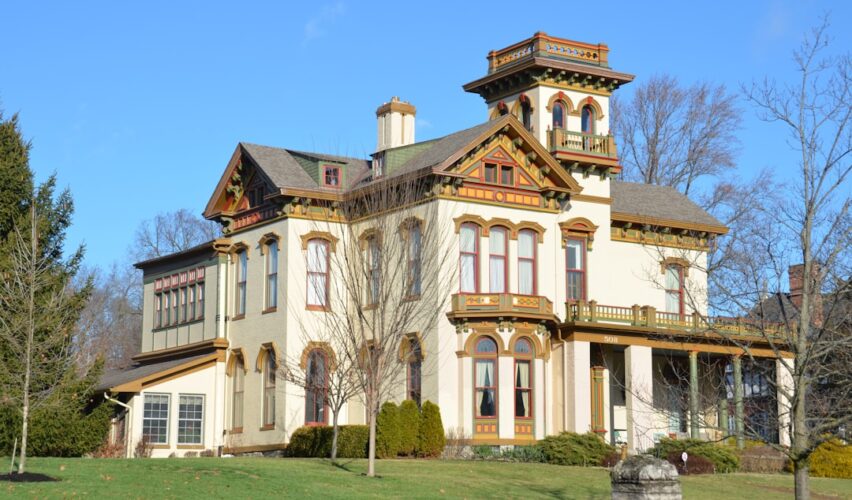
Bidwell Mansion stands as one of California’s most significant Victorian landmarks, though its future now hangs in the balance following a devastating fire on December 11, 2024. This three-story, 26-room Italian Villa-style home in Chico, California, served as the residence of John and Annie Bidwell from 1868 until their deaths in 1900 and 1918 respectively.
Quick Facts About Bidwell Mansion:
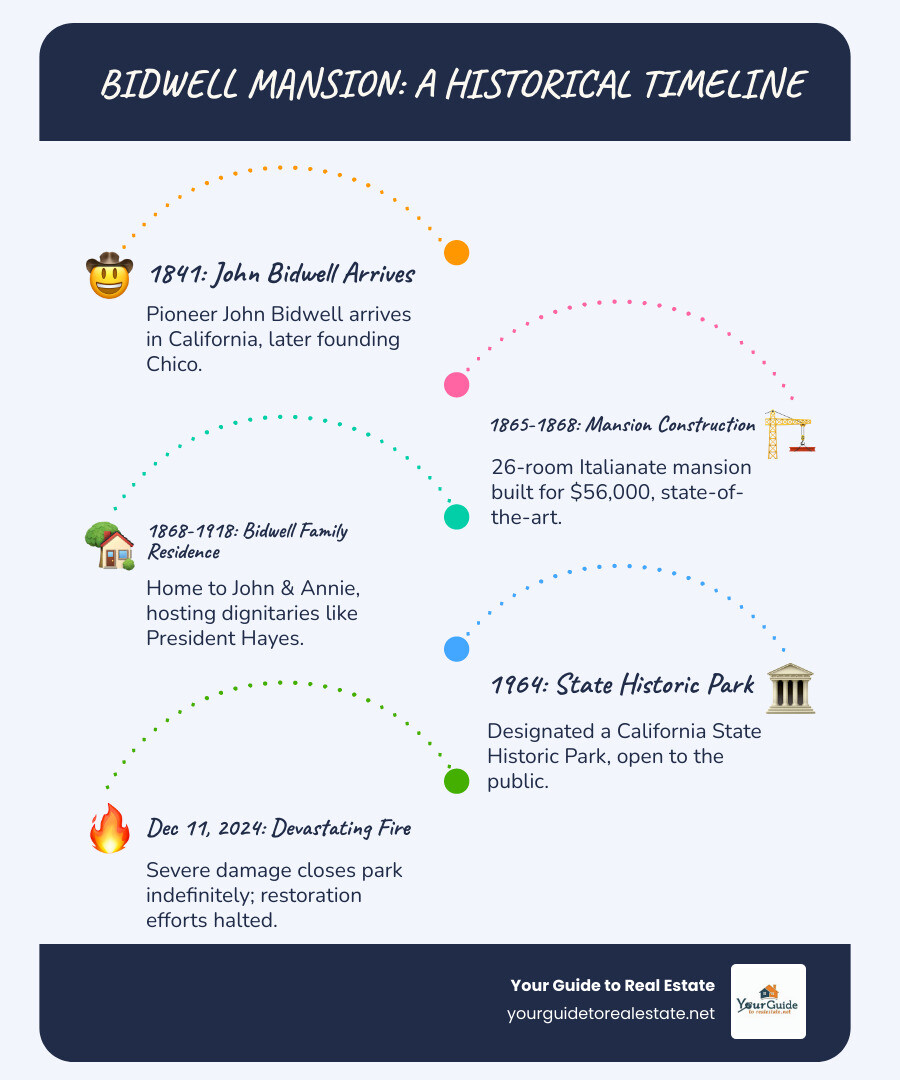
- Built: 1865-1868 at a cost of $56,000 (equivalent to millions today)
- Style: Italianate/Italian Villa architecture with 26 rooms
- Owners: John Bidwell (Chico’s founder) and Annie Bidwell (suffragist and philanthropist)
- Notable Features: First home north of Sacramento with indoor plumbing, gas lighting, and air cooling
- Current Status: CLOSED – Severely damaged by fire on December 11, 2024
- Historical Designation: California Historical Landmark #329 and National Register of Historic Places
The mansion was far more than just a grand home. It served as the social and cultural center of the upper Sacramento Valley, hosting distinguished guests including President Rutherford B. Hayes, General William T. Sherman, Susan B. Anthony, and naturalist John Muir.
John Bidwell, who arrived in California as a 22-year-old pioneer in 1841, became one of the state’s most influential figures. He founded Chico, served in the U.S. House of Representatives, and transformed over 30,000 acres into an agricultural showcase. His wife Annie was equally remarkable – a devoted philanthropist, suffragist, and prohibition advocate who left the mansion to serve as a school upon her death.
The December 2024 fire has halted all restoration efforts and closed Bidwell Mansion State Historic Park indefinitely, leaving the community and preservationists struggling with the potential loss of this irreplaceable piece of California history.
Bidwell mansion vocab explained:
The Founders: John and Annie Bidwell’s Enduring Legacy
When we think about visionary leaders who shaped communities, John and Annie Bidwell stand out as remarkable pioneers whose legacy extends far beyond the walls of Bidwell Mansion. Their story is one of adventure, innovation, and unwavering commitment to building something meaningful for future generations.
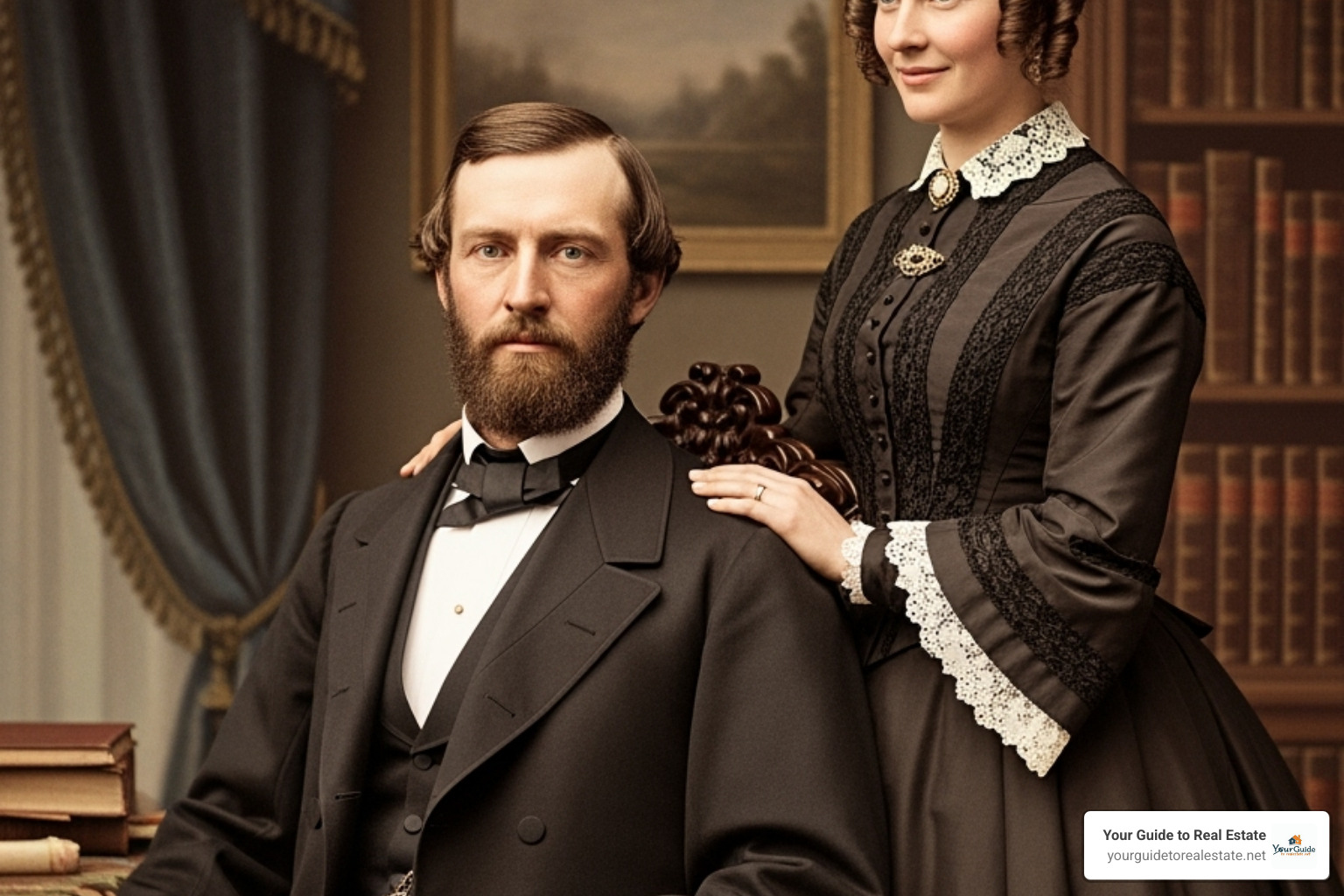
John Bidwell arrived in California in 1841 as a bold 22-year-old adventurer, becoming one of the first pioneers to cross the treacherous Sierra Nevada mountains. This wasn’t just a young man’s adventure – it was the beginning of a life that would transform an entire region. He even finded gold near the Middle Fork of the Feather River, which gave him the financial foundation to pursue his bigger dreams.
What made John truly special was his vision for agriculture. He didn’t just farm – he revolutionized farming in California. On his vast lands, he pioneered specialty crops that had never been grown commercially in the state. He successfully produced California’s first commercial raisin crop and fostered the development of the Casaba Melon. Many of the specimen trees he planted, including the Cockspur Coral, Tulip tree, and a massive Southern Magnolia, still stand today as living monuments to his foresight.
John’s impact went beyond farming. He served as a Brigadier General in the California State Militia and later represented California in the U.S. House of Representatives. His political work included introducing legislation that led to the completion of the California and Oregon Railroad – a crucial piece of infrastructure that connected communities and boosted economic growth.
Annie Ellicott Kennedy Bidwell was equally remarkable, though in different ways. When she married John on April 16, 1868, in Washington D.C., their wedding was so significant that President Ulysses S. Grant attended as a guest. Annie brought her own powerful vision to their partnership – she was a passionate advocate for women’s suffrage and a tireless supporter of the prohibition movement.
Her commitment to education was profound. Annie believed deeply that learning should be accessible to everyone, regardless of gender. This belief was so strong that she arranged for Bidwell Mansion to serve as a coeducational Christian school after her death – a idea for the time.
Together, the Bidwells transformed their home into something extraordinary. The Bidwell Mansion became a magnet for the most influential figures of their era. President Rutherford B. Hayes, General William T. Sherman, Susan B. Anthony, naturalist John Muir, and California Governor Leland Stanford all made the journey to Chico to visit. These weren’t just social calls – these gatherings shaped policies, sparked innovations, and created lasting friendships that influenced the entire nation.
Just as choosing the right partners is crucial in real estate decisions, the Bidwells understood the importance of surrounding themselves with visionary leaders. Learn more about how to choose the right real estate agent here.
The Bidwells’ Impact on Chico
The Bidwells didn’t just live in Chico – they created it from the ground up. John’s purchase of Rancho Del Arroyo Chico, which grew from 22,214 acres to over 30,000 acres, provided the foundation for an entire city. He carefully planned and named Chico, envisioning a community where agriculture, education, and culture could flourish together.
His most lasting gift to education came in the 1880s when he donated eight acres of his cherry orchard for the Chico State Normal School. This generous act created what would eventually become California State University, Chico – ensuring that generations of students would have access to higher education right in their community.
The relationship between the Bidwells and the Mechoopda people adds another important layer to their story. When John purchased the land grant, many Mechoopda people, who spoke the Konkow language, moved to his ranch where they found employment. Their skilled basketry became part of the mansion’s collections, creating a cultural bridge that honored their craftsmanship.
Bidwell Mansion itself became the beating heart of the upper Sacramento Valley’s social and cultural life. It was more than a grand home – it was a place where ideas took shape, where policies were debated, and where the future of California was often discussed over dinner.
The agricultural innovations John pioneered created a lasting economic foundation for the region. By proving that diverse crops could thrive in the Sacramento Valley and by demonstrating sustainable farming practices, he set the stage for the agricultural prosperity that continues to define the area today. His vision of a self-sufficient, educated, and prosperous community became the blueprint that Chico still follows more than a century later.
Architectural Grandeur: A Look Inside the Historic Bidwell Mansion
When you step back and look at the Bidwell Mansion, you’re not just seeing a beautiful old house. You’re witnessing a bold statement about progress, prosperity, and what was possible when vision met determination in 1860s California.

The construction story itself is remarkable. From 1865 to 1868, skilled craftsmen worked tirelessly to bring John and Annie’s dream to life. The final result was a stunning three-story, 26-room Victorian home that cost an eye-watering $56,000 – a sum that would equal several million dollars in today’s market. As real estate professionals, we know that understanding construction costs is crucial for any major building project, and you can learn more about modern building costs here.
Henry W. Cleaveland, the talented architect behind this masterpiece, created something truly special. He blended Italianate and Italian Villa styles into a design that was both neat and uniquely suited to California living. The mansion’s exterior featured distinctive pink-tinted plaster walls complemented by rich brown wood trim, creating a warm and welcoming appearance that stood out beautifully against the Sacramento Valley landscape.
What made this architectural achievement even more impressive was how perfectly it reflected the Bidwells’ vision. This wasn’t just about showing off their success – it was about creating a home that would serve as the cultural heart of their growing community.
Innovations and Design of the Bidwell Mansion
Here’s where the Bidwell Mansion truly shined – it wasn’t just beautiful, it was revolutionary. John and Annie weren’t content with a typical 1860s home. They wanted something that pushed the boundaries of what was possible.
The mansion boasted advanced 19th-century amenities that were practically unheard of north of Sacramento. Imagine having gas lighting throughout your home when most people were still relying on candles and oil lamps. The convenience and safety this provided was extraordinary for its time.
Even more impressive was the mansion’s indoor plumbing and running water system. Multiple bathrooms with flush toilets, running water in sinks – these weren’t just luxuries, they were technological marvels. The Bidwells understood that true comfort meant having modern conveniences that made daily life easier and more hygienic.
California’s warm summers called for creative solutions, and the mansion delivered with an ingenious air cooling system. The design cleverly used natural air circulation, likely incorporating the cupola to create cooling breezes throughout the house. It’s fascinating to see how thoughtful design could solve climate challenges long before air conditioning existed.
The pink-tinted plaster exterior wasn’t just beautiful – it was practical too, helping reflect heat while maintaining the mansion’s distinctive appearance. Inside, every room was carefully planned and furnished with a mix of original and period furnishings that told the story of the Bidwells’ lives and values.
John and Annie were deeply involved in every design decision, from the architectural details to the interior furnishings. Their personal touches are everywhere – Annie’s piano still sits in the parlor, local Native American baskets showcase their connection to the community, and their extensive library reveals their intellectual curiosity and wide-ranging interests.
This wasn’t just a house – it was a carefully crafted memorial to the Bidwells’ values of enlightenment, generosity, and concern for humanity. Every detail, from the sophisticated gas lighting to the thoughtfully selected furnishings, reflects their vision of creating something that would inspire and educate future generations. You can learn more about the mansion’s complete story from those dedicated to preserving this remarkable legacy.
A Landmark in Peril: The 2024 Fire and Future of Restoration
On December 11, 2024, the unthinkable happened. A devastating fire tore through the Bidwell Mansion, leaving this beloved California landmark severely damaged and its future uncertain. The blaze brought ongoing restoration efforts to an abrupt halt and forced the indefinite closure of Bidwell Mansion State Historic Park.

The news hit the Chico community like a punch to the gut. For generations, families had visited this historic treasure, walked through its neat rooms, and connected with California’s pioneer heritage. Now, the mansion that had survived over 150 years stood wounded and silent.
Community members expressed a mix of heartbreak, anger, and disbelief. Some wondered about the cause – was it an accident, or something more sinister? While authorities continue their investigation, the focus has shifted to what comes next for this irreplaceable piece of history.
Before the fire struck, dedicated preservationists had been working tirelessly to restore the mansion to its 1868 glory. Workers were carefully painting the exterior, repairing the roof, and restoring intricate wooden details. The ornamental urns and balustrades that gave the mansion its distinctive Victorian charm were being carefully repaired or replaced.
Inside, curators had been tenderly caring for the mansion’s precious artifacts. They’d cleaned and safely stored 70 delicate curtain panels, along with countless doilies and tablecloths that told the story of the Bidwells’ daily life. This painstaking work represented years of dedication and expertise – all now interrupted by the flames.
The park’s website now carries the sobering message that there’s “no anticipated date for reopening any portion of this park.” It’s a stark reminder of how quickly disaster can strike, even when we think we’re preserving something forever.
But here’s what gives us hope: the community’s response has been nothing short of inspiring. Within days of the fire, supporters launched a fund to rebuild the Bidwell Mansion. It shows just how deeply this landmark has touched people’s hearts and lives.
At the center of these recovery efforts stands the Bidwell Mansion Association (BMA). This passionate nonprofit group has dedicated itself to preserving, restoring, and sharing the mansion’s story with visitors. Now more than ever, their mission feels urgent and vital.
The BMA doesn’t just maintain the building – they bring history to life through educational programs, guided tours, and special events. They’re the ones who make sure each visitor understands not just what they’re seeing, but why it matters. For the latest news on restoration progress and ways you can help, check out the BMA Facebook page.
Visitor Information and Affected Events
Before the tragic fire changed everything, the Bidwell Mansion welcomed thousands of curious visitors each year. Families would gather on Wednesdays, Saturdays, and Sundays to take guided tours at 11 a.m., 1 p.m., and 3 p.m. For just $6 for adults and $3 for kids under 18, you could step back in time and walk through authentic Victorian rooms.
The tours were intimate experiences, limited to just 10 people per group. You couldn’t reserve ahead of time – it was first-come, first-served, though you could make same-day reservations. This approach kept things personal and ensured everyone got to ask questions and really connect with the history.
The mansion was thoughtfully designed for accessibility. The first floor welcomed visitors with mobility challenges through an exterior ramp, and the Visitor Center was fully accessible too. While the upper floors weren’t reachable by wheelchair (they required climbing about 50 stairs), the park offered video tours so everyone could experience the mansion’s full grandeur.
Park rules were simple but important: no dogs allowed and no metal detectors. These guidelines protected both visitors and the precious historical artifacts that made each room special.
The mansion’s calendar was packed with beloved annual traditions. “Christmas with the Bidwells” was pure magic – visitors could meet actors portraying General and Mrs. Bidwell, sing carols in the neat parlor, enjoy homemade cookies, and listen to stories from the mansion’s golden age. “Summer with the Bidwells” brought the community together for outdoor fun with period music, old-fashioned games, ice cream, and gardening activities that connected people to the land John Bidwell loved so much.
All of these treasured experiences are now on hold. The mansion sits empty, its rooms silent where laughter and learning once filled the air. The reopening of Bidwell Mansion is contingent upon extensive restoration work and safety assessments – a process that could take years to complete. Just like in real estate transactions, sometimes the most important things depend on conditions being met first. Learn more about what “contingent” means in real estate here.
The fire has created a painful gap in Chico’s cultural life, but it hasn’t destroyed the love and determination of those committed to bringing this landmark back to life.
Frequently Asked Questions about Bidwell Mansion
The recent fire at Bidwell Mansion has understandably sparked many questions from visitors, history enthusiasts, and the Chico community. As real estate professionals who deeply appreciate historic properties, we want to share the remarkable story behind this landmark and address the most pressing concerns about its future.
Who were John and Annie Bidwell?
John Bidwell was truly one of California’s most fascinating pioneers. Born in 1819, he started on an incredible adventure at just 22 years old, becoming one of the first Americans to cross the treacherous Sierra Nevada mountains into California in 1841. This bold journey marked the beginning of an extraordinary life that would shape an entire region.
John wasn’t just an adventurer—he was a visionary entrepreneur who understood the value of land and community development. After finding gold in California’s early days, he wisely invested his earnings into agricultural pursuits rather than continuing to chase quick riches. He transformed over 30,000 acres into what became known as an agricultural showcase, pioneering new crops and farming techniques that would influence California agriculture for generations.
But John’s contributions extended far beyond farming. He founded the city of Chico, served as a Brigadier General in the California State Militia, and represented California in the U.S. House of Representatives. His commitment to education led him to donate eight acres of his own cherry orchard for what would become California State University, Chico—a gift that continues benefiting students today.
Annie Ellicott Kennedy Bidwell was equally remarkable and perfectly matched John’s pioneering spirit. When they married in 1868, their wedding was so significant that President Ulysses S. Grant attended as a guest. Annie was a fierce advocate for social justice, dedicating her life to causes that were often controversial for women of her era.
She campaigned tirelessly for women’s suffrage, believing passionately that women deserved equal rights and representation. Annie was also a devoted supporter of the prohibition movement and numerous educational initiatives throughout California. Her deep religious faith guided her philanthropic work, and she envisioned the Bidwell Mansion serving as a coeducational Christian school after her death—a testament to her lifelong commitment to education and moral progress.
Together, the Bidwells transformed their home into the cultural and intellectual heart of Northern California, hosting presidents, generals, suffragists, and leading thinkers of their time.
What is the current status of Bidwell Mansion?
This is perhaps the most heartbreaking question we’re asked. On December 11, 2024, the Bidwell Mansion suffered severe damage in a devastating fire that has left the entire community reeling. The Bidwell Mansion State Historic Park is currently closed indefinitely, with California State Parks stating there’s no anticipated reopening date.
The timing couldn’t have been worse. The mansion had been undergoing careful restoration work to return it to its original 1868 appearance. Craftspeople were carefully restoring exterior paint, repairing the roof and woodwork, and replacing ornamental features. Curators had been painstakingly cleaning and preserving historic textiles, including 70 curtain panels and numerous period pieces that told the Bidwells’ story.
All of this important preservation work has now come to an abrupt halt. The Bidwell Mansion Association, along with the broader community, is rallying support for what will likely be an extensive rebuilding effort. A fund has already been established to help restore this irreplaceable piece of California history.
The investigation into the fire’s cause continues, but regardless of what caused this tragedy, the focus now shifts to preserving what remains and planning for the mansion’s resurrection.
What made the mansion architecturally significant when it was built?
When the Bidwell Mansion was completed in 1868, it was nothing short of for its time and location. This wasn’t just another big house—it was a technological marvel that showcased what was possible when vision met resources.
The mansion’s 26 rooms spread across three stories made it an impressive sight, but its architectural style truly set it apart. Designed by Henry W. Cleaveland in the Italianate style with Italian Villa influences, the building featured a distinctive pink-tinted plaster exterior with rich brown wood trim that made it both neat and welcoming.
But the real innovation lay in the mansion’s modern amenities, which were practically unheard of north of Sacramento. The Bidwells installed sophisticated gas lighting throughout the home, providing reliable illumination that far surpassed candles or oil lamps. Even more impressive was the extensive indoor plumbing system, complete with running water in multiple bathrooms and flush toilets—luxuries that most California homes wouldn’t see for decades.
Perhaps most ingeniously, the mansion featured an early air-cooling system that used the cupola and strategic ventilation to combat California’s hot summers. This showed remarkable foresight in climate control design, long before electricity made modern cooling possible.
The $56,000 construction cost—equivalent to several million dollars today—reflected the Bidwells’ commitment to creating something truly special. They weren’t just building a home; they were creating a symbol of progress that would inspire their community and welcome the most distinguished guests of their era.
Conclusion
The story of Bidwell Mansion is really the story of California itself – one of bold dreams, remarkable achievement, and the enduring power of community spirit. For more than 150 years, this magnificent 26-room Victorian home has stood as far more than just bricks and mortar. It’s been a living testament to John and Annie Bidwell’s extraordinary vision, their pioneering courage, and their unwavering commitment to building something lasting and meaningful.
When you walk through Chico today, you’re walking through a city that the Bidwells literally carved out of the wilderness. The tree-lined streets, the thriving university, the rich agricultural heritage – all of it traces back to their Bidwell Mansion and the incredible hospitality they showed there. Presidents dined in those rooms. Suffragists planned campaigns by those windows. Scientists and artists found inspiration in those halls.
The December 11, 2024 fire has shaken us all. Seeing such severe damage to this beloved landmark feels like losing a piece of our collective soul. The indefinite closure of Bidwell Mansion State Historic Park isn’t just about losing a tourist attraction – it’s about losing a place where generations of families have connected with history, where students have finded their passion for the past, and where the community has gathered to celebrate its roots.
But here’s what we’ve learned about communities like Chico: they don’t give up easily. The immediate response – the fundraising efforts, the outpouring of support, the determination of the Bidwell Mansion Association – shows that this story isn’t over. Not by a long shot.
At Your Guide to Real Estate, we understand that some properties hold value that goes far beyond market price. Historic homes like the Bidwell Mansion are irreplaceable treasures that anchor entire communities. They tell stories that shaped our state and our nation. They remind us that the buildings we create today will someday be tomorrow’s history.
The road ahead won’t be easy. Restoration will take years, maybe decades. But if John Bidwell could transform 30,000 acres of wilderness into a thriving community, and if Annie Bidwell could fight for women’s rights when few believed in the cause, then surely we can rebuild what fire has damaged.
The Bidwell Mansion will rise again. And when it does, it will stand not just as a monument to the past, but as proof that communities can overcome even the most devastating setbacks when they work together.
Learn more about historical property valuation and market analysis to understand how unique properties like historic landmarks are assessed and valued in today’s market.