
Understanding the World of Commercial Properties
Commercial real estate refers to property and buildings designed for business operations rather than residential living. Unlike residential real estate where people live, commercial properties generate income through business activities and are typically zoned for commercial, industrial, or mixed-use purposes.
What is Commercial Real Estate?
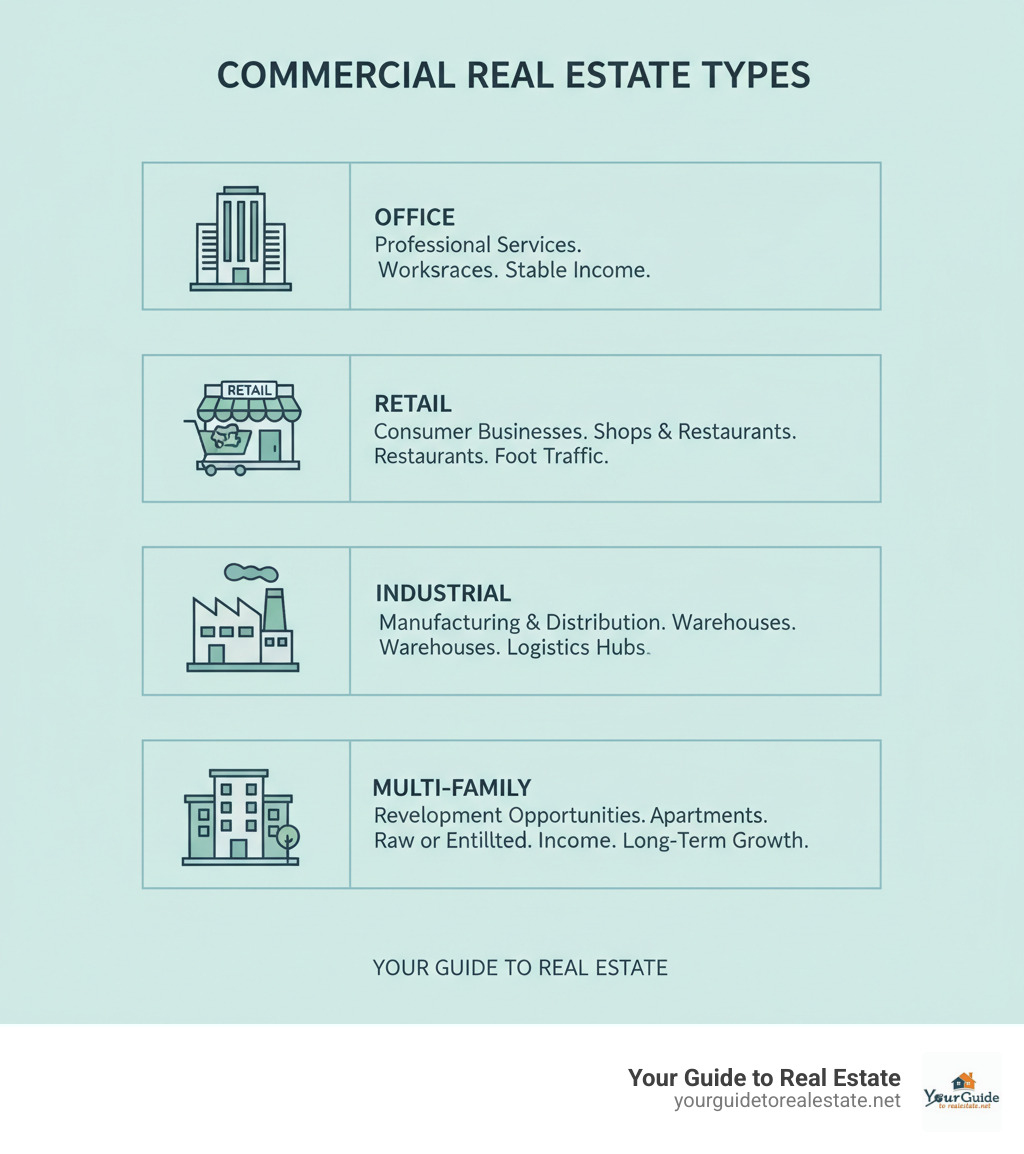
- Office Buildings – Professional workspaces for businesses
- Retail Properties – Stores, restaurants, and shopping centers
- Industrial Buildings – Warehouses, manufacturing facilities, and distribution centers
- Multi-family Housing – Apartment buildings and rental complexes (4+ units)
- Land – Undeveloped or development-ready parcels
The key difference between commercial and residential real estate lies in their intended use and income generation potential. Commercial properties are investment vehicles that can help businesses grow their balance sheet while providing long-term stability through lease agreements.
Whether you’re a business owner looking to purchase your first commercial property or an investor seeking to diversify your portfolio, understanding the fundamentals is crucial. As one industry expert notes: “Buying real estate for your business is an exciting milestone for any entrepreneur. It signifies that the company is ready for growth and financially prepared to invest in a long-term location.”
Commercial real estate transactions are more complex than residential deals, often requiring 12 to 18 months of advance planning and involving specialized financing, extensive due diligence, and professional advisory teams.
Commercial real estate vocabulary:
The Benefits and Risks of Investing in Commercial Real Estate

Stepping into commercial real estate investing can feel like standing at the edge of a diving board – exciting but a little nerve-wracking. The good news? With the right knowledge, this investment strategy can transform your financial future in ways that few other asset classes can match.
Benefits of Investing in Commercial Real Estate
Let’s start with the exciting part – the benefits that make commercial real estate such an attractive investment option. When you own your business property, you’re essentially building assets instead of just paying someone else’s mortgage. Every monthly payment becomes an investment in your own future rather than padding your landlord’s wallet.
Growing your balance sheet becomes much more achievable when you own commercial property. Your business suddenly has a tangible, appreciating asset that banks love to see on financial statements. This improved financial position often opens doors to better financing terms for future ventures and creates a solid foundation for business expansion.
The stable income potential from commercial properties often surprises new investors. Unlike residential rentals with their typical one-year leases, commercial tenants frequently sign long-term leases spanning five, ten, or even twenty years. Imagine having guaranteed rental income for the next decade – that’s the kind of predictability that helps you sleep better at night.
Tax advantages make commercial real estate even more attractive. Depreciation deductions can significantly reduce your taxable income, while interest payments on commercial mortgages are typically fully deductible. These benefits can add thousands of dollars back to your bottom line each year.
For business growth, owning your space means total control. Want to renovate? Go ahead. Need to expand? You’re the boss. No more asking permission from landlords or worrying about lease renewals that could disrupt your operations.
Investment Risks
Of course, every investment has its challenges, and commercial real estate is no exception. Market fluctuations can affect property values, and unlike stocks, you can’t just click “sell” if you need to exit quickly. Real estate markets move slowly, which can be both a blessing and a curse.
The high initial capital requirement often catches new investors off guard. We’re typically talking about down payments of 20-30% on properties worth hundreds of thousands or millions of dollars. This isn’t a decision you make on a whim over your morning coffee.
Property management complexity increases significantly with commercial properties. You might deal with multiple tenants, specialized maintenance requirements, and complex lease negotiations. Industrial buildings need different expertise than office spaces, and retail properties have their own unique challenges.
Vacancy risk represents perhaps the biggest concern for commercial property owners. When a major tenant leaves, you could face months of lost income while still covering mortgage payments, property taxes, and maintenance costs. However, this risk can be minimized through careful tenant screening and diversified tenant mixes.
The key to success lies in thorough planning and understanding these risks upfront. If you’re ready to explore how commercial property can boost your investment portfolio, consider our Commercial Real Estate Investment Strategies for detailed guidance on making smart investment decisions.
The Ultimate Guide to Buying Commercial Real Estate
Buying your first commercial real estate property is like taking your business to the next level – it’s exciting, a bit nerve-wracking, and definitely a big decision. Whether you’re a growing business ready to own your space or an investor looking to diversify, the process requires careful planning and the right team by your side.
The journey from “we need a property” to “we own a property” typically takes 12 to 18 months of advance planning. That might sound like a long time, but trust me – rushing into commercial real estate is like trying to assemble furniture without reading the instructions. It rarely ends well.
Step 1: Assessing Needs and Assembling Your Professional Team
Before you start dreaming about corner offices or perfect retail locations, you need to get crystal clear on what your business actually needs. This isn’t just about finding a space that looks nice – it’s about finding a space that works for your operations today and can grow with you tomorrow.
Size and square footage might seem obvious, but it’s trickier than you think. You need to consider your current team, equipment, inventory, and customer traffic. But here’s the kicker – you also need to think 5-10 years ahead. Will you be hiring more people? Adding new equipment? Expanding your product lines? It’s like buying clothes for a growing teenager – you want some room to grow into.
Configuration requirements go beyond just square footage. A 5,000-square-foot open warehouse serves very different needs than 5,000 square feet divided into offices and meeting rooms. Think about your workflow, specialized equipment needs, and whether you need features like loading docks, high ceilings, or specific electrical requirements.
Location analysis can make or break your business success. For retail businesses, high foot traffic and visibility are everything – you want customers to find you easily. If you’re in manufacturing or distribution, easy access to highways, rail lines, or ports for shipping might be more important than foot traffic. And don’t forget about your employees – a location that’s impossible for your team to reach isn’t going to work long-term.
Once you know what you need, it’s time to build your dream team. Commercial real estate transactions are complex beasts, and trying to handle them alone is like performing surgery on yourself – technically possible, but not recommended.
Your commercial real estate agent will be your guide through the maze of available properties, market conditions, and negotiations. They should specialize in your property type and know the local market inside and out. A good agent saves you time, money, and headaches. Our guide on How to Choose the Right Real Estate Agent: A Complete Buyer’s Guide can help you find the right professional for your needs.
A lawyer or notary handles the legal heavy lifting – reviewing contracts, conducting title searches, and making sure you’re not accidentally buying someone else’s problems along with the property. Your accountant keeps you grounded in financial reality, helping you understand what you can actually afford and the tax implications of your purchase. A commercial lender becomes your financing partner, and starting that relationship early is crucial. Finally, a building inspector and potentially an environmental consultant help you understand exactly what you’re buying, including any hidden issues that could cost you later.
Step 2: Securing Financing for Your Commercial Real Estate Purchase
Here’s where commercial real estate gets really different from buying a house. Forget everything you know about residential mortgages – commercial financing is a whole different animal, and it requires more preparation, documentation, and patience.
The commercial loan process starts with lenders wanting to know everything about your business. They’ll scrutinize your financial statements, tax returns, and business plan like they’re studying for the most important test of their lives. They’re not just lending you money – they’re betting on your business’s ability to succeed and repay the loan.
Lender requirements are comprehensive and demanding. You’ll need to provide detailed financial documentation proving your business is profitable and has strong cash flow. Most lenders also require a substantial down payment, typically ranging from 10% to 30% of the purchase price. That’s a significant chunk of change, so make sure your finances are in order before you start shopping.
Loan terms for commercial properties are typically structured as 20-25 year amortizations, spreading your principal and interest payments over that period. Some lenders offer flexible options like postponing principal payments for up to 12 months or allowing prepayments of up to 15% annually, which can provide valuable breathing room for growing businesses.
The impact of interest rates on your monthly payments and total loan cost can’t be overstated. Higher rates mean higher monthly payments and more money paid over the life of the loan. The choice between fixed and variable rates depends on your risk tolerance – fixed rates offer predictable payments, while variable rates might start lower but can increase over time. For a deeper understanding of how commercial loans work, check out our Understanding Mortgages: A Beginner’s Guide to Home Loans.
Step 3: The Critical Role of Due Diligence
Once your offer is accepted, the real detective work begins. The due diligence period typically lasts 30-60 days, and it’s your chance to make sure the property is everything the seller claims it to be. Think of it as a very thorough background check on your potential new property.
Physical property inspection involves your building inspector examining every nook and cranny of the structure. They’ll check the roof condition, HVAC systems, electrical and plumbing systems, and overall structural integrity. Finding problems during inspection isn’t necessarily a deal-breaker – it’s information you can use to negotiate repairs or price adjustments.
Legal due diligence is where your lawyer or notary earns their fee. They’ll conduct a comprehensive title search to confirm the seller actually owns the property and identify any liens, encumbrances, or legal disputes that could affect your ownership. They’ll also verify that the property’s zoning and by-law compliance allows for your intended use – there’s nothing worse than buying a property only to find your business isn’t allowed to operate there.
Environmental assessments are typically required by lenders, especially for properties with any history of industrial use. These assessments investigate potential environmental contamination that could pose health risks or require expensive cleanup. It’s like getting a clean bill of health for the property.
If you’re buying an income-generating property, reviewing existing leases is crucial. You need to understand every lease agreement, including rent amounts, lease terms, renewal options, and any special clauses that could impact your future operations and income. These leases are part of what you’re buying, so make sure they’re assets, not liabilities.
Due diligence might feel overwhelming, but it’s your protection against nasty surprises. The lender’s due diligence process alone can take six to eight weeks after your offer is accepted, so patience is key. For additional protection, consider learning about Understanding Title Insurance to safeguard your investment.
The commercial real estate buying process requires time, patience, and the right professional team, but the reward – owning a property that supports and grows with your business – makes it all worthwhile.
Navigating Commercial Leases: A Guide for Landlords and Tenants
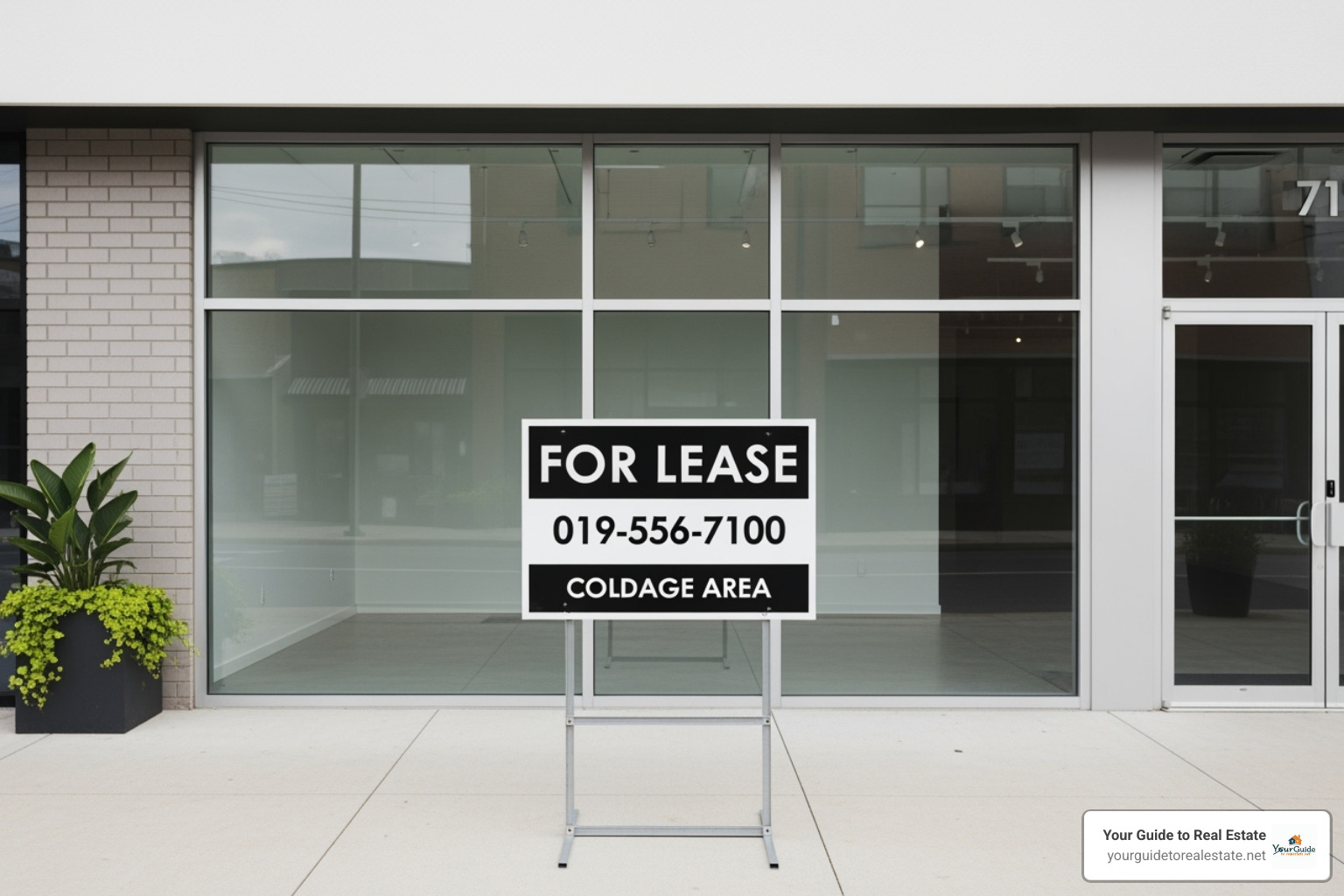
When you’re ready to dive into commercial real estate leasing, you’re entering a world that’s far more complex than residential rentals. Whether you’re a business owner searching for the perfect space or a property owner looking to attract quality tenants, understanding commercial leases can make or break your success.
Think of a commercial lease as the blueprint for your business relationship. For tenants, this document will determine not just your monthly costs, but your operational flexibility, growth potential, and long-term stability. For landlords, it’s your roadmap to consistent income and property protection.
Lease negotiation becomes an art form in commercial real estate. You’ll find yourself discussing everything from basic rent amounts to tenant improvements – those custom modifications that transform a generic space into your business’s perfect home. Smart landlords often contribute to these improvements through rent concessions or direct funding, knowing that a happy tenant means a stable income stream.
The stakes are higher here. Essential lease components go well beyond what you’d see in a residential agreement. Term length might stretch for years or even decades, giving both parties the stability they need. Rent amounts can be structured in multiple ways, from flat rates to percentage-based payments tied to your business success.
Don’t overlook the fine print on permitted use clauses – these determine exactly what kind of business activities you can conduct. Signage rights can be crucial for retail businesses, while subletting rights offer flexibility if your needs change down the road.
Understanding Different Types of Commercial Leases
The world of commercial real estate leases offers several structures, each shifting the balance of responsibilities between landlord and tenant. Understanding these differences is crucial because they directly impact your bottom line.
A Gross Lease is the most straightforward option for tenants. You pay one flat rate that covers your base rent plus most operating expenses. Your landlord handles property taxes, insurance, and maintenance headaches. While this simplicity comes with higher base rent, it offers predictable budgeting – no surprise bills for a broken HVAC system or rising property taxes.
Moving into Net Lease territory, things get more interesting. In a single Net Lease, you’ll pay base rent plus your share of property taxes. It’s a middle ground that gives you some cost control while keeping things relatively simple.
A Double Net (NN) Lease adds insurance costs to your responsibilities. Now you’re covering base rent, property taxes, and building insurance. Your landlord typically handles structural repairs and common area upkeep, but you’re taking on more of the property’s operating risks.
The Triple Net (NNN) Lease is where tenants take on the most responsibility. You’ll pay base rent plus property taxes, insurance, and virtually all operating expenses. This includes maintenance, repairs, utilities, and those Common Area Maintenance (CAM) charges for shared spaces like parking lots and lobbies. While your base rent might be lower, you’re essentially running the property alongside your business.
Percentage Leases are popular in retail settings, combining base rent with a percentage of your gross sales. This creates a partnership dynamic – when your business thrives, your landlord benefits too. It can be a win-win, especially for new businesses that need lower initial costs.
| Lease Type | Landlord Responsibilities | Tenant Responsibilities |
|---|---|---|
| Gross Lease | Property taxes, insurance, maintenance, utilities | Base Rent |
| Net (Single N) | Insurance, maintenance, utilities | Base Rent, Property Taxes |
| Double Net (NN) | Structural repairs, some common area maintenance, utilities | Base Rent, Property Taxes, Insurance |
| Triple Net (NNN) | None (or structural only, depending on agreement) | Base Rent, Property Taxes, Insurance, All Operating Expenses |
Key Legal Protections in a Commercial Real Estate Lease
A solid commercial real estate lease agreement is your safety net in what can be a complex business relationship. Beyond the basic terms, smart lease agreements address the practical realities of property ownership and business operations.
Repair and maintenance clauses deserve special attention because they determine who handles everything from daily cleaning to major roof repairs. These clauses can save or cost you thousands, so clarity is essential. Will you be responsible for HVAC maintenance? What happens when the parking lot needs repaving?
Insurance requirements protect both parties but can be complicated. Your lease should specify exactly what coverage each party needs, from general liability to property insurance. Understanding these requirements upfront helps you budget accurately and avoid coverage gaps.
Default and termination clauses might seem pessimistic to discuss, but they’re crucial for both parties. What constitutes a breach of contract? How much notice is required for various situations? What are the remedies if things go wrong? Clear terms here prevent costly legal battles later.
One often-overlooked protection is lease registration. In many areas, filing a “Notice of Lease” with the local real estate registry creates powerful tenant protections. If your landlord sells the property, the new owner must honor your existing lease terms. This simple step can save your business from unexpected displacement.
These legal protections work both ways. Landlords benefit from clear default procedures and maintenance responsibilities, while tenants gain security and operational clarity. The goal is creating a framework where both parties can succeed.
Ready to explore commercial leasing in more detail? Explore more about commercial leasing with Your Guide to Real Estate for comprehensive insights and practical strategies.
Market Trends and the Future of Commercial Properties

The commercial real estate landscape is shifting beneath our feet, and it’s happening faster than many expected. From the way we work to how we shop, these changes are reshaping what businesses need from their properties.
Current Market Outlook
Let’s be honest – the hybrid work revolution has turned the office market upside down. In cities like Montreal, nearly half of all vacant office space is concentrated in just a handful of buildings. While some industry veterans question whether hybrid work is here to stay, the market is already adapting to this new reality.
The impact of hybrid work on office space is undeniable. Companies are rethinking their space needs, often downsizing or reconfiguring layouts to accommodate flexible schedules. This doesn’t mean office space is dead – it’s evolving. Smart landlords are offering more flexible lease terms and redesigning spaces for collaboration rather than individual workstations.
Meanwhile, the rise of e-commerce on industrial and retail sectors tells a different story. Industrial properties are experiencing unprecedented demand as online shopping continues to grow. However, the market is finding its balance. In Greater Montreal, for example, the industrial vacancy rate reached 6.7% in Q2 2025, with asking rents adjusting from $16.80 per square foot in Q2 2023 to $14.55 per square foot in Q2 2025.
This adjustment period follows years of rapid expansion. The good news? New supply is coming. Approximately 3.5 million square feet will be added to the Greater Montreal industrial market by 2026, building on the impressive 7 million square feet constructed in 2023-2024.
Retail markets are showing resilience too, particularly in downtown areas. As office workers return and consumer confidence grows, we’re seeing a resurgence in foot traffic. Local investors are leading the charge in markets like Montreal, showing strong regional confidence in commercial real estate opportunities.
Role of Technology
Technology isn’t just changing how we work – it’s revolutionizing how we buy, sell, and manage commercial properties. PropTech innovations are making processes smoother and giving us insights we never had before.
AI in property management is becoming the secret weapon for smart property owners. Artificial intelligence helps predict when your HVAC system might fail, optimizes energy usage to cut costs, and processes massive amounts of market data to help you make better investment decisions. It’s like having a crystal ball for your property portfolio.
Virtual tours have evolved far beyond simple photo galleries. Today’s 3D interactive experiences let potential buyers or tenants walk through properties from anywhere in the world. This technology proved invaluable during the pandemic and continues to save time and money for everyone involved. Why schedule ten property visits when you can narrow it down to two or three after virtual tours?
Online listing platforms have become the backbone of commercial real estate marketing. These platforms don’t just list properties – they provide detailed analytics, high-quality photography, drone footage, and comprehensive search tools. They help properties lease or sell faster by reaching a broader audience than traditional marketing methods ever could.
The convergence of these technologies is creating opportunities we couldn’t have imagined just a few years ago. Property managers can monitor building systems remotely, investors can analyze market trends in real-time, and tenants can find their perfect space without leaving their current office.
To understand how these trends fit into the bigger picture, explore our insights on Top 7 Real Estate Trends Shaping 2025 and Beyond and How Technology is Revolutionizing Real Estate: 2025 Trends to Watch.
The future of commercial real estate isn’t just about adapting to change – it’s about embracing the tools and trends that will define the next decade of property investment and management.
Frequently Asked Questions about Commercial Real Estate
Navigating commercial real estate can feel overwhelming, especially when you’re just starting out. Here are the most common questions we hear from clients, along with straightforward answers to help you move forward with confidence.
How long does it take to buy a commercial property?
If you’re thinking about buying commercial real estate, patience is your friend. The entire process typically takes several months – much longer than buying a house. We always tell our clients to start planning 12 to 18 months in advance for any commercial acquisition.
Why so long? Well, there’s a lot more moving parts than residential deals. You’ll need time to assess your needs, assemble your professional team, secure financing, and conduct thorough due diligence. The complexity means you can’t rush the process without risking costly mistakes.
Once your offer is accepted, don’t expect to close quickly. The lender’s due diligence process alone can take six to eight weeks. During this time, they’re examining everything from your financial statements to the property’s environmental history. It might feel slow, but this careful approach protects your investment.
What is a capitalization (cap) rate?
The capitalization rate – or “cap rate” as we call it in the industry – is one of the most important numbers in commercial real estate. Think of it as a quick way to compare different investment properties and estimate your potential returns.
Here’s the simple formula: Cap Rate = Net Operating Income (NOI) ÷ Current Market Value
Let’s say you’re looking at a property that generates $100,000 in net operating income annually, and it’s valued at $1,000,000. Your cap rate would be 10%. Not bad!
Generally speaking, a higher cap rate suggests higher potential returns but often comes with more risk. A lower cap rate might indicate a more stable, lower-risk investment. It’s like comparing different savings accounts – you want to find the sweet spot between return and security that matches your comfort level.
How do I determine the right size property for my business?
Choosing the right size commercial real estate property is like buying a suit – it needs to fit you now and leave room for growth. Getting this wrong can be expensive, so let’s break it down.
Start by assessing your current needs honestly. Count your employees, measure your equipment, calculate your inventory requirements, and consider your customer traffic patterns. Don’t forget about break rooms, storage areas, and those awkward corners that every business seems to need.
Next, think about the future. Project your growth over the next 5-10 years. Will you double your staff? Add new product lines? Expand your services? It’s better to have slightly more space than to outgrow your property in two years.
Analyze your business operations to determine the optimal layout. A tech startup needs different space than a manufacturing company or retail store. Do you need open collaboration areas, specialized equipment zones, customer-facing areas, or loading docks?
Finally, consult with a commercial real estate agent who understands your industry. They can translate your business needs into specific square footage requirements and help you understand local market conditions. For example, they’ll know that average rents in Modesto, CA run about $21 per square foot annually, while San Diego averages $33 per square foot.
The “right” size isn’t just about square footage – it’s about finding space that supports your business goals without breaking your budget.
Conclusion: Building Your Future with Strategic Real Estate Decisions
Your journey into commercial real estate doesn’t have to feel overwhelming. With the right knowledge and approach, it becomes a powerful tool for building wealth and securing your business’s future. Throughout this guide, we’ve walked together through the essential foundations – from understanding the five main types of commercial properties to navigating complex lease agreements and staying ahead of market trends.
The path to successful commercial real estate investment starts with strategic planning. This means taking time to truly assess your needs, whether you’re looking for office space that can grow with your team or industrial property that supports your operations. We recommend planning 12 to 18 months in advance for commercial acquisitions – this isn’t a process you want to rush.
Thorough due diligence serves as your safety net throughout this journey. Those 30 to 60 days of investigation might feel tedious, but they’re what separate smart investors from those who face costly surprises later. From building inspections to environmental assessments, each step helps ensure your investment is sound and your future secure.
Perhaps most importantly, you don’t have to steer this alone. Leveraging professional advice from your carefully assembled team – your commercial real estate agent, lawyer, accountant, and lender – brings decades of combined expertise to your corner. They’ve seen the pitfalls and know the shortcuts, helping you make confident decisions at every turn.
When you approach commercial real estate strategically, you’re not just buying property – you’re investing in your company’s future. Instead of monthly rent payments that disappear, you’re building equity that strengthens your balance sheet. You’re creating stability that protects against the uncertainties of leasing from others.
Whether you’re taking your first steps into commercial property ownership or expanding your investment portfolio, Your Guide to Real Estate provides the proven framework and stress-free guidance you need. Our resources are designed to help you succeed in the real estate market, turning what seems complex into manageable, strategic steps forward.
Ready to explore financing options for your commercial venture? Get a complete overview of home and business financing with our beginner’s guide to mortgages.