

Why Competitive Analysis Reports Drive Business Success
A competitive analysis report is a strategic document that evaluates your competitors’ strengths, weaknesses, and market positioning to help you make smarter business decisions. Key components include:
- Competitor identification – Direct, indirect, and substitute competitors
- Market research – Industry trends, customer behavior, and economic data
- Product/service comparison – Features, pricing, and positioning analysis
- SWOT analysis – Strengths, weaknesses, opportunities, and threats
- Strategic recommendations – Actionable insights for competitive advantage
Understanding your competition is crucial for strategic decision-making and sustained success. For real estate professionals analyzing market conditions or any business owner seeking growth, a competitive analysis report is a strategic blueprint.
Businesses using competitive analysis tools report 12-15% faster response times to market changes. This isn’t just about knowing who your competitors are; it’s about understanding what makes customers choose one solution over another.
Market research helps you find customers for your business. Competitive analysis helps you make your business unique. Combine them to find a competitive advantage.
A well-structured report transforms raw data into actionable insights, revealing market gaps, threats, and opportunities. Instead of relying on assumptions, you’ll have the data to compete effectively and win in your market.
The Foundation: Identifying Competitors and Gathering Intelligence
Building a competitive analysis report requires a solid foundation: understanding who you’re up against. Your competition isn’t always obvious; it includes direct rivals, online platforms, and even different services that solve the same customer problem.
The Role of Market Research and Data Sources
Market research is the bedrock of any solid competitive analysis report. As the U.S. Small Business Administration notes, “Market research helps you find customers for your business. Competitive analysis helps you make your business unique. Combine them to find a competitive advantage”.
Market research helps you understand three key areas:
- Consumer behavior reveals what motivates your audience and their pain points, helping you see where competitors fall short.
- Economic trends provide the bigger picture. In real estate, factors like interest rates and inflation can reveal opportunities competitors miss.
- Demographic information (age, income, location) shows who you and your competitors are targeting. The U.S. Census Business Builder and Bureau of Labor Statistics are excellent resources.
You can gather this intelligence using both primary and secondary research.
Primary vs. Secondary Research Methods
| Category | Primary Research | Secondary Research |
|---|---|---|
| Definition | Data collected by you for a specific purpose. | Data collected by someone else for a different purpose, but useful for your current research. |
| Methods | Surveys, interviews, focus groups, observations, experiments, direct product testing. | Government publications (Census, BLS, BEA), industry reports, trade journals, market research firms, competitors’ annual reports, news articles, academic research, social media, online reviews. |
| Pros | Highly relevant, specific to your needs, up-to-date, deep insights into customer preferences. | Cost-effective, time-saving, provides broad market overview, good for identifying initial trends and benchmarks. |
| Cons | Time-consuming, expensive, requires expertise in research design and analysis, potential for bias. | May not be perfectly custom to your specific question, can be outdated, data quality can vary, may lack granular detail. |
The smart approach is to start with secondary research to get a broad overview, then use primary research to fill specific gaps. For example, a real estate professional might start with national housing trends before conducting local buyer surveys. For deeper insights, our guide on Valuation and Market Analysis in Real Estate offers proven frameworks.
Information to Collect on Your Competitors
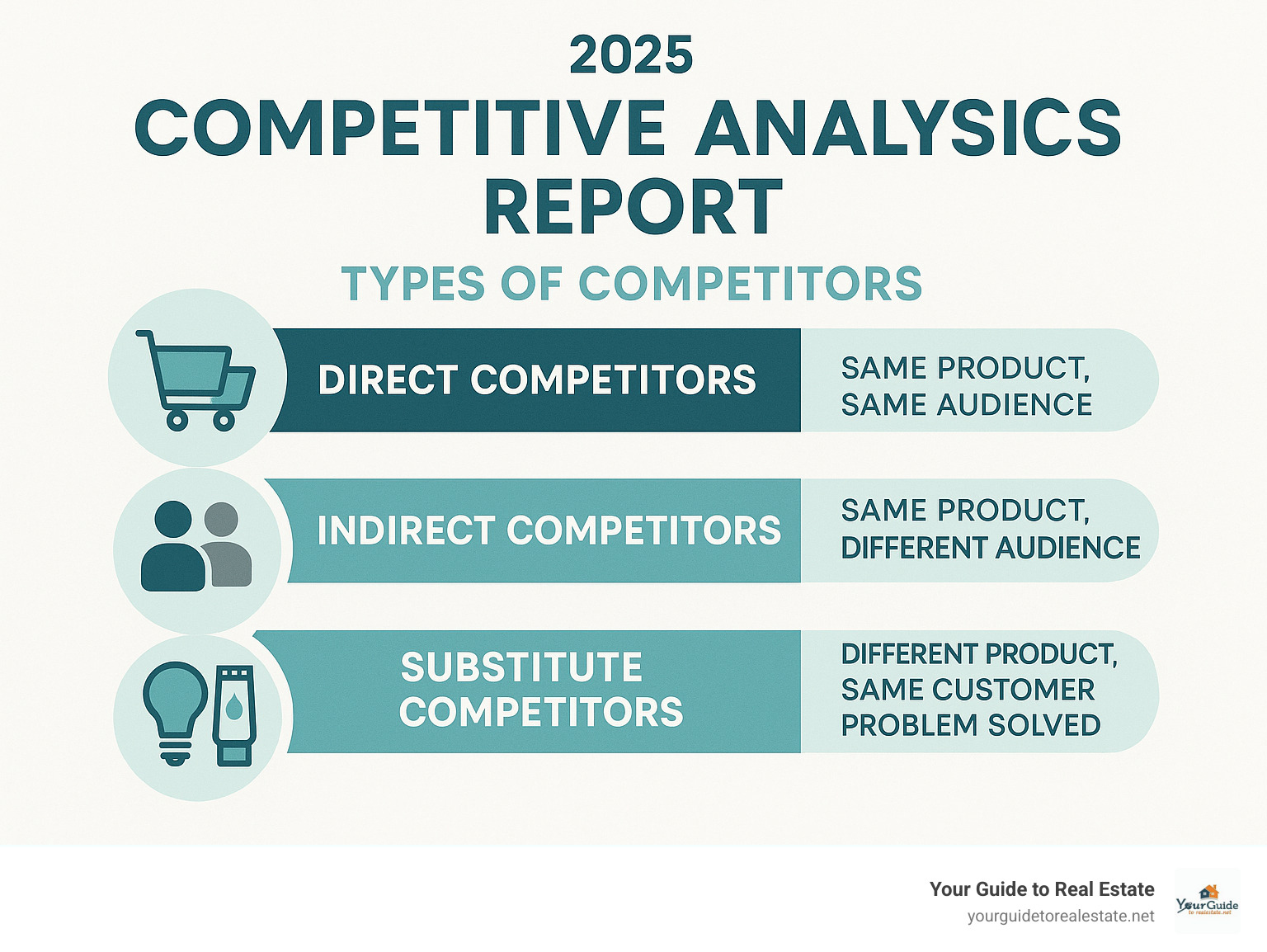
With your market research foundation, it’s time to investigate the competition. First, identify the different types:
- Direct competitors offer similar products to the same audience, like two real estate agencies in the same neighborhood.
- Indirect competitors offer different services to your audience or similar services to a different audience. For example, a luxury agency and a first-time homebuyer specialist compete for overall market share.
- Substitute competitors solve the same problem differently. For an agent, this could be a “for sale by owner” platform or rental properties.
Next, gather intelligence on these competitors:
- Product and service offerings: Analyze what they sell and what features set them apart. A feature-by-feature comparison can reveal opportunities to differentiate.
- Pricing strategies: Understand how competitors position themselves (budget, premium, etc.). This is crucial due to the “anchoring effect,” where their prices set a reference point for customers.
- Target market analysis: Look at their marketing materials to see who they’re actually targeting, not just who they claim to serve.
- Marketing and sales tactics: Analyze their promotional methods and brand voice to find what works in your market and where you can stand out.
- Company size and revenue: Estimate their scale through employee counts and public records to understand their resources. This context is vital for your strategy.
- Customer sentiment: Use online reviews and social media to find what customers really think. Recurring complaints are often your biggest opportunities.
- Online presence: Evaluate their website, search engine ranking, and social media engagement to understand their digital strategy.
How to Build a Comprehensive Competitive Analysis Report
After gathering intelligence, it’s time to create your competitive analysis report. This strategic roadmap turns raw data into actionable wisdom by organizing your findings into a clear narrative. A brilliant analysis is useless if it’s confusing and unread.
Key Components of a Competitive Analysis Report
An effective report needs structure. Here are the essential components:
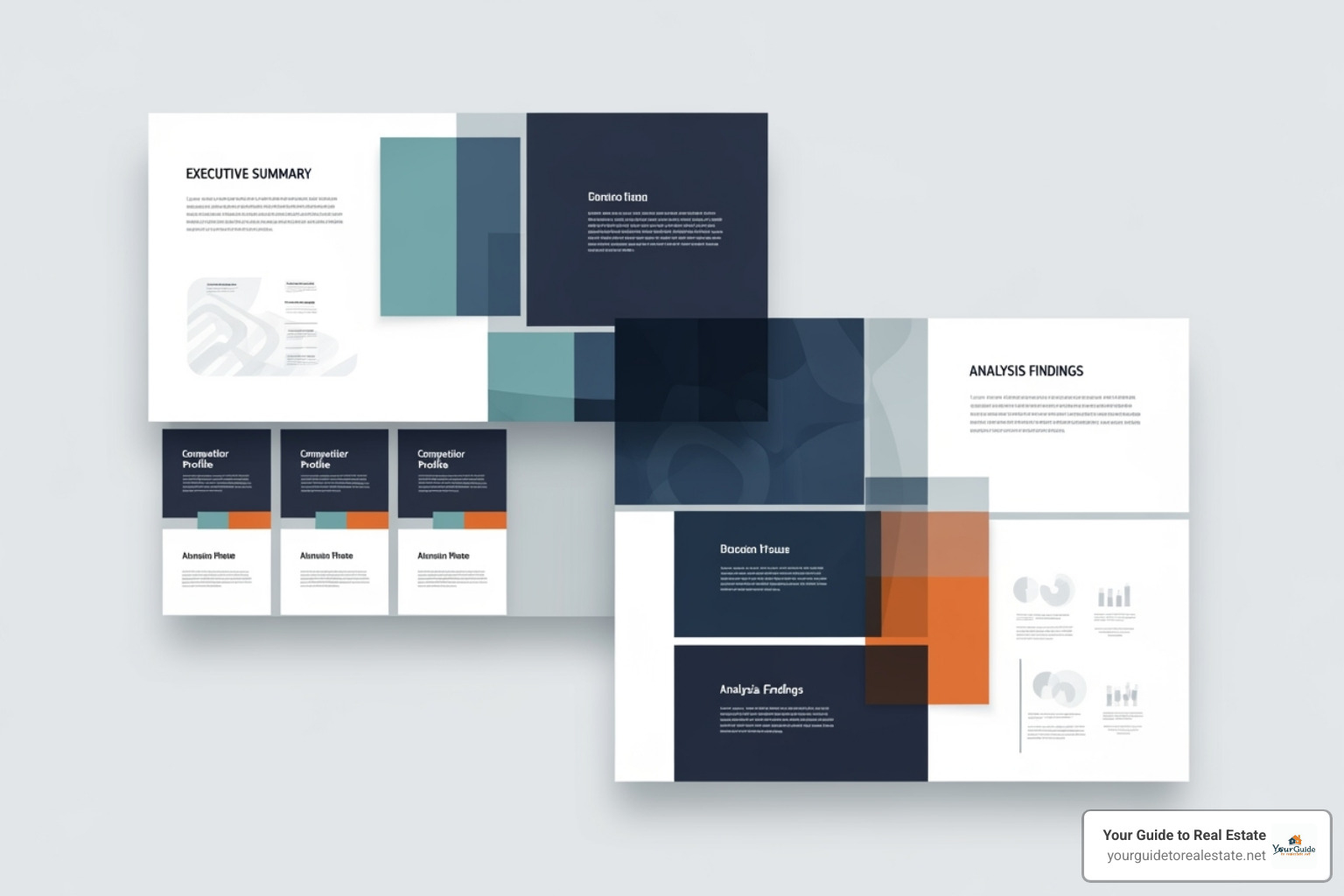
- Executive Summary: This is the elevator pitch of your report. Keep it brief and focus on the most significant opportunities, threats, and your main strategic recommendation for busy decision-makers.
- Company Overview: Briefly describe your business, mission, and current market position. This provides crucial context for the analysis.
- Competitor Profiles: For each major competitor, detail their business, products, pricing, target market, marketing, and customer sentiment. Connect these facts to what they mean for your business.
- Product/Service Feature Comparison: Line up your offerings against the competition, feature by feature. This helps you understand where you stand out and where you have gaps.
- Market Share Analysis: Estimate relative positions and growth trends to understand competitive intensity and opportunities.
- Pricing Comparison: Go beyond just listing numbers. Dig into the value propositions behind competitors’ prices to understand their positioning.
- Marketing & Social Media Strategy: Analyze competitors’ messaging, brand personality, and advertising tactics to uncover market gaps you can exploit.
- SWOT Analysis: Synthesize all your research into clear strategic insights about strengths, weaknesses, opportunities, and threats.
For real estate professionals, our guide on How to Do a Competitive Market Analysis in Real Estate provides detailed, industry-specific insights.
Using Visual Tools and Templates
Visual tools are your secret weapon for creating readable reports. They help communicate insights more effectively than dense text.
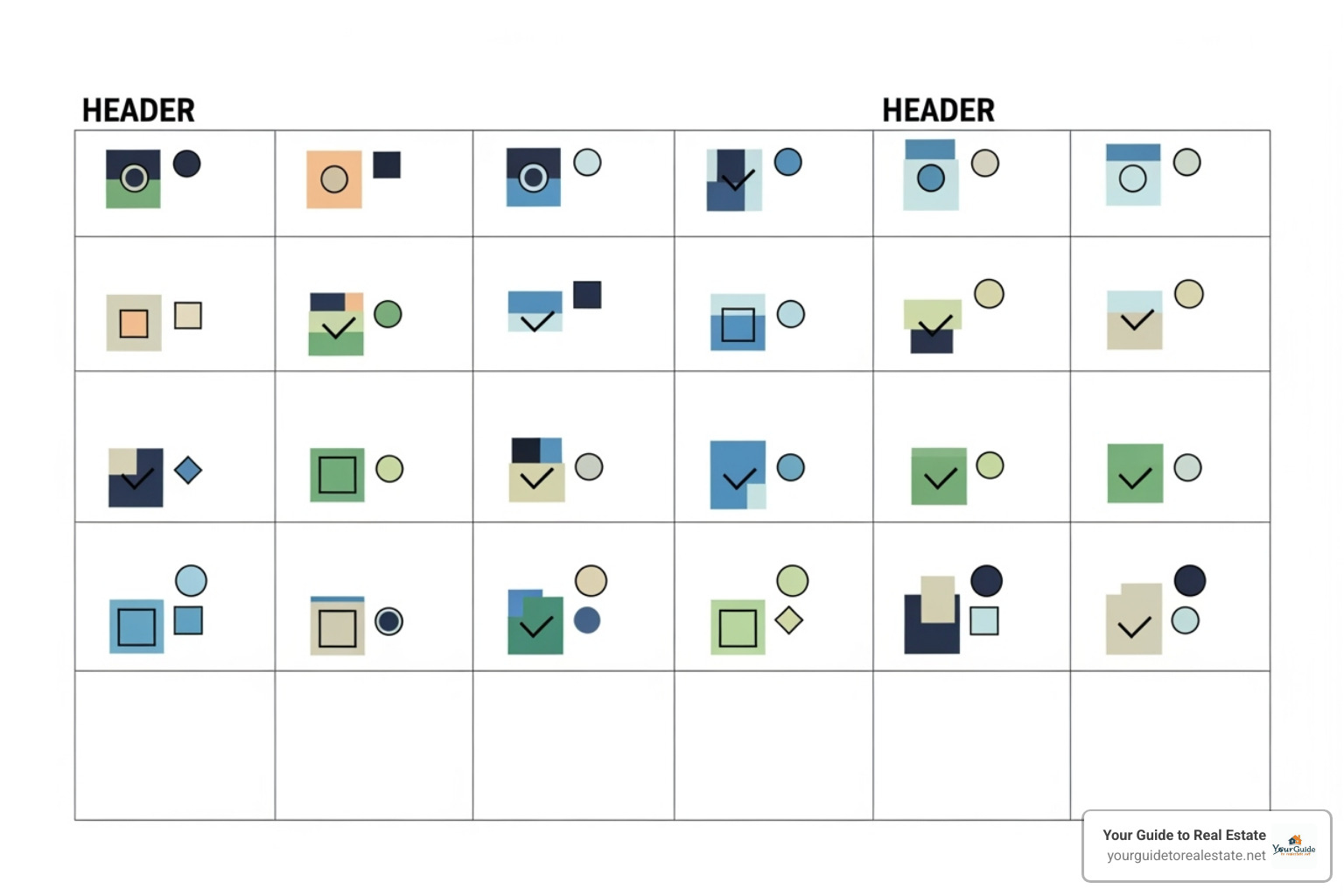
- A Feature Comparison Matrix is a grid comparing your features against competitors. It instantly shows where you lead and where you lag.
- SWOT Matrices provide a visual snapshot of your analysis, communicating strengths, weaknesses, opportunities, and threats quickly.
- Comparison Charts are excellent for showing trends and relationships in data like pricing, market share, or customer satisfaction.
- A Market Positioning Map plots competitors on a 2×2 grid (e.g., price vs. quality) to reveal your position in the landscape and highlight market gaps.
Templates provide a research roadmap, ensure you don’t miss details, and create consistency for tracking changes over time. Templates with visuals help communicate complex findings effectively, making it more likely that your analysis will drive action.
From Data to Decisions: Analyzing Findings and Finding Your Edge
This is where you turn data into actionable insights. It’s about uncovering the strategic gold that will guide your business decisions and help you outshine the competition. The key is to understand what the information means for your business. Identify competitor vulnerabilities and market gaps to shape your product and marketing strategies.
Conducting a SWOT Analysis
The SWOT analysis is a strategic compass for your competitive analysis report, organizing your findings into four clear categories.

- Strengths: Your internal advantages, like a great team, unique technology, or a strong reputation.
- Weaknesses: Internal areas for improvement, such as a tight budget or outdated tech. Acknowledging them is the first step to fixing them.
- Opportunities: External factors you can leverage, like market trends or new customer segments. In real estate, this could be new developments or demographic shifts.
- Threats: External challenges like new competitors or economic downturns. Identify them early to prepare.
The real power move is to conduct a SWOT analysis for your key competitors too. This reveals where you can capitalize on their weaknesses. For real estate professionals looking to optimize their operations, our guide on Real Estate Business Systems offers valuable insights.
Determining Your Unique Competitive Advantage
Your competitive advantage is what you do better than anyone else. It should be clear in your value proposition—the promise of what customers get when they choose you.
Your Unique Selling Proposition (USP) is what makes customers choose you. It should be a distinct advantage—like superior service or deep local knowledge—that competitors can’t easily copy. Your core competencies are the fundamental strengths that form your competitive moat, such as strong community relationships or proprietary processes.
The anchoring effect is also important. Competitors’ prices create mental anchors for customers. Use this to your advantage by positioning yourself as a premium or high-value option. Be the obvious choice for your ideal customer, not everything to everyone.
For real estate agents, even choosing the right brokerage can become part of your competitive advantage. Learn more in our guide on How to Choose a Broker as a Real Estate Agent. Your competitive advantage isn’t static; use insights from your analysis to adapt to market shifts and maintain your edge.
Putting Your Analysis into Action
The value of a competitive analysis report lies in its application. It’s a map to find business opportunities. Let’s explore how to turn insights into concrete strategies.
Informing Strategy: Product Development, Pricing, and Marketing
Your analysis informs three critical areas:
-
Product Development: Understanding competitor offerings clarifies your path. If you find a feature gap that customers need, that’s your opportunity. For a real estate professional, if competitors lack virtual tours, you’ve found a way to stand out. Look beyond what exists to what should exist.
-
Pricing Strategies: Knowing competitor positioning turns pricing from guesswork into science. You can find success as a high-value option in a premium market or a premium choice in a budget market, provided you deliver on that value. The anchoring effect is key; competitor prices set a reference point for customers, so you can position your own pricing strategically.
-
Marketing Efforts: Knowing what competitors are—and aren’t—doing gives you a boost. If they focus on one platform or message (e.g., price), you can find an opening on another platform or with a different message (e.g., quality). If competitors have weak testimonials, you can craft marketing that highlights your strengths and differentiates you.
For real estate professionals looking to grow their business, check out our guide on how to Build Real Estate Business.
Common Pitfalls and How to Avoid Them
Avoid these common pitfalls when putting your analysis into practice:
-
Confirmation bias: The tendency to favor information that confirms your existing beliefs. The fix: Challenge your assumptions and actively look for contradictory evidence.
-
Analysis paralysis: Getting stuck gathering data instead of making decisions. The fix: Set deadlines. Perfect information doesn’t exist; aim for enough good information to decide.
-
Outdated data: This can give you false confidence in a fast-changing market. The fix: Check sources regularly and prioritize data freshness.
-
Ignoring indirect competitors: A classic mistake. A real estate agent’s competition isn’t just other agents but also rental markets or ‘for sale by owner’ platforms. The fix: Think broadly about who else solves your customer’s problem.
-
Lack of action: The most frustrating pitfall. An analysis is worthless if it isn’t used. The fix: Before you start, decide what actions you’ll take based on potential findings.
How Frequently Should You Update Your Competitive Analysis Report?
Your competitive landscape is dynamic, so your competitive analysis report needs regular updates to remain valuable.
-
Annual deep dives are good for comprehensive strategic planning. Re-research competitors, update profiles, and reassess your position.
-
Quarterly check-ins help you track major changes, like new services or pricing shifts, allowing you to adapt your strategy quickly.
-
Monthly monitoring of competitor websites and social media keeps you informed. Use Google Alerts to track news.
The right frequency depends on your market’s pace. Fast-moving industries need more frequent updates, but never go more than a year without a full review. Stay proactive. Regular updates help you spot trends and opportunities early, so you can adapt before you’re forced to react.
Frequently Asked Questions about Competitive Analysis
Let’s address some of the most common questions about competitive analysis reports.
What is the main purpose of a competitive analysis?
The main purpose is to understand your competitive landscape to make smarter strategic decisions. It involves identifying competitors, evaluating their strategies, and assessing their strengths and weaknesses against your own. The goal is to find your market advantage and uncover opportunities. This understanding informs everything from product development to marketing, helping you avoid mistakes and capitalize on market gaps.
How do I identify my business’s main competitors?
Start by identifying direct competitors: businesses offering similar products or services to the same audience. Also, look for indirect and substitute competitors who solve the same customer problem differently. For a real estate agent, this includes “for sale by owner” platforms or rental properties. Use online searches with customer-focused terms and consult industry reports to find competitors. The North American Industry Classification System (NAICS) can also help identify companies by industry.
Can a competitive analysis help me with my pricing strategy?
Absolutely. Understanding competitor pricing and value provides insight into market expectations. This information helps you position your pricing strategically, whether that means justifying a higher price with superior value or targeting a new segment with competitive pricing. The “anchoring effect” is also relevant; competitor prices set a reference point for customers. This intelligence helps you find the pricing sweet spot that reflects your value while staying competitive.
Conclusion
This guide has covered the essential steps for creating a competitive analysis report that drives business success. From identifying competitors to gathering intelligence, each step builds a powerful strategic tool. A well-crafted report transforms data into a roadmap for finding market gaps, understanding customer needs, and positioning your business for growth.
Visual tools like comparison matrices and SWOT analyses are key decision-making aids. They help you spot opportunities, adjust pricing, and develop new features, making your analysis the foundation for smarter decisions.
The process is ongoing. Regular updates—annual deep-dives with quarterly refreshes—ensure you stay ahead of market trends and maintain your competitive edge. For real estate professionals, understanding the competitive landscape is crucial. The insights from your analysis inform how you position services, set prices, and communicate your unique value.
Competitive analysis is a continuous journey of learning and adapting. By making it an ongoing part of your business strategy, you’re not just keeping up—you’re staying one step ahead.
Ready to gain your edge in the market? Get our complete guide to Competitive Market Analysis in Real Estate.