

What Is a Condo Hotel and Why This Hybrid Model Is Gaining Popularity
A condo hotel is a unique real estate investment where you own an individual hotel room or suite that operates as part of a luxury hotel when you’re not using it. Here’s what you need to know:
| Key Feature | Description |
|---|---|
| Ownership Type | Fee simple deeded ownership of individual units |
| Operation | Professional hotel management company runs daily operations |
| Usage | Owner can use unit personally (typically 30-90 days/year) |
| Revenue | Rental income split ~50/50 between owner and management |
| Price Range | $300,000 to over $1 million depending on location and brand |
| Target Market | Luxury vacation destinations and major urban centers |
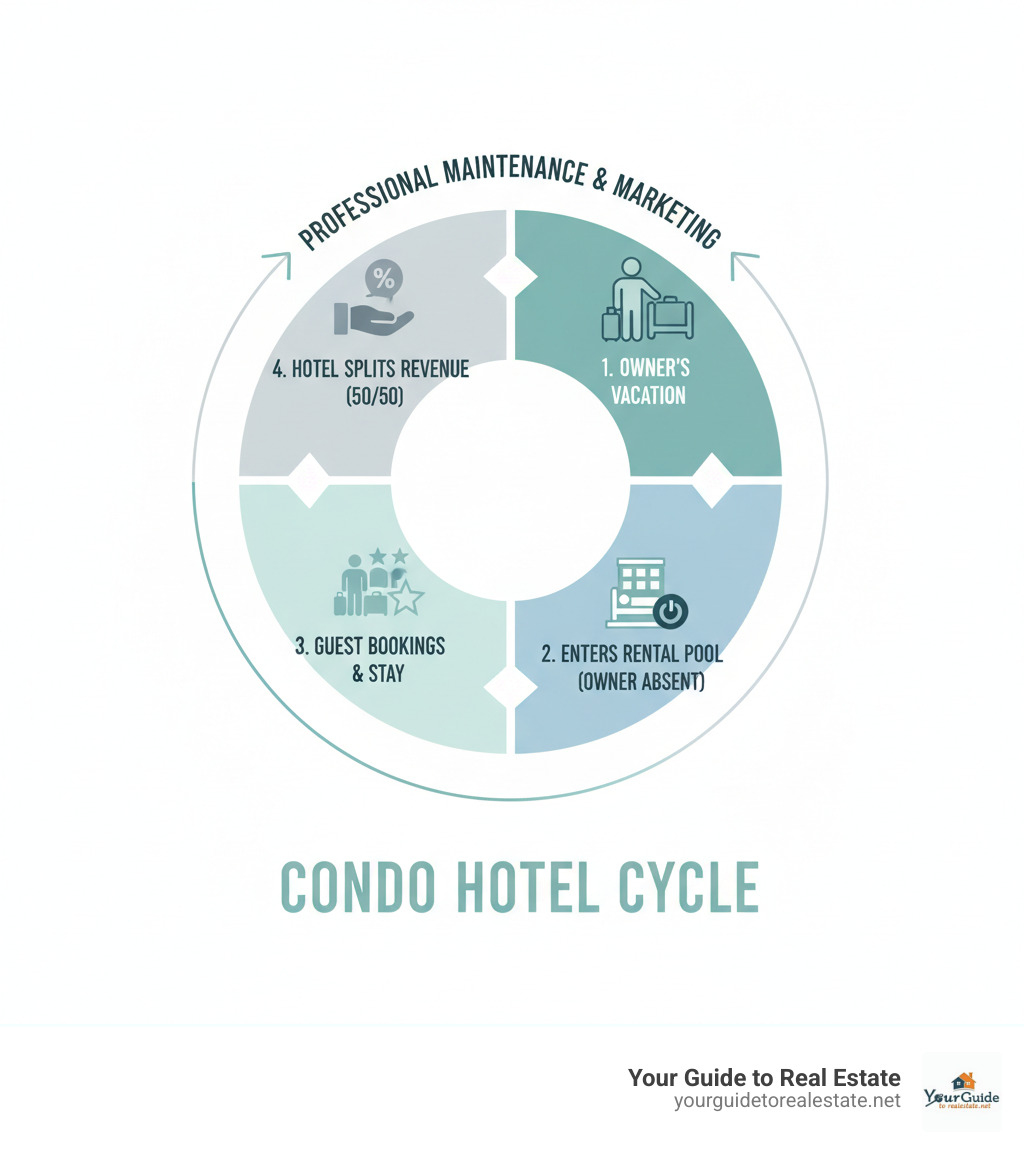
The condo hotel concept combines the benefits of vacation home ownership with the potential for rental income through professional hotel operations. When you’re not using your unit, it becomes part of the hotel’s inventory – guests book it just like any other hotel room, and you receive a portion of the revenue.
This hybrid model gained popularity in places like Miami Beach and Fort Lauderdale, and is now found in destinations worldwide. Major hospitality brands like Four Seasons, Ritz-Carlton, and Trump International operate many of these properties.
The appeal is clear: you get a luxury vacation home in a prime location with professional management, hotel amenities, and potential income – all without the typical headaches of vacation rental property management.
However, as one industry expert noted, “the numbers often don’t work for an investment” due to high management fees and limited owner control. Understanding both the benefits and risks is crucial before diving into this complex real estate sector.
This guide will walk you through everything you need to know about condo hotels – from how they work to whether they make financial sense for your situation.
Must-know condo hotel terms:
The Condo Hotel Model: Ownership, Operations, and Key Differences
Think of a condo hotel as the best of both worlds – you own a piece of a luxury hotel, but someone else handles all the work. This fascinating real estate concept has been around since the 1970s, and it’s built on a surprisingly simple idea: what if you could own a hotel room that makes money when you’re not using it?

Here’s how it works: when you buy a condo hotel unit, you get fee simple deeded ownership – meaning you truly own that piece of real estate. But here’s the twist: your unit isn’t just sitting empty when you’re away. Instead, it becomes part of the hotel’s room inventory, available for booking by regular hotel guests.
The legal definition gets pretty specific. According to hospitality law experts, a condo hotel is “a hotel where some or all of the rooms have been legally transformed into condominium units which are sold to purchasers, and where it is intended that the condominium units will be part of the hotel’s rooms inventory to be rented to the public and operated by the hotel management.”
This hybrid structure is what makes condo hotels so appealing – and sometimes so complicated. You get all the benefits of owning real estate, plus the marketing power and professional management of a major hotel brand. Most condo hotels are high-end properties – think four or five-star luxury resorts where guests expect top-notch service.
But how does a condo hotel compare to other types of property ownership? The differences are pretty significant:
| Feature | Condo Hotel | Traditional Condominium | Timeshare |
|---|---|---|---|
| Ownership | You own the unit outright | You own the unit outright | You own usage rights only |
| Usage Rights | Personal use plus hotel rental | Use or rent as you choose | Limited weeks per year |
| Management | Professional hotel company | Homeowner association | Timeshare company |
| Costs | HOA fees, taxes, FF&E reserves | HOA fees, taxes, utilities | Annual maintenance fees |
| Resale Potential | Can sell like regular real estate | Can sell like regular real estate | Often difficult to resell |
The condo hotel model really shines when it comes to convenience. You don’t need to find renters, clean between guests, or handle maintenance issues. The hotel management company takes care of everything while you’re away.
How a Condo Hotel Works
Let’s break down the day-to-day reality of condo hotel ownership. When you’re not using your unit, it enters what’s called the rental pool – essentially becoming just another room that hotel guests can book online.
The hotel management company handles everything: marketing your unit, taking reservations, checking guests in and out, cleaning, and maintaining the property. For you as the owner, it’s truly hands-off. No dealing with difficult guests at 2 AM or scrambling to find a cleaning service.
Here’s where it gets interesting financially. The revenue split from rental income is typically 50/50 between you and the hotel management company. While that might seem steep, the hotel covers most operating expenses – housekeeping, marketing, administrative costs, and guest services.
As the unit owner, you’re responsible for property taxes, insurance, and contributions to an FF&E reserve (that’s Furniture, Fixtures & Equipment – basically keeping your unit looking fresh and hotel-ready).
There is one catch: owner usage restrictions. Most rental pool agreements limit your personal use to 30-90 days per year. This ensures the hotel has consistent room inventory to offer guests. Some properties also have blackout dates during peak seasons when owner use isn’t allowed.
The success of your investment really depends on the professional management team. A strong hotel operator with good marketing and high service standards can mean the difference between a profitable investment and a money pit. That’s why many condo hotel projects partner with well-known luxury brands.
You’ll also get access to hotel amenities that you’d never have in a regular condo – think room service, concierge, spa services, and 24-hour front desk. It’s like having a luxury vacation home with a full staff.
Condo Hotel vs. Mixed-Use Hotel
Here’s where things can get confusing. Not every building with both hotel rooms and condos is a condo hotel. The key difference is integration into hotel inventory.
In a true condo hotel, your privately owned unit becomes part of the hotel’s bookable rooms when you’re not there. A hotel guest booking online might end up staying in your unit without even knowing it’s privately owned. This guest experience transparency is crucial – the service and quality should be identical whether they’re in a hotel-owned room or your unit.
A mixed-use hotel is different. It might have luxury apartments or condos built above or alongside a hotel, but those residential units have separate entrances and management. Residents might get access to some hotel amenities, but their units aren’t part of the hotel’s rental program.
Think of it this way: in a condo hotel, your unit works to generate revenue as part of the hotel business. In mixed-use, the residential components are separate – more like living next door to a hotel than being part of one.
This distinction matters a lot if you’re considering How to Invest in Real Estate. Only true condo hotel units offer the rental income potential and professional management that make this investment model attractive.
The bottom line? Condo hotels offer a unique blend of personal enjoyment and investment potential, but they require careful consideration of the management structure and your personal goals.
The Allure and The Pitfalls: Pros and Cons for Owners
Picture this: You own a luxurious suite in a five-star resort where someone else handles all the work while you collect rental income. When you want to vacation, your slice of paradise is waiting with fresh towels and room service. It sounds almost too good to be true – and that’s exactly what we need to talk about.

The condo hotel concept brilliantly balances lifestyle dreams with investment potential. Many international investors find this model especially attractive, particularly when they’re seeking stability in the U.S. market. The appeal is clear: you get to enjoy luxury amenities while your property potentially pays for itself.
But here’s something important to understand from the start. The SEC has strict rules about how condo hotels can be marketed. Developers and realtors can’t advertise them as guaranteed investments because the returns are simply too unpredictable. This tells us something crucial – while these properties offer income potential, they’re primarily lifestyle purchases that happen to generate revenue.
Think of it this way: you’re buying a vacation home that works part-time to help cover its own expenses. Sometimes it’s a star employee, sometimes it calls in sick. The key is knowing what you’re getting into.
Advantages for the Unit Owner
Let’s start with why condo hotel ownership can be genuinely appealing. The benefits are real, and for the right person in the right situation, they can be quite compelling.
The hassle-free vacation home experience tops the list for most owners. When you’re not using your unit, the hotel management takes over everything. They market it, book guests, handle check-ins, clean between stays, and deal with any maintenance issues. You never have to worry about finding renters or fixing a broken air conditioner from 1,000 miles away. As many FAQs about condo hotels explain, this truly is a “lock-and-leave” solution.
The potential rental income can help offset ownership costs. While we can’t call it a guaranteed investment, your unit can generate revenue through the hotel’s established reservation system and brand recognition. Condo hotel owners typically earn more rental income than they would from a traditional vacation home because they’re tapping into the hotel’s professional marketing and guest services.
Access to luxury amenities transforms your ownership experience. Imagine having room service deliver breakfast to your balcony, using the concierge to book dinner reservations, or enjoying spa treatments without leaving the building. These aren’t just amenities you visit – they’re services you own access to.
Professional maintenance and marketing keep your unit in pristine condition. The hotel maintains everything to hospitality industry standards, ensuring your property always looks its best. Meanwhile, their marketing reach exposes your unit to travelers worldwide, something you’d never achieve marketing a vacation rental on your own.
Finally, prime locations put you in the heart of desirable destinations. Condo hotels typically occupy coveted spots in resort areas, major cities, or near popular attractions. You’re not just buying a property – you’re buying into a location that people actively want to visit.
Risks and Drawbacks for the Unit Owner
Now let’s talk about the less glamorous side. Understanding these challenges upfront can save you from unpleasant surprises later.
High management fees take a significant bite from your rental income. That typical 50/50 revenue split might sound fair until you realize the hotel management company’s portion covers their profit, not just expenses. Add in FF&E reserves and other deductions, and your net income can be much smaller than expected.
Your success depends entirely on hotel management performance. If the hotel operator struggles with marketing, guest satisfaction, or maintaining the property’s reputation, your rental income suffers right alongside theirs. You’re essentially betting on their business skills with your money.
Usage limitations can frustrate owners who want flexibility. Most agreements restrict personal use to 30-90 days per year, with blackout dates during peak seasons when you’d most want to visit. It’s your property, but you can’t always use it when you want.
Market volatility hits condo hotels particularly hard. Tourism trends, economic downturns, and even events like natural disasters can dramatically impact occupancy rates. Some industry experts have pointed out that condo-hotels can be poor investments during economic uncertainty because they’re so dependent on discretionary travel spending.
Resale appreciation can be disappointing compared to traditional real estate. Condo hotel values often depend more on income potential than comparable property sales, making them harder to value and sometimes slower to appreciate. In emerging markets, there simply isn’t enough resale data to predict future performance.
Financing challenges create additional problems. Many lenders classify condo hotels as “non-warrantable” properties, requiring larger down payments (often 25-30% or more) and charging higher interest rates. This can significantly impact your overall investment math.
The bottom line? Condo hotel ownership works best when you prioritize lifestyle benefits over investment returns. If you’re thinking about making a move and considering whether to Sell My Condo for a condo hotel, make sure you’re comfortable with both the rewards and the risks.
Navigating the Complexities: Financial, Legal, and Operational Problems
When you decide to explore condo hotel ownership, you’re stepping into a world that’s far more intricate than buying a regular vacation home. Think of it as entering a sophisticated dance where real estate meets hospitality meets securities law – and everyone needs to stay in perfect sync.

The challenge with condo hotels is that they don’t fit neatly into traditional real estate categories. You’re not just buying a home – you’re buying into a commercial operation. This unique position creates a web of regulations, financial considerations, and operational requirements that can feel overwhelming at first.
Developers face their own mountain of challenges. They’re juggling multiple types of lenders, dealing with ADA compliance issues, managing liquor licensing for units they don’t actually own, and navigating the ups and downs of both the hotel and residential markets simultaneously. It’s no wonder these projects require such specialized expertise.
This is where professionals who understand Real Estate Financing become your best friends. The financial landscape for condo hotels is unlike anything you’ll encounter with traditional properties.
The Financial Breakdown of a Condo Hotel Unit
Let’s talk money – because understanding the true cost of condo hotel ownership goes way beyond that initial purchase price.
What you’ll pay upfront typically ranges from $300,000 to well over $1 million, depending on where you’re buying and what brand name is on the building. The sweet spot for many buyers is getting in during pre-construction when prices are at their lowest. Early buyers often see the best appreciation potential, though nothing is guaranteed.
The ongoing expenses are where things get interesting – and sometimes surprising for first-time condo hotel owners. Your HOA fees will cover common area maintenance, basic utilities, and security, but don’t expect them to include the daily housekeeping that hotel guests receive. Those services come from the hotel operation side.
Then there’s the FF&E reserve – Furniture, Fixtures & Equipment. This isn’t just a fancy acronym; it’s a real expense that ensures your unit stays looking like it belongs in a luxury hotel. When that sofa gets worn out from guest use or the kitchen appliances need replacing, this reserve fund covers it.
Property taxes and insurance work similarly to regular ownership, though insurance can be trickier since you’re essentially running a short-term rental business. The IRS has specific guidance on Rental Income and Expenses that applies to condo hotel situations.
The management fees deserve special attention because they’re substantial – often around 50% of your rental revenue. Yes, that’s a big chunk, but remember what you’re getting: professional marketing, reservations, guest services, and maintenance that keeps your unit earning money while you’re not there.
Revenue expectations need to be realistic. While your unit can generate income when you’re not using it, occupancy rates fluctuate with tourism trends, economic conditions, and seasonal patterns. The hotel’s performance directly impacts your bottom line, which brings us to an important point: this isn’t guaranteed income.
If you’re considering this path, take time to understand Understanding Mortgages: A Beginner’s Guide to Home Loans because financing a condo hotel is a whole different ballgame.
Legal and Regulatory Oversight
Here’s where condo hotel ownership gets really interesting from a legal perspective. The SEC watches this market like a hawk because the line between real estate and investment securities can get pretty blurry.
The SEC’s main concern is whether selling a condo hotel unit crosses into securities territory. If a developer promises you’ll make money primarily through their management efforts rather than your own, that starts looking like a security to regulators. This is why you’ll never hear legitimate developers guarantee rental returns or pitch units as pure investments. They’re required to market these as vacation homes with potential rental benefits – not investment vehicles.
Financing becomes tricky because most lenders classify condo hotels as “non-warrantable” properties. Translation: fewer banks want to touch them, and those that do charge more for the privilege. Expect to put down 20% to 30% instead of the typical 10-20% for a regular home, and your interest rate might be a full percentage point higher. The Loan Process for Buying a House becomes significantly more complex when that house is actually a hotel room.
State and local regulations add another layer of complexity. Condominium laws vary by state, and many local zoning authorities struggle with properties that are simultaneously residential and commercial. Some areas don’t even have clear categories for condo hotels, forcing developers to work closely with local governments to create new frameworks.
Professional legal guidance isn’t optional here – it’s essential. Hotel law experts understand the intricate balance between real estate regulations, hospitality operations, and securities compliance. They help ensure everyone understands exactly what they’re getting into, which protects both developers and buyers from costly surprises down the road.
The regulatory landscape continues evolving as condo hotels become more popular. What seemed impossible to steer a decade ago is now routine for experienced professionals, but it still requires specialized knowledge that general real estate attorneys might not possess.
Market Outlook: Trends, Success Factors, and Future Projections
The condo hotel world has been quite the rollercoaster ride. Think of it as the real estate equivalent of your favorite theme park – thrilling highs, stomach-dropping lows, but ultimately an experience that keeps drawing people back for more.

After gaining momentum in the 1970s and 80s, condo hotels really took off in the early 2000s. Then came 2008, and well, we all know how that story goes. The financial crisis hit the hospitality and real estate sectors particularly hard, and many condo hotel projects either stalled or struggled to deliver on their promises.
But here’s the interesting part – the market didn’t just bounce back, it evolved. Today’s condo hotel landscape is smarter, more regulated, and frankly, more realistic about what these properties can and can’t deliver. We’re seeing a genuine resurgence driven by several key factors that make this model more attractive than ever.
For developers, the math is compelling. Building luxury hotel rooms is incredibly expensive – we’re talking hundreds of thousands of dollars per room. Selling individual units to private buyers provides crucial capital early in the project, often right around the hotel’s opening. This cash flow allows developers to focus on creating exceptional properties rather than worrying about financing gaps.
The regulatory environment has also matured. While SEC oversight remains strict (which is actually good for buyers), the industry has learned to work within these guidelines more effectively. This creates a more stable foundation for both developers and buyers. These changes align perfectly with the broader Top 7 Real Estate Trends Shaping 2025 and Beyond, particularly the growing demand for hybrid property models.
Key Drivers of a Successful Condo Hotel
Not all condo hotels are created equal – some thrive while others merely survive. After studying successful properties across different markets, we’ve identified the critical factors that separate the winners from the also-rans.
Location remains the ultimate game-changer. Whether we’re talking about a beachfront resort in Miami Beach or a sophisticated urban property in a major city center, prime location drives everything else. Great locations ensure steady demand from both leisure and business travelers, which directly translates to higher occupancy rates and better rental income for owners.
Brand power cannot be overstated. When you see names like Four Seasons, Ritz-Carlton, or Trump International attached to a condo hotel, it’s not just about prestige. These brands bring established marketing machines, sophisticated reservation systems, and most importantly, guest loyalty. Branded properties consistently outperform their unbranded counterparts, often seeing double-digit appreciation while generic properties struggle to maintain value. This trend is part of The Rise of Branded Residences, where discerning buyers increasingly seek the security and status of recognized hospitality brands.
Amenities make or break the guest experience. Today’s travelers expect world-class spas, state-of-the-art fitness centers, multiple dining options, and resort-style pools. These aren’t just nice-to-haves – they’re essential for commanding premium room rates and attracting repeat guests. For owners, exceptional amenities also mean a more luxurious personal experience during their stays.
The hotel operator is your silent partner in success. Even the most beautiful property in the best location can fail with poor management. A strong hotel operator brings operational expertise, marketing reach, and the ability to adapt to changing market conditions. They’re the ones making sure your investment performs day in and day out.
Is Buying a Condo Hotel a Good Investment?
This is where we need to have an honest conversation. The answer isn’t a simple yes or no – it depends entirely on your goals, expectations, and how well you understand what you’re getting into.
Let’s talk numbers realistically. While some branded condo hotels have indeed outperformed traditional condos in resort markets, this isn’t guaranteed. The rental income potential is real, but so are the management fees, maintenance costs, and market fluctuations. We’ve seen properties where owners are thrilled with their returns, and others where the numbers just don’t work out as expected.
The financing challenge is real and affects resale value. Because most lenders treat condo hotels as non-warrantable properties, your pool of potential buyers is smaller when it’s time to sell. This can impact both how quickly you can sell and the price you’ll receive.
Market performance varies dramatically by property. The branded properties in prime locations with strong operators have generally held their value better than generic properties or those in secondary markets. This isn’t surprising, but it’s crucial to understand before you buy.
Due diligence isn’t optional – it’s everything. Before considering any condo hotel, dig deep into the developer’s track record, the management company’s performance at similar properties, and the local market conditions. Understanding property valuation in this unique sector is complex, which is why tools like Competitive Market Analysis Real Estate become so important.
The bottom line? A condo hotel can be a smart choice if you’re primarily buying a luxury vacation home and view the rental income as a nice bonus rather than your main reason for purchasing. If you’re looking purely for investment returns, traditional real estate might serve you better.
Long-term viability looks promising for well-positioned properties. The concept has proven its staying power by surviving multiple economic cycles and adapting to changing consumer preferences. As travel patterns evolve and luxury experiences become more important to consumers, quality condo hotels are likely to remain attractive to both guests and owners.
The key is aligning your purchase with your personal goals. Whether you’re seeking a luxury retreat, a potential income stream, or both, understanding exactly what you’re buying – and what you’re not – is essential for success in this unique corner of the real estate market.
Frequently Asked Questions about Condo Hotels
We know that condo hotels can feel overwhelming at first. The unique blend of ownership and hospitality creates questions that don’t come up with regular real estate purchases. Let’s walk through the most common concerns we hear from potential buyers.
How much can I use my condo hotel unit?
This is probably the first question on every potential owner’s mind. After all, if you’re buying a vacation home, you want to know when you can actually vacation there!
Most condo hotel properties limit personal use to 30 to 90 days per year. This might sound restrictive, but there’s good reason behind it. The hotel needs to maintain consistent inventory for guests, and your rental income depends on the unit being available for bookings.
Here’s where it gets a bit more complex: blackout dates. During peak seasons – think Christmas week in Miami or ski season in Aspen – your personal use might be completely restricted. The hotel can command top dollar during these periods, so they prioritize paying guests.
Before you sign anything, read that rental program agreement carefully. Make sure the allowed usage days align with when you actually want to visit. There’s nothing worse than finding you can’t use your beach condo during spring break because that’s prime rental season.
Who is responsible for maintenance and repairs?
One of the biggest selling points of condo hotel ownership is that you can truly “lock and leave” without worrying about maintenance headaches. But understanding exactly who handles what is crucial.
The hotel management company takes care of most day-to-day maintenance when your unit is in the rental pool. They handle cleaning between guests, minor repairs, and keeping everything up to hotel standards. This is part of what you’re paying those management fees for.
Your FF&E (Furniture, Fixtures & Equipment) reserve covers the bigger stuff – replacing worn-out furniture, updating appliances, and refreshing decor. This ensures your unit always looks hotel-ready and doesn’t fall behind current standards.
As the unit owner, you’re still responsible for major structural issues within your unit and any problems that occur during your personal stays. You’ll also handle property taxes, insurance, and your share of building maintenance through HOA fees.
The beauty of this system is that most owners never have to deal with emergency repair calls or finding reliable contractors in a vacation destination. The hotel’s maintenance team already knows the property inside and out.
Can I get a traditional mortgage for a condo hotel?
This is where condo hotel ownership gets tricky, and frankly, it’s one of the biggest barriers for many potential buyers.
Most lenders classify condo hotels as “non-warrantable” properties. This fancy term basically means they don’t fit the neat little box that traditional residential mortgages require. Because your unit is part of a commercial hotel operation with rental agreements, banks see them as riskier investments.
What does this mean for your wallet? You’ll likely need to put down 20% to 30% or more as a down payment – significantly higher than the typical residential mortgage. Interest rates are also higher, often a full percentage point above what you’d pay for a primary residence.
The pool of willing lenders is much smaller too. You’ll need to work with banks that specialize in commercial real estate or condo hotel financing. Don’t expect your neighborhood bank to understand this type of property.
Our Mortgage Options Explained guide covers general financing principles, but condo hotel financing is definitely a specialized field. Start shopping for lenders early in your process, and be prepared for a more complex application process than you’d face with a regular home purchase.
The financing challenges are real, but they’re not impossible. Many condo hotel owners find that the lifestyle benefits and potential rental income make the extra effort worthwhile.
Conclusion
We’ve taken quite a journey together through the fascinating world of condo hotels, haven’t we? From understanding what makes these properties tick to diving deep into their financial complexities, we’ve covered a lot of ground. What started as a simple concept – owning a hotel room that earns money when you’re not there – has revealed itself to be a sophisticated real estate model with both exciting opportunities and real challenges.
The condo hotel concept truly is unique in the real estate landscape. It’s not just about buying a fancy vacation home or making a straightforward investment. Instead, it’s about becoming part of a larger hospitality operation while maintaining your own slice of luxury. When it works well, it’s almost magical – you get to enjoy world-class amenities, professional management, and potential income, all while someone else handles the day-to-day headaches of property management.
But let’s be honest about what we’ve learned. The benefits are real and compelling: hassle-free ownership, access to luxury services most of us could never afford otherwise, and the potential for our vacation home to actually help pay for itself. The idea of walking into a Four Seasons or Ritz-Carlton and knowing you own a piece of it is pretty special.
However, the risks are equally real. Those management fees can be hefty, our personal usage might be more limited than we’d like, and the success of our investment depends heavily on factors beyond our control – like the hotel management company’s performance and broader tourism trends. The financing challenges alone can be a significant hurdle, with higher down payments and interest rates making these properties less accessible than traditional real estate.
What strikes us most is how much the success of a condo hotel depends on getting the fundamentals right. Location remains king – a mediocre property in Miami Beach will likely outperform a beautiful one in an unknown destination. Brand power matters enormously – those famous hotel flags aren’t just for show, they represent marketing reach and operational expertise that directly impacts your bottom line. And the quality of management can make or break the entire experience.
For anyone considering this path, we can’t stress enough how important it is to do your homework. This isn’t a decision to make lightly or based on a glossy sales presentation. Talk to current owners, research the management company’s track record, understand the local market dynamics, and most importantly, be realistic about your expectations. The SEC prohibits marketing these as guaranteed investments for good reason.
At Your Guide to Real Estate, we’ve seen how complex real estate decisions can feel overwhelming. That’s exactly why we focus on providing you with clear, honest information and a proven framework for making smart choices. Whether you’re exploring condo hotels or any other real estate opportunity, our goal is to help you understand what you’re getting into so you can make decisions with confidence.
The condo hotel market will continue evolving, adapting to new economic conditions and traveler preferences. For the right person – someone who values the lifestyle benefits, understands the risks, and has done thorough due diligence – these properties can offer a unique and rewarding ownership experience.
If you’re ready to explore complex property types like condo hotels with expert guidance, we invite you to find how our virtual real estate brokerage services can help you steer these sophisticated real estate decisions with the support and expertise you deserve.