Why Understanding Condo vs Townhouse Differences Matters for Your Home Purchase
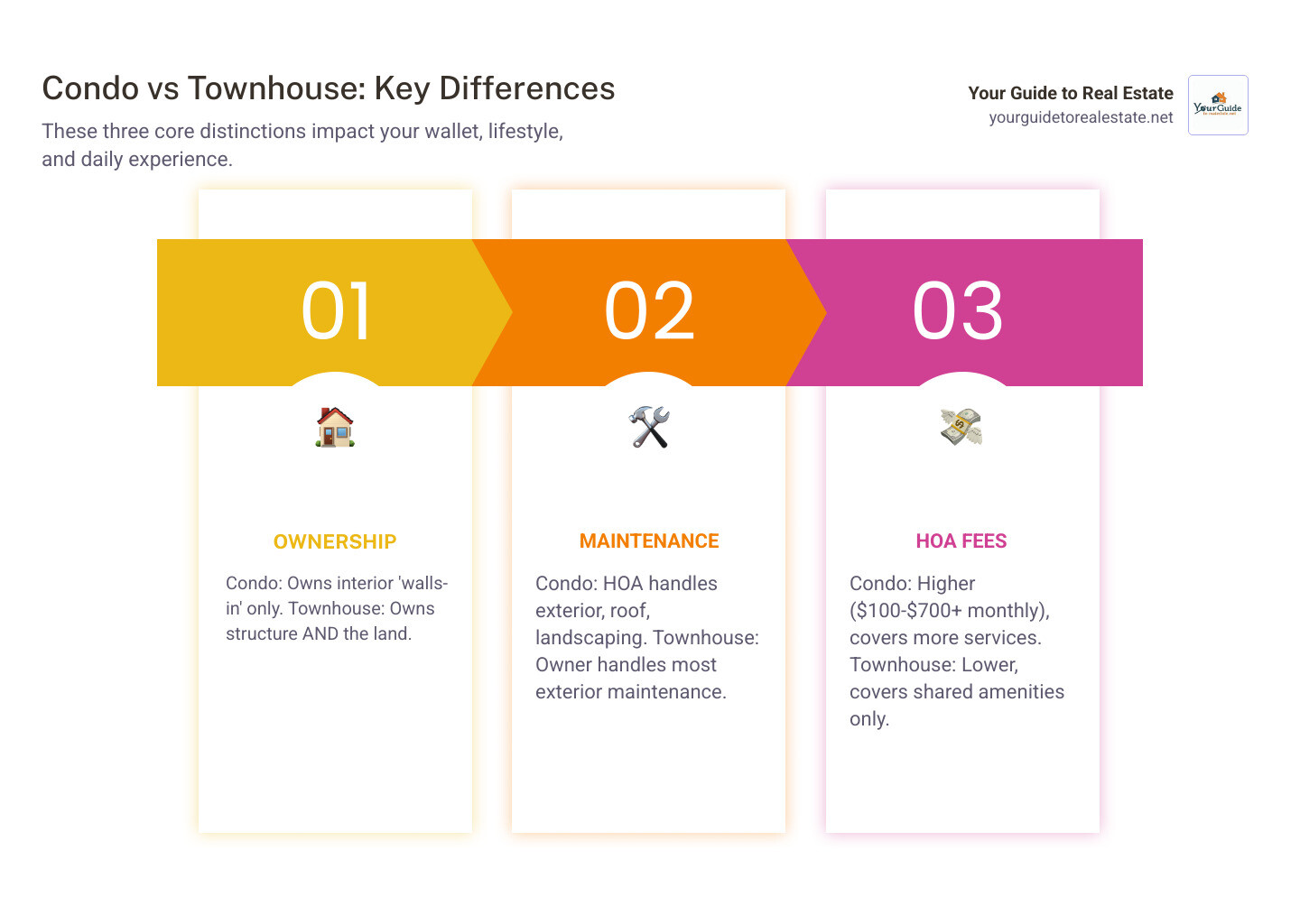
What’s the difference between a condo and a townhouse boils down to three core distinctions that impact your wallet, lifestyle, and daily experience:
| Key Difference | Condo | Townhouse |
|---|---|---|
| Ownership | You own the interior space only (“walls-in”) | You typically own the structure AND the land |
| Maintenance | HOA handles exterior, roof, landscaping | You handle most maintenance yourself |
| HOA Fees | Higher ($100-$700+ monthly) – covers more services | Lower – typically covers shared amenities only |
When it comes to looking for a home to buy, there are many things to consider beyond size and curb appeal. The choice between these two property types affects everything from your monthly budget to how much freedom you have to paint your front door.
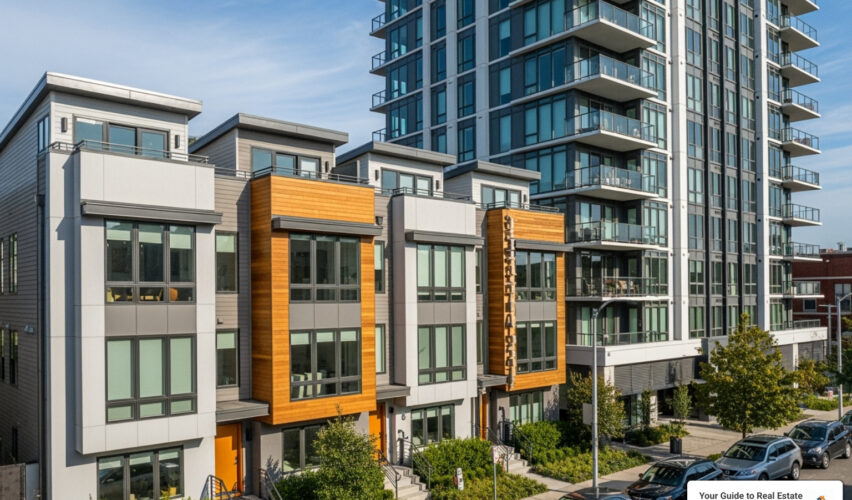
Many first-time buyers get confused because both condos and townhouses can look similar from the outside. You might see a row of connected homes and wonder: “Is this a townhouse development or a condo complex?”
The visual similarity hides fundamental differences in ownership structure. As one real estate expert notes, “condominium is a form of ownership/deed, not strictly a building type.” This means a townhouse-style building could actually be legally structured as a condo, where you only own the interior.
Understanding these distinctions is crucial because they determine:
- How much you’ll pay each month beyond your mortgage
- What repairs and maintenance you’re responsible for
- How much control you have over your property
- Your long-term investment potential
Explore more about what’s the difference between a condo and a townhouse:
The Core Difference: Ownership and Structure
This section explains the fundamental legal and physical distinctions that define condos and townhouses, moving beyond simple appearances to the heart of what you actually own.
What is a Condo? The “Walls-In” Concept
Picture walking into a high-rise building with a beautiful lobby, taking an elevator to the 10th floor, and open uping the door to your home. That’s condo living in a nutshell. But here’s what makes it unique: you own everything from the walls inward, but not much else.
When you buy a condominium, you’re purchasing your individual unit within a larger multi-unit building. Think of it as owning an apartment, but instead of paying rent, you hold the deed. Your ownership includes the interior walls, floors, and ceilings of your specific unit – essentially the “airspace” inside those boundaries.
Everything else? That belongs to everyone. The building’s exterior, the roof, hallways, lobbies, elevators, fitness centers, and pools are all owned collectively through the homeowners association (HOA). You and your neighbors share both the ownership and the costs of maintaining these common areas.
This shared ownership model is what fundamentally defines what’s the difference between a condo and a townhouse. It’s also why your monthly HOA fees tend to be higher – they’re covering a lot more shared spaces and services.
For a deeper dive into different ownership structures, you might find our guide on Condo vs Coop enlightening.
What is a Townhouse? A Hybrid Home
Now imagine a different scenario: you walk up to your front door, open up it, and step into your multi-level home that’s attached to similar homes on either side. Welcome to townhouse living – where you get more of that single-family home feel while still being part of a connected community.
The game-changer here is ownership. With most townhouses, you don’t just own the interior – you own the entire structure AND the land beneath it. This is called “fee-simple ownership,” and it’s much closer to owning a traditional house.
Your ownership typically extends to the exterior walls, the roof, and a small plot of land that might include a private patio, small yard, or even an attached garage. This gives you much more control over your property, but it also means more responsibility falls on your shoulders.
Here’s where it gets interesting though: a townhouse can actually be structured as a condominium for legal purposes. In these cases, you’d only own the interior space, just like in a high-rise condo. This is why checking the actual deed and ownership structure is so important when house hunting.
Most townhouses offer that sweet spot between privacy and community. You’ll typically have fewer shared walls than a condo (usually just one or two sides), and you often get your own private outdoor space – something many condo dwellers miss.
For more on why this housing style has become so popular, explore the appeal of townhomes.
Financial Breakdown: Costs, Fees, and Value
Understanding the financial implications is crucial. This section breaks down the purchase price, ongoing expenses, and long-term investment potential for both property types.
Purchase Price and Appreciation
When you’re house hunting, your wallet will immediately notice that condos often offer a more affordable entry point into homeownership. The numbers tell the story clearly: condos typically cost less upfront because you’re not buying the land underneath your home.
Nationally, condos average around 1,200 square feet and offer that crucial first step onto the property ladder. According to National Association of Realtors data, the median sale price of condominiums increased 5.8% to $337,900 in March 2024.
Townhouses sit in the middle ground between condos and single-family homes, both in size and price. They’re typically larger than condos, ranging from 1,300 to 1,500 square feet, and you’re getting more bang for your buck with that land ownership component.
Here’s where what’s the difference between a condo and a townhouse becomes really important for your long-term wealth building. Townhouses generally appreciate faster than condos because you own the dirt beneath your feet. That land ownership means your property tends to follow similar appreciation patterns to single-family homes.
Condos can still be solid investments, especially in hot urban markets where demand stays strong. But if you’re thinking long-term wealth building, the land component of townhouse ownership often gives you a leg up in the appreciation game.
Ongoing Costs: HOA Fees and Insurance
Once you’ve bought your new home, the monthly costs beyond your mortgage payment become your new reality. Both condos and townhouses come with Homeowners Association (HOA) fees, but the amounts and what you get for your money vary dramatically.
Condo HOA fees pack a bigger punch to your monthly budget, typically ranging from $100 to $700 per month (and sometimes much higher in luxury buildings). But here’s the thing – you’re getting a lot for that money. Your condo HOA handles everything outside your front door: building maintenance, roof repairs, landscaping, snow removal, and often utilities like water and trash.
Think of it as hiring a full-service property management company. You get that low-maintenance lifestyle where you can travel for weeks without worrying about lawn care or roof leaks.
Townhouse HOA fees are gentler on your wallet, often under $100 to a few hundred dollars monthly. That’s because you’re handling most of your own exterior maintenance – your roof, your walls, your little patch of yard. The HOA fees mainly cover shared community features like parks, street lighting, or that nice entrance sign.
| Feature/Service | Condo HOA Coverage | Townhouse HOA Coverage |
|---|---|---|
| Exterior Structure | Yes (roof, siding, foundation) | No (owner’s responsibility) |
| Common Areas | Yes (lobbies, gyms, pools, etc.) | Yes (community parks, shared spaces) |
| Landscaping | Yes (all common grounds) | Yes (common grounds only) |
| Utilities | Often (water, trash, sometimes heat/AC) | Seldom (maybe water for common areas) |
| Building Insurance | Yes (master policy) | No (owner’s responsibility) |
| Snow Removal | Yes (common areas, sometimes individual driveways) | Yes (common roads, sometimes individual driveways) |
Insurance costs also differ significantly. Condo owners need an HO-6 policy that covers your stuff and your unit’s interior – the HOA’s master policy handles the building itself. This usually means lower insurance costs for you.
Townhouse owners need full homeowner’s insurance, similar to a single-family home, covering both inside and outside. It’s more comprehensive coverage, but it also costs more.
For detailed breakdowns, check out our guides on Condo Insurance Cost and Condo Association Insurance to understand exactly what you’ll be paying for.
What’s the Difference Between a Condo and a Townhouse in Daily Life?
Beyond ownership and cost, your day-to-day experience will vary significantly. Here’s a look at the lifestyle implications of choosing a condo versus a townhouse.
Maintenance and Customization Freedom
Picture this: It’s Saturday morning, and while your neighbor with a single-family home is out mowing the lawn and cleaning gutters, you’re sipping coffee on your balcony. This is the low-maintenance lifestyle that makes condos so appealing. The HOA handles all exterior maintenance, landscaping, snow removal, and even structural repairs like roof leaks.

Condo maintenance responsibilities are refreshingly simple. You’re responsible for everything inside your unit – fixing a dripping faucet, painting your walls, or replacing appliances. Everything outside? That’s the HOA’s job. This hands-off approach gives you more time for hobbies, travel, or simply relaxing.
Townhouse maintenance responsibilities tell a different story. While the HOA might handle common community areas like parks or entrance landscaping, you’re the owner responsible for your roof, exterior walls, and any private yard or patio. As real estate expert David Harris notes, “For a townhouse, if something goes wrong, the maintenance cost falls squarely on the shoulders of the owner of that townhouse.”
When it comes to customization rules, what’s the difference between a condo and a townhouse becomes quite apparent. Condo living typically means stricter regulations. Want to paint your front door bright red? You’ll likely need HOA approval. Planning a major kitchen renovation? The HOA’s Covenants, Conditions, and Restrictions (CC&Rs) might require permits and approvals, especially for structural changes.
Townhouses generally offer more freedom for both exterior modifications and landscaping since you own the structure and land. However, don’t expect complete freedom – HOA rules still apply to maintain community aesthetics and property values.
Amenities, Privacy, and Community
Condo amenities can make everyday life feel like a vacation. Many complexes feature pools, fully equipped gyms, security systems, and even concierge services for package delivery. These resort-style perks are often a major draw for buyers seeking convenience and luxury without the maintenance headaches.
Townhouse amenities tend to be more modest but still valuable. Think community parks, playgrounds, or a shared pool area. While less extensive than luxury condo high-rises, these amenities support a family-friendly community atmosphere without the higher HOA fees.
Privacy levels reveal another key distinction. In a condo, you’ll have neighbors above, below, and on both sides. This close proximity means noise considerations are real – you might hear footsteps overhead or conversations through walls. If absolute quiet is essential to your happiness, condo living might feel cramped.
Townhouses offer significantly more privacy since you typically only share walls with neighbors on one or two sides, and crucially, no one lives above or below you. Many townhouses also include private outdoor spaces like patios or small yards, giving you a personal retreat space.
Both property types foster a sense of community, but it manifests differently. Condo living, with shared amenities and closer quarters, often creates tight-knit communities where neighbors become friends. Townhouse communities encourage neighborly connections too, but the extra space and private yards allow for more personal boundaries when you need them.
Pros and Cons at a Glance
Understanding what’s the difference between a condo and a townhouse means weighing the trade-offs that affect your daily life:
Condo advantages include affordability as a great entry point into homeownership, low maintenance that frees up your weekends, premium amenities you might not afford otherwise, and prime urban locations with walkable access to restaurants and entertainment.
However, condo living comes with high HOA fees that can strain your monthly budget, strict rules limiting your customization freedom, less privacy due to close neighbors, and typically slower appreciation compared to properties that include land ownership.
Townhouse benefits offer more space with multiple levels and room to grow, greater privacy with fewer shared walls and often private outdoor areas, actual land ownership that can boost your investment, and better appreciation potential since they resemble single-family homes.
The townhouse trade-offs include more maintenance responsibilities for your exterior and yard, ongoing HOA rules (though usually less restrictive), still having shared walls with some noise potential, and stairs throughout multiple levels that might not work for everyone’s mobility needs.
The choice ultimately depends on whether you prioritize convenience and amenities or space and investment potential.
Making the Right Choice for You
The best choice is a personal one. This section helps you align your personal goals and lifestyle with the right type of property.
What’s the difference between a condo and a townhouse for first-time homebuyers?
For first-time homebuyers, understanding what’s the difference between a condo and a townhouse can make or break your homeownership journey. Both options serve as excellent stepping stones when that dream single-family home feels financially out of reach.

Condos often represent the most affordable path to homeownership. Their lower purchase prices mean smaller down payments and more manageable monthly mortgage payments. Plus, that hands-off maintenance approach can be a godsend when you’re still learning the ropes of property ownership. You’ll build equity, enjoy tax benefits, and get familiar with homeownership basics without worrying about roof repairs or lawn care.
But here’s the catch: those HOA fees can add up quickly, and some condo associations restrict your ability to rent out your unit. If your life plans might change in a few years, these restrictions could limit your options.
Townhouses offer a sweet spot between condos and single-family homes. You get more space to spread out, often multiple levels, and sometimes a small yard where you can actually plant something. For first-time buyers who are thinking long-term or planning to start a family, this extra room to grow can be invaluable.
Yes, you’ll handle more maintenance than with a condo, but it’s typically manageable compared to a full house. And because townhouses often appreciate better than condos, they can be stepping stones that actually step up in value.
The decision ultimately comes down to your comfort level with both financial responsibility and physical maintenance. Our First Time Homebuyers Toolkit: Everything You Need to Know Before You Buy walks you through these considerations in detail, and our Real Estate Financing guide helps you understand your funding options.
What’s the difference between a condo and a townhouse based on your lifestyle?
Your daily routine and life priorities should drive this decision more than anything else. Think about how you actually want to live, not just where you want to live.
If you’re a busy professional who travels frequently or works long hours, a condo lifestyle might feel like a perfect fit. Imagine coming home to a building where someone else handles the snow removal, lawn care, and building maintenance while you focus on your career. Many condos also offer amenities like gyms and pools right in your building – no separate memberships needed.
Growing families often gravitate toward townhouses, and for good reason. Those extra square feet matter when you’re dealing with strollers, toys, and the general chaos that comes with kids. Having multiple levels means you can separate adult spaces from play areas, and a small private yard gives children a safe place to burn energy without leaving home.
Retirees and empty nesters can thrive in either option, but their choice often depends on their energy levels and interests. Those who want to travel extensively or simply don’t want to deal with any maintenance headaches often love condo living. Others who aren’t ready to give up gardening or want more privacy might prefer a townhouse with a small yard to tend.
Location preferences also play a huge role in this decision. Condos dominate urban cores, putting you walking distance from restaurants, entertainment, and public transportation. If you value city energy and want to minimize car dependency, condos often deliver that lifestyle.
Townhouses span a wider range of locations, from urban developments to suburban communities. They offer that balance between community living and personal space, often in neighborhoods that feel more residential than commercial.
The key question to ask yourself: Do you want your home to handle itself so you can focus on other things, or do you want more control over your living space? Your honest answer will point you in the right direction.
Frequently Asked Questions about Condos vs. Townhouses
When it comes to what’s the difference between a condo and a townhouse, these are the questions we hear most often from homebuyers. Let’s clear up the confusion with straightforward answers.
Which is a better investment, a condo or a townhouse?
Here’s the honest truth: townhouses generally make better long-term investments. The main reason? You typically own the land underneath your home, not just the “airspace” like in a condo. Land ownership is what drives appreciation over time, making townhouses behave more like single-family homes in terms of value growth.
That said, condos aren’t investment duds. In high-demand urban areas, condos can be fantastic investments, especially if you’re looking at rental income potential. Think about it – young professionals and busy executives often prefer the low-maintenance lifestyle that condos offer, creating steady rental demand.
The key factors that matter most are location, market conditions, and the financial health of the HOA. A well-managed condo in a thriving downtown area might outperform a townhouse in a declining suburb. Always look at the specific property and market, not just the property type.
Can a townhouse be a condo?
This question trips up a lot of buyers, and for good reason! Yes, a townhouse can absolutely be a condo. Here’s why this isn’t as confusing as it sounds.
“Condo” describes how you own the property, not what it looks like. You could have a building that looks exactly like traditional townhouses – multi-level homes in a row with shared side walls – but legally structured as a condominium association.
In this scenario, you’d own everything inside your townhouse unit (the “walls-in” concept), while the exterior walls, roof, and land would be common elements owned collectively by all the residents. This is why checking the deed and legal structure is crucial when you’re house hunting, not just trusting appearances.
Are HOA fees for condos always higher than for townhouses?
Almost always, yes. Condo HOA fees are typically higher, and there’s a logical reason for this difference.
Condo associations have much bigger responsibilities. They’re maintaining entire building exteriors, including roofs, siding, and foundations. They’re also covering all those common areas like lobbies, elevators, fitness centers, and pools. Many condo HOAs even handle utilities like water, sewer, and sometimes heat or air conditioning.
Townhouse HOAs have a lighter load. Since you’re usually responsible for your own exterior maintenance, roof repairs, and yard care, the association mainly focuses on shared community spaces, roads, and basic services like waste removal.
Think of it this way: condo living is like having a full-service property management company, while townhouse living is more like sharing the cost of maintaining your neighborhood’s common areas. The trade-off is clear – higher fees for condos mean less personal responsibility, while lower townhouse fees come with more DIY maintenance duties.
Conclusion: Which Home is Right for Your Journey?
Choosing between a condo and a townhouse doesn’t have to feel overwhelming. By now, you’ve finded that what’s the difference between a condo and a townhouse goes far beyond their appearance—it’s about ownership structure, financial commitment, and how you want to live your daily life.
Condos shine when convenience and amenities matter most. If you’re drawn to the idea of never worrying about roof repairs, love having a pool and gym steps from your door, and prefer spending weekends exploring rather than doing yard work, condo living could be your sweet spot. The lower purchase price and hands-off maintenance make it an attractive entry point into homeownership, especially in vibrant urban areas.
Townhouses appeal to those wanting more control and space. When you crave a bit more elbow room, dream of having your own small garden, and don’t mind taking on maintenance responsibilities for potentially better long-term investment returns, a townhouse offers that perfect middle ground between apartment living and a full single-family home.
The truth is, there’s no universally “right” choice. Your perfect home depends on where you are in life right now and where you’re headed. A busy professional might thrive in a downtown condo with concierge services, while a growing family might find their happiness in a townhouse with a small backyard for the kids to play.
Your budget plays a starring role too. While condos typically cost less upfront, those monthly HOA fees add up over time. Townhouses might require a bigger initial investment, but you’re building equity in both the structure and the land beneath it.
At Your Guide to Real Estate, we believe the best real estate decisions come from understanding all your options clearly. That’s why we’ve walked you through everything from ownership structures to daily lifestyle differences—because your home should fit your life, not the other way around.
Ready to turn this knowledge into action? Find expert guidance on choosing a real estate broker who can help you steer these choices with confidence. Whether you’re leaning toward condo convenience or townhouse flexibility, the right professional can help you find the perfect match for your unique situation.