
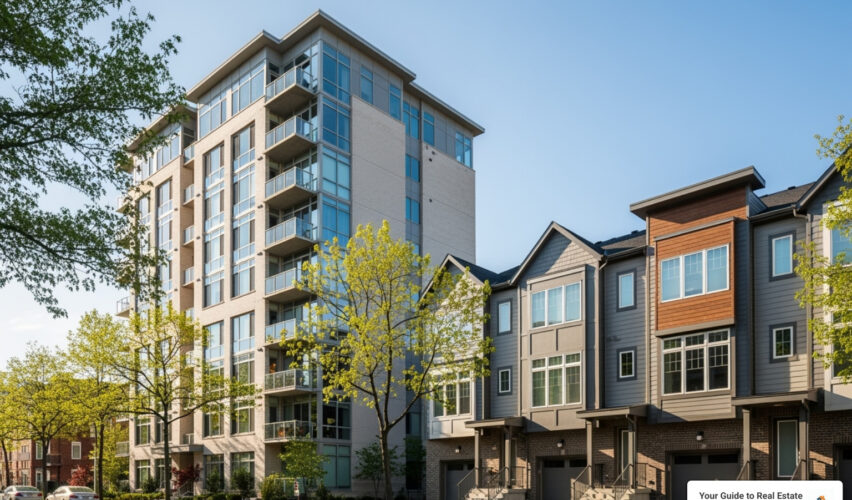
Why Understanding Condo vs. Townhouse Differences Matters for Homebuyers
What is the difference between a condo and a townhouse? This question comes up constantly for homebuyers exploring alternatives to single-family homes. The answer isn’t just about architecture – it’s about ownership structure, financial responsibilities, and lifestyle.
Key Differences at a Glance:
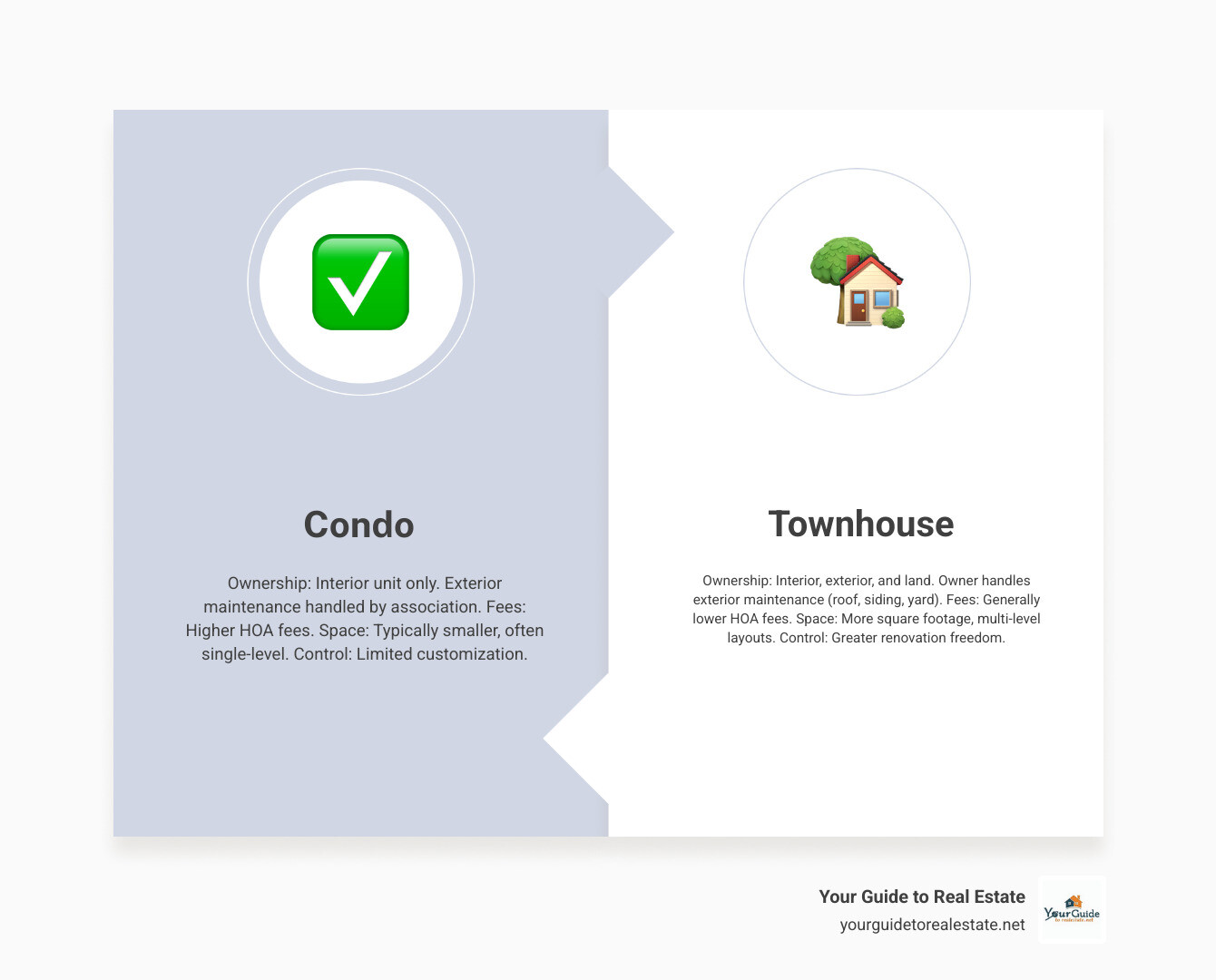
- Ownership: Condos = interior unit only; Townhouses = interior, exterior, and land
- Maintenance: Condos = association handles exterior; Townhouses = owner handles everything
- Fees: Condos = higher HOA fees; Townhouses = lower HOA fees
- Space: Condos = typically smaller; Townhouses = more square footage
- Control: Condos = limited customization; Townhouses = more renovation freedom
Both options offer affordability and convenience compared to detached homes. Nationally, the average condo sells for $353,900, while townhouses typically cost more than condos but less than single-family homes.
The confusion often stems from focusing on what these homes look like rather than how they’re legally structured. As one real estate expert noted: “Condominium is a form of ownership, not strictly a building type.”
Whether you’re a first-time buyer seeking low maintenance or a family wanting more space and control, understanding these differences will help you make the right choice for your situation.
Essential what is the difference between a condo and a townhouse terms:
The Core Difference: Ownership and Governance
When you’re exploring what is the difference between a condo and a townhouse, the most important distinction isn’t what they look like—it’s what you actually own. This fundamental difference shapes everything from your monthly expenses to whether you can plant tulips in your front yard.
Think of it this way: buying a condo is like owning an apartment, while buying a townhouse is more like owning a house that happens to share walls with neighbors. The legal structures governing these properties are completely different, and understanding this will save you from surprises down the road.
Both types of homes typically come with community rules outlined in Covenants, Conditions, and Restrictions (CC&Rs). These documents spell out everything from pet policies to paint colors. But how these rules are enforced—and what they cover—varies dramatically between condos and townhouses.

What Do You Actually Own in a Condo?
When you buy a condo, you’re purchasing what’s called “walls-in” ownership. Imagine drawing a line around the inside perimeter of your unit—everything inside that line is yours. The paint on your walls, your kitchen cabinets, your flooring, and your appliances all belong to you.
But here’s where it gets interesting: you don’t own the actual walls, the roof above you, or the ground beneath your feet. Instead, you own a shared interest in common elements alongside every other unit owner in the building.
These common areas include the lobbies, elevators, pools, fitness centers, and even the building’s exterior. It’s like being part of a club where everyone owns a piece of the clubhouse. Your Condo Association—made up of all the unit owners—manages these shared spaces and makes decisions about repairs, improvements, and rules.
This arrangement creates the famous “lock-and-leave” lifestyle that many condo owners love. When the roof needs replacing or the elevator breaks down, it’s not your personal headache to solve. For more details about this ownership structure, check out our guide on What is a Condo?.
What Do You Own with a Townhouse?
Townhouse ownership feels much more like owning a traditional house. When you buy a townhouse, you typically get fee simple ownership, which means you own the interior and exterior structure plus the land the unit sits on.
This includes your roof, your exterior walls, and usually a private yard or patio. You have your own front door, and many townhouses come with private garages or parking spaces. While you might share one or two walls with neighbors, the building itself is yours to maintain and modify (within HOA guidelines).
The trade-off? You’re responsible for everything. When your roof starts leaking or your siding needs painting, that’s coming out of your pocket. But you also have much more freedom to make changes to your property. Our Townhouse vs. Condo comparison dives deeper into these ownership differences.
Most townhouse communities still have a Homeowners Association (HOA), but their role is typically more limited than in condo communities.
Condo Associations vs. Townhouse HOAs
Both condos and townhouses usually involve some form of collective governance and rules managed by a board of directors. However, their scope and impact on your daily life can be dramatically different.
Condo Associations have broad authority because they manage the entire building. They handle major decisions like roof replacements, elevator maintenance, and building-wide insurance. They also enforce detailed rules about everything from pet restrictions to decoration policies. Some associations even regulate the types of window treatments you can install or whether you can have plants on your balcony.
Townhouse HOAs typically have a narrower focus. They might manage community amenities like pools or playgrounds, maintain common landscaping, and enforce architectural standards. But since you own your building’s exterior, you usually have more freedom to make changes—though you’ll still need HOA approval for major modifications.
The rule enforcement process varies between communities, but both types can impose fines for violations. Before buying either property type, read the meeting minutes from the past year. You’ll quickly learn whether the board focuses on maintaining property values or gets bogged down in disputes over holiday decorations.
Understanding these governance structures is crucial for answering what is the difference between a condo and a townhouse. For more insights into HOA operations, explore our guide on 9 Things You Need To Know About Homeowners’ Associations and learn how associations protect the community with Condo Association Insurance.
Comparing the Costs: Purchase Price, Fees, and Maintenance
Money talks, and when you’re deciding what is the difference between a condo and a townhouse, your wallet definitely has a voice in the conversation. The financial picture goes way beyond just the sticker price – you’re looking at upfront costs, those monthly fees that never seem to go away, and the ongoing reality of keeping your home in good shape.

Let’s break down the real costs so you can plan smartly for your future.
Upfront Purchase Price and Financing
Here’s some good news: both condos and townhouses typically cost less than single-family homes, making them great stepping stones into homeownership. Condos often shine as starter homes for younger buyers or anyone wanting to get into the market without breaking the bank. According to the National Association of Realtors, the average condo sells for $353,900 nationally.
Townhouses typically fall somewhere in the middle – more expensive than condos but still more affordable than detached homes. It’s like getting more bang for your buck while staying within a reasonable budget.
But here’s where things get interesting: financing a condo can be trickier than financing a townhouse. Lenders don’t just look at your credit score and income – they also scrutinize the condo association’s financial health. If too many units are rentals or the association’s finances look shaky, your loan application might hit some bumps. Some lenders even charge slightly higher interest rates for condos.
Government-backed loans add another layer of complexity. Both FHA Loan Requirements and other programs require specific community approvals, so it’s worth checking those approved lists early in your search.
Ongoing Fees: What is the difference between a condo and a townhouse?
This is where what is the difference between a condo and a townhouse really shows up in your monthly budget. Both come with ongoing fees, but the amounts and what you get for your money can vary dramatically.
Condo fees are almost always higher, and there’s a good reason why. Your monthly condo fee is like having a full-service package that covers exterior maintenance, landscaping, common area upkeep, building insurance, and often utilities like water and trash removal. Some luxury condos even throw in internet and cable.
You’re also paying for those nice amenities – the pool, gym, security, and that fancy lobby didn’t maintain themselves. Plus, part of your fee goes into a reserve fund for future big-ticket items like roof replacements or elevator upgrades. Our guide on How Much is Condo Insurance? can help you understand what coverage you’ll still need personally.
Townhouse HOA fees tend to be much lower because you’re handling most of your own maintenance. These fees typically cover shared amenities, common landscaping, and maybe some utilities for community irrigation or shared services.
Here’s the catch nobody likes to talk about: special assessments. Even with reserve funds, both condos and townhouses can hit you with extra fees when major repairs exceed what’s saved up. Always review the association’s financial statements before buying – your future wallet will thank you.
Maintenance and Upkeep Responsibilities
The “lock-and-leave” lifestyle is probably condo living’s biggest selling point. When you own a condo, your maintenance worries pretty much end at your front door. The association handles everything outside – roofing, exterior painting, snow removal, landscaping, you name it. It’s perfect for busy professionals, frequent travelers, or anyone who’d rather spend weekends doing literally anything besides home maintenance.
Townhouse ownership flips this responsibility back to you. While you might still have an HOA managing some community features, you’re the one responsible for your roof, siding, windows, and private yard. When something breaks, the repair bill lands in your mailbox, not the association’s.
This means townhouse owners need to budget for bigger expenses and handle tasks like Water Softener Maintenance themselves. The upside? You control the quality and timing of repairs. Want to upgrade your roof early or choose premium siding? That’s your call.
The trade-off is classic: condos offer convenience and predictable monthly costs, while townhouses give you more control but require more personal responsibility. Understanding this balance is crucial when deciding what is the difference between a condo and a townhouse for your specific situation.
What is the difference between a condo and a townhouse in lifestyle and livability?
The choice between a condo and a townhouse profoundly impacts your daily life. It’s not just about what you own or how much you pay; it’s about the kind of space you inhabit, the amenities you enjoy, where you live, and how much freedom you have to make it truly yours.
Space, Layout, and Location
When exploring what is the difference between a condo and a townhouse, the physical space and location often tell the story best. Picture yourself walking into each type of home – the experience is quite different.
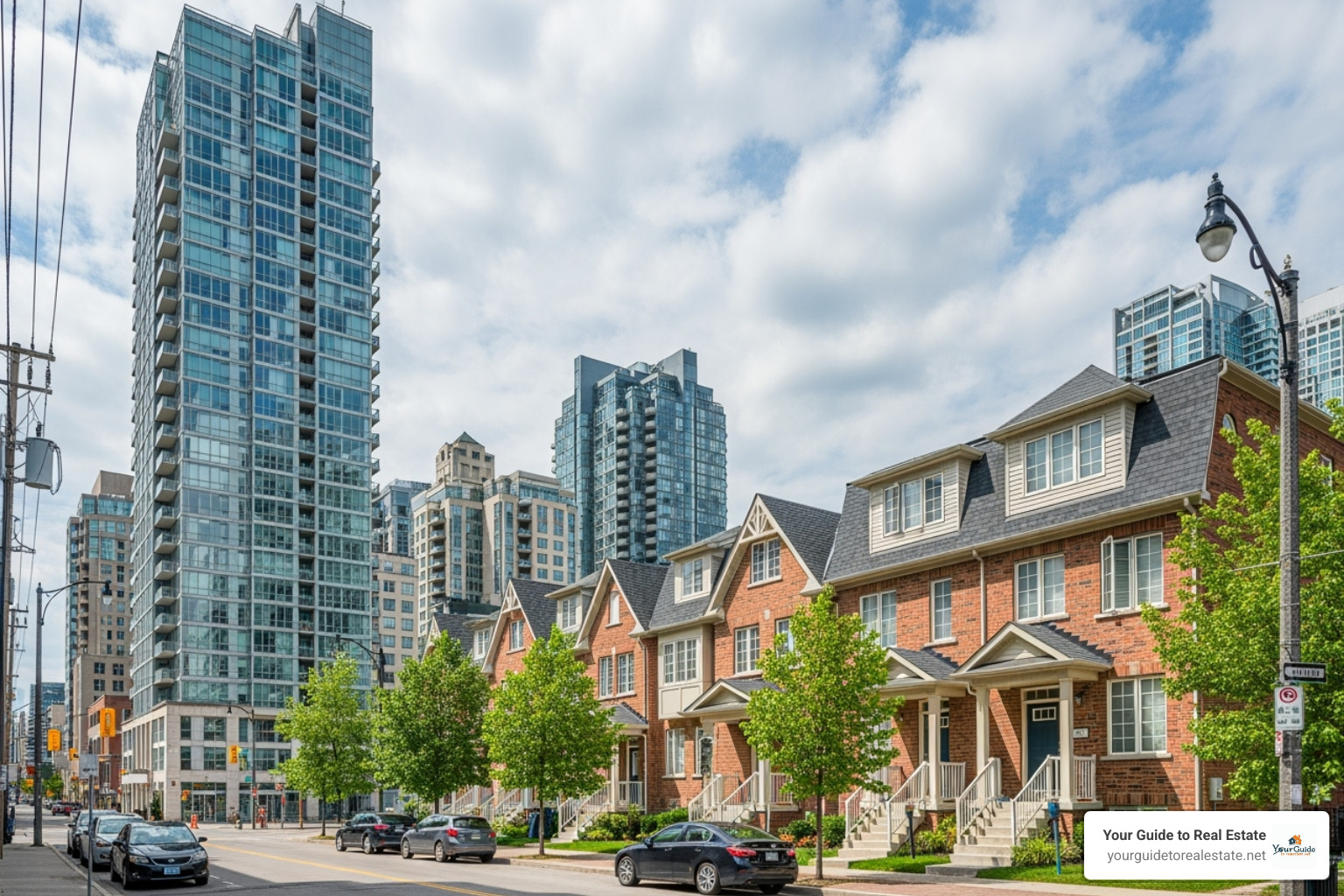
Condos typically offer single-level living in multi-story buildings. This layout works beautifully for individuals, couples, or anyone who prefers everything on one floor. At an average of 1,200 square feet, condos make efficient use of space, though you’ll generally have less room to spread out than in a townhouse.
The real advantage of condos often lies in their prime urban locations. You’ll find them in busy city centers where you can walk to work, grab dinner, or catch public transportation. That convenience comes with trade-offs – namely, less private outdoor space and the energy of city life right outside your windows.
Townhouses tell a different spatial story. These multi-level homes create natural separation between your daily activities and private retreats. Imagine cooking dinner on the main floor while the kids do homework upstairs – that vertical layout, ranging from 1,300 to 1,500 square feet, gives families breathing room.
What many townhouse owners treasure most is their private outdoor space. Whether it’s a small patio perfect for morning coffee or a yard where you can garden, this personal slice of the outdoors is something condos rarely offer. Townhouses appear in both urban neighborhoods (think charming historic rows) and suburban communities, giving you more location flexibility. When planning your ideal living space, considering different layouts like a Bedroom Floor Plan can help you visualize how these structures might work for your lifestyle.
Amenities and Community Life
The amenities question often becomes a major factor when people weigh what is the difference between a condo and a townhouse. It’s really about whether you prefer shared luxury or private convenience.
Condo living often feels like having a built-in resort. Walk downstairs to your building’s gym instead of paying for a membership. Take a swim in the pool without worrying about maintenance. Enjoy the security of a front desk or concierge service. These shared amenities, covered by your condo fees, can significantly improve your lifestyle while fostering natural community interactions around the pool or in the lobby.
Townhouse communities take a different approach to amenities. While you might find a community pool or park, the offerings are typically more modest. Instead, townhouses compensate with practical perks like private garages (no more circling the block for parking!) and dedicated outdoor space where you can barbecue without reserving a community area.
The community atmosphere differs too. Condo living often creates more structured social opportunities – think organized events in shared spaces. Townhouse communities tend toward neighborly interactions – chatting over the fence or kids playing together in the common areas.
Flexibility for Customization and Renovations
Your ability to personalize your home represents one of the starkest contrasts in what is the difference between a condo and a townhouse. This difference can make or break your long-term happiness with your choice.
Townhouse owners enjoy significantly more renovation freedom. Since you own both the structure and the land, you can typically repaint your exterior, landscape your yard, or make interior structural changes (within local building codes). Your HOA might have some guidelines, but they’re usually less restrictive than condo boards.
Want to install new lighting or upgrade electrical work? Projects like learning How to Wire a Light Switch become straightforward home improvements rather than board approval battles.
Condo owners face more customization constraints. You only own the “walls-in,” so exterior changes are typically off-limits. Even interior renovations affecting building systems often require condo board approval. One owner joked, “I had to get permission to install a dishwasher – apparently, it might affect the building’s plumbing capacity.”
While these restrictions can frustrate DIY enthusiasts, they also ensure building consistency and protect everyone’s investment. The trade-off is clear: less personal control for more shared responsibility and community standards.
Condo vs. Townhouse: Which Is the Better Investment?
When you’re weighing your options, it’s natural to think about what is the difference between a condo and a townhouse from an investment perspective. After all, for most of us, our home represents our largest financial asset. Both property types can build equity and wealth over time, but they each come with distinct advantages and challenges that could impact your long-term returns.

The investment potential really depends on your local market, your timeline, and what you plan to do with the property. Let’s break down the key factors that could influence your decision.
Resale Value and Market Appreciation
Here’s where townhouses often have an edge. Townhouses typically appreciate faster than condos, and there’s a straightforward reason for this: you own the land underneath your home. Land is a finite resource, and that ownership stake tends to drive stronger appreciation over time.
Townhouses also appeal to a broader pool of buyers. They attract first-time homebuyers who want more space than a condo offers, growing families who need multiple levels, and even some single-family home buyers who appreciate the lower maintenance responsibilities. This wider buyer appeal can translate to better resale prospects when it’s time to sell.
Condos face different market dynamics. While they absolutely do appreciate in value, they tend to be more sensitive to economic shifts and local market conditions. The financial health of your condo association plays a huge role in your unit’s value too. A well-managed association with healthy reserve funds can actually boost your property value, while an association struggling with deferred maintenance or frequent special assessments can drag it down.
When we help clients understand property values through a Competitive Market Analysis Real Estate, we always dig deep into the HOA’s financial standing for condos. It’s that important to your investment’s success. Our guide on Real Estate Valuation can help you understand these factors better.
Rental Potential and Restrictions
If you’re thinking about renting out your property someday – maybe you’ll relocate for work or want to keep it as an investment – the rules around rentals become crucial.
Condo associations often impose strict rental restrictions that can really limit your options. Many have rental caps, meaning only a certain percentage of units in the building can be rented out at any given time. Some require owner-occupancy ratios to stay above specific thresholds to maintain their mortgage eligibility. These rules exist for good reasons – they help maintain property values and ensure a stable community – but they can definitely complicate your investment plans.
Getting on a rental waiting list in a condo building isn’t unheard of, and some associations require extensive vetting of potential tenants. While this can mean higher-quality renters, it also means less flexibility for you as an owner.
Townhouses generally offer more rental flexibility. While your HOA might still have some guidelines about rentals, they’re typically much less restrictive than what you’ll find in condo communities. This freedom can make townhouses more attractive for investors who want to keep their options open.
For those serious about property investment, exploring financing options like DSCR Loans Complete Guide can be valuable, especially since these investment-focused loans may have different criteria depending on whether you’re buying a condo or townhouse. Our comprehensive Property Investment guide dives deeper into maximizing your real estate returns.
The bottom line? Both condos and townhouses can be solid investments, but townhouses often edge ahead in terms of appreciation and rental flexibility, while condos might offer easier entry points and lower maintenance headaches.
Frequently Asked Questions about Condos and Townhouses
These are some of the most common questions we hear from homebuyers trying to understand what is the difference between a condo and a townhouse. Let’s clear up the confusion once and for all.
Is a row house the same as a townhouse?
This question comes up constantly, and honestly, it’s no wonder people are confused! While the terms get tossed around interchangeably, there are some subtle but important differences.
Row houses are typically part of a continuous block of nearly identical homes that share side walls. Picture those charming, historic streets you might find in older neighborhoods – that’s classic row house territory. These homes tend to be more compact and are almost always found in denser urban settings.
Townhouses share walls too, but they offer more variety in style, size, and amenities. You’ll find townhouses in both urban and suburban environments, and they’re more likely to come with perks like private garages or small yard spaces that row houses often lack.
Think of it this way: all row houses are technically townhouses, but not all townhouses are row houses. Row houses are just one specific style within the broader townhouse category.
Can a townhouse be a condo?
Absolutely! This is where things get really interesting, and it perfectly illustrates why understanding what is the difference between a condo and a townhouse matters so much.
You can have a “condo townhouse” – a property that looks like a townhouse but operates under condominium ownership rules. Condominium describes the legal ownership structure, not the building style.
In a condo townhouse, you get the multi-level living and private entrance that makes townhouses appealing. But legally, you only own the interior space. The exterior structure, roof, and land are common elements owned collectively by all residents through the association.
This means you’ll pay those higher condo-style maintenance fees we discussed earlier, even though your home has the townhouse look and feel. It’s like getting the best of both worlds – or the most confusing of both worlds, depending on how you look at it! Always ask about the ownership structure when you’re house hunting, because it dramatically affects your financial responsibilities.
Are condo fees and HOA fees tax-deductible?
Here’s the short answer most homeowners need to hear: if it’s your primary residence, no, these fees aren’t tax-deductible. The IRS considers condo and HOA fees personal living expenses, just like your mortgage payment or grocery bill.
But there’s an important exception that makes this worth discussing. If you own your condo or townhouse as a rental property or investment property, then yes – those fees typically become deductible business expenses. You can write them off against your rental income because they’re legitimate costs of operating your investment.
There’s also a small possibility that if you use part of your primary residence for a qualifying home office, a portion of your HOA fees might be deductible. But tax laws are tricky and change frequently.
Our advice? Always consult with a qualified tax professional about your specific situation. They can help you understand what applies to your circumstances and ensure you’re not missing any legitimate deductions or accidentally claiming ones you shouldn’t.
Conclusion: Making Your Final Decision
Choosing between a condo and a townhouse isn’t just about picking a place to live – it’s about selecting a lifestyle that fits your unique needs and dreams. After exploring what is the difference between a condo and a townhouse in detail, you now have the knowledge to make this important decision with confidence.
Think about your ideal weekend. Are you someone who wants to grab your keys and head out for a spontaneous trip, knowing your home’s exterior maintenance is handled? A condo’s lock-and-leave lifestyle might be perfect. Or do you picture yourself tending to your own garden, choosing your exterior paint color, and having the freedom to renovate as you please? A townhouse could be your answer.
The financial picture matters too. If you’re a first-time buyer looking for lower upfront costs and don’t mind higher monthly fees for extensive amenities, condos often make sense. But if you prefer lower ongoing fees and don’t mind taking on maintenance responsibilities for potentially better long-term appreciation, townhouses deserve serious consideration.
Here’s how these property types stack up across the key factors we’ve discussed:
| Feature | Condo | Townhouse |
|---|---|---|
| Ownership | Interior unit (“walls-in”); Shared interest in common areas | Interior, exterior, and land (fee simple); Shared walls with neighbors |
| Cost (Purchase) | Generally lower than townhouses/single-family homes | Generally more than condos, less than single-family homes |
| Cost (Fees) | Higher monthly fees (cover extensive exterior/common area care, amenities) | Lower monthly fees (cover common grounds, some shared amenities) |
| Maintenance | Minimal personal responsibility (interior only); HOA handles exterior | Significant personal responsibility (exterior, roof, yard) |
| Space/Layout | Often single-level; Typically smaller square footage | Multi-level; Generally larger square footage |
| Amenities | Extensive (pools, gyms, concierge, security) | Fewer shared amenities; May have private garage/yard |
| Customization | Limited (interior only, often requires board approval) | More flexibility (interior & exterior, within HOA guidelines) |
| Privacy | Less (shared walls, common hallways, closer neighbors) | More (private entrance, often small yard, vertical separation) |
| Appreciation | Slower, more sensitive to market and HOA health | Faster, often due to land ownership |
There’s no universally “right” choice – only what’s right for you. Your decision should align with your current financial situation, your tolerance for maintenance tasks, your space needs, and your long-term goals. A busy professional might thrive in a condo with a gym and concierge service, while a growing family might prefer the extra space and yard of a townhouse.
At Your Guide to Real Estate, we understand that navigating these decisions can feel overwhelming. That’s exactly why we created our proven framework to guide you through every step of the real estate process with confidence and clarity. Whether you’re exploring options in Dallas, Oklahoma City, or anywhere across the United States, having the right professional support makes all the difference.
The key is taking your time, asking the right questions, and working with someone who truly understands your needs. For help connecting with the right professional to guide your journey, learn more about Choosing a Real Estate Broker.
Your perfect home is out there – and now you have the knowledge to find it.