Why Understanding Home Inspection Costs Matters for Every Homebuyer
The cost of home inspection averages $343 nationally, with most homeowners paying between $296 and $424. In Texas specifically, you can expect to pay around $446 on average, with costs ranging from $340 to $461.
Quick Cost Breakdown:
- National Average: $343 (range: $296-$424)
- Texas Average: $446 (range: $340-$461)
- Cost per Square Foot: $0.18-$0.25
- Inspection Duration: 2-4 hours
- Report Delivery: 24-48 hours
Here’s the reality: skipping a home inspection could cost you up to $18,000 in hidden repairs. That $400 inspection fee suddenly looks like the bargain it truly is.
A home inspection gives you peace of mind and powerful negotiation leverage. It’s your chance to find potential problems before you own them – from faulty wiring and plumbing leaks to foundation issues and roof damage.
Most buyers pay for their own inspection, and it’s typically not included in closing costs. But here’s what many don’t realize: you can often negotiate with sellers to cover this expense, especially in competitive markets.
The inspection process is straightforward. You schedule it after your offer is accepted, attend the 2-4 hour examination, and receive a detailed report within 24-48 hours. This report becomes your roadmap for negotiations and future maintenance planning.
Cost of home inspection glossary:
- 4 surprising factors that can affect a home appraisal
- how much does an appraisal cost
- real estate valuation
Breaking Down the Cost of a Home Inspection
When you’re buying a home, every expense matters – and the cost of home inspection is one investment that pays for itself many times over. Think of it as your financial safety net, protecting you from costly surprises down the road.
Let’s explore what you can realistically expect to pay and why these costs vary so much from home to home.

National and Texas Average Costs
Across the United States, homebuyers typically pay around $343 for a home inspection, with most falling between $296 and $424. But here’s where it gets interesting – if you’re buying in Texas, you’ll likely pay a bit more.
The cost of home inspection in Texas averages $446, with prices typically ranging from $340 to $461. Why the higher price tag? Texas has unique challenges like expansive clay soil, extreme weather conditions, and specific building codes that require experienced inspectors with local expertise.
When you break it down by square footage, you’re looking at $0.18 to $0.25 per square foot. So that cozy 1,500-square-foot starter home might cost around $300-$375 to inspect, while a sprawling 3,000-square-foot family home could run $540-$750.
Location within Texas matters too. In major cities like Houston, you might pay $375-$525 due to higher demand and living costs. San Antonio buyers often see prices between $350-$500. Even smaller Texas towns have their own pricing dynamics based on local market conditions and inspector availability.
Key Factors Influencing the Cost of a Home Inspection
Several key factors determine what you’ll actually pay, and understanding them helps you budget smartly and avoid sticker shock.
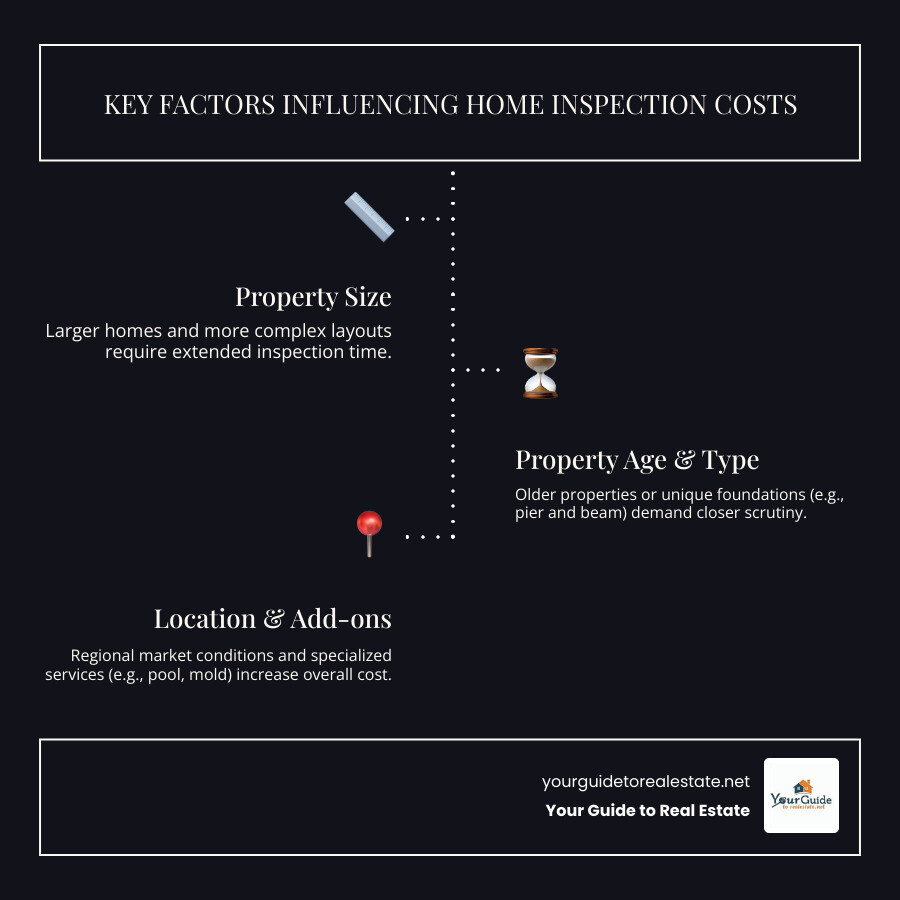
Property size is the biggest cost driver. Larger homes simply take more time to inspect thoroughly. A 1,000-square-foot condo might cost $250-$350, while a 4,000-square-foot home could easily run $600 or more. Many inspectors use tiered pricing – for example, homes under 1,500 square feet might start at $385, while homes over 5,000 square feet could cost $785 or more.
Property age significantly impacts inspection complexity and cost. That charming 1920s bungalow with original wiring and plumbing will require more detailed examination than a five-year-old home with modern systems. Older homes often have unique features, potential code violations, or deferred maintenance that demands extra inspector time and expertise.
Your specific location affects pricing beyond just the Texas average. Areas prone to foundation issues due to clay soil, flood-prone regions like parts of Houston, or neighborhoods with unique architectural styles may require specialized knowledge that commands higher fees.
Foundation type can add to your costs too. If your potential home has a pier and beam foundation – common in older Texas homes – expect to pay an additional $95 or so. These foundations require inspectors to crawl into tight spaces and examine more complex structural elements compared to standard slab foundations.
Additional structures mean additional costs. That backyard pool you’re excited about? Plan on an extra $80 for pool inspection. Hot tub? Around $55 more. Detached garage, guest house, or workshop? Each requires separate attention and expertise.
Properties like duplexes or other multi-unit buildings naturally cost more due to their complexity. You’re essentially getting multiple inspections rolled into one comprehensive service.
The bottom line? While the cost of home inspection varies based on these factors, it’s still one of the smartest investments you’ll make in your home-buying journey.
What’s Included in a Standard Inspection?
When you invest in a home inspection, you’re getting much more than a quick walkthrough. A standard home inspection is a thorough, visual examination of your potential new home’s accessible systems and components. Think of it as a comprehensive health check-up for the house you’re about to call home.
Your inspector will use non-invasive techniques to assess the property. This means they won’t be tearing down walls, digging holes in your yard, or causing any damage. Instead, they’ll carefully examine what’s visible and accessible to identify significant defects or safety concerns that could impact your buying decision or lead to expensive surprises later.
The inspector’s role is to be your advocate – providing you with an objective, professional assessment of the home’s condition. They’re trained to spot issues that untrained eyes might miss, from subtle signs of water damage to electrical hazards that could put your family at risk.
In Texas, all home inspections must follow strict Texas Real Estate Commission (TREC) guidelines. These standards ensure that every inspection is thorough, consistent, and covers all the essential components that matter most to your safety and investment.
Core Components Covered
During your standard inspection, the certified professional will examine the home from top to bottom. Here’s what gets the full treatment:
Roofing gets careful attention, with inspectors checking for leaks, damaged shingles, flashing problems, and proper drainage. They’ll assess the overall integrity and give you an idea of the roof’s remaining lifespan – crucial information when budgeting for future expenses.
The exterior evaluation covers siding, trim, windows, doors, driveways, walkways, and the visible foundation. Your inspector will pay special attention to grading and drainage to ensure water flows away from the house rather than pooling around your foundation.
Structural components receive thorough scrutiny, especially the foundation, framing, and visible structural elements. This is particularly important in Texas, where expansive clay soils can cause foundation movement and structural issues over time.
Inside the home, every interior space gets examined. Walls, ceilings, floors, doors, windows, and visible insulation are all checked for signs of water intrusion, mold, or structural problems that could affect your daily life.
Electrical systems are carefully evaluated for safety and code compliance. The inspector will examine the electrical panel, wiring, outlets, switches, and fixtures. Faulty wiring isn’t just inconvenient – it’s a serious safety hazard that needs immediate attention.
Plumbing systems get a comprehensive look, including visible pipes, fixtures, water heaters, and drainage systems. Your inspector will test for leaks, check water pressure, and ensure everything functions as it should.
Your HVAC systems – heating, ventilation, and air conditioning – are tested for functionality, age, and efficiency. This includes checking thermostats, ductwork, and filters to ensure your family stays comfortable year-round.
Insulation and ventilation in attics, crawl spaces, and other areas are assessed to ensure energy efficiency and prevent moisture problems that could lead to mold or structural damage.
Finally, major built-in appliances like ovens, dishwashers, and garbage disposals typically get a basic functionality check to ensure they’re working properly.
Specialized Inspections and Add-On Services
Sometimes a standard inspection isn’t enough to give you complete peace of mind. Depending on your home’s age, location, or specific concerns you might have, specialized inspections can provide deeper insights – though they will add to your overall cost of home inspection.
Wood-destroying insect inspections are particularly valuable in Texas, where termites thrive in our warm climate. These inspections typically cost between $75-$150 and can save you thousands in termite damage repairs.
Mold testing becomes important if you notice musty odors, see visible mold, or know the home has had water damage. Professional mold testing can add $100-$200 to your inspection costs, with more comprehensive testing ranging from $300-$800.
If you have concerns about indoor air quality beyond mold, air quality testing can identify other pollutants for an additional cost of up to $200.
Sewer scope inspections involve sending a camera down the main sewer line to check for blockages, cracks, or tree root intrusion. At around $200-$350, this service can save you from major headaches and expensive repairs after you move in.
For homes with pools or spas, a specialized pool inspection ensures all equipment functions correctly and safely. These typically cost between $75-$125.
Properties with septic systems need specialized attention, as these systems require different expertise than standard municipal connections. Septic inspections generally cost $150-$300.
Radon testing checks for this colorless, odorless gas that can cause lung cancer. Testing typically costs $100-$200 for basic screening.
Homes with private wells benefit from well inspections that check the pump, pressure tank, and water quality, generally costing between $300-$500.
For older homes, asbestos and lead paint testing becomes particularly relevant. Asbestos testing can add $100-$250, while lead paint inspections typically cost $340-$500.
Note: Service availability and pricing may vary. Contact Your Guide to Real Estate for details about specific inspection services in your area.
The Inspection Process & Key Distinctions
Navigating the home inspection process doesn’t have to feel overwhelming, especially when you understand what to expect at each step. Think of it as getting to know your potential new home before you commit to the relationship. From scheduling your inspection to understanding what happens after you receive the report, each stage is designed to give you the information you need to make a confident decision.
If you’re new to home buying, our First-Time Homebuyers Toolkit: Everything You Need to Know Before You Buy walks you through every step of the process, including how inspections fit into your overall timeline.
Scheduling your inspection typically happens right after your offer is accepted. You’ll want to book this quickly since most purchase contracts give you a limited window (usually 7-10 days) to complete your inspection and decide whether to move forward.
Attending the inspection is highly recommended, even though it’s not required. This gives you a chance to ask questions, understand any issues firsthand, and get a feel for your potential new home’s maintenance needs. Most inspectors welcome your presence and will explain their findings as they work.
Receiving the report usually happens within 24-48 hours, and this document becomes your roadmap for negotiations. You can use it to request repairs, ask for credits, or even decide to walk away if major issues are finded.
This inspection report gives you powerful negotiation leverage. Maybe the HVAC system needs attention, or there are some electrical issues that need addressing. These findings can lead to meaningful conversations with the seller about who handles what repairs.
Who Pays for the Home Inspection?
Here’s the straightforward answer: the buyer typically pays for the home inspection. This is an out-of-pocket expense that you’ll handle directly with the inspector, usually on the day of service. The cost of home inspection isn’t rolled into your closing costs – it’s separate from all those loan-related fees you’ll see at the closing table.
But here’s where things can get interesting. Real estate is all about negotiation, and creative buyers sometimes find ways to get help with inspection costs. In competitive markets, sellers might offer to pay for inspections to make their property more attractive. Or if you find significant issues during the inspection, you might negotiate for the seller to cover the inspection cost as part of a broader repair agreement.
Some savvy sellers even conduct pre-listing inspections themselves. They fix issues upfront and share the report with potential buyers, which can speed up the process and build confidence in their property.
The key thing to remember? Negotiation possibilities exist, especially when you’re working with an experienced agent who knows how to structure deals creatively. Sometimes seller concessions can cover inspection costs, particularly in situations where the seller is motivated to close quickly.
Home Inspection vs. Home Appraisal
Let’s clear up one of the biggest sources of confusion in home buying. While both inspections and appraisals involve someone examining your potential new home, they serve completely different purposes.
| Feature | Home Inspection | Home Appraisal |
|---|---|---|
| Primary Focus | Condition-focused | Value-focused |
| Purpose | To identify significant defects or safety concerns. | To determine the home’s fair market value. |
| Who It’s For | The buyer (to inform their purchase decision). | The lender (to ensure the property value supports the loan). |
| What It Covers | Structural, mechanical, electrical, plumbing systems, roof, foundation, interior, exterior. | Property size, features, condition, recent comparable sales, local market trends. |
| Outcome | A detailed report outlining issues and recommendations. | An appraisal report stating the property’s estimated value. |
| Negotiation Role | Provides leverage for repair requests or price adjustments. | Can impact loan approval if the appraisal is lower than the offer price. |
Think of it this way: the home inspection tells you what’s wrong with the house, while the appraisal tells you what it’s worth. The inspection is your detective work to uncover hidden problems. The appraisal is the bank’s way of making sure they’re not lending more money than the house is actually worth.
Your inspection report becomes ammunition for negotiating repairs or price adjustments. An appraisal, on the other hand, can make or break your financing if it comes in lower than your offer price.
Curious about appraisal costs? Check out our detailed guide on How Much Does an Appraisal Cost? to understand this other important piece of the home-buying puzzle.
How Long Does an Inspection Take?
Plan to set aside 2 to 4 hours for a standard inspection. This gives your inspector enough time to thoroughly examine every accessible system and component without rushing through important details.
Larger homes naturally take longer to inspect. A cozy 1,200 square foot starter home might be done in 2 hours, while a sprawling 4,000 square foot property could easily take 4 hours or more. Your inspector needs to check every room, every system, and every accessible area.
Older homes often require extra time too. That charming 1950s bungalow might have quirky electrical work or plumbing that needs closer examination. Homes with obvious maintenance issues will also slow things down as the inspector documents each concern.
Specialized inspections add significant time to your day. A termite inspection might add 30 minutes to 3 hours, depending on the property size and accessibility. Mold testing can take 1 to 6 hours. If you’ve requested a radon test, that requires a full 48 hours of monitoring equipment in the home.
The good news? Report delivery happens quickly. Most inspectors will have your detailed report ready within 24 to 48 hours, and some even deliver same-day results. This quick turnaround is crucial since you typically have a limited window during your option period to review findings and decide your next moves.
Saving Money & The Risks of Skipping an Inspection
Let’s be honest – buying a home comes with a long list of expenses, and it’s natural to look for ways to cut costs. But here’s the thing about the cost of home inspection: trying to save money by skipping it is like refusing to check your parachute before jumping out of a plane. You might save a few hundred dollars upfront, but the potential consequences can be devastating.
That inspection fee isn’t really an expense – it’s an investment in your peace of mind and financial security. Think of it as buying yourself the power to make an informed decision about what’s likely the biggest purchase of your life.

How to Save on the Cost of a Home Inspection
While we never recommend cutting corners on quality, there are smart ways to manage your inspection budget without sacrificing thoroughness.
Bundling services is often your best bet for savings. Many inspectors offer package deals when you combine multiple services. For instance, adding a termite inspection to your general home inspection might cost you an extra $90, but ordering it separately could run $160. The same goes for sewer scopes, radon testing, or mold inspections.
Shopping around is always wise, but don’t just chase the lowest price. Get quotes from at least three qualified inspectors and compare what’s included. Sometimes a slightly higher fee includes services that others charge extra for. Look at their sample reports too – a thorough, detailed report is worth paying a bit more for.
Timing can work in your favor during slower seasons. While you can’t always control when you’re buying, if you have flexibility, scheduling during the inspector’s off-peak periods might open doors to better pricing or promotional offers.
Don’t be shy about asking for discounts. Many inspectors offer breaks for first-time homebuyers, military personnel, or other groups. The worst they can say is no, but you might be pleasantly surprised.
Negotiating with the seller can also help offset costs. In some markets, sellers will pay for inspections upfront to streamline the process. If your inspection uncovers issues, you might ask the seller to contribute to inspection costs as part of repair negotiations.
The High Price of Skipping an Inspection
Here’s where we need to get serious for a moment. Skipping a home inspection to save money is like playing Russian roulette with your financial future. The data is sobering: homeowners who skip inspections can face up to $18,000 in hidden repair costs that could have been identified beforehand.
Hidden repair costs are the biggest threat. That charming older home might have a roof that’s one storm away from leaking, or plumbing that’s been patched together with hope and prayer. When these systems fail – and they will – you’re looking at emergency repair bills that make that $400 inspection fee look like pocket change.
Safety hazards are even more serious than the money. Faulty wiring can cause fires. Gas leaks can be deadly. Structural problems can literally bring the house down around you. An inspector’s trained eye can spot these dangers before they become tragedies.
Structural defects are particularly expensive nightmares. In Texas, our expansive clay soil creates foundation challenges that can cost tens of thousands to fix. What looks like a small crack in the wall might signal major structural movement that requires extensive repairs.
Plumbing issues can flood your home and your budget. From corroded pipes ready to burst to sewer lines blocked by tree roots, these problems always seem to happen at the worst possible moment – usually when you’re least prepared financially.
Perhaps most frustrating is the loss of negotiation power. When you skip the inspection, you’re essentially telling the seller you’ll accept whatever problems exist. That’s like playing poker with your cards face up on the table. Research shows that 50% of buyers use inspection findings to negotiate better deals, and 45% of homeowners later regret not addressing issues they didn’t know about initially.
Are There Hidden Fees?
Most reputable inspectors are upfront about their pricing, but it’s smart to ask about potential extras that could bump up your final bill.
Credit card convenience fees are becoming common – some inspectors charge around 3% for card payments. If you want to avoid this, ask about paying by check or bank transfer instead.
Re-inspection fees might apply if you want the inspector to return after the seller makes repairs. This second visit is usually much shorter and less expensive than the original inspection, but it’s an additional cost to consider.
Travel surcharges can apply for properties in remote areas. If your dream home is way out in the country, the inspector might add a fee to cover their travel time and fuel costs.
Report delivery fees are rare but worth asking about. Most inspectors provide digital reports at no extra charge, but some might charge for printed copies or expedited delivery.
The key is getting a clear, itemized quote upfront. A good inspector will be transparent about all potential charges, so you can budget accordingly and avoid any unpleasant surprises when it’s time to pay.
Frequently Asked Questions about Home Inspections
Buying a home can feel like learning a new language, especially when it comes to inspections. We’ve been helping homebuyers steer this process for years, and we hear the same questions over and over again. Let’s clear up some of the most common confusion points so you can move forward with confidence.
What fixes are mandatory after a home inspection?
Here’s something that surprises many first-time buyers: no fixes are universally mandatory after a home inspection. The inspection report isn’t a repair order for the seller – it’s an information tool for you.
Think of it this way: the inspector is like a detective, uncovering clues about the home’s condition. What you do with those clues is entirely up to you and your negotiations with the seller.
That said, some situations create strong pressure for repairs. Lender requirements can force the issue if you’re getting a mortgage. Your lender might refuse to fund the loan until certain problems are fixed – typically major safety issues like exposed electrical wires, structural defects like foundation problems, or serious building code violations that affect the home’s habitability.
Faulty wiring is a perfect example. If the inspector finds dangerous electrical work, your lender will likely require it to be fixed before closing. Same goes for major plumbing issues that could flood the house or HVAC systems that don’t work at all.
The real power of an inspection report comes in negotiation between buyer and seller. You might ask the seller to fix critical items, give you a credit at closing, or reduce the sale price. In today’s market, sellers are often motivated to address serious safety concerns to keep the deal moving forward.
Do I need an inspection for a new construction home?
This might be the biggest myth in real estate: “It’s brand new, so it doesn’t need an inspection.” Yes, you absolutely need an inspection for new construction, and here’s why.
Even the most skilled builders are human, and humans make mistakes. Verifying construction standards through an independent inspection ensures your new home was built correctly according to plans, building codes, and industry standards.
Identifying builder errors early can save you thousands down the road. We’ve seen new homes with improper grading that causes water to pool against the foundation, HVAC ducts that aren’t connected properly, or electrical outlets that don’t work. These aren’t necessarily signs of a bad builder – they’re just the reality of complex construction projects.
For new construction, consider phased inspections to maximize your protection. A pre-drywall inspection happens before the walls are closed up, letting your inspector see the framing, wiring, plumbing, and ductwork while they’re still accessible. Then a final walkthrough inspection before closing ensures everything functions properly and any earlier issues were resolved.
The cost of home inspection for new construction is the same as for existing homes, but the peace of mind is invaluable when you’re making such a significant investment.
Can I choose my own home inspector?
Absolutely, and we strongly recommend you do! Yes, it’s recommended that you personally select your inspector rather than just going with whoever someone else suggests.
While your real estate agent (including our team at Your Guide to Real Estate) can provide recommendations, the final choice should be yours. This helps avoid conflicts of interest and ensures your inspector’s loyalty is to you, not to anyone else in the transaction.
Vetting inspectors takes a little homework, but it’s worth the effort. Look for professionals with solid experience, great reviews, and clear communication skills. Don’t be afraid to ask questions about their background and approach.
Checking certifications is crucial. Make sure your inspector is licensed in Texas through TREC and holds certifications from respected organizations like the American Society of Home Inspectors (ASHI) or InterNACHI. These certifications show they’re committed to high professional standards and ongoing education.
Ask to see sample reports before you hire anyone. A good inspection report should be thorough, easy to understand, and include photos of any issues found. This preview will show you exactly what you’re paying for.
Choosing the right professionals for your real estate journey makes all the difference. For more guidance on building your team, check out our article on How to Choose the Best Real Estate Agent, which covers many of the same vetting principles.
Conclusion
When you step back and look at the bigger picture, understanding the cost of home inspection isn’t really about memorizing price ranges or calculating square footage fees. It’s about recognizing that this relatively small investment—averaging $446 in Texas—can save you from financial heartache and give you the confidence to move forward with your home purchase.
Think about it this way: you wouldn’t buy a used car without looking under the hood, right? Your future home deserves at least the same level of scrutiny, especially when we’re talking about what’s likely the largest purchase of your lifetime.
Throughout our exploration, we’ve seen how various factors influence inspection costs. Property size, age, location, and foundation type all play their part in determining your final bill. Whether you’re looking at a cozy 1,200 square foot starter home in San Antonio or a sprawling 3,500 square foot family home in Houston, the principles remain the same—the inspection fee is a small price to pay for peace of mind.
The numbers tell a compelling story. That potential $18,000 in hidden repairs we mentioned? It’s not just a scary statistic—it’s a reality many homeowners face when they skip this crucial step. Compare that to your inspection cost, and suddenly that $400-500 fee looks like the smartest money you’ll ever spend.
What really excites us at Your Guide to Real Estate is how a thorough inspection transforms you from a hopeful buyer into an informed decision-maker. Armed with your inspector’s detailed report, you’re no longer guessing about the home’s condition. You have facts, and facts give you power—power to negotiate repairs, adjust your offer, or simply plan for future maintenance.
This process doesn’t have to feel overwhelming. You can bundle services to save money, compare quotes from multiple inspectors, and even negotiate with sellers to help cover costs. The key is approaching it strategically, just like every other aspect of your real estate journey.
At Your Guide to Real Estate, we believe knowledge is your greatest asset in real estate. A professional home inspection fits perfectly into our proven framework for success—it removes uncertainty and replaces it with actionable insights. When you know what you’re buying, you can move forward with confidence, knowing you’ve made a smart, informed decision.
Your dream home is out there, and with the right preparation and guidance, you’ll find it. A home inspection is simply one more tool in your toolkit, helping ensure that when you get the keys, there are no unpleasant surprises waiting behind closed doors.
For more insights on making informed real estate decisions, explore our comprehensive guide on Real Estate Valuation and Market Analysis.