Understanding the Dallas Property Market in 2025
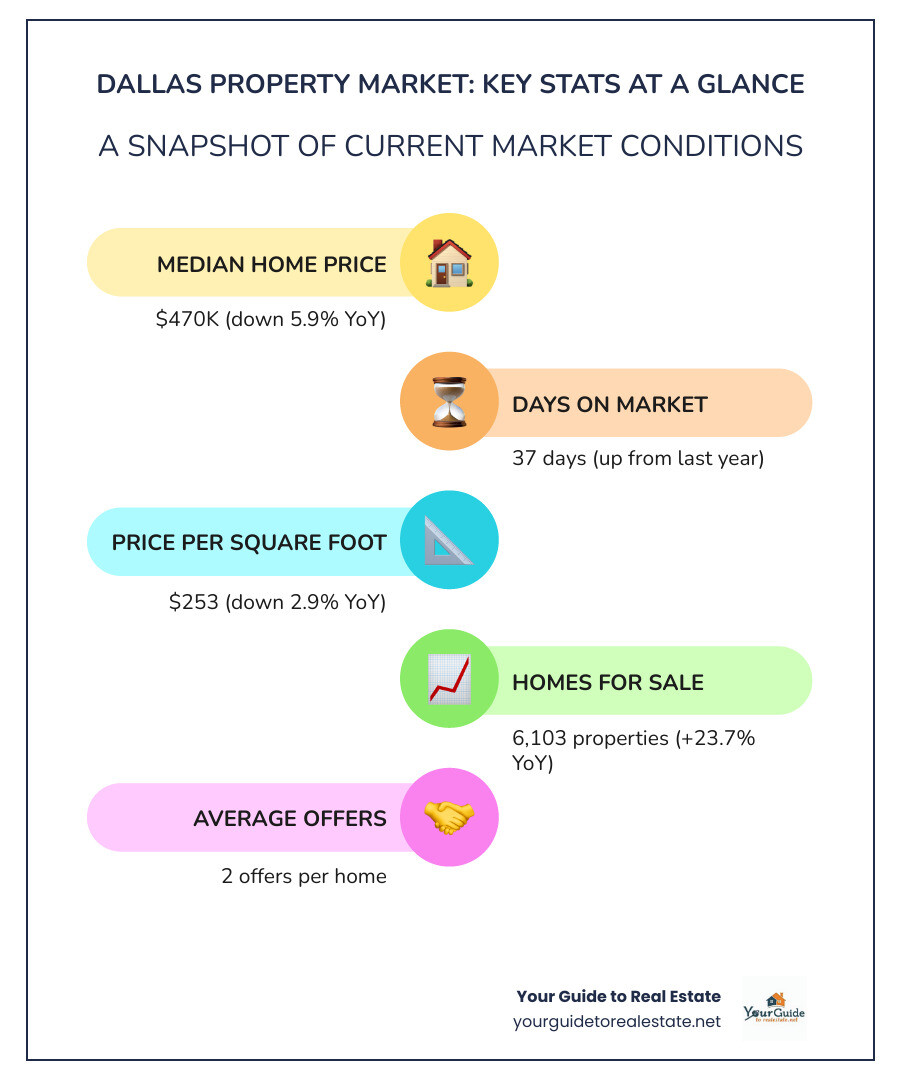
The dallas property market is undergoing a significant shift. After years of explosive gains, inventory is surging and price growth is slowing. Here’s a snapshot of the current market conditions:
Key Market Stats:
- Median Home Price: $470K (down 5.9% year-over-year)
- Days on Market: 37 days (up from 30 days last year)
- Price per Square Foot: $253 (down 2.9% year-over-year)
- Homes for Sale: 6,103 properties (+23.7% year-over-year)
- Average Offers: 2 per home
The Dallas-Fort Worth metroplex remains one of the nation’s fastest-growing regions, adding over 150,000 residents between 2022 and 2023, fueled by corporate relocations and a job market that has grown 11.2% since February 2020.
Experts describe the market’s current state as a “recalibration,” not a crash. Active listings have reached levels unseen in over a decade, creating new opportunities for buyers and sellers who understand the changing dynamics.
“The Dallas-Fort Worth housing market is experiencing a sharp shift, with the number of homes for sale hitting levels not seen in more than a decade,” according to recent market analysis.
Whether you’re a buyer, seller, or investor, understanding these trends is crucial for making informed decisions in America’s top-ranked real estate market for 2025.
An In-Depth Look at the Dallas Property Market
The data on the dallas property market tells a story of significant change. Understanding these numbers is key to your next move.
Current Price Trends and Sales Volume
The median home price in Dallas was $470,000 in May 2025, a 5.9% drop from the previous year. This moderation is a welcome change after years of relentless price hikes. The price per square foot is now around $253, down 2.9% from last year, reflecting a market “recalibration.”
Sales volume has also slowed, with 963 homes sold in May compared to 1,100 in the same period last year. This slower pace reduces competition and allows for more thoughtful decisions. Given the market’s dynamic nature, getting a professional competitive market analysis is invaluable before making a move.
Market Speed and Competitiveness
The frantic pace of the market has eased. The average Dallas home now stays on the market for 37 days, up from 30 days last year. Most properties receive about 2 offers on average, a significant change from the bidding wars of the past. The sale-to-list price ratio is 97.6%, meaning homes typically sell for just under their asking price.
However, quality still drives demand. “Hot homes” that are well-priced and presented can sell near list price and go under contract in about 18 days. Despite the cooling, Dallas homes still sell for 7% above the national average, indicating the market’s underlying strength. To make your property stand out, consult our Ultimate Guide to Selling Your Home.
Housing Inventory and Mortgage Impact
For buyers, the inventory situation is a major positive. There are now 6,103 homes for sale, a 23.7% increase from last year. This provides more choices and negotiating power. The months of supply has risen to 4.75 months, moving closer to the 5-6 months that indicates a balanced market.
Of course, mortgage rates are a key factor. The rise in 30-year fixed mortgages to around 6.54% has created affordability challenges, cooling buyer demand and contributing to the inventory growth. Understanding how these rates affect your purchasing power is critical. Our guide on Understanding Mortgage Rates can help you steer this new landscape.
The Economic Engine: What’s Driving Dallas Real Estate?
The dallas property market is powered by impressive economic forces that attract people, businesses, and investment. Let’s explore the key drivers behind this growth.
Population Boom and Migration Patterns
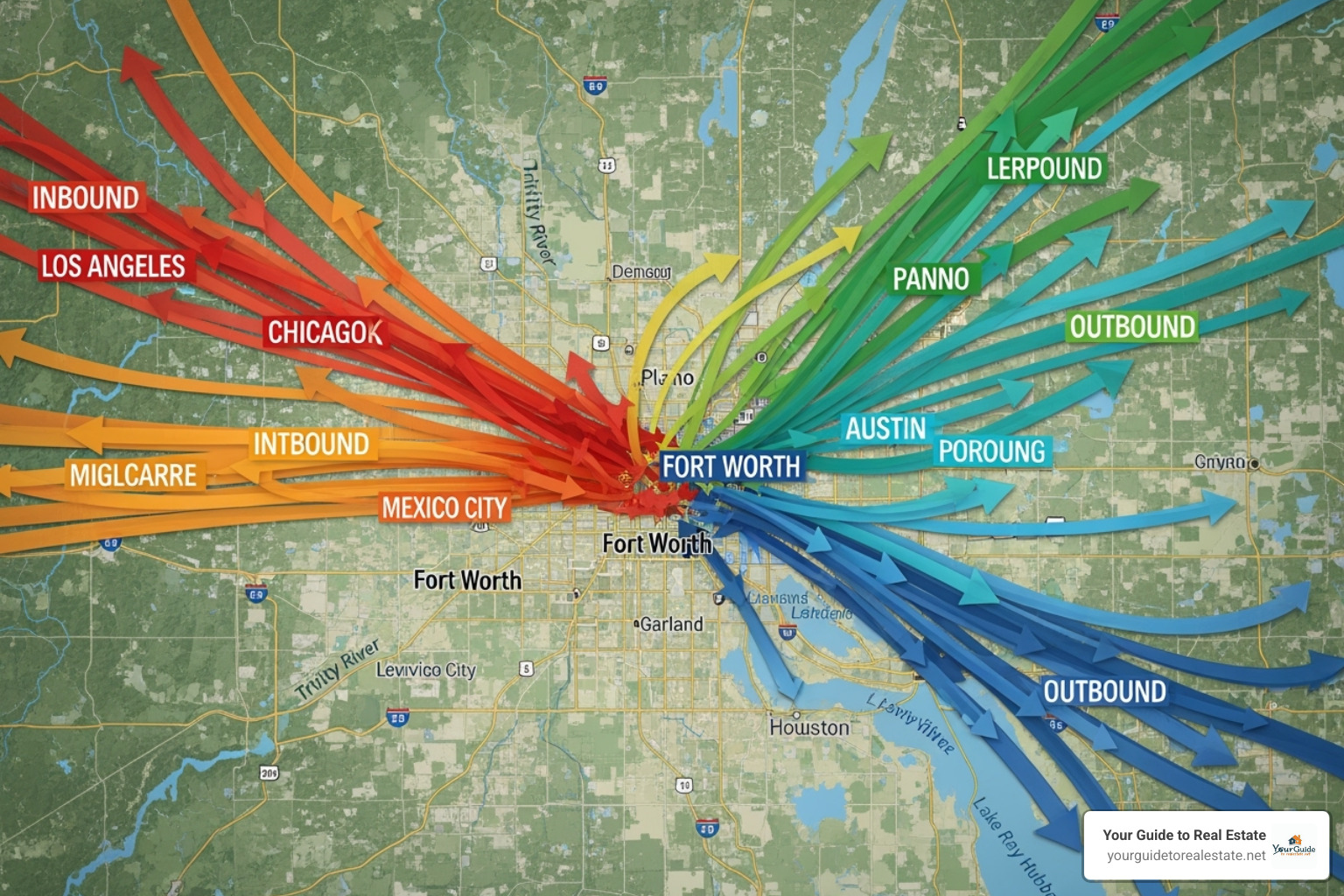
Dallas-Fort Worth leads the nation in population growth, adding 152,598 new residents between 2022 and 2023, according to U.S. Census data on DFW growth. Many new arrivals come from expensive coastal cities like Los Angeles, Seattle, and San Francisco, drawn by Dallas’s opportunities and relative affordability.
While some residents move to other Texas cities or Phoenix, a telling statistic is that 74% of Dallas homebuyers choose to stay within the metro area when they move. This high retention rate, particularly among the large Millennial demographic, speaks to the quality of life and career opportunities available here.
Corporate Powerhouses and Job Creation
Strong job growth is the secret to Dallas’s population boom. The region’s employment has grown by 11.2% since February 2020, making it the 4th fastest-growing metro for jobs in the U.S. Dallas is home to corporate heavyweights like McKesson Corporation, AT&T, and Southwest Airlines, which provide stable, high-paying careers.
Future growth is secured by major investments and relocations. Over 21 companies have moved to North Texas since 2021, including engineering firm AECOM. A game-changing project is Texas Instruments’ $30 billion investment in new semiconductor plants, expected to employ up to 3,000 workers by 2025. Learn more about this investment at Texas Instruments’ new plants. Key industries like technology, finance, and healthcare create a resilient economic foundation for the dallas property market.
Infrastructure, Walkability, and Lifestyle
While Dallas is known for its extensive highway network, the DART system (Dallas Area Rapid Transit) offers light rail and bus alternatives. The city is also investing in making more neighborhoods walkable and bike-friendly, improving the Walk Score, Transit Score, and Bike Score in many areas.
Despite its growth, Dallas’s cost of living is only about 1% higher than the national average. This allows residents to enjoy big-city amenities—from restaurants to professional sports—without the extreme costs of other major metros. For buyers, understanding how lifestyle factors affect property values is key. Our First-Time Homebuyer Tips can help you evaluate these important considerations.
Investing in Dallas: Opportunities, Risks, and Top Neighborhoods
For investors, the dallas property market presents a landscape of high potential and notable challenges. This section breaks down where to look and what to watch out for.
| Neighborhood | Median Home Price (Approx.) | Average Rent (1-2 Bed) | Key Investment Appeal |
|---|---|---|---|
| Irving | $400K – $600K | $1,700 – $2,100 | Corporate Hub, High Job Growth |
| Richardson | $450K – $650K | $1,600 – $2,000 | University Proximity, Tech Corridor |
| Frisco | $600K – $800K+ | $2,200 – $2,600 | Family-Friendly, Rapid Growth, New Development |
| Munger Place | $400K – $700K | $1,500 – $1,900 | Historic Charm, High Renter-Occupancy (77%) |
| Euless | $350K – $500K | $1,600 – $2,000 | DFW Airport Proximity, Strategic Location |
(Note: Median Home Prices are approximate estimates based on general market trends and can vary significantly by specific property type and location within the neighborhood. Average Rent figures are based on research data for 1-2 bedroom units and may vary.)
Top Neighborhoods for Real Estate Investment
Dallas offers fantastic neighborhoods that combine steady rental income with solid appreciation potential. Here are some of the top areas for investment:
- Irving: As a leader in corporate headquarters per capita, Irving has constant housing demand from professionals. One-bedroom rents have climbed 4% year-over-year, signaling a healthy market.
- Richardson: Home to the University of Texas at Dallas and the “Telecom Corridor,” this area ensures a steady stream of student and professional renters. Average one-bedroom rent jumped 13% year-over-year.
- Frisco: This suburb’s excellent schools and new developments attract families, who drive premium rents. Two-bedroom apartments here saw a 7% year-over-year rent increase.
- Munger Place: This historic neighborhood in Old East Dallas maintains a 77% renter occupancy rate, appealing to urban professionals seeking character and proximity to downtown.
- Euless: Strategically located near DFW Airport, Euless has seen 9% rental growth for larger four-bedroom apartments, making it attractive to families and professionals.
The market’s diversity, from luxury areas like Preston Hollow to more accessible neighborhoods like Riverway Estates-Bruton Terrace, means there are opportunities for nearly every budget. Our guide on How to Invest in Real Estate can help you refine your strategy.
Understanding the Dallas Rental Market
The Dallas rental scene is buzzing, with a median rent of $1,775. This robust market is driven by a massive population influx, as many newcomers prefer to rent while settling in. The strong rental growth across various neighborhoods, such as Frisco’s 7% and Richardson’s 13% year-over-year increases, reflects this high demand.
Demand is diverse, coming from student populations, relocating corporate employees, and families. High occupancy rates, like the 77% in Munger Place, translate to lower vacancy periods and more predictable cash flow for investors. Tapping into this market means investing in an income stream backed by fundamental economic growth. Our resources on Property Investment can help you explore different approaches.
Potential Challenges for the Dallas Property Market
Every thriving market has potential pitfalls. Being aware of them is key to successful investing.
Market saturation is a primary concern. Rapid development could lead to supply outpacing demand in some areas, increasing competition for renters and sellers. The overvaluation debate is also prominent. Some analysts have raised concerns about inflated prices, with some forecasts predicting a drop in home values over the next 12 months. Recent data has already shown a year-over-year decline in house prices.
However, most experts view this as a market “recalibration,” not a crash, thanks to strong fundamentals like job and population growth. Broader economic fluctuations, such as rising mortgage rates, can also impact the market by slowing buyer activity.
To steer these challenges, investors should diversify their portfolios, stay informed on local regulations, and maintain cash reserves. Approaching Dallas real estate with both optimism and caution is the key to long-term success.
A Guide for Dallas Buyers and Sellers
Whether you’re buying or selling in the dallas property market, the current climate requires a specific strategy. Here’s what you need to know to succeed.
Advice for Homebuyers
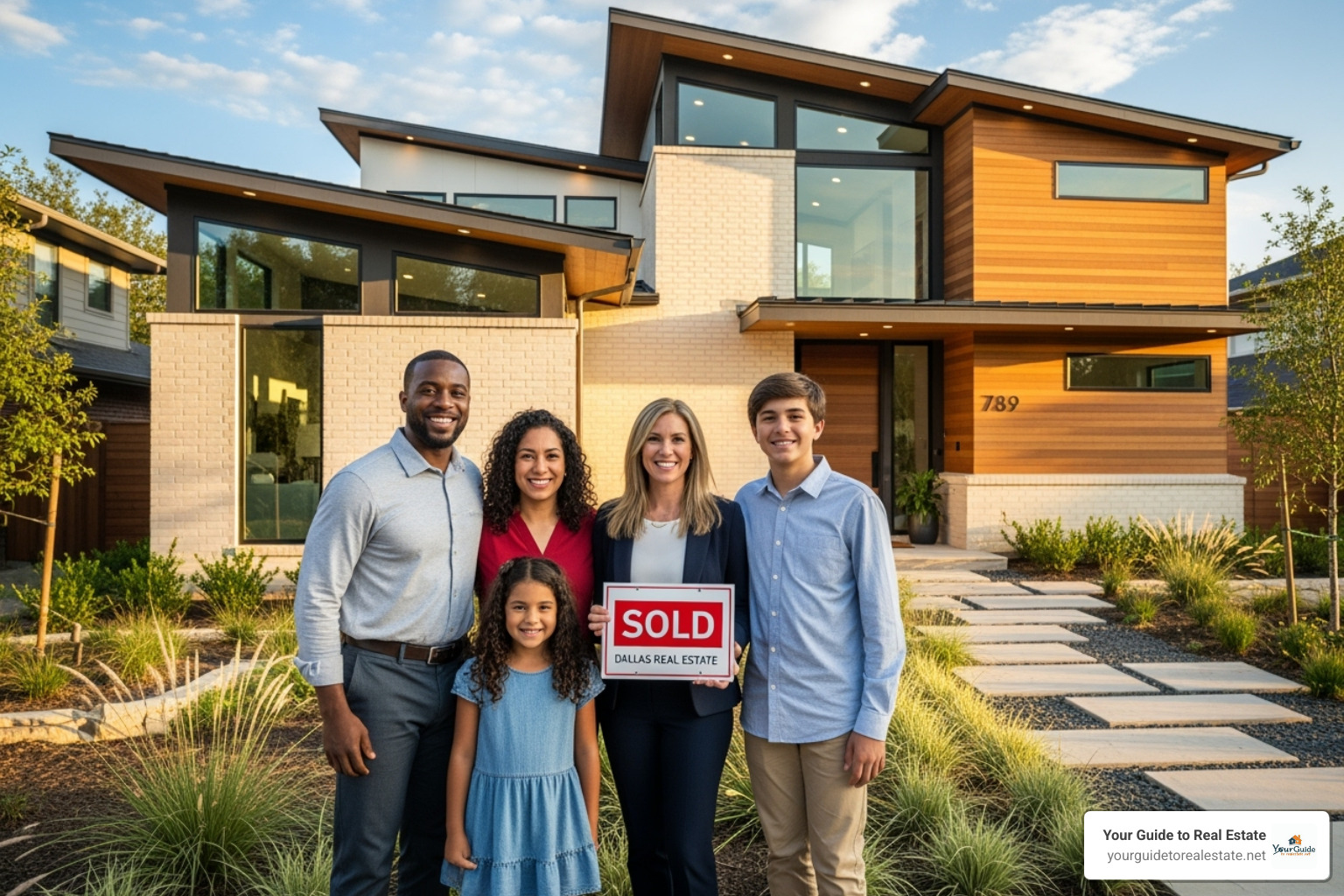
Good news for buyers: the dallas property market is shifting in your favor. After years of intense competition, a more balanced market is emerging. The increased inventory, with 6,103 homes for sale (up 23.7% from last year), means you have more choices and can take your time to find a home that truly fits your needs.
Your negotiation power has also grown. Homes are on the market longer (average of 37 days), and with 38.69% of homes seeing price drops, sellers are more open to discussion. Properties are now selling for about 3% below asking price on average.
Our advice is to be patient but prepared. Research neighborhoods, get pre-approved for a mortgage, and be ready to act when you find the right home. Professional guidance is crucial in this evolving market. Our guide on How to Choose the Right Real Estate Agent: A Complete Buyer’s Guide can help you find an expert who understands current Dallas dynamics.
Strategies for Home Sellers
For sellers in today’s dallas property market, a smart approach is essential. The days of multiple, sight-unseen offers are over, but success is still achievable with the right strategy.
Realistic pricing is critical. With nearly 39% of homes needing price drops, overpricing leads to longer market times. Price your home competitively from day one based on current data.
Home presentation is more important than ever. With more inventory, your property must stand out. Invest in professional staging, quality photos, and minor repairs to attract buyers.
Be prepared for longer days on market. The average is 37 days, but well-priced and beautifully presented homes can still go pending in around 18 days. Finally, be ready to negotiate. Flexibility on terms or repairs can make the difference. For more strategies, see our Quick Home Sale Tips.
The Role of Schools and How Dallas Compares to Houston
School quality significantly impacts property values in the dallas property market. The area has 506 public schools rated “good and higher” by GreatSchools data, plus 163 private and charter schools. This strong educational infrastructure helps maintain property values.
When comparing Dallas versus Houston, the better market depends on your goals. Dallas typically offers stronger capital appreciation due to its diverse economy based on tech, finance, and corporate HQs. This fuels steady value increases, ideal for long-term wealth building.
Houston may offer higher rental yields but comes with greater risks from natural disasters, leading to higher insurance costs. For long-term value growth and economic stability, Dallas is often the preferred choice. If higher rental income with a lower entry point is more appealing, Houston could be an option, provided you are comfortable with the associated risks.
Frequently Asked Questions about the Dallas Property Market
Here are straight answers to the most common questions we receive about the dallas property market.
Is Dallas currently a buyer’s or seller’s market?
Dallas is shifting toward a buyer’s market. Inventory is up 23.7% year-over-year, giving buyers more options. Homes are on the market longer (37 days on average), and nearly 39% of listings have had price drops. This means buyers have more choices and significant negotiation power, even if it’s not a full buyer’s market yet.
Are home prices in Dallas expected to drop?
While some analysts predict modest price corrections, this is widely seen as a market “recalibration” rather than a crash. Some forecasts suggest a potential drop in DFW home values over the next 12 months, and data from the past year has already shown a slight decline. However, the market’s fundamentals—strong job growth, massive population inflow, and corporate relocations—remain incredibly strong, providing a solid long-term foundation for property values.
What part of Dallas is best for real estate?
The “best” area depends entirely on your goals.
- For families, suburbs with top-rated schools like Frisco and Richardson are popular choices.
- For investors, areas with major employment centers like Irving (corporate HQs) and Richardson (tech corridor) offer strong rental demand.
- For urban living, historic neighborhoods like Munger Place offer character and a high renter occupancy rate.
- For affordability, areas like Euless and Riverway Estates-Bruton Terrace provide more accessible entry points with growth potential.
The best area is the one that aligns with your budget, lifestyle, and investment strategy.
Conclusion
Our journey through the dallas property market reveals a clear picture: Dallas is not just weathering market shifts, it’s positioned for long-term success. The current recalibration—with higher inventory and cooler prices—is not a crisis, but an opportunity for savvy buyers, sellers, and investors.
The market is built on powerful economic fundamentals. The Dallas-Fort Worth metroplex added over 150,000 residents in one year, has the nation’s 4th fastest employment growth, and continues to attract major corporate investments, like Texas Instruments’ $30 billion project. This is the recipe for sustained real estate demand.
While mortgage rates and price corrections are factors, the market’s underlying strength and diversity provide stability. From family-friendly Frisco to the corporate hub of Irving, there are opportunities for every goal and budget.
Navigating this dynamic landscape requires the right guidance. At Your Guide to Real Estate, we provide actionable insights to help you make confident decisions. Markets change, but with expert knowledge, you can succeed.
Our housing market forecast page offers expert analysis to help you understand the bigger picture. In real estate, knowledge is power.