

Why Financial Planning Doesn’t Have to Be Overwhelming
An investment calculator is a free online tool that helps you estimate how much money you could have for retirement. By inputting your current savings, monthly contributions, and expected returns, you can see the power of compound interest and visualize your financial future without complex formulas or confusing jargon.
Quick Answer for Investment Calculators:
- What they do: Calculate your potential retirement savings based on your inputs.
- Key inputs: Current age, retirement age, current investments, monthly contribution, and expected annual return.
- Main benefit: Show how consistent investing can lead to significant wealth over time.
- Best feature: Run “what if” scenarios to see how small changes impact your future.
- Cost: Many are completely free to use.
- Philosophy: Based on simple, long-term investing principles.
About half of Americans aren’t saving for retirement, and many who are feel lost. The good news? Building wealth doesn’t require a finance degree. A simplified approach to investing strips away the confusion and focuses on one powerful concept: consistent investing over time builds wealth.
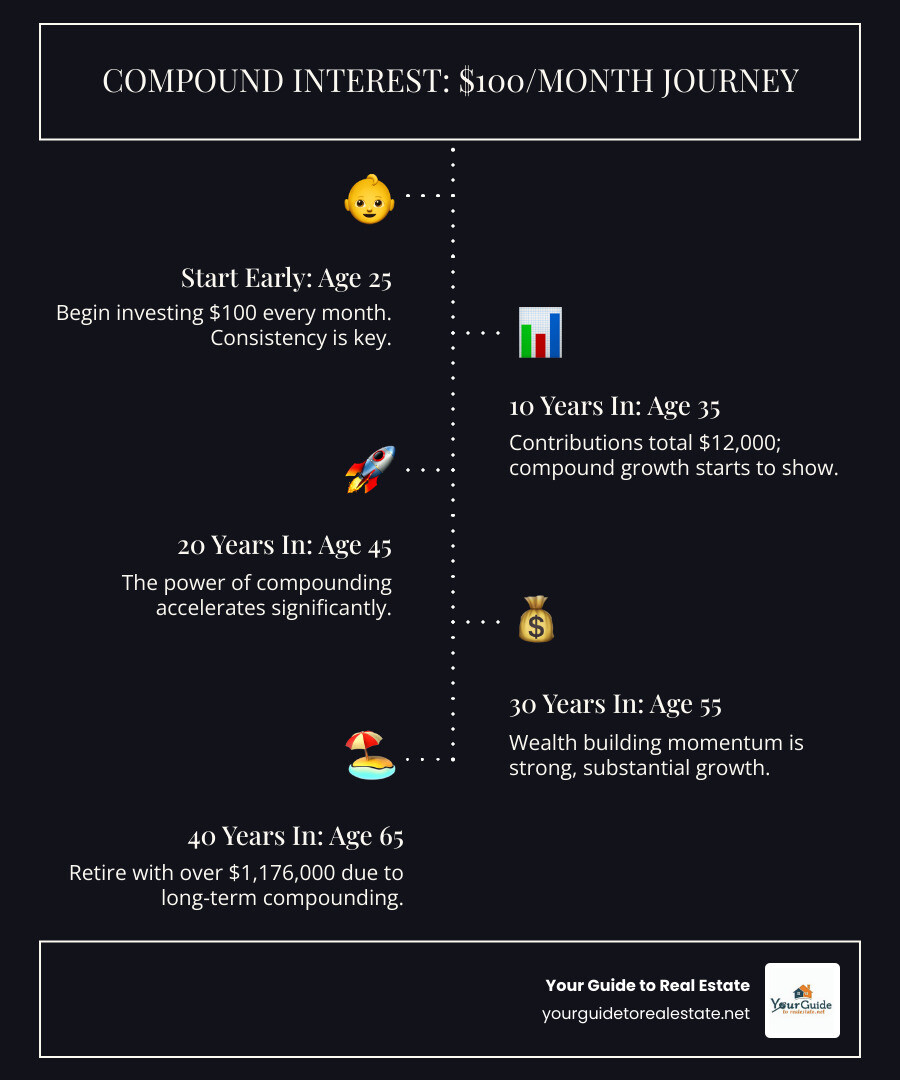
For example, investing just $100 a month from age 25 to 65 can result in over $1 million. That’s the magic of compound interest working for decades. The calculator turns this abstract concept into something concrete. Instead of wondering “Will I have enough?” you can see where your current path leads and experiment with different scenarios. This isn’t about get-rich-quick schemes; it’s about behavior change through clear visualization.
Quick look at investment calculators:
Understanding the Investment Philosophy Behind the Calculator
An investment calculator isn’t just a number-crunching tool – it’s often built on time-tested principles that have helped millions of people build real wealth. At its heart, this approach is refreshingly simple: get your financial house in order first, then invest consistently for the long haul.
Think of it like building a house. You wouldn’t start hanging drywall before pouring the foundation. This philosophy works the same way. Before you can effectively build wealth, you need a solid foundation – and that means getting out of debt and establishing an emergency fund.
The beauty of this approach lies in its simplicity. While some try to complicate investing with fancy terminology, this philosophy focuses on what actually works: consistent, long-term investing in diversified growth stock mutual funds. Building wealth takes discipline and time, but the results speak for themselves.
An investment calculator brings this philosophy to life by showing you exactly how your disciplined efforts compound over decades. It’s not about getting rich quick – it’s about getting rich for sure through patience and consistency.
The “Steps” to Wealth
A popular wealth-building strategy revolves around a sequence of steps designed to build momentum and create lasting financial change.
Step 1 starts with a small emergency fund, like $1,000. This is your first line of defense against going back into debt when life happens.
Step 2 is paying off all debt except your house using the debt snowball method. The key is attacking your smallest debts first. The psychological wins from paying off smaller debts keep you motivated.
Step 3 builds your emergency fund to 3-6 months of expenses. Now you’re protected against major financial emergencies, which means your investments can stay invested.
Step 4 is where an investment calculator becomes your best friend: investing 15% of your household income for retirement. With no debt payments and a solid emergency fund, this 15% can work its compound interest magic for decades.
The remaining steps focus on college funding for kids, paying off your home early, and finally building wealth and giving generously. Each step builds on the previous one, creating momentum toward financial freedom.
Why Behavior Is More Important Than Math
Personal finance is about 80% behavior and only 20% head knowledge. You don’t need to be a math whiz to build wealth – you need to develop the right habits and stick with them.
This is why the debt snowball method works so well. Those quick psychological wins create momentum that keeps you going. It’s the same reason why consistency beats perfection every time.
When it comes to investing, this behavioral focus means avoiding “get rich quick” schemes and staying the course when the market gets bumpy. An investment calculator reinforces these good behaviors by showing you the power of steady, consistent investing over time. The math is simple, but the behavior is what makes millionaires. When you see how your consistent efforts compound, staying motivated becomes much easier – and that’s where the real magic happens on your path to becoming financially free.
A Deep Dive into the Investment Calculator
An investment calculator works like your personal financial crystal ball, but instead of mysterious predictions, it uses solid math to show you where your money could go. Think of it as a friendly conversation with your future, wealthier self.
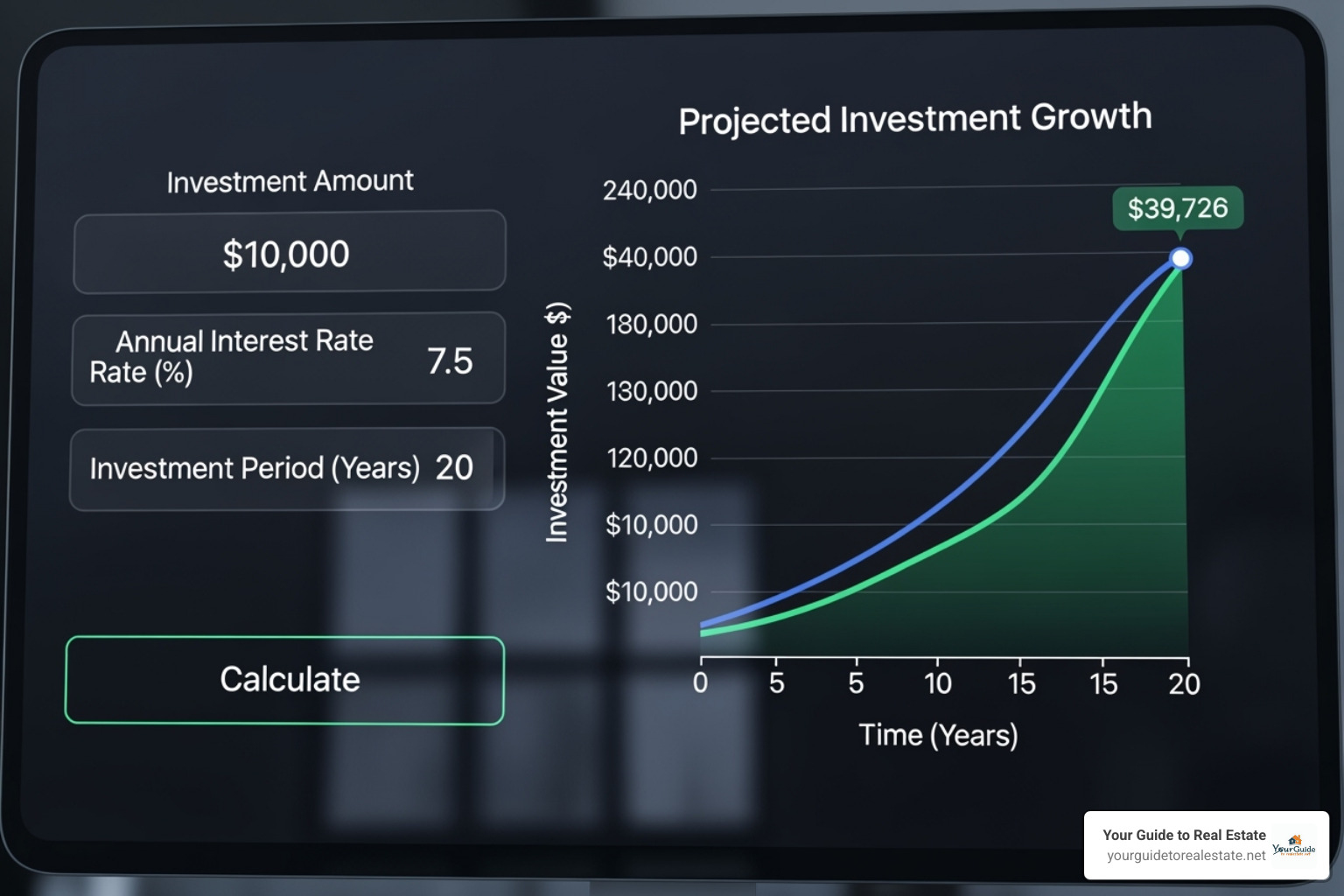
The magic behind this tool isn’t magic at all – it’s compound interest. Compound interest is what transforms modest monthly contributions into serious wealth. When you earn interest on your original investment plus all the interest you’ve already earned, your growth accelerates.
The calculator takes your real-world numbers and runs them through this compound interest engine, creating a visual story of your financial future. It’s like watching a time-lapse video of a tiny seed growing into a massive oak tree, except that tree is your retirement fund.
Key Inputs for Your Financial Future
Getting started with an investment calculator is simple. You just need five basic pieces of information.
- Your current age matters more than you might think. Starting at 25 versus 35 can mean a multi-million dollar difference by retirement. Time is your greatest asset.
- Your planned retirement age determines how long your money has to grow. Every extra year of investing can add tens of thousands to your final number.
- Your current investments might be zero, and that’s okay. Everyone starts somewhere.
- The monthly contribution is where the rubber meets the road. Many experts recommend investing 15% of your gross household income, but even $100 a month can grow to over $1 million if you start early enough.
- The annual rate of return. Historically, the S&P 500 has returned 10–12% over long periods. While not a guarantee, this average provides a reasonable expectation for long-term growth.
Understanding the Outputs of the Investment Calculator
Once you hit calculate, an investment calculator delivers motivating results. The main number is your estimated retirement savings. The calculator also breaks down how much came from your contributions versus how much your investments earned. For long-term investors, the growth often dwarfs the contributions.
The future value graph tells your money’s story visually, showing the curve of compound interest steepening over time. The real power comes from the “what if” scenarios. See what happens if you invest an extra $200 monthly. These small changes can add hundreds of thousands to your retirement fund, and seeing those numbers makes it easier to stay disciplined.
Benefits and Drawbacks of This Approach
Like any financial tool, an investment calculator has its strengths and limitations.
On the positive side, it excels at motivation and goal visualization. Its simplicity makes investing accessible to everyone, aligning with our mission to provide stress-free guidance. It also reinforces positive behavioral changes by connecting daily choices to long-term dreams.
However, there are considerations. The calculator often assumes 10-12% annual returns, which are based on historical averages and are not guaranteed. The tool is also an oversimplification, as it doesn’t account for taxes, inflation, or varying risk tolerances. Finally, all investing involves market risk. The calculator’s smooth growth projections don’t show the bumpy ride that real investing often involves.
Recommended Investment Strategy
Once you’ve tackled your debt and built an emergency fund, it’s time to put your money to work. The beauty of a simplified investment approach is that it takes the guesswork out of investing. No need to stress about picking the “perfect” stock. Instead, the focus is on growth-stock mutual funds – a strategy that’s both simple and effective over the long haul.
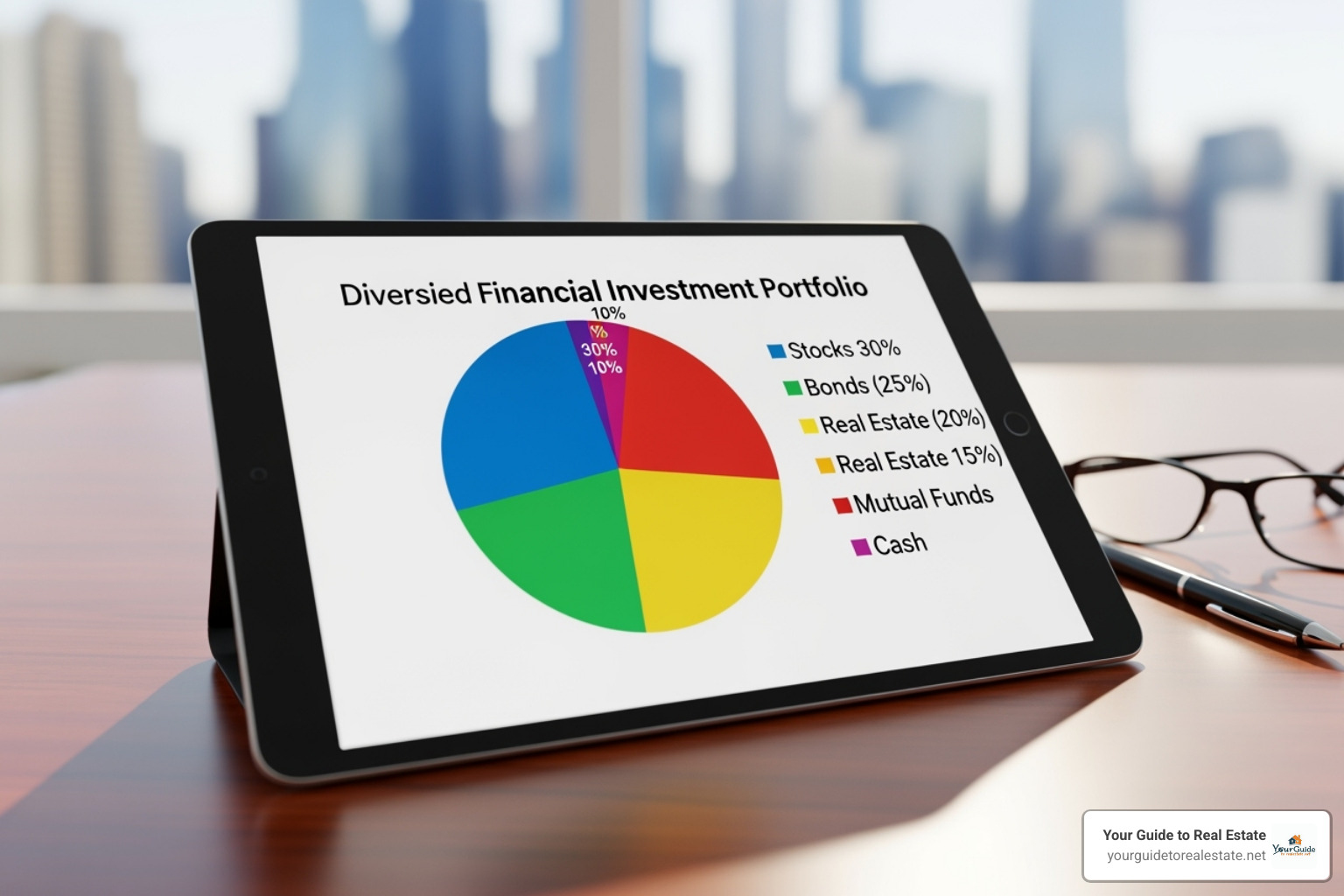
The golden rule is investing 15% of your income into good growth-stock mutual funds. Mutual funds automatically spread your money across dozens or hundreds of companies. This diversification reduces your risk compared to betting on a single stock.
When you plug these numbers into an investment calculator, you’ll see how this steady approach can turn modest contributions into substantial wealth. It’s not about getting rich quick – it’s about getting rich for sure. If you’re just getting started, our guide on How to Start Investing in 2025: A Beginner’s Guide walks you through what you need to know.
The Four Types of Mutual Funds
A smart strategy is to spread your investments evenly across four different categories:
- Growth and Income Funds: These are your steady workhorses, investing in large, established companies like Microsoft or Apple. They are reliable and often pay dividends.
- Growth Funds: These target medium-sized companies with market values between $2 billion and $10 billion. They offer more growth potential than the giants.
- Aggressive Growth Funds: These invest in smaller companies with huge potential but also higher risk. They can be a wild ride but have historically provided excellent long-term returns.
- International Funds: These take your money global, investing in companies outside the U.S. This geographic diversification protects you if the U.S. economy hits a rough patch.
By splitting your money among these four types, you’re betting on the entire global economy’s growth – a historically safe bet.
What About Other Investments like Real Estate?
As folks in the real estate world, we get this question a lot! This philosophy is compatible with other investments, but it’s strategic about when and how to pursue them.
- Single stocks are generally considered too risky for a core retirement strategy. The risk of picking a loser isn’t worth it when mutual funds offer instant diversification.
- Bonds might seem safer, but their returns often barely keep up with inflation, meaning you’re treading water instead of building real wealth.
- Real estate is a fantastic wealth-building tool, but timing matters. Your retirement investing should be separate from your real estate ventures. First, get that 15% going into mutual funds. Then, once you’re financially stable, you can explore How to Invest in Real Estate or dive into Property Investment strategies.
Think of it this way: mutual funds are your foundation, and real estate can be the cherry on top.
Investing for Different Life Stages
Your age dramatically impacts your investment outcomes. An investment calculator can show you the path forward, no matter where you are in life.
- Starting in your 20s is like winning the compound interest lottery. Investing just $100 a month at 25 can lead to over $1 million by 65. Time is your greatest asset.
- Catching up in your 40s and 50s requires more aggressive action but is absolutely doable. This is often your peak earning years. Investing 15% of a higher income can help you accumulate over $1 million, even starting at 40.
- For those 50 and older, the IRS allows catch-up contributions. In 2024, you can contribute an extra $7,500 to a 401(k) and $1,000 to an IRA, according to IRS guidelines. These higher limits can dramatically boost your savings.
Our guide on the Fastest Ways to Catch Up on Retirement Savings shows you how to make the most of your time. The bottom line? Whether you’re 25 or 55, an investment calculator can show you a path to a comfortable retirement.
Creating Your Personalized Retirement Plan
An investment calculator transforms retirement planning from overwhelming guesswork into a clear, personalized roadmap. Instead of wondering if you’ll have enough, you can see where your current path leads and make adjustments.
Think of the calculator as your financial GPS. You wouldn’t start a road trip without a destination, and you shouldn’t invest without a clear picture of your retirement goals. The beauty lies in its ability to show you multiple routes to your destination.

The most powerful feature is scenario planning. You can experiment with “what if” situations and watch how small changes today create massive differences tomorrow. This isn’t just number crunching—it’s turning retirement dreams into achievable goals. The critical question the calculator helps answer is: How Much Do I Need to Retire? The answer varies for everyone.
Using the Investment Calculator for Goal Setting
Creating your retirement plan with an investment calculator is a logical process:
- Define your retirement dream. Picture your ideal lifestyle. Will you travel, take up expensive hobbies, or help family? These choices determine how much money you’ll need.
- Calculate your “number.” Estimate your monthly expenses in retirement. Don’t forget major costs like healthcare and inflation. What costs $3,000 per month today could require over $7,200 in 30 years.
- Work backwards from your goal. Plug your current numbers into the calculator. This shows whether you’re on track or need to make adjustments.
- Adjust your contributions. If you’re falling short, experiment. What happens if you invest an extra $200 monthly or delay retirement by two years? The calculator instantly shows the impact, helping you find a realistic path.
Finding Extra Money to Invest
The biggest challenge is often finding the money to invest. The good news is there are proven ways to free up cash flow.
- Budgeting is the foundation. Tracking your spending reveals “money leaks.”
- Cutting expenses has a huge long-term payoff. Cancel unused subscriptions, which could free up $50-100 monthly.
- Cook meals at home. Americans spend thousands annually dining out. According to the Bureau of Labor Statistics, food away from home is a significant expense. Cutting this in half can free up over $100 per month to invest.
- Shop around for better deals on recurring services like car insurance, cable, and cell phone plans.
- Increasing your income works alongside cutting expenses. Side hustles, selling unused items, or negotiating a raise can generate substantial extra cash for investing.
For more strategies, check out our guide on How to Save Money. Every dollar you free up can be plugged into the calculator to see its powerful long-term impact.
Frequently Asked Questions about This Investing Approach
When it comes to your financial future, questions are normal. We’re here to give you straight answers without the jargon or sales pitch so you can feel confident using an investment calculator and following this approach.
How much money do I need to start investing with this method?
The beautiful thing about this approach is you don’t need to be wealthy to start. But there’s a catch: you need to get your financial house in order first.
The magic number to start isn’t about having a specific amount of cash. Instead, it’s about completing the foundational steps: being debt-free (except your mortgage) and having a 3-6 month emergency fund locked and loaded.
This order matters. Investing while carrying high-interest debt is like trying to fill a bucket with holes. You’re working against yourself.
Once you’ve plugged those holes, then you invest 15% of your household income. Whether that’s $200 or $2,000 a month, consistency is what builds wealth. An investment calculator is incredibly motivating at this point because you can see how your contributions will grow, no matter how modest they seem today.
Is a 10-12% annual return realistic?
This question comes up constantly. When you see those projections on an investment calculator, it might feel too good to be true. Let’s break it down.
The 10-12% figure comes from real historical data. The S&P 500 has averaged roughly this return over 30+ year periods, according to New York University’s historical data. This isn’t wishful thinking; it’s what happened in the stock market over decades.
However, you won’t get exactly 10% every year. Some years might be 25%, others -15%. The power is in staying invested through all these ups and downs so the good years make up for the tough ones.
Market volatility is real. However, diversification through growth stock mutual funds helps smooth out that ride. The key word is long-term. If you’re investing for 20, 30, or 40 years, historical patterns suggest this return range is achievable.
How does this compare to investing in real estate?
At Your Guide to Real Estate, we believe in real estate’s wealth-building power. Here’s how it fits with this investment philosophy.
Mutual funds and real estate serve different purposes. Mutual funds are your retirement foundation—they’re liquid, professionally managed, and you can start with small amounts. Real estate typically requires more hands-on involvement and larger initial investments.
- Liquidity is a big difference. You can sell mutual fund shares quickly. Selling a property takes time, making real estate illiquid.
- The hands-on versus passive nature is another distinction. Mutual funds are managed by professionals. With rental properties, you’re dealing with tenants and maintenance. Our expertise in How to Invest in Real Estate and Property Investment can help, but it’s more involved.
A sound approach keeps these strategies separate and sequential. First, secure your retirement by investing 15% of your income in mutual funds. Once that’s on autopilot, you can explore real estate as an additional wealth-building tool.
This isn’t an either-or decision. Many successful investors use Buy and Hold Real Estate strategies alongside their mutual fund investments. Both can build substantial wealth. The key is timing and diversification.
Conclusion
Building wealth doesn’t have to be overwhelming. An investment calculator proves that with the right tools and mindset, anyone can create a clear path to financial freedom. It transforms abstract concepts like compound interest into concrete, motivating numbers that show what your consistent efforts can achieve.
Throughout this guide, we’ve seen how this philosophy centers on two truths: behavior matters more than perfect math, and time is your greatest ally. Getting out of debt, then consistently investing 15% of your income in diversified mutual funds is a simple formula that has created countless millionaires.
The calculator itself is straightforward. You plug in your numbers, and it shows you the power of starting today. Whether you’re 25 and can turn $100 monthly into over $1 million, or you’re 45 and ready to catch up, the message is the same: consistency and discipline win every time.
Yes, market returns aren’t guaranteed, but this approach is built on solid fundamentals, not get-rich-quick schemes.
At Your Guide to Real Estate, we know that building wealth happens through multiple channels. While an investment calculator focuses on retirement savings through mutual funds, real estate can be another powerful piece of your wealth-building puzzle once you’ve secured that foundation.
Your financial future is in your hands. Taking action today puts you ahead of the millions who keep waiting. For a deeper understanding of how different assets can build your net worth, explore our guide on Valuation and Market Analysis in Real Estate.
The journey to financial freedom starts with a single step. Why not take it today?