Why Understanding the Difference Between Condo and Townhouse Matters
The difference between condo and townhouse ownership can make or break your home buying experience. While both offer shared-wall living with community perks, they operate under completely different rules when it comes to what you own, what you’re responsible for, and how much control you have over your property.
Quick Answer: Condo vs. Townhouse Key Differences
| Aspect | Condo | Townhouse |
|---|---|---|
| What You Own | Interior unit only (“walls in”) | Interior, exterior, and land |
| Maintenance | HOA handles exterior/roof | Owner handles all maintenance |
| Typical Size | ~1,200 sq ft, single level | 1,300-1,500 sq ft, multi-level |
| HOA Fees | $100-$700+ monthly | Usually lower |
| Privacy | Neighbors above/below possible | No neighbors above/below |
| Amenities | More extensive (pools, gyms) | Fewer shared amenities |
Here’s what most buyers don’t realize: a condo isn’t just a type of building – it’s a legal form of ownership. You could live in a townhouse-style building but own it as a condo, meaning you only own the interior space while the HOA owns everything else.
This distinction affects everything from your monthly budget to your weekend plans. Condo owners enjoy amenities like pools and fitness centers but can’t plant flowers without permission. Townhouse owners get private yards and more control but handle their own roof repairs.
With approximately 17 million privately owned condominiums in the US and townhouses becoming increasingly popular as affordable alternatives to single-family homes, understanding these differences is crucial for making the right choice for your lifestyle and financial goals.
Explore more about difference between condo and townhouse:
What is a Condo vs. a Townhouse?
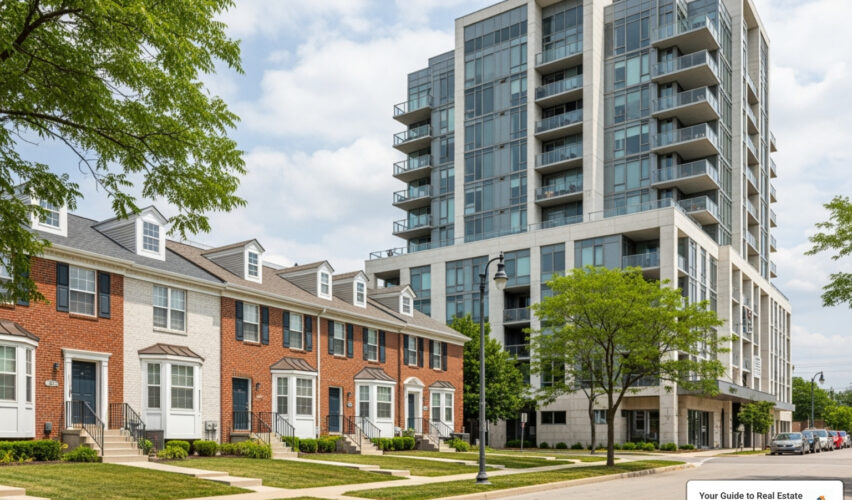
Picture this: you’re driving through a neighborhood and see a sleek high-rise next to a row of charming multi-story homes connected side by side. That’s the difference between condo and townhouse living in a nutshell – both offer community living with shared walls, but they’re as different as city life and suburban comfort.
Both condos and townhouses fall under what we call attached homes – properties that share at least one wall with a neighbor. They typically come with a Homeowners Association (HOA) that manages common areas and sets community rules. But here’s where things get interesting: the similarities pretty much end there.
The architectural styles alone tell different stories. Condos often rise skyward in sleek buildings, maximizing urban space. Townhouses stretch horizontally in connected rows, offering that “house” feel without the sprawling yard.

Defining a Condominium (Condo)
Think of a condominium as owning your own private slice of a larger pie. You own your unit – everything from the walls inward – but you share ownership of everything else with your neighbors through the HOA.
This “walls-in” concept is crucial to understand. Your condo ownership includes your interior space, but the building structure, roof, exterior walls, hallways, and those amazing amenities like pools and fitness centers? Those belong to everyone collectively.
The first condo in the United States popped up in Salt Lake City back in 1960, and boy, did Americans fall in love with the concept! Today, there are approximately 17 million privately owned condominiums across the country. That’s a lot of people who’ve finded the joy of homeownership without having to worry about mowing lawns or fixing gutters.
Condos shine in busy urban areas where space is premium. They’re perfect for folks who want the perks of homeownership – building equity, stable housing costs, community amenities – without the weekend honey-do list that comes with a traditional house.
Defining a Townhouse
A townhouse is like the middle child of the housing world – it has the attached-home efficiency of a condo but the ownership feel of a single-family house. These multi-floor homes typically share one or two side walls with neighbors, creating that classic rowhouse style you see lining city streets and suburban developments.
Here’s what makes townhouses special: no neighbors above or below. You get your own private entrance, often your own small yard or patio, and usually ownership of the actual structure and the land underneath it. This is called fee simple ownership – fancy legal terms for “you own it all.”
But here’s where it gets a bit tricky (and why real estate can be confusing): a townhouse can actually be sold under a condominium ownership structure. Wait, what? That’s right – “condo” isn’t just about the building style; it’s about the legal structure of ownership. So you might live in a townhouse-style home but technically own it as a condo, where the HOA owns the exterior and land.
The beauty of townhouses lies in giving you that house-like experience – multiple floors, private entrance, often a small outdoor space – while still being part of a managed community. It’s the best of both worlds for many buyers who want more space and privacy than a traditional condo but less maintenance than a detached home.
The Core Difference Between Condo and Townhouse: Ownership & Responsibilities
Here’s where the difference between condo and townhouse really matters for your daily life. It all comes down to a simple question: what do you actually own? This isn’t just about bragging rights – it determines everything from your monthly bills to whether you can paint your front door purple.
Both property types usually come with a Homeowners Association (HOA) that creates rules called Covenants, Conditions & Restrictions (CC&Rs). Think of these as the “house rules” for your community. But the legal structure underneath these rules is completely different.
Ownership Rights and Control
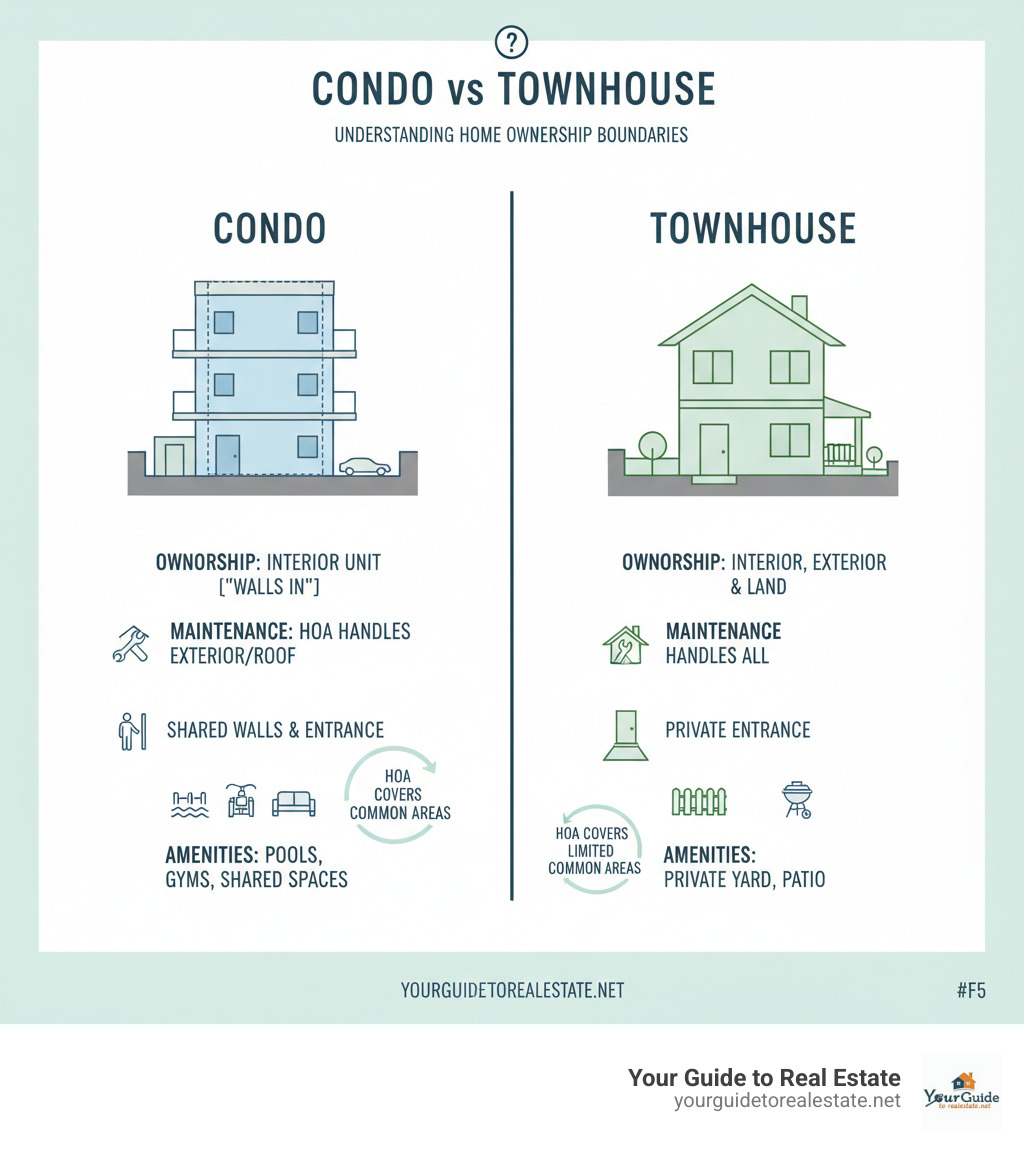
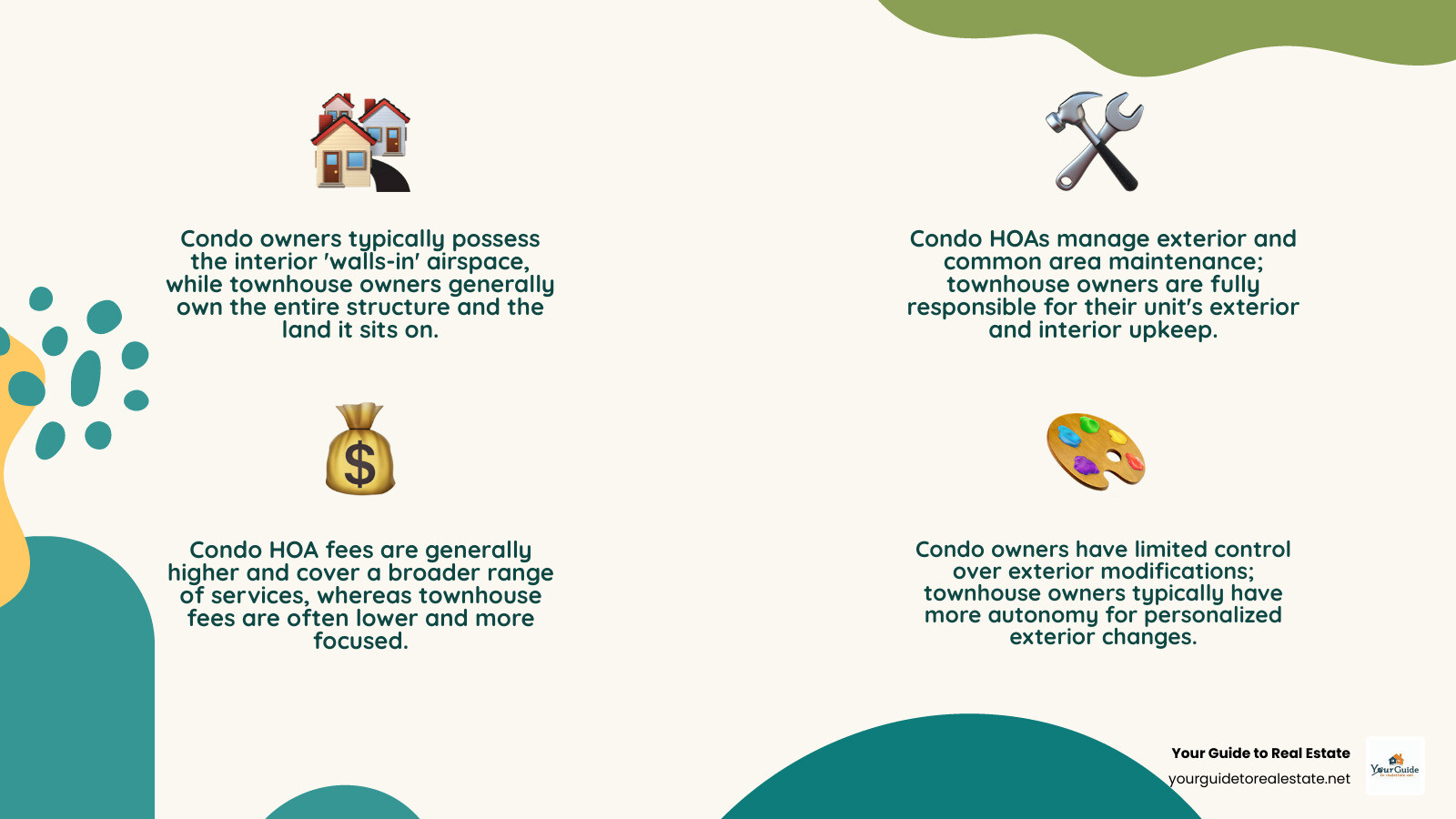
When you buy a condo, you’re essentially buying the airspace inside your unit. You own everything from the interior walls inward – your floors, fixtures, and that quirky chandelier you installed. But the building’s exterior, roof, hallways, and that gorgeous pool? Those belong to everyone collectively through the HOA.
As Janice Pynn, president of Simerra Property Management, puts it perfectly: condo fees cover “your percentage share of the costs to run the building as a whole.” This shared ownership means limited control over exterior changes. Want to install a satellite dish or change your window color? You’ll need HOA approval first.
Townhouse ownership tells a different story. You typically own the entire structure plus the land underneath it – what’s called “fee simple ownership.” Mike Fabbri, a licensed real estate salesperson, explains that “Townhouse owners have full ownership of their units, including the land… Owners generally have control over the exterior appearance and landscaping of their home.”
This means more freedom for exterior modifications and landscaping control. You can usually plant that herb garden, paint your shutters, or even replace your roof (within HOA guidelines, of course). The key difference? Townhouse owners typically have full ownership of their units, making them feel more like traditional homeowners.
Maintenance and Repairs
This is where ownership structure hits your wallet and weekend plans. With a condo, the HOA handles the big stuff – roof repairs, exterior maintenance, and common area upkeep. Your monthly HOA fees cover these shared responsibilities, giving you a relatively maintenance-free lifestyle.
Kate Wollman-Mahan from Coldwell Banker Warburg sums it up nicely: “Condos are great for buyers who are happy to pay a maintenance fee to the condo board in exchange for the management of the property.” You handle everything inside your unit, but when the building needs a new roof? That’s covered.
For townhouse owners, it’s a different ball game. You’re responsible for both interior and exterior maintenance – just like owning a single-family home. Agent David Harris puts it bluntly: “For a townhouse, when the roof goes or a pipe bursts, it’s solely the owner’s responsibility.”
This means emergency repairs are your problem to solve and fund. The trade-off? Usually lower HOA fees since you’re not paying for building-wide maintenance. Both property types can face special assessments – those surprise fees when major repairs exceed the HOA’s reserve funds.
HOA Rules and Regulations
Both condos and townhouses come with HOA rules, but the strictness varies significantly. Jennifer Patchen, an Opendoor broker, reminds us that “A townhouse is typically governed by an HOA… There are monthly fees and restrictions involved here, too.”
Condo HOAs often have stricter regulations because of the shared building and amenities. These might include pet restrictions (size, breed, number), rental policies, noise ordinances, and even parking rules. Some condos regulate everything from your window treatments to your holiday decorations.
Townhouse HOAs can be more lenient, especially about exterior modifications within your private space. Since you’re responsible for your own unit’s exterior, the HOA focuses more on community areas and neighborhood aesthetics.
Here’s the catch: there’s no set standard for HOA rules. Every community creates its own guidelines. That’s why reviewing HOA documents is crucial before buying. These rules can significantly impact your lifestyle, so understanding them upfront prevents unpleasant surprises later.
The importance of reviewing HOA documents cannot be overstated – they’re your roadmap to community living and can make or break your homeownership experience.
Lifestyle and Living Experience
When you’re choosing between a condo and townhouse, you’re not just picking a property – you’re choosing how you want to live every single day. The difference between condo and townhouse living goes far beyond square footage and extends into the rhythm of your daily routine, from morning coffee to weekend relaxation.

Space, Layout, and Privacy
Condo living typically means embracing a more compact, efficient lifestyle. Most condos average around 1,200 square feet and spread across a single level – think of it as apartment-style living that you actually own. You’ll likely have neighbors above, below, and on either side, which creates a cozy community feel but can also mean less privacy.
If you’re someone who notices every footstep from upstairs or gets distracted by conversations through thin walls, definitely schedule a condo showing during peak hours – maybe a weekday evening or weekend afternoon when families are most active. This gives you a realistic sense of the noise level you’ll be living with.
Townhouse living offers a different experience entirely. These homes typically range from 1,300 to 1,500 square feet and stretch across multiple floors, giving you that classic “house” feeling with bedrooms upstairs and living areas downstairs. The beauty of townhouse living is having no neighbors above or below you – just shared side walls.
Most townhouses come with their own private entrance (no more waiting for elevators!) and often include a small yard or patio space. This outdoor area can be a game-changer if you have pets, enjoy gardening, or just want a spot to drink your morning coffee in peace. The trade-off? Townhouses can sometimes feel darker inside since you’re only getting natural light from the front and back, not from all sides like a detached home.
Community and Amenities
Here’s where the lifestyle differences really shine through. Condo communities often feel like living in a resort. Many offer extensive amenities like swimming pools, state-of-the-art fitness centers, rooftop terraces, and even concierge services or doormen. Some luxury condo buildings in urban areas take this to the extreme with wine storage, dog grooming stations, and business centers.
These amenities create a social environment where you might bump into neighbors at the pool or strike up conversations in the fitness center. It’s perfect if you love having everything at your fingertips without leaving your building. Of course, all these perks come with a price tag – those higher HOA fees we discussed earlier.
Townhouse communities take a more neighborhood-focused approach. You’re more likely to find community parks, playgrounds, and maybe a modest clubhouse rather than luxury amenities. The social atmosphere tends to center around outdoor spaces – think neighborhood barbecues, kids playing in common areas, or dog walks through tree-lined streets.
This setup often appeals to families or anyone who prefers a quieter, more suburban feel even when living in attached housing. Since there are fewer shared amenities to maintain, your HOA fees typically stay lower, leaving more money in your pocket for your own home improvements or family activities.
The choice between these two lifestyles often comes down to whether you want convenience and amenities delivered to you (condo) or prefer creating your own space and community connections (townhouse).
Financial Implications: Costs, Fees, and Value
Let’s talk money – because understanding the financial side of the difference between condo and townhouse is crucial for making a smart buying decision. From upfront costs to long-term value, these two property types can impact your wallet in very different ways.

Purchase Price and Resale Value
Here’s some good news for first-time buyers: condos are often the more affordable option. Nationally, the average condo sells for around $353,900, making them an attractive entry point into homeownership. This is especially true in pricey urban markets where every dollar counts.
Townhouses typically carry higher price tags since you’re buying more space and, crucially, the land underneath. But here’s where it gets interesting for your long-term wealth building – townhouses often appreciate more like single-family homes. Why? That land ownership makes all the difference.
When you own the dirt under your home, you’re not just buying a living space – you’re investing in real estate that historically holds and grows its value better over time. Condos do build equity, but they generally see slower appreciation rates due to higher density and shared ownership structures.
Of course, location still rules everything. A well-positioned condo in downtown Dallas might outperform a townhouse in a declining suburb. The financial health of your HOA also plays a huge role in resale value. A condo with a well-managed association and healthy reserve funds can be a solid investment, while one with deferred maintenance and special assessments on the horizon? That’s a red flag for future buyers.
HOA Fees and Other Ongoing Costs
Now let’s dive into those monthly fees that can make or break your budget. Condo HOA fees typically range from $100 to $700+ per month, and trust me, they can go much higher in luxury buildings or expensive markets. Before you gasp at those numbers, remember what you’re getting: exterior maintenance, landscaping, snow removal, often utilities like water and trash, security, and contributions to that all-important reserve fund for major repairs.
As Janice Pynn puts it perfectly – these fees aren’t profit centers, they’re “your percentage share of the costs to run the building as a whole.” Think of it as outsourcing all the headaches of home maintenance.
Townhouse HOA fees are generally lower – often under $100 to a few hundred monthly. But here’s the catch: those lower fees mean you’re on the hook for your own roof, exterior painting, and yard work. When that water heater dies or the roof starts leaking, there’s no HOA cavalry coming to save you.
Beyond HOA fees, your ongoing costs look different too. Property taxes are typically lower for condos since you don’t own land and the assessed value is usually less. Insurance is simpler too – condo owners just need an HO-6 policy covering their interior and belongings, while townhouse owners need comprehensive coverage for the whole structure, just like a single-family home.
The bottom line? Condos offer predictable monthly costs with fewer surprises, while townhouses give you lower monthly fees but higher responsibility when things go wrong. Neither approach is right or wrong – it’s about what fits your budget and peace of mind.
How to Choose: Key Factors for Buyers
Choosing between a condo and townhouse goes far beyond comparing price tags. It’s about finding a home that fits your lifestyle like a favorite sweater—comfortable, practical, and something you’ll love for years to come. We believe the best decisions come from understanding yourself first, then matching that to what each property type offers.
For first-time buyers especially, this decision can feel overwhelming. That’s why we’ve developed a proven framework to help you think through what matters most. Our first time homebuyer tips provide additional guidance for navigating this exciting journey.
What to consider when analyzing the difference between condo and townhouse
The difference between condo and townhouse living becomes clearer when you honestly assess your preferences and priorities. Start by thinking about your tolerance for maintenance. If the thought of cleaning gutters or repairing a fence makes you cringe, condo living might be your sweet spot. The HOA handles exterior upkeep, leaving you free to focus on your interior space and weekend plans.
On the flip side, if you enjoy having control over your property and don’t mind rolling up your sleeves for yard work, townhouse ownership offers that hands-on experience. You can plant a garden, paint your front door, or tackle home improvement projects without asking permission from an association.
Amenities matter differently to different people. Some buyers light up at the mention of a community pool, fitness center, or 24-hour concierge service. If these features align with how you want to live, condos typically deliver more extensive shared amenities. However, luxury comes with higher monthly fees.
Privacy and space needs vary greatly among buyers. If you’re sensitive to noise or value having no neighbors above or below, a townhouse’s multi-level layout often provides better sound separation. Many townhouses also include small private outdoor spaces—perfect if you have pets or dream of hosting backyard barbecues.
Your budget for ongoing costs deserves careful consideration beyond the purchase price. Condos often have higher HOA fees but lower individual maintenance expenses. Townhouses typically flip this equation with lower association fees but higher personal maintenance responsibilities. Factor in property taxes, insurance costs, and potential special assessments when calculating your true monthly housing cost.
Future planning plays a crucial role in this decision. Are you planning to start a family? Townhouses often appeal to growing families with their extra space and private entrances. Looking toward retirement? Many buyers love the lock-and-leave convenience of condo living. As Jeff Benach from Lexington Homes wisely notes, “Buyers should consider how they want to live.”
The buying process for the difference between condo and townhouse
The path to homeownership follows familiar steps whether you choose a condo or townhouse, but each property type has unique considerations that can make or break your experience.
Getting pre-approved remains our first recommendation for every buyer. Knowing your budget helps focus your search and strengthens your position when you find the right property. This step is identical regardless of property type and sets the foundation for everything that follows.
Finding the right real estate agent becomes especially important with condos and townhouses. You need someone who understands the nuances of HOA documents, association finances, and the specific markets you’re considering. Our guide on how to choose the right real estate agent can help you find an advocate who’ll protect your interests throughout the process.
Due diligence on the HOA represents the most critical difference from single-family home purchases. Request all association documents, including meeting minutes from the past year, current financial statements, and the complete CC&Rs. Look for red flags like pending lawsuits, planned special assessments, or insufficient reserve funds. A well-managed association protects your investment, while a struggling one can become a financial nightmare.
Financing considerations can surprise unprepared buyers. While townhouse mortgages often mirror single-family home loans, condo financing involves additional scrutiny. Lenders evaluate the entire complex’s financial health, owner-occupancy rates, and whether the association meets specific criteria. For FHA loans, the condo complex must have FHA approval, which can provide affordable financing options for many buyers.
Understanding real estate contingencies protects you during the buying process. These include inspection contingencies, financing contingencies, and sometimes HOA document review periods. Our resources on what does contingent mean in real estate and pending vs contingent help you steer these important protections.
Our goal is creating a stress-free experience using our proven framework. Every buyer deserves confidence in their decision and support throughout the journey to homeownership.
Frequently Asked Questions about Condo vs. Townhouse Differences
When we work with buyers exploring their options, the same thoughtful questions come up again and again about the difference between condo and townhouse living. These aren’t just casual curiosities—they’re the real concerns that keep people up at night when making such a big decision. Let’s explore the answers that matter most.
Which is a better investment, a condo or a townhouse?
Here’s the honest truth: there’s no one-size-fits-all answer to this question. The “better” investment depends entirely on your personal goals, timeline, and what’s happening in your local market.
Townhouses often have the investment edge when it comes to long-term appreciation. Because you typically own the land underneath your home (that fee simple ownership we talked about earlier), townhouses tend to appreciate more like single-family homes. Land ownership is a powerful wealth-building tool that has historically driven property values upward over time.
But don’t count condos out of the investment race just yet. Condos can be fantastic rental properties, especially in busy urban areas where people want amenities and low-maintenance living. Think about young professionals in Dallas who’d rather hit the gym downstairs than mow a lawn on weekends. The rental demand for well-located condos with great amenities can be incredibly strong.
The wild card in any condo investment is the HOA. A well-managed association with healthy reserve funds and desirable amenities can actually boost your property value significantly. On the flip side, an HOA that’s constantly hitting owners with special assessments or letting the building fall apart can tank your investment faster than you can say “leaky roof.”
Location trumps everything in real estate investment. A condo in a prime neighborhood will often outperform a townhouse in a declining area. Market conditions, job growth, and local development plans all play huge roles in determining which property type will serve you better financially.
Is it harder to get a mortgage for a condo?
Unfortunately, yes—getting a mortgage for a condo can be more complicated than financing a townhouse. It’s not necessarily about you as a borrower (though your credit and income still matter plenty). The challenge is that lenders don’t just evaluate your financial health—they’re also judging your entire condo community.
Here’s what makes lenders nervous about condos: they need to scrutinize the condo association’s financial health, reserve funds, and owner-occupancy rates. They’ll dig into whether the HOA has enough money set aside for major repairs, or if special assessments are a regular occurrence that could strain owners financially.
Owner-occupancy rates matter more than you might think. Lenders prefer communities where most units are occupied by their owners rather than renters. Why? Owner-occupied buildings tend to be better maintained and have more stable communities, which protects the lender’s investment.
The association can’t be tangled up in lawsuits either—that’s a major red flag for lenders. And if you’re hoping to use an FHA loan, the entire complex must meet specific FHA approval criteria, which adds another layer of requirements.
The frustrating part? Even if you’re the most qualified buyer in the world with perfect credit and a hefty down payment, your mortgage application can still be denied if the condo association doesn’t meet the lender’s standards. It’s definitely something to keep in mind when weighing your options.
Can a townhouse be a condo?
This question always makes us smile because it highlights one of the biggest misconceptions in real estate. Yes, absolutely—a townhouse can legally be structured as a condo. Mind-blowing, right?
Here’s the key insight: “condominium” describes a legal form of ownership, not an architectural style. You could live in a beautiful townhouse with your own private entrance, multiple floors, and even a small yard, but still technically own it as a condo.
In this scenario, you’d own the interior space of your townhouse unit (just like a traditional condo), while the HOA would own the land, exterior walls, roof, and any common areas. This is completely different from fee simple townhouse ownership, where you own everything—the building, the land, even that patch of grass out front.
Why does this matter? Because it completely changes your responsibilities and control. A townhouse structured as a condo means you’re not responsible for roof repairs or exterior maintenance, but you also can’t decide to paint your front door purple without HOA approval.
When you’re looking at townhouses, always ask about the ownership structure. Don’t assume anything based on how the building looks. Check the deed, review the HOA documents, and make sure you understand exactly what you’re buying. The difference between condo and townhouse ownership could mean the difference between a weekend spent gardening in your yard or lounging by the community pool—and there’s no wrong choice, just different lifestyles.
Conclusion
Understanding the difference between condo and townhouse ownership isn’t just about memorizing real estate terms—it’s about finding the home that fits your life like a perfect puzzle piece. Throughout this guide, we’ve peeled back the layers of ownership structures, maintenance responsibilities, costs, and lifestyle considerations that separate these two popular housing options.
The heart of your decision comes down to understanding yourself and what matters most in your daily life. Condo living offers the ultimate in convenience and community amenities, where your biggest maintenance worry might be changing a lightbulb while the HOA handles everything from roof repairs to landscaping. You’ll pay higher monthly fees, but you’ll also have access to amenities that might otherwise be out of reach—think resort-style pools, fitness centers, and concierge services.
Townhouse ownership, on the other hand, gives you more control and space to spread out. You’ll have your own private entrance, often a small yard for morning coffee or evening barbecues, and the freedom to paint your front door any color your heart desires (HOA permitting, of course). The trade-off? When the roof needs replacing or the furnace breaks down, that’s your responsibility and your checkbook.
At Your Guide to Real Estate, we’ve seen countless buyers steer this decision successfully. Some find they’re natural condo dwellers who love the social atmosphere and maintenance-free lifestyle. Others realize they need the privacy and autonomy that comes with townhouse living. Neither choice is inherently better—they’re simply different paths to homeownership happiness.
What we’ve learned from helping buyers across Dallas, Oklahoma City, and beyond is that the difference between condo and townhouse living becomes crystal clear once you honestly assess your priorities. Do you value convenience over control? Are you willing to trade higher fees for fewer responsibilities? Would you rather have extensive amenities or a private yard?
This decision shapes not just where you live, but how you live. Your home should support your lifestyle, not complicate it. Whether you’re drawn to the urban energy of condo living or the suburban feel of townhouse communities, the key is making an informed choice that aligns with your financial situation, maintenance tolerance, and long-term goals.
For expert guidance custom to your unique situation and local market conditions, consider choosing the right real estate professional who can walk you through these nuances and help you find your perfect home. After all, the best investment isn’t just in property—it’s in the peace of mind that comes from making the right choice for you.