
Understanding Earnest Money: Your Good Faith Deposit Explained
Do you get earnest money back? Yes, you can get your earnest money back if specific conditions in your purchase contract are met, such as unmet contingencies like failed inspections, financing issues, or low appraisals. However, you may forfeit this deposit if you back out without a valid contractual reason or miss key deadlines.
Here’s when you typically get earnest money back:
- Inspection contingency triggered – Major defects found during home inspection
- Financing contingency invoked – Unable to secure mortgage approval despite good-faith effort
- Appraisal contingency used – Home appraises for less than the purchase price
- Home sale contingency applies – Unable to sell your current home within the specified timeframe
- Seller breaches contract – Seller backs out or fails to meet their obligations
- Mutual agreement – Both parties agree to cancel the transaction
You will likely NOT get earnest money back if:
- You waive your contingencies to make a stronger offer
- You miss critical contract deadlines
- You back out for personal reasons (buyer’s remorse, finding another property, change of heart)
- You breach the contract terms
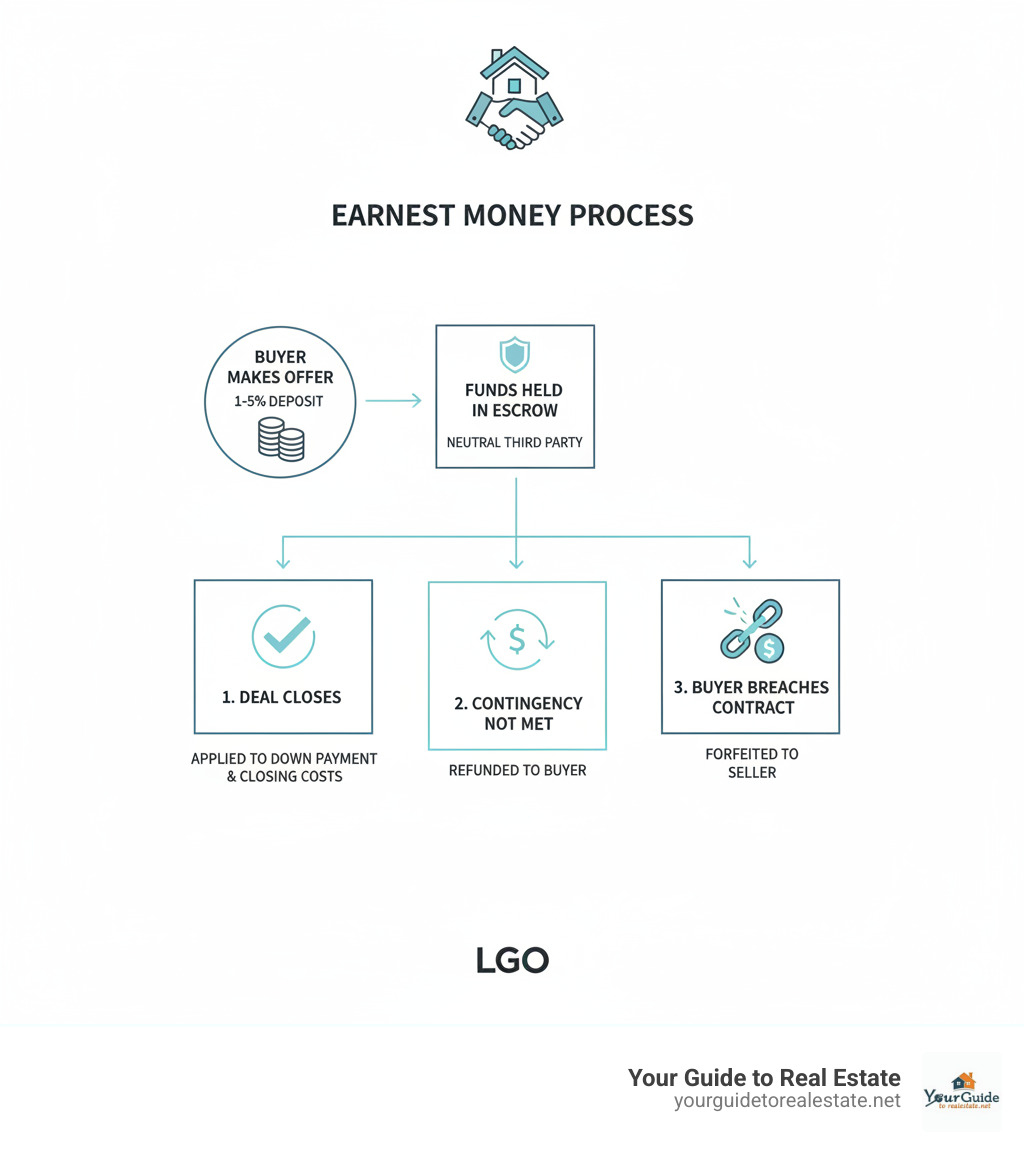
Earnest money—also called a good faith deposit—is typically 1% to 5% of the home’s purchase price, though it can reach 10% in competitive markets. This deposit shows sellers you’re serious about buying their property. It’s held in escrow by a neutral third party until closing, when it’s applied to your down payment and closing costs.
The key to protecting your earnest money is understanding your purchase contract, especially the contingencies that give you a legal way to exit the deal without penalty. Missing a deadline or backing out without a valid reason can cost you thousands of dollars.
Related content about do you get earnest money back:
What Is Earnest Money and How Does It Work?

Picture this: You’ve just found your dream home. After weeks (or maybe months) of searching, you’re ready to make an offer. But here’s the thing—sellers need to know you’re not just window shopping. That’s where earnest money comes in.
Earnest money is your way of showing the seller you’re genuinely committed to buying their home. Think of it as putting some skin in the game. When you make an offer, this good faith deposit tells the seller, “I’m serious about this purchase, and I’m willing to prove it.”
Why do sellers need this reassurance? Well, once they accept your offer, they’re taking their home off the market. They’re turning away other potential buyers and investing time in a deal with you. Without earnest money, what’s stopping a buyer from tying up a property for weeks, only to walk away on a whim? The seller would lose valuable time and miss out on other opportunities. As real estate attorney Marc Kaufman puts it, “If a buyer changes her mind and was able to request the down payment be returned without consequence, then the whole idea of a contract would no longer be worth much.”
So how much earnest money should you expect to put down? In most markets, you’ll see deposits ranging from 1% to 5% of the home’s purchase price. A typical amount is usually around 1% to 3%, which for a $300,000 home would be $3,000 to $9,000.
But here’s where it gets interesting—the amount can vary quite a bit depending on your local market. In competitive, hot markets where sellers are fielding multiple offers, buyers sometimes offer up to 10% to make their offer stand out from the crowd. On the flip side, in slower markets that favor buyers, you might negotiate a smaller deposit. Some markets, like Dallas or Oklahoma City, have local customs where buyers typically offer a flat amount—say $5,000 to $10,000—regardless of the home’s price. And if you’re buying new construction directly from a builder, they might ask for even more, sometimes as much as 10% of the purchase price.
Once you’ve agreed on the amount, where does this money actually go? Here’s an important detail: you never send earnest money directly to the seller. (If someone asks you to do that, run—it’s likely a scam!) Instead, your deposit goes into an escrow account held by a neutral third party. This could be a title company, a real estate attorney, or the brokerage where your agent works. The money sits safely in this account, untouched, while you move through the inspection, appraisal, and financing stages of the transaction.
The typical timeline? You’ll usually need to deposit your earnest money within five days of the seller accepting your offer, though sometimes it’s submitted along with your initial offer.
Now, when closing day finally arrives, what happens to this money? This is where people often get confused about whether do you get earnest money back. The answer is a bit nuanced. You don’t receive your earnest money back as a separate check or refund. Instead, it’s applied as a credit toward your closing costs and down payment. This actually works in your favor—it reduces the total amount of cash you need to bring to the closing table.
For example, if you put down $5,000 in earnest money and your closing costs are $8,000, you’d only need to bring an additional $3,000 to closing. If you’re using a VA loan (which doesn’t require a down payment), your earnest money would go entirely toward closing costs, and if there’s anything left over, you might even get a check back for the difference.
Earnest Money vs. Down Payment
Let’s clear up a common source of confusion: earnest money and down payments are not the same thing, even though they’re both part of buying a home.
Your earnest money is paid early in the process—right after your offer is accepted—to show you’re a serious buyer. It’s usually a smaller amount, typically 1% to 5% of the purchase price (though sometimes up to 10% in competitive markets). This money is held by a neutral third party in an escrow account and acts as your good faith commitment.
Your down payment, on the other hand, is the much larger chunk of money you put toward actually purchasing the home. Depending on your loan type and financial situation, this could be anywhere from 3% to 20% or more of the purchase price. You don’t pay this until closing day, when ownership officially transfers to you.
Here’s the key connection: at closing, your earnest money doesn’t just disappear. It’s credited toward your down payment and closing costs, reducing the final amount you need to pay. So in a way, your earnest money becomes part of your down payment—but they start out serving very different purposes.
| Feature | Earnest Money | Down Payment |
|---|---|---|
| Purpose | Shows good faith and commitment to the seller | Secures financing for the purchase; reduces loan amount |
| Typical Amount | 1-10% of purchase price (often 1-3%) | 3-20%+ of purchase price (varies by loan type and lender) |
| When it’s paid | Soon after offer acceptance (within 5 days typically) | At the closing of the sale |
| Who holds it | Neutral third-party escrow agent (title company, attorney, broker) | Held by the lender or applied to purchase price at closing |
| What happens at closing | Applied as a credit towards your down payment or closing costs | A larger sum, part of the purchase price, paid directly to the seller |
The bottom line? Earnest money gets you in the game early, while your down payment gets you the keys to your new home. Both are essential parts of the home-buying process, but they play distinct roles at different stages of your journey.
The 3 Main Ways to Get Your Earnest Money Back

While the idea of putting down a significant sum of money can be daunting, especially when you’re just starting the home-buying process, understanding how to protect that investment is key. The good news is that under the right circumstances, you absolutely do get earnest money back. The secret lies in the contract you sign and the conditions you include.
Your purchase contract is your blueprint for the entire transaction, and within it are critical provisions known as contingencies. These are conditions that must be met for the purchase agreement to proceed. If a contingency isn’t satisfied, it typically gives you a legal exit from the contract without losing your earnest money. Think of them as your safety nets!
For a deeper dive into these protective clauses, explore our Home Contingencies Complete Guide.
1. Using Contract Contingencies
Contract contingencies are your strongest allies when it comes to protecting your earnest money. Think of them as carefully crafted escape hatches built right into your purchase agreement. When a contingency isn’t met—and you’ve followed all the proper procedures and timelines—you can walk away from the deal and do get earnest money back. No penalties, no lost deposit, just a clean exit.
The beauty of contingencies is that they’re not loopholes; they’re legitimate, expected parts of nearly every real estate contract. Let’s look at the most common ones that can help you recover your deposit.
The inspection contingency is often considered a buyer’s best friend, and for good reason. It gives you the right to hire a professional home inspector to thoroughly examine the property, typically within 7 to 10 days after your offer is accepted. If the inspection uncovers major defects—we’re talking about serious issues like a failing roof, significant structural damage, foundation problems, or a termite infestation—you have options.
You can ask the seller to make the necessary repairs, negotiate a price reduction to account for the problems, or simply walk away if you can’t reach an agreement. For example, if you find during inspection that the home’s electrical system needs a complete overhaul costing $15,000, and the seller refuses to address it, you can cancel the contract and get your earnest money returned. This contingency is your opportunity to make sure you’re not buying someone else’s expensive problems.
The financing contingency protects you when the mortgage process doesn’t go as planned. Despite getting pre-approved and doing everything right, sometimes loan applications get denied. Maybe your financial situation changed, or perhaps the lender finded something unexpected during underwriting. A financing contingency makes your purchase dependent on successfully obtaining a mortgage loan within a specified timeframe—usually around 4 to 5 weeks, which is how long it typically takes to get a mortgage commitment letter.
If you genuinely can’t secure financing despite making a good-faith effort, this contingency allows you to cancel the contract and recover your deposit. This is precisely why getting pre-approved early and including this contingency in your offer is so important. For a comprehensive look at what to expect during this process, check out our guide on the Loan Process for Buying a House.
The appraisal contingency comes into play when your lender orders an independent appraisal of the property. Lenders want to make sure the home is actually worth what you’ve agreed to pay for it—after all, they’re lending you a substantial sum of money. If the home appraises for less than your purchase price, you could be in a tight spot.
Let’s say you’ve agreed to buy a home for $500,000, but the appraisal comes back at only $475,000. Your lender likely won’t approve a loan for the full purchase price, leaving you with a $25,000 gap. With an appraisal contingency, you have options: ask the seller to lower their price to match the appraised value, come up with the extra cash yourself, or cancel the contract and get your earnest money back. Without this contingency, you’d be stuck either paying the difference or forfeiting your deposit.
The home sale contingency is particularly valuable if you need to sell your current home before you can afford to buy a new one. This contingency makes your new purchase dependent on successfully selling your existing property within a specified timeframe. If your current home doesn’t sell, you can back out of the new purchase without losing your earnest money.
This contingency does require you to make an honest effort to sell your current home—listing it at a reasonable price and working actively with your agent. While sellers in competitive markets might be hesitant to accept offers with this contingency, it provides crucial protection for buyers who would otherwise be financially stretched.
The key to successfully using any of these contingencies is following the contract requirements to the letter. That means meeting all deadlines, providing proper written notice, and documenting everything. Miss a deadline by even a day, and you might forfeit your right to use the contingency—and lose your earnest money along with it.
2. The Seller Breaches the Contract
Sometimes the tables turn, and it’s the seller who causes the deal to fall apart. When this happens, the law is typically on your side. If the seller breaches the terms of the purchase agreement, you’re generally entitled to get your earnest money back—and sometimes even more.
Let’s talk about what seller breach actually looks like. The most straightforward scenario is when a seller simply backs out of the deal without any valid contractual reason. Maybe they got cold feet. Perhaps they received a higher offer after accepting yours (which isn’t allowed once you’re under contract). Or they might have decided they don’t want to move after all. Whatever their reasoning, if they unilaterally cancel the transaction when they don’t have a legal right to do so, that’s a breach of contract. Your earnest money should be returned immediately.
Another common breach involves the seller failing to meet their obligations outlined in the contract. For instance, perhaps the seller agreed to make certain repairs before closing but never got around to them. Or maybe they promised to clear out specific items from the property but left you with a garage full of junk. Sometimes sellers find they have title issues—problems with the legal ownership of the property—that they can’t resolve. If you agreed to buy a house with a clear title and the seller can’t deliver that, they’ve breached the contract.
I once worked with a couple who had a seller agree to move out within six months so they could close on their dream home. Unfortunately, the seller couldn’t find another place to live and refused to vacate. The buyers were understandably frustrated, but because the seller couldn’t fulfill this key obligation, they were able to cancel the transaction and received their full earnest money deposit back.
Here’s what’s important to understand: when a seller breaches the contract, you’re not just entitled to your deposit back. In some cases, you might even have grounds to sue the seller for specific performance (forcing them to complete the sale) or for damages beyond your earnest money. However, most buyers simply want their deposit returned so they can move on to find another home.
The key is documenting everything. If you suspect the seller is breaching the contract, notify them in writing and keep copies of all correspondence. Work closely with your real estate agent and consider consulting with a real estate attorney to ensure your rights are protected and your earnest money is returned promptly.
3. Mutual Agreement to Cancel
Life happens, and sometimes a real estate deal just isn’t meant to work out—even when nobody’s technically at fault. Maybe the buyer’s job transfer fell through, or the seller inherited a property they’d rather keep in the family. When both parties recognize that continuing doesn’t make sense for anyone, they can simply agree to walk away.
This mutual agreement to cancel is often the smoothest path forward when a transaction needs to end. There’s no finger-pointing, no legal wrangling—just a clean break that allows everyone to move on.
How does it actually work? Both the buyer and seller will need to sign a release form that formally terminates the purchase agreement. This document tells the escrow agent that both parties agree to cancel the deal and provides clear escrow release instructions for returning the earnest money to the buyer. Think of it as a friendly handshake that says, “This didn’t work out, but we’re parting on good terms.”
Without both signatures on this release form, your earnest money can remain stuck in escrow limbo. The escrow company can’t simply return funds because one party asks—they need documented proof that both sides agree. In California, for example, specific forms like the California contingency removal form are used throughout the transaction process, and similar release documentation is required for cancellations.
Here’s something that might surprise you: sellers often prefer this approach, even when they’re not obligated to release the buyer. Why? Because fighting over earnest money ties up their property and prevents them from finding a new buyer. A lengthy dispute can cost them weeks or months of market time—and potentially thousands more in lost value—while the legal wheels turn slowly. It’s usually better business to sign the release, get the house back on the market quickly, and find a buyer who’s ready to close.
So do you get earnest money back when both parties agree to cancel? Absolutely—that’s exactly what makes this option so appealing when circumstances change for everyone involved.
When You Might NOT Get Your Earnest Money Back

Now for the less comfortable part of the conversation. While we’ve covered all the ways you can protect your earnest money, it’s equally important to understand when you might lose it. Nobody wants to imagine forfeiting thousands of dollars, but knowing these scenarios upfront can help you avoid costly mistakes.
If you breach the contract terms—meaning you fail to uphold your end of the agreement—the seller typically has the right to keep your earnest money as liquidated damages. This isn’t the seller being vindictive; it’s compensation for taking their home off the market, potentially turning away other buyers, and incurring expenses during the transaction process. Think of it as the price of breaking your promise.
So when exactly might you forfeit your deposit? Let’s walk through the most common scenarios that can cost buyers their earnest money.
Waiving Your Contingencies
Picture this: You’ve found your dream home, but so have three other buyers. The seller has multiple offers on the table. How do you make yours stand out? One strategy some buyers use is waiving contingencies—essentially removing those safety nets we talked about earlier.
An offer without contingencies looks incredibly attractive to sellers. It means fewer hoops to jump through, less risk of the deal falling apart, and a faster, smoother closing. In hot markets where bidding wars are common, buyers sometimes waive their inspection contingency, financing contingency, or even both to strengthen their position. Some buyers make “as-is” purchases, accepting the property in its current condition with no right to request repairs or back out based on inspection findings.
But here’s the reality: waiving contingencies is a high-risk strategy that can backfire spectacularly. If you waive your inspection contingency and later find the foundation is cracked or the roof needs replacing, you’re stuck. If you waive your financing contingency and your loan falls through, you can’t use that as an exit. In these situations, if you try to back out of the deal, you will almost certainly lose your earnest money.
We understand the pressure to compete in a seller’s market, but please think carefully before waiving protections. If you do choose this route, make sure you truly understand the risks you’re taking and have the financial cushion to handle unexpected problems.
Missing Contract Deadlines
Real estate contracts operate on strict timelines, and missing a deadline can be just as costly as waiving a contingency altogether. Every contingency in your contract comes with an expiration date—a specific deadline by which you must act or lose that protection.
Many contracts include what’s called a “time is of the essence” clause. This legal language means every single date matters, and courts will enforce them strictly. If your inspection contingency expires on Tuesday at 5 PM, and you don’t notify the seller of issues until Wednesday morning, you’ve likely lost your right to use that contingency. Your window has closed.
The same applies to your financing contingency. If you’re required to secure mortgage approval by a certain date and you miss it—even by a day—the seller might consider that contingency satisfied. If you then can’t close the deal, they could keep your earnest money for your failure to perform.
Here’s what makes this particularly tricky: life gets busy during a home purchase. You’re juggling inspections, loan applications, insurance quotes, and maybe even selling your current home. It’s easy to lose track of dates. But the contract doesn’t care how overwhelmed you are. Missing a deadline can cost you thousands of dollars.
Our advice? Create a calendar with every single deadline highlighted in red. Set reminders on your phone. Work closely with your real estate agent to stay on top of each milestone. And if you need more time, ask for an extension before the deadline passes—not after.
Backing Out for Personal Reasons
Sometimes, after the excitement of having an offer accepted, reality sets in. Maybe you’ve had second thoughts about the neighborhood. Perhaps you found another property you like better. Or maybe you’re simply experiencing buyer’s remorse—that sinking feeling of “Did I make the right decision?”
These feelings are completely normal and more common than you might think. Buying a home is one of the biggest financial decisions you’ll ever make, and it’s natural to feel anxious. However, here’s the hard truth: if your reason for backing out isn’t covered by a contingency in your contract, do you get earnest money back? Unfortunately, no.
Cold feet isn’t a contingency. Neither is finding another property you prefer, or deciding you want to keep renting for another year. The purchase contract is a legally binding agreement, and if you walk away simply because you changed your mind, the seller has every right to keep your deposit.
This is why it’s so important to be absolutely certain before you make an offer. Take your time. Sleep on it. Talk it through with your family. Once you sign that contract and hand over your earnest money, you’re making a serious commitment. As real estate attorney Marc Kaufman wisely pointed out, if buyers could simply walk away without consequence whenever they felt like it, contracts would be meaningless.
The bottom line? Your contingencies exist for legitimate issues that arise during the transaction—problems with the property, financing challenges, or appraisal discrepancies. They don’t exist to protect you from simply changing your mind. If you’re not ready to commit, it’s better to wait than to risk losing your deposit.
How to Protect Your Earnest Money Deposit
Let’s be honest—putting down thousands of dollars can feel nerve-wracking, especially when you’re already stressed about finding the perfect home. But here’s the good news: with the right approach and a bit of due diligence, you can significantly reduce your risk of losing that deposit. Think of protecting your earnest money as an insurance policy you create yourself through smart decisions and careful attention to detail.
The foundation of protecting your deposit starts with reading your purchase agreement carefully. I know, I know—legal documents aren’t exactly beach reading. But this contract is your roadmap for the entire transaction, and every clause matters. Pay special attention to sections about earnest money, contingencies, and deadlines. If something doesn’t make sense, don’t hesitate to ask questions. Never sign anything you don’t fully understand. This isn’t the time to skim.
Speaking of deadlines, understanding all your contract deadlines is absolutely crucial. Your purchase agreement will have multiple dates—when your inspection must be completed, when your financing contingency expires, when the appraisal needs to be done. Missing even one of these deadlines can cost you your entire deposit, even if you had a perfectly valid reason to back out. Set reminders on your phone, mark your calendar, and communicate these dates clearly with everyone involved—your real estate agent, your lender, your attorney if you have one.
Before you hand over your earnest money, verify the escrow holder’s credentials. Your deposit should go to a reputable, neutral third party like a title company, a real estate attorney, or an established brokerage. This is important: never wire money directly to a seller or an unverified account. Scammers love to impersonate legitimate parties and redirect funds. Always verify wiring instructions with a phone call to a trusted contact—not a phone number provided in an email, but one you look up independently.
Throughout the entire process, document all communication. Save every email, text message, letter, and signed document related to your transaction. Take notes after phone calls, including the date, time, and what was discussed. If a dispute arises over whether you notified the seller about an issue or met a deadline, this documentation becomes your evidence. It’s tedious, yes, but it’s also your protection.
Now, about waiving contingencies—we touched on this earlier, but it bears repeating. In competitive markets, your agent might suggest waiving contingencies to make your offer stand out. While this can work, avoid waiving contingencies without fully understanding the risks. If you waive your inspection contingency and later find the foundation is crumbling, you’ll either need to proceed with the purchase or forfeit your earnest money. Have an honest conversation with your agent about the specific risks in your market and your personal situation.
When you do pay your earnest money, always pay to a reputable third party and get a receipt. This receipt is your proof that you’ve fulfilled this part of your contractual obligation. Keep it with your other transaction documents.
Finally, consider consulting with a real estate attorney, especially if you’re in a complex transaction or dealing with unusual circumstances. Real estate laws vary significantly from state to state, and an attorney can help you steer local regulations and protect your interests. Yes, it’s an additional expense, but it’s often money well spent for peace of mind.
Working with an experienced real estate professional makes all the difference. A knowledgeable agent who understands your local market can guide you through contract nuances and help you avoid common pitfalls. If you’re looking for expert guidance, search for a top real estate agent who can advocate for your interests throughout the transaction.
How do you get earnest money back if a deal falls through?
So the deal has fallen through, and you’re entitled to your earnest money. Now what? The process of actually getting your money back involves several specific steps, and following them correctly is essential.
Your first step is formal written notification. You can’t just call the seller and say you’re out—you need to put it in writing. This notification must clearly state that you’re terminating the contract and, most importantly, cite the specific contingency that allows you to do so. For example, if the inspection revealed major issues, your letter might say, “Buyer is terminating the contract due to unsatisfactory inspection results per the inspection contingency clause in Section 5.” Vague statements won’t cut it here.
Timing is everything with this notification. Your contract specifies exact timeframes for each contingency, and your written notice must be delivered within those windows. If your inspection contingency gives you 10 days to notify the seller of issues, and you send your termination letter on day 11, you’ve likely lost your right to that contingency—and potentially your deposit.
Once you’ve properly notified the seller, both parties typically need to sign release forms before the escrow agent can return your money. This mutual release agreement instructs the escrow holder to disburse the earnest money back to you. In some states like California, there are specific forms that must be used. Your real estate agent should be familiar with the proper paperwork for your area.
After the release forms are signed, your agent or attorney will contact the escrow company and send them the signed documents. The escrow company will then process your refund, usually by check or wire transfer. This can take anywhere from a few days to a couple of weeks, depending on the company’s procedures.
But what if the seller refuses to sign the release form, even though you have a valid claim? This is where things can get complicated. The earnest money will remain in escrow, essentially frozen, until both parties agree on its release or a court orders its disbursement. You might need to pursue mediation, arbitration, or even small claims court, depending on the amount involved and your local laws. The good news is that many sellers ultimately find it in their best interest to refund the money rather than engage in a lengthy dispute that keeps their property tied up and off the market.
Best Practices for a Secure Deposit
Let’s bring it all together with some practical strategies that will help you steer the earnest money process with confidence.
Start by reading your purchase agreement carefully—yes, we’re mentioning this again because it’s that important. This document governs the entire transaction, and understanding it thoroughly is your first line of defense.
Next, understand all deadlines in your contract. Create a timeline of every critical date and share it with everyone involved in your transaction. Missing a deadline is one of the easiest ways to forfeit your deposit, but it’s also one of the most preventable mistakes.
Verify the escrow holder’s credentials before sending any money. Make sure the entity holding your earnest money is legitimate, neutral, and properly licensed. This simple step can protect you from fraud.
Document all communication throughout the transaction. Keep emails, texts, letters, and notes from phone conversations. This paper trail can be invaluable if questions arise later about what was agreed upon or when notices were sent.
Avoid waiving contingencies without understanding the risks. In hot markets, the pressure to make your offer more competitive can be intense, but don’t sacrifice your protections without knowing exactly what you’re giving up.
Consider engaging a local real estate agent who knows your market inside and out. A REALTOR familiar with local customs and contract nuances—whether you’re buying in Dallas, Oklahoma City, or anywhere else—can provide guidance that’s specific to your area. They’ve seen countless transactions and can help you avoid common pitfalls.
For complex situations or if you simply want additional peace of mind, consult a real estate attorney. They can review your contract, explain your rights, and provide legal advice custom to your specific circumstances and local laws.
Protecting your earnest money isn’t about being paranoid—it’s about being prepared. With these practices in place, you can move forward with confidence, knowing you’ve done everything possible to safeguard your investment. And if you do need to exercise a contingency and get your earnest money back, you’ll have followed all the right steps to make that process as smooth as possible.
Frequently Asked Questions about Earnest Money
Can earnest money be something other than cash?
Here’s an interesting twist that surprises many buyers: yes, earnest money can technically be something other than cash, though it’s quite rare in practice. Some contracts allow for earnest money to be an item of “good and considerable value”—think a car, a boat, jewelry, real estate, or even precious metals.
Why don’t we see this more often? Well, cash is simply cleaner and easier for everyone involved. There’s no debate about value, no need for appraisals, and no complications with storage or transfer.
If you do go the non-cash route, your purchase contract needs to spell out exactly how this asset will be handled. What happens if the deal falls through under a contingency? Does the item get returned to you? And if the sale closes, how is its value applied to your purchase price? Does the seller keep the item, or is it liquidated and the cash value credited toward your closing costs?
It’s a unique approach, but for most transactions, sticking with a straightforward monetary deposit keeps things simple and secure for everyone.
How much earnest money is normal?
If you’re wondering what number to write on that earnest money check, you’re not alone! The typical range is 1% to 3% of the home’s purchase price, but “normal” really depends on several factors.
Market temperature plays a huge role. In a red-hot seller’s market where multiple offers are the norm, buyers often increase their earnest money to 5% or even 10% of the purchase price to stand out from the competition. It’s a way of saying, “I’m really serious about buying your home.” Conversely, when buyers have more negotiating power, you might see deposits closer to 1% to 2%.
Local customs matter too. In some markets, like certain areas of Dallas or Oklahoma City, you’ll often see flat amounts—typically $5,000 to $10,000—regardless of whether you’re buying a $200,000 starter home or a $500,000 property. It’s just how things are done in those communities.
Property type can influence the amount as well. Builders of new construction homes sometimes require heftier deposits, potentially up to 10% of the purchase price, since they’re taking the home off the market during a lengthy construction period.
At the end of the day, earnest money is negotiable. Your real estate agent can guide you on what’s competitive in your specific market while still protecting your interests.
Do you get earnest money back at closing?
This question comes up constantly, and the answer often surprises first-time buyers: No, you don’t get your earnest money back as a separate refund at closing. But don’t worry—you’re not losing it!
Instead, your earnest money deposit is applied as a credit toward your down payment and closing costs. Think of it as an advance payment that reduces the total cash you need to bring to the closing table.
Here’s a practical example: Let’s say you put down $8,000 in earnest money when you made your offer. At closing, your down payment and closing costs total $40,000. Instead of writing a check for the full $40,000, you only need to bring $32,000 because your earnest money is credited toward that total. It’s already working for you!
The only scenario where you might actually receive a refund at closing is if you’re using a no-down-payment loan (like a VA or USDA loan) and your earnest money exceeds your closing costs. For instance, if you deposited $5,000 in earnest money but your closing costs are only $3,000, you’d get $2,000 back. But this is fairly uncommon.
So while you don’t do get earnest money back as cash in hand at closing, it absolutely reduces what you owe—which is even better than getting it back separately!
Conclusion
Buying a home is one of the biggest financial decisions you’ll ever make, and understanding what happens to your earnest money can make all the difference between a smooth transaction and a stressful ordeal. Throughout this guide, we’ve walked through the ins and outs of this crucial deposit, and hopefully, you now feel more confident about protecting your hard-earned money.
So, do you get earnest money back? As we’ve seen, the answer isn’t simply yes or no—it depends on how you handle your contract and what circumstances arise during the buying process. The good news is that you have more control than you might think.
Your contingencies are your safety net. These contract clauses—whether for inspections, financing, appraisals, or selling your current home—give you legitimate ways to exit a deal and recover your deposit when things don’t go as planned. They’re not just legal jargon; they’re your financial protection. Understanding them and using them wisely can mean the difference between walking away whole or losing thousands of dollars.
But contingencies alone aren’t enough. Careful planning and attention to detail are absolutely crucial. Missing a deadline, even by a single day, can cost you your entire deposit. Reading your purchase agreement carefully, marking every deadline on your calendar, and staying in close communication with your real estate agent and lender aren’t just good ideas—they’re essential steps to protect your investment.
While waiving contingencies might make your offer more attractive in a competitive market, it also puts your earnest money at serious risk. Unless you’re absolutely certain about the property and your financing, keeping those protections in place is usually the smarter choice.
At Your Guide to Real Estate, we’re passionate about empowering you with the knowledge and confidence to steer the real estate market successfully. Whether you’re buying your first home or your fifth, understanding the financial aspects of the transaction—from earnest money to mortgages—helps you make informed decisions and avoid costly mistakes. Our proven framework and stress-free guidance are here to support you every step of the way, whether you’re in Dallas, Oklahoma City, or anywhere across the United States.
Ready to dive deeper into the financial side of homebuying? Our comprehensive guide on Understanding Mortgages: A Beginner’s Guide to Home Loans will help you understand how to secure your financing and make smart choices that protect both your earnest money and your long-term financial health.
Your dream home is out there, and with the right knowledge and preparation, you can make it yours without unnecessary stress or risk. Here’s to a successful home-buying journey!