
What is Down Payment Assistance and How Can It Help You?
Down payment assistance (DPA) programs help homebuyers cover the upfront costs of purchasing a home. They offer grants, loans, and other financial support to make homeownership more accessible, especially for those who find it difficult to save for a traditional down payment.
Quick Overview of Down Payment Assistance Options:
- Grants: Free money you don’t have to pay back (with conditions).
- Forgivable Loans: Loans that are “forgiven” if you stay in your home for a set time.
- Deferred-Payment Loans: Interest-free loans you pay back when you sell or refinance.
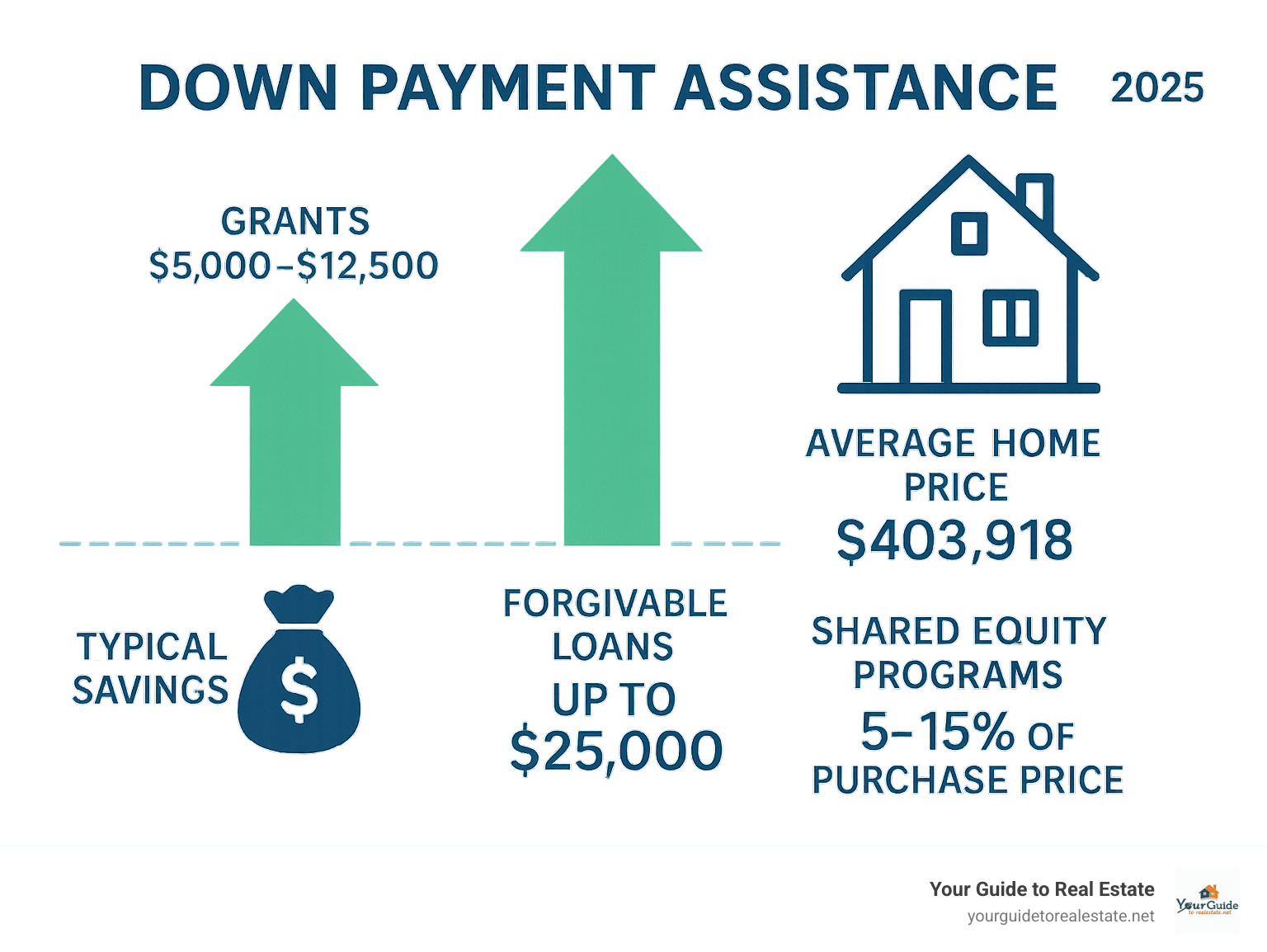
- Shared Equity Programs: Co-ownership where you share future home value changes.
The biggest myth in real estate is that you need a 20% down payment. In reality, the minimum is often much lower—just 5% in Canada for homes under $500,000, and even less with some U.S. programs. Still, rising home prices can make even a 5% down payment a significant hurdle. This is where DPA becomes a game-changer.
By bridging the gap between your savings and the required down payment, these programs help you get into a home faster, build equity sooner, and avoid high-cost personal loans. Many also help lower your monthly mortgage payment by reducing the total loan amount. A larger down payment can also help you avoid Private Mortgage Insurance (PMI) in the U.S. or CMHC insurance in Canada, saving you money every month.
Who is Typically Eligible for Assistance?
Each DPA program has its own rules, but most share common eligibility criteria:
- Buyer Status: While many programs target first-time homebuyers, over 38% are available to repeat buyers. The definition of “first-time homebuyer” is also often flexible, sometimes including anyone who hasn’t owned a home in three years, single parents, or those who have gone through a divorce. For more guidance, see our Easy Steps to Buying Your First Home.
- Income Limits: Most programs are for low-to-moderate income households, with limits based on your region’s Area Median Income (AMI). Caps can range from under $100,000 to $150,000 or more, depending on the program and your household size.
- Credit Score: Lenders and DPA providers need to see a history of responsible debt management. While some programs are flexible, many require a minimum credit score, such as 650.
- Primary Residence: Nearly all DPA programs require the property to be your primary residence, not an investment or vacation home.
- Homebuyer Education: Many programs require completing a homebuyer education course. These courses provide valuable knowledge about the buying process, mortgages, and home maintenance.
The Different Types of DPA Programs Explained
Down payment assistance comes in several forms, each designed for different financial situations. Understanding these options helps you pick the perfect fit for your homeownership goals.

Grants
Grants are the most sought-after form of DPA because they are essentially gift money that you don’t have to pay back. Typically, you must use the funds for your down payment or closing costs and live in the home for a specified period. For example, some Fannie Mae sponsored programs in Florida provide direct grants to homebuyers. You can search for home buying assistance programs in the US to find opportunities in your area.
Forgivable Loans
A forgivable loan is a second mortgage that doesn’t require monthly payments and is “forgiven” over time. As long as you live in the home for the required period (e.g., five to seven years), the loan balance is gradually reduced until it disappears. For instance, the Ingham County DPA Program in Michigan offers up to $30,000 as a zero-interest second mortgage that is fully forgiven after seven years.
Deferred-Payment Loans
These loans provide upfront funds with 0% or very low interest rates and no monthly payments. The full loan amount is due when you sell the home, refinance your mortgage, or at the end of the loan term. The Nova Scotia Down Payment Assistance Program is a good example, offering an interest-free loan of up to 5% of the home’s purchase price, repayable over 10 years.
Shared Equity Mortgages
Shared equity programs involve a partnership between you and the DPA provider. They contribute to your down payment in exchange for a share of the home’s future appreciation (or depreciation) when you sell. This lowers your initial mortgage and monthly payments. Calgary’s Attainable Homes Program uses this model to help buyers in a high-cost market. To learn how this fits into your mortgage strategy, read our guide on Understanding Mortgages: A Beginner’s Guide to Home Loans.
[TABLE] Comparing Down Payment Assistance Options
| Program Type | Repayment Required? | Key Feature | Best For… |
|---|---|---|---|
| Grant | No | Free money with conditions | Buyers who may not stay in the home long-term. |
| Forgivable Loan | No, if you meet terms | Loan is “forgiven” over time | Buyers planning to live in the home for many years. |
| Deferred-Payment Loan | Yes, at a later date | No monthly payments | Buyers who need help now but expect higher income later. |
| Shared Equity | Yes, plus a share of profit | Lower monthly mortgage | Buyers in high-cost markets who are comfortable sharing future equity. |
Your Guide to Applying for Down Payment Assistance
Applying for down payment assistance is a straightforward process when broken down into steps. Following this guide will help you steer the application smoothly.

Step 1: Finding the Right Program for You
DPA programs are offered by federal, state/provincial, and municipal governments, as well as non-profit organizations. Your best option will depend on your location and financial situation.
Start your search with these trusted resources:
- Federal Resources: In the U.S., the Department of Housing and Urban Development (HUD) lists state-specific programs. In Canada, the Canada Mortgage and Housing Corporation (CMHC) is the primary source for homeownership information.
- Local Housing Authorities: Search for your city or county’s housing authority to find hyper-local programs.
- Approved Mortgage Lenders: Lenders who participate in DPA programs can be valuable guides.
Step 2: Understanding the Eligibility Criteria
Once you find promising programs, check their eligibility requirements. Key factors include:
- Household Income Limits: Most programs target low-to-moderate income households, with specific caps based on your area’s median income and family size.
- Home Price Caps: Programs often set a maximum purchase price for eligible homes, which varies by market. For example, a program in Dallas will have different limits than one in rural Oklahoma.
- Location Restrictions: Assistance is location-specific. A program for Oklahoma City cannot be used in another state.
- Homebuyer Education: Many programs, especially for first-time buyers, require completing a homebuyer education course to ensure you are prepared for homeownership.
- First-Time Homebuyer Status: This rule is often flexible. You may qualify if you haven’t owned a home in three years or are a single parent or displaced homemaker.
If you plan to use an FHA loan with your DPA, review our guide on FHA Loan Requirements to see how they work together.
Step 3: Gathering Your Documents and Submitting Your Application
With a program selected, the final step is preparing your application. Being organized will speed up the process.

You will typically need the following:
- Completed Application Form: Fill this out accurately and completely.
- Government-Issued ID: A driver’s license or passport.
- Proof of Income: This includes recent pay stubs and tax returns. In Canada, this is your Notice of Assessment.
- Mortgage Pre-Approval Letter: This shows you can secure the primary financing for the home.
- Purchase Agreement: Some programs require a signed purchase agreement for a specific property before they will finalize your DPA.
While DPA can add time to your closing, having your documents ready makes a significant difference. To understand how this fits into the overall timeline, see our guide on the Loan Process for Buying a House.
Exploring DPA Programs: Examples, Drawbacks, and Alternatives
To give you a clearer picture, here are some real-world examples of down payment assistance programs, along with potential challenges and alternative paths to homeownership.
A Look at Programs Across North America
DPA programs vary significantly by location. Your best opportunities will be local to your specific city, county, or state.
-
In Canada: Provinces offer diverse support. Nova Scotia’s DPAP provides an interest-free loan of up to 5% of the purchase price (max $25,000), repayable over 10 years. You can find more info on the Nova Scotia DPAP on their official site. New Brunswick’s Home Ownership Program offers a forgivable loan of up to $75,000 for low-to-moderate income households. In Alberta, the Métis Nation of Alberta provides a forgivable loan of up to $20,000 for Métis Citizens, which is forgiven after five years of residency.
-
In the U.S.: The landscape is vast, with thousands of state and local programs. Since Your Guide to Real Estate serves clients in areas like Dallas and Oklahoma City, it’s crucial to research local options. For example, Minnesota Housing offers up to $18,000 through its Start Up and Step Up programs. In Michigan, the Ingham County DPA Program provides up to $30,000 as a zero-interest second mortgage, forgiven after seven years. You can explore the Ingham County DPA Program details here. Florida’s Hometown Heroes program offers a 30-year deferred second mortgage for essential workers.
Potential Drawbacks and Limitations
While DPA is a powerful tool, it’s important to be aware of potential challenges:
- Repayment Obligations: Not all DPA is free money. Many programs are loans that must be repaid upon selling, refinancing, or at the end of a term.
- Property Liens: Most DPA loans place a second mortgage (lien) on your property, which must be settled before the title is clear.
- Restrictions: Some programs limit your ability to sell or refinance for a certain period.
- Higher Interest Rates: The first mortgage paired with a DPA program may have a slightly higher interest rate than a conventional loan.
- Longer Closing Times: The additional application and approval process can extend your closing timeline.
- Tax Implications: Some forms of assistance may be considered taxable income. Always consult a tax professional.
Alternatives If You Don’t Qualify
If DPA isn’t the right fit, other paths to homeownership exist:
- Gifted Funds: Family members can gift you money for a down payment. Lenders will require a gift letter stating the funds are not a loan.
- Employer Assistance: Check with your HR department for employer-sponsored home buying assistance programs.
- Seller Concessions: The seller can agree to pay a portion of your closing costs, freeing up your cash for the down payment.
- Low Down Payment Mortgages: FHA, VA, USDA, and conventional loans are widely available and require as little as 0-5% down. While you may pay mortgage insurance, they are a viable alternative. Our guide on Mortgage Options Explained can help you explore these in detail.
Frequently Asked Questions
Here are answers to some of the most common questions about down payment assistance.
Do you have to pay back down payment assistance?
It depends entirely on the program type:
- Grants are gifts that you do not have to pay back, provided you meet the conditions (like living in the home for a set period).
- Forgivable loans are forgiven over time. If you stay in the home for the required duration (e.g., 5-15 years), you won’t have to repay it. If you move early, you may have to pay back a prorated amount.
- Deferred-payment loans must be repaid, but not immediately. Payment is typically due when you sell, refinance, or the loan term ends.
- Shared equity programs require repayment of the initial amount plus a percentage of your home’s appreciation when you sell.
Always read the terms carefully to understand your repayment obligations.
Can repeat homebuyers get down payment assistance?
Yes. It’s a common myth that DPA is only for first-time buyers. Over 38% of all homeownership programs are available to repeat buyers. Additionally, the definition of a “first-time homebuyer” is often broad. Many programs use a three-year rule, meaning you may qualify if you haven’t owned a home in the last three years. Don’t assume you’re ineligible just because you’ve owned a home before.
How does down payment assistance affect the mortgage process?
Using DPA adds a few steps to the mortgage process. You will have two separate applications: one for your primary mortgage and one for the DPA. This can add time to your closing, so it’s important to apply early.
Crucially, your mortgage lender must be approved to work with your chosen DPA program. Not all lenders participate in all programs, so confirm this upfront. An experienced lender can be a great resource for finding compatible programs.
Financially, DPA reduces the amount you need for your primary mortgage, which lowers your loan-to-value (LTV) ratio. This can help you qualify for better loan terms. For more help, see our guide on How to Compare Mortgages.
Conclusion
The path to homeownership can feel challenging, but down payment assistance programs are designed to bridge the financial gap. From grants and forgivable loans to other creative solutions, there are over 2,000 programs across North America that can turn your dream of owning a home into a reality.
These programs aren’t just for first-time buyers, and the eligibility rules are often more flexible than you might think. The key is to research local options, understand the terms, and get your documents in order.
At Your Guide to Real Estate, we provide the proven framework and stress-free guidance to make complex processes manageable. DPA is one piece of the puzzle. To see the complete picture, your next step is to learn how these programs work with your primary loan. Explore our Understanding Mortgages: A Beginner’s Guide to Home Loans to move forward with confidence.