
Understanding Property Rights: When Government Powers Override Owner Control
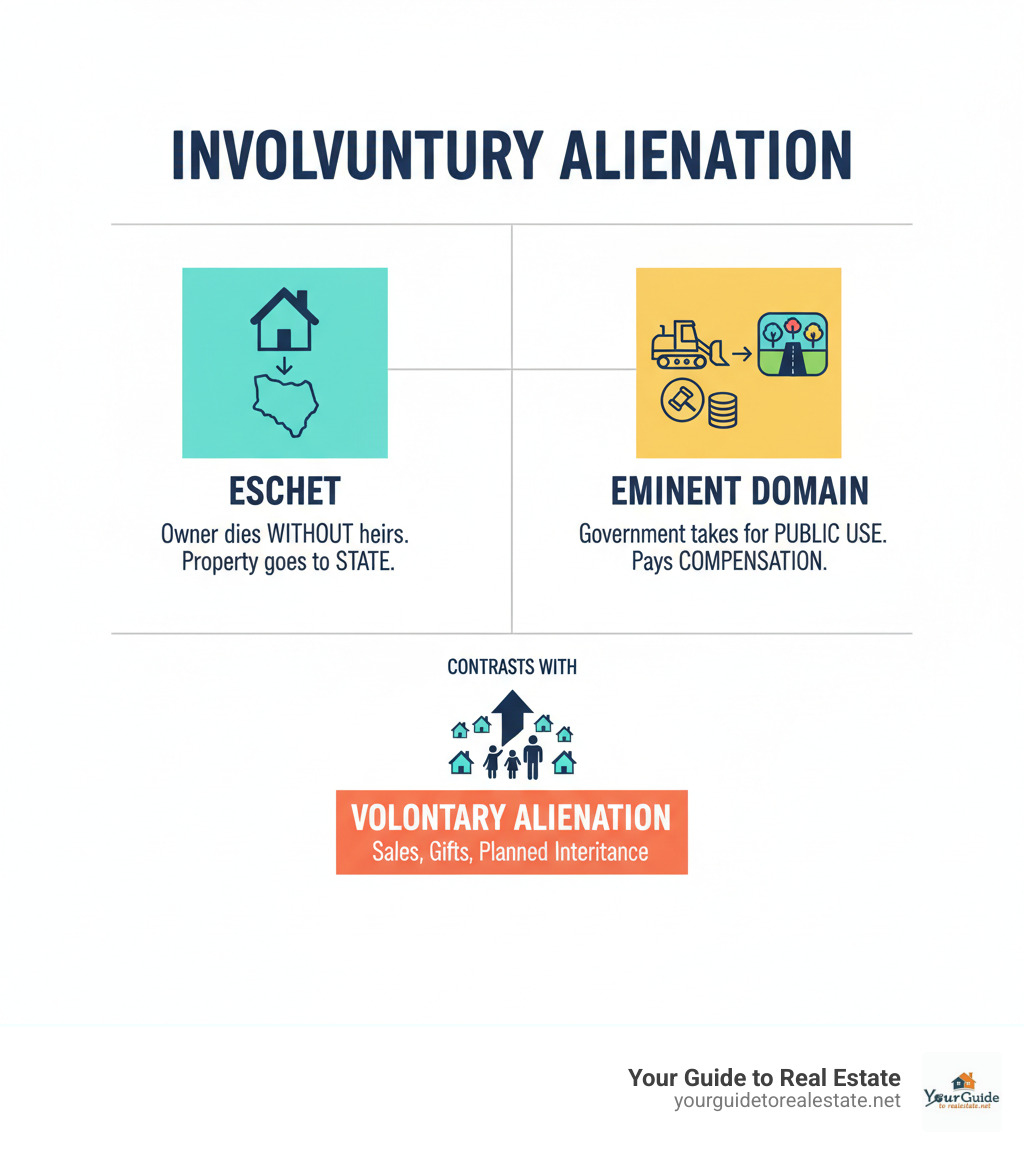
Escheat and eminent domain are both examples of involuntary alienation – the transfer of property ownership without the owner’s consent. These government powers can seem intimidating, but understanding them is crucial for anyone involved in real estate.
Quick Answer:
- Involuntary alienation = Property transfer without owner’s consent
- Escheat = Property reverts to state when owner dies without heirs
- Eminent domain = Government takes property for public use with compensation
- Both are government powers that override private property rights
When you own property, you might think you have complete control. But the reality is different. Even with fee simple absolute ownership – the highest form of property ownership – the government retains certain powers over your land.
These powers exist to serve the public good. Eminent domain allows governments to build highways, schools, and other public infrastructure. Escheat ensures that property doesn’t sit abandoned when owners die without heirs.
The key distinction is involuntary. Unlike selling your home or gifting it to family (voluntary alienation), these transfers happen through legal processes – whether you agree or not. Property owners do have rights and can contest these actions, but they cannot simply refuse to participate.
This differs significantly from other property transfers like adverse possession (where a private individual takes property) or inheritance through a will (where the original owner planned the transfer).
Escheat and eminent domain are both examples of terms explained:
Understanding Involuntary Alienation: When Property is Transferred Without Consent
Picture this: you own a beautiful home with a white picket fence, and suddenly the government needs your land for a new highway. Or imagine someone passes away without a will or family, leaving their property in legal limbo. These scenarios might sound like plot twists from a legal drama, but they’re real situations that happen every day across America.
This is involuntary alienation – where property changes hands without the owner saying “yes, please take my land.” It’s not as scary as it sounds, but it’s definitely something every property owner should understand.
Escheat and eminent domain are both examples of how the government can step in and transfer property ownership through legal processes. Unlike your typical real estate transaction where everyone shakes hands and signs papers willingly, these transfers happen whether the original owner agrees or not.
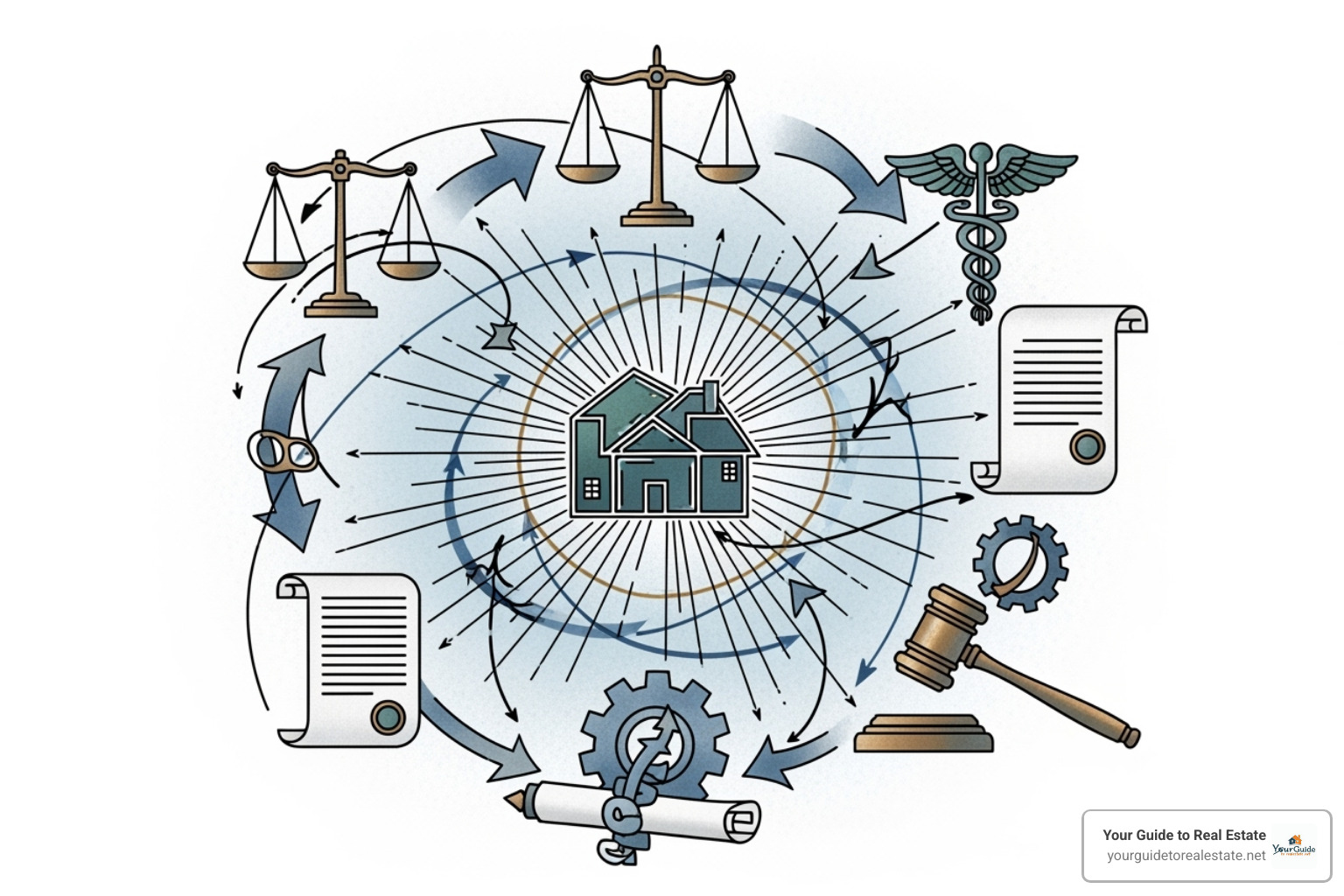
The key thing to remember? These aren’t random government power grabs. They’re established legal processes with rules, protections, and purposes. Understanding them helps you steer the real estate world with confidence, whether you’re buying your first home or managing an investment property.
What is Involuntary Alienation?
Involuntary alienation is simply when property ownership transfers from one person to another without the original owner’s consent. Think of it as the legal system saying, “Sorry, but this property needs to change hands for important reasons.”
This happens through what lawyers call “operation of law” – meaning the law itself triggers the transfer, not a person’s decision. Sometimes a court makes the decision, other times it’s an automatic legal process.
The word “involuntary” tells the whole story. The original owner didn’t wake up one morning and decide to give away their property. Instead, a legal situation forced the change. This could be because they owed money, the government needed the land, or there was simply no one left to inherit it.
Voluntary vs. Involuntary Alienation
To really understand involuntary transfers, let’s compare them to the normal way property changes hands.
Voluntary alienation is what most of us think of when we imagine property transfers. You decide to sell your house, so you list it with a realtor. You choose to gift land to your daughter for her wedding. You plan to leave your vacation home to your grandchildren in your will.
The magic word here is choice. You’re in the driver’s seat, making decisions about your own property. Everything happens because you want it to happen.
Involuntary alienation flips this script completely. Here, the transfer happens because of legal requirements or government powers, not personal choice. The property owner might fight it, ignore it, or even be completely unaware it’s happening – but the transfer occurs anyway.
Escheat and eminent domain are both examples of involuntary transfers where the government has the final say. But they’re not the only ones. Foreclosure happens when you can’t pay your mortgage. Tax sales occur when property taxes go unpaid. Adverse possession can transfer property to someone who’s been using land without permission for years.
The bottom line? While we all prefer making our own choices about our property, the legal system has backup plans for situations where voluntary transfers won’t work or aren’t possible.
Escheat and Eminent Domain are Both Examples of Government Power
When you buy your dream home, it’s natural to think you have complete control over your property. But here’s something that might surprise you: the government always keeps certain powers over your land, even when you own it outright.
Think of it like this – you’re the captain of your ship, but the government still controls the waters you sail in. These powers exist for good reasons: to build roads we all use, to make sure abandoned property doesn’t just sit there forever, and to keep communities functioning smoothly.
Escheat and eminent domain are both examples of these government powers that can override private property rights. While that might sound scary at first, understanding these concepts helps you steer real estate with confidence.
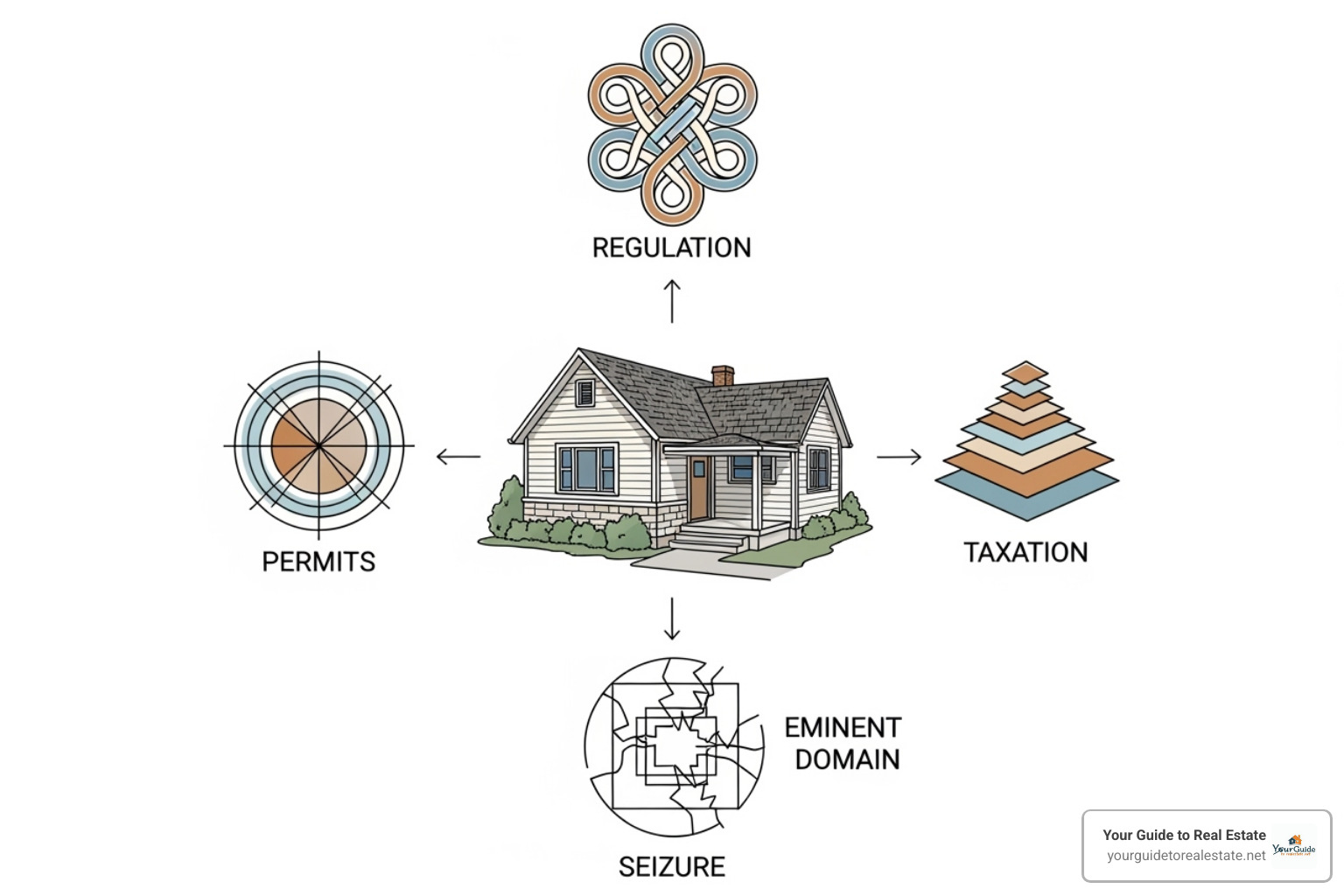
The government has four main powers over property, and real estate professionals use the acronym PETE to remember them:
- Police Power (like zoning laws that keep factories out of neighborhoods)
- Eminent Domain (taking property for public use with fair payment)
- Taxation (those property taxes you pay each year)
- Escheat (when property goes back to the state because there’s no owner)
Most of the time, police power and taxation work behind the scenes – you follow building codes and pay your taxes, and life goes on. But eminent domain and escheat are different. They can actually transfer ownership of your property, whether you want it to happen or not.
Eminent Domain Explained: When Public Good Trumps Private Property
Eminent domain sounds intimidating, but it’s actually a power that helps build the infrastructure we all depend on. Simply put, it’s the government’s right to buy your property for public use, even if you don’t want to sell.
This power comes straight from the Fifth Amendment to the Constitution. The government can take your property, but only if two big conditions are met: the land must be used for something that benefits the public, and you must receive fair payment for it.
What counts as “public use”? Think highways that connect cities, schools that educate our kids, parks where families gather, or utility lines that bring power to homes. Sometimes it’s less obvious – like taking blighted areas to revitalize neighborhoods. The courts have generally been pretty broad in what they consider public benefit.
The legal process is called condemnation, and it usually unfolds like this: First, the government identifies a need (maybe a new highway route). Then they hire appraisers to determine your property’s fair market value – what a willing buyer would pay a willing seller in normal circumstances. Next comes an offer and hopefully some negotiation.
If you can’t reach an agreement, the government files a condemnation lawsuit. Don’t panic though – you have rights in this process. You can challenge whether the use is truly public, contest the compensation amount, or negotiate for better terms.
Here’s something interesting: sometimes the government doesn’t formally take your property but does something that makes it nearly worthless. Maybe they build a highway right next to your quiet suburban home, destroying its value. This is called inverse condemnation, and you can actually sue the government for compensation.
One important note: while property owners get paid fair market value, renters typically don’t receive relocation help from the government. It’s one of those gaps in the system that can create real hardship.
The Concept of Escheat: What Happens to Property Without an Owner?
Now let’s talk about escheat – it rhymes with “cheat” but it’s actually about preventing legal chaos. Escheat and eminent domain are both examples of how the government ensures property always has an owner.
Here’s the scenario: someone dies without a will (called dying “intestate”) and has no living relatives who can inherit their property. What happens to their house, their land, their bank accounts? They can’t just float in legal limbo forever.
That’s where escheat comes in. After a thorough search for heirs and a waiting period (usually around five years), the property goes to the state. It’s like having a backup plan built into the legal system.
The process is actually quite careful. When someone dies without a will, the probate court doesn’t just immediately grab their stuff. They actively search for relatives – spouses, kids, parents, siblings, even distant cousins. They post public notices and dig through records. The state really tries to find rightful heirs before taking ownership.
But here’s the good news: even after property escheats to the state, it’s usually not gone forever. If legitimate heirs show up later with proof of their relationship, they can often claim the property or its value back from the state. Most escheat processes are reversible.
You see this a lot with forgotten bank accounts. Someone moves, changes banks, and forgets about an old savings account. After years of inactivity, the bank eventually turns that money over to the state’s unclaimed property division. But the rightful owner (or their heirs) can still claim it later.
The best protection against escheat? Simple: create a will or trust. Even a basic will that says “everything goes to my sister Jane” prevents your property from escheating. It’s one of those situations where a little planning goes a long way.
Understanding these government powers helps you make smarter real estate decisions. While escheat and eminent domain are both examples of involuntary property transfers, they’re predictable parts of our legal system – not random events to fear.
How Do These Differ from Other Property Transfers?
Understanding property transfers can feel like navigating a maze, but the key is knowing who’s doing the taking and why it’s happening. While escheat and eminent domain are both examples of government-powered involuntary transfers, they’re quite different from other ways property changes hands.
Think of it this way: property transfers fall into distinct categories based on who initiates them. Government transfers (like escheat and eminent domain) come from the top down – the state exercises its sovereign power over private property. Private transfers happen between individuals, whether they’re planned or unexpected.
The legal distinctions matter because they determine your rights as a property owner. When the government acts, there are constitutional protections and specific procedures. When private parties are involved, different rules apply entirely.

Why Adverse Possession is Not the Same
Adverse possession might sound like legal mumbo-jumbo, but it’s actually a fascinating concept. Imagine someone starts using your vacant land, puts up a fence, and treats it like their own for years. Under certain conditions, they might actually become the legal owner through adverse possession.
Here’s what makes adverse possession completely different from government takings: it’s a private individual action. One person takes property from another person – no government involvement required. The state just provides the legal framework that makes it possible.
For adverse possession to work, the taker must possess the property in a way that’s actual, open, notorious, continuous, and hostile for a specific time period (usually 5-20 years, depending on your state). That “hostile” part doesn’t mean they’re angry – it means they’re using the property without the owner’s permission.
The biggest difference? No compensation. Unlike eminent domain where you get paid, adverse possession leaves the original owner with nothing. The person who loses their property through adverse possession gets zero dollars, while someone facing eminent domain receives fair market value.
Escheat and eminent domain are both examples of government powers that follow constitutional procedures. Adverse possession? That’s just one private party taking advantage of another’s neglect, with the law’s blessing.
Transfers by Descent (Intestate Succession)
When someone dies without a will, their property doesn’t just disappear into thin air. Instead, state law steps in with a predetermined plan called intestate succession or transfers by descent. Think of it as the government’s backup plan for your estate.
Here’s where it gets interesting: intestate succession looks a lot like escheat at first glance. Both involve someone dying without a will. But there’s a crucial difference – the existence of heirs.
With intestate succession, the deceased person has living relatives who can inherit. The probate court identifies these heirs and distributes property according to a specific order of succession. Typically, this means spouses first, then children, then parents, then siblings, and so on down the family tree.
Escheat only kicks in when there are absolutely no heirs to be found. It’s the ultimate safety net when someone dies completely alone in the world with no living relatives whatsoever.
The probate process for intestate succession can take months or even years, especially for complex estates. But unlike escheat, the property stays within the family bloodline rather than reverting to the state. It’s what the law assumes most people would want – their assets going to family members rather than the government.
This distinction matters because it shows how escheat and eminent domain are both examples of last-resort government powers. Escheat only happens when the normal family inheritance system completely breaks down.
Navigating the Legal Landscape of Property Takings
When you’re dealing with property ownership, understanding that escheat and eminent domain are both examples of involuntary alienation is just the beginning. The real challenge comes when you need to steer the actual legal processes behind these government powers.
Think of it this way – knowing these concepts exist is like knowing there are storms out there. But understanding the legal processes is like learning how to read weather patterns and prepare accordingly. Whether you’re a current homeowner, thinking about buying your first property, or working in real estate, these legal frameworks can directly impact you.
The good news? While these are government powers, they’re not random or arbitrary. Both processes operate within well-established legal frameworks that include due process protections. In eminent domain cases, there’s also the constitutional requirement of just compensation. These aren’t legal wild cards – they’re structured procedures with built-in safeguards.
At Your Guide to Real Estate, we believe that knowledge is your best protection. Whether you’re crafting an estate plan to prevent escheat issues or facing a potential eminent domain situation, understanding your rights and options makes all the difference. Our proven framework helps you steer these complex waters with confidence.
The Process and Implications of Eminent Domain
Facing an eminent domain action can feel overwhelming. One day you’re living your life, and the next day the government is telling you they need your property for a highway expansion. But here’s what many people don’t realize – this isn’t a process where the government just shows up and takes your land overnight.
The eminent domain process typically starts with notification. A government entity (could be federal, state, or local) will inform you that your property is being considered for acquisition. This isn’t the final word – it’s the beginning of a structured legal process.
Next comes the appraisal phase. The government will conduct their own assessment to determine what they believe is the fair market value of your property. This appraisal forms the foundation of their initial offer to you. However – and this is crucial – their first appraisal isn’t necessarily the final word on what your property is worth.
The negotiation stage is where things get interesting. You have every right to negotiate the government’s initial offer. Many property owners don’t realize this, but that first offer may not reflect the full just compensation you’re entitled to receive. Depending on your situation and local laws, this compensation might include not just your property’s value, but also relocation costs or even compensation for lost business.
If negotiations don’t lead to an agreement you can live with, the government will file a condemnation lawsuit. This is where eminent domain gets formally exercised through the court system. Even at this stage, you’re not powerless. You can challenge the amount of compensation being offered by presenting your own appraisals and arguments. While challenging the government’s claim of “public use” is possible, it’s typically much harder to win on those grounds.
The legal implications here are significant. Escheat and eminent domain are both examples of processes that can permanently change property ownership, but eminent domain at least guarantees you’ll be compensated fairly. The key word there is “fairly” – which is why having experienced legal counsel is so important.
Consider this: landmark cases like Kelo v. City of New London have shaped how courts interpret “public use,” while other cases have explored what constitutes a regulatory taking that requires compensation. The legal landscape is complex, but it’s designed to balance public needs with private property rights.
The Process and Implications of Escheat
Unlike eminent domain, escheat usually happens quietly. There’s typically no dramatic confrontation because, by definition, there’s no living owner to contest the process. But that doesn’t mean it’s simple or without significant implications.
The escheat process often begins when someone dies intestate (without a will) and has no apparent legal heirs. It can also start when financial assets like bank accounts remain dormant for extended periods, suggesting they’ve been abandoned.
Here’s where it gets interesting – the state doesn’t just immediately grab the property. There’s a search for heirs that can be quite extensive. State agencies, usually through their unclaimed property divisions, will dig through public records, run advertisements, and sometimes even hire genealogists to track down potential family members.
This search happens during what’s called a dormancy period. The length varies by state and type of asset, but it’s typically several years. During this time, the state is actively trying to find rightful owners or heirs. It’s like a legal treasure hunt, except the treasure is someone’s inheritance.
Once the prescribed waiting period ends and no heirs have been found, the property officially transfers to state custody. If it’s real estate, the state will often sell it and hold the proceeds. If it’s financial assets, they’ll typically be managed by the state’s unclaimed property division.
But here’s the part that surprises many people – escheat is often reversible. If legitimate heirs show up later (even years later), they typically have the right to claim the property or its value. We’ve seen cases where family members finded escheated property decades after the original owner died and successfully reclaimed it.
The most important implication? The critical need for proper estate planning. Having a valid will or trust ensures your property goes where you want it to go, not into state custody. It’s one of those situations where a little planning upfront can save your family significant headaches later.
Escheat and eminent domain are both examples of legal processes that operate within established frameworks, but they serve very different purposes. While eminent domain serves immediate public needs, escheat serves as society’s safety net for abandoned property. Both remind us that property ownership, while strong, exists within a broader legal and social context.
Conclusion
We’ve taken quite a journey together through the sometimes confusing world of property transfers that happen without your say-so. It’s not exactly light reading, but understanding these concepts could save you – or your heirs – from some serious headaches down the road.
Escheat and eminent domain are both examples of how the government maintains ultimate authority over property, even when you think you own it outright. Think of it this way: when you “own” property, you’re really holding the strongest bundle of rights possible – but the government always keeps a few trump cards.
Eminent domain is the government’s ability to take your property for the greater good, as long as they pay you fairly for it. It’s not personal – they’re building that new highway or school whether you like it or not. But at least you get compensated at fair market value.
Escheat is different entirely. It’s what happens when someone dies without a will and without any family to inherit their property. The state steps in as the ultimate heir, making sure property doesn’t just sit there gathering dust forever. It’s actually pretty practical when you think about it.
These government powers are quite different from other ways property changes hands. When your neighbor claims part of your yard through adverse possession, that’s a private person taking action – not the government. When your great-aunt passes away and leaves you her house in her will, that’s voluntary. When she dies without a will but has family, the property still goes to relatives through intestate succession.
The real takeaway here? Estate planning matters more than you might think. A simple will can prevent your property from escheating to the state. And if you’re ever facing eminent domain, you have rights – including the right to challenge the government’s offer and make sure you get truly fair compensation.
At Your Guide to Real Estate, we’ve seen how these legal concepts play out in the real world. Whether you’re in Dallas wondering about your property rights or in Oklahoma City planning your estate, understanding these rules helps you make smarter decisions. We’re here to help you steer these waters with confidence and clarity.
Contact Your Guide to Real Estate to help you steer property laws