
Why Finding the Right Buyer’s Agent is Your Key to Real Estate Success
When you’re ready to find buyers agent representation, you’re taking one of the smartest steps in your home buying journey. Nearly nine out of 10 buyers work with a professional real estate agent at some point during their purchase process, according to research data.
Quick Answer: How to Find a Buyers Agent
- Search Online – Use agent directories, check reviews, and analyze their digital presence
- Get Referrals – Ask friends, lenders, and attend open houses to observe agents in action
- Interview Candidates – Create a shortlist and ask specific questions about experience and strategy
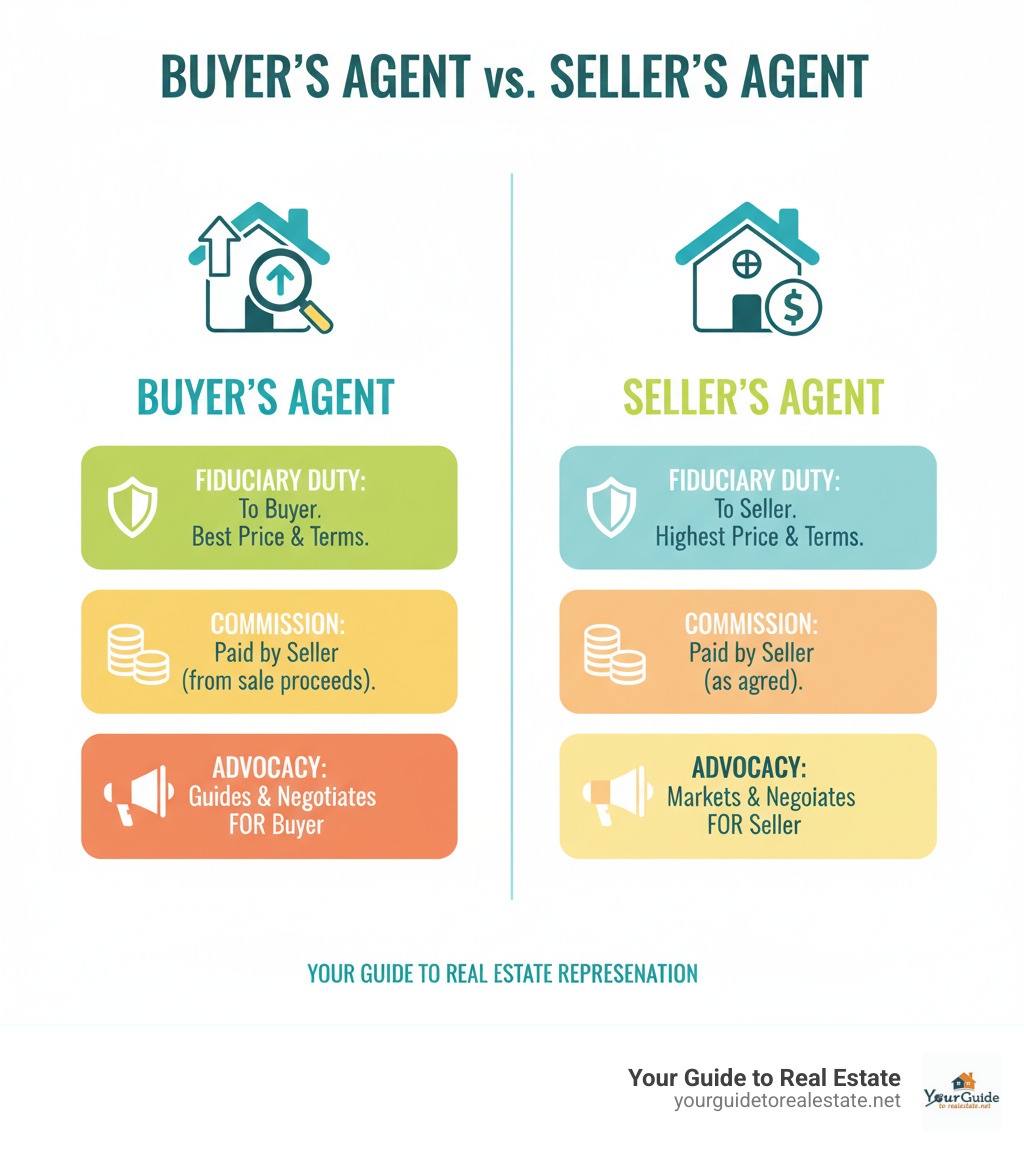
A buyer’s agent is a licensed real estate professional who works exclusively for you – the buyer. Unlike listing agents who represent sellers, buyer’s agents have a fiduciary duty to protect your interests and help you secure the best possible deal.
Here’s what makes buyer’s agents valuable:
- Market Navigation – They know neighborhoods, pricing trends, and hidden opportunities
- Negotiation Power – Professional negotiators who can save you thousands of dollars
- Access to Listings – Including off-market properties not available to the general public
- Expert Guidance – From initial search through closing and beyond
The key is finding an agent who understands your specific needs and has the skills to deliver results. As one forum user noted: “Top agents aren’t for everyone; their high volume might mean less personal attention.”
Whether you’re a first-time buyer or seasoned investor, the right buyer’s agent becomes your trusted partner in what’s likely your biggest financial decision.
Method 1: The Digital Deep Dive to Find a Buyers Agent Online

When you’re ready to find buyers agent representation, your laptop becomes your best friend. The internet gives you incredible power to research agents thoroughly before you even make that first phone call. It’s like having a crystal ball into how they work, what clients think, and whether they’re truly committed to helping buyers.
Start your search with online agent directories. These platforms let you filter by location, specialties, and sales history. A professional website with detailed bios and clear contact information tells you an agent takes their business seriously. You want someone who invests in their online presence because it often reflects how they’ll invest in your home search.
Look for credentials that show specialized buyer training. The ABR (Accredited Buyer Representative) designation means they’ve completed extra coursework specifically about representing buyers. CRS (Certified Residential Specialist) indicates advanced training and significant sales experience. But here’s a real gem: EBA (Exclusive Buyer Agent) means they never represent sellers, so there’s zero conflict of interest.
Remember the REALTOR® difference too. While all REALTORS® are real estate agents, not all agents are REALTORS®. Members of the National Association of REALTORS® follow a strict Code of Ethics, giving you extra protection.
The key is identifying agents who specialize in representing buyers. Their production stats should show consistent buyer transactions, not just seller listings. For deeper insights on what to look for, check out our guide on Real Estate Agent Selection.
How to analyze online reviews
Online reviews are like getting insider information from past clients. But don’t just look at star ratings – dig into the actual stories people tell.
Look for patterns in the feedback. When multiple reviews mention the same strengths like “great negotiator” or “always available,” that’s meaningful. Specific examples carry more weight than generic praise. A review saying “Sarah helped us win a bidding war and saved us $15,000” tells you way more than “Sarah was awesome.”
Pay attention when reviews mention communication style and problem-solving skills. The best buyer’s agents are patient teachers who explain everything clearly. They should be available evenings and weekends because real estate doesn’t follow a 9-to-5 schedule.
Recent reviews matter most since they reflect current performance. An agent who was great five years ago might be overwhelmed with too many clients now. Look for consistent quality in recent feedback.
Watch for red flags too. If reviews mention poor communication, missed appointments, or pressure tactics, keep looking. For more detailed guidance on making the right choice, read our How to Choose the Right Real Estate Agent: A Complete Buyer’s Guide.
Using social media and video content
Social media gives you a behind-the-scenes look at how agents really work. YouTube videos are especially valuable because many top agents create weekly market updates and buyer tips. Watching these helps you gauge their local market insights and see if their personality matches what you’re looking for.
Does the agent seem knowledgeable and confident? Do they explain things clearly without using too much jargon? Can you picture yourself working with them for months? These videos reveal their true professionalism and teaching style.
Check their LinkedIn profiles for professional connections and recommendations from past clients. Active community involvement often signals deep local knowledge – exactly what you want in a buyer’s agent.
Their social media activity shows how engaged they are with their market and clients. An agent posting regular market updates and responding to questions demonstrates the kind of service you can expect. For more video resources about real estate, explore our real estate videos.
The digital deep dive takes time, but it’s worth it. You’re gathering intelligence that helps you create a solid shortlist of potential agents who truly understand buyers and have the track record to prove it.
Method 2: On-the-Ground Recon and Personal Referrals

Sometimes the best way to find buyers agent representation is to get out there and see agents in their element. While online research gives us great insights, there’s nothing quite like watching a professional work in person or hearing honest stories from people we trust.
Think of attending open houses as your chance to be a detective. You’re not just looking at pretty kitchens and master bedrooms – you’re studying the agent running the show. How do they greet visitors? Do they know the neighborhood inside and out? Can they answer tough questions without stumbling? These observations give us a real feel for who they are beyond their polished website photos.
Personal referrals are gold mines too. When your sister raves about her agent or your mortgage lender suggests someone they’ve worked with dozens of times, that carries serious weight. These recommendations come from real experiences, not marketing fluff. Your friends and family have zero reason to steer you wrong, and industry professionals like lenders and attorneys work with agents regularly – they know who delivers and who disappoints.
The beauty of this approach is that you’re gathering authentic intel. No staged photos or carefully crafted testimonials – just real people sharing real experiences. For more guidance on making the right choice, check out our comprehensive guide on How to Select the Best Real Estate Agent.
How to find a buyers agent through referrals
When someone gives you an agent recommendation, don’t just say “thanks” and move on. This is your chance to dig deeper and get the inside scoop. Ask about their specific experience with the agent – what made them great? Were they always available when needed, or did calls go unanswered for days?
Find out about the agent’s strengths and weaknesses too. Maybe they were fantastic at negotiating but terrible at returning texts. Or perhaps they knew every neighborhood detail but took forever to schedule showings. Understanding these nuances helps you figure out if their style matches what you need.
Communication frequency is huge. Some buyers want daily updates, while others prefer weekly check-ins. Ask your referrer how often their agent reached out and whether it felt like too much, too little, or just right. This gives you a baseline for what to expect.
Don’t be shy about asking if they’d use this agent again. That simple question often reveals more than a ten-minute conversation about pros and cons. When someone says “absolutely” without hesitation, you know you’re onto something good. Our Best Buyers Agent guide can help you evaluate these referrals more effectively.
What to look for at open houses
Open houses are like free auditions for potential buyer’s agents. You get to watch them perform without any pressure to commit. Pay attention to their local knowledge first – do they know which schools are best, where the new grocery store is opening, or why home values are rising on the east side of town? This kind of hyperlocal expertise is invaluable.
Watch their professionalism in action. Are they dressed appropriately and managing the flow of visitors smoothly? Do they engage everyone respectfully, from serious buyers to curious neighbors? How they interact with visitors tells you a lot about their people skills and patience level.
Here’s something important: look for honesty about the property. A good agent won’t just gush about the granite countertops. They’ll also mention that the roof needs work in a few years or that traffic gets heavy during rush hour. This transparency shows integrity.
Remember though, the agent at the open house is usually the listing agent representing the seller. While you’re observing their professionalism and skills, keep in mind they’re not working for you. Their job is to get the best deal for their seller client. You’ll still need to find buyers agent representation that’s 100% focused on your interests – someone whose only goal is helping you win.
Method 3: The Interview and Vetting Process

After doing our homework online and gathering referrals, we reach the most exciting part of our journey to find buyers agent representation: the interview process. Think of this as a friendly job interview, except we’re the ones doing the hiring for what might be the most important purchase of our lives.
Creating a shortlist of three to five candidates gives us enough options without feeling overwhelmed. We schedule these interviews knowing that chemistry matters just as much as credentials. After all, we’ll be spending a lot of time with this person during what can be an emotional rollercoaster of a process.
The best part about interviewing potential agents? We get to see their true colors right away. A great buyer’s agent will be just as interested in interviewing us as we are in vetting them. They’ll want to understand our timeline, budget, must-haves, and deal-breakers before they agree to work with us.
This compatibility assessment goes both ways. We’re looking for someone whose communication style matches ours, whose availability aligns with our schedule, and whose personality puts us at ease. For insights into what makes an exceptional agent, check out our guide on Real Estate Agent Skills.
Key questions to ask when you find a buyers agent
During our interviews, we ask strategic questions that reveal how an agent really operates. The key is asking specific questions that go beyond surface-level pleasantries.
“What’s your experience in my target area?” is our opening question. We want to hear about recent sales, neighborhood trends, and local market knowledge. An agent who’s sold five homes in our desired area this year is far more valuable than one who’s never worked there.
“Are you full-time or part-time?” might seem obvious, but it matters. Full-time agents typically have better availability and more current market knowledge. When we’re competing against other buyers, having an agent who can respond quickly to new listings or negotiate changes makes all the difference.
We always ask about communication style and hours. Some agents prefer texting, others stick to phone calls. We want to know their typical response time and whether they’re available evenings and weekends. The best agents understand that great properties don’t wait for business hours.
“What’s your current client load?” helps us gauge how much attention we’ll receive. An agent juggling twenty active buyers might be successful, but we could get lost in the shuffle. We also clarify whether we’ll work directly with them or get passed to a team member.
The million-dollar question is “What’s your strategy for winning offers?” In competitive markets, this separates the pros from the amateurs. We want to hear about their approach to pricing, timing, and presentation. They should mention tools like comparative market analysis to help us make strong, informed offers. For more on this crucial process, read about Competitive Market Analysis Real Estate.
Finally, we ask “How do you handle multiple offer situations?” This scenario is increasingly common, and we need an agent with creative strategies and negotiation skills to help us succeed.
Assessing experience, knowledge, and communication
The how matters as much as the what when agents answer our questions. We’re listening for confidence paired with honesty. If an agent doesn’t know something, we’d rather hear “Let me research that and get back to you” than a made-up answer.
Years in business tell part of the story, but recent activity matters more. An agent who’s been licensed for ten years but only sells a few homes annually might not be as sharp as someone with three solid years of consistent sales.
We pay special attention to hyperlocal expertise. Can they tell us about upcoming developments, school district boundaries, or why one street commands higher prices than another? This granular knowledge becomes invaluable during our search.
Patience with questions reveals a lot about an agent’s character. The best buyer’s agents understand that education is part of their job. They should encourage our questions and explain concepts clearly without talking down to us.
Most importantly, we notice whether they listen to our needs. A great agent asks follow-up questions about our lifestyle, priorities, and concerns. They should be taking notes and tailoring their approach based on what we share.
The interview process might feel formal, but it’s really about finding someone we trust to guide us through one of life’s biggest decisions. To understand what drives these professionals day-to-day, explore The Day-to-Day Life of a Real Estate Agent: What You Didn’t Know.
Navigating Agreements, Commissions, and Conflicts of Interest
As we get closer to selecting our buyer’s agent, it’s important to understand how the business side works. Don’t worry – it’s simpler than you might think, and knowing these details upfront will help you make confident decisions.
Here’s some great news: you typically won’t pay your buyer’s agent directly. Traditionally, the seller covers the real estate commission for both agents – theirs and yours. This commission usually runs between 3% to 6% of the home’s sale price and gets split between the listing agent and buyer’s agent. The money comes out of the seller’s proceeds at closing, not your pocket.
That said, commissions are negotiable, and it’s perfectly fine to discuss this upfront with potential agents. Some agents offer rebates or different fee structures, especially in competitive markets. Just remember what we mentioned earlier about discount agents – extremely low fees might signal less experience or reduced service levels. For insight into what agents actually earn, check out How Much Do Real Estate Agents Really Make? With Real Numbers.
Now, let’s talk about something that should raise red flags: dual agency. This happens when one agent tries to represent both you and the seller in the same transaction. Think about it – how can someone negotiate the best price for you while also trying to get the highest price for the seller? It’s like asking a referee to coach both teams!
This conflict of interest is so problematic that eight states have banned dual agency entirely: Wyoming, Alaska, Vermont, Colorado, Florida, Maryland, Texas, and Kansas. Even where it’s legal, we strongly recommend avoiding it. When you find buyers agent representation, you want someone whose loyalty is 100% with you.
Watch out for agents who seem more interested in closing any deal rather than the right deal for you. Red flags include high-pressure tactics, reluctance to show you properties in your price range, or pushing you toward homes that clearly don’t match your stated needs.
Understanding Buyer’s Agent Agreements
When you choose your agent, you’ll likely sign a buyer’s agent agreement. This isn’t scary – it’s actually protection for both of you. The agreement clarifies expectations, services, and responsibilities.
There are two main types of agreements to understand:
Exclusive Right-to-Represent agreements mean you’re committed to working with this agent for a specific time period, usually 90 days to six months. In return, the agent commits to full representation and all the services that come with it. This includes property searches, market analysis, showing coordination, negotiation, and guidance through closing.
Limited Services or Touring agreements are more flexible but offer fewer protections. These might cover specific services like property showings without the full commitment. However, you might miss out on comprehensive market analysis, negotiation expertise, and ongoing support.
Most successful buyers choose exclusive agreements because they get the agent’s full attention and expertise. The key things to look for in any agreement include a reasonable contract length (avoid anything longer than six months), clear cancellation clauses if you’re not satisfied, and a detailed explanation of what services the agent will provide.
A good agent will explain the agreement thoroughly and answer all your questions. They might even offer a trial period or satisfaction guarantee. If an agent rushes you through this step or seems reluctant to explain the terms, that’s a red flag.
This agreement should feel like a partnership, not a trap. The right agent will want you to feel comfortable and confident before moving forward together.