

Why a Home Inspection Report Is Your Most Valuable Tool in Real Estate
A home inspection report is a detailed document that evaluates the condition of a home’s major systems and components, identifying defects, safety concerns, and items needing repair or replacement. It typically includes:
- Summary of major findings – Critical issues requiring immediate attention
- Detailed section-by-section analysis – Roof, foundation, electrical, plumbing, HVAC
- Photos and descriptions – Visual evidence of conditions and defects
- Inspector’s recommendations – Suggested repairs or further evaluations
- Terminology key – Explanation of codes like “Functional,” “Defect,” or “Safety Concern”
Almost no home is perfect—even newly built ones. According to industry standards, inspectors will usually find some issues needing attention or that the buyer and seller should be aware of. That’s completely normal.
The home inspection report is not a pass/fail test. Instead, it’s a roadmap that helps you understand what you’re buying. It reveals the current condition of the property, from the foundation to the roof, and everything in between.
The purpose of a home inspection is to visually examine the readily accessible systems and components of the home. This report becomes a critical tool for informed decision-making during your real estate transaction. It’s your due diligence—a way to uncover potential problems before you commit to one of the biggest purchases of your life.
Whether you’re a first-time buyer or a seasoned investor, understanding your home inspection report helps you negotiate repairs, plan for future maintenance, or even decide to walk away from a bad deal. For more guidance on the home buying process, check out our Easy Steps to Buying Your First Home.
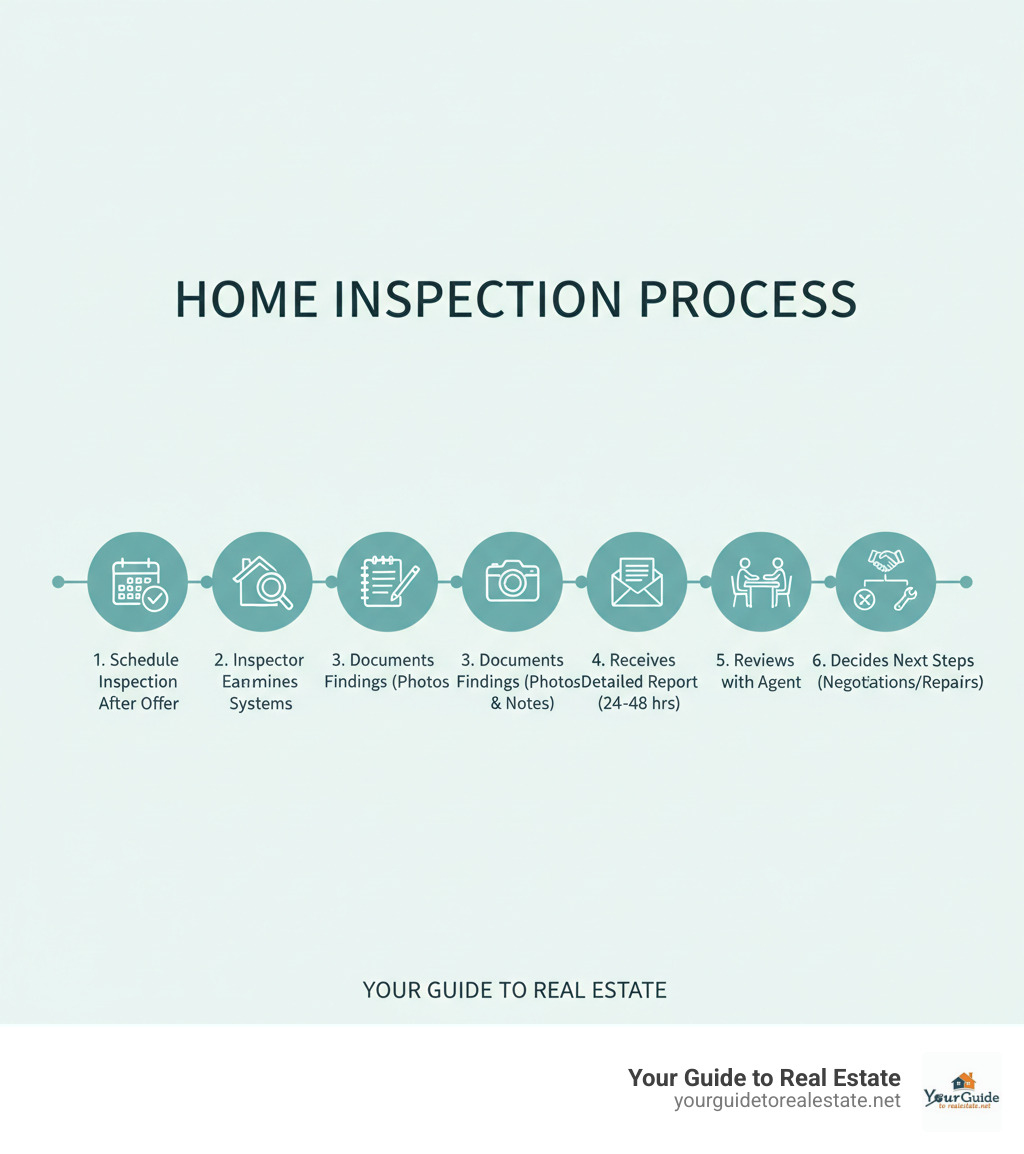
Easy home inspection report glossary:
- what does contingent mean in real estate
- what does pending mean in real estate
- appraisal contingency
The Anatomy of a Home Inspection Report
You’ve just received your home inspection report, and you’re staring at what looks like a novel about your potential new home. Don’t worry—it’s not as overwhelming as it seems once you understand how these reports are put together.
Most home inspection reports follow a similar structure, though the exact format varies depending on which inspector you hired and what software they use. The good news? Once you know what to look for, these reports become surprisingly easy to steer.
Your report will typically start with a summary page. This is your “at a glance” section—the highlights (or lowlights) that need your immediate attention. Think of it like the CliffsNotes version of your home’s condition. It’s tempting to read just this page and call it done, but that would be a mistake. The summary is designed to point you toward the important stuff, but the real story lives in the detailed sections that follow.
After the summary, you’ll find the meat of the report: detailed sections covering every major system and component the inspector examined. Each section includes the inspector’s observations, supported by photos and descriptions. Many modern reports are digital and interactive, making it easy to jump between sections. Some inspectors use color-coding systems to help you quickly identify the severity of issues—green for good, yellow for watch this, red for address this soon.
Here’s something important to remember: these reports aren’t designed to scare you. As many inspectors note right up front, there’s no such thing as a perfect home. Most findings are normal wear and tear or minor maintenance items. The report isn’t meant to “trash the home”—it’s meant to give you information you can use for negotiation, planning future repairs, or prioritizing safety concerns. You can see different report styles and formats by checking out Sample Home Inspection Reports – InterNACHI®.

Core Structural and Exterior Systems
These sections cover what we call the bones and skin of the house. Problems here tend to be the most expensive and complicated to fix, which is why inspectors pay such close attention to them.
The foundation section looks at the base that everything else sits on. Your inspector will check for cracks, signs of movement, or water penetration. They’re looking for red flags like horizontal cracks, efflorescence (that white powdery stuff that means moisture is present), or leaning support piers. While inspectors aren’t structural engineers, they’ll flag anything that looks concerning enough to warrant a specialist’s opinion. Not all cracks are created equal—a small hairline crack in a mortar joint might just be normal shrinkage, while a large horizontal crack could signal bigger problems. Standing water near the foundation is always a concern.
Grading and drainage might sound boring, but this is actually one of the most important systems around your home. Proper grading means the ground slopes away from your house, carrying water away from the foundation instead of letting it pool and seep into your basement or crawlspace. The inspector will note issues like ground that slopes toward the house, damaged or missing gutters, or downspouts that dump water right next to the foundation. The rule of thumb? The ground should slope at least one inch per foot for at least six feet away from the foundation.
The roof covering section examines what’s keeping the weather out of your home. The inspector will identify the roofing material—asphalt shingles, tile, metal, or something else—and assess its overall condition. They’ll look for worn or missing shingles, damaged flashing around chimneys and vents, and signs of past or current leaks. Issues like torn shingles from foot traffic or water pooling on flat sections will definitely make it into the report.
Both exterior and interior walls get their own attention. Outside, the inspector checks the siding material, trim, and any signs of water damage, rot, or structural problems. Warped siding, missing flashing around windows, or soft wood are all concerns. Inside, they’re looking for water stains, significant cracks, or other signs that something might be going on behind the scenes.
Windows are checked for both condition and operation. Can they open and close smoothly? Are the seals intact? Are there broken panes, missing locks, or screens that have seen better days? Windows painted shut or sashes that won’t stay open are common findings in older homes.
Finally, decks and porches are inspected for structural soundness and safety. Deteriorated wood, wobbly railings, or steps that are spaced too far apart can all be safety hazards that need addressing.
Major Mechanical and Interior Systems
This is where we get into the systems that make your house actually livable and comfortable. These are the behind-the-scenes workers that keep you warm in winter, cool in summer, and supplied with hot water for your morning shower.
The electrical system section is all about safety and functionality. The inspector examines the service entrance where power comes into your home, the main electrical panel and any sub-panels, the wiring throughout the house, and all the outlets, switches, and light fixtures. They’ll test important safety features like Ground Fault Circuit Interrupters (GFCIs) in bathrooms and kitchens and check that smoke detectors are present and working. Common findings include open knockouts in electrical panels (holes that should be covered), exposed wiring, outlets near water sources that lack GFCI protection, or outdated wiring systems. Copper wiring is the gold standard, while old aluminum or knob-and-tube wiring raises concerns.
Your plumbing system gets a thorough once-over too. This includes water supply lines, all the fixtures like sinks and toilets, drain and waste pipes, and the water heater. The inspector is looking for leaks, slow drains, corroded pipes, or an aging water heater that might be living on borrowed time. If your report notes that “the water heater is 19 years old and functioning but far beyond its manufacturer’s warranty period,” that’s inspector-speak for “start budgeting for a replacement soon.”
The HVAC system—that’s heating, ventilation, and air conditioning—is tested to make sure it’s working properly. The inspector will run the furnace or boiler and the air conditioning unit (weather permitting) to check basic functionality. They’ll look at ductwork, vents, filter condition, and watch for unusual noises or signs of poor maintenance. A missing filter cover or dirty filter are simple fixes, but a system that’s not heating or cooling properly is a bigger concern.
Insulation and ventilation might not be glamorous, but they have a huge impact on your comfort and energy bills. The inspector checks insulation levels in attics and crawlspaces, looks at vapor barriers, and makes sure there’s adequate ventilation throughout the house. Issues like insufficient insulation, vapor barriers that aren’t properly positioned, or a dryer vent that’s disconnected and venting into the house are all things that need fixing.
The interior components section covers your floors, walls, and ceilings from a finish perspective. Minor cracks in drywall, nail pops, loose floor tiles, or gaps in trim are often cosmetic issues, but sometimes they can hint at bigger problems like foundation settlement or moisture issues.
Appliances and Fireplaces
Your home inspection report also covers many of the built-in items that come with the house, making sure they’re safe and functional.
Built-in kitchen appliances like the dishwasher, range, oven, and microwave are all tested for basic operation. The inspector isn’t checking if they work perfectly—they’re just making sure they turn on and function as expected. A dishwasher that won’t start or a range with burners that don’t heat are the kinds of things you’ll want to know about before closing.
Bathroom fixtures get checked as part of the plumbing inspection, but specific issues like toilets that rock when you sit on them, missing drain stoppers, or showerheads that leak often get called out separately because they’re easy fixes that buyers sometimes want addressed.
The fireplace and chimney inspection looks at what’s visible and accessible. The inspector checks for structural integrity, creosote buildup (that black tarry stuff that can catch fire), and whether the damper opens and closes properly. A chimney that’s clogged or damaged isn’t just an inconvenience—it’s a serious fire and carbon monoxide hazard.
Decoding the Inspector’s Findings: Terminology and Red Flags
You’ve got your home inspection report in hand, and now comes the part where you actually need to understand what it’s telling you. The good news? Once you learn the inspector’s language, it’s much easier to separate the “fix this now” items from the “keep an eye on it” ones.
Most inspectors use a color-coding system to help you prioritize. Think of it like a traffic light: green means everything’s good, blue signals minor concerns, yellow indicates moderate issues, and red flags major problems. Our advice? Start with the red items first, then work your way backward through yellow and blue. This way, you’re tackling the most critical issues right away.
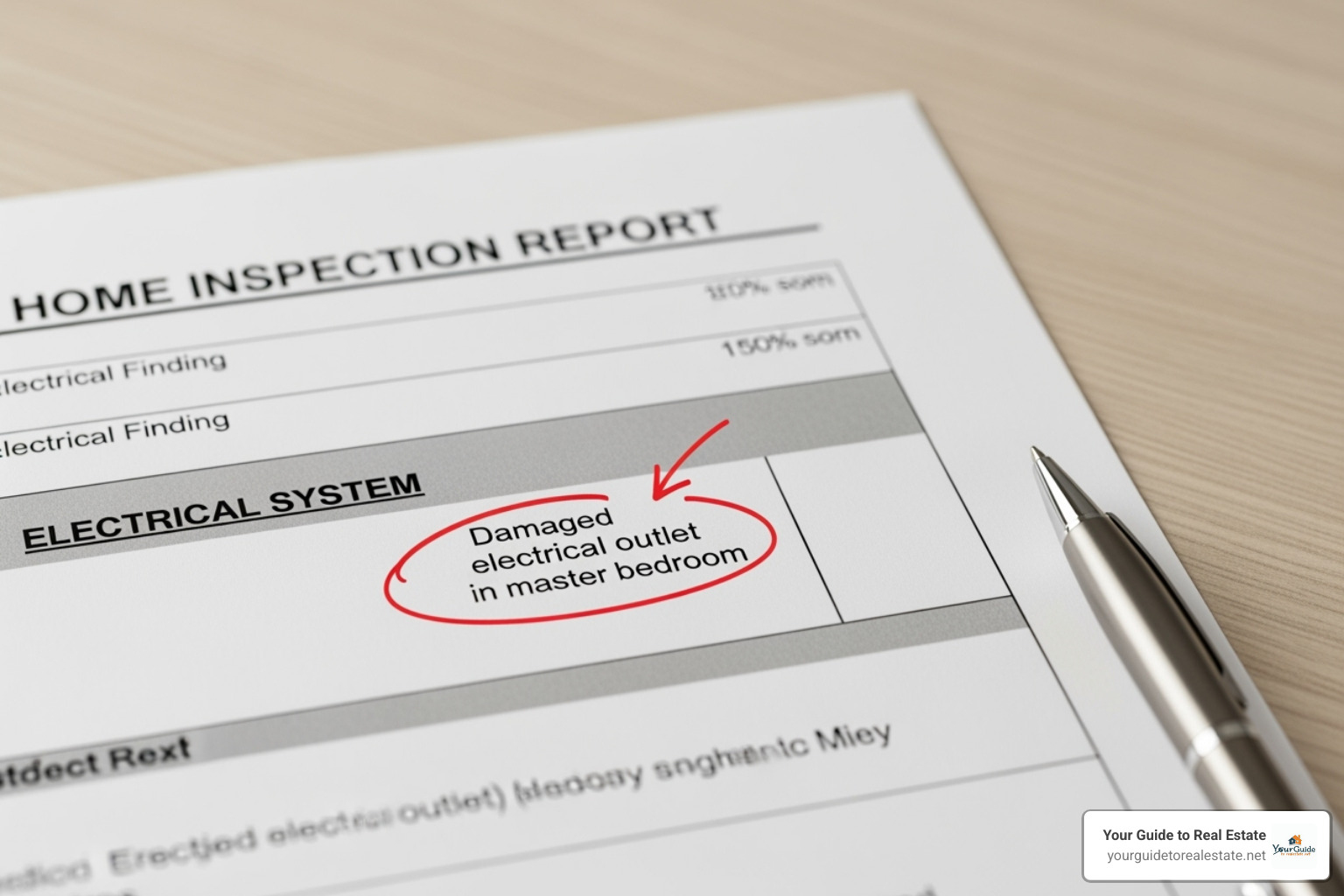
Common Terminology in Your Home Inspection Report
Every inspector has their own shorthand, but most follow similar conventions. Here’s what those cryptic abbreviations actually mean:
When you see Inspected (I) or Functional (F), breathe easy. The inspector looked at the item, and it’s working the way it should. Normal wear and tear is expected, and these items are doing their job just fine.
Not Inspected (NI) means the inspector couldn’t check something. There’s always a reason—maybe furniture was blocking access, or weather conditions prevented them from testing the air conditioning in January. This doesn’t mean there’s a problem, but it does mean you might want to investigate further yourself or hire a specialist to take a look.
The term Not Present (NP) is straightforward. If the home doesn’t have a certain feature—say, no garage door opener or no dishwasher—it’ll be marked NP. Nothing to worry about here.
Now we get to the more serious designations. Repair or Replace (RR) or Defect (D) means something isn’t working as intended or needs a closer look from a qualified contractor. This could be anything from a leaky faucet to a failing furnace. The severity varies widely, so don’t panic—just pay attention to the details and photos the inspector provides.
When something’s marked Marginal (M), it’s usually near the end of its useful life or has a minor issue that doesn’t quite rise to the level of a defect. Think of an older HVAC system that’s still chugging along but probably won’t last another five years. It’s functional today, but replacement is on the horizon.
Safety Concern (S) is exactly what it sounds like. These items pose an immediate risk to anyone living in the home and should be addressed quickly. We’re talking exposed electrical wiring, missing stair railings, or improperly vented furnaces.
Finally, Additional Evaluation Recommended (AE) means the inspector found something that needs expert eyes beyond a standard visual inspection. They might recommend bringing in a structural engineer for foundation concerns, an electrician for panel issues, or a plumber for complex pipe problems.
All professional home inspections follow industry standards, such as the InterNACHI Standards of Practice, which define what inspectors examine and how they report their findings.
Major Red Flags to Watch For
Let’s be honest: almost no home is perfect. But some issues are far more serious than others. A material defect is something that significantly impacts the home’s value or creates an unreasonable safety risk. These are the findings that should make you sit up and take notice.
Structural issues top the list because they’re often the most expensive to fix. Minor hairline cracks in the foundation are usually normal settling, but large horizontal cracks, stair-step patterns in brick, or bowing walls signal serious structural movement. A sagging roof or compromised attic framing isn’t just an eyesore—it could lead to collapse or major water intrusion. One report noted that “many of the rafter purloins in the studio loft roof are rotten and most will need replacing.” That’s not something you want to find after you’ve moved in. Similarly, leaning piers or columns in crawlspaces indicate the home’s support system is failing.
Water intrusion and moisture problems are the silent killers of homes. Water doesn’t just cause immediate damage—it creates ongoing issues like mold, rot, and structural deterioration. Standing water in basements or crawlspaces, active leaks, or significant water stains all point to moisture problems that won’t fix themselves. Visible mold or conditions that encourage mold growth (damp wood, high humidity) are both health hazards and signs of deeper issues. That white powdery substance on basement walls? It’s called efflorescence, and it means moisture is wicking through the masonry. Poor grading that directs water toward the house rather than away from it, or damaged gutters and downspouts, will eventually cause foundation problems.
Old or failing systems might not be immediate emergencies, but they represent significant future expenses. An aging HVAC system that’s poorly maintained or barely functioning will need replacement soon, and that’s not cheap. Outdated electrical panels—like old fuse boxes or certain brands known for issues—pose serious safety risks. Undersized electrical service (less than 100 amps for most modern homes) or unsafe wiring practices like exposed wires, aluminum wiring, or open knockouts in panels are fire hazards waiting to happen. Galvanized steel pipes corrode from the inside out, restricting water flow and eventually leaking. Old cast iron drain lines fail in similar ways. Even a water heater that’s working fine today becomes a ticking time bomb once it passes its typical lifespan of 5 to 15 years. While an aging system isn’t technically a defect if it’s still functioning, it’s definitely a financial consideration you’ll need to plan for.
Safety hazards require immediate attention. Improper electrical wiring, whether it’s exposed wires, missing GFCIs in wet areas like bathrooms and kitchens, or improper grounding, creates fire and shock risks. Missing or non-functional smoke and carbon monoxide detectors are non-negotiable—they save lives. Loose railings on stairs or decks are fall hazards, especially for children and elderly residents. Furnace flue problems that allow combustion gases to vent improperly can lead to carbon monoxide poisoning, which is odorless and deadly.
For more specific examples of issues that can derail a home purchase, check out our guide on Things That Fail a Home Inspection. Understanding these red flags helps you make informed decisions about whether to negotiate repairs, ask for a price reduction, or walk away from a property that’s more trouble than it’s worth.
What Your Report Won’t Tell You (And Why It Matters)
Let’s talk about what your home inspection report can’t tell you—and why understanding these limitations is just as important as knowing what’s in the report itself.
Here’s the thing: a standard home inspection is a visual examination of readily accessible systems and components. Think of it as a thorough check-up, not exploratory surgery. Your inspector isn’t going to tear down walls, dig up the yard, or dismantle your HVAC system piece by piece. They work within a defined scope, focusing on what they can actually see and access.
This is important to remember: a home inspection report is not a guarantee or warranty. It’s a snapshot—a detailed picture of what the home looked like on the day of the inspection. It doesn’t predict when your water heater will finally give up the ghost, and it can’t uncover every hidden issue lurking behind walls or under floors.
The purpose of a home inspection is to visually examine the readily accessible systems and components of the home. That phrase “readily accessible” is key. If something is buried, blocked, or locked away, your inspector simply can’t evaluate it. And that’s perfectly normal and expected.
Items Not Covered in a Standard Inspection
Your home inspection report covers a lot of ground, but there are several specialty areas that fall outside its scope. If any of these are concerns for your particular property, you’ll need to arrange separate, specialized inspections.
Pests are one big example. Your inspector might spot visible signs of termites—like those telltale mud tubes climbing up foundation walls—but a comprehensive pest inspection requires a licensed pest control professional. The same goes for mold. While an inspector may note moisture conditions that could lead to mold growth or point out what looks like mold, they won’t identify the specific type or tell you how to remediate it. That’s a job for a qualified mold specialist.
Asbestos and radon both require specialized testing equipment and expertise. These are serious health hazards, but they’re invisible to the naked eye. Your inspector won’t be testing for either one during a standard inspection.
If the property has a pool or spa, you’ll want a separate pool inspection. The same goes for septic systems and wells—these require their own specialized evaluations to check capacity, functionality, and water quality. And anything underground, like buried oil tanks or irrigation systems, won’t be part of your standard report either. Out of sight really does mean out of scope here.
What an Inspector Doesn’t Evaluate
Beyond specific excluded items, there are certain evaluations your inspector simply isn’t required to make—and that’s by design.
First, inspectors don’t evaluate code compliance. Building techniques have evolved dramatically over the decades. What was perfectly acceptable when your home was built 30 or 40 years ago might not meet today’s building codes. Your inspector reports on current condition and safety, not whether every nail and board meets the latest regulatory standards. As many reports note, “It is common for minor wall damage to occur during the time current tenants move personal belongings out of a home”—and these kinds of cosmetic issues aren’t code violations or structural concerns.
Speaking of cosmetic issues, don’t expect your home inspection report to catalog every little scratch, paint chip, or nail pop. Minor aesthetic imperfections that don’t affect function or safety generally won’t make the cut. Your inspector is looking for problems that matter, not keeping track of touch-up paint jobs.
Here’s another common misconception: inspectors won’t give you a definitive life expectancy for major systems. They might note that your water heater is 15 years old and mention that the typical lifespan is 10-15 years. But they can’t tell you it will fail next Tuesday. As the standards note, “The fact that a structural element, system or subsystem is near, at or beyond the end of the normal useful life of such a structural element, system or subsystem is not by itself a defect.” It’s helpful information for planning, but it’s not a crystal ball.
Similarly, your inspector won’t provide repair cost estimates. Their job is to identify issues and recommend consulting qualified contractors for estimates. They’re not there to negotiate on your behalf or tell you what repairs should cost in your market.
And perhaps most importantly, your home inspection report won’t tell you whether you should buy the house or what it’s worth. The inspector provides factual observations about the property’s condition—period. They don’t offer opinions on market value or the advisability of your purchase. For insights into property value, you’d want to look at a Real Estate Valuation or appraisal instead.
Finally, if an area is covered by insulation, blocked by personal belongings, or simply unsafe to access—like a crawlspace that’s too tight to enter or a steep roof that’s wet and slippery—your inspector will mark it as “Not Inspected” and explain why. It’s not that they’re skipping work; it’s that they’re being honest about what they physically could and couldn’t examine.
Understanding these limitations helps you set realistic expectations and know when to bring in additional specialists. Your home inspection report is incredibly valuable, but it’s not meant to be the only tool in your toolbox.
You’ve Got the Report—Now What? Your Next Steps
So, the home inspection report has landed in your inbox. You open it, and there it is—pages of findings, photos, and technical terms. Your heart might skip a beat. Take a deep breath. This is completely normal, and you’re not in this alone.
Here’s the truth: almost every home, even brand-new construction, will have something in the report. The inspector’s job is to document every observable issue, from the critical to the cosmetic. That’s why your report might feel overwhelming at first glance. But remember, this isn’t a test your house failed. It’s information—valuable information that puts you in control.

Your first step is to prioritize. Not all findings are created equal. Start with the items marked as safety concerns or major defects—those red flags we talked about earlier. These are the issues that could affect your safety, the home’s structural integrity, or lead to significant expenses down the road. Things like foundation problems, electrical hazards, or evidence of water intrusion should be at the top of your list.
Minor cosmetic issues—a loose doorknob, a nail pop in the drywall, or worn caulking—are typically low priority. Yes, they’re noted in the report, but they’re not deal-breakers. They’re more like items for your future to-do list once you move in.
The real power of your home inspection report comes in what you do with it next. This document becomes your negotiating tool, your maintenance roadmap, and sometimes, your reason to walk away. Let’s talk about how to use it wisely.
Reviewing and Negotiating with Your Agent
This is where your real estate agent earns their keep. If you’ve chosen a good Buyers Agent, they’ve been through this process dozens, maybe hundreds of times. They know what’s normal, what’s concerning, and what’s negotiable in your local market.
Schedule a time to sit down with your agent and go through the report together, page by page if needed. They’ll help you understand which findings are typical for a home of that age and which ones warrant serious attention. Maybe that 15-year-old water heater is common in your market, or maybe foundation cracks like the ones in your report are a bigger deal than you thought.
Your agent will also help you develop a negotiation strategy. Are you in a hot seller’s market where homes are getting multiple offers? Or is it a buyer’s market where you have more leverage? The current market conditions will shape your approach. In a competitive market, you might focus only on major safety and structural issues. In a slower market, you might have room to negotiate repairs for more items.
Together, you’ll decide what to ask for and how to present it. Your agent will then communicate your requests to the seller’s agent in a professional, clear manner. They know the language that gets results and can frame your concerns in a way that keeps negotiations productive rather than adversarial.
This entire process is typically protected by your inspection contingency, one of several safeguards built into your purchase contract. These contingencies give you the legal right to negotiate or even walk away based on what the inspection reveals. For a deeper understanding of how these protective clauses work, read our Home Contingencies Complete Guide.
Your Three Main Options After the Inspection
Once you and your agent have reviewed the home inspection report and identified your concerns, you have three main paths forward:
Request repairs from the seller. This is the most straightforward approach for significant issues. You submit a repair addendum listing the specific items you want the seller to fix before closing. This works well for clear-cut problems like a broken HVAC system, faulty electrical wiring, or a leaking roof. If the seller agrees, they’ll hire contractors to make the repairs and provide you with receipts or warranties showing the work was completed properly. The advantage here is that problems are fixed before you take ownership. The downside? You have less control over who does the work and how it’s done.
Ask for seller credits or a price reduction. Instead of having the seller handle repairs, you can negotiate for money off the purchase price or credits toward your closing costs. This approach gives you control. You can choose your own contractors, get multiple bids, and ensure the work is done to your standards. It’s especially useful for items that aren’t urgent—like that aging water heater that still works but will need replacing in a year or two—or for situations where you’d rather oversee the repairs yourself after closing. Your lender will need to approve any credits, and there are limits to how much can be credited toward closing costs, so work closely with your agent and lender on this option.
Walk away from the deal. Sometimes, the home inspection report reveals problems that are just too big, too expensive, or too risky. Maybe there’s extensive foundation damage, a failing septic system, or signs of serious water intrusion throughout the basement. If the seller won’t budge on repairs or credits, or if you simply decide the house isn’t worth the headache, your inspection contingency allows you to cancel the contract and get your earnest money back. This is your safety net. There’s no shame in walking away from a bad deal—in fact, it’s often the smartest move you can make.
The goal isn’t to nickel-and-dime the seller over every minor issue. It’s to reach a fair agreement that leaves you feeling confident and secure in your purchase. Your agent will help you strike that balance, advocating for your interests while keeping the deal moving forward.
Frequently Asked Questions about Home Inspection Reports
You’ve made it this far, and you’re probably brimming with questions. That’s completely natural! Let’s tackle some of the most common questions we hear about home inspection reports and put your mind at ease.
How long does a home inspection take and what is the cost?
The truth is, there’s no one-size-fits-all answer here. A home inspection report for a cozy 1,200-square-foot bungalow will take considerably less time than one for a sprawling 4,000-square-foot Victorian with multiple outbuildings.
Most standard residential inspections take somewhere between 2 to 4 hours from start to finish. If you’re looking at an older home with complex systems, or one that’s been poorly maintained, expect the inspector to need more time to thoroughly examine everything. Conversely, a newer, well-maintained home might be on the shorter end of that spectrum.
Several factors affect the inspection duration. The home’s age plays a big role—older homes often have more quirks and potential issues to investigate. The size obviously matters, as does the home’s overall condition and accessibility. If the crawlspace is packed with storage or the attic is difficult to access, that adds time. For a comprehensive look at what influences inspection length, we’ve put together a detailed guide: How Long Does a Home Inspection Take?.
As for cost, you’re typically looking at $300 to $600 for a standard residential inspection, though this can vary based on your location, the home’s size and age, and any additional services you request. Want to test for radon? That’s extra. Need a termite inspection? That’s a separate service. Think of the inspection fee as an investment in peace of mind—it’s a small price compared to finding major issues after you’ve already bought the property.
We’ve created resources to help you understand and plan for these costs. Check out our article on Cost of Home Inspection for a detailed breakdown, and if you want to estimate what you might pay for your specific situation, our Home Inspection Cost Calculator can give you a ballpark figure.
Can a house “fail” a home inspection?
Here’s the short answer: No, a house cannot fail a home inspection. Let that sink in for a moment, because it’s one of the most important things to understand about this entire process.
A home inspection report is not a test with a passing or failing grade. It’s not a judgment on whether a home is “good” or “bad.” Instead, it’s a detailed informational tool designed to give you a clear, honest picture of the property’s current condition. The inspector’s job is to observe, document, and report—not to make the final decision for you.
Think of it this way: even brand-new homes will have findings in their inspection reports. Maybe a window doesn’t quite sit flush, or a piece of trim needs adjusting, or the grading near one corner could be improved. The inspector documents these observations because that’s their job, but none of these findings mean the home has “failed” anything.
The home inspection report focuses on the condition of the home’s systems and components, highlighting safety concerns, potential defects, and maintenance needs. Some findings will be minor and easily addressed. Others might be more significant and require careful consideration. But ultimately, it’s up to you—armed with this information and working with your real estate agent—to decide what these findings mean for your purchase decision. One buyer might see an older HVAC system as a dealbreaker, while another might view it as a negotiation opportunity or simply budget for its eventual replacement.
The report gives you power and knowledge, not a verdict.
Should I attend the home inspection?
If there’s one piece of advice we could shout from the rooftops, it’s this: Yes, you should absolutely attend your home inspection! Even if you can only make it for the last hour, your presence makes a world of difference.
Here’s why we’re so adamant about this. When you attend the inspection, you get to ask questions directly to the inspector. That technical jargon that might seem confusing on paper? The inspector can explain it to you in plain English, right on the spot. You can ask follow-up questions, clarify concerns, and get a much deeper understanding than you would from just reading the report later.
You also get to see the issues firsthand. Reading “foundation crack, recommend further evaluation” in a report is one thing. Standing in the basement with the inspector as they point out the crack, explain its characteristics, and discuss why it might be a concern is entirely different. You’ll gain context that no written report can fully convey. Is it a hairline crack that’s been stable for years, or is it something more worrying? Seeing it helps you understand.
Beyond the specific findings, attending gives you a better understanding of your potential new home. You’ll learn where the main water shut-off is located, how to change the furnace filter, what that mysterious switch in the garage actually controls, and dozens of other practical details about living in this particular house. For first-time homebuyers especially, this is like getting a crash course in homeownership.
Finally, being there helps you build rapport with the inspector. They’ll see you’re engaged and interested, and they’re often more willing to share insights and tips when you’re there in person. Plus, if you have questions after reading the full report later, you’ll feel more comfortable reaching out.
Trust us on this one: attending your home inspection is time well spent, and the insights you gain will serve you well long after closing day.
Conclusion
Your home inspection report is so much more than a stack of papers or a PDF file sitting in your inbox. It’s your personal decoder ring for understanding what you’re really buying—foundation to roofline and everything tucked in between. Think of it as having a knowledgeable friend walk through the property with you, pointing out both the good and the not-so-good, so you can move forward with your eyes wide open.
Throughout this guide, we’ve unpacked how to read the inspector’s language, spot the issues that truly matter, and understand the natural limitations of what a standard inspection covers. We’ve shown you how to work with your agent to turn findings into negotiating power, and how to decide whether to request repairs, ask for credits, or even walk away if the problems are too overwhelming. This isn’t about fear or second-guessing—it’s about empowerment and making choices that protect your investment and your future.
The beauty of a home inspection report is that its value doesn’t end at closing. Keep it handy as your go-to maintenance guide. That aging water heater the inspector noted? You’ll know to budget for its replacement. Those gutters that need attention? You’ve got a head start on preventing bigger water issues down the road. It’s a gift that keeps on giving, helping you care for your home proactively rather than reactively.
At Your Guide to Real Estate, our mission is simple: we want you to feel confident and informed every step of the way. Whether you’re buying your first home or your fifth, we’re here with proven frameworks and stress-free guidance to help you succeed in the real estate market. Your home inspection report is a cornerstone of that success, changing uncertainty into clarity.
Curious about what your property is really worth or how it stacks up in today’s market? Get a professional market analysis for your property with Your Guide to Real Estate today. We’re here to help you make smart, informed decisions—because that’s what real estate success is all about.