Why Understanding Acre Measurements Matters in Real Estate
How big is an acre in feet is one of the most common questions asked by property buyers, sellers, and real estate investors. Whether you’re evaluating a suburban lot or considering rural land investment, understanding this fundamental measurement can make the difference between a smart purchase and costly confusion.
Quick Answer: An acre equals exactly 43,560 square feet
Here are the key measurements you need to know:
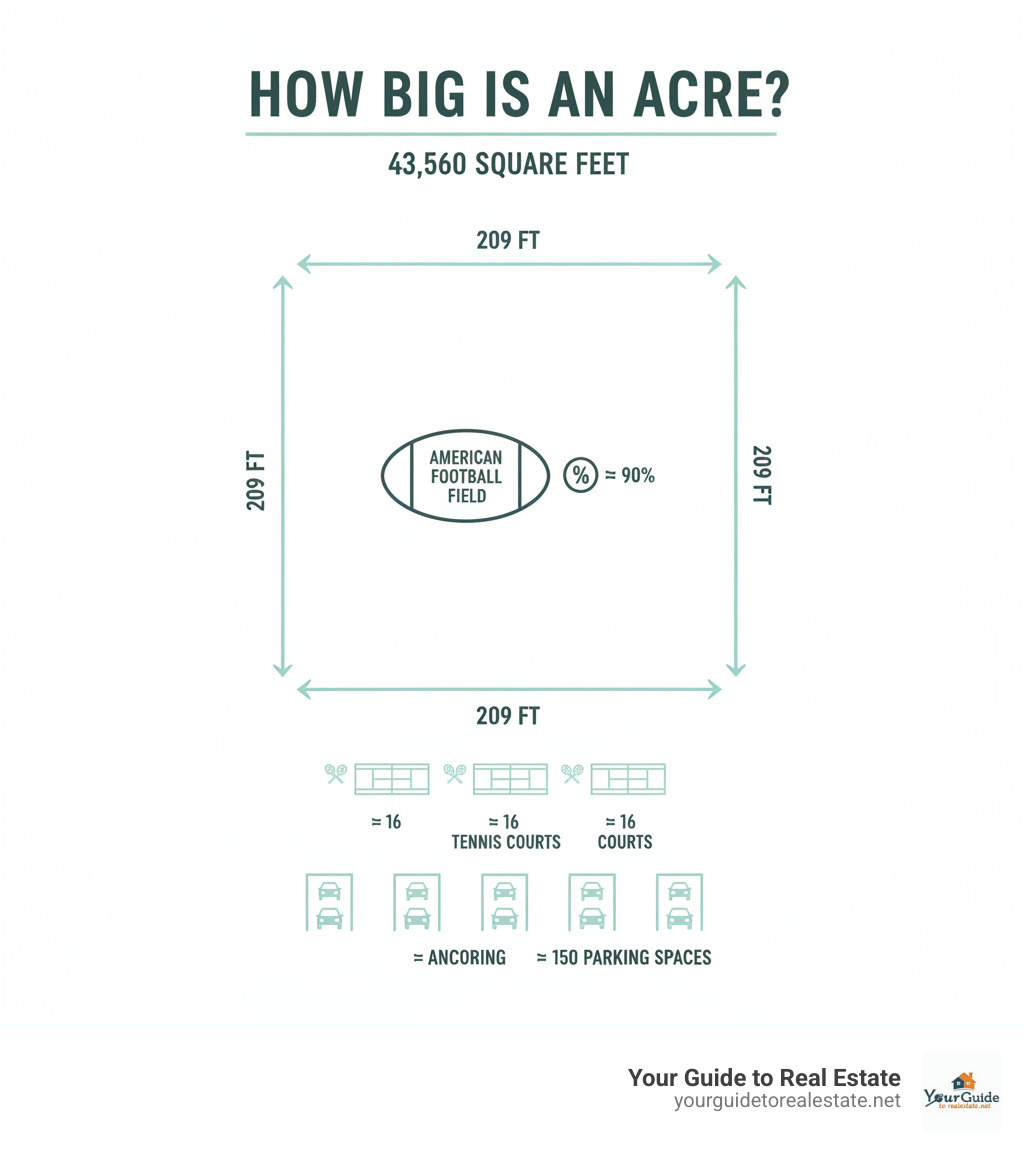
- Total area: 43,560 square feet
- Square acre dimensions: Approximately 208.71 feet × 208.71 feet
- Traditional rectangular acre: 660 feet × 66 feet (1 furlong × 1 chain)
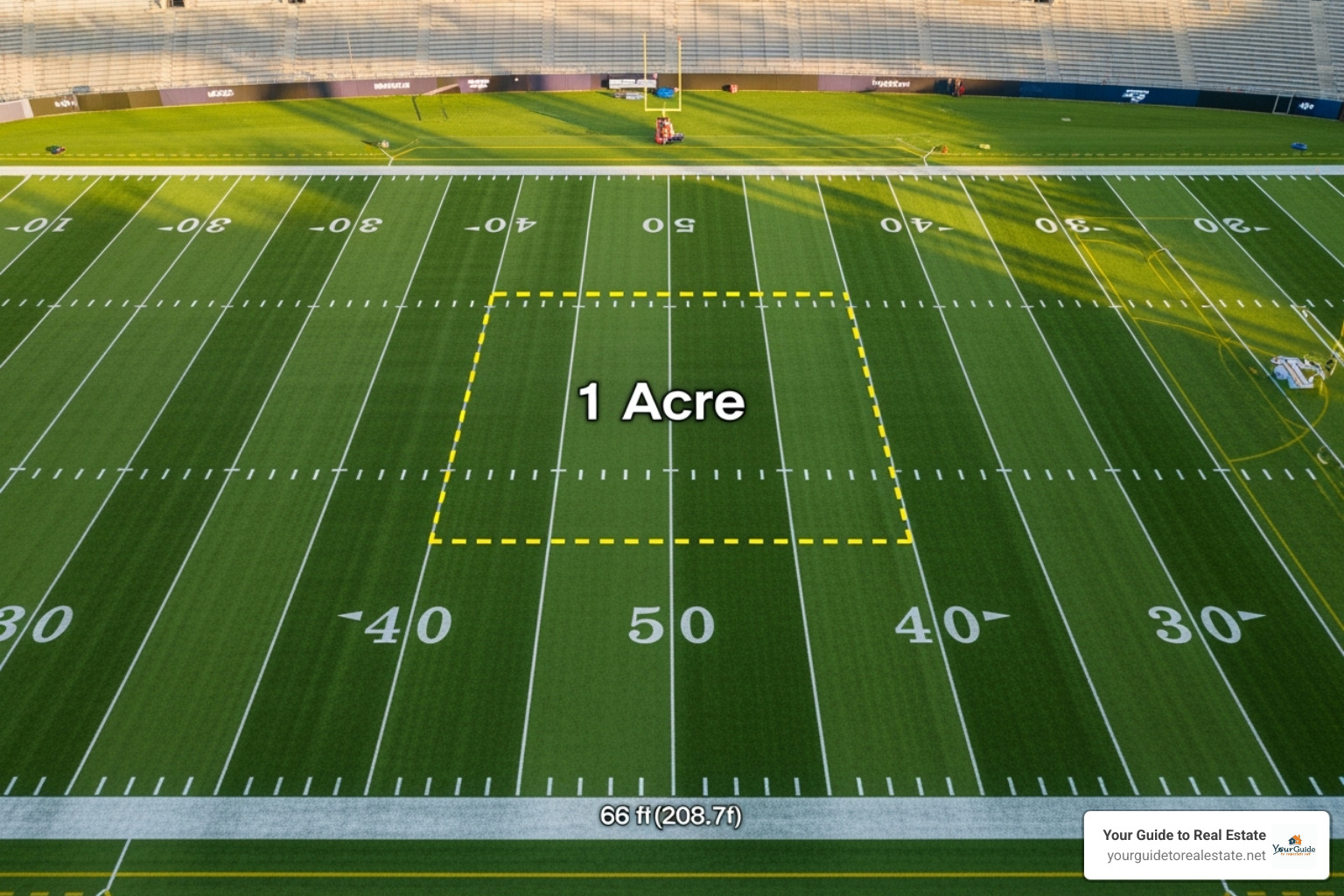
- Comparison: About 90% the size of an American football field
The confusion often comes from thinking about acres in linear feet rather than square feet. An acre measures area – the total surface space covered by a piece of land. It’s not a length or width measurement, but rather the amount of ground you could walk across in any direction.
Real estate agents frequently encounter clients who struggle with this concept. As one industry professional noted: “One of the more common questions real estate agents receive from clients is how big is an acre of land.” This confusion is understandable – we’re used to measuring rooms in square feet, but land parcels in acres.
Understanding acre dimensions becomes crucial when evaluating property listings, planning development projects, or simply visualizing how much space you’re buying. A quarter-acre suburban lot feels very different from a 10-acre rural property, and knowing these measurements helps you make informed decisions.
Common how big is an acre in feet vocab:
The Exact Measurement: Why an Acre is Measured in Square Feet
Here’s something that trips up a lot of people: when we ask how big is an acre in feet, we’re actually talking about square feet, not regular linear feet. It’s like the difference between asking “how long is this rope?” versus “how much carpet do I need for this room?”
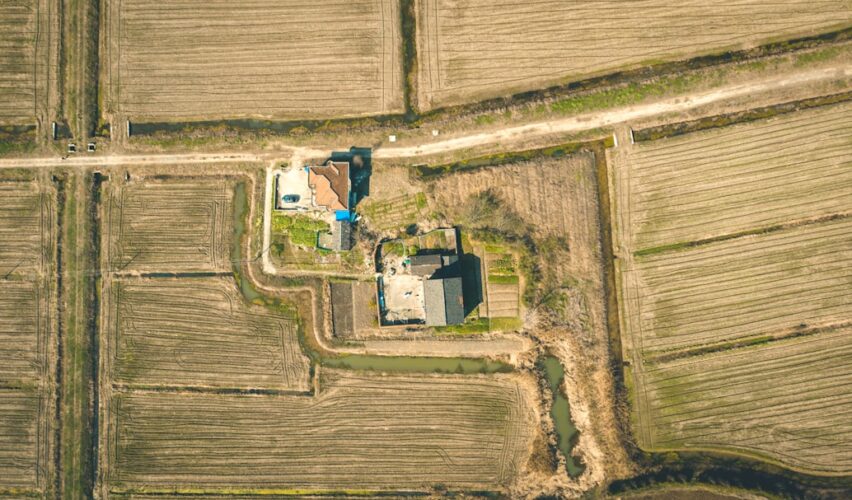
An acre measures area – the total surface space of land. Think of it as looking down at a piece of property from an airplane. You’re seeing the entire footprint, not just one edge or border. This is why we use square feet instead of linear feet.
The distinction matters more than you might think. Linear feet tell you distance in one direction, like measuring a fence line. But square feet tell you the total space you’re working with – crucial information for valuation and market analysis in real estate.
What is the exact number of square feet in an acre?
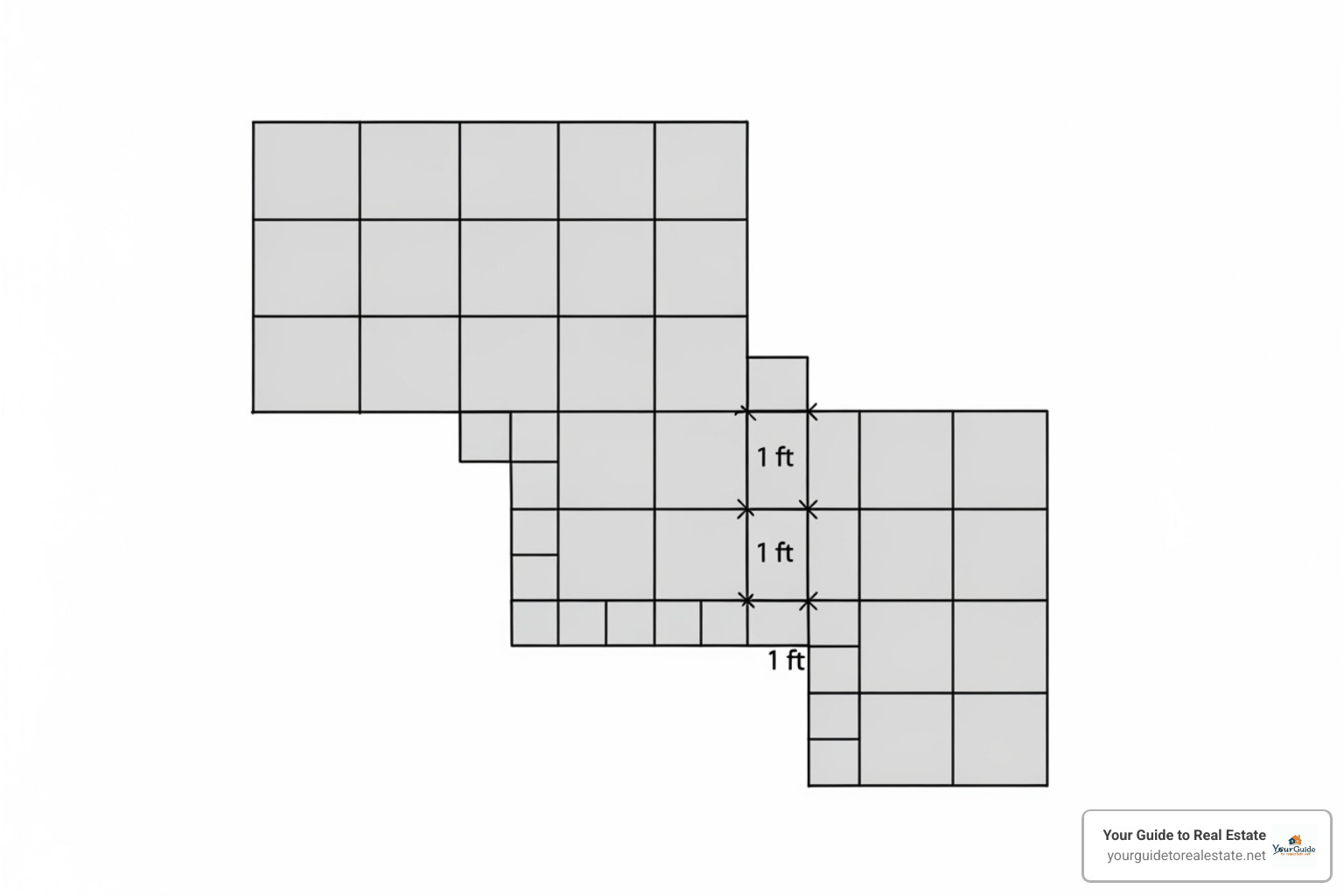
The magic number is 43,560 square feet – every single time, no exceptions. This isn’t some rough estimate that changes based on location or local customs. It’s a rock-solid standard in both the imperial system and US customary systems.
What makes this number so reliable? It doesn’t matter if your acre is shaped like a perfect square, a long skinny rectangle, or even looks like a puzzle piece. If the total area adds up to 43,560 square feet, you’ve got yourself one acre.
This standard unit has been helping property buyers and sellers make sense of land deals for generations. It’s the foundation that keeps everyone speaking the same language when it comes to property size.
How does an acre relate to other units of area?
Understanding how an acre stacks up against other measurements can really help put things in perspective. Let’s break it down in ways that actually make sense:
In square yards, an acre equals 4,840 square yards. This conversion comes in handy when you’re looking at older property records or dealing with landscaping projects. The math is pretty straightforward: since one square yard equals nine square feet, you divide 43,560 by 9.
When it comes to square miles, an acre is just a tiny slice of the pie. There are 640 acres in one square mile, which means one acre is 1/640 of a square mile. Put it this way – if a square mile were a pizza, one acre would be a pretty small slice!
For anyone dealing with international properties or metric measurements, an acre translates to about 0.4047 hectares. Since most countries outside the US use hectares as their go-to land measurement, this conversion becomes essential for understanding global real estate markets.
These different ways of measuring the same space help you communicate with everyone from local contractors to international investors, making your real estate journey much smoother.
Visualizing an Acre: Common Dimensions and Comparisons
Picture this: you’re standing on a piece of land, and someone tells you it’s exactly one acre. What are you actually looking at? Understanding how big is an acre in feet becomes much clearer when we can visualize it in real-world terms.
The tricky part about acres is that they measure area, not a specific shape. It’s a bit like asking “what does 1,000 square feet look like?” – well, it depends! Your 1,000 square foot apartment might be long and narrow, while your friend’s might be more square-shaped. The same flexibility applies to acres, which makes them both versatile and sometimes confusing.
Can an acre be any shape, or does it have a standard shape?
Here’s something that surprises many people: an acre can be absolutely any shape you can imagine. As long as the total area adds up to 43,560 square feet, you’ve got yourself an acre. It could be a perfect circle, a triangle, a long skinny rectangle, or even a weird zigzag shape that looks like it was drawn by a toddler with a crayon.
This flexibility exists because an acre measures surface area, not specific dimensions. Think of it like a pizza – whether it’s round, square, or shaped like a heart, if it contains the same amount of dough and toppings, it’s still the same amount of pizza.
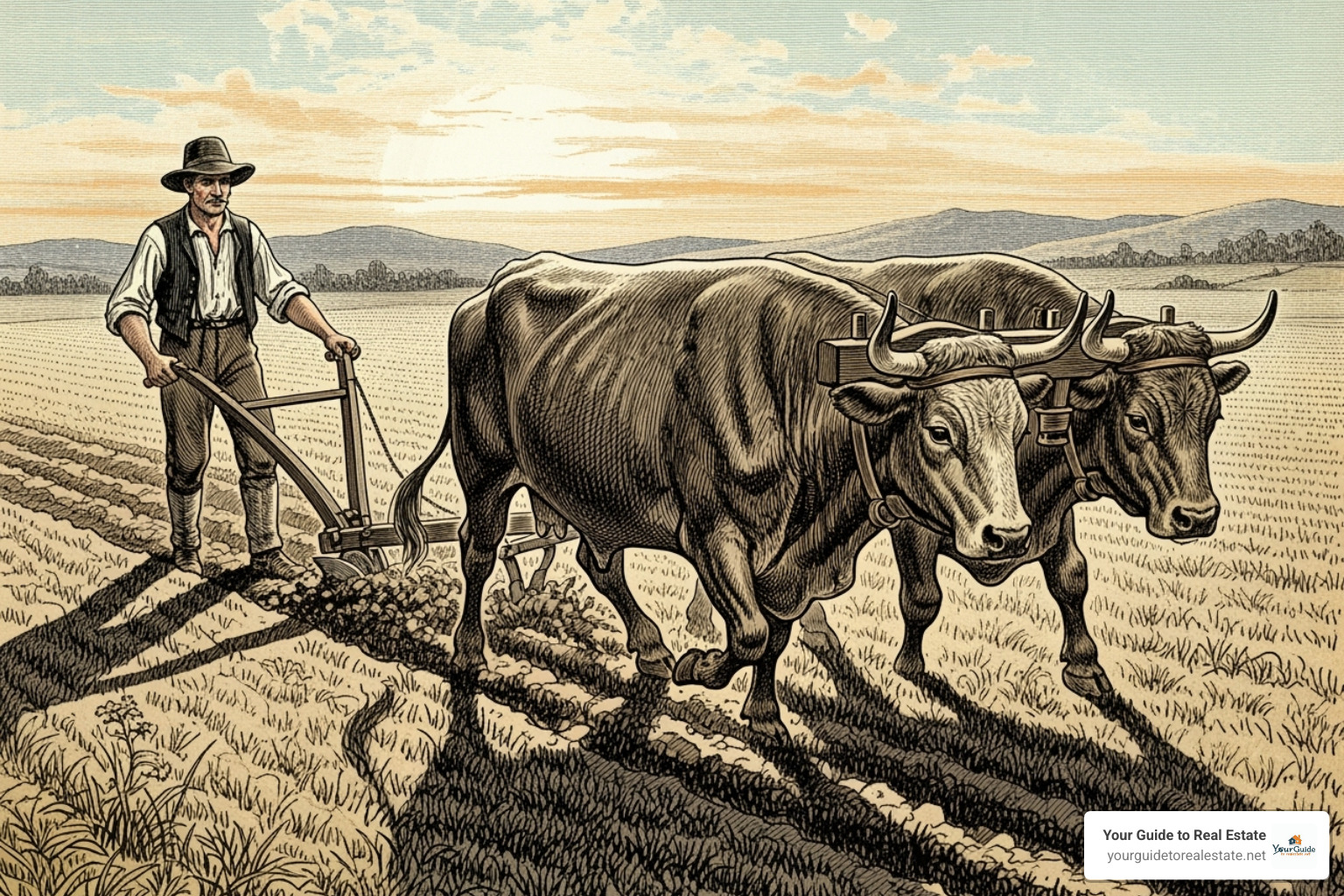
That said, there is a traditional shape that has historical significance. Back in medieval England, an acre was typically laid out as a furlong by a chain – that’s 660 feet long by 66 feet wide. This rectangular shape made perfect sense for farming with oxen, creating those long, narrow strips that were practical to plow in straight lines.
What are the dimensions of an acre? How big is an acre in feet?
While an acre can take any form, certain common dimensions help us wrap our heads around its actual size:
The square acre is probably the easiest to visualize. If you laid out an acre as a perfect square, each side would measure approximately 208.71 feet. That’s roughly the length of two city blocks in many areas – not huge, but definitely substantial.
The traditional rectangular acre follows those historical farming dimensions: 66 feet wide by 660 feet long. This creates quite a different feel – imagine walking the length of this property versus the width. The long walk would take you about two and a half minutes at a normal pace, while crossing the width would take less than 30 seconds.
For more modern contexts, consider a 100-foot-wide acre – this would stretch 435.6 feet long. This dimension is common in suburban development, where developers want to maximize street frontage while maintaining acre-sized lots.
Here’s a fun fact that really drives home the concept: you could theoretically have an acre that’s 1 foot wide and 43,560 feet long. That would be a strip of land stretching over 8 miles! Completely impractical, but it perfectly illustrates that the total area is what matters, not the shape.
How does the size of an acre compare to a football field?
The football field comparison is hands-down the most helpful way to visualize an acre, especially if you’ve ever been to a game or watched one on TV.
An American football field (not counting the end zones) measures 100 yards long by 53⅓ yards wide. When you do the math, that comes out to 48,000 square feet. Since an acre is 43,560 square feet, this means an acre is about 90% the size of a football field.
Picture yourself standing on the 50-yard line of a football field. Now imagine someone took a small bite out of one end – maybe from the goal line back to about the 8-yard line. What’s left is roughly the size of an acre.
This comparison works so well because most of us have a gut feeling for how big a football field is. Whether you’ve walked across one, run laps around it, or just watched games on TV, you know it’s big but not enormous. An acre has that same “substantial but manageable” feel to it.
For real estate purposes, this visualization is incredibly valuable. When you’re looking at a one-acre lot, you’re not getting a tiny postage stamp of land, but you’re also not getting a vast estate. You’re getting a nice, usable piece of property that offers space for a home, yard, garden, and maybe even some outbuildings – all while remaining manageable for maintenance and development.
The Historical Roots and Evolution of the Acre
Ever wonder why we have such a specific number like 43,560 square feet for an acre? It’s not some random figure dreamed up by surveyors with too much time on their hands. The story behind how big is an acre in feet takes us back to medieval England, where farmers, oxen, and practical necessity shaped one of our most enduring land measurements.
What is the historical origin of the acre?
The word “acre” comes from the Old English word ‘æcer’, which simply meant “open field” or cultivated land. You can trace its roots even further back to the Latin ‘ager’, also meaning field. But here’s where it gets interesting – and very practical.
Originally, an acre wasn’t defined by precise measurements at all. Instead, it represented the amount of land a farmer could plow in one day with a yoke of oxen. Picture this: a medieval farmer starting at sunrise, walking behind two sturdy oxen as they slowly turned over the soil, furrow by furrow. By sunset, the area they’d managed to plow became known as an acre.
This “day’s work” definition was beautifully practical but wildly inconsistent. The size varied based on the strength of the oxen, the type of soil, the weather, and even how motivated the farmer felt that particular day. A strong team working light, sandy soil could cover more ground than tired oxen struggling through heavy clay.
This agricultural origin also gave us related measurements that might sound familiar. A furlong literally means “furrow long” – the distance a team of oxen could plow before needing a rest. A chain (66 feet) and a rod became standard surveying tools. These weren’t abstract mathematical concepts but real tools and distances that made sense to people working the land. You can explore more about these fascinating historical units in this comprehensive Dictionary of Weights, Measures and Units.
How has the definition of an acre changed over time?
As you might imagine, having variable-sized acres made land transactions a nightmare. Try collecting taxes when every farmer’s “acre” might be different! English kings quickly realized they needed standardization to bring order to land ownership and taxation.
The most significant change came with Edward I of England in the late 13th century. He established the “Statute on the size of an acre,” which transformed the acre from a vague agricultural concept into a precise legal standard. Edward’s statute defined an acre as exactly 4,840 square yards, arranged in a specific rectangular shape: 40 rods long by 4 rods wide.
Since a rod measured 16.5 feet, this created the traditional rectangular acre of 660 feet by 66 feet – one furlong by one chain. This wasn’t just mathematical convenience; it maintained the practical farming dimensions that made sense for plowing while ensuring everyone used the same measurement.
This royal decree marked the crucial shift from practical measure to legal standard. No longer could farmers claim their particularly tough field deserved a smaller “acre” for tax purposes! The standardization worked so well that our modern definition of 43,560 square feet traces directly back to these medieval English statutes.
It’s remarkable that a measurement born from the daily rhythm of oxen and plows has remained virtually unchanged for over 700 years. While most of the world has adopted metric measurements, the acre’s staying power shows how deeply practical origins can embed themselves in our systems – even when we’re now more likely to measure land for shopping centers than ox-plowed fields.
How Big is an Acre in Feet in Modern Real Estate?
Even in our tech-savvy world, the humble acre continues to play a starring role in real estate transactions. Whether you’re dreaming of a cozy suburban home or exploring property investment opportunities, knowing how big is an acre in feet can save you from some serious surprises at closing.
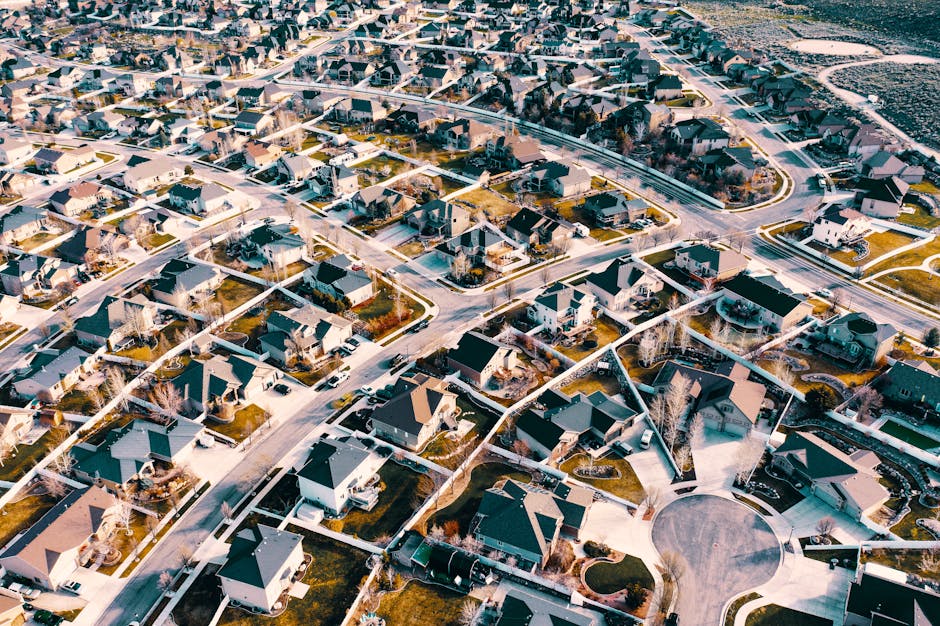
Picture this: you’re scrolling through property listings and see “beautiful 2-acre lot with mountain views.” Without understanding that you’re looking at 87,120 square feet of space (that’s nearly two football fields!), you might not fully grasp what you’re considering. That’s where acre knowledge becomes your secret weapon.
Modern real estate professionals rely on acres for everything from property deeds to zoning regulations. Your local government uses acres to determine minimum lot sizes for new construction. Banks calculate loan-to-land ratios based on acreage. Even your property taxes are often calculated using the acre as a baseline measurement.
Are there different types of acres?
Here’s where things get a bit interesting. While we’ve established that a standard acre equals 43,560 square feet, the real estate world has created some variations that might catch you off guard.
The International Acre and the U.S. Survey Acre are virtually identical for everyday purposes. The difference between them is about the size of a small closet – roughly 0.016 square meters. Unless you’re surveying the entire state of Texas, this won’t affect your home purchase.
But watch out for historical quirks when dealing with older properties. The Scottish acre was about 27% larger than our modern acre, while the Irish acre was a whopping 60% bigger. If you’re researching family land that’s been passed down through generations, these differences might explain some confusing paperwork. You can explore more fascinating details about acre variations if you’re curious about these historical measurements.
The real troublemaker in modern real estate is something called a “builder’s acre.” This isn’t a legal measurement at all – it’s essentially marketing speak for 40,000 square feet. Some developers use this rounded-down number because it’s easier to work with in planning. The problem? You’re getting about 3,560 square feet less land than a true acre provides. Always ask for clarification when you see this term in property listings.
What factors influence the cost of an acre of land? How big is an acre in feet for valuation?
While how big is an acre in feet never changes (it’s always 43,560 square feet), the price tag attached to that acre can swing from a few hundred dollars to several million. Think of it like buying a car – a 2024 model year is always a 2024, but a Honda Civic costs dramatically different from a Ferrari.
Location remains the ultimate price driver. An acre in downtown Manhattan would cost exponentially more than an acre in rural Kansas, even though both contain exactly the same amount of space. Proximity to jobs, schools, shopping, and entertainment creates demand that pushes prices skyward.
Topography and usability play huge roles in valuation. Flat, buildable land commands premium prices compared to steep slopes or wetlands. If your acre requires extensive grading, drainage work, or environmental permits before you can build, those costs get reflected in a lower purchase price.
The basic economics of supply and demand affect land just like any other commodity. When everyone wants to move to Austin, Texas, but there’s limited developable land, prices soar. Conversely, areas with abundant available land and few buyers see more modest pricing.
Available utilities can make or break land values. An acre with existing water, sewer, electric, and gas connections is worth significantly more than raw land where you’ll need to drill wells and install septic systems. These infrastructure costs can easily add tens of thousands to your development budget.
Zoning regulations determine what you can actually do with your acre. Land zoned for commercial development typically costs more than residential acreage, which costs more than agricultural land. Understanding these restrictions is crucial for any land purchase, and working with experienced professionals becomes essential. This is where how to choose a real estate agent becomes invaluable – they can help you steer these complex regulations and avoid costly mistakes.
The bottom line? While every acre contains the same 43,560 square feet, its value depends entirely on what you can do with that space and how badly others want it too.
Frequently Asked Questions about Acre Dimensions
When we help clients understand land measurements, we hear the same questions over and over again. And honestly, we love these questions! They show that people are really trying to wrap their heads around how big is an acre in feet in practical terms. Let’s tackle the most common ones we encounter.
How many tennis courts can fit in one acre?
This question always makes us smile because it’s such a creative way to visualize land size! If you’re a tennis enthusiast, this comparison might be exactly what you need to picture an acre.
A standard tennis court, including all the required safety zones and run-off areas around the playing surface, measures about 120 feet by 60 feet. That gives us 7,200 square feet per court.
Since an acre contains 43,560 square feet, you could theoretically fit about 15-16 standard tennis courts in a single acre if you arranged them efficiently. That’s quite a bit more space than most people imagine when they think “one acre”!
Now, if you’re thinking about a real tennis facility with spectator areas, parking, and clubhouse space, you’d probably only fit 2-3 complete courts comfortably. But for pure court space? You’ve got room for a serious tennis tournament on just one acre.
Is a “builder’s acre” the same as a standard acre?
This is where things get a bit tricky, and we always warn our clients to watch out for this terminology. The short answer is no – a “builder’s acre” is not the same as a standard acre, and the difference matters for your wallet.
A “builder’s acre” is really just a marketing term that some developers use. They’ll round down to 40,000 square feet instead of the true 43,560 square feet because it’s easier to work with for planning purposes. It’s a nice, round number that divides evenly.
Here’s the important part: a “builder’s acre” is not a legal unit of measurement. When you’re looking at property deeds, surveys, or any official documentation, an acre always means 43,560 square feet. Period. If someone tries to sell you a “builder’s acre,” you’re actually getting about 3,560 square feet less land than a true acre – that’s roughly the size of a large house!
We always tell our clients to ask for clarification when they see this term and to rely on the official survey documents for the real measurements.
Why do the US, Liberia, and Myanmar still use the acre?
This is a fascinating question that touches on history, economics, and just plain stubbornness! These countries primarily use the imperial system of measurements, of which the acre is a fundamental part. Meanwhile, most other countries have adopted the metric system and measure land in hectares.
The United States has actually made some attempts to “go metric” over the years, but it’s incredibly expensive and complicated to change an entire country’s measurement system. Think about it – every road sign, every building code, every piece of machinery, every textbook would need updating. The cost would be astronomical.
Plus, there’s the human factor. Americans are comfortable with acres, feet, and miles. We grew up with them. When someone says “quarter-acre lot,” we have an instant mental picture. Ask us about hectares, and most of us would need a calculator and a confused look.
So while the rest of the world measures land in hectares (which equal 10,000 square meters, if you’re curious), we’re sticking with our acres. It means how big is an acre in feet remains a very relevant question for anyone dealing with American real estate!
The good news is that once you understand the basic measurements, you’re set for success in the U.S. real estate market.
Conclusion
Understanding how big is an acre in feet comes down to one essential number that every property owner should know: 43,560 square feet. But as we’ve finded together, this measurement is so much more than just a number on a deed or property listing.
The acre tells a story that stretches back centuries, from medieval farmers following their oxen across muddy fields to modern families searching for the perfect lot size. It’s a measurement of area, not length, which means your acre can be a perfect square, a long rectangle, or even an oddly-shaped plot that follows a winding creek.
What makes this knowledge truly valuable is how it connects to your real estate decisions. When you’re standing on a quarter-acre lot in a suburban neighborhood, you now know you’re looking at about 10,890 square feet of space. When you drive past that “5-acre development opportunity” sign, you can picture roughly five football fields of potential.
We’ve seen how an acre can be nearly any shape while maintaining its consistent size, how it evolved from a practical farming measure to a legal standard, and why it remains the go-to unit for land measurement across the United States. From the traditional 660-by-66-foot rectangle that our ancestors plowed to the perfect 208-by-208-foot square that’s easier to visualize, the acre adapts to our needs while staying true to its 43,560-square-foot foundation.
At Your Guide to Real Estate, we believe that understanding these fundamentals gives you confidence in every property conversation. Whether you’re a first-time buyer trying to imagine your future backyard or an experienced investor evaluating development potential, knowing the true dimensions of an acre helps you make smarter decisions.
Our proven framework starts with education and ends with successful transactions. When you’re ready to put this knowledge to work in the real estate market, we’re here to provide the stress-free guidance that makes all the difference. The right partnership begins with choosing a real estate broker who understands both the numbers and your dreams.