
The Timeline to Launch Your Real Estate Career
How long does it take to become a real estate agent? The answer depends on where you live and how fast you want to move, but here’s what you can expect:
Quick Timeline Overview:
- Fastest possible: 6-12 weeks (Florida, some U.S. states)
- Typical timeline: 3-6 months (most U.S. locations)
- Longer process: 9-18 months (Canada, includes provisional periods)
- Key factors: Pre-licensing hours, exam scheduling, application processing
The research shows significant variation across regions. In Florida, motivated individuals can complete pre-licensing and get registered in as little as 2-5 weeks. Meanwhile, in Ontario, Canada, the traditional route involves 9-12 months of coursework plus a mandatory 2-year “articling period.”
Your personal timeline will depend on several key factors:
- Education requirements – ranging from 40 hours (Massachusetts) to 180 hours (Texas)
- Study pace – full-time vs. part-time commitment
- Exam availability – some areas schedule weekly, others have longer waits
- Application processing – can take anywhere from days to 8+ weeks
The good news? Real estate licensing takes a fraction of the time required for a college degree, and many successful agents launch rewarding careers within just a few months of starting the process.
Whether you’re looking for flexible work hours, unlimited income potential, or the satisfaction of helping people with major life decisions, understanding the licensing timeline is your first step toward joining this dynamic industry.
Know your how long does it take to become a real estate agent terms:
Understanding the General Timeline
When you’re wondering how long does it take to become a real estate agent, the honest answer is: it depends on where you live and how quickly you want to move through the process. The timeline can range from just a few weeks to well over a year, and this wide variation isn’t arbitrary – it’s based on the specific requirements of each state or province.
Let’s start with the good news. In some U.S. states, you can move incredibly fast. Take Florida, for example, where the pre-licensing requirement is just 63 hours. If you’re highly motivated and can study full-time, you could complete your coursework in as little as 2 to 5 weeks. Factor in exam scheduling and application processing, and you might be holding your real estate license in about 12 weeks total.
New York offers another speedy path. With 77 required hours, dedicated full-time students can finish their coursework in around 2 weeks and be licensed within 6 weeks overall. It’s pretty amazing when you think about it – you could literally go from complete beginner to licensed real estate professional in less than two months.
Canada tells a different story entirely. The process is more thorough and, frankly, much longer. Most aspiring agents across Canada need between 6 and 18 months just to complete their education and obtain a provisional license. And here’s the kicker – many provinces require an additional “articling period” that can add another two years before you’re fully licensed.
Several key factors determine where you’ll land on this timeline spectrum. Pre-licensing hour requirements vary dramatically from state to state. Massachusetts keeps it simple with just 40 hours, while Texas demands a hefty 180 hours of education. More hours naturally mean more study time, whether you’re going full-time or part-time.
Exam availability can also impact your timeline. Some regulatory bodies offer licensing exams weekly, so you can schedule yours right after finishing your coursework. Others have longer waiting periods that might add a week or two to your journey.
Then there’s application processing – the administrative step that happens after you pass your exam. This is often where things slow down, not because of anything you did wrong, but simply due to the volume of applications and bureaucratic processes. Processing can take anywhere from a few days to 8 weeks or more.
To help you visualize these differences, here’s how the timelines compare in three major regions:
| Region | Pre-licensing Hours | Minimum Course Completion | Application Processing | Exam Scheduling | Total Minimum Timeline |
|---|---|---|---|---|---|
| Florida (U.S.) | 63 | 2-5 weeks | 2-4 weeks | 1-2 weeks | ~12 weeks |
| California (U.S.) | 135 | 7.5 weeks | 6-8 weeks | 1-2 weeks | ~14.5 weeks |
| Ontario (Canada) | 24 months (max) | 9-12 months (typical) | 1-4 weeks | 1-2 weeks | 9-12 months + 2-year articling |
The important thing to remember is that while educational requirements are manageable regardless of your location, it’s often the mandatory waiting periods and administrative processes that really determine your overall timeline. But don’t let longer timelines discourage you – many successful agents say the thorough preparation actually helped them feel more confident when they started their careers.
The Step-by-Step Licensing Process and How Long Each Step Takes

Breaking down the path to becoming a real estate agent into clear steps helps us see exactly how long does it take to become a real estate agent. It also shows us where you can speed things up!
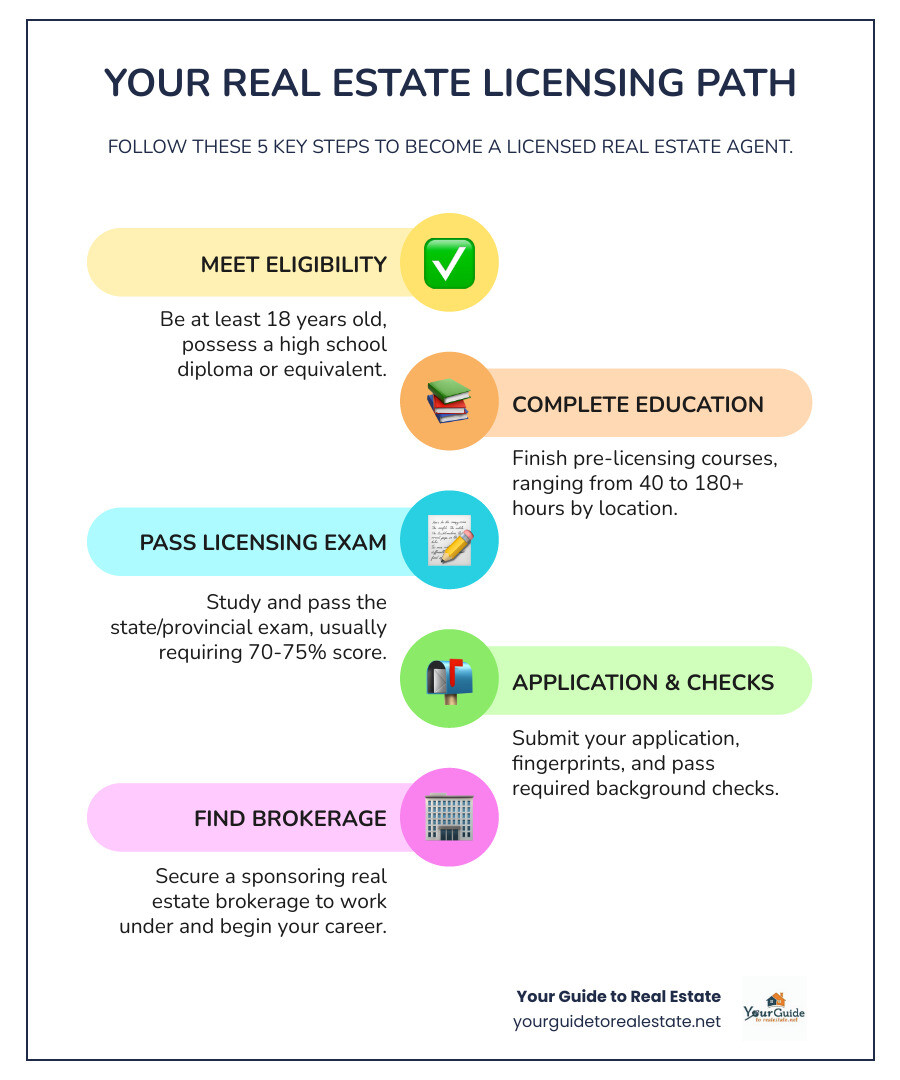
Step 1: Meet the Basic Eligibility Requirements (1-2 Days)
First things first, you need to meet some basic rules. This is usually the quickest part, often taking only 1-2 days! You just need to confirm you’re at least 18 years old and have a high school diploma or something similar (like a GED). Also, you’ll need to be a citizen or have the legal right to work where you want to sell homes. Pretty straightforward, right?
We strongly advise that you Familiarize yourself with official requirements directly from your specific state or provincial regulatory body before starting on your journey. This initial check-off typically takes no more than a day or two.
Step 2: Complete Pre-Licensing Education (2 Weeks to 6+ Months)
Now, this is where you’ll spend most of your time and effort. We’re talking anywhere from 2 weeks to over 6 months! The biggest reason for this huge difference is how many hours of training your state or province requires. For example, some U.S. states might ask for just 40 hours of classes, while others, like Texas, need a whopping 180 hours! Here at Your Guide to Real Estate, we know our home states of Oklahoma and Texas have some serious hour requirements, so planning your study time is super important.
Your personal speed will also depend on how you choose to learn. Online self-paced courses are fantastic for flexibility. You can fit studying around your life, which can really speed things up if you’re focused. Many future agents find this the fastest way to go! But if you prefer traditional in-person classes, that works too. Think about it: studying full-time could let you finish a 77-hour course in New York in just two weeks. But if you’re going part-time, maybe just a few hours a week, that same course could take 15 weeks. It’s all about what works for you!
No matter how you learn, the courses will teach you important stuff like property law, contracts, how agents work with clients, property values, and ethics. This knowledge is your foundation, so learn it well! You can even check out programs like Ontario’s Pre-Registration Learning Path to see how deep some of these programs go.
Step 3: Pass the Real Estate Licensing Exam (1-4 Weeks)
Alright, courses done! Your next big step is the real estate licensing exam, which typically takes 1-4 weeks to get through. Once you finish your classes, you’ll need to schedule your exam. Some places let you book it right away, maybe even for next week! But other regions might have a bit of a wait, so it’s smart to check this early on.
Even if you felt like a superstar in your classes, we always suggest setting aside at least a week or two for intense exam prep. Think of it as your final sprint! Many study guides and practice tests are out there to help you. Don’t skip this step—it’s your gateway to becoming an agent!
Most exams are multiple-choice and cover both national and local real estate rules. You’ll usually need to score between 70% to 75% to pass. And hey, if you don’t pass the first time, don’t worry! Most places let you retake the exam. For example, in California, you can try again as many times as you need within two years. Just remember, each retake might cost a bit extra and add another week or so to your journey.
Step 4: Complete Background Checks and Final Application (2-8 Weeks)
Now for the paperwork and patience phase, which can take anywhere from 2 to 8 weeks. This is often where a little waiting game happens. You’ll definitely need to go through fingerprinting and criminal record checks. For our friends in Ontario, this means a Criminal Record and Judicial Matters Check (CRJMC) through RECO’s online system. Make sure you follow their exact steps to avoid any hiccups or extra costs!
Once you pass your exam and clear your background check, it’s time to submit your official license application. This is usually done online, like through RECO’s MyWeb portal in Ontario. You’ll also need to pay various fees—for the application, background check, and sometimes even your first year’s insurance upfront.
The trickiest part here is waiting for regulatory approval. These government bodies have their own processing times, which can be a few days or many weeks. California’s Department of Real Estate (DRE), for instance, often takes 6-8 weeks. Our best tip? Make sure your application is perfect and complete from the start. That way, you won’t face any extra delays!
Step 5: Find a Sponsoring Brokerage (1-4+ Weeks)
Last but not least, you need to find a sponsoring brokerage. This step usually takes 1-4+ weeks, but it’s super important. In both the U.S. and Canada, new agents can’t work alone. You need a licensed broker to guide you, teach you the ropes, and make sure you follow all the rules. It’s not just a legal thing; it’s vital for your career growth!
We strongly suggest you interview several brokerages. Look for one that feels right, offers good training, and has a commission split and fee setup that works for you. This is your chance to ask about their support, their training programs, and what the office culture is like. Some might offer a higher commission but less help, while others give tons of support for a different split. Think about what you need most as a new agent!
For more help with this big decision, check out our guide on How to choose the right broker for you. You can even start looking for a brokerage while you’re still doing your courses. This can really help shorten your overall timeline to becoming a real estate agent!
How Long Does It Take to Become a Real Estate Agent in Different Regions?
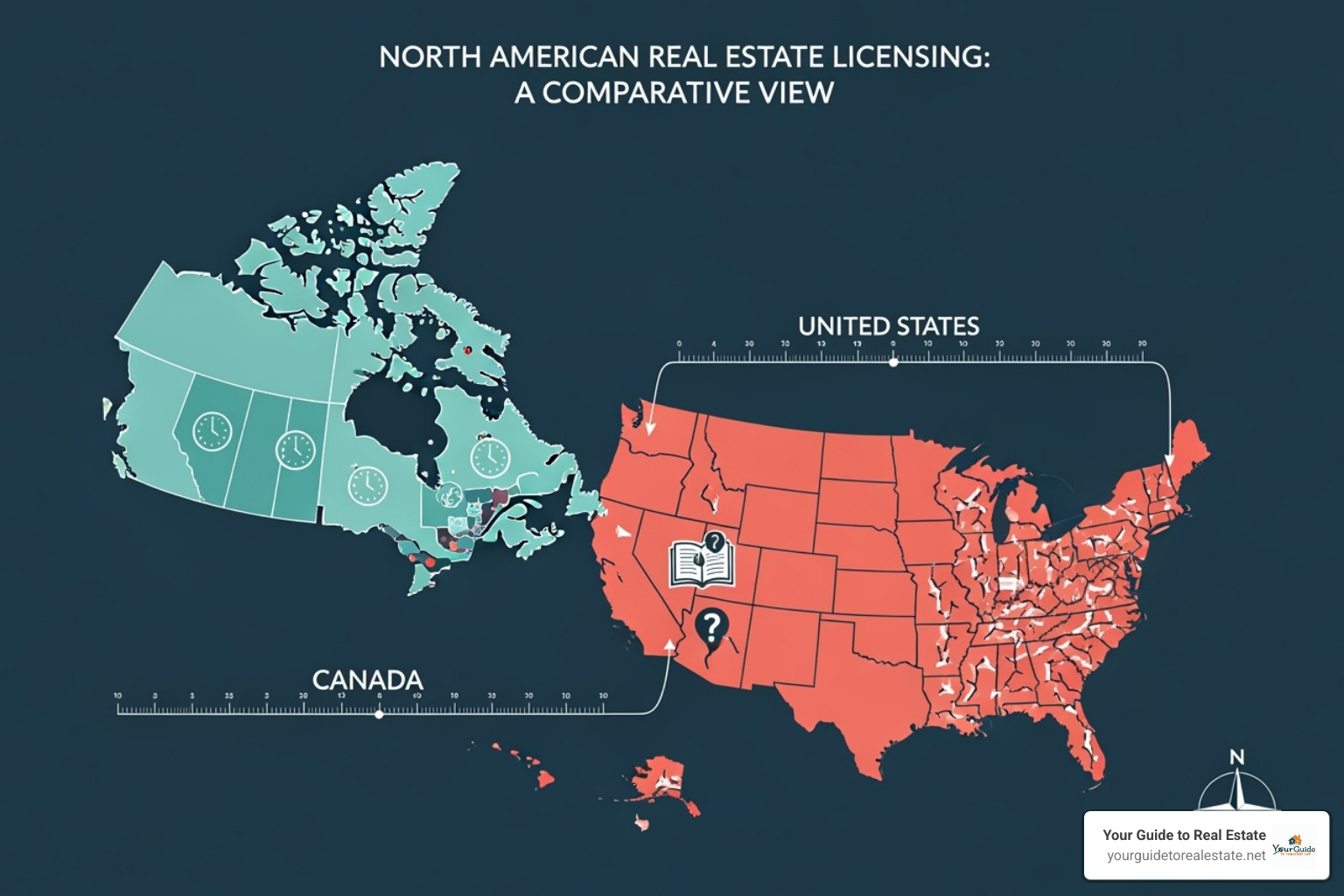
So, you’re wondering how long does it take to become a real estate agent? Well, the answer really depends on where your real estate dreams are taking root! Canada and the U.S. have quite different paths to becoming licensed, which means your timeline can vary a lot just by crossing the border.
The Canadian Timeline: A Provincial Breakdown
North of the border, things operate a little differently. In Canada, each province sets its own rules, so there’s no single, national timeline. Generally, most folks will spend anywhere from 6 to 18 months getting their studies done, passing background checks, and securing at least a provisional license. But here’s the catch: that often doesn’t even count the “articling period,” which is a unique Canadian step!
Let’s break down a few provinces:
- In Ontario, you’re looking at one of the more comprehensive journeys. You’ll typically complete 9-12 months of coursework and training through the Humber College Real Estate Salesperson Program. This program is thorough, with five courses, two simulation sessions, and six exams. You have up to 24 months to finish it all. But wait, there’s more! After that, you’ll enter a mandatory 2-year “articling period” (they call it the Post-Registration Phase) before you’re fully authorized. You also need to apply for registration with RECO within a year of finishing your initial courses.
- Over in Alberta, the Real Estate Council of Alberta (RECA) suggests you can get through their pre-licensing program in about six months. This includes a “Fundamentals of Real Estate” course plus four practice courses.
- British Columbia handles its education through UBC Sauder’s Real Estate Division. Their Real Estate Trading Services Licensing Course comes with a one-year completion limit. You can’t just power through it, though; there are rules about completing no more than two assignments per week. This keeps everyone on a steady, thoughtful pace.
- If you’re eyeing Manitoba, you’ll tackle four different modules. You need to finish all of them within sixteen months of when you first sign up for Module 1. Aim for at least 70% on those first three modules!
- Quebec has its own system, too. The Authority of Real Estate Brokerage in Quebec (OACIQ) approves specific course providers for their training programs.
- And in Newfoundland and Labrador, you can take a self-paced Pre-License Salesperson course. After that, it’s a 75-question exam where you need 70% to pass. You get up to three tries, but each retake will cost you.
- Finally, Saskatchewan also uses UBC Sauder for its education, which involves four phases of instruction spread across six courses.
Just to give you an idea of the financial side, becoming licensed in Ontario could cost around $4,110 just for the courses (assuming you pass everything on your first try). When you add in insurance and board fees, the total expenses could reach up to $7,500. It’s an investment, for sure!
The U.S. Timeline: State-by-State Examples
Now, let’s hop south to the U.S. where the journey often feels a bit speedier. Generally, the U.S. offers a faster route to becoming a real estate agent. This is mainly because there are usually fewer pre-licensing hours required, and those Canadian “articling” periods aren’t a common thing here.
Here at Your Guide to Real Estate, our company operates in the United States, including Dallas and Oklahoma City, Oklahoma. So, we’re pretty familiar with these timelines firsthand!
- Take Florida, for example. With just 63 hours of pre-licensing education required, a truly dedicated person can finish their coursework and sign up for the exam in as little as 2 to 5 weeks. The whole process, from start to finish, including application and exam, can be wrapped up in roughly 12 weeks. Talk about fast-track!
- Then there’s California. While you might dream of quick sunshine and even quicker licensing, the Golden State has its own unique rules. It requires 135 hours of pre-licensing coursework, but here’s the kicker: you can’t complete any single course in less than 2.5 weeks. Since there are three required courses, that means a minimum of 7.5 weeks for education alone. Add in another 6-8 weeks for the Department of Real Estate (DRE) to process your application, and the fastest you can expect to be licensed is around 14.5 weeks.
- New York asks for 77 hours of pre-licensing education. If you can study full-time, you could potentially get through the education in just 2 weeks, schedule the exam in another 2, and have your application processed in about 2 weeks. That brings your total minimum timeline to a super-fast 6 weeks!
- Our neighbors in Texas have one of the highest requirements, demanding 180 hours of pre-licensing education. This will naturally take more time to study, but online, self-paced options can still help you move efficiently.
- Right here in our home state of Oklahoma, you’ll need 90 hours of pre-licensing education. With focused study, you could complete this in a few weeks to a couple of months.
- And if you’re in Massachusetts or Michigan, you’re in luck! These states have some of the shortest requirements, with just 40 hours of pre-licensing education.
As you can see, while everyone shares the ambition to become a real estate agent, the specific journey and its duration really do depend on where you live and how much effort you’re ready to put in!
How to Speed Up the Process and Become an Agent Faster

We totally get it—when you’re excited about starting your real estate career, waiting months can feel like an eternity! While some steps in the licensing process are set by regulators and can’t be rushed, there are definitely smart strategies to minimize how long does it take to become a real estate agent.
Choose an Accelerated Online Program
Online learning has revolutionized real estate education, and it’s often your fastest path to getting licensed. The flexibility of online courses means you can study at 6 AM before work, during lunch breaks, or late at night after the kids are in bed. No more driving to a classroom twice a week for months on end.
If you have the opportunity to study full-time, online courses become even more powerful. That 77-hour New York requirement? You could knock it out in just two weeks by dedicating 40 hours per week to your studies. Compare that to a traditional evening class that might stretch the same content over three or four months.
The self-paced learning advantages are huge. When a concept clicks immediately, you can move on. When something needs extra attention, you can review it without holding up other students. This personalized approach often means completing coursework in weeks, not months—a significant time-saver in your licensing journey.
How to expedite the process of getting a real estate license in Canada
Even though Canada’s licensing process is generally longer, especially with those articling periods, you can still move efficiently through the system. Staying organized from day one prevents those frantic searches for documents when deadlines approach. Create a simple filing system for course materials, notes, and application paperwork.
Studying diligently might sound obvious, but consistency is key. Ontario’s Pre-Registration Phase involves substantial coursework, and maintaining a regular study schedule ensures you pass exams on the first attempt. Retakes aren’t just expensive—they add weeks to your timeline.
Completing application documents accurately the first time around prevents costly delays. Take your time with paperwork, double-check everything, and consider having someone else review your application before submission. A simple typo or missing signature can add weeks to your wait time.
Don’t forget to explore exemptions for prior education or experience. If you have a university degree in law, business, or related fields, some provinces might allow you to skip certain coursework. Always ask your provincial regulatory body about these possibilities—it could save you months of study time.
Streamline Your Application and Broker Search
Being proactive with timing can dramatically cut your overall timeline. Submit exam and license applications immediately upon eligibility—don’t let paperwork sit on your desk for “a few days” while you catch up on other things. Those few days can easily turn into weeks.
Here’s a smart move: start interviewing brokerages while still in your course. You don’t need to wait until you’re fully licensed to begin networking with potential sponsors. Many brokerages love talking to motivated students who are serious about their career launch.
Having your sponsoring broker lined up early means you can submit that final piece of your licensing puzzle immediately when your approval comes through. This eliminates the common bottleneck of scrambling to find a brokerage after getting licensed. For guidance on making this crucial decision, check out our detailed guide on how to choose the right broker for you.
Budgeting for Success: Costs and Timeline Impact
Money might not seem directly related to speed, but financial preparedness absolutely prevents delays. When you have course fees ready to go (ranging from $200-$600 in the U.S. to over $4,000 in places like Ontario), you can enroll immediately rather than waiting for your next paycheck.
Exam fees are typically modest ($15-$100), but licensing fees and insurance costs can add up. In Ontario, your mandatory professional liability insurance is built into your RECO registration, while other jurisdictions handle it separately.
Having funds ready prevents delays in every step of the process. You won’t miss exam dates because you can’t pay the fee, and you won’t wait weeks for your license because the application fee check is still in the mail. This financial readiness keeps your momentum going strong.
Understanding the earning potential that awaits can help motivate your investment in speed and quality education. Our comprehensive breakdown of agent income potential shows why getting licensed quickly—but thoroughly—is such a smart career move.
Beyond the License: Provisional Periods and Your First Years
Phew! You’ve tackled the exams, steerd the paperwork, and officially earned your real estate license. That’s a huge accomplishment! But for many, especially in places like Canada, getting the license is just the beginning of the journey. The question of how long does it take to become a real estate agent often extends beyond that initial approval, including crucial phases that set you up for long-term success.
What is the ‘articling period’ and how does it affect the timeline?
The “articling period,” or provisional licensing phase, is a unique and important step in some regions, particularly across Canada. Think of it like a learner’s permit for real estate.
-
Provisional licensing explained: This means you’re licensed, but you operate under specific conditions. You’ll typically receive closer supervision and need to complete additional education. It’s all about giving new agents practical, hands-on experience and further training, all while under the watchful eye of an experienced broker. It ensures you’re truly ready for the complexities of the market.
-
Ontario’s 2-year post-registration phase: Ontario is a prime example of this system. After you obtain your initial salesperson registration with RECO, you enter a 24-month Post-Registration Phase. This is your real-world training ground! To become a fully authorized real estate salesperson and renew your registration at the end of these two years, you must complete further education. This includes a mandatory Compliance course and two elective courses. It’s a structured way to deepen your knowledge and practical skills.
-
Additional courses required for full licensure: These courses aren’t just more studying; they often focus on real-world application, advanced topics, and ethical considerations. They make sure you’re well-equipped and confident to handle any situation you might encounter in your career.
-
Earning commissions during this period: The great news is that during your provisional or articling period, you are typically able to work and earn commissions! You’re building your business, learning on the job, and getting paid for it – all while benefiting from the guidance and support of your sponsoring broker. It’s a fantastic opportunity to kickstart your career.
Setting Yourself Up for Success
Once you’re licensed, whether provisionally or fully, the real work and continuous learning truly begin. This phase is all about building your foundation and growing into a thriving professional.
-
Brokerage training and mentorship: Choosing the right sponsoring brokerage is incredibly important. A good one will offer robust training programs and invaluable mentorship opportunities. They’ll help you steer contracts, master negotiations, understand marketing strategies, and manage client relationships. Look for a brokerage that genuinely invests in its agents’ growth and development.
-
Building a client base: Your initial years will be actively spent building your network and generating leads. This means getting out there, marketing yourself effectively, networking with purpose, and, most importantly, providing such exceptional service that clients can’t help but refer you to everyone they know. Referrals are gold in this business!
-
Developing key real estate agent skills: Beyond the academic knowledge from your courses, successful agents possess a powerful set of skills. We’re talking about strong communication, shrewd negotiation, quick problem-solving, and excellent time management. These aren’t just learned in a classroom; they are honed through experience, every single day you’re out there working.
-
For a candid look at what a career in real estate truly entails, including the ups, downs, and everything in between, check out our article on The day-to-day life of a new agent. It’s not always as glamorous as TV portrays, but it’s incredibly rewarding for those who are dedicated and passionate about helping people!
Frequently Asked Questions about Becoming a Real Estate Agent
We get tons of questions from aspiring agents, and honestly, some of the same concerns come up again and again. Let’s tackle the big three that everyone wants to know about how long does it take to become a real estate agent and what it really takes to get there.
What education is required to become a real estate agent?
Here’s the good news: you don’t need to go back to college! The fundamental requirement across virtually all jurisdictions is simply a high school diploma or GED equivalent. That’s it for your basic education before diving into the specialized stuff.
Once you’ve got that covered, you’ll need to complete your state or provincial pre-licensing coursework. This is where things get interesting because the requirements vary dramatically. You might breeze through 40 hours in Massachusetts or buckle down for 180 hours in Texas. In Canada, you’re looking at those extensive multi-course programs we talked about earlier.
Now, if you happen to have a bachelor’s degree in real estate, completed law school, or passed a bar exam, you might catch a break. Some jurisdictions offer exemptions from certain pre-licensing requirements, which could shave weeks or even months off your timeline. It’s definitely worth asking about when you’re researching your local requirements.
The bottom line? Your high school diploma opens the door, but the real learning happens in those pre-licensing courses where you’ll dive deep into contracts, property law, and all the nitty-gritty details that make you a competent agent.
Can you really get a real estate license in 3 months?
Absolutely! But there’s a big “it depends” attached to that answer. In states like Florida, where you only need 63 hours of pre-licensing education and the administrative wheels turn pretty quickly, a dedicated person studying full-time can absolutely get licensed in about 12 weeks. We’ve seen it happen!
New York is even faster if you can commit to full-time study. With only 77 hours required, some motivated folks walk away with their license in just 6 weeks. It’s pretty amazing when you think about it.
But let’s be real here. If you’re in Texas with its 180-hour requirement or California with its mandatory course pacing rules, you’re looking at a longer journey. In these areas, 4-6 months is a more realistic fast-track timeline, even if you’re giving it your all.
The biggest factor? Your personal commitment to studying full-time. If you can treat getting licensed like a full-time job for a few months, you’ll move through the process much faster than someone squeezing in study time on weekends.
How much does it cost to get a real estate license?
This is where geography really shows its impact on your wallet. The cost difference between the U.S. and Canada is pretty eye-opening.
In the United States, you’re typically looking at $500 to $1,500 for the initial licensing process. This covers your pre-licensing courses ($200-$600), exam fees ($15-$100 per attempt), license application fees ($50-$250), background checks and fingerprinting ($40-$80), and your initial Errors & Omissions insurance. It’s a reasonable investment for launching a new career.
Canada tells a different story entirely. In Ontario, for example, just the Pre-Registration Phase courses will run you around $4,110 – and that’s assuming you pass every exam on your first try. When you add in insurance, local real estate board fees, and other expenses, you’re looking at a total investment of $4,000 to $7,500.
These numbers highlight why we always recommend having your funds ready before you start the process. Nothing’s more frustrating than being ready to submit your application only to realize you need to wait for your next paycheck to cover the fees. Financial delays can easily add weeks to your timeline, so budget accordingly and keep those funds accessible.
The investment might seem steep, especially in Canada, but remember – you’re not just buying a license. You’re investing in a career with unlimited income potential and the flexibility that draws so many people to real estate in the first place.
Conclusion
So, how long does it take to become a real estate agent? After walking through the entire journey together, we’ve finded that your timeline can range from an impressive 6 weeks in states like New York to well over a year in Canadian provinces like Ontario with their extended provisional periods.
The beauty of this career path lies in its flexibility. Your individual timeline becomes a unique combination of your chosen location’s specific requirements and how much energy you’re willing to invest in the process. If you’re in Florida and can dedicate yourself full-time to studying, you might be showing homes in just three months. If you’re in Ontario balancing other commitments, you’re looking at a longer but equally rewarding journey.
Here’s what we’ve learned matters most: while getting licensed quickly feels exciting, building a solid foundation is what creates lasting success. The agents who thrive aren’t necessarily the ones who got licensed fastest—they’re the ones who chose their education carefully, found the right sponsoring brokerage, and committed to continuous learning.
Think of your licensing timeline as just the beginning of an incredible adventure. The real magic happens in those first few years when you’re building relationships, mastering your craft, and finding what makes you unique in this dynamic industry.
At Your Guide to Real Estate, we believe in giving you the complete picture. Yes, the initial push to get licensed is important, but the mentorship, training, and ongoing support you receive afterward will truly define your career trajectory. We’ve seen too many agents rush through the process only to struggle later because they didn’t invest in the right foundation.
Whether you’re just starting to explore this career or you’re already deep in your pre-licensing coursework, every successful agent started exactly where you are right now. The timeline might vary, but the destination—a rewarding career helping people with one of life’s biggest decisions—remains the same.
We’re here to support you every step of the way with expert insights, practical tips, and the kind of guidance that turns uncertainty into confidence. Your real estate journey is unique, and we want to help you make it as smooth and successful as possible.
Explore more tips for new and aspiring agents and find how our proven framework can help you build the thriving real estate career you’ve always envisioned.