
Why Home Appraisal Costs Matter for Your Real Estate Journey
If you’re wondering how much does an appraisal cost, you’re likely in the middle of buying, selling, or refinancing a home. Here’s what you need to know right away:
Average Home Appraisal Costs:
- Single-family homes: $300-$500
- Condos: $300-$500
- Multi-family homes: $600-$1,000
- Commercial properties: $1,500-$10,000+
- National average: $358 (typical range $314-$423)
A home appraisal is a professional assessment of your property’s current market value, conducted by a licensed appraiser. Mortgage lenders require appraisals to ensure they’re not lending more money than the home is actually worth. Think of it as their insurance policy – and yours too.
The buyer typically pays for the appraisal as part of their closing costs, though this can sometimes be negotiated with the seller. While the fee might seem like just another expense in an already costly process, it serves a crucial purpose: protecting everyone involved in the transaction.
Your appraisal cost will depend on several factors, including your property type, location, loan type, and local market conditions. Government-backed loans like FHA and VA often cost more due to stricter requirements, while simpler properties in urban areas with plenty of comparable sales typically cost less.
How much does an appraisal cost terms simplified:
Understanding Home Appraisals: The What, Why, and Who
Think of a home appraisal as your property’s report card – except instead of grading your math skills, it’s determining what your house is actually worth in today’s market. This professional assessment plays a huge role in home valuation and lender protection, making it one of the most important steps in nearly any real estate transaction.
When you’re buying a home, the appraisal ensures you’re not overpaying. When you’re getting a mortgage, it protects your lender from lending more than the property is worth. It’s like having a neutral referee in the sometimes emotional world of real estate, making sure everyone’s playing fair with the numbers.
For a deeper understanding of how appraisals fit into the bigger picture, our Understanding Mortgages: A Beginner’s Guide to Home Loans breaks down the entire financing process.
What is a Home Appraisal and Why is it Needed?
A home appraisal is a professional opinion of value – essentially, what a trained expert thinks your property would sell for in the current market. This isn’t your neighbor’s guess or what Zillow says online. It’s a detailed, unbiased assessment conducted by a licensed professional who follows strict guidelines.
The National Association of Realtors explains that appraisals provide crucial valuation services for real estate transactions. These aren’t casual estimates – they’re official documents that can make or break a deal.
Most of the time, your mortgage lender requires an appraisal because they need to know the home will serve as adequate collateral for your mortgage. If something goes wrong and you can’t make payments, they need confidence they can sell the property and recover their investment. It’s protection for them, and honestly, for you too.
But appraisals aren’t just for buying homes. You might need one for refinancing when you want to tap into your home’s equity or get a better interest rate. Estate planning often requires appraisals to fairly divide assets among family members. Some homeowners get appraisals for tax appeals when they think their property taxes are too high – and sometimes they’re right!
The bottom line? An appraisal gives you confidence that the numbers in your real estate transaction actually make sense.
Who Typically Pays for a Home Appraisal?
Here’s where many people get confused: even though the lender orders the appraisal, the buyer typically pays for it. It’s part of your closing costs, usually bundled with other fees you’ll see on your loan estimate.
Think of it this way – the lender needs the appraisal to approve your loan, but since you’re the one benefiting from that loan, you cover the cost. It’s a lender requirement that becomes your expense.
That said, real estate is all about negotiation. In competitive markets, sellers sometimes offer to cover the appraisal cost as a seller concession to make their property more attractive. It’s not common, but it happens – especially when sellers are motivated to close quickly.
If you’re new to homebuying and feeling overwhelmed by all these costs, our First-Time Homebuyers Toolkit: Everything You Need to Know Before You Buy can help you budget for the entire process.
Home Appraisal vs. Home Inspection vs. CMA
Let’s clear up some confusion. During a real estate transaction, you’ll hear about appraisals, inspections, and CMAs – and they’re all completely different animals. Here’s what sets them apart:
| Feature | Home Appraisal | Home Inspection | Competitive Market Analysis (CMA) |
|---|---|---|---|
| Purpose | Determine fair market value for lending/sale | Evaluate physical condition and identify defects | Estimate a home’s asking or selling price |
| Who Performs It | Licensed/Certified Appraiser | Certified Home Inspector | Real Estate Agent |
| What It Includes | Interior/exterior assessment, comparable sales research, market analysis, detailed report | Visual examination of structural, mechanical, and safety components | Analysis of recently sold, active, and expired listings |
| Typical Cost | $300 – $500 (single-family average) | $300 – $500 (average) | Free (provided by agent) |
The appraisal focuses on property value – what it’s worth in dollars and cents. The inspection focuses on property condition – whether the roof leaks or the electrical system is up to code. A CMA focuses on market price – what similar homes have sold for recently.
Think of it this way: the appraisal tells you what you should pay, the inspection tells you what might break, and the CMA tells you what everyone else paid for similar homes.
Each serves a different purpose in protecting your investment. The appraisal protects against overpaying, the inspection protects against buying a money pit, and the CMA helps you understand if you’re getting a fair deal.
For more insight into how agents determine market value, check out our guide on Competitive Market Analysis: Real Estate.
Key Factors That Determine Appraisal Costs
When you’re wondering how much does an appraisal cost, the honest answer is: it depends. Think of it like asking “how much does a car cost?” – there’s a huge difference between a basic sedan and a luxury SUV. The same principle applies to home appraisals.

The main drivers behind appraisal costs are pretty straightforward: property complexity, the appraiser’s time investment, and current market conditions. A straightforward suburban home with tons of recent comparable sales nearby? That’s going to cost less than a one-of-a-kind architectural masterpiece sitting on 50 acres in the middle of nowhere.
Picture an appraiser’s workday. They might breeze through a standard three-bedroom ranch in a cookie-cutter neighborhood in two hours, but that same appraiser could spend an entire day researching and evaluating a historic Victorian mansion with custom everything. More time equals more money – it’s that simple.
Property Type and Characteristics
Your property type is probably the biggest factor in determining your appraisal cost. Let’s break down what you can expect to pay based on what you own.
Single-family homes are the bread and butter of the appraisal world, typically costing between $300 and $500. These are the most common appraisals, so appraisers know exactly what to expect and can work efficiently.
Condos fall into a similar price range of $300 to $500. In fact, they’re sometimes even easier to appraise because there are often plenty of recent sales right in the same building or complex. It’s like having a built-in comparison shopping list.
Multi-family homes – think duplexes, triplexes, and fourplexes – bump up the cost to $600 to $1,000. Why? The appraiser needs to evaluate multiple living units, analyze rental income potential, and consider different comparable properties. It’s essentially like appraising several properties rolled into one.
Commercial properties are in a league of their own, with costs ranging from $1,500 to $10,000 or more. These require specialized expertise and often need appraisers with advanced designations. The complexity can be mind-boggling – think shopping centers, office buildings, or industrial facilities.
Land appraisals vary wildly based on size and complexity. A simple residential lot might cost $200 to $1,000, while raw farmland or development property can run $1,000 to $4,000 or higher. The appraiser needs to research zoning laws, development potential, and find comparable land sales, which can be like finding a needle in a haystack.
Property size matters too. A 6,000-square-foot mansion takes considerably longer to inspect and measure than a cozy 1,200-square-foot starter home. Every room, every detail needs to be documented.
Unique features can add $100 to $200 or more to your appraisal cost. We’re talking about properties with waterfront access, historic designations, unusual architecture, or extensive custom work. These homes require extra research and expertise to value properly.
The location – whether urban or rural – also plays a role. Urban properties often have more comparable sales data readily available, making the appraiser’s job easier. Rural properties might require extensive travel and research, potentially driving up costs due to the extra time involved.
Loan and Appraisal Type
The type of loan you’re getting can significantly impact how much does an appraisal cost. It’s not just about the property – it’s about what your lender requires.
Conventional loans typically involve the most straightforward appraisals, falling within those standard cost ranges we mentioned earlier. These lenders have fewer special requirements, so the process is usually smooth and predictable.
Government-backed loans are a different story entirely. FHA appraisal costs typically run $400 to $700, while VA appraisal fees can range from $425 to $900 for a single-family home. Why the premium? These loans have stricter health, safety, and structural standards that require extra scrutiny from the appraiser. For detailed FHA guidelines, you can check out HUD’s official documentation.
The type of appraisal also makes a big difference in cost. A full appraisal with complete interior and exterior inspection typically costs $375 to $450 for a standard home. This is the gold standard – thorough, comprehensive, and detailed.
Drive-by appraisals are less expensive at $100 to $150 because the appraiser only views the exterior and relies on public records. These are sometimes used for refinancing when a full inspection isn’t deemed necessary.
Desktop appraisals are the most budget-friendly option at $75 to $200. The appraiser never leaves their office, working entirely from online data and public records. These are typically reserved for low-risk situations.
Hybrid appraisals split the difference at $250 to $375. A local inspector handles the property visit while a licensed appraiser determines the value remotely. It’s a newer approach that aims to balance thoroughness with efficiency.
Understanding these factors helps you budget appropriately and know what to expect when you’re planning your real estate transaction.
How Much Does an Appraisal Cost? A Detailed Breakdown
Now for the numbers you’ve been waiting for. While we’ve established that how much does an appraisal cost varies based on several factors, let’s dive into the actual dollars and cents you can expect to budget for your appraisal.

The national average cost for a home appraisal sits at around $358, with most homeowners paying between $314 and $423 for a standard single-family home. Some regions see a broader range of $298 to $482, with many transactions settling around $379.
Here’s a helpful way to think about it: your appraisal will typically cost about 0.15% to 0.30% of your home’s value. So if you’re buying a $300,000 home, expect to pay roughly $450 to $900 for the appraisal. This puts the cost in perspective as a relatively small percentage of your overall investment.
How much does an appraisal cost for different property types?
Your property type is the biggest factor determining your final appraisal bill. Think of it this way: the more unique or complex your property, the more detective work your appraiser needs to do.
Single-family homes are the bread and butter of the appraisal world. These straightforward properties typically cost $300 to $500 to appraise. There are plenty of comparable sales to reference, and the process is relatively routine for experienced appraisers.
Condominiums fall into a similar price range of $300 to $500. While they’re part of a larger building, appraisers focus on your individual unit plus the shared common areas. The abundance of comparable sales within the same building or complex can actually make these easier to value.
Multi-family properties require significantly more work. A duplex, triplex, or fourplex will run you $600 to $1,000 because the appraiser needs to evaluate multiple dwelling units, each with its own rental potential and characteristics. Larger apartment buildings start at $1,500 and can climb to $3,000 or more.
Commercial properties are in a league of their own. These specialized appraisals range from $1,500 to $10,000 or higher, reflecting the complex income-based valuation methods and specialized expertise required. Many commercial appraisers hold advanced designations like MAI (Member of the Appraisal Institute) and charge accordingly.
Land appraisals vary dramatically based on size and complexity. A simple residential lot might cost just $200 to $1,000, while raw land or farmland spanning multiple acres can run $1,000 to $4,000. The appraiser needs to research zoning regulations, development potential, and environmental factors – all of which take considerable time.
How much does an appraisal cost based on loan type?
The type of mortgage you’re pursuing also influences your appraisal cost. Different loan programs have different requirements, and some demand more thorough inspections than others.
Conventional loan appraisals are typically the most straightforward, falling within those standard $300 to $500 ranges we discussed. These follow industry-standard appraisal practices without additional government requirements.
FHA appraisal costs run higher at $400 to $700 because the Federal Housing Administration has specific property standards. Your appraiser needs to verify the home meets minimum health, safety, and structural requirements – think checking for peeling paint, proper handrails, and adequate heating systems. This extra scrutiny takes additional time and expertise.
VA appraisal costs for eligible service members and veterans range from $425 to $900 for single-family homes. The Department of Veterans Affairs requires appraisers to complete a Minimum Property Requirements checklist, ensuring the home is safe and livable for our nation’s heroes. The exact fee varies by state – a VA appraisal in Florida might cap at $500, while Montana could reach $825.
These government-backed loans cost more because they’re protecting both you and the taxpayers who ultimately back these programs. The additional requirements mean more work for the appraiser, but they also provide extra peace of mind about your home’s condition and safety.
Understanding these cost variations helps you budget more accurately for your real estate transaction. For more insights into different financing options, check out our guide on Real Estate Financing.
Navigating the Appraisal Process: A Homeowner’s Guide
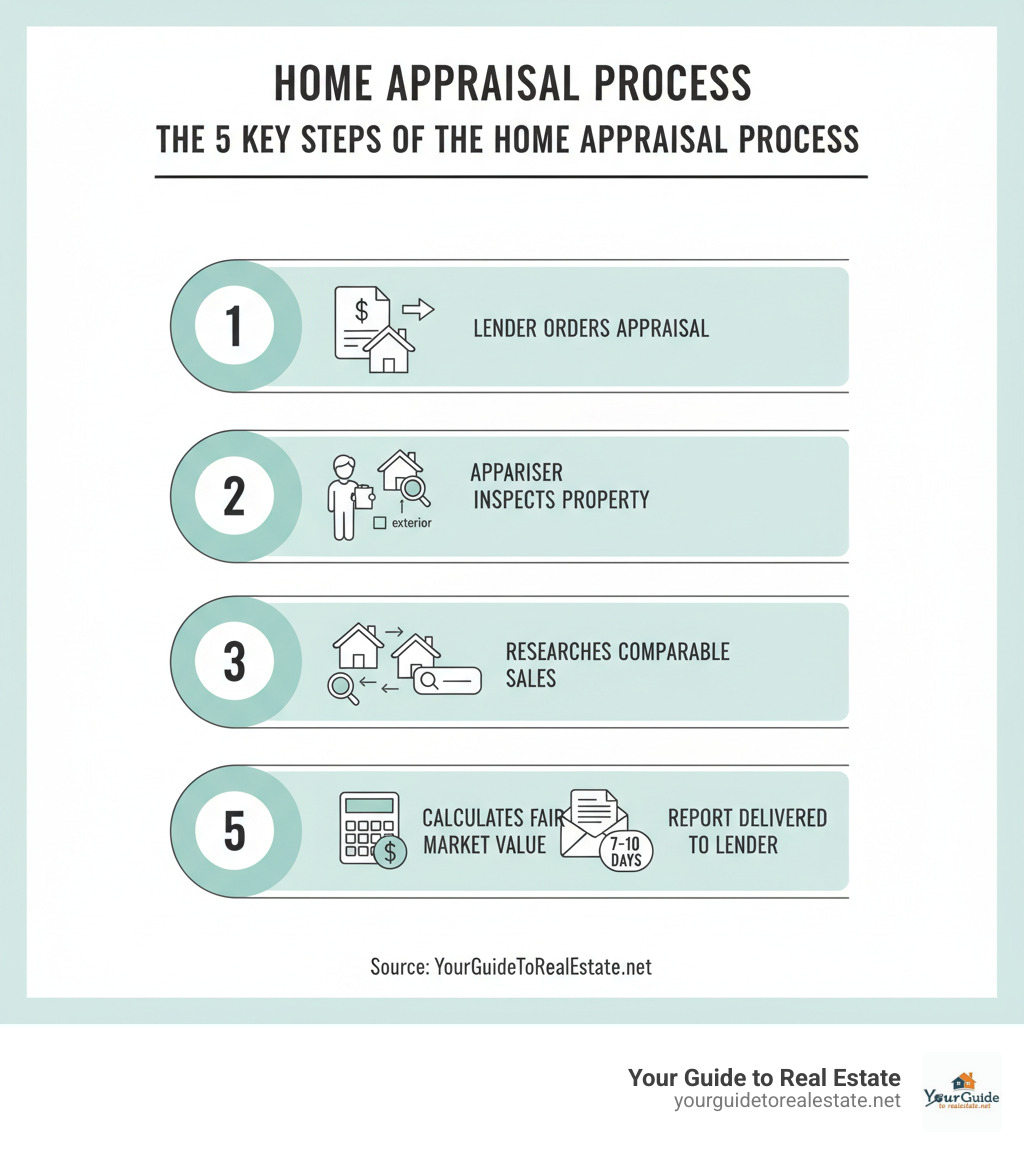
Understanding how much does an appraisal cost is just the beginning. The real value comes from knowing what happens during the process and how to steer it successfully. Whether you’re buying your first home or refinancing for the third time, the appraisal process follows a fairly predictable timeline that typically spans seven to ten days from start to finish.
The good news is that you’re working with true professionals. Appraisers must meet rigorous standards set by the Appraiser Qualification Board, which ensures they have the proper education, experience, and testing credentials. This isn’t someone’s weekend side hustle – it’s a licensed professional providing an expert, unbiased opinion of your property’s value.
For more comprehensive guidance on the entire home-selling process, check out The Ultimate Guide to Selling Your Home: Tips, Timelines, and Tools.
How to Prepare for a Home Appraisal
Think of preparing for an appraisal like getting ready for an important job interview – you want to put your home’s best foot forward. While appraisers are trained to look beyond surface issues, a well-prepared home helps ensure they can do their job efficiently and accurately.
Start with the basics: clean and declutter. A tidy home not only makes a better impression but also allows the appraiser to easily access all areas and take precise measurements. When rooms are cluttered, it can give the impression that maintenance has been deferred or that problems might be hiding underneath.
Address minor repairs before the appraiser arrives. Fix that dripping faucet, patch small holes in the walls, replace burnt-out light bulbs, and tackle any obvious maintenance issues. These small investments can prevent the appraiser from noting deferred maintenance in their report.
Boost your curb appeal with some simple landscaping touches. Mow the lawn, trim overgrown bushes, and maybe add some fresh flowers. The exterior is the first thing the appraiser sees, and a well-maintained outside suggests a well-cared-for inside.
Here’s where you can really make a difference: compile a detailed list of recent upgrades and renovations. This is absolutely crucial and often overlooked. Include everything significant you’ve done in the last 5-10 years – new roof, HVAC system, kitchen remodel, bathroom updates, window replacements, finished basement, new flooring. Write down completion dates and costs if you have them. The appraiser might not immediately recognize all your improvements, so this list helps ensure they’re properly accounted for.
Make sure everything is accessible. The appraiser needs to inspect all areas, including the attic, basement, garage, and any outbuildings. Keep utilities turned on so they can test plumbing, heating, and electrical systems. If possible, arrange for pets to be elsewhere during the visit – while we love our furry friends, pet damage or strong odors can unfortunately impact the perceived value.
What Happens if an Appraisal Comes in Low?
Sometimes the appraisal comes back lower than your agreed-upon sale price. Don’t panic – this happens more often than you might think, and it’s not necessarily a deal-killer. Let’s say you offered $400,000 for a home, but it appraises for only $380,000. Your lender will only approve financing for the appraised value, leaving you with a $20,000 gap to figure out.
Your first option is to renegotiate the sale price. If you included an appraisal contingency in your purchase agreement (and you absolutely should!), you can ask the seller to lower their price to match the appraisal. Many sellers will negotiate rather than lose the sale entirely.
You could choose to pay the difference in cash if you truly love the home and have the extra funds available. In our example, you’d need to bring an additional $20,000 to closing.
Consider requesting a second opinion through an appraisal rebuttal. You can challenge the existing appraisal by providing additional comparable sales data or documentation about upgrades the appraiser might have missed. While you typically can’t order a completely new appraisal, a well-documented rebuttal sometimes succeeds.
Walking away remains an option if you have that appraisal contingency. You can typically exit the deal without losing your earnest money, though it means starting your home search over again.
A low appraisal can actually work in your favor as a buyer – it’s like having an expert tell you that you’re about to overpay for something.
How Long Does an Appraisal Take and Can the Cost Be Negotiated?
The appraisal timeline breaks down into several phases. The actual on-site inspection usually takes anywhere from 30 minutes for a simple condo to several hours for a large, complex property. The appraiser will measure rooms, take photos, note the condition of various systems, and assess the overall property.
The report turnaround typically takes 7 to 10 business days after the inspection. This is when the appraiser researches comparable sales, analyzes market data, and compiles their detailed findings into the official appraisal report.
Your appraisal stays valid for 90 to 120 days in most cases, though this can vary based on how quickly your local market is changing. In rapidly shifting markets, lenders might require updated appraisals sooner.
As for negotiating the cost – this depends on who’s ordering the appraisal. When your lender orders the appraisal, they typically work through an Appraisal Management Company that assigns someone from their approved panel. The fee is usually set, and you have little room to negotiate.
When you’re ordering independently – perhaps for estate planning, tax appeals, or just to understand your home’s current value – you have much more flexibility. Shop around and get quotes from several licensed appraisers. Compare their fees, experience levels, and how quickly they can deliver results. Some appraisers may be willing to negotiate, especially for straightforward properties or if they’re looking to fill gaps in their schedule.
Understanding these timelines and your options helps you plan better and avoid surprises during what can already be a stressful process.
Conclusion: Is the Cost of an Appraisal Worth It?
After exploring how much does an appraisal cost and understanding all the moving pieces that influence pricing, you might be wondering if this expense is really necessary. The short answer? Absolutely.

Yes, paying $300 to $500 for a typical single-family home appraisal (or potentially more for complex properties) adds another expense to your already lengthy real estate budget. But think of it this way: you’re about to make one of the biggest financial decisions of your life. Wouldn’t you want an expert’s unbiased opinion backing up that choice?
The value of an unbiased valuation extends far beyond just meeting your lender’s requirements. When a licensed appraiser conducts a thorough assessment of your property, they’re providing a professional safety net that protects your investment in multiple ways.
For buyers, an appraisal ensures you’re not paying more than a home is actually worth. Imagine finding after closing that you overpaid by $20,000 or $30,000 – that’s a financial hit that could take years to recover from. The appraisal acts as your financial guardian, confirming that your dream home is also a smart investment.
Lenders benefit too, of course. They need to know they’re not lending more money than they could recoup if they had to sell the property. But this protection actually works in your favor as a borrower – it keeps you from taking on more debt than the property can support.
The peace of mind factor shouldn’t be underestimated either. Whether you’re buying your first home, refinancing to get a better rate, or dealing with estate planning, having that professional validation of value brings clarity to what can otherwise feel like a confusing process.
At Your Guide to Real Estate, we’ve seen how this small upfront investment saves our clients from much larger financial mistakes down the road. Our proven framework for stress-free real estate guidance always includes understanding these protective measures, because we believe knowledge leads to confidence.
Ready to take the next step in understanding your property’s true value? Consider getting a professional market analysis for your property to see how your home fits into today’s market landscape.