
Why Buying a House Without a Realtor Is More Common Than You Think
How to buy a house without a realtor is becoming an increasingly popular choice among savvy homebuyers. In fact, research shows that about 12% of Canadian home buyers are choosing to go it alone, while in the US, approximately 11% of home sales happen without traditional agent representation.
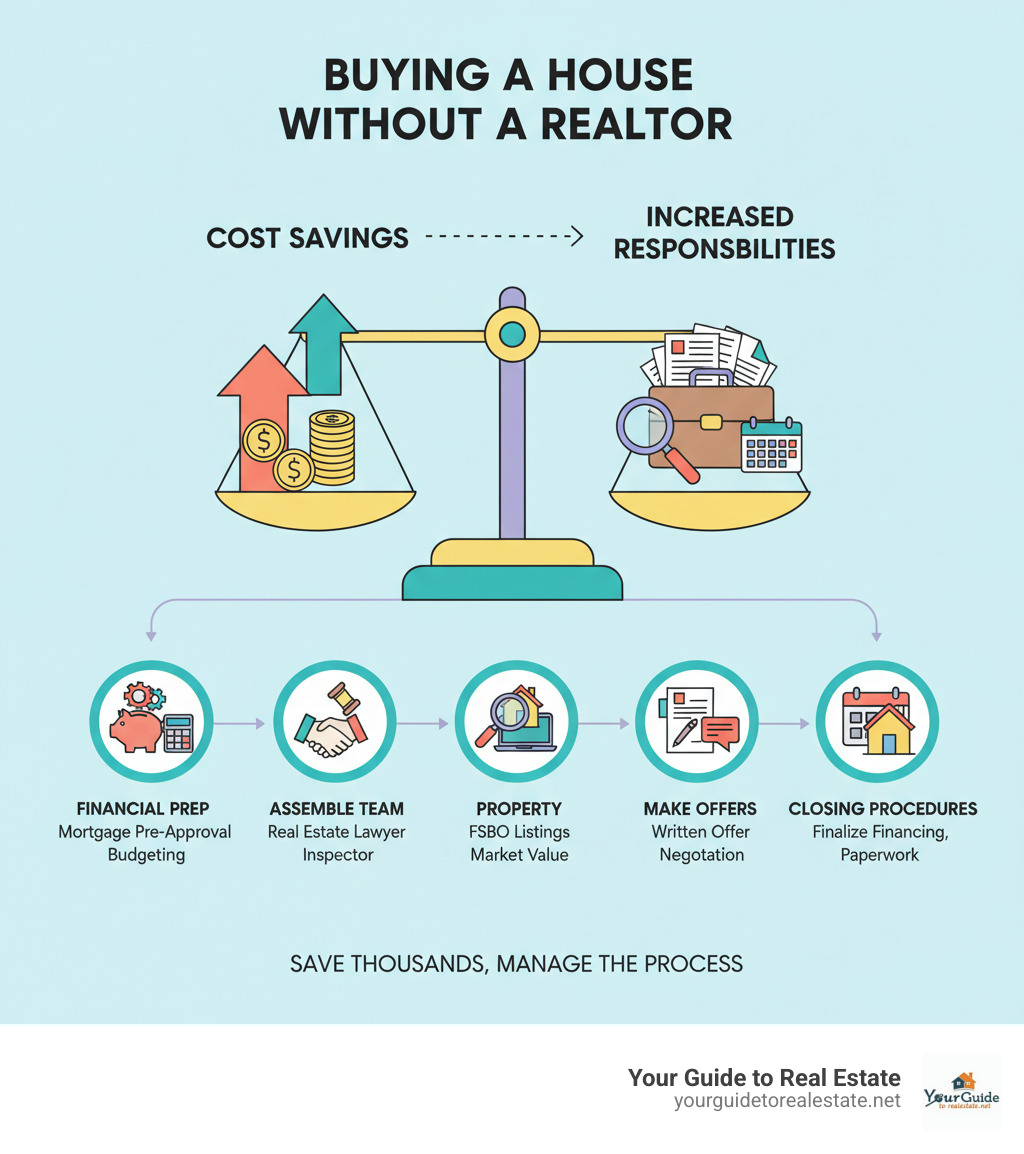
Quick Answer: Steps to Buy Without a Realtor
- Get mortgage pre-approval to establish your budget
- Hire a real estate lawyer to handle legal paperwork
- Research comparable sales to determine fair market value
- Find properties through FSBO listings and online portals
- Make a written offer including price, conditions, and timeline
- Schedule a home inspection to identify potential issues
- Finalize financing and coordinate the closing process
The main draw? Potential savings of thousands of dollars. Real estate agents typically take 5-6% of the home’s price in commissions. For a $300,000 property, that’s $15,000-$18,000 you could potentially save. On a $500,000 home, you’re looking at savings of $25,000-$30,000.
But here’s what many buyers don’t realize: you’re taking on significant responsibilities. You’ll handle everything from market research to contract negotiations to coordinating inspections. As one industry expert put it, “Going without an agent means the buyer takes on all tasks typically handled by an agent, including property searching, scheduling, negotiation, and paperwork.”
The process isn’t impossible – it just requires preparation, the right professional team, and a clear understanding of what you’re getting into.
Quick how to buy a house without a realtor terms:
Weighing the Pros and Cons of Going Agent-Free
Making the choice to buy a house without a realtor isn’t just about saving money – though that’s certainly part of it. It’s about understanding what you’re gaining and what you’re giving up. Think of it like deciding whether to hire a contractor or renovate your kitchen yourself. You might save money doing it yourself, but you’re also taking on all the responsibility, risk, and work.
Let’s break down the real differences so you can make this decision with your eyes wide open:
| Aspect | Buying With a Realtor | Buying Without a Realtor |
|---|---|---|
| Cost | Typically none directly, as seller pays both agents’ commissions. However, this is factored into the home’s price. | Potential to save the buyer’s agent commission (2.5-3% of home price), which could be thousands of dollars. |
| Expertise | Access to an agent’s market knowledge, negotiation skills, and industry connections. | Requires extensive self-education on market trends, property valuation, legal aspects, and negotiation tactics. |
| Time Commitment | Agent handles property searches, scheduling viewings, paperwork, and coordination. Reduces buyer’s time commitment. | Significant time investment for research, property hunting, scheduling, paperwork, and managing all aspects of the transaction. |
| Negotiation | Agent acts as a buffer and skilled negotiator, advocating for the buyer’s best interests. | Buyer negotiates directly with the seller or seller’s agent, requiring strong negotiation skills and emotional detachment. |
| Property Access | Access to MLS listings, off-market properties, and agent networks. | Primarily limited to publicly listed properties, FSBOs, and direct outreach. Less access to the “hidden” market. |
The Main Benefits of Buying a House Without a Realtor
The biggest reason people consider going solo? Money. And we’re talking about real money here.
Real estate commissions typically run 5-6% of the home’s sale price, split between the buyer’s and seller’s agents. On a $300,000 home, that’s $15,000-$18,000 in total commissions. For a $500,000 property, you’re looking at $25,000-$30,000. Now, the seller traditionally pays these fees, but here’s the thing – those costs are baked right into the home’s price.
When you don’t have a buyer’s agent, you might have negotiation leverage to get a lower price. The seller’s agent might be willing to reduce their commission since they don’t have to split it with another agent. Some buyers have saved up to $55,000 by going this route, representing the difference in sale prices with and without agent assistance.
But it’s not just about the money. Many buyers love the direct communication with sellers. No playing telephone through two agents – you can ask questions directly about the property’s history, why they’re selling, or what they love about the neighborhood. This direct line often leads to faster responses and clearer information.
You also get full control over the process. Want to schedule three showings in one day? Go for it. Want to take your time researching every detail before making an offer? That’s your call. You set the pace, and you make all the decisions without anyone else’s schedule or preferences getting in the way.
The Potential Risks and Drawbacks of an Agent-Free Purchase
Now for the reality check. Going without an agent isn’t just about saving money – you’re also taking on some serious responsibilities and risks.
The biggest risk? You might overpay. Real estate agents spend years learning local market conditions, understanding property values, and spotting red flags. Without this expertise, you could end up paying more than a property is worth. As real estate experts Ilyce Glink and Samuel J. Tamkin put it: “buyers working without a broker may overpay.”
Then there’s the limited property access issue. Most homes are listed on the Multiple Listing Service (MLS), which is primarily available to licensed agents. While you can find properties on public websites, agents often have access to more detailed information, upcoming listings, and even off-market properties. You might miss out on your dream home simply because you didn’t know it was available.
The legal paperwork can be overwhelming. Purchase agreements, disclosure forms, title documents – these aren’t just formalities. They’re legally binding contracts that protect you from future problems. Miss an important clause or misunderstand a disclosure, and you could face expensive surprises down the road.
Negotiation is where many solo buyers struggle most. The seller’s agent works for the seller, not you. They’re trained negotiators whose job is to get the best deal for their client. Without your own advocate, you might agree to unfavorable terms or miss opportunities to negotiate repairs, closing costs, or price reductions.
Finally, there’s the failure to disclose issues problem. Experienced agents know what questions to ask and what red flags to watch for. They can spot potential problems that might not be obvious to first-time buyers, from foundation issues to neighborhood concerns that could affect your property’s future value.
The bottom line? How to buy a house without a realtor can work, but it requires significant time, research, and confidence in your abilities. You’re essentially becoming your own real estate professional – and that’s a big job.
Your Step-by-Step Guide on How to Buy a House Without a Realtor
So, you’ve weighed the pros and cons and decided to start on this adventure independently. Fantastic! While how to buy a house without a realtor requires careful planning and attention to detail, we’ve broken it down into manageable steps that will guide you through each phase. Think of this as your personal roadmap to homeownership.
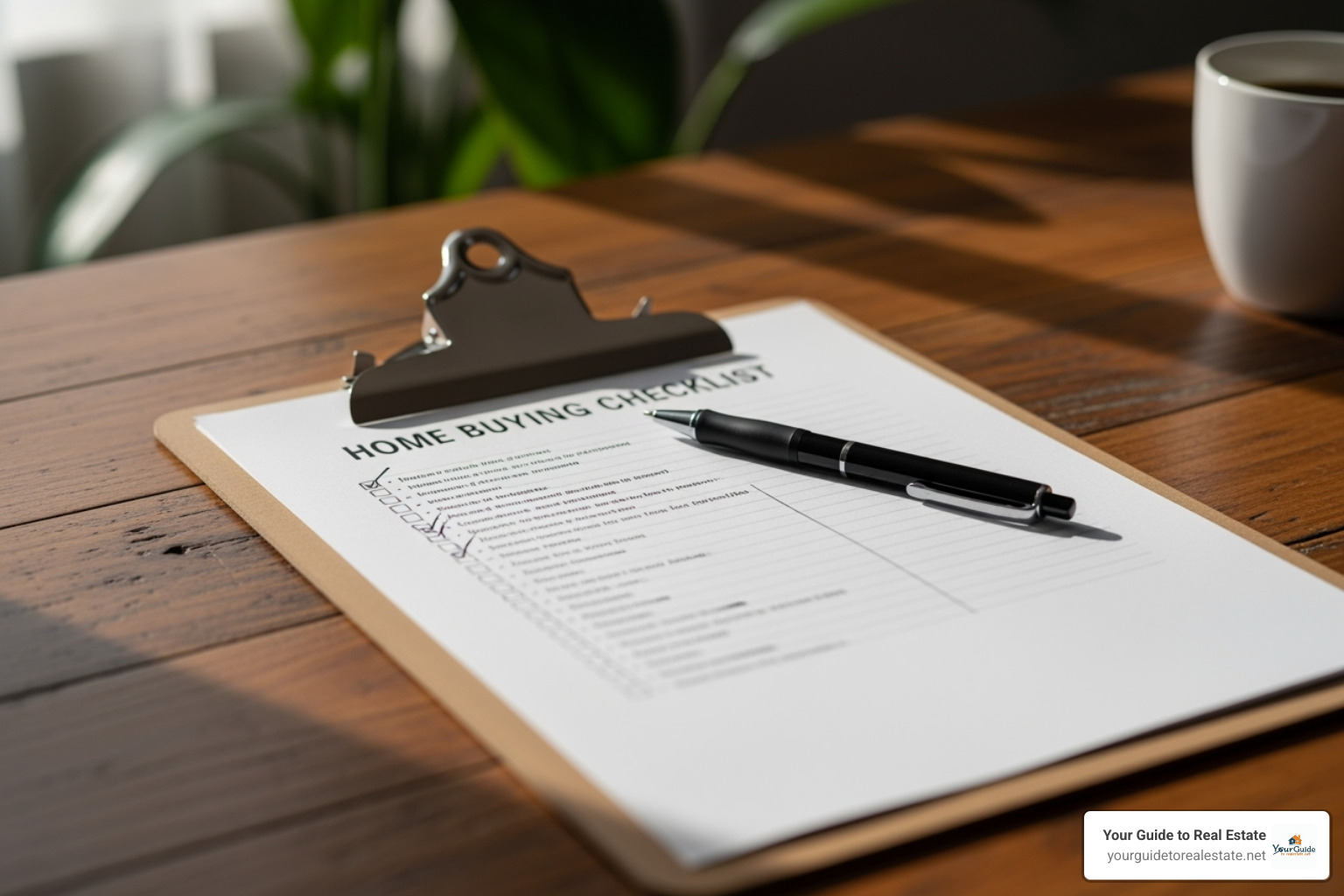
Step 1: Financial Preparation and Mortgage Pre-Approval
Before you fall in love with any property, let’s get your financial house in order. This foundation will determine everything that comes next.
Budgeting for all costs goes way beyond just the sticker price. You’ll need money for your down payment (typically 5-20% of the home’s price), but that’s just the beginning. Closing costs can surprise many first-time buyers – they typically range from 2% to 7% of the home’s price. On a $300,000 home, you could be looking at $6,000 to $21,000 in additional expenses. Don’t forget about property taxes, homeowner’s insurance, and setting aside funds for those inevitable repairs that pop up after you move in. Our guide on easy steps to buying your first home walks you through these financial preparations in detail.
Here’s where things get exciting: getting pre-approved for a mortgage. This isn’t just helpful – it’s essential when you’re buying without an agent. A pre-approval letter shows sellers you’re serious and qualified. In fact, 86% of sellers prefer buyers who’ve been pre-approved. It’s like having a golden ticket that opens doors and strengthens your negotiating position.
Shopping for lenders is your next mission. Don’t just accept the first rate you’re offered – different lenders can offer surprisingly different terms. Compare rates, fees, and customer service. The time you spend here could save you thousands over the life of your loan. Make sure to get a preapproval letter before you start making offers. If you need help navigating this process, our comprehensive guide on understanding mortgages and home loans breaks down everything you need to know.
Step 2: Assembling Your Professional Team
Here’s a truth many people don’t realize: going agent-free doesn’t mean going it completely alone. You’ll need a crack team of professionals to protect your interests and handle the complex legal aspects of your purchase.
Hiring a real estate lawyer is absolutely non-negotiable. In Canada, it’s legally required. In the US, while not always mandatory, we can’t stress enough how crucial this is when you’re unrepresented. Your lawyer will handle contract review, making sure every clause in your purchase agreement protects you rather than leaves you vulnerable. They’ll conduct a thorough title search to confirm the seller actually owns the property and identify any liens or legal issues that could become your problem later. When someone asks “Do I need an attorney to represent me at closing?” – the answer is a resounding yes when you don’t have an agent watching your back.
Finding a qualified home inspector is your next essential hire. Never, ever skip this step – we’ve seen too many buyers regret cutting corners here. A thorough inspection reveals hidden problems that could cost you thousands down the road. A good inspector examines everything from the foundation to the roof, checking electrical systems, plumbing, HVAC, and structural integrity. What a home inspector looks for includes safety issues, code violations, and expensive repairs you’ll want to know about before you sign on the dotted line.
You might also consider working with an appraiser independently. While your lender will order their own appraisal, having your own can give you additional confidence that you’re paying a fair price, especially in competitive markets where emotions can drive up offers.
Step 3: Finding Properties and Conducting Market Research
Now comes the fun part – but also the most time-consuming. Without an agent’s network and MLS access, you’ll need to become a property-hunting detective.
Finding FSBO listings should be your starting point. These “For Sale By Owner” properties represent sellers who, like you, want to avoid agent commissions. Check local newspapers, Craigslist, Facebook Marketplace, and community bulletin boards. Drive through neighborhoods you’re interested in – many FSBO sellers simply put up yard signs without extensive online marketing.
Online real estate portals will become your best friends. While you won’t have full MLS access, sites like Zillow, Realtor.com, and local real estate websites provide plenty of listings to browse. Set up alerts for properties that match your criteria so you’ll know immediately when something new hits the market.
But here’s where the real work begins: conducting market research. You need to become a local expert fast. Neighborhood scouting means visiting areas at different times of day and week to understand traffic patterns, noise levels, and the general vibe. Check out schools, shopping, and commute times to your work.
Analyzing comparable sales is crucial for making smart offers. Look for homes similar to ones you’re considering that have sold in the last three to six months. Pay attention to size, age, condition, and location. Our guide on how to find real estate “comps” will teach you to think like an appraiser. Researching property history can also reveal important details – has the house been on and off the market? Are there any red flags in its sales history?
Step 4: Making an Offer and Negotiation
This is where your preparation pays off. Drafting a purchase agreement is serious business – this legally binding document will govern your entire transaction. We strongly recommend having your real estate lawyer help draft or review this document.
Your offer price should reflect your market research, not your emotions. Include an appropriate earnest money deposit – typically 1-2% of the home’s price – to show you’re serious. But here’s what many buyers miss: including contingencies is absolutely critical for protecting yourself. These conditions must be met for the sale to proceed.
A home inspection contingency lets you walk away or renegotiate if major problems surface. A financing contingency protects you if your loan falls through. An appraisal contingency ensures you’re not stuck paying more than the home is worth. Understanding what does contingent mean in real estate can save you from costly mistakes.
Negotiation strategies become crucial when you’re dealing directly with sellers or their agents. The seller’s agent works for them, not you. Be prepared for handling counter-offers – it’s rare for a first offer to be accepted outright. Stay professional, stick to facts from your market research, and don’t be afraid to walk away if the deal doesn’t make sense. Requesting seller concessions for repairs, closing costs, or other expenses can be part of your negotiation strategy.
Step 5: Due Diligence and The Closing Process
You’re in the home stretch! This final phase requires careful attention to detail and coordination of multiple moving parts.
Reviewing the inspection report thoroughly is your first priority. Don’t just glance at the summary – read every detail. If issues arise, work with your lawyer to negotiate repairs or request credits toward fixing problems. About 46% of buyers use inspection findings to renegotiate their deal, so don’t feel awkward about asking for what’s fair.
While handling inspection issues, you’ll simultaneously be finalizing your mortgage. Your lender will order an appraisal to ensure the property value supports your loan amount. Stay in close contact with your loan officer and provide any requested documents promptly. Our detailed guide on the loan process for buying a house explains each step of this sometimes complex process.
Understanding the escrow process is important as you approach closing. A neutral third party holds your earnest money, handles document transfers, and ensures all conditions are met before money and keys change hands. Our resource on understanding escrow process clarifies how this protection works for both parties.
You’ll receive a Closing Disclosure at least three days before closing. Review this document carefully – it shows your final loan terms, monthly payments, and closing costs. Compare it to your initial loan estimate and question any significant changes.
Finally, closing day arrives! You’ll be signing final documents – lots of them. The Consumer Financial Protection Bureau provides helpful information about who to expect at your mortgage closing. Bring a cashier’s check for your closing costs, a valid ID, and any documents your lawyer requested. After what feels like signing your name a hundred times, you’ll walk away with the keys to your new home.
When Does Buying Without a Realtor Make the Most Sense?
Let’s be honest – how to buy a house without a realtor isn’t right for everyone or every situation. But there are specific scenarios where going solo makes perfect sense and can actually reduce your risk while maximizing your benefits.
The key is understanding when the stars align in your favor. It usually comes down to your experience level, the type of transaction, and whether you have existing relationships that simplify the process.

Ideal Scenarios for an Agent-Free Purchase
Buying from family or friends is probably the most straightforward situation for going agent-free. When you’re purchasing from someone you know and trust, many of the traditional challenges disappear. The price might already be agreed upon, you likely know the property’s history, and the negotiation stress is minimal. You’ll still absolutely need a real estate lawyer to handle the legal transfer and ensure everything’s done properly, but the heavy lifting of property search and tough negotiations is essentially eliminated.
Purchasing a new construction home directly from a builder can also make sense for unrepresented buyers. When you work with the builder’s sales team, you’re dealing with professionals who handle these transactions daily. Some builders might even offer incentives or slight price reductions if you’re not bringing an agent into the mix. However, here’s a crucial tip: many builders have policies where if you visit their sales center without an agent, you can’t bring one in later. Always clarify their policy upfront to avoid any surprises.
Experienced home buyers often find they can steer the process successfully on their own. If you’ve bought and sold multiple properties before, or work in real estate or a related field, you likely possess the market knowledge and negotiation skills that typically come from an agent. These buyers have essentially developed their own real estate agent skills through experience. They understand market trends, can spot red flags, and feel comfortable handling complex negotiations.
For Sale By Owner (FSBO) properties create a natural match for agent-free buyers. These sellers have already decided to skip agent representation to save on commissions, which can open the door for more flexible negotiations. Both parties are motivated to work directly with each other, potentially creating win-win scenarios. Just remember that a seller’s desire to save on commission doesn’t automatically mean they’ll accept a lower price – you’ll still need to negotiate based on market value and the property’s condition.
Real estate professionals – whether you’re a contractor, mortgage broker, or work in a related field – often have enough industry knowledge to feel confident going solo. Your professional network likely includes the lawyers, inspectors, and other specialists you’ll need, and your industry experience helps you spot potential issues that might escape a typical buyer’s notice.
The common thread in all these scenarios? They either reduce the complexity of the transaction, leverage existing relationships and trust, or involve buyers who already possess significant real estate knowledge. If your situation doesn’t fit one of these categories, you might want to seriously consider whether the potential savings are worth the added risk and responsibility.
Frequently Asked Questions About Buying a House Without a Realtor
We know that diving into how to buy a house without a realtor can feel overwhelming, and you probably have a million questions swirling around in your head. Don’t worry – we’ve been helping people steer these waters for years, and we’re here to clear up the most common concerns we hear.
Can you legally buy a house without a realtor?
Here’s the short answer: absolutely yes! You can legally buy a house without a realtor in both the United States and Canada. There’s no law anywhere that says you must have a buyer’s agent holding your hand through the process.
Think about it this way – real estate agents are service providers, not legal requirements. Just like you can represent yourself in court or do your own taxes, you can absolutely represent yourself in a real estate transaction.
However – and this is a big however – the absence of an agent means you’re taking on all the responsibilities that would normally fall on their shoulders. You’ll be handling negotiations, paperwork review, scheduling inspections, and coordinating with various professionals. It’s totally doable, but it’s not exactly a walk in the park.
This is precisely why having a real estate lawyer becomes absolutely critical when you’re going solo. While an agent isn’t legally required, having proper legal representation is non-negotiable. Your lawyer will ensure all the legal aspects are handled correctly and that your interests are protected throughout the transaction.
How do I make an offer on a house without a realtor?
Making an offer without a realtor might seem intimidating, but it’s really about getting the details right and having the proper legal support. The key is working with your real estate lawyer to draft a formal written offer that covers all your bases.
Your offer needs to be comprehensive because once both parties sign it, you’re looking at a legally binding contract. Your full legal names and the seller’s need to be clearly stated, along with the complete property address – no shortcuts here.
The offer price is obviously the big number everyone focuses on, but don’t forget about the earnest money deposit. This shows you’re serious and typically ranges from 1-2% of the home’s price.
Contingencies are your safety net – these are the conditions that must be met for the sale to go through. Common ones include passing a home inspection, securing your financing, and having the appraisal come in at or above your offer price. You’ll also want to include a proposed closing date and an expiration date for your offer, giving the seller a clear deadline to respond.
This document, known as a purchase agreement, becomes your roadmap for the entire transaction. Don’t try to wing it with a template you found online – your lawyer’s expertise here is worth every penny.
How does the mortgage process work if I’m not using an agent?
Good news here – the mortgage process is largely the same whether you have an agent or not. Your lender doesn’t really care if you have a realtor; they’re focused on your financial qualifications and the property’s value.
You’ll still need to get pre-approved early in the process (remember Step 1 from our guide above?). Once you have a signed purchase agreement, you’ll provide it directly to your lender, and they’ll move forward with processing your loan application.
Direct communication with your lender actually becomes one of the benefits here. Instead of information flowing through your agent, you’re talking directly with the mortgage professional handling your file. This can sometimes speed things up and reduce miscommunication.
Your lender will still order an appraisal of the property to make sure its value supports the loan amount. You’ll continue providing all your financial documents – pay stubs, tax returns, bank statements – directly to your lender for underwriting.
The beauty is that your lender can often provide guidance beyond just the financing. Don’t hesitate to ask questions about the process, timeline, or any concerns you have. And remember, shopping around for the best mortgage terms is always smart – check out our guide on how to shop for a mortgage to make sure you’re getting the best deal possible.
Conclusion: Are You Ready to Buy a Home on Your Own?

So here we are at the end of our journey together, and hopefully you’re feeling more confident about whether how to buy a house without a realtor is the right path for you. It’s not a decision to take lightly, but it’s absolutely doable with the right mindset and preparation.
Let’s be honest – this route isn’t for everyone. If you’re someone who prefers to have an expert handle the details while you focus on other things, there’s nothing wrong with working with a realtor. But if you’re the type of person who likes to be hands-on, enjoys research, and wants to potentially save thousands of dollars, going agent-free could be incredibly rewarding.
The potential savings alone can be life-changing. We’re talking about keeping $15,000 to $30,000 in your pocket that you can use for renovations, furniture, or simply building your emergency fund. That’s real money that can make a real difference in your life.
But remember, those savings come with increased responsibilities. You’ll be the one scheduling inspections, researching comparable sales, and negotiating directly with sellers or their agents. You’ll need to become a temporary expert in your local market and stay organized throughout a complex process.
The key to success lies in building the right professional team. Your real estate lawyer becomes your legal shield, your home inspector protects you from costly surprises, and your lender guides you through the financing maze. These professionals are worth every penny you’ll pay them.
Preparation is everything. Start by getting your finances in order and securing that pre-approval letter. Then dive deep into market research before you even start looking at properties. The more you know upfront, the more confident you’ll feel when it’s time to make an offer.
At Your Guide to Real Estate, we’ve seen countless buyers successfully steer this process. Yes, it requires more effort on your part, but the sense of accomplishment and the money you’ll save can make it all worthwhile. With the right preparation and expert resources, you can steer the process successfully.
If you’re still building your knowledge about the real estate world, don’t forget to explore our guide on choosing a real estate broker – it might help you decide if working with a professional is actually the better choice for your specific situation.
Whatever you decide, we’re here to support you with the knowledge and resources you need to make the best choice for your unique circumstances.