
Why Understanding Home Affordability Matters When You Earn $70,000
If you’re wondering “i make $70,000 a year how much house can i afford”, you’re not alone. This is one of the most common questions first-time homebuyers ask, and for good reason – getting the math wrong could leave you house-poor or missing out on your dream home entirely.
Quick Answer: Home Affordability on $70K Salary
- Price Range: $180,000 – $350,000 (depending on your financial profile)
- Monthly Income: $5,833 gross per month
- Maximum Housing Payment: $2,275 per month (using 39% rule)
- Down Payment Impact: $21,000 down = ~$320,000 home; $100,000 down = ~$400,000 home
- Key Factors: Credit score, existing debt, down payment size, interest rates
Your $70,000 annual salary puts you close to the median U.S. household income of $67,521, making you a typical American homebuyer. But here’s the thing – your salary alone doesn’t determine how much house you can afford.
Lenders look at much more than your paycheck. They examine your debt-to-income ratio, credit score, down payment, and other financial factors. Two people earning $70,000 could qualify for completely different loan amounts based on these variables.
The difference between getting approved for a $200,000 home versus a $300,000 home often comes down to understanding how lenders calculate affordability – and knowing which financial levers you can pull to improve your buying power.
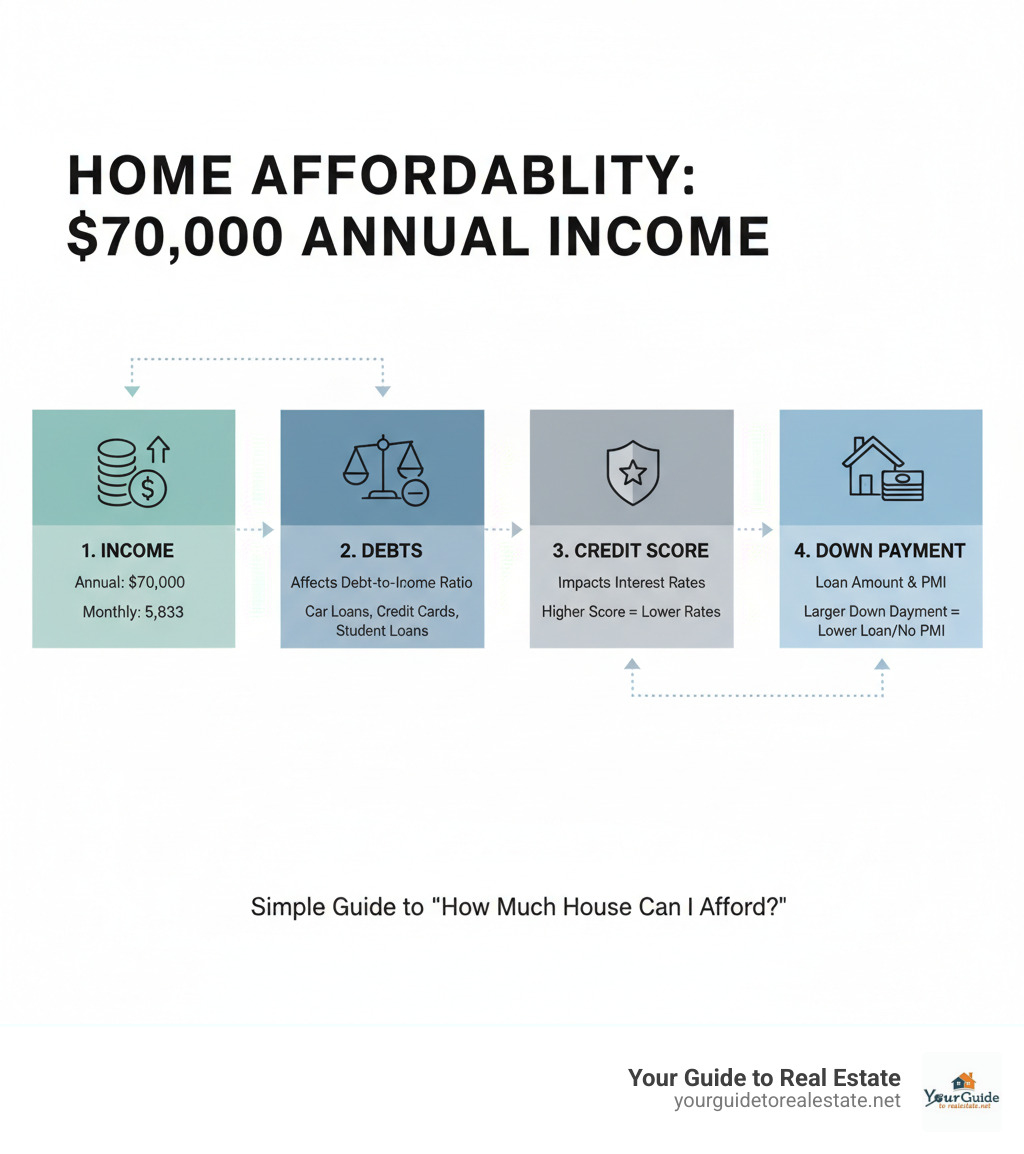
Simple guide to i make $70,000 a year how much house can i afford terms:
What’s the Magic Number? Estimating Your Home Budget on a $70K Salary
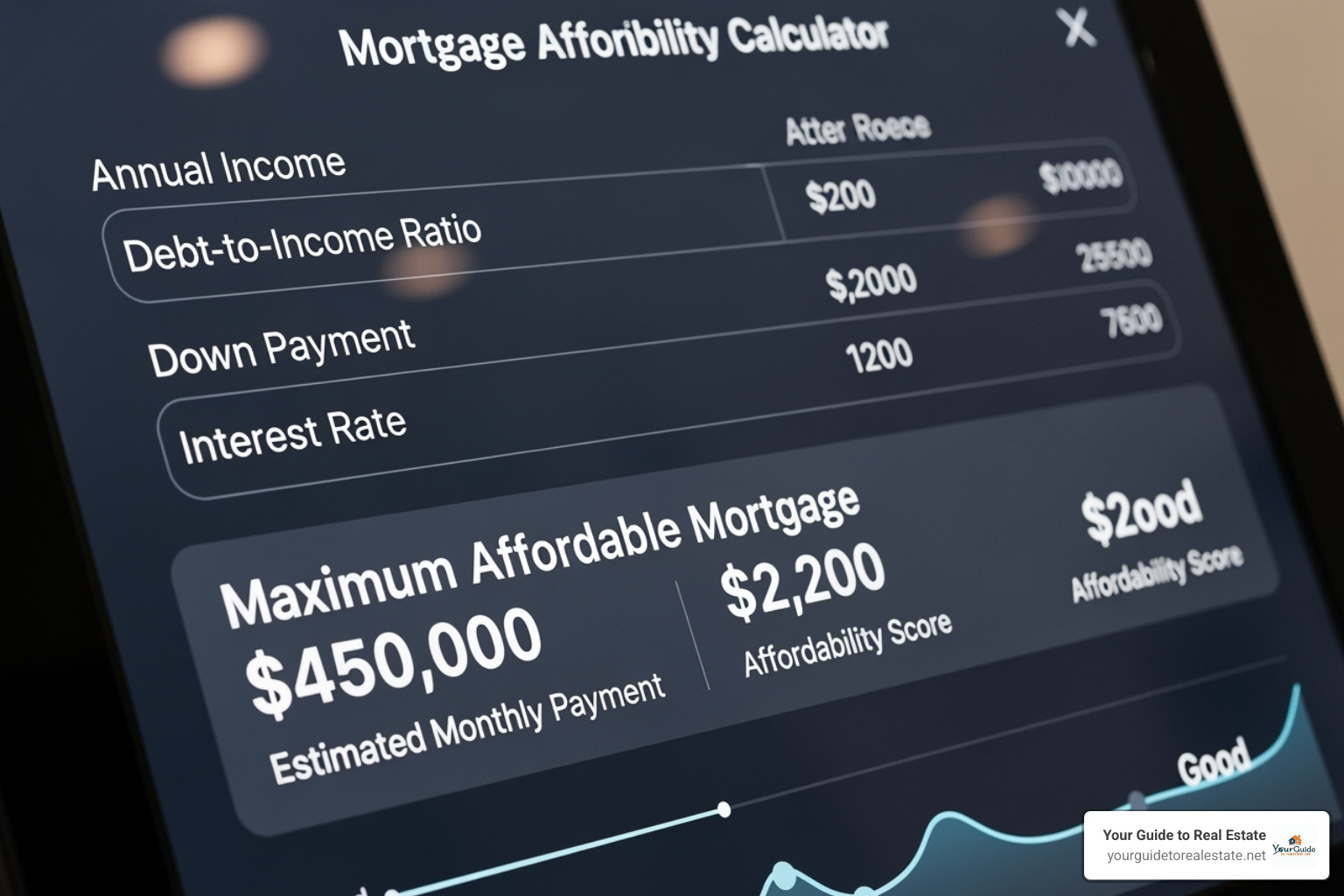
Let’s get straight to what you really want to know: “i make $70,000 a year how much house can i afford”? The honest answer is there’s no single magic number – but there is a helpful range that’ll give you a realistic starting point.
The old-school rule of thumb says you can afford a home worth three to four times your annual salary. With your $70,000 income, that puts you somewhere between $210,000 and $280,000. But here’s the thing – this is just the beginning of the conversation, not the end.
Your gross monthly income of $5,833 is what lenders use as their foundation. From there, they calculate how much you can realistically spend on PITI – that’s Principal, Interest, property Taxes, and Insurance all rolled into one monthly payment.
The real game-changer? Your down payment. Watch how dramatically it shifts your buying power:
| Annual Salary | Down Payment | Estimated Max Purchase Price | Monthly Mortgage Payment (P&I only, est.) |
|---|---|---|---|
| $70,000 | $20,000 | ~$218,000 – $244,000 | ~$1,200 – $1,400 |
| $70,000 | $50,000 | ~$253,000 – $335,000 | ~$1,200 – $1,500 |
| $70,000 | $100,000 | ~$400,000 | ~$1,500 – $1,800 |
These estimates depend on current interest rates, your credit score, property taxes, insurance costs, and any existing debt you’re carrying.
The 28/36 Rule: A Quick Affordability Check
Most lenders use something called the 28/36 rule to figure out what you can handle. Think of it as their way of making sure you won’t be eating ramen noodles every night just to make your mortgage payment.
The front-end ratio (28% rule) says your housing costs shouldn’t eat up more than 28% of your gross monthly income. For your $5,833 monthly income, that’s about $1,633 for PITI. But here’s where it gets interesting – some lenders will stretch this to 31% or even 39%, which bumps your maximum housing cost up to around $2,275 per month.
The back-end ratio (36% rule) looks at your total debt picture. Your housing payment plus car loans, student loans, credit cards, and any other monthly debt shouldn’t exceed 36% of your income. That’s roughly $2,100 total monthly debt for your salary. Again, flexible lenders might go up to 44% or even 50% in special programs.
These ratios directly impact how much mortgage you’ll qualify for. The lower your existing debts, the more room you have for a house payment. Want to understand the nuts and bolts of how mortgages actually work? Check out our Understanding Mortgages: A Beginner’s Guide to Home Loans.
A Sample Budget: What Monthly Payments Look Like
Let’s break down what that maximum $2,275 monthly housing payment actually covers. Spoiler alert: it’s not just your mortgage payment.
Your monthly housing cost includes principal and interest (the actual loan repayment), property taxes (which vary wildly by location – hello, Texas!), homeowners insurance (required by your lender), and possibly Private Mortgage Insurance (PMI) if you put down less than 20%.
Here’s a real-world example: a $250,000 home with 20% down at a 5.99% interest rate might cost you about $1,495 in principal and interest, plus another $400 for taxes and insurance. That’s $1,895 total – well within your budget.
But if you only put down 10%? Add another $100-150 monthly for PMI. Suddenly you’re pushing $2,000+ per month. This is why understanding PMI is crucial – our guide on Understanding Private Mortgage Insurance breaks it down completely.
Calculating Your Maximum Home Price if i make $70,000 a year how much house can i afford
So what’s the bottom line? With a $70,000 salary, you’re realistically looking at homes in the $180,000 to $350,000 range. That’s a pretty wide spread, and here’s why:
Your down payment makes a huge difference. Save up $21,000 (about 30% of your annual income), and you might afford a home around $320,000. Manage to scrape together $100,000? You could be looking at $400,000 homes. It’s like financial magic, but with math.
Interest rates also play a starring role. Even a half-percent difference in your rate can change your buying power by tens of thousands of dollars. This is why having great credit is like having a superpower in the mortgage world.
Loan terms matter too. A 15-year mortgage means higher monthly payments but less total interest paid. A 30-year loan gives you lower monthly payments but costs more over time. Most first-time buyers go with 30 years to keep those monthly payments manageable.
Ready to crunch your own numbers? Our Mortgage Calculator lets you plug in your specific situation and see exactly what you can afford.
Beyond the Paycheck: Key Factors Lenders Use to Determine Affordability

When you apply for a mortgage, lenders aren’t just checking your income; they’re essentially looking at your entire financial story. They need to assess their risk in lending you a large sum of money, and your $70,000 salary is only one chapter. Understanding their perspective is key to knowing how much house you can truly afford.
Lenders perform a thorough financial health check, examining several factors to determine your mortgage approval and the maximum loan amount. This risk assessment helps them predict your ability to consistently make payments over the long term. If you’re curious about the general steps involved, our guide on the Loan Process for Buying a House offers a great overview.
Decoding Your Debt-to-Income (DTI) Ratio
Your Debt-to-Income (DTI) ratio is one of the most critical factors lenders scrutinize. It’s a percentage that compares your total monthly debt payments to your gross monthly income. Simply put: can you handle more debt?
There are two primary DTI ratios lenders typically consider:
- Gross Debt Service (GDS) Ratio: This measures the percentage of your gross monthly income that goes towards housing costs (PITI, and sometimes utilities or HOA fees). Lenders generally prefer this to be at or under 35-39% of your pre-tax household income.
- Total Debt Service (TDS) Ratio: This is the big one. It includes all your housing costs plus all your other monthly debt obligations, like student loan payments, car payments, and minimum credit card payments. The TDS ratio should ideally be at or under 40-42% of your pre-tax income. Some aggressive lenders might go up to 50% DTI, but this is less common for conventional loans and often comes with higher scrutiny.
Let’s consider how common debts affect this:
- Student Loans: The pre-pandemic average student loan payment was $393 per month. If you have such a payment, it directly reduces the amount of your income available for a mortgage.
- Car Payments: A car loan payment, say $300-$500 per month, also eats into your available income for housing.
- Credit Card Debt: Even if you pay off your credit cards monthly, lenders will look at your minimum required payments as part of your DTI. High balances, even if you’re managing them, can signal higher risk.
For example, if your monthly income is $5,833 and you have $900 in other monthly debt payments, your total debt capacity (at a 36% TDS) would be $2,099.88. Subtracting your $900 in other debts leaves you with only $1,199.88 for housing costs, which is significantly less than the $1,633.33 allowed by the 28% rule. This demonstrates how other debts can drastically reduce your home buying power.
It’s worth noting that your $70,000 annual salary is slightly higher than the median annual household income of $67,521. This puts you in a good position, but effectively managing your existing debt is crucial. If debt feels overwhelming, exploring options like a Debt Consolidation Loan might be beneficial before seeking a mortgage.
The Power of Your Credit Score
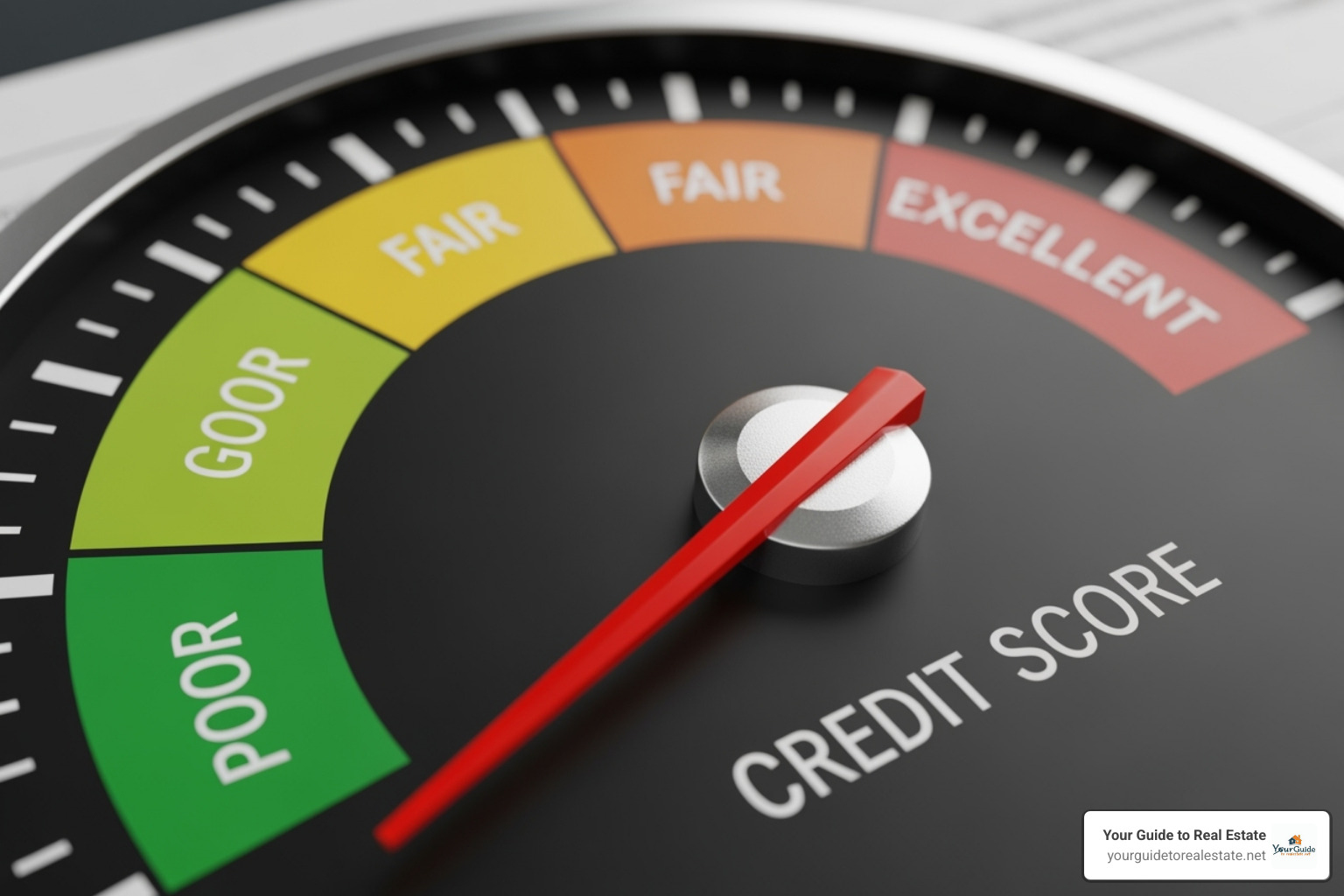
Think of your credit score as your financial report card. It’s a three-digit number (most commonly a FICO score) that summarizes your credit history and directly influences the interest rate you’ll receive on your mortgage. And let us tell you, a good credit score is like having a superpower when it comes to home affordability!
- Credit History: Lenders want to see a consistent history of responsible borrowing and repayment. This means paying bills on time, keeping credit card balances low, and not opening too many new accounts at once.
- Interest Rates: This is where the magic happens. A higher credit score signals lower risk to lenders, allowing them to offer you a lower interest rate. Even a half-percentage point difference can save you tens of thousands of dollars over the life of a 30-year mortgage and significantly reduce your monthly payments. This means you can afford a more expensive home for the same monthly cost.
- Loan Qualification: Your credit score is also a gatekeeper. Different loan types have minimum credit score requirements:
- Conventional loans generally require a minimum credit score of 620.
- FHA loans are more lenient, often requiring a score of 580 (with 3.5% down) or even 500 (with 10% down).
- VA and USDA loans typically require a minimum score of 580 or higher, though some lenders for USDA might prefer 640.
A strong credit score is your best friend in the mortgage process. It literally pays to have good credit. To ensure you’re getting the best possible terms, learn more about How to Shop Mortgage rates and compare offers.
How Your Down Payment Changes the Game
Your down payment is perhaps the most impactful single factor you control in determining how much house you can afford. It’s the chunk of cash you pay upfront, reducing the amount you need to borrow and showing lenders your commitment.
- Minimum Down Payment: While 20% is often seen as the ideal, minimum down payments can be as low as 3% for conventional loans, and 3.5% for FHA loans. VA and USDA loans can even offer 0% down for eligible borrowers. However, these lower down payments often come with trade-offs.
- 20% Down Payment: Reaching this threshold is a game-changer. Why? Primarily because it allows you to:
- Avoid Private Mortgage Insurance (PMI): This is a monthly fee that protects the lender if you default, and it can add a significant amount to your monthly housing costs. Avoiding PMI can save you hundreds of dollars each month, freeing up more of your budget for the actual home.
- Potentially Secure Better Interest Rates: Lenders see a 20% down payment as a sign of lower risk, which can translate to more favorable interest rates.
- Lower Monthly Payments: A smaller loan amount naturally means lower monthly principal and interest payments.
- Loan-to-Value (LTV) Ratio: Your down payment directly affects your LTV ratio (loan amount divided by home value). A lower LTV (meaning a larger down payment) is always more attractive to lenders.
- Building Equity: A larger down payment means you start with more equity in your home from day one. This gives you a financial cushion and a head start on building wealth through homeownership.
Don’t despair if 20% feels out of reach! There are many programs designed to help, especially for first-time homebuyers. Explore options for Down Payment Assistance to see if you qualify for grants or loans that can help you bridge the gap.
How to Boost Your Buying Power and Afford More House

Feeling a little overwhelmed by the numbers? Don’t be! Even if your initial affordability estimates don’t quite match your dreams, there are concrete steps you can take to increase your buying power and get closer to your homeownership goals. It’s all about strategic financial planning and making smart moves.
Consider your journey to homeownership a long-term financial strategy. Every dollar saved, every debt paid down, and every improvement to your credit score brings you closer. Sometimes, increasing your income through side hustles or career advancement can also significantly boost your affordability. For those starting on this journey for the first time, we have excellent First-Time Homebuyer Tips to guide you.
Exploring Loan Options and First-Time Buyer Programs
Not all mortgages are created equal, and understanding the different types can open up more affordability. Here’s a quick rundown of common loan types and how they might fit your $70,000 salary:
- Conventional Loans: These are the most common type, offered by private lenders. They typically require a minimum credit score of 620 and can ask for as little as 3% down. However, less than 20% down usually means Private Mortgage Insurance (PMI).
- FHA Loans: Insured by the Federal Housing Administration, FHA loans are great for first-time homebuyers or those with lower credit scores (as low as 500-580) and smaller down payments (3.5% minimum). They do require mortgage insurance premiums (MIP) for the life of the loan in most cases. You can learn more about their specific criteria at FHA Loan Requirements.
- VA Loans: If you’re an eligible veteran, active-duty service member, or surviving spouse, VA loans are a fantastic option. They often require no down payment and no private mortgage insurance, making them incredibly affordable.
- USDA Loans: Backed by the U.S. Department of Agriculture, these loans are designed for low-to-moderate-income buyers in eligible rural areas. They also offer 0% down payment options and can be a hidden gem for those willing to live outside major metropolitan centers.
Beyond federal programs, don’t forget to research state and local first-time homebuyer programs. Many states, including Texas and Oklahoma where we operate, offer grants, tax credits, or second mortgages with favorable terms to help with down payments and closing costs. These programs can significantly reduce your upfront expenses and increase your overall affordability.
Strategies to Improve Your Financial Profile
Boosting your home buying power isn’t about magic; it’s about making strategic financial moves. Here are our top tips:
- Pay Down Debt: This is huge. Reducing your existing debt, especially high-interest credit card debt, directly lowers your DTI ratio. A lower DTI means more of your income is available for housing, increasing your mortgage approval amount. If you have a car payment, consider if you can pay it off or refinance it to reduce the monthly amount.
- Increase Income: Easier said than done, right? But even small increases can help. Consider a side hustle, ask for a raise, or explore opportunities for career advancement. A combined income of $140,000 (two applicants earning $70,000 each) and a $42,000 down payment could afford up to $645,846 according to our research, showcasing the power of dual incomes.
- Improve Credit Score: We can’t stress this enough. Pay all your bills on time, every time. Keep your credit card balances low (ideally below 30% of your limit). Avoid opening new credit accounts before applying for a mortgage. Dispute any errors on your credit report. A higher credit score can literally save you thousands in interest over the life of your loan.
- Budgeting: Get a clear picture of where your money goes. Track your spending for a few months, identify areas where you can cut back, and redirect those savings towards your down payment or debt reduction.
- Saving Strategies: Be intentional about saving for your down payment and an emergency fund. Even if you only need a small down payment, having a cushion for closing costs and unexpected home expenses is vital.
By implementing these strategies, you’ll not only increase your mortgage affordability but also build a stronger financial foundation for homeownership. To help you steer the various options and secure the best terms, make sure to read our guide on How to Compare Mortgages.
Frequently Asked Questions about Home Affordability
Let’s be honest – figuring out “i make $70,000 a year how much house can i afford” brings up a lot of questions. You’re not alone in wondering about the details that could make or break your homebuying dreams. Here are the questions we hear most often from folks in your exact situation.
How do student loans affect my ability to buy a house?
If you’re carrying student loan debt, you’re in good company – and yes, it absolutely affects your home buying power. Those monthly payments don’t disappear when lenders calculate how much mortgage you can handle.
Here’s the reality: your student loan payment gets added to your Total Debt Service ratio, which means it directly competes with your potential mortgage payment. With the average student loan payment sitting at $393 per month according to federal data, that’s $393 less of your $5,833 monthly income available for housing costs.
But here’s where it gets interesting. If you’re on an Income-Based Repayment (IBR) plan, some lenders will use your actual lower IBR payment instead of calculating a percentage of your total loan balance. This can be a game-changer for your DTI ratio and might significantly boost your buying power.
Different lenders handle student loans differently too. Some might calculate 0.5% to 1% of your outstanding balance as a hypothetical monthly payment if your loans are in deferment. The key is being upfront with your lender about your exact situation – they’ve seen it all before and can work with you to find the best approach.
Can I really buy a house if i make $70,000 a year how much house can i afford in an expensive market?
This is the million-dollar question (sometimes literally!). The short answer is: it depends entirely on what “expensive” means where you’re looking.
Let’s put this in perspective. The median home price ranges from around $126,948 in West Virginia to over $828,002 in Hawaii. Your $70,000 salary will stretch very differently in Oklahoma City versus San Francisco or Manhattan.
In many markets across Texas and Oklahoma, our research shows that your $180,000 to $280,000 budget range can absolutely work for a starter home. But if you’re eyeing markets where starter homes begin at $500,000, you’ll need to get creative.
Consider starting with a condo or townhouse instead of a single-family home. Yes, there might be HOA fees to factor in, but the lower purchase price could get you in the door. Think of it as your stepping stone – you build equity, improve your financial position, and move up later.
Location flexibility can be your secret weapon. Sometimes moving just 20-30 minutes further from a city center can open up significantly more affordable options. And hey, you might find you actually prefer the quieter pace and bigger yards.
For insights into where markets are heading, check out our Housing Market Forecast to help time your purchase strategically.
What are the hidden costs of owning a home?
Okay, let’s talk about the elephant in the room – those “surprise” costs that aren’t really surprises if you know what to look for. Your mortgage payment is just the beginning of your monthly housing expenses.
Closing costs hit you right at the finish line, typically running 2% to 5% of your loan amount. On a $250,000 home, that’s $5,000 to $12,500 you’ll need at closing on top of your down payment.
Then there are the ongoing monthly costs beyond your mortgage. Property taxes and homeowners insurance are usually rolled into your payment through escrow, but they can vary dramatically by location. HOA fees are another monthly expense if you’re buying a condo or home in a planned community.
But here’s the big one that catches many new homeowners off guard: maintenance and repairs. We always tell our clients to budget 1% to 3% of their home’s value annually for upkeep. On a $250,000 home, that’s $2,500 to $7,500 per year – or roughly $200 to $625 per month you should be setting aside.
Think about it: when the water heater dies at 2 AM or the roof starts leaking during a storm, you can’t call a landlord. You are the landlord now. Utilities will likely be higher than what you paid as a renter too, especially if you’re moving from an apartment to a house.
The good news? None of these costs should derail your homebuying plans if you budget for them upfront. They’re just part of the true cost of homeownership that smart buyers plan for from day one.
Conclusion: Your Path to Homeownership Starts Now
We hope this comprehensive guide has answered your burning question: “i make $70,000 a year how much house can i afford”. The truth is, while your $70,000 salary puts you in a solid position, the real answer is beautifully complex—shaped by your unique financial fingerprint.
Your credit score opens doors to better interest rates. Your existing debt either expands or shrinks your buying power. Your down payment can transform a $200,000 budget into a $300,000 opportunity. And the market you’re shopping in? That’s the wild card that can change everything.
Here’s what we want you to remember: homeownership isn’t just about qualifying for a mortgage—it’s about building a foundation for your future. Every dollar you save, every point you improve your credit score, and every debt you pay down is an investment in your dreams.
The path forward is clearer now. You know that your affordability range likely falls between $180,000 and $350,000, depending on your financial profile. You understand that lenders look beyond your paycheck to assess your complete financial story. Most importantly, you’ve learned that you have more control over this process than you might have initially thought.
Your journey to homeownership starts with your very next financial decision. Whether that’s paying down a credit card, researching first-time buyer programs, or simply starting to save more aggressively for a down payment—you’re already on your way.
At Your Guide to Real Estate, we believe knowledge is your greatest asset in the real estate market. We’re here to provide the proven framework and stress-free guidance that turns homeownership dreams into reality. Whether you’re house hunting in Dallas, Oklahoma City, or anywhere across the country, these principles will serve you well.
Ready to dive deeper into the mortgage world? Our comprehensive resource on Understanding Mortgages: A Beginner’s Guide to Home Loans will help you master the next phase of your homebuying journey.
Your future home is out there waiting for you. Now you have the tools to find it.