Why Kitchen Floor Plans Matter for Homeowners
A kitchen floor plan is the blueprint that determines how your kitchen space is organized, from appliance placement to traffic flow. Understanding kitchen layouts is crucial whether you’re buying a home, planning a renovation, or evaluating a property’s value.
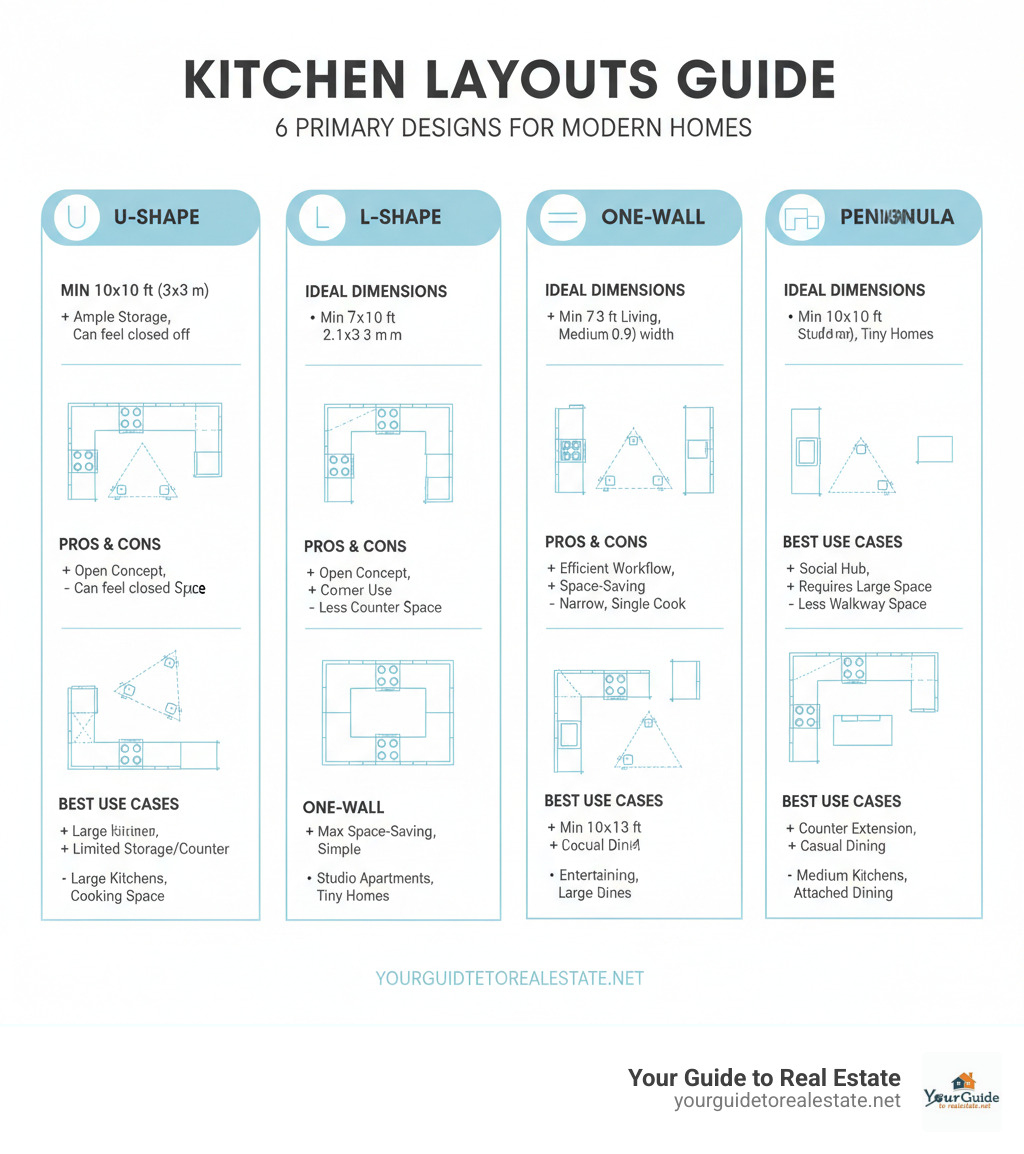
The 6 most common kitchen floor plans are:
- U-Shaped – Ideal for medium to large kitchens with multiple cooks
- L-Shaped – Perfect for small to medium kitchens and open-concept living
- Galley – Best for narrow spaces with one primary cook
- One-Wall – Great for small spaces and studio apartments
- Island – Excellent for large kitchens and entertaining
- Peninsula – Good for medium kitchens needing extra counter space
The right kitchen layout can make or break your daily cooking experience and significantly impact your home’s resale value. According to real estate data, kitchens are often the deciding factor for buyers, making layout choices critical for both functionality and investment returns.
A well-designed kitchen follows the work triangle principle – keeping the sink, stove, and refrigerator within 4-9 feet of each other for maximum efficiency. Modern kitchens also consider work zones for prep, cooking, and cleaning to accommodate today’s cooking styles.
Kitchen floor plan terms simplified:
- what is the primary difference between homeowners insurance and renters insurance?
- i make $70,000 a year how much house can i afford
- real estate financing
The 6 Most Common Kitchen Floor Plan Layouts
When it comes to designing the heart of your home, understanding different kitchen floor plan options can make all the difference. Each layout has its own personality and strengths, and finding the right match for your space and lifestyle is key to creating a kitchen you’ll truly love.
Let’s walk through the six most popular layouts, exploring what makes each one special and helping you find which might be perfect for your home.
The U-Shaped Kitchen
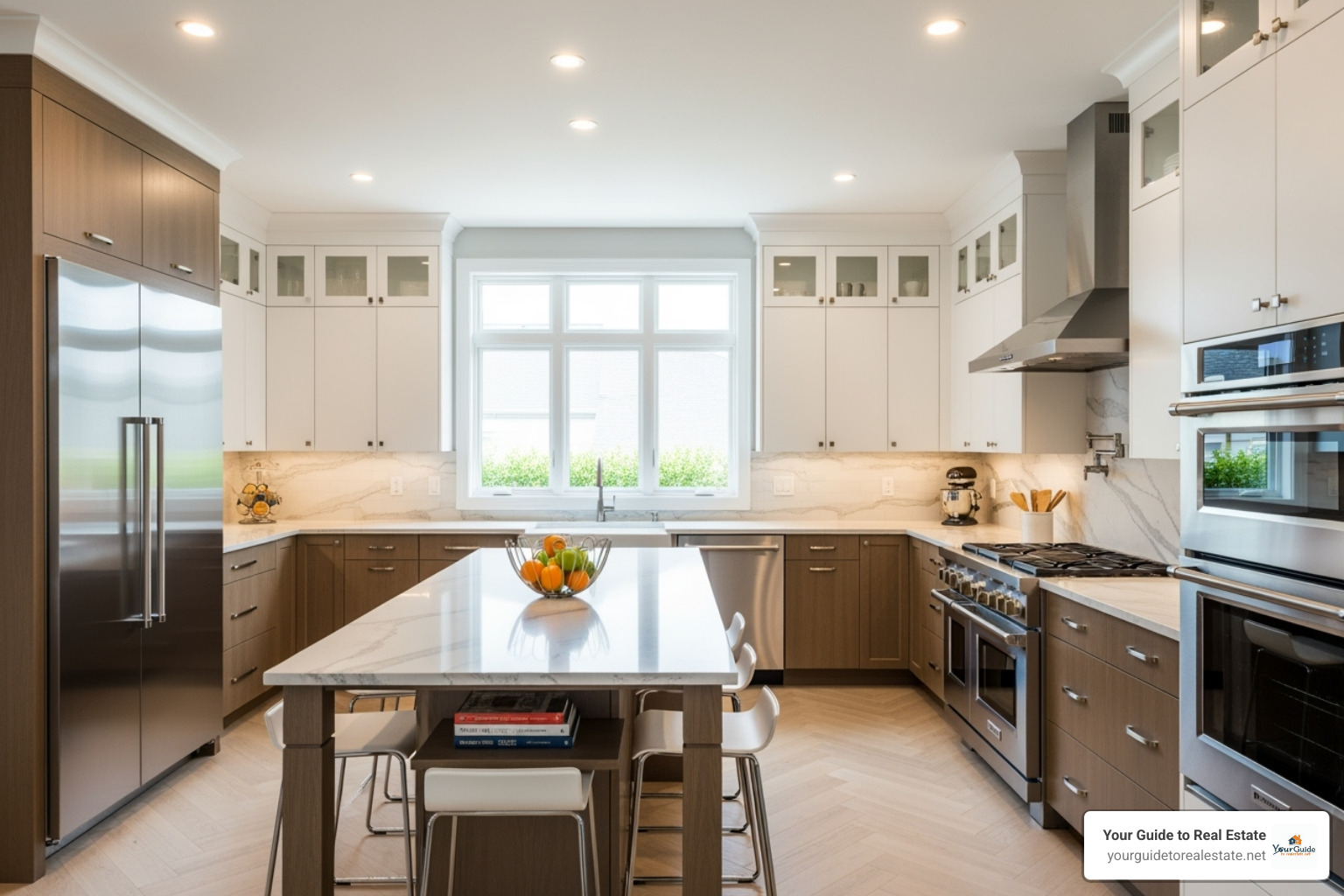
Picture a kitchen that wraps around you like a warm hug – that’s the U-shaped layout. With cabinets and appliances along three walls, this design creates a cozy cooking cocoon that’s both functional and inviting.
The beauty of a U-shaped kitchen floor plan lies in its generous counter space and abundant storage. You’ll have room to spread out when preparing meals, and everything you need stays within arm’s reach. This layout naturally creates an efficient workflow, making it a dream for anyone who spends serious time in the kitchen.
What really sets the U-shape apart is how well it accommodates multiple cooks. Whether you’re cooking alongside your partner or teaching the kids to bake, there’s plenty of room for everyone to work without stepping on each other’s toes. The design keeps the cooking zone contained, so you can have a full meal prep session while others relax in adjacent living areas.
This layout truly shines in medium to large kitchens where it has space to breathe. While you can adapt it for smaller spaces, the U-shape reaches its full potential when there’s room to add an island or peninsula for even more functionality.
The L-Shaped Kitchen

The L-shaped kitchen is like the Swiss Army knife of kitchen layouts – incredibly versatile and adaptable to almost any situation. Using two adjacent walls, this design creates an open, airy feel while maximizing your available space.
This kitchen floor plan excels at making the most of corner spaces, which can be tricky in other layouts. The open center keeps traffic flowing smoothly, making it perfect for families who gather in the kitchen. It’s especially brilliant in open-concept living areas, where the kitchen seamlessly blends with dining and living spaces.
The L-shape offers wonderful flexibility for small to medium kitchens. You can add a small island or keep the center completely open for a dining table. This adaptability makes it a favorite among homeowners who want their kitchen to serve multiple purposes.
If you’re considering your first home purchase, understanding how flexible layouts like the L-shape can grow with your changing needs is valuable insight. Check out our First-Time Homebuyer Tips for more guidance on evaluating kitchen layouts during your home search.
The Galley Kitchen

Think of the galley kitchen as the race car of kitchen designs – sleek, streamlined, and built for speed. With two parallel walls of cabinets and appliances creating a central corridor, this layout is all about efficiency.
The galley kitchen floor plan is often considered the most efficient layout for one cook. Everything you need is just a few steps away, creating a smooth workflow that makes meal preparation feel effortless. It’s perfect for those who love to cook but don’t need space for multiple people working simultaneously.
This design works beautifully in narrow spaces where other layouts might feel cramped. Whether you’re dealing with a small apartment or a narrow kitchen in a larger home, the galley layout makes every square foot count. The parallel design also keeps costs down since plumbing and electrical runs are simplified.
While galley kitchens are ideal for small to medium kitchens with one primary cook, they can feel tight when multiple people try to use the space at once. But for solo cooking enthusiasts, it’s hard to beat this layout’s focused efficiency.
The One-Wall Kitchen
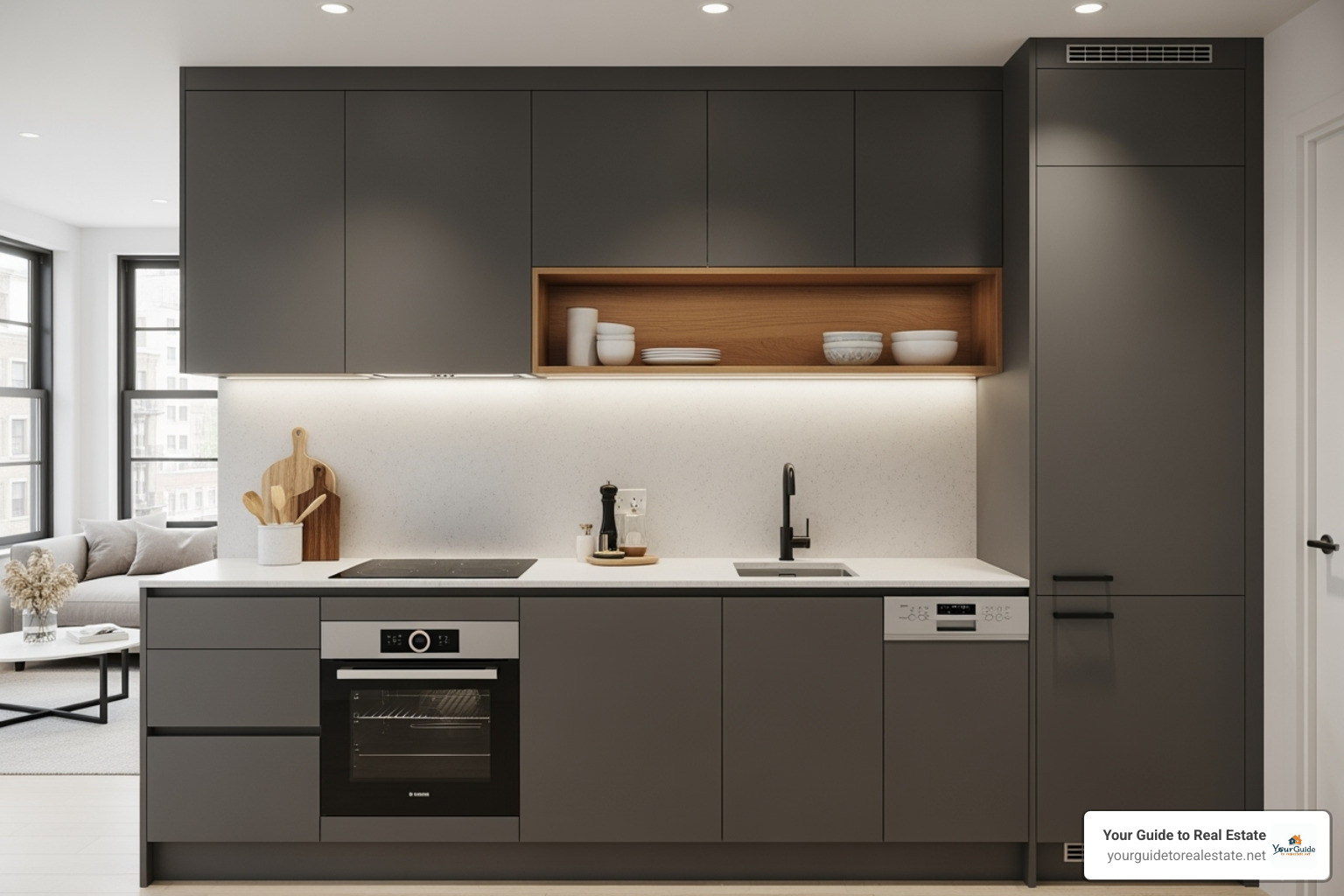
Sometimes the simplest solution is the smartest one. The one-wall kitchen puts everything along a single wall, creating the ultimate space-saver that’s perfect for modern living.
This kitchen floor plan is a master of maximization. By keeping all your kitchen functions on one wall, you free up the rest of the space for living, dining, or just moving around comfortably. It’s particularly brilliant in studio apartments and small condos where every square foot matters.
The linear workflow might not follow the traditional triangle pattern, but it can be surprisingly efficient when appliances are arranged thoughtfully. Plus, installation costs are typically lower since all utilities run along one wall.
One-wall kitchens are ideal for small spaces and studio apartments, but they also work beautifully in open-concept designs where the kitchen is part of a larger living area. You can always add a portable island or cart when you need extra workspace.
The Island Kitchen
The kitchen island is like having a helpful assistant right in the middle of your cooking space. This freestanding counter becomes the social hub of your kitchen while adding valuable workspace and storage.
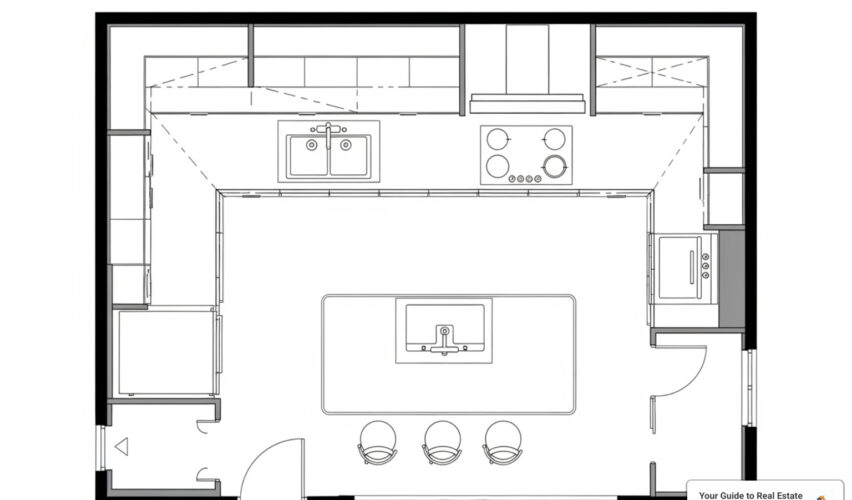
Islands are true multitaskers, offering extra workspace for meal prep, additional storage in their base cabinets, and often seating for casual dining or homework time. They can even house appliances like sinks or cooktops, creating multiple work zones that make cooking more efficient.
This kitchen floor plan is ideal for medium to large kitchens and entertaining. The island naturally becomes a gathering spot where family and friends can chat with the cook without getting in the way. It’s perfect for busy households where the kitchen serves as command central.
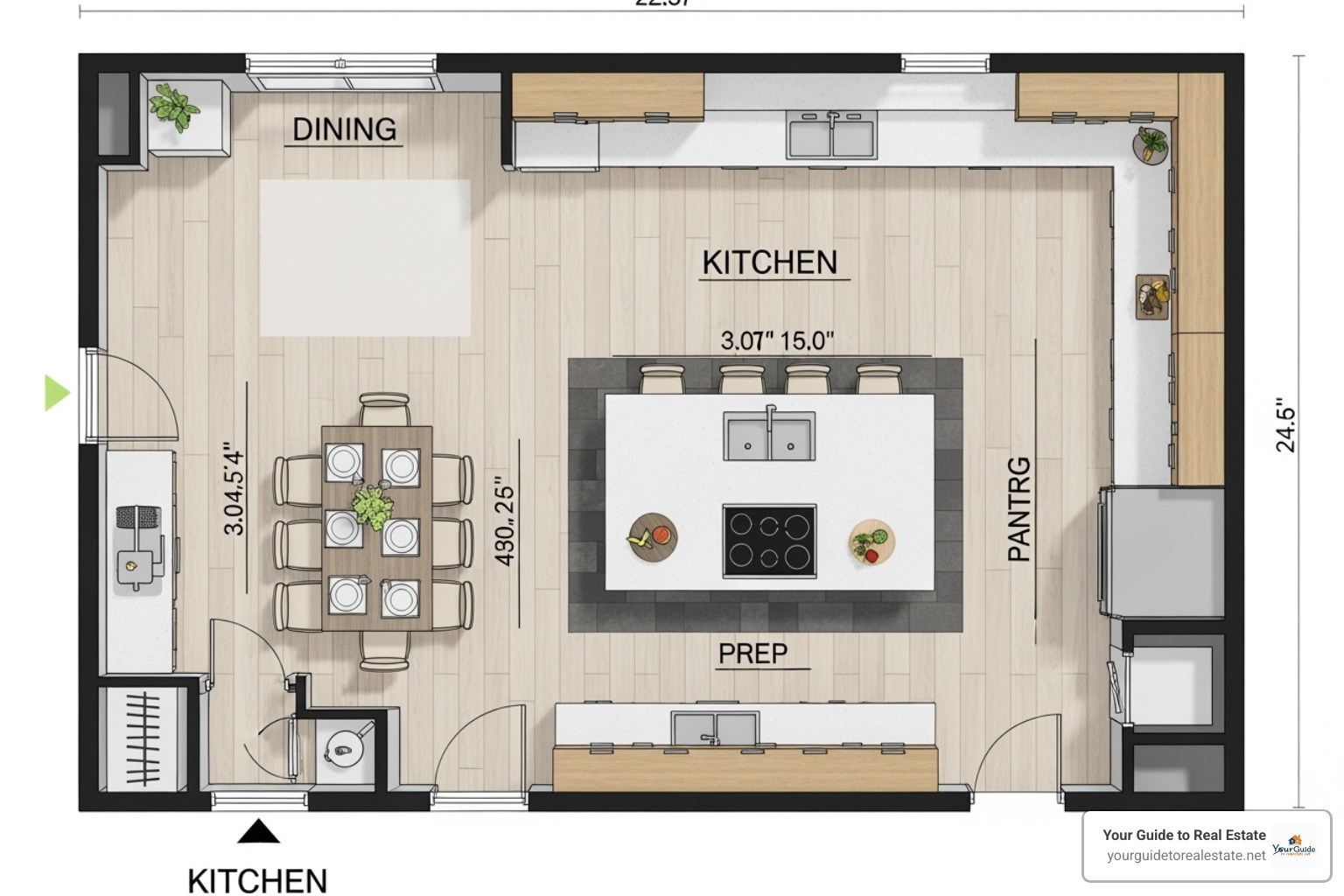
You’ll need adequate space around your island – at least 36 to 42 inches of clearance on all sides for comfortable movement. When planned well, an island kitchen becomes the heart of the home where life naturally happens.
The Peninsula Kitchen
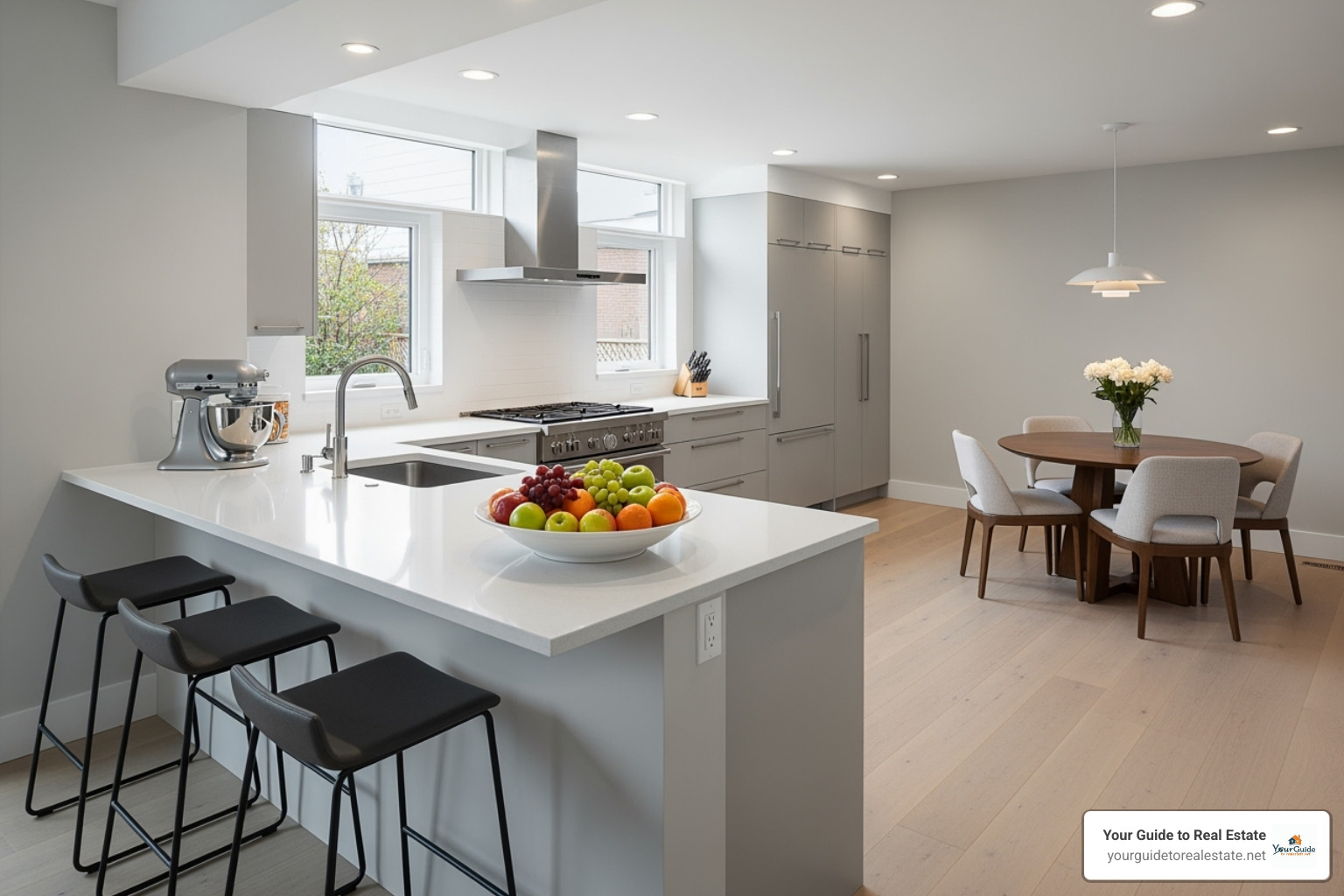
Think of a peninsula as an island’s practical cousin – it offers many of the same benefits but connects to your existing cabinetry or wall. This attached island design is perfect for kitchens that want island functionality but don’t have the space for a full freestanding unit.
The peninsula defines space beautifully without creating a closed-off feeling. It naturally separates the kitchen from adjacent areas while maintaining an open, connected flow. Many peninsulas provide seating with bar stools, creating a casual dining spot that’s perfect for quick meals or coffee with friends.
This layout works wonderfully for medium-sized kitchens needing more counter space but lacking room for a traditional island. The peninsula gives you extra workspace, storage, and often a spot for additional appliances, all while maintaining good traffic flow.
Peninsula kitchens strike the perfect balance between open and defined space, making them ideal for homes where the kitchen needs to feel connected to living areas while still maintaining its own identity.
Core Principles of Kitchen Layout and Design
A great kitchen is more than just its shape. Understanding the principles of workflow, efficiency, and key components is crucial for a successful design. These core principles ensure that your chosen kitchen floor plan is not only beautiful but also highly functional for your daily life.
The Kitchen Work Triangle and Zones
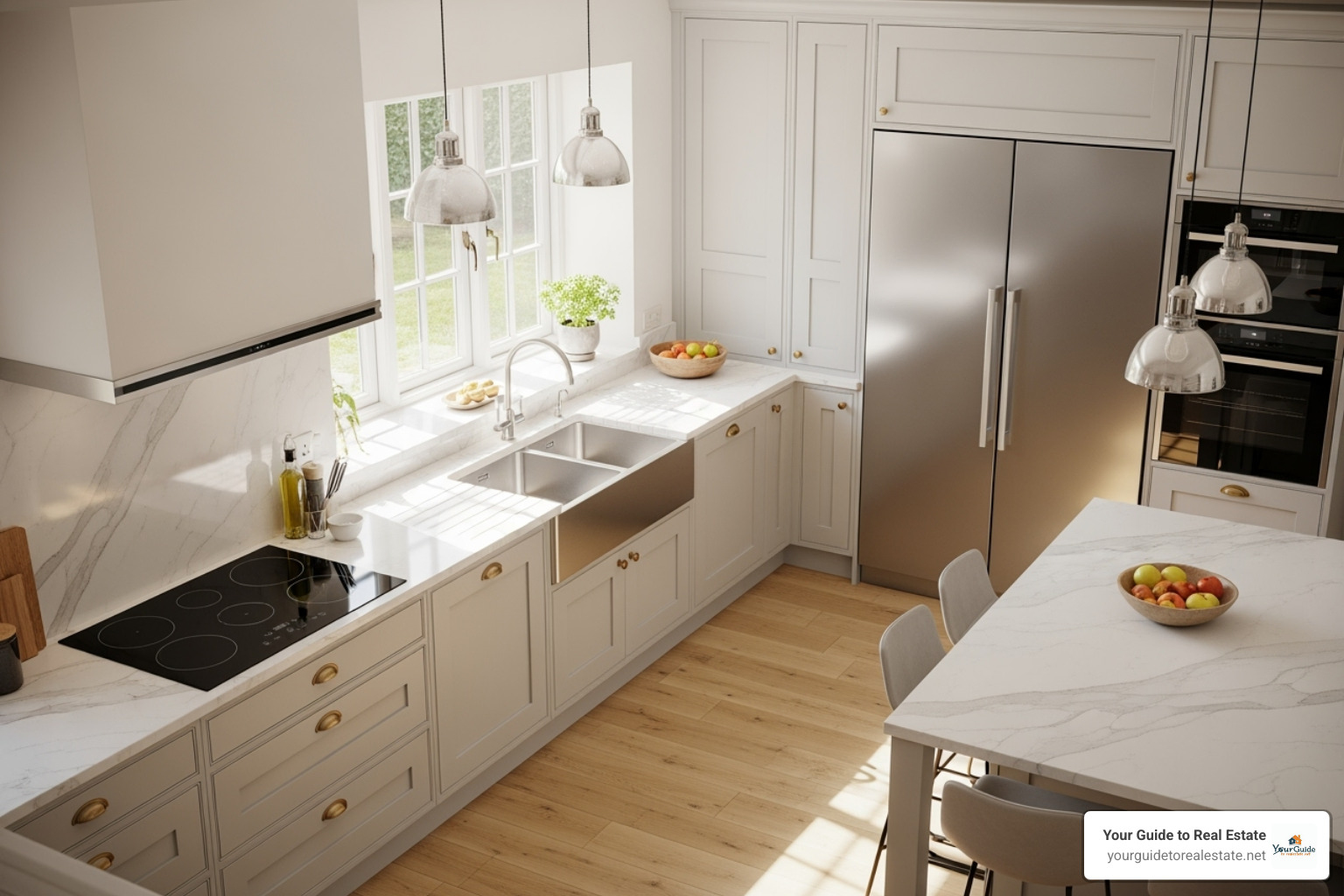
Think of the work triangle as your kitchen’s best friend. This time-tested principle connects your three most important workstations: the sink for cleaning, the refrigerator for storage, and the stove for cooking. The magic happens when these three points are positioned 4-9 feet apart from each other, creating smooth, unobstructed paths that make cooking feel effortless.
But here’s where modern kitchen design gets exciting – we’ve evolved beyond just triangles! Today’s kitchens work better when we think about work zones instead. Picture your kitchen as having distinct neighborhoods, each with its own purpose.
Your prep zone becomes command central near the sink, where you’ll want plenty of counter space for chopping vegetables and mixing ingredients. The cooking zone revolves around your stove and oven, with nearby counter space for hot dishes and all those spices you reach for constantly. The cleaning zone keeps your sink and dishwasher working together like a dream team, making cleanup almost enjoyable.
Don’t forget about the storage zone – this includes your refrigerator, pantry, and all those cabinets where ingredients live. When these zones work together harmoniously, even multiple cooks can dance around each other without stepping on toes.
Exploring Kitchen Floor Plan Templates – RoomSketcher can show you exactly how these zones come to life in different layouts.
Key Elements of a Functional Kitchen Floor Plan
A truly functional kitchen floor plan depends on getting the details right. Let’s walk through what makes the difference between a kitchen that works and one that drives you crazy.
Storage solutions are absolutely crucial – and we’re talking about so much more than basic cabinets. Smart kitchens include deep drawers for pots and pans, pull-out pantry organizers, and specialized storage for everything from spices to cutting boards. The goal is keeping your counters clear so you actually have space to cook.
Appliance placement can make or break your daily routine. Think about your morning coffee ritual or Sunday dinner prep – you want to move naturally from grabbing ingredients from the fridge, to prepping at the counter, to cooking at the stove, and finally cleaning at the sink. Those landing areas – clear counter space next to major appliances – aren’t just nice to have, they’re essential for safety and convenience.
Traffic flow matters more than you might think. Nobody wants to play kitchen bumper cars! We recommend at least 36 inches of clearance for comfortable movement, bumping that up to 42-48 inches in busy areas where multiple people cook or where you have seating.
Counter space is like closet space – you can never have too much. Consider the size of your largest cutting board or that big turkey you roast every holiday when planning your layout.
Natural Light and Ventilation
The difference between a kitchen you love and one you tolerate often comes down to light and air. Natural light from windows and skylights transforms any space, making it feel larger, more welcoming, and more energy-efficient. There’s something magical about prepping dinner as the afternoon sun streams through your kitchen window.
Proper ventilation might not be glamorous, but it’s absolutely essential. A quality range hood that’s properly sized and vented to the outside protects your cabinets from grease buildup, keeps cooking odors from taking over your home, and maintains healthy indoor air quality. Your future self will thank you for investing in good ventilation – especially when you’re searing that perfect steak without setting off smoke alarms.
Getting these fundamentals right in your kitchen planning pays dividends whether you’re renovating your forever home or preparing for a future sale, just like the strategies covered in The Ultimate Guide to Selling Your Home: Tips, Timelines, and Tools.
Planning Your Perfect Kitchen: Key Considerations and Common Mistakes
From small spaces to open concepts, tailoring your layout to your lifestyle is key. Here’s how to make the right choices and avoid common pitfalls, ensuring your kitchen floor plan truly works for you.
Choosing the Right Kitchen Floor Plan for Your Space
One of the biggest decisions you’ll face is whether to go with an open-concept or closed kitchen design. This choice will shape how your kitchen functions and how it connects with the rest of your home.
| Feature | Open-Concept Kitchen Layouts | Closed Kitchen Layouts |
|---|---|---|
| Pros | Creates spacious feel, allows interaction while cooking, great for entertaining, increases natural light flow, modern and desirable for resale | Contains cooking odors and noise, provides focused work environment, hides kitchen mess from guests, often more storage options, better for serious cooking |
| Cons | Cooking smells spread throughout home, kitchen mess always visible, can be noisy, requires consistent tidiness, may lack storage | Can feel cramped and isolated, limits natural light, less social interaction, may feel outdated to some buyers |
| Best For | Families who love entertaining, smaller homes that need to feel larger, casual cooking styles | Serious home chefs, families who prefer separation, homes with adequate space in each room |
Accommodating multiple cooks becomes much easier with the right layout. We find that U-shaped kitchens work wonderfully for busy households because they create natural work zones. One person can prep at the sink while another cooks at the stove without bumping into each other. L-shaped kitchens with islands also excel here, giving each cook their own territory.
For entertaining, open-concept layouts shine brightest. An island kitchen becomes the heart of your gathering, where guests naturally gravitate while you’re preparing food. The island serves as both workspace and social hub, making hosting feel effortless rather than stressful.
Best Layouts for Small Spaces
Working with a small kitchen doesn’t mean sacrificing functionality. The average kitchen measures around 10×10 feet, but many urban homes feature even smaller cooking spaces that require smart planning.
Galley kitchens remain our top recommendation for narrow spaces. The parallel counters create an efficient cooking corridor where everything stays within easy reach. You’ll be amazed how much storage and workspace you can pack into this streamlined design.
One-wall layouts work magic in studio apartments and tiny homes. By keeping all appliances and storage along a single wall, you free up precious floor space for other activities. The key is using every vertical inch with tall cabinets that reach the ceiling.
L-shaped designs can surprise you with their efficiency in small spaces. The corner placement leaves the center open for a small dining table or rolling cart that provides extra prep space when needed.
Maximizing vertical space becomes crucial regardless of your chosen layout. Think floor-to-ceiling cabinets, open shelving for daily essentials, and clever pull-out pantries that make the most of narrow spaces.
Smart storage solutions turn every nook into valuable real estate. Consider toe-kick drawers under your base cabinets, slim pull-out spice racks, and integrated bins that keep trash and recycling hidden but accessible.
Common Mistakes to Avoid
Even experienced renovators can stumble when planning their kitchen floor plan. Here are the pitfalls we see most often and how to avoid them:
Ignoring the work triangle tops our list of common mistakes. When your sink, stove, and refrigerator are too far apart or blocked by obstacles, cooking becomes a marathon instead of a smooth dance. Keep these three points within 4-9 feet of each other with clear paths between them.
Insufficient counter space will haunt you daily. Everyone needs room to chop vegetables, mix ingredients, and plate finished dishes. Don’t forget those landing areas next to appliances – you need somewhere safe to set down that hot casserole dish or heavy grocery bags.
Poor traffic flow creates kitchen bottlenecks that drive everyone crazy. Make sure your aisles are at least 36 inches wide, and consider how cabinet doors and appliances will open. Nobody wants to play kitchen Tetris just to get a glass of water.
Wasting storage potential means missing opportunities to stay organized. Those deep corner cabinets where items disappear forever? Install lazy Susans or pull-out shelves instead. Every storage space should be easily accessible and functional.
Forgetting about trash and recycling might seem minor, but it affects your kitchen’s daily flow and appearance. Plan for integrated bins that stay hidden but remain convenient for busy cooking sessions.
Inadequate lighting makes even the most beautiful kitchen feel unwelcoming. Layer your lighting with ambient overhead fixtures, task lighting under cabinets, and natural light from windows when possible. Good lighting makes cooking safer and more enjoyable.
Planning tools like the Kitchen Planner online – Free, no download and in 3D can help you visualize your kitchen floor plan before making final decisions, potentially saving you from costly mistakes down the road.
Frequently Asked Questions about Kitchen Layouts
When it comes to planning your kitchen floor plan, we hear the same questions over and over again. Let’s explore the most common concerns homeowners have when designing their dream kitchen.
What is the most efficient kitchen layout?
The answer really depends on how you use your kitchen! If you’re typically the only cook in the house, we absolutely love the galley kitchen for its incredible efficiency. Everything you need is right there within arm’s reach – no wasted steps between your prep area, stove, and sink. It’s like having your own personal cooking runway.
But here’s where it gets interesting: if you have a larger space or multiple people who love to cook together, a well-designed U-shaped or L-shaped kitchen with an island becomes a game-changer. These layouts give you distinct work zones where two or three people can cook simultaneously without bumping into each other. Think of it as having multiple “mini kitchens” within one space – someone can be prepping salad at the island while another person handles the main course at the stove.
The key is matching your layout to your lifestyle. A busy family with multiple cooks needs something completely different than a couple who takes turns in the kitchen.
How much space do you need for a kitchen island?
This is probably the question we get asked most often, and for good reason – nobody wants to squeeze sideways past their beautiful new island every morning!
Here’s our golden rule: you need at least 36-42 inches of clearance on all working sides of your island. This gives you enough room for cabinet doors to swing open fully and allows people to move comfortably around the space. We’ve seen too many kitchens where the island looks gorgeous but becomes a daily obstacle course.
If you’re planning to add seating to your island (and who doesn’t love a good breakfast bar?), you’ll need even more breathing room. We recommend 44-48 inches on the seating side to accommodate bar stools and give people space to sit down and stand up without blocking the main walkway.
An island should improve your kitchen floor plan, not create a traffic jam. When in doubt, go with more space rather than less – your future self will thank you every time you’re carrying hot dishes or trying to load the dishwasher.
How does a kitchen layout affect my home’s resale value?
Let’s be honest – kitchens sell homes. We’ve seen it happen countless times: buyers walk into a house, take one look at a thoughtfully designed kitchen floor plan, and start imagining their family gathered around that beautiful island.
A functional, modern, and open kitchen layout is one of the biggest selling points your home can have. Buyers today are looking for kitchens that feel like the heart of the home – spaces where they can cook, entertain, and connect with family all at the same time. When your layout maximizes efficiency, offers plenty of storage, and flows seamlessly into your living areas, it becomes irresistible to potential buyers.
On the flip side, a poorly designed or outdated layout can be a real deal-breaker. We’ve watched buyers walk through homes with cramped galley kitchens or awkward work triangles and immediately start calculating renovation costs in their heads. That mental math can quickly knock thousands off what they’re willing to offer.
The bottom line? Investing in a smart kitchen floor plan isn’t just about making your daily life better (though it absolutely does that). It’s also about protecting and enhancing one of your biggest financial investments – your home.
Conclusion
Your kitchen floor plan isn’t just about where to put your appliances—it’s about creating a space that works beautifully with your daily routine and adds real value to your home. We’ve walked through everything from the compact efficiency of galley kitchens to the social hub that island layouts create, and explored how smart design principles can transform any space into something truly functional.
The key is matching your layout to how you actually live. If you’re someone who loves hosting dinner parties, that open-concept island kitchen might be perfect for keeping conversations flowing while you cook. But if you prefer quiet, focused cooking time, a well-designed U-shaped kitchen could give you all the counter space and storage you need without the distractions.
Remember the fundamentals we covered: respect the work triangle, plan for adequate counter space, and don’t forget about traffic flow. These aren’t just design theories—they’re the difference between a kitchen that feels like a joy to use and one that makes simple tasks feel like a chore. Natural light and proper ventilation matter too, creating a space that feels welcoming and stays comfortable even during busy cooking sessions.
Whether you’re renovating your current home or evaluating potential properties, understanding these layout principles puts you in control. A thoughtful kitchen floor plan can significantly boost your home’s resale value, while a poorly designed one can be a real turnoff for future buyers.
At Your Guide to Real Estate, we’re here to help you make these important decisions with confidence. Our proven framework takes the stress out of real estate choices, whether you’re planning improvements or searching for your next home. Just like choosing the right kitchen layout, securing the right financing is crucial for your real estate success—learn more in our Understanding Mortgages: A Beginner’s Guide to Home Loans.