

Why Market Research Tools Matter for Real Estate Success
Market research tools are software and platforms that help businesses gather, analyze, and understand data about their target audiences, competitors, and market conditions. Here’s what you need to know:
Top Market Research Tool Categories:
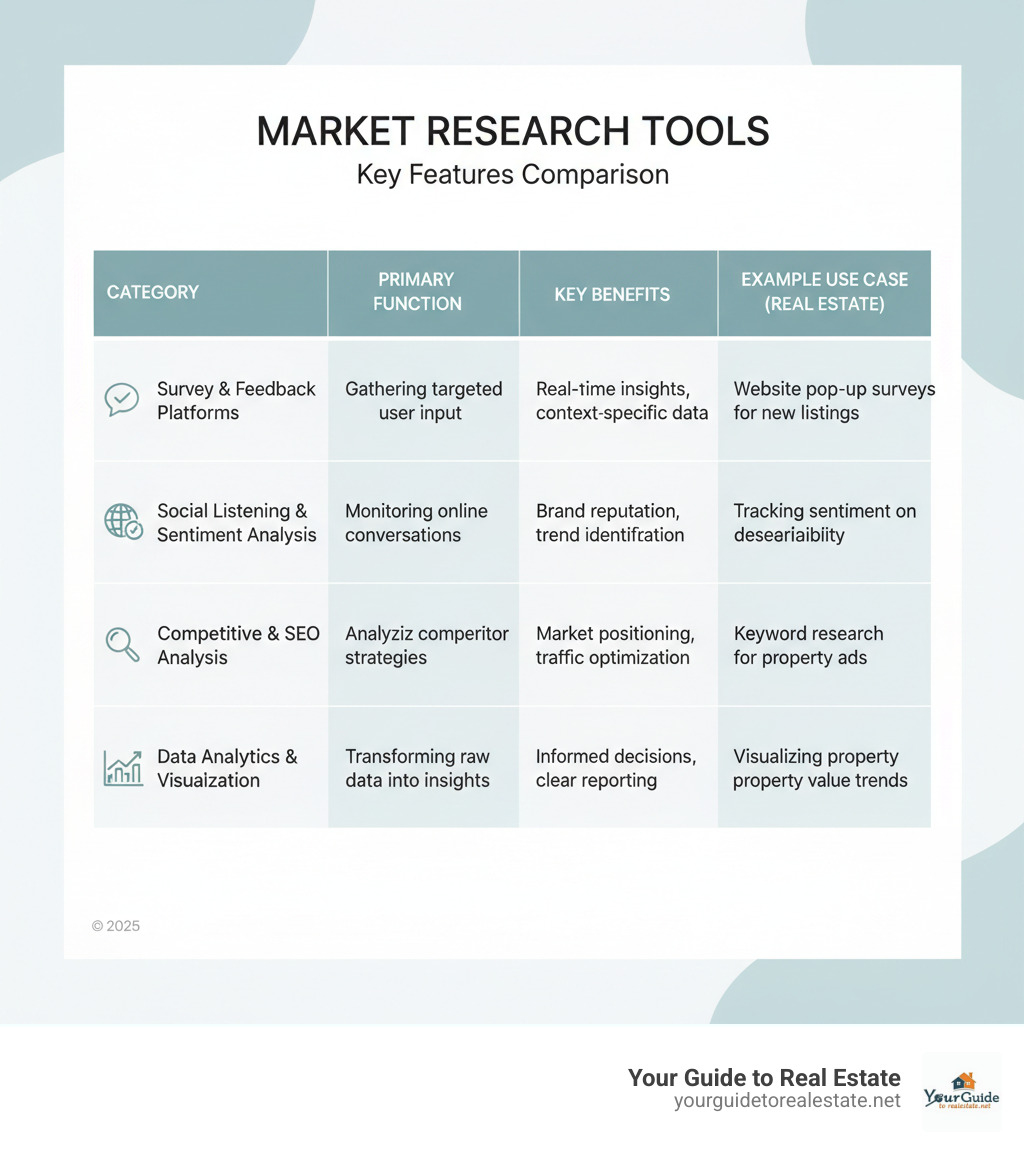
- Survey & Feedback Tools – Collect direct insights from customers (SurveyMonkey, Typeform)
- Social Listening Platforms – Monitor online conversations and sentiment (BrandMentions, Meltwater)
- Competitive Analysis Tools – Track competitor strategies and market position (Similarweb, BuzzSumo)
- Data Analytics Platforms – Visualize trends and patterns (Tableau, Google Trends)
- Free Government Resources – Access demographic and economic data (U.S. Census Bureau)
- AI-Powered Tools – Automate research and uncover hidden insights (quantilope, Glimpse)
With millions of terabytes of data created daily, much of it unstructured, using the right tools is essential. Whether you’re a real estate investor, agent, or homeowner, you need more than gut feelings. You need data-driven insights to reduce risk and guide smart decisions.
Modern market research tools deliver insights in minutes at a fraction of the cost of traditional methods. They help answer critical questions: Is there demand in this area? What are buyers searching for? How saturated is the market? What are competitors doing?
Many of these tools are designed for business professionals, not data scientists, allowing you to make better decisions based on real information instead of guesswork.
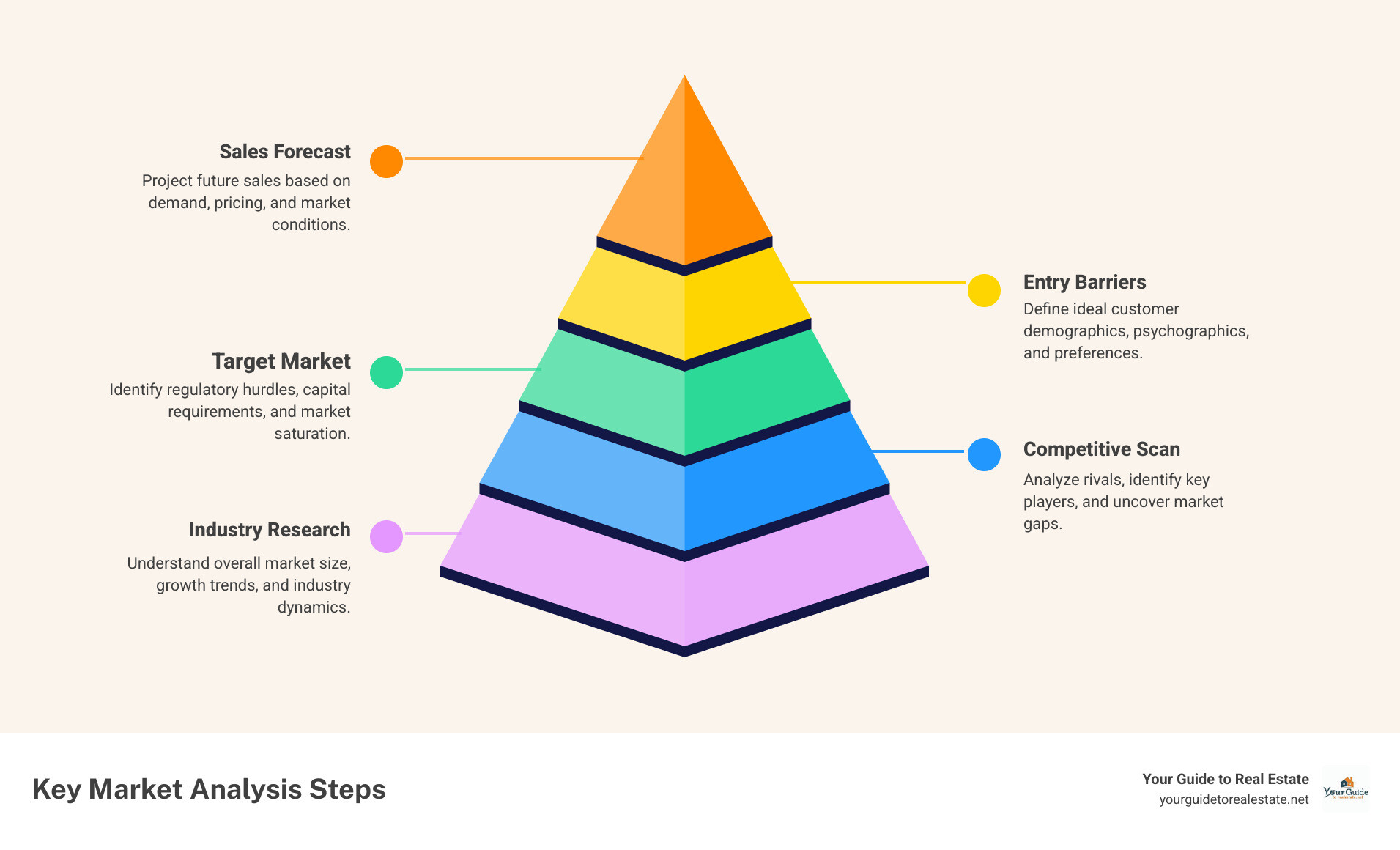
Market research tools terms simplified:
Essential Categories of Market Research Tools
Market research tools act as data detectives, helping us collect information, spot patterns, and understand the market. With so much data available, picking the right tools is key to finding actionable insights. The process is simple: gather data, analyze it, and extract consumer insights. The challenge is choosing the right tools for the job. Whether analyzing a neighborhood in Dallas or understanding buyer needs in Oklahoma City, these tools provide the facts needed to understand customers, identify needs, and evaluate real estate ventures.
Survey & Feedback Tools: The Best Market Research Tools for Direct Insights
Sometimes, the best approach is to simply ask. Survey and feedback tools let us gather direct research from potential buyers, sellers, or investors through questionnaires, focus groups, and interviews. This helps us understand consumer preferences and build accurate buyer personas. In real estate, this means asking about must-have amenities, seller motivations, or feedback on a listing. Tools like SurveyMonkey and Typeform make this easy, with SurveyMonkey offering a large respondent panel and Typeform providing a conversational format. For quick insights, Glimpse offers short surveys with AI analysis. For website feedback, ProProfs Qualaroo triggers targeted surveys, while Loop11 and Userlytics help test user experience with screen recordings. To build detailed buyer personas, HubSpot’s Make My Persona tool is a great resource for defining both demographic and psychographic details of your target clients.
Social Listening & Sentiment Analysis Tools
People constantly share opinions online about neighborhoods, property features, and housing plans, creating vast amounts of unstructured data—about 90% of all data. Social listening and sentiment analysis tools tap into these conversations, helping us monitor brand mentions and understand the voice-of-customer. For real estate, this means tracking discussions on neighborhood desirability or sentiment around housing policies. This helps spot trends, manage reputations, and find what resonates with your audience. Tools like Meltwater Radarly monitor global data sources, while BrandMentions tracks keyword mentions on social media. BuzzSumo helps monitor your brand and find content opportunities. For deeper analysis, Sprinklr Insights uses AI to analyze over 30 digital channels, and Heartbeat AI visualizes trends in qualitative data. These tools provide a constant pulse on the market.
Competitive & SEO Analysis: Market Research Tools for a Strategic Edge
Knowing your competitors’ strategy is essential in real estate. Competitive and SEO analysis tools provide a strategic edge by revealing competitor activities, market gaps, and ways to optimize your online presence, from website traffic to content strategies. For example, when listing a luxury property in Dallas, you can use these tools to find what keywords buyers are searching for and which competitors rank for them. Similarweb is great for comparing website traffic, while BuzzSumo helps analyze content performance and find influencers. For keyword research, Ubersuggest and GrowthBar SEO provide search volume and content ideas. SparkToro offers audience intelligence, revealing what your audience searches for and consumes. Finally, BuiltWith shows the technology behind competitor websites, offering infrastructure insights.

Data Analytics & Visualization Platforms
Collecting data is just the first step; the real value comes from changing numbers into usable insights. Data analytics and visualization platforms connect data sources, analyze information, and create clear reports. They help identify patterns, spot trends, and communicate findings to stakeholders. For instance, tracking property values and demographic shifts in Oklahoma City is much easier with visualization. Tableau is a leading tool for creating professional data visualizations from any source. Statista offers statistics and forecasts on over 80,000 topics, delivering easy-to-digest data. GWI (Global Web Index) provides on-demand consumer research on nearly 3 billion consumers, while QuestionPro Research Suite offers advanced survey and analysis tools. These platforms are critical for synthesizing information and making confident decisions.
Open uping Insights with Free Government & Public Data
Here’s something many real estate professionals don’t realize: some of the most powerful market research tools available cost absolutely nothing. The U.S. government and various public institutions collect and share massive amounts of data that can transform how we understand markets, demographics, and economic trends.
These free resources are particularly valuable for small businesses and independent agents who might not have thousands of dollars to spend on premium research platforms. Whether we’re analyzing opportunities in Dallas, evaluating neighborhood trends in Oklahoma City, or looking at broader patterns across the United States, these publicly available datasets provide the foundation for smart, data-driven decisions.
Think of these resources as your secret weapon. While others are guessing about market conditions or paying premium prices for basic insights, we can access reliable demographic information, economic trends, and industry data that helps us spot opportunities before they become obvious to everyone else.
Demographic & Population Data
Understanding who lives where is fundamental to real estate success. Before we invest in a property, list a home, or target marketing campaigns, we need to know about the people in that area. What’s their age distribution? How much do they earn? What do their households look like?
The U.S. Census Bureau is our go-to resource for this information. It’s essentially a massive database of who we are as a nation, broken down into incredibly useful details. We can filter this data by age, income, year, and location to identify potential target markets across the country. Want to know if a neighborhood has enough young families to support a new development? The Census Bureau has that answer.
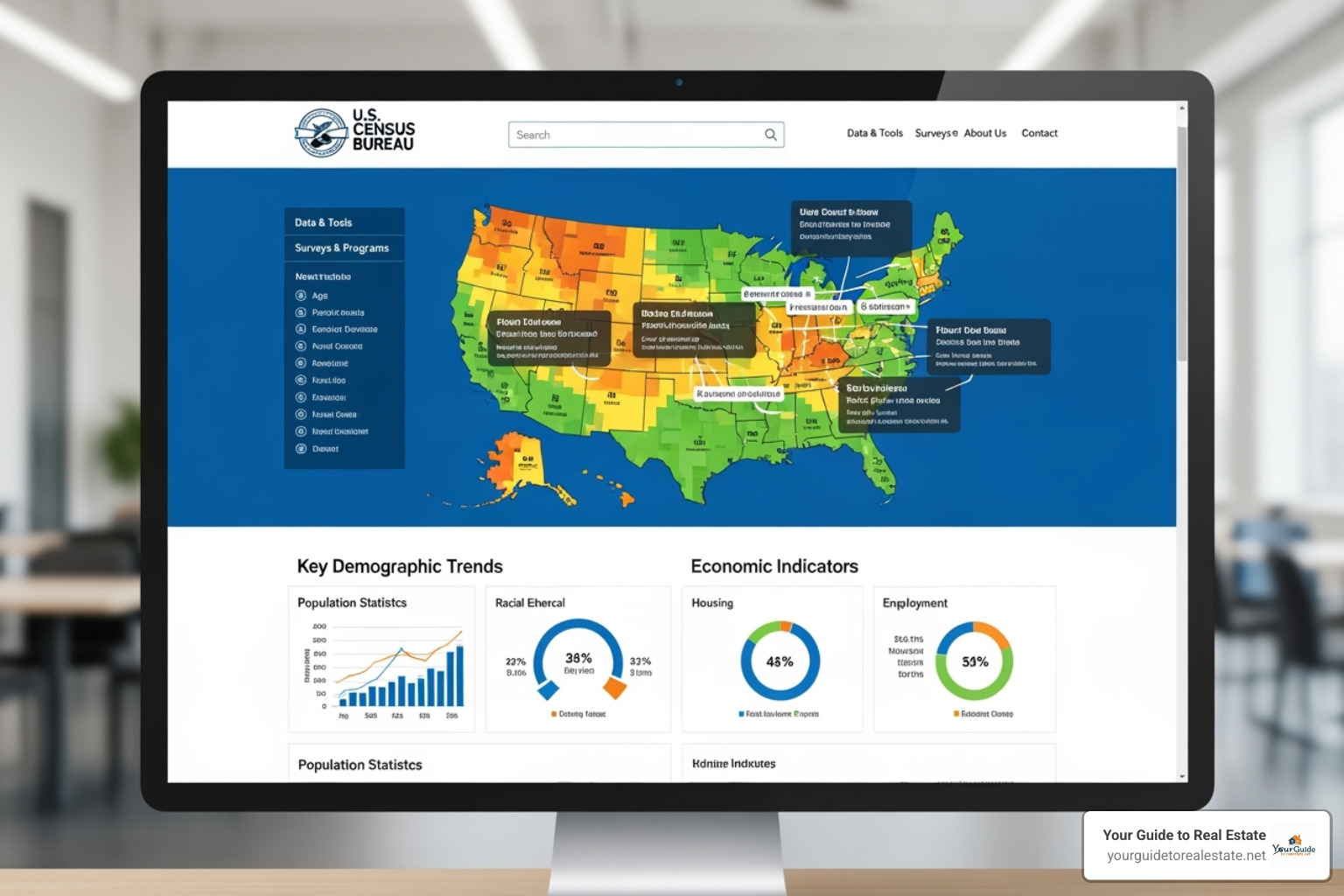
The Business and Economy section of the Census Bureau is particularly useful because it helps us see where certain industries might be over-saturated or where there are gaps in the market. If we’re considering commercial real estate, this tells us whether an area already has too many retail spaces or if there’s room for growth.
The Bureau of Labor Statistics adds another layer to this picture with employment statistics and workforce demographics. These numbers help us understand not just who lives in an area, but whether they have stable employment and income to support housing demand. Population trends revealed through these sources can signal whether a market is growing, stable, or declining—critical information for any real estate decision.
Economic & Financial Indicators
The real estate market doesn’t exist in a vacuum. It moves with the broader economy, responding to shifts in consumer spending, inflation, and interest rates. Understanding these economic and financial indicators helps us anticipate market changes and advise clients on timing their transactions.
The Consumer Price Index (CPI) tracks how much everyday goods and services cost over time. When the CPI rises, it signals inflation, which affects everything from construction costs to how much house a buyer can afford. For real estate professionals, this data helps us formulate realistic pricing strategies that account for changing purchasing power.
The Gross Domestic Product (GDP) data from the Bureau of Economic Analysis gives us the big picture of economic health. When GDP is growing, people generally feel more confident about making major purchases like homes. When it’s contracting, we know to expect a more cautious market.
But perhaps no economic indicator matters more to real estate than interest rates. The Federal Reserve’s Daily Interest Rates data directly impacts mortgage rates, which in turn affects buyer demand and affordability. A small shift in interest rates can mean the difference between a hot market and a cool one. Checking these rates regularly helps us stay ahead of market shifts and provide timely advice to our clients.
Business & Industry Data
Commercial real estate investors and agents working with business clients need to understand the business landscape of their target areas. Which industries are thriving? Where’s the competition? What’s the market size for different types of commercial properties?
The North American Industry Classification System (NAICS) provides a standardized way to classify and research specific business sectors. This classification system allows us to drill down into particular industries and understand their presence in different geographic areas.
The U.S. Census Business Builder takes things a step further by combining demographic and business data into powerful analytical tools. We can explore market potential for various industries, assess demand for commercial spaces, and identify underserved markets. It’s like having a business consultant in our pocket.
For comprehensive industry insights, the Statistics of U.S. Businesses provides detailed information about the number of firms, employment levels, and payroll by industry and geography. This data helps us assess whether a commercial real estate investment makes sense or understand what’s driving demand in a residential market.
These free government resources might not be as flashy as premium market research tools, but they’re built on solid, reliable data that forms the foundation of smart real estate decisions. The best part? They’re available to everyone, leveling the playing field and giving us the insights we need to succeed.
The Future is Now: AI’s Impact on Market Research
Something remarkable is happening in market research. The tools we use today would have seemed like science fiction just a few years ago. Artificial Intelligence isn’t just changing how we gather information—it’s completely changing what’s possible.
About 90% of all data is unstructured. That’s where AI truly shines. While humans can spot patterns in spreadsheets and charts, AI can sift through millions of social media posts, reviews, forum discussions, and articles to find insights we’d never find on our own. It’s like having a tireless research assistant who never gets overwhelmed by information overload.
The speed alone is mind-blowing. Traditional market research used to take 4-12 weeks and cost anywhere from $15,000 to $50,000. Today’s AI-powered market research tools can deliver professional-grade reports in minutes at a fraction of the cost. For real estate professionals, this means we can research multiple markets in Dallas or Oklahoma City, compare neighborhoods side-by-side, and adapt our strategies almost in real-time when market conditions shift.
Automation is perhaps the most practical benefit we see day-to-day. AI handles the tedious stuff—cleaning data, organizing responses, generating initial reports—so we can focus on what matters: understanding what the data means for our clients and making smart decisions. These AI co-pilots are becoming common in modern market research platforms, helping us create surveys, analyze responses, and even identify sentiment in customer feedback without manual coding.
Predictive analytics takes things even further. Instead of just telling us what happened last quarter, AI can forecast future market shifts based on hundreds of variables. For real estate, this means better predictions about property values, buyer demand, and emerging neighborhood trends. It’s not fortune-telling—it’s sophisticated pattern recognition based on historical data and current indicators.
One of AI’s underrated strengths? It eliminates human bias. We all have assumptions and blind spots, but AI analyzes data objectively, without preconceived notions about which neighborhoods are “up and coming” or which buyer demographics are “most valuable.” The results are more reliable and often surprising.
Hyper-personalization is another emerging trend worth watching. AI can analyze individual buyer behavior and preferences at scale, helping us tailor property recommendations and marketing messages to each person’s unique needs. Instead of generic email blasts, we can send genuinely relevant information that resonates with each client.
Here’s the important part: AI isn’t replacing human expertise in market research. It’s augmenting it. The best insights still come from experienced professionals who understand real estate markets and can interpret data in context. AI just makes us faster, more efficient, and more accurate. It’s the difference between having a calculator and doing long division by hand—both get you the answer, but one lets you solve more complex problems.
For those of us in real estate, AI-powered market research tools mean we can serve our clients better, make more informed recommendations, and stay ahead of market changes. That’s a future worth embracing.
Frequently Asked Questions about Market Research
We know that navigating market research tools can feel overwhelming at first. You might be wondering how these tools actually work in practice, or whether they’re really worth the investment for your real estate business. Let’s walk through some of the questions we hear most often from real estate professionals and small business owners.
How do market research tools help in understanding consumer behavior?
Think of market research tools as windows into your clients’ minds. They help us understand not just what people do, but why they do it.
When we use survey and feedback tools, we’re gathering direct feedback straight from the source. We can ask potential buyers what features they dream about in their next home, or find out what’s holding sellers back from listing their property. This kind of primary research cuts through assumptions and gives us real answers.
But people don’t just share their thoughts in surveys. They’re constantly talking online, posting reviews, commenting on neighborhood Facebook groups, and sharing their housing frustrations on social media. Social listening tools help us tune into these online conversations and track purchase habits indirectly. We can see which neighborhoods people are excited about, what property features generate the most buzz, and even spot emerging concerns before they become major issues.
The demographic and behavioral data we pull from website analytics, government sources like the U.S. Census Bureau, and specialized platforms help us understand who our customers actually are. We’re not just guessing anymore. Tools like SparkToro and platforms with psychographic insights dig even deeper, revealing the values, motivations, and media consumption habits that drive decisions. Why do some buyers prioritize walkability over square footage? What makes a seller finally decide it’s time to move? These tools help us answer those questions.
Perhaps most exciting is how AI-powered tools with predictive analytics can help us forecast future behaviors. We can spot shifts in demand, like growing interest in suburban properties or increasing searches for sustainable home features, before those trends fully materialize. This means we can stay ahead of the curve rather than just reacting to changes.
When we combine insights from all these different sources, we’re not just creating detailed customer profiles. We’re building a genuine understanding of the people we serve, which makes everything we do more effective.
How do these tools assist in product development and strategy?
In real estate, “product development” might sound like a corporate term, but it’s really about creating value for our clients. That could mean identifying what types of properties to focus on, developing new services that clients actually need, or crafting marketing campaigns that truly resonate.
Before we invest time and money into a new idea, market research tools help us validate whether there’s real demand. Considering a specialized service for first-time homebuyers in Oklahoma City? We can use surveys and trend analysis through tools like Google Trends to see if people are actually searching for that kind of help. This saves us from pursuing ideas that sound good but don’t have market support.
Direct feedback from surveys and focus groups is invaluable for identifying user needs. We can ask potential clients what frustrates them about the real estate process, what information they wish they had, or what would make their experience better. Tools like AnswerThePublic show us the actual questions people are typing into search engines, revealing gaps we might not have considered.
When we’re trying to gauge demand and understand market size, we pull from multiple sources. Search interest data tells us how many people are looking for certain property types or real estate services. Government data from the Census Bureau helps us understand the potential reach of any new offering. This combination gives us a realistic picture of opportunity.
Pricing strategy becomes much less of a guessing game when we have the right data. We can analyze economic indicators like the Consumer Price Index to understand purchasing power, look at competitor pricing through competitive analysis tools, and even survey consumers about their willingness to pay. This ensures our pricing is both competitive and profitable.
Planning marketing campaigns transforms when we truly understand our audience. Social listening and keyword research reveal the exact language our target clients use, the platforms they spend time on, and the content they engage with. We’re not just throwing messages into the void and hoping they stick. Tools like Google’s Market Finder can even help us identify new geographic markets, whether that’s expanding from Dallas into surrounding suburbs or exploring opportunities in new cities entirely.
The difference between guessing and knowing is profound. These tools help us know.
What are the benefits of using AI-powered market research tools?
AI has genuinely changed what’s possible in market research. These aren’t just incremental improvements. They’re game-changers that make sophisticated research accessible to businesses of all sizes.
The speed advantage is hard to overstate. Traditional market research can take four to twelve weeks and cost between $15,000 and $50,000. AI-powered tools can deliver comprehensive reports in minutes. That means when you spot a potential opportunity in a new neighborhood or notice a shift in buyer behavior, you can research it immediately rather than waiting weeks for answers.
This speed also brings cost-effectiveness. When we looked at the numbers, we found that hiring a market research analyst typically costs between $45,000 and $85,000 annually. AI-powered market research tools provide similar expertise at a fraction of that investment, making professional-grade research accessible to solo agents and small teams.
We create 328 million terabytes of data every single day, and about 90% of that data is unstructured, meaning it’s difficult for humans to process at scale. AI excels at analyzing these vast datasets, finding meaning in everything from social media posts to economic indicators to search trends. No human analyst, no matter how talented, could match that processing power.
AI also eliminates human bias from the analysis process. We all have assumptions and blind spots. AI algorithms analyze data objectively, without preconceptions about what the results “should” show. This leads to more accurate and reliable insights.
Perhaps most valuable is AI’s ability to identify hidden patterns that we might never spot on our own. It can uncover subtle correlations between seemingly unrelated factors, revealing insights about consumer behavior and market dynamics that give us a real competitive edge.
Finally, AI handles all the repetitive, time-consuming tasks that used to eat up hours of our day. Automated survey creation, data cleaning, report generation—all of this happens in the background. This frees us up to focus on what humans do best: strategic thinking, creative problem-solving, and building genuine relationships with our clients.
The integration of AI into market research isn’t just an emerging trend we’re watching. It’s a fundamental shift that’s already here, empowering us to conduct more effective research than we ever thought possible.
Paving Your Path to Real Estate Success
In the dynamic world of real estate, relying on intuition alone is a risky business. Experience matters, but so does knowing exactly what the data is telling you. That’s where everything we’ve discussed comes together.
The market research tools we’ve explored aren’t just fancy software or complicated platforms. They’re your competitive edge in a market where information wins. Whether you’re analyzing property values in Dallas, understanding what buyers really want in Oklahoma City, or identifying the next big investment opportunity across the United States, these tools transform uncertainty into clarity.
Think about it: you can now survey potential buyers to understand their must-have features, monitor online conversations to gauge neighborhood sentiment, analyze competitor strategies to find market gaps, and visualize complex data to spot trends before they become obvious to everyone else. And the best part? Much of this information is available for free through government resources, or at a fraction of what traditional research used to cost.
The real estate market moves fast. Neighborhoods change. Buyer preferences shift. Economic indicators fluctuate. Data-driven strategy means you’re not reacting to these changes after they happen—you’re anticipating them. You’re making informed decisions backed by real insights, not guesswork.
At Your Guide to Real Estate, we believe in empowering you with a proven framework and stress-free guidance for success. That framework starts with understanding your market deeply, and these tools make that possible for everyone, not just those with massive research budgets.
Ready to dive deeper into understanding your competition and pricing your properties strategically? Learn more about competitive market analysis for real estate to take the next step in your data-driven journey.
Don’t just guess. Know. Your next real estate success story starts with the insights you uncover today.