

Why Understanding MOHELA is Essential for Your Financial Future
MOHELA is one of the largest federal student loan servicers in America, managing millions of borrowers’ loans on behalf of the U.S. Department of Education. If you’ve received a notice that your loans are being serviced by mohela, or you’re trying to understand what this means for your financial goals, you’re in the right place.
Quick Facts About MOHELA:
- Non-profit organization with over 40 years of experience in student loan servicing
- Services federal loans owned by the Department of Education – they don’t own your loans
- Handles payments, repayment plans, and borrower support but major program decisions come from the Department of Education
- Approximately 530 employees dedicated to helping borrowers manage their student debt
- Headquartered in St. Louis, Missouri with additional offices in Columbia, MO and Washington, DC
Many borrowers feel confused when their loans transfer to a new servicer like mohela. The good news? Your loan terms, interest rates, and benefits stay exactly the same. Only your servicer – the company that processes your payments and answers your questions – has changed.
Understanding how to work effectively with mohela isn’t just about managing your current payments. For many borrowers, student loan debt directly impacts their ability to qualify for a mortgage and achieve homeownership goals. The better you manage your student loans, the stronger your financial foundation becomes for major life decisions like buying a home.
As Scott Giles, mohela‘s CEO, emphasizes their commitment: “With over 40 years in the student loan servicing industry, we have the expertise to help manage your loans – answer any account questions, help you explore your benefits and repayment options and process your payments.”
Handy mohela terms:
Understanding Your Relationship with MOHELA
If you’ve ever wondered who actually owns your student loans versus who you talk to about them, you’re not alone. This confusion trips up thousands of borrowers every year, but understanding the difference is simpler than you might think.
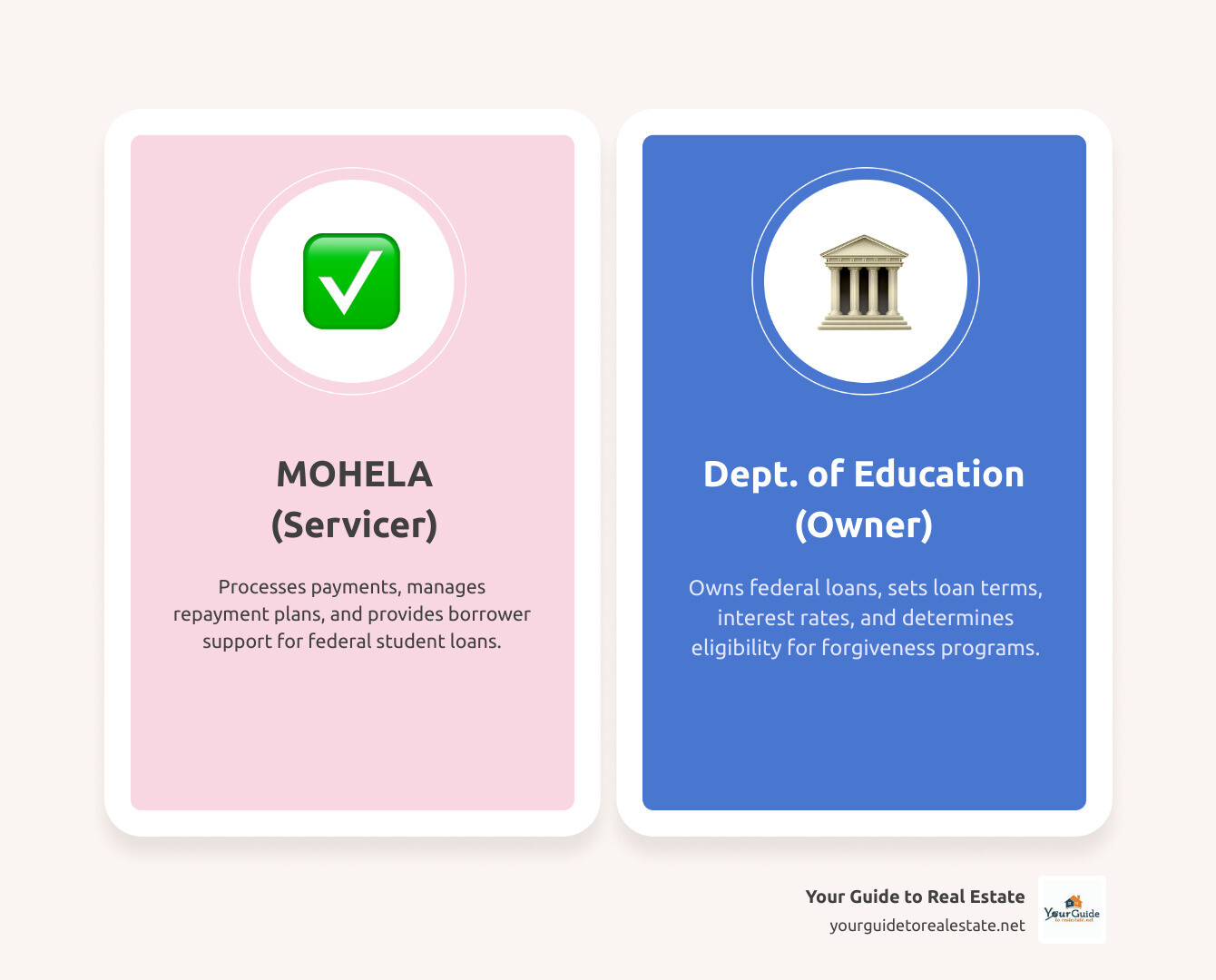
Here’s the straightforward truth: The U.S. Department of Education owns your federal student loans. MOHELA is your loan servicer – think of them as the helpful middleman who handles all the day-to-day stuff on behalf of the government.
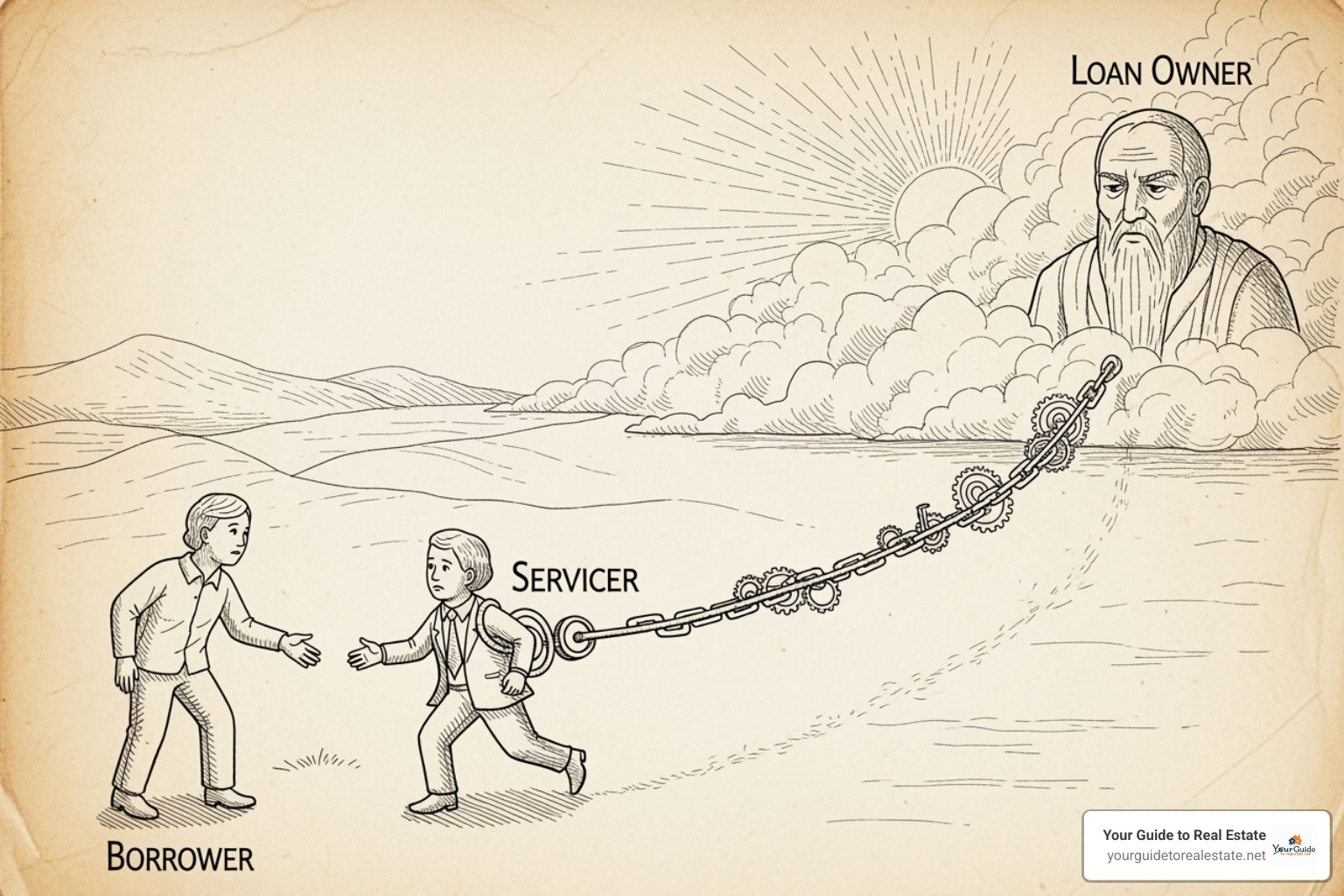
What does MOHELA actually do for you? They process your monthly payments, answer your questions when you call, help you explore different repayment options, and assist with all those forms that seem to multiply like rabbits. As a non-profit organization with over 40 years of experience, they’ve seen it all and helped millions of borrowers steer their student loan journey.
The loan transfer process might feel overwhelming, but it’s actually pretty routine in the student loan world. Many borrowers recently experienced their loans moving to MOHELA from other servicers, and here’s the reassuring part: absolutely nothing changes about your actual loan. Your interest rate stays the same, your loan terms remain identical, and any benefits you had before transfer right over with you.
When your loans do transfer to MOHELA, you’ll receive welcome communications that walk you through setting up your new online account. Don’t toss these letters in the junk pile – they contain important information about accessing your account and managing your loans going forward.
MOHELA works hard to make transitions smooth. They’ll typically maintain your communication preferences and keep your Auto Pay enrollment active without you having to jump through hoops. If you were in deferment or forbearance with your previous servicer, you won’t need to reapply – MOHELA picks up right where things left off.
One important thing to remember: While MOHELA handles your daily loan management, the Department of Education still calls the shots on major program decisions. This includes things like forgiveness program eligibility and federal student loan policy changes.
For the complete picture of all your federal student loans, make sure to check your Federal Student Aid account regularly. You can track all your federal loans on StudentAid.gov, which serves as your central command center for everything federal student aid related.
The bottom line? MOHELA is there to make your student loan management as straightforward as possible, so you can focus on bigger financial goals – like eventually qualifying for that dream home mortgage.
Mastering Your Online Account and Tools
Getting the hang of MOHELA’s digital tools is like learning to use a really helpful app – once you know your way around, everything becomes so much easier. Think of your online account as mission control for your student loans, where you can handle almost everything without picking up the phone.
Setting up your account is straightforward, but timing matters. Once your loans land with MOHELA, give it 24-48 hours before trying to register online. This little waiting period ensures all your information has properly transferred into their system. Once you’re in, you’ll find everything you need: loan details, payment history, contact updates, and even a secure messaging system to chat with customer service.
One of the smartest moves you can make is going paperless. When you opt for digital correspondence, important documents like bills and letters show up directly in your online inbox instead of getting lost in your mailbox (or that stack of mail on your kitchen counter). You’ll get email alerts when new documents arrive, so you’ll actually see important updates faster than waiting for traditional mail. Plus, you’re helping the environment – it’s a win all around.
The MOHELA App brings all this convenience to your phone. Whether you’re using iOS or Android, you can check your balance, make payments, and review your payment history from anywhere. It’s pretty amazing how technology keeps making our financial lives simpler. Just like How Technology Is Revolutionizing Real Estate: 2025 Trends to Watch shows how tech is changing our industry, these mobile tools are changing how we manage debt.
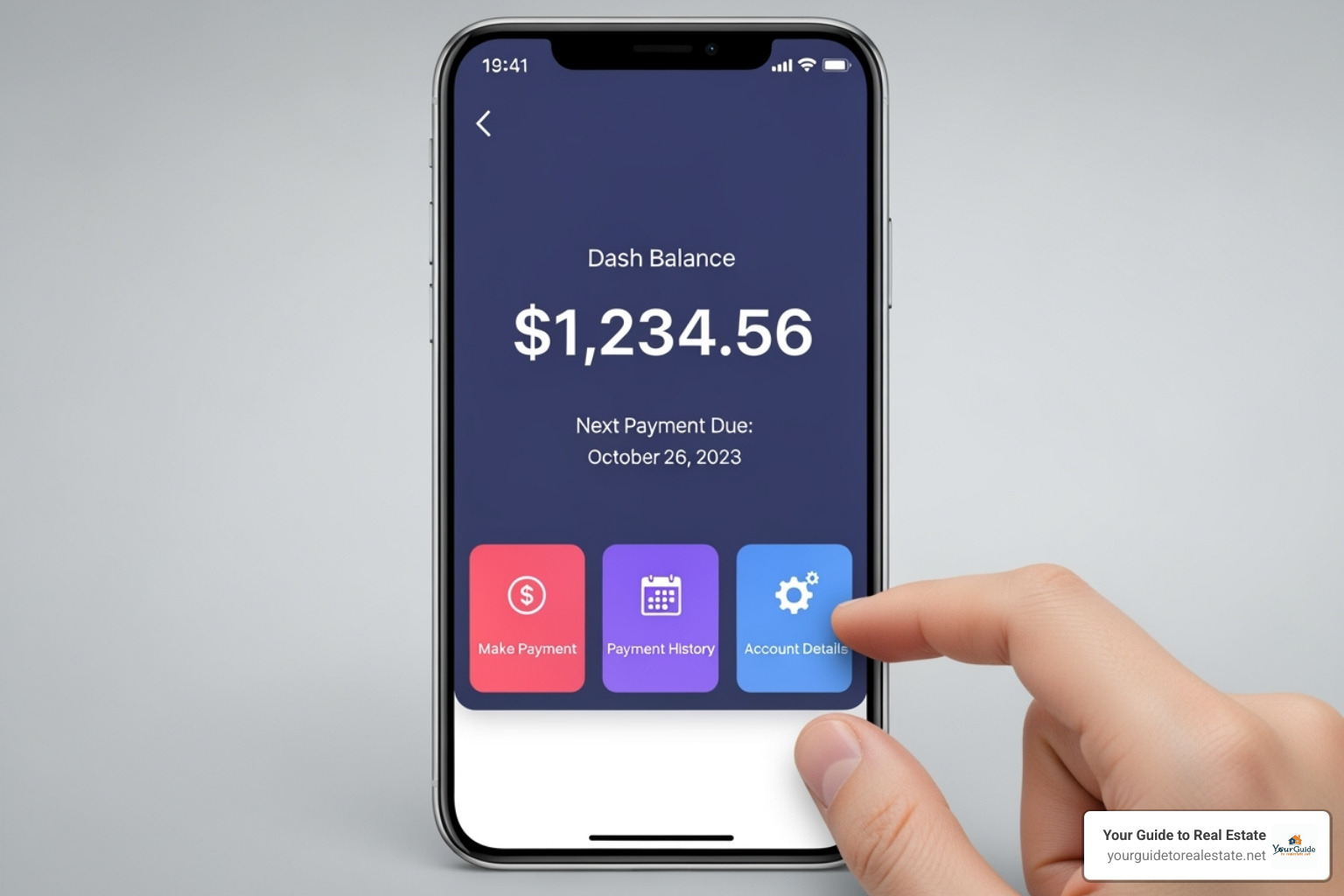
Here’s where things get really interesting: Auto Debit isn’t just about convenience. It guarantees your payments go out on time every month, protecting you from late fees and credit dings. But here’s the bonus – signing up for automatic payments can qualify you for a 0.25% interest rate reduction. That might not sound like much, but over the life of your loan, it adds up to real money back in your pocket.
These digital tools give you control and visibility over your student loans, which is exactly what you need for strong financial health. When your student debt is well-managed, it puts you in a much better position for future goals like homeownership. Every payment you make on time and every dollar you save through rate reductions strengthens your overall financial picture.
Navigating Repayment Plans and Payments
Choosing the right repayment plan can feel overwhelming, but it’s one of the most important decisions you’ll make for your financial future. The good news? MOHELA offers several federal student loan repayment options, and you’re not stuck with your first choice forever.
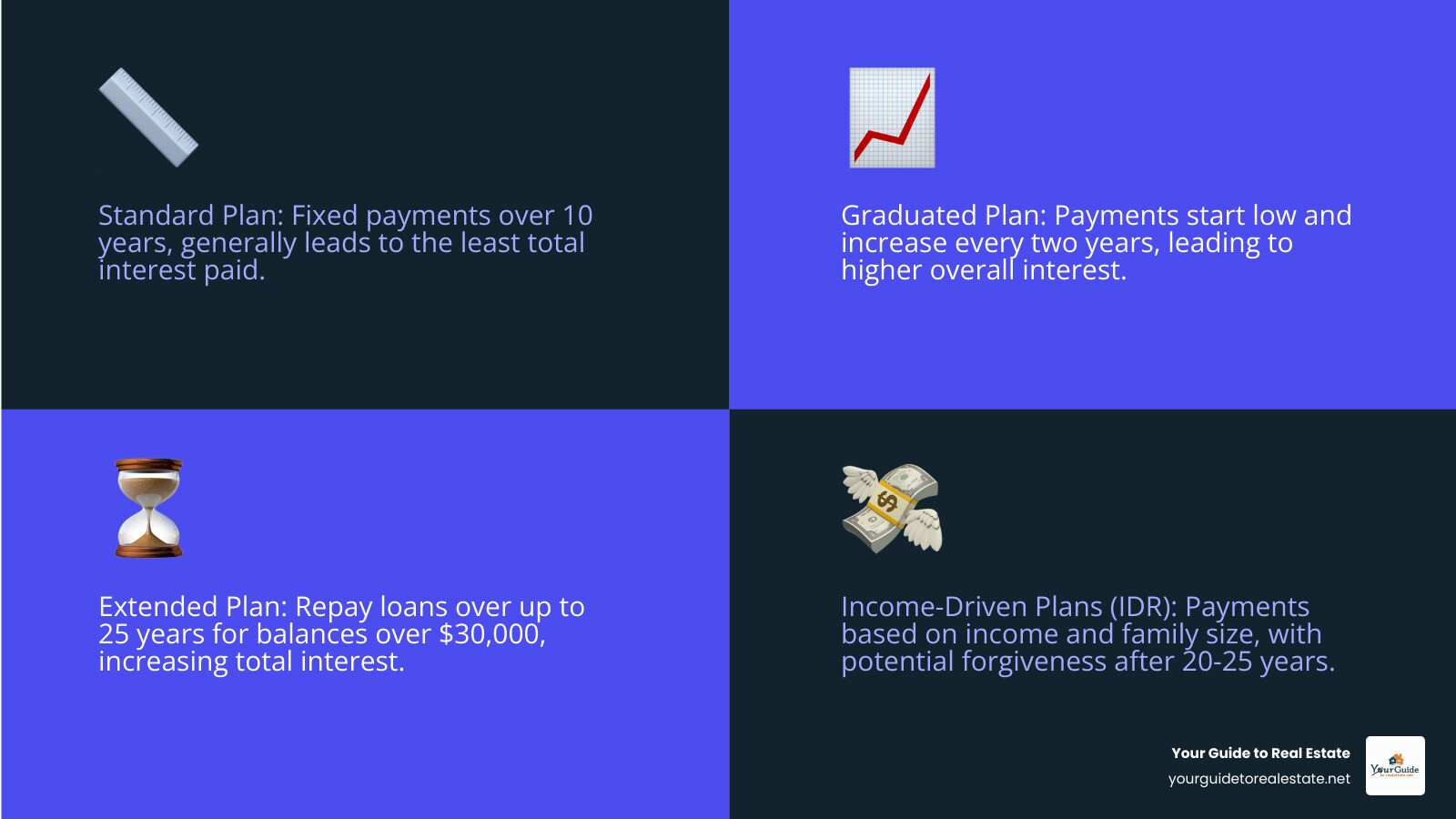
Let’s start with the basics. The Standard Repayment Plan is what you’ll automatically get unless you choose something else. Your payments stay the same for 10 years (or up to 30 years for consolidated loans), and you’ll pay the least interest overall. The downside? Those monthly payments can be pretty hefty.
If you need lower payments now but expect your income to grow, the Graduated Repayment Plan might work better. Your payments start small and increase every two years, still paying off your loans in 10 years. You’ll pay more interest than the Standard Plan, but it gives you breathing room early in your career.
Got more than $30,000 in Direct Loans? The Extended Repayment Plan lets you stretch payments over 25 years with either fixed or graduated payments. Your monthly payment drops significantly, but you’ll pay much more interest over time.
Here’s where things get really helpful: Income-Driven Repayment (IDR) Plans. These calculate your payment based on what you actually earn, not just your loan balance. After 20-25 years of payments, any remaining balance gets forgiven.
The SAVE Plan is the newest and often most generous option. It typically offers the lowest monthly payments of any IDR plan, usually around 10% of your discretionary income. If you were on the old REPAYE plan, you’ve already been moved to SAVE automatically.
The PAYE Plan also caps payments at 10% of discretionary income, but never more than you’d pay on the Standard Plan. Forgiveness comes after 20 years, though new enrollments ended in July 2024.
Income-Based Repayment (IBR) sets payments at 10% or 15% of discretionary income, depending on when you first borrowed. You’ll get forgiveness after 20 or 25 years.
The Income-Contingent Repayment (ICR) plan calculates payments as either 20% of discretionary income or what you’d pay on a 12-year Standard Plan, whichever is less. Like PAYE, new enrollments generally aren’t allowed as of July 2024, except for consolidated Parent PLUS loans.
When you make payments, mohela applies them to interest first, then principal. There’s one interesting exception: payments made within 120 days of loan disbursement might be treated as loan cancellations instead. If that’s your situation, contact mohela directly to make sure your payment gets handled correctly.
Before choosing a plan, definitely check out the Loan Simulator on StudentAid.gov. This free tool shows you exactly what each plan would cost monthly and over the life of your loans. It’s like having a crystal ball for your student debt!
How to change your repayment plan with MOHELA
Life changes, and so do your financial needs. Maybe you got a raise, had a baby, or faced unexpected expenses. The great news is that switching repayment plans is totally doable.
For Income-Driven Repayment plans, head straight to StudentAid.gov and select “Apply for Income-Driven Repayment.” The system can often pull your tax information directly from the IRS using your FSA ID, which makes the whole process much smoother.
Here’s something super important: if you choose an IDR plan, you’ll need to recertify every year. This means updating your income and family size information so mohela can calculate your correct payment amount. Miss this deadline, and your payments could jump back to a much higher amount. Trust us, you don’t want that surprise!
Set up reminders now, or better yet, go paperless with mohela so you get email notifications about important deadlines. Your future self will thank you.
Want to switch to a non-IDR plan like Standard, Graduated, or Extended? You can call mohela at 888.866.4352, and their customer service team will walk you through your options.
Understanding these repayment choices is just as crucial as Understanding Mortgages: A Beginner’s Guide to Home Loans when you’re ready to buy a home. Both decisions shape your financial future, so it’s worth taking the time to get them right.
Managing Parent PLUS loans with MOHELA
Parent PLUS loans are a different beast entirely. If you’re a parent who borrowed to help fund your child’s education, there are some unique rules and opportunities you should know about.
First, the tricky part: Parent PLUS loans don’t directly qualify for most Income-Driven Repayment plans. But here’s the workaround that many parents don’t know about. Consolidate your Parent PLUS loans into a Direct Consolidation Loan, and suddenly that new consolidated loan can qualify for the Income-Contingent Repayment (ICR) plan. This could significantly lower your monthly payments.
Parent PLUS loans do come with some helpful deferment options. You can request a Parent PLUS Deferment while your child is enrolled at least half-time in school. No payments required during this period, which can be a huge relief.
Even better, after your child graduates or drops below half-time enrollment, you might qualify for an additional six-month post-enrollment deferment. It’s like a grace period to help you transition into repayment mode.
To apply for these deferments, you’ll need to complete the Parent PLUS Deferment form from the Federal Student Aid website.
Here’s the catch with deferments: interest keeps adding up even when you’re not making payments. When you start repaying again, that accumulated interest often gets added to your principal balance, making your total debt higher. If you can swing it, try to at least pay the interest during deferment periods. Your wallet will appreciate it later.
Exploring Special Programs and Borrower Assistance
Life doesn’t always go according to plan, and mohela understands that. Whether you’re working in public service, facing financial hardship, or dealing with unexpected challenges, there are programs designed to help you manage your student loans effectively.
Public Service Loan Forgiveness (PSLF) is one of the most valuable programs available to federal student loan borrowers. If you work full-time for a qualifying employer – like government organizations, non-profit organizations, or other public service employers – you could have your remaining loan balance forgiven after making 120 qualifying monthly payments.
Here’s how it works with mohela: While they service your PSLF-eligible loans and track your progress, the U.S. Department of Education actually manages the PSLF program itself. This means the Department of Education determines what counts as eligible employment and qualifying payments. MOHELA‘s job is to keep track of your payments and employment history, then discharge your loans once they get the official approval from the Department of Education.
The key to PSLF success is staying organized and proactive. You should regularly submit the PSLF form to certify your employment – think of it as checking in to make sure you’re still on the right track. The best place to monitor your PSLF progress is through your account on StudentAid.gov, where you can see your payment counts, employment history, and form status.

There’s also exciting news about the PSLF buyback opportunity. This program allows you to “buy back” certain months when your loans were in ineligible deferment or forbearance status, potentially counting them toward your 120 qualifying payments. It’s complex, but it could be incredibly valuable if you qualify. You can learn more about PSLF Buyback on the official StudentAid.gov website.
When financial difficulties hit, mohela has resources to help you through tough times. Deferment and forbearance are two options that can temporarily pause your loan payments. The main difference? Deferment is typically for specific situations like unemployment or economic hardship, while forbearance is more discretionary and often used for general financial difficulties.
That interest usually continues to accrue during both deferment and forbearance periods. This means your loan balance could grow while payments are paused. If possible, try to at least pay the interest to prevent your total debt from increasing.
MOHELA also has specific assistance programs for borrowers affected by natural disasters. If a hurricane, wildfire, or other disaster has impacted your ability to make payments, reach out to them immediately. They have established protocols to help you steer your loan obligations during these challenging circumstances.
Assistance for Borrowers in School or Grace Periods
If you’re currently in school or recently graduated, mohela provides guidance to help you steer these important transition periods. Understanding your options now can save you stress and money later.
While you’re enrolled at least half-time, your federal student loans are typically in in-school deferment status. This means no payments are required, and mohela works directly with your school to confirm your enrollment status. It’s pretty seamless – one less thing to worry about while you’re focused on your studies.
When you graduate, leave school, or drop below half-time enrollment, most federal student loans enter a grace period. This is usually six months of breathing room before you need to start making payments. Think of it as a transition period to help you find a job and get your financial house in order.
About 60 days before your grace period ends, mohela will send you important information about your repayment terms. They’ll calculate your payment schedule and let you know when your first payment is due. This advance notice gives you time to budget and plan accordingly.
Even before repayment begins, there are important steps to take. If you’re planning to continue your education, completing the FAFSA form each year is essential for future financial aid. Additionally, each time you accept new federal student loans, you should complete an Annual Student Loan Acknowledgment. This helps you understand exactly how much you owe and how additional borrowing affects your financial future.
Communication is key during these periods. If you’re expecting additional loan disbursements, leaving school early, or making significant changes to your course load, contact both your school’s financial aid office and mohela. Being proactive prevents surprises and helps ensure your loans are managed correctly from the start.
Frequently Asked Questions about MOHELA
We know that managing student loans can feel overwhelming at times, and you probably have lots of questions swirling around in your head. Don’t worry – you’re not alone! Here are the most common questions we hear about mohela and how they can help you steer your student loan journey.
How do I contact MOHELA for assistance?
Getting in touch with mohela is easier than you might think. They’ve set up multiple ways to reach them, so you can choose whatever works best for your situation.
The most direct way is calling their Borrower Information line at 888.866.4352. Their friendly customer service team operates during these hours (all times are Central Time):
Monday: 7:00 a.m. – 8:00 p.m. CT
Tuesday – Wednesday: 7:00 a.m. – 7:00 p.m. CT
Thursday – Friday: 7:00 a.m. – 5:00 p.m. CT
If you’re a financial aid officer at a school, there’s a dedicated FAO Hotline at 888.866.4353 just for you.
Honestly, we often find the secure messaging feature in your online account to be the most convenient option. You can ask detailed questions about your specific account, and you’ll get a written response you can refer back to later. Plus, no waiting on hold!
MOHELA is also active on social media if you want to stay updated on general news and information. You can find them on Facebook, LinkedIn, and Twitter – just search for mohela on any of these platforms.
For international borrowers or those who prefer traditional mail, you can find complete mailing addresses and additional contact details on their Contact Us page.
How can I protect myself from student loan scams?
This is such an important question, and we’re glad you’re thinking about it! Unfortunately, student loan scams are everywhere these days, and scammers are getting pretty creative with their tactics.
Here’s the golden rule: mohela and the Department of Education will never ask you to pay money for services that are already free. If someone contacts you promising to reduce your loans or get you forgiveness for a fee, that’s a huge red flag.
All legitimate repayment options, deferments, forbearances, and forgiveness programs are completely free through mohela or StudentAid.gov. No exceptions, no processing fees, no “expedited service” charges.
Be extra cautious about unsolicited calls, emails, or text messages. Scammers love to create urgency, saying things like “Act now or lose your benefits!” Real mohela communications won’t pressure you like that. When in doubt, hang up and call mohela directly using the official number we mentioned above.
Never share your FSA ID, Social Security number, or bank account information with anyone who contacts you out of the blue. MOHELA already has your account information – they don’t need to ask for it again over the phone.
If you encounter something suspicious, report it to the Federal Trade Commission (FTC) and the Federal Student Aid (FSA) Ombudsman Group. You’ll be helping protect other borrowers too.
What is MOHELA’s commitment to borrowers?
MOHELA takes their responsibility to borrowers seriously, and it shows in how they operate. As a governmental, non-profit organization with over 40 years of experience, they’re not trying to make a profit off your student loans – they’re focused on helping you succeed.
Their Customer Promise centers around providing what they call a “first-rate experience.” This isn’t just marketing speak – they’ve built their entire operation around core values that actually make a difference in how they treat you.
Service Excellence means they’re committed to being genuine resource experts who can give you superior guidance. Integrity means they’ll be honest and transparent with you, even when the news isn’t what you want to hear. Respect means they treat every borrower with dignity, regardless of your loan balance or situation.
They also emphasize agility – adapting quickly when federal policies change so you don’t get caught off guard. And stewardship means they take their role as managers of federal resources seriously.
Here’s something pretty cool: mohela has been recognized as a USA TODAY Top Workplace for two years running. That’s not just about being nice to borrowers – it reflects their commitment to creating a positive workplace culture that ultimately benefits you as a customer. Happy employees tend to provide better service, and that recognition shows they’re doing something right.
Their teamwork approach means when you contact them, you’re not just getting help from one person – you’re tapping into a collaborative network of people who want to see you succeed with your student loan repayment.
Conclusion
Taking control of your mohela student loans is one of the smartest financial moves you can make. What might feel overwhelming at first becomes much more manageable when you understand the system and use the right tools.
Mohela is your day-to-day partner in loan management, but the U.S. Department of Education makes the big decisions about programs and policies. This partnership structure actually works in your favor – you get personalized service from mohela while benefiting from federal protections and programs.
The journey we’ve covered together – from setting up your online account and choosing the right repayment plan to exploring forgiveness programs and avoiding scams – builds a solid foundation for your financial future. Every step you take toward smart loan management strengthens your overall financial health.
This matters more than you might think, especially if homeownership is in your future plans. Your student loan payment history directly impacts your credit score and debt-to-income ratio – two crucial factors mortgage lenders examine closely. By staying on top of your mohela account, making payments on time, and choosing the right repayment plan, you’re actually paving the way for that future home purchase.
Proactive management is the key. Set up that Auto Debit for the interest rate reduction. Use the mobile app to check your balance regularly. Don’t ignore those annual recertification deadlines if you’re on an income-driven plan. These small actions add up to big financial wins.
At Your Guide to Real Estate, we’ve seen countless clients whose smart student loan management helped them qualify for better mortgage terms and achieve their homeownership dreams sooner. The same attention to detail and proactive approach that serves you well with mohela will serve you equally well when you’re ready to buy your first home.
Financial empowerment isn’t just about managing debt – it’s about creating opportunities. When you’re ready to take that exciting next step toward homeownership, check out our guide on Easy Steps to Buying Your First Home. Your future self will thank you for the solid financial foundation you’re building today.