

Why This Mortgage Rate Drop Matters for Your Home Buying Journey
If you’re wondering when will mortgage rates go down, here’s what you need to know right now:
Current Status (Early 2025):
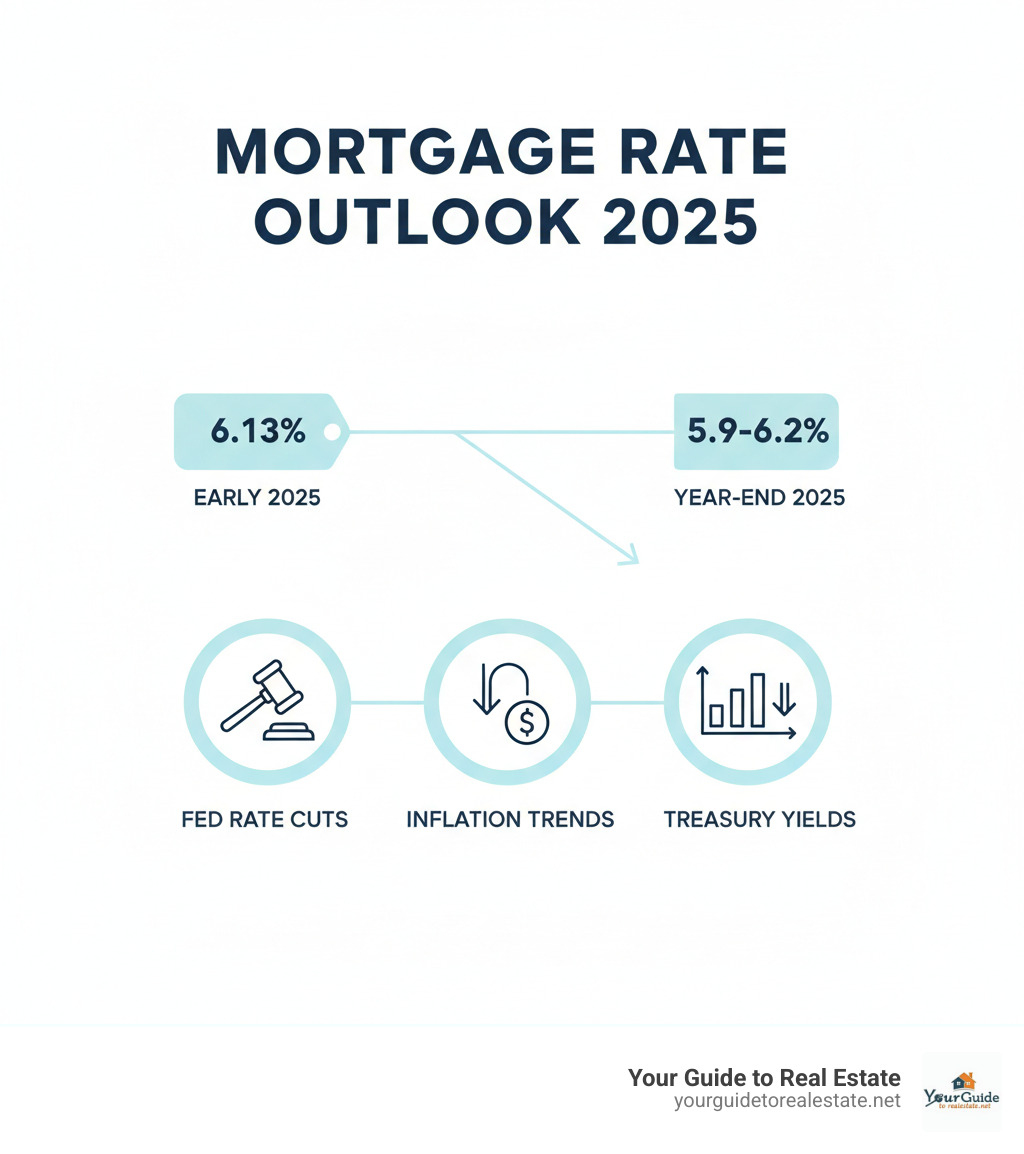
- 30-year fixed rates: Recently dropped to 6.13% – the lowest in 3 years
- Expert predictions: Rates expected to fall to 5.9-6.2% by end of 2025
- Key drivers: Federal Reserve rate cuts and cooling inflation
- Timeline: Gradual decline expected throughout 2025, with potential dips below 6% by early 2026
After reaching peaks above 7% in late 2023 and early 2024, mortgage rates have finally started moving in the right direction. The recent drop of 15 basis points in a single week marked the largest weekly decline in over a year, sparking a surge in both purchase applications and refinancing activity.
This shift comes as the Federal Reserve begins cutting its benchmark rate and inflation shows signs of cooling. While we’re unlikely to see the ultra-low rates of the pandemic era again, the current trend suggests meaningful relief is on the horizon for homebuyers and homeowners alike.
The timing couldn’t be more important. Millions of potential buyers have been sitting on the sidelines, waiting for borrowing costs to become more manageable. Meanwhile, homeowners who locked in rates above 7% are now eyeing refinancing opportunities that could save them hundreds of dollars each month.
When will mortgage rates go down basics:
- i make $70,000 a year how much house can i afford
- interest only mortgage calculator
- Down payment assistance
Current Mortgage Rate Trends: A Welcome Dip for Borrowers
After months of watching rates climb to uncomfortable heights, borrowers are finally catching a break. The mortgage market has delivered some genuinely good news, with rates dropping significantly from their recent peaks above 7%. This isn’t just a small blip – we’re talking about meaningful relief that’s already changing how people approach the housing market.
Right now, the average rate for a 30-year fixed mortgage sits at 6.13%, according to current mortgage rates data. To put this in perspective, that’s the lowest we’ve seen since late 2022. Just a few months ago, many borrowers were staring down rates above 7%, so this shift feels pretty substantial.
The speed of this change has been remarkable too. We recently saw the largest weekly drop in over a year, with rates falling by 15 basis points in just seven days. When you’re talking about mortgage rates, that kind of movement gets everyone’s attention – and for good reason.
The market is responding immediately. The seasonally adjusted mortgage application index shows a clear surge in activity. People who had been sitting on the sidelines, waiting for borrowing costs to become more reasonable, are suddenly back in the game. Both homebuyers and existing homeowners are taking notice.
What’s particularly encouraging is the refinancing surge we’re seeing. Homeowners who locked in rates when they were at their peak are now exploring ways to lower their monthly payments. It’s a smart move that could save them hundreds of dollars each month.
This shift represents more than just numbers on a chart – it’s breathing new life into the entire housing market. After a period where high borrowing costs kept many potential buyers away, we’re seeing renewed optimism and activity. While we’re not expecting a return to the ultra-low pandemic-era rates, any meaningful drop makes a real difference in affordability and purchasing power.
Understanding these trends becomes even more important when you consider the broader context of Why Are Mortgage Rates Going Up? – because knowing what drives rates higher also helps us recognize when conditions are improving. Right now, those conditions are definitely moving in the right direction for borrowers.
The Key Drivers: What Makes Mortgage Rates Rise and Fall?
If you’ve been wondering when will mortgage rates go down, understanding what moves them in the first place is your secret weapon. Here’s the thing – many people think the Federal Reserve just waves a magic wand and sets mortgage rates directly. But the reality? It’s more like watching a complex dance between several economic partners, each influencing the others in fascinating ways.
Think of it this way: mortgage rates are like the temperature in your house. The thermostat (the Fed) plays a big role, but so do things like whether the windows are open (economic conditions), how well insulated your house is (investor confidence), and even what the weather’s doing outside (global events).
The Federal Reserve’s Indirect Influence
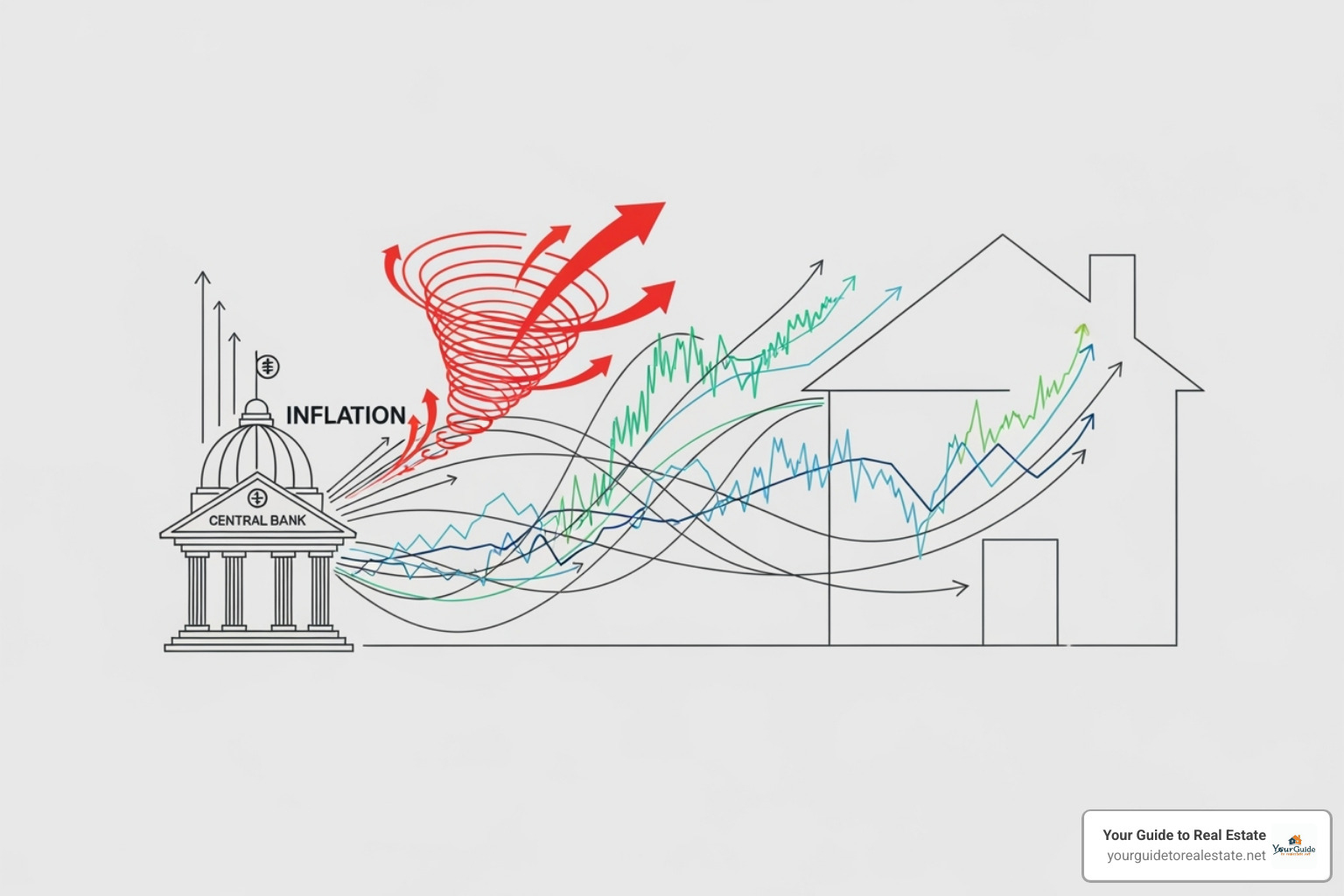
Here’s where it gets interesting. The Federal Reserve doesn’t actually set mortgage rates – but boy, does it influence them! When the Fed makes decisions about the federal funds rate, those ripples spread throughout the entire economy like dropping a stone in a pond.
The Fed has what they call a “dual mandate” – keeping people employed and keeping inflation from getting out of hand. When inflation gets too hot, they’ll often raise their benchmark rate to cool things down. When the economy starts looking shaky or unemployment rises, they might cut rates to give things a boost.
Just recently, the Federal Reserve lowered its benchmark rate by a quarter point, bringing it down to a range of 4% to 4.25%. This was their first rate cut in nine months, and it sent a clear signal that they’re shifting gears. While one single rate cut might not dramatically change your mortgage rate overnight, it’s the anticipation of future cuts that really gets the market moving.
Here’s something fascinating: mortgage rates actually dropped sharply before the Fed made their widely expected rate cut. Investors in mortgage-backed bonds were essentially buying ahead of the announcement, betting on what was coming. It’s like the market has a crystal ball – or at least tries to!
The current economic landscape is particularly telling. The Fed is responding to what they call “downside risks to employment” and ongoing uncertainty about where the economy is headed. This context is crucial for understanding how Fed policy connects to Understanding Mortgage Rates.
The Treasury Yield Connection
Now here’s the most direct connection you need to understand: 30-year mortgage rates follow the 10-year Treasury note yield like a loyal puppy. Mortgage lenders basically use the 10-year Treasury as their starting point for pricing loans.
When investors feel optimistic about the economy, they tend to sell their “safe” bonds and put money into riskier investments like stocks that might give better returns. This selling pushes bond prices down and their yields up – which means mortgage rates go up too.
But when there’s economic uncertainty or scary news, investors run back to the safety of bonds. This pushes bond prices up and yields down, which is exactly what we’ve been seeing lately. The combination of expected Fed rate cuts and some weaker economic data caused Treasury yields to slide, contributing significantly to the recent drop in mortgage rates.
The bond market is incredibly sensitive – almost like a nervous cat that jumps at every sound. Political developments, government spending discussions, or even rumors about Fed policy can make Treasury yields bounce around. This intricate relationship between economic signals, investor emotions, and bond yields is a key piece of understanding Mortgage Rate Forecasts.
Broader Economic and Political Factors
Beyond the Fed and Treasury bonds, the overall health of our economy plays a starring role in determining when will mortgage rates go down. It’s like a huge web where everything connects to everything else.
Inflation trends are probably the biggest player here. When inflation runs hot, lenders want higher interest rates to make up for the fact that the money they’ll get back later won’t buy as much. The recent signs that inflation is cooling down have been a major reason why people are getting excited about falling rates. If inflation keeps settling down, mortgage rates should follow.
Economic growth and unemployment work hand in hand with Fed policy. When the economy slows down and more people lose jobs, the Fed often cuts rates to stimulate activity. Their recent actions are partly responding to rising unemployment rates and what they see as risks to employment. This creates a domino effect that can push mortgage rates lower.
Housing supply doesn’t directly change rates, but it definitely affects affordability. When there are more homes available from new construction, it can ease some of the price pressure, making homes more accessible even if rates aren’t dramatically lower. This dynamic is playing out right now in The U.S. Housing Market in 2025.
Government policies and political uncertainty can also shake things up. Fiscal policies, trade discussions, and even political drama around the Federal Reserve create uncertainty that makes markets jumpy. While these events might not directly change your mortgage rate, they can definitely affect how confident investors feel and how much rates bounce around day to day.
All these factors create a constantly shifting landscape where mortgage rates are always adjusting. It might seem complicated, but understanding these moving parts gives you a much clearer picture of what’s really driving the answer to when will mortgage rates go down.
So, When Will Mortgage Rates Go Down? Expert Predictions for 2025
After months of uncertainty and volatility, there’s finally some good news on the horizon. Forecasts from leading industry experts suggest that mortgage rates will continue to stabilize and ease throughout 2025. While predictions naturally vary, there’s a clear consensus pointing toward a downward trend – though we shouldn’t expect a return to those incredibly low pandemic-era rates anytime soon.
The question when will mortgage rates go down is getting clearer answers from the experts who watch these trends most closely. And honestly, their predictions are more encouraging than we’ve seen in quite some time.
What the Experts are Forecasting
We’ve been tracking what the major housing authorities and financial experts are saying about when will mortgage rates go down, and the outlook is genuinely promising. Here’s what the leading voices in the industry are predicting:
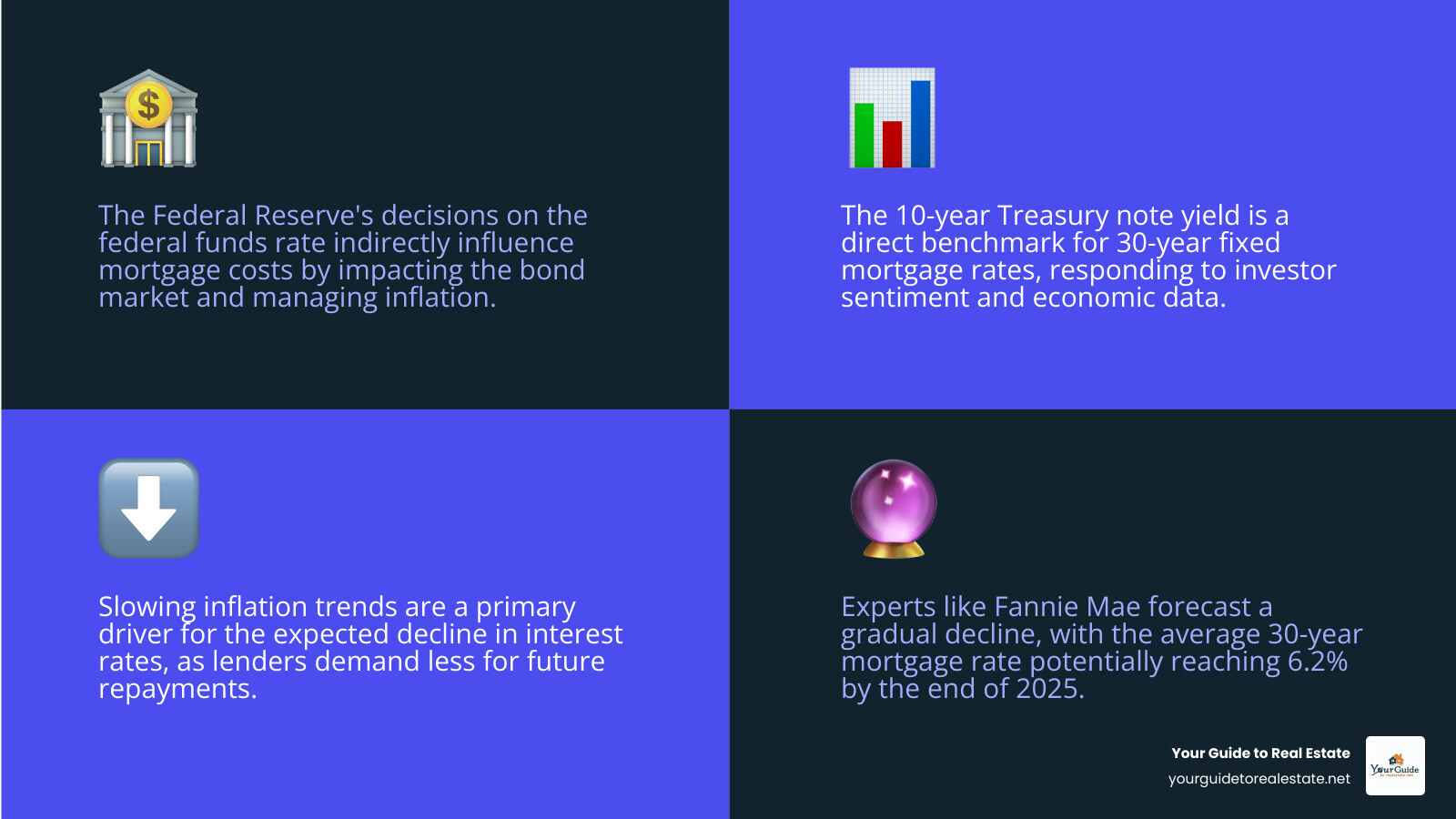
Fannie Mae recently updated their forecast, predicting that the average 30-year mortgage rate will fall to 6.2% by the end of 2025. That’s a meaningful drop from where we are today and would make a real difference in monthly payments.
The Mortgage Bankers Association is even more optimistic. They’re projecting that the year-end 2025 average rate on the 30-year fixed mortgage could reach 5.9%. If they’re right, that would put rates firmly in the “more affordable” category for many buyers.
Some analysts are making an even bolder prediction, suggesting that the average 30-year mortgage rate in the United States could drop as low as 5% by the end of 2025. While that might seem aggressive, it’s not outside the field of possibility given current economic trends.
Individual experts are also weighing in with cautiously optimistic forecasts. Hector Amendola of Panorama Mortgage expects rates to decrease, pointing to a sluggish labor market and strain in rate-sensitive sectors as key factors. Danielle Hale from Realtor.com and others are watching for rates to inch lower as the Federal Reserve continues its rate-cutting cycle.
Meanwhile, experts like Andrea Blais, Jay Crowell, Ralph DiBugnara, Charles Goodwin, and Sam Williamson predict rates will moderate into the mid-to-upper 6% range – still a welcome improvement from recent peaks.
Morgan Stanley strategists add another layer to the forecast, anticipating that mortgage rates could fall alongside Treasury yields over the next two years. They believe slowing US GDP growth in 2026 could further lower both Treasury yields and mortgage rates. For more detailed analysis of these trends, check out our Real Estate Market Projections for 2025.
A Look at Historical Context
Before we get too excited (or too disappointed) about current rates, let’s put things in perspective. Yes, today’s rates around 6.13% feel high compared to the recent past, but history tells a different story.
The lowest 30-year mortgage rate ever recorded by Freddie Mac was 2.65% in early 2021 – a truly unique period driven by the pandemic and aggressive Federal Reserve intervention. By October 2023, rates had climbed to nearly 7.80% due to persistent inflation concerns.
Here’s something that might surprise you: the historical average 30-year fixed interest rate since April 1971 is around 7.8%. That means even with current rates in the low 6s, we’re actually sitting below that long-term average. It’s a helpful reminder that while those pandemic-era lows were fantastic for borrowers, they were truly an anomaly in the broader context of mortgage rate history.
Our team has compiled extensive Historical mortgage rate data to help you understand these patterns and what they mean for today’s market. The takeaway? While we probably won’t see those “free money” rates of 2021 again, the current environment is significantly better than last year’s peaks and quite reasonable by historical standards.
When will mortgage rates go down enough to impact affordability?
Here’s where the rubber meets the road: when mortgage rates go down, your monthly payments drop, and your purchasing power increases. This isn’t just theory – it’s real money in your pocket every month.
Let’s look at some concrete examples. Morgan Stanley provides a great illustration: for a $1 million home, the estimated monthly payment (principal and interest) at a 7% rate is $5,322. If the rate drops to 6.25% – just a 0.75% difference – that payment falls to $4,925, saving you $397 per month!
For a more typical home purchase, say $500,000, that same 0.75% rate drop could save you nearly $200 monthly. Over the life of a 30-year loan, these savings add up to tens of thousands of dollars. You can run your own numbers using our Mortgage Calculator to see exactly how rate changes would affect your situation.
But here’s the catch: affordability isn’t just about rates – it’s also heavily influenced by home prices. And this is where the “lock-in effect” comes into play. Many homeowners who refinanced or bought during the pandemic secured incredibly low rates (2-3%). They’re understandably reluctant to sell and buy again at higher rates, even if those rates are lower than last year’s peaks.
This reluctance keeps existing home inventory limited, which helps maintain liftd home prices. While new construction is adding supply to the market, until more existing homeowners feel comfortable moving, prices will remain a significant factor in overall affordability. The good news? As rates continue to decline, more homeowners may feel comfortable making a move, potentially increasing inventory and easing price pressure.
Strategies for Homebuyers and Owners in a Shifting Rate Environment
Instead of trying to perfectly time the market – a task even seasoned economists struggle with – the best approach is to focus on what you can control. Whether you’re looking to buy your first home, upgrade, or simply optimize your current mortgage, there are strategic moves you can make right now. We believe in offering a proven framework and stress-free guidance for success in the real estate market.
The truth is, nobody has a crystal ball when it comes to predicting exactly when mortgage rates will go down to their lowest point. What we do know is that rates are trending in the right direction, and that’s reason enough to get your financial house in order.
For Prospective Homebuyers
Here’s something that might surprise you: when mortgage rates go down, it doesn’t automatically make home buying easier. Lower rates bring more buyers out of the woodwork, which means you’ll face stiffer competition. Homes sell faster, bidding wars become more common, and sellers get pickier about offers.
The secret weapon? Being financially prepared before the crowd arrives.
Improving your credit score should be your first priority. Lenders save their best rates for borrowers with scores in the high 700s or above. If your score needs work, start by checking your credit report for errors and paying down outstanding debts. Even a 20-point improvement can save you thousands over the life of your loan.
Building your down payment is equally important. A larger down payment doesn’t just reduce your monthly payments – it signals to lenders that you’re a lower risk, potentially qualifying you for better rates. Plus, in competitive markets, a substantial down payment can make your offer stand out.
Getting pre-approved isn’t optional anymore; it’s essential. This step shows sellers you’re serious and financially ready. It also prevents the heartbreak of falling in love with a home you can’t actually afford. Think of it as your golden ticket to serious house hunting.
Don’t forget to shop around for lenders. We can’t stress this enough – different lenders offer different rates and terms, even for identical borrowers. Getting quotes from at least three to five lenders can save you thousands. For detailed guidance on this process, check out How to Shop for a Mortgage and our First-Time Homebuyer Tips.
For Current Homeowners
If you bought your home when rates were at their peak – we’re talking 7% or higher – you might be sitting on a golden opportunity. The recent drop in rates could translate to significant monthly savings through refinancing.
Refinancing opportunities are abundant right now. If your current rate is significantly higher than today’s rates, refinancing could lower your monthly payment, reduce the total interest paid over your loan’s life, or help you switch from an adjustable-rate mortgage to a stable fixed rate. The key is calculating your break-even point to ensure the closing costs make financial sense. Our guide on Mortgage Refinancing Explained walks you through this process.
Adjustable-rate mortgages (ARMs) are making a comeback, and for good reason. With rates potentially continuing to fall, ARMs often offer lower initial rates than fixed-rate loans. This can be attractive if you plan to move or refinance again before the rate adjusts. Just be honest about your long-term plans and risk tolerance.
For homeowners with significant equity, cash-out refinancing presents an interesting opportunity. You can tap into your home’s equity while potentially securing a lower interest rate on your entire loan. This strategy works well for funding home improvements or consolidating higher-interest debt. Learn more about this option in our Cash Out Refinancing Explained guide.
When will mortgage rates go down and what should you do now?
The smartest strategy is to focus on what you can control. Work on improving your credit score, building your savings, and understanding your budget. These steps will put you in a strong position to act when the right opportunity arises, regardless of day-to-day rate fluctuations.
Here’s the reality: trying to perfectly time the market is a common pitfall that can cost you more than it saves. As Lawrence Yun, Chief Economist at the National Association of Realtors, points out, “While mortgage rates remain liftd, they are expected to stabilize.” The timing and pace of rate changes is one of the most challenging forecasts to make.
Instead of waiting for the “perfect” moment that may never come, focus on building a strong financial foundation. This approach aligns with our philosophy at Your Guide to Real Estate: providing you with the tools and knowledge to make informed decisions that serve your long-term financial goals.
The best time to buy a home is when you’re financially ready and have found a property that meets your needs. Rates are just one piece of the puzzle. Explore all your options with our comprehensive Mortgage Options Explained guide to make the decision that’s right for your situation.
Frequently Asked Questions about Falling Mortgage Rates
As mortgage rates start their welcome descent, we’re getting bombarded with questions from both buyers and homeowners. It’s understandable – after months of watching rates climb, everyone wants to know what this shift really means for their wallet. Let’s explore the questions we hear most often.
Will mortgage rates drop back to 3%?
Here’s the reality check: when will mortgage rates go down to those dreamy 2-3% levels we saw during the pandemic? Probably not anytime soon, and honestly, that’s okay. Those ultra-low rates were like finding a unicorn – they existed because of a perfect storm of economic chaos and emergency Federal Reserve actions to keep the economy from completely collapsing.
Most economists we follow agree that seeing those rates again would require another significant economic crisis, and nobody’s rooting for that scenario. The good news? We don’t need 3% rates to make homeownership more affordable. The current trend toward the 5% to 6% range by late 2025 represents a meaningful improvement that could save you hundreds of dollars each month.
Think of it this way: those pandemic rates were the exception, not the rule. What we’re heading toward is a return to more historically normal territory that still offers plenty of opportunity for smart buyers and savvy refinancers.
How much do I save if rates drop by 1%?
Now we’re talking real money! The savings from even a modest rate drop can be genuinely life-changing. Let’s break it down with numbers that might surprise you.
Take a $400,000 30-year fixed loan as an example. At a 7% interest rate, your monthly principal and interest payment hits about $2,661. Drop that rate to 6%, and suddenly you’re looking at $2,398 per month. That’s a difference of roughly $268 every single month – enough to cover a nice dinner out, boost your emergency fund, or tackle other financial goals.
But here’s where it gets really exciting: over the full 30-year life of that loan, you’d save more than $96,000 in total interest payments. That’s not pocket change – that’s a substantial chunk of money that stays in your bank account instead of going to your lender.
Even smaller rate drops pack a punch. A half-point reduction still saves you over $130 monthly on that same loan. The best part? You can use a mortgage calculator to plug in your specific numbers and see exactly what a rate drop would mean for your situation.
Should I lock my mortgage rate now or wait?
This question keeps us busy, and for good reason – it’s the classic timing dilemma that can make or break your monthly budget. Here’s our straight-forward advice: if you’ve found your home and you’re ready to move forward, lock that rate.
The mortgage market might be trending downward, but it’s still as unpredictable as weather in Texas. One surprising jobs report or unexpected inflation number can send rates bouncing back up faster than you can say “rate lock expired.” When you lock your rate, you’re essentially buying insurance against that volatility between now and your closing date.
We’ve seen too many buyers try to play the “float and hope” game, waiting for rates to drop just a little bit more. Sometimes it works out, but more often, they end up kicking themselves when rates tick back up and they’re stuck paying more than they could have locked in weeks earlier.
For current homeowners eyeing refinancing opportunities, the strategy is similar. Once you’ve shopped around with multiple lenders and found a rate that meaningfully improves your financial picture, don’t let analysis paralysis keep you from pulling the trigger. A bird in the hand is worth two in the bush, especially when that bird can save you thousands of dollars over the life of your loan.
The bottom line? Focus on securing a rate that works for your budget and your timeline, rather than trying to perfectly time the market. Even the experts can’t predict exactly when mortgage rates will go down or by how much on any given week.
Conclusion
While no one has a crystal ball, the consensus is clear: mortgage rates are heading in the right direction for homebuyers. We’ve witnessed a significant recent dip that brought rates down to their lowest levels in three years, and experts across the board predict a continued, gradual decline through 2025. It’s the kind of news that makes us cautiously optimistic about what’s ahead.
The key is keeping an eye on the influencing factors we’ve discussed – things like inflation trends and Federal Reserve policy decisions. These economic forces will continue to shape the rate environment, but the current trajectory looks promising. Most forecasts suggest we’ll see rates settle somewhere between 5.9% and 6.2% by the end of 2025, which represents meaningful savings for both buyers and those looking to refinance.
Rather than trying to perfectly time the market (a strategy that even seasoned economists struggle with), we encourage you to focus on strengthening your financial position. This means working on improving your credit score, building up your savings for a down payment, and getting pre-approved for a mortgage. These steps put you in control of your homebuying journey, regardless of daily rate fluctuations.
By taking these proactive steps, you’ll be ready to make a confident move when the right opportunity presents itself. Whether you’re a first-time buyer excited about entering the market or a current homeowner considering refinancing, having your financial house in order is your best strategy for success.
At Your Guide to Real Estate, we believe in empowering you with the knowledge and resources to steer the complexities of the housing market with confidence. The mortgage landscape can feel overwhelming, but with the right guidance and preparation, it doesn’t have to be stressful.
For more in-depth guidance on understanding the home loan process and making the best decisions for your financial future, let our team help you every step of the way. Our comprehensive guide, Understanding Mortgages: A Beginner’s Guide to Home Loans, is a great place to start your journey. We’re here to make your path to homeownership both stress-free and successful.