

Why Choosing the Right Real Estate Brokerage Matters
How to pick a real estate brokerage is the most critical business decision you’ll make as a real estate agent. Your choice directly impacts your income, training, support, and career trajectory.
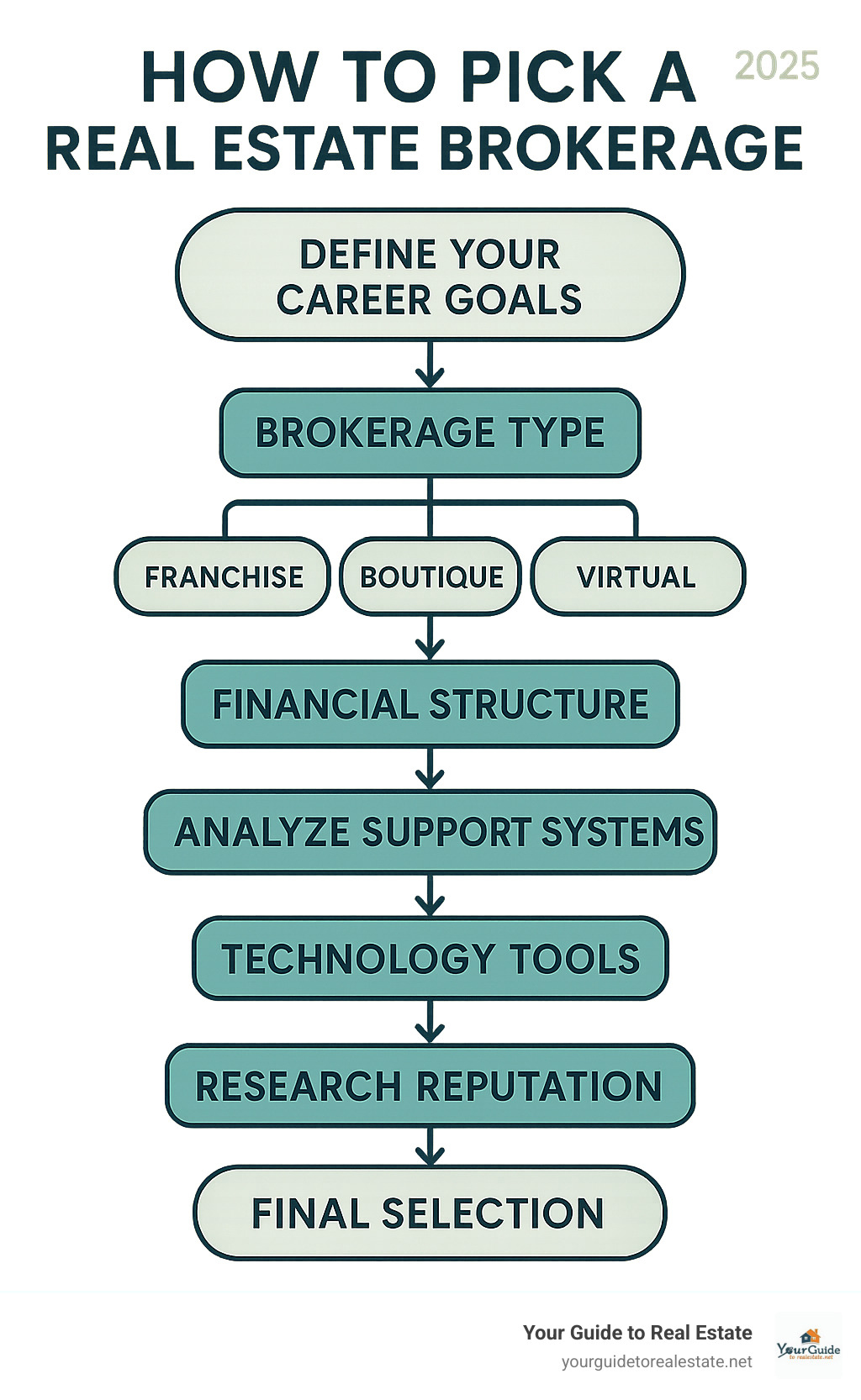
Here’s how to pick a real estate brokerage in 7 key steps:
- Define your career goals – Full-time vs. part-time, income targets, and work style.
- Understand brokerage types – Franchise, boutique, and virtual brokerages.
- Analyze the financials – Commission splits, caps, and all hidden fees.
- Evaluate training and support – Mentorship, ongoing education, and broker accessibility.
- Assess culture and fit – Office environment, values, and networking.
- Review technology and tools – CRM systems, marketing support, and digital resources.
- Research reputation – Market presence, client reviews, and agent testimonials.
In a crowded market, the right brokerage partnership is essential for standing out. Research shows that 60% of agents change brokerages at least once in their careers, often due to misaligned expectations.
This decision isn’t just about finding a place to hang your license. It’s about finding a strategic partner that provides the tools, training, and support to build a thriving business. Whether you’re a new agent seeking mentorship or an experienced pro looking for better splits and tech, the right brokerage accelerates success. The key is to dig deeper than brand names and commission rates to find the real support, genuine mentorship, and practical resources that will help you grow.
Laying the Groundwork: Define Your Career Goals

Before you start your search, you need a clear vision for your career. This self-assessment is the foundation for finding a brokerage that aligns with your ambitions. Think of it as creating a roadmap before you start driving.
Start by getting honest about your income goals. Are you aiming for a six-figure income quickly, or seeking supplemental income? Your targets influence which brokerage makes sense. High-volume goals require a brokerage with robust lead generation, while part-time work demands flexibility and lower overhead.
Next, decide if you’ll be a full-time vs. part-time agent. This choice reflects your commitment level and determines the support you’ll need.
Your career strategy should align with your interests. Do you see yourself specializing in first-time homebuyers, luxury properties, or investment deals? Knowing your niche helps narrow your options.
A genuine self-assessment of your current Real Estate Agent Skills is crucial. Your skill gaps will determine what kind of training and support you’ll need from your brokerage.
Consider your preferred working style. Do you thrive as a solo entrepreneur or in a collaborative team environment?
Finally, develop a simple business plan outlining your first-year goals. This will help you evaluate whether a potential brokerage can support your vision for Real Estate Business Growth.
Understanding The Day-to-Day Life of a Real Estate Agent: What You Didn’t Know will give you realistic expectations. There’s no single “right” path; the key is being honest about your goals to find a brokerage that can help you achieve them.
Understanding the Brokerage Landscape
Not all brokerages are created equal. They vary in size, structure, and philosophy. Understanding these differences is essential to finding your ideal work environment.

Every agent must work under a licensed broker, but this requirement opens the door to strategic partnerships. You’re not just finding a place to park your license; you’re choosing a business partner. The brokerage landscape is diverse, with models ranging from traditional offices to virtual platforms. Understanding What is a Real Estate Brokerage? A Beginner’s Complete Guide will give you a solid foundation.
Brokerage size and market presence also matter. A large national firm offers brand recognition, while a small boutique firm might provide more direct access to the broker. Consider where your target market aligns with the brokerage’s strengths.
Franchise vs. Boutique (Independent) Brokerages
Franchise brokerages like RE/MAX are household names offering national brand recognition and standardized training. This structure can be valuable for new agents. However, they often come with higher fees, such as franchise or desk fees.
Boutique brokerages are independent firms focused on local expertise and personalized support. They typically offer more flexibility and direct access to leadership, as they aren’t bound by corporate policies.
For a detailed comparison, see our guide on Independent vs. Franchise Real Estate Brokerages: Which One Is Right For You?.
| Feature | Franchise Brokerages | Boutique Brokerages |
|---|---|---|
| Brand Recognition | High, national/global | Lower, local focus |
| Training | Standardized, often extensive | Hands-on, personalized, varies by firm |
| Fees | Potentially higher (franchise fees, desk fees) | Can be lower, but varies widely |
| Flexibility | Less, adherence to brand guidelines | More, creative freedom |
| Support | Structured, corporate resources | Direct access to broker/owner, personalized |
| Culture | Can be competitive, varies by office | Often tight-knit, collaborative |
| Market Focus | Broad | Niche, local expertise |
Virtual (Cloud-Based) Brokerages
Virtual brokerages operate primarily online, making remote work their entire business model. Our Virtual Real Estate Brokerage guide explains how lower overhead allows them to offer high commission splits. With a strong technology focus, they provide advanced digital tools. However, they offer less in-person support, making them ideal for seasoned agents who value flexibility and are comfortable working independently.
Solo Agent vs. Joining a Team
This decision shapes your daily experience. As a solo agent, you have complete autonomy and higher commission potential. You build your personal brand, and your reputation is your own.
Joining a team offers immediate mentorship, lead sharing, and lower initial risk, which is attractive for new agents. The trade-off is split commissions within the team, but many agents find it profitable because they close more deals with team support.
For more insights, check out our guide on how to Build Real Estate Business.
The Financial Framework: Commissions, Splits, and Hidden Fees
Understanding a brokerage’s financial structure is non-negotiable. Look beyond the commission split to uncover all costs that will impact your bottom line.
How do commission structures, splits, and fees vary, and what should agents consider?
Many agents focus only on the commission split, but it’s just one piece of the financial puzzle.
Commission splits are the percentage of commission you keep versus what goes to the brokerage. They can range from 50/50 to 90/10 or even 100%. A lower split might come with incredible support and resources, while a higher split could mean you’re on your own. For example, on a $12,500 commission, a 70/30 split means you take home $8,750 before other fees.
Commission caps are great for productive agents. Once you pay the brokerage a certain amount in splits for the year (the cap), you keep 100% of your commissions afterward. This can save you thousands if you plan to close a high volume of deals.
What are the common expenses beyond commission splits?
Be prepared for additional fees, which can include:
- Desk/Monthly Fees: For office space and utilities.
- Franchise Fees: An additional percentage (e.g., 3-8%) on top of your split for big-name brands.
- Errors & Omissions (E&O) Insurance: Protects you from lawsuits; some brokerages cover it, others pass the cost to you.
- MLS Dues: Essential for accessing the Multiple Listing Service.
- Technology Fees: For CRM systems, websites, and other software.
- Other Fees: Look out for marketing, start-up, or per-transaction fees.
You’ll also have personal operating expenses like lockboxes, signage, business cards, and continuing education.
Use our Real Estate Broker Comparison Spreadsheet to map out the true cost of each brokerage. Seeing the numbers side-by-side makes the how to pick a real estate brokerage decision much clearer.
How to Pick a Real Estate Brokerage: Your 7-Point Inspection Checklist
Use this checklist to systematically evaluate and compare potential brokerages, ensuring you make an informed, strategic decision.

1. Training, Mentorship, and Support
For new agents, this is gold. Look for comprehensive onboarding, ongoing education, and structured mentor programs. Is the managing broker easily accessible for urgent questions? Is there administrative or contract review support? This support is crucial for building confidence. Our guide on Top 5 Things to Look For When Choosing a Real Estate Brokerage as a New Agent offers more insights.
2. Brokerage Culture and Fit
Culture is the “vibe” of the office. Is it collaborative or competitive? Is the office energetic or quiet? Do their core values align with yours? A good cultural fit is vital for long-term happiness. Trust your gut feeling during your visit.
3. Lead Generation and Marketing Support
Leads are the lifeblood of your business. If a brokerage provides leads, ask how they are distributed and if there’s a referral fee. A good CRM system is essential for managing contacts. Also, check if they provide marketing materials and support for your Real Estate Business Systems and professional Real Estate Business Cards.
4. Technology and Tools
A tech-savvy agent has a significant advantage. Your brokerage should provide an advanced CRM, transaction management software (like DocuSign), a professional website with an IDX feed, and mobile apps to work on the go.
5. Reputation and Market Presence
A brokerage’s reputation impacts your credibility. Look for strong market share in your target area. Check client reviews on sites like RankMyAgent.com, RateMyAgent.com, and Google Reviews. Look for agent reviews on sites like Glassdoor or Indeed. Also, check the brokerage’s standing with your state’s real estate commission to ensure they are in good standing.
6. Location and Local Expertise
Even in a digital world, location matters. A convenient office is a plus. More importantly, does the brokerage specialize in your target market? Their local expertise and neighborhood knowledge will directly benefit you and your clients. You can search for a Broker Near Me using tools like Google Maps.
7. The REALTOR® Designation
Not all real estate agents are REALTORS®. A REALTOR® is a member of the National Association of REALTORS® (NAR) and adheres to a strict Code of Ethics. This designation signals a higher standard of professionalism. If your broker is a REALTOR®, you must also join and pay annual dues, which often includes benefits like MLS access.
The Interview: 20 Essential Questions to Ask a Potential Broker
Once you’ve narrowed your list, it’s time to interview. Being prepared with the right questions will reveal everything you need to know.
Think of this as a job interview – except you’re interviewing them. We recommend meeting with at least three different brokerages for comparison. Don’t feel pressured to sign anything on the spot; a reputable broker will give you time to decide.
Expect the interview to be a two-way conversation about their structure and your goals. Come prepared with questions and don’t be afraid to ask tough ones. A broker who is vague or defensive might not be the right partner. Our guide on How to Choose a Broker as a Real Estate Agent provides additional context.
Questions on How to Pick a Real Estate Brokerage’s Financials
Understanding the money side is critical.
- Commission Splits & Caps: “What are your commission splits, and do they change with production? Do you offer a commission cap, and what is it?” A cap means after you pay a certain amount to the brokerage, you keep 100% of your commissions for the rest of the year.
- Fees: “What are your monthly desk/office fees? Are there franchise fees? Who pays for E&O insurance? What are the technology fees?”
- Total Costs: “Can you provide a full list of all other potential fees, like transaction, marketing, or start-up fees?” Also clarify what personal expenses you’ll handle (signs, lockboxes, etc.).
Questions on Support and Growth
Your success depends on the support system.
- Training: “What training do you offer, how often, and is there a cost?”
- Mentorship: “Do you have a formal mentor program? How does it work and what is the cost?” This can be invaluable but may involve sharing commissions from your first few deals.
- Leads: “How are leads provided and distributed? What is the quality and conversion rate?”
- Support: “Do you provide transaction coordinators or administrative help? What marketing materials and design support do you provide?”
- Technology: “What CRM, eSignature, and transaction management platforms do you use?”
Questions on How to Pick a Real Estate Brokerage’s Culture and Expectations
Cultural fit impacts your daily happiness and success.
- Atmosphere: “How would you describe the office atmosphere? Is it collaborative or competitive?”
- Expectations: “What are your minimum production requirements or expectations for agents?”
- Meetings: “How often are team meetings, and are they mandatory?”
- Get a Feel for the Place: Ask for a tour and to meet current agents. A broker’s hesitation is a potential red flag.
- Talk to Agents: “Can I have the contact information for a few agents to speak with them privately?” Their honest feedback is invaluable.
Frequently Asked Questions about How to Pick a Real Estate Brokerage
What’s more important for a new agent: a high commission split or good training?
For new agents, comprehensive training and strong mentorship are far more valuable than a high commission split. It’s tempting to chase higher percentages, but without the skills to close deals, a high split means nothing. Would you rather keep 80% of zero deals, or 50% of ten deals? A brokerage that invests in your education equips you to build a sustainable career. Building a solid foundation of skills will lead to significantly higher long-term earning potential.
Can I switch brokerages if I’m unhappy with my choice?
Absolutely! As an independent contractor, you have the freedom to switch brokerages. Many agents (around 60%) change brokerages at least once. The process is usually straightforward: review your agent agreement, notify your current broker, and your new broker will initiate the license transfer with your state’s real estate commission. Don’t stay in a situation that’s holding you back. Learn from your first experience to make a more informed second choice.
What are the biggest red flags to watch out for when choosing a brokerage?
Trust your instincts – if something feels off, it probably is. Here are some key red flags:
- Vague Financials: A broker who can’t provide a clear, written breakdown of all splits, fees, and expenses.
- High-Pressure Tactics: Any brokerage that pushes you to sign an agreement immediately. A good partner wants you to make an informed decision.
- Bad Reviews: A pattern of negative reviews from former agents on sites like Glassdoor, especially about lack of support, hidden fees, or broken promises.
- Outdated Technology: A brokerage that isn’t keeping up with modern tools will put you at a disadvantage.
- Inaccessible Leadership: If the managing broker is never available or there’s no structured training, you’ll likely struggle to get the guidance you need.
Conclusion

How to pick a real estate brokerage is about finding your professional home and a true business partner. The right choice will shape your income, learning curve, and ultimate success.
Look at the complete picture: the financial structure, support systems, technology, culture, and reputation. A lower commission split with incredible training and mentorship can be far more valuable than a high split where you’re left on your own.
Don’t rush this decision. Visit multiple offices, ask tough questions, and trust your instincts. A supportive, collaborative environment can make all the difference. Use the resources available, like our comparison spreadsheet, and talk to current agents. The best brokerages are confident in what they offer and will welcome your diligence.
Your Guide to Real Estate is here to support you on your journey. For even more detailed guidance, explore our complete guide on Choosing a Real Estate Broker. Choose a brokerage that will help you reach your full potential, and you’ll be setting yourself up for a rewarding career.