
Why the Realtor Code of Ethics Matters for Every Home Buyer and Seller
The realtor code of ethics is a set of professional standards governing REALTORS®, who are members of the National Association of REALTORS® (NAR) in the U.S. and the Canadian Real Estate Association (CREA) in Canada.
Key Points About the Code:
- Adopted in 1913, it’s one of the first business ethics codes.
- It sets higher standards than the law, exceeding basic legal requirements.
- It outlines duties to clients, the public, and other REALTORS®.
- It includes enforceable standards with penalties for violations.
- Its primary goal is consumer protection through competent and fair treatment.
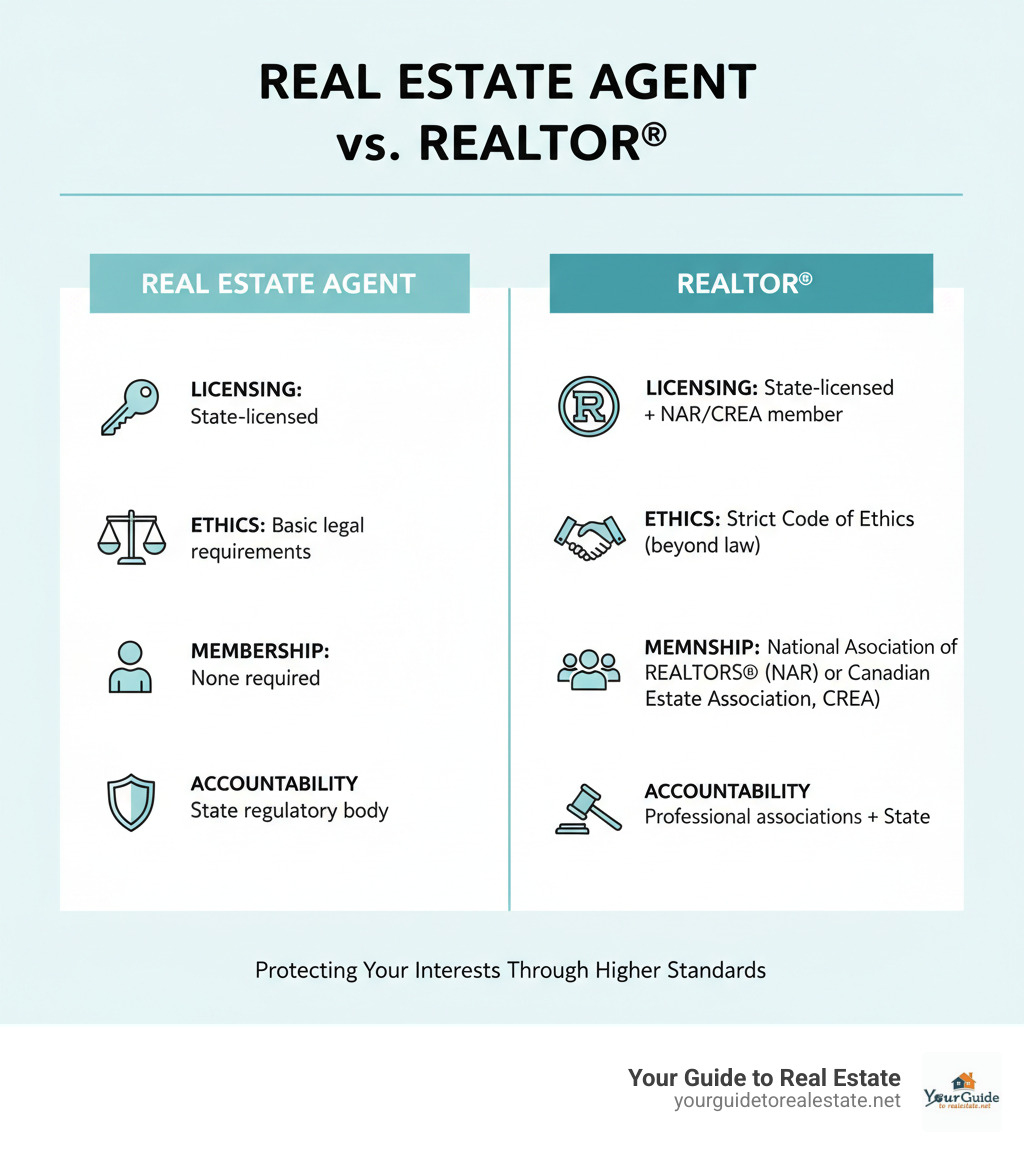
What Makes a REALTOR® Different from a Real Estate Agent?
Not all real estate agents are REALTORS®. Only licensed agents who join NAR or CREA can use the REALTOR® trademark, signifying their commitment to the Code of Ethics. This commitment goes beyond state licensing requirements, establishing standards that often demand more from practitioners. While legal obligations take precedence in a conflict, the ethical standards are consistently higher.
Why This Matters to You
Understanding these ethical standards helps you choose the right professional and know what to expect. The Code is built on moral integrity, competency, and dedication, which are enforceable standards. REALTORS® who violate the Code face serious consequences, giving you peace of mind during your transaction.
Essential realtor code of ethics terms:
The Foundation of Trust: History and Purpose of the Code
In 1913, when professional standards were often loose, the National Association of Real Estate Boards (now NAR) took a groundbreaking step. They adopted the first realtor code of ethics, becoming one of the first business groups to create formal ethical standards. The goal was to promise the public that REALTORS® would operate with integrity, honesty, and competency.

The Canadian Real Estate Association (CREA) adopted its own version in 1959, sharing the vision of professionalism that protects consumers. A key feature of the Code is its adaptability; it has been updated dozens of times to remain relevant with changes in technology and society.
The Role of NAR and CREA
NAR and CREA act as guardians of ethical real estate practice. Their responsibilities include:
- Establishing and amending the Code to meet current challenges.
- Enforcing the standards, with real consequences for violations.
- Providing training and education to help REALTORS® understand and apply the Code.
- Upholding the REALTOR® brand as a promise of ethical conduct.
Why the Code of Ethics Matters to You
When making a major financial decision like buying or selling a home, you want a professional who is pledged to put your interests first. The realtor code of ethics provides this assurance by:
- Ensuring competent service from knowledgeable professionals.
- Promoting fair dealing and requiring honesty in all transactions.
- Protecting consumer rights, such as requiring written agreements and disclosure of conflicts of interest.
- Building public confidence in the real estate industry.
The Code turns a potentially stressful process into one you can approach with confidence, knowing you are working with someone professionally obligated to serve your best interests.
The Three Pillars: Core Principles of a REALTOR®’s Duty
The realtor code of ethics is built on three pillars of duty, guided by the Golden Rule: “Whatsoever ye would that others should do to you, do ye even so to them.” This principle is supported by foundational values of honesty, integrity, competency, fairness, and accountability. These are not just ideals but enforceable standards. You can read The Code of Ethics in full, but here is a breakdown of these duties.
Duties to Clients and Customers
When you hire a REALTOR®, they swear to put your interests first. This includes:
- Article 1: Protecting Your Interests. Your REALTOR® must protect and promote your interests as their client, negotiating the best terms while remaining honest with all parties. This duty of client confidentiality extends even after the transaction closes.
- Article 2: Avoiding Misrepresentation. They must be transparent and honest, avoiding exaggeration or concealment of pertinent facts about a property.
- Article 4: Disclosing Personal Interest. If your REALTOR® has a personal or financial interest in a property, they must disclose it to you in writing.
- Article 9: Putting It in Writing. All significant agreements, offers, and counteroffers must be in writing, with clear language, and you must receive copies.
Duties to the Public
REALTORS® also have a responsibility to the community, which helps create a fair market for everyone.
- Article 10: Fair Housing. REALTORS® must provide equal service to all and cannot discriminate based on race, color, religion, sex, disability, familial status, national origin, sexual orientation, or gender identity.
- Article 12: Truth in Advertising. All marketing and advertising must be truthful and present a “true picture” without misleading information.
- Article 13: Not Practicing Law. REALTORS® must stay within their area of expertise and recommend legal counsel when necessary, protecting you from unqualified legal advice.
Duties to Other REALTORS®
Professional cooperation among REALTORS® ultimately benefits you by ensuring smoother transactions.
- Article 3: Cooperation. REALTORS® are encouraged to cooperate with each other to serve their clients’ best interests, which gives your property more exposure and provides you with more options.
- Article 15: No False Statements. REALTORS® cannot knowingly or recklessly make false or misleading statements about their competitors.
- Article 17: Dispute Resolution. The Code requires REALTORS® to mediate or arbitrate disputes rather than litigate, keeping conflicts from affecting your transaction.
These three pillars work together to create an environment of professionalism and mutual respect, allowing your REALTOR® to focus on your success.
Understanding the Realtor Code of Ethics in Practice
The realtor code of ethics is a practical framework that guides a REALTOR®’s daily interactions. It represents a higher standard of conduct than what is legally required, ensuring you receive superior service and protection.

Legal Requirements vs. Ethical Standards
The Code often establishes standards that “exceed basic legal requirements.” For example, while state law might require disclosing known structural defects, the Code’s mandate to avoid “concealment of pertinent facts” is much broader. This means your REALTOR® is looking out for your best interests beyond just checking legal boxes. However, if a conflict arises, the law always takes precedence.
Disclosure of Representation and Interests
Transparency is a cornerstone of the Code. You will see this in two key areas:
- Disclosure of representation: Your REALTOR® must clearly state, typically in writing, whom they represent in the transaction (you, the other party, or as a neutral party).
- Disclosure of personal interest: If your REALTOR® or a close associate has a personal interest in a property, they must disclose this to you in writing to avoid conflicts of interest.
Key Articles Every Home Buyer and Seller Should Know
While the entire Code is important, these four articles have a direct impact on your experience:
- Article 1 (Fiduciary Duty): Your interests come first.
- Article 2 (Avoiding Misrepresentation): You get the truth about the property.
- Article 10 (Equal Service for All): You receive fair treatment without discrimination.
- Article 12 (Honest Advertising): Marketing materials must be truthful.
How the Code of Ethics Compares to the Law
This table illustrates how the Code raises the bar above standard legal requirements:
| Aspect | Legal Requirement (State Law) | Ethical Standard (REALTOR® Code) |
|---|---|---|
| Property Disclosure | Must disclose known material defects | Must avoid concealment of any pertinent facts |
| Advertising Claims | Cannot make false statements | Must present a “true picture” and avoid exaggeration |
| Client Representation | Must follow agency law requirements | Must zealously protect client interests while treating all parties honestly |
| Professional Conduct | Cannot engage in fraudulent practices | Must demonstrate integrity, competency, and fairness in all dealings |
Working with a REALTOR® provides an extra layer of protection. The law sets the floor, but the Code builds a much higher ceiling for professional conduct.
Enforcement and Consequences: What Happens When the Code is Broken?
The realtor code of ethics has real teeth. It includes serious enforcement mechanisms to ensure accountability and maintain public confidence. Violations can lead to consequences ranging from mandatory education and fines to suspension or even revocation of REALTOR® membership.

The Process for Filing an Ethics Complaint
If you believe a REALTOR® has violated the Code, you can take action. The process is designed to be fair to all parties.
- Contact the Local Association: Start by contacting the local REALTOR® association where the agent is a member.
- File a Complaint: You will be given a formal complaint form to detail the alleged violation and which articles of the Code were broken.
- Provide Evidence: Support your claim with documentation like emails, contracts, or text messages.
- Grievance Committee Review: A committee reviews the complaint to determine if, on its face, it warrants a hearing.
- Ethics Hearing: If the complaint moves forward, both parties present their case to a professional standards committee, which decides if a violation occurred and determines the appropriate disciplinary action.
You can learn more about the Consequences for Violations.
How the Code of Ethics Is Enforced
Enforcement is handled primarily at the local level, guided by national standards.
- Professional Standards Committee: Trained, experienced REALTORS® and public members hear cases and determine outcomes.
- Mediation: Before a formal hearing, parties may be offered mediation—a voluntary and confidential process to resolve disputes with a neutral third party.
- Arbitration: This is typically used for monetary disputes between REALTORS® and results in a binding decision.
This structured system, detailed in resources like NAR’s Enforcement Process, ensures that ethical violations are taken seriously, protecting consumers and the integrity of the profession.
Frequently Asked Questions about the Realtor Code of Ethics
Here are answers to common questions about how the realtor code of ethics works in today’s market.
How has the Code of Ethics evolved with technology?
The Code is a living document, regularly updated to address technological changes. It ensures ethical standards apply to the digital age:
- Electronic Transactions (Article 9): The same standards of clarity and written agreement apply to digital signatures and electronic contracts.
- Online Advertising (Article 12): REALTORS® must present a “true picture” in all online marketing, including social media and property listings, without misleading photos or claims.
- Data Privacy: Rules govern how REALTORS® handle online listing data (e.g., via IDX), protecting privacy and intellectual property.
- Virtual Showings: Digital tools like 3D tours and drone footage must accurately represent the property.
The Code is amended regularly to stay current, ensuring you are protected whether you are interacting with a REALTOR® online or in person.
Can I file a complaint against a real estate agent who is not a REALTOR®?
No. The realtor code of ethics only applies to members of NAR or CREA. If your agent is not a REALTOR®, you cannot file a complaint with a REALTOR® association.
However, you still have recourse. Complaints against any licensed real estate agent (including non-REALTORS®) can be filed with your state’s licensing board or Canada’s provincial regulatory body. These agencies enforce state and provincial real estate laws. To check an agent’s status, use NAR’s “Find a Member” tool or ask them directly.
Where can I find the full text of the Code of Ethics?
Reading the Code is empowering. You can find the complete, up-to-date text on the official websites:
- For the U.S.: The National Association of REALTORS® website has the current 2025 Code of Ethics & Standards of Practice.
- For Canada: The Canadian Real Estate Association (CREA) website provides its version of the Code.
These sites are updated annually, ensuring you have access to the latest standards.
Conclusion
For over a century, the realtor code of ethics has been the backbone of trust in real estate. It’s a living document that ensures REALTORS
e uphold the highest standards of moral integrity, competency, and dedication.
The Code’s three pillarsduties to clients, the public, and other REALTORS
eprovide a framework that protects you. It means your REALTOR
e is committed to promoting your interests, providing equal service, and being truthful in all communications.
Crucially, the Code is enforceable. The robust system for handling complaints and disciplining violators ensures that the REALTOR
e designation remains a meaningful symbol of accountability and professionalism.
At Your Guide to Real Estate, we believe understanding these standards is key to a stress-free transaction. Choosing a REALTOR
e means partnering with a professional bound by a code that exceeds legal requirements, giving you an invaluable layer of protection and peace of mind. The realtor code of ethics is a promise of ethical conducta promise that makes all the difference.
Ready to work with professionals who are committed to these high standards? Learn more about finding the right agent for your needs: More info about working with agents.