
What’s New with the SALT Deduction in 2025
The latest salt deduction news brings major changes for taxpayers, especially homeowners in high-tax states. Here’s what you need to know right now:
Key 2025 SALT Deduction Updates:
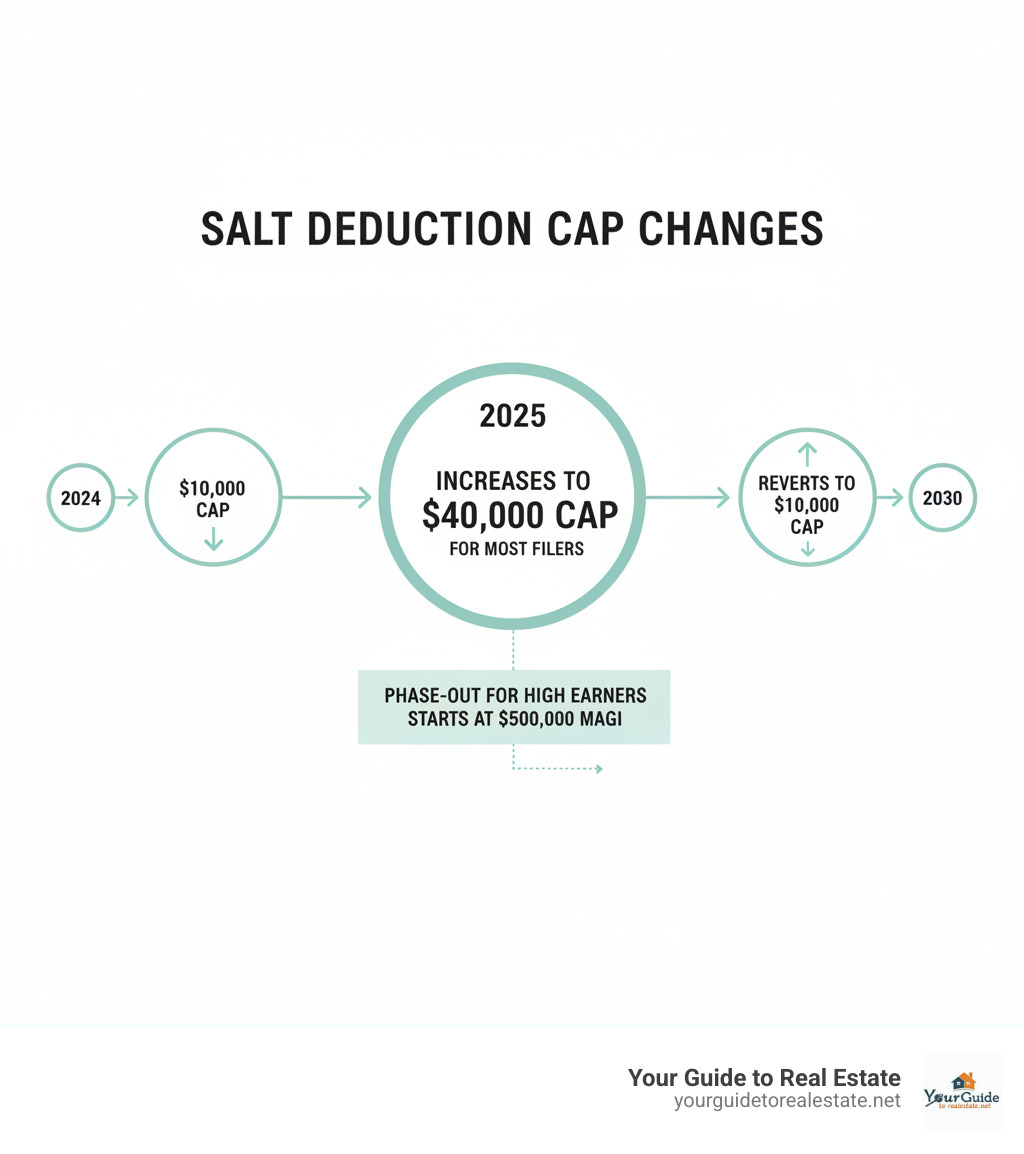
- SALT cap increases from $10,000 to $40,000 for most filers
- New income phase-out starts at $500,000 MAGI, creating a “SALT torpedo” effect
- Temporary change – cap reverts to $10,000 in 2030
- Primary beneficiaries are six-figure households who itemize deductions
- Business owners still lack clarity on nexus concerns
The One Big Beautiful Bill Act signed into law has temporarily quadrupled the State and Local Tax (SALT) deduction limit. This represents the most significant change to the SALT deduction since the Tax Cuts and Jobs Act capped it at $10,000 in 2017.
But there’s a catch. The new law includes a complex phase-out system that can create surprisingly high tax rates for certain income levels. As CPA Jeff Levine warns, this “SALT torpedo” could catch many taxpayers off guard.
Who benefits most? Homeowners in states like California, New York, and New Jersey who pay high property taxes and state income taxes. Who doesn’t? The 90% of taxpayers who take the standard deduction likely won’t see any benefit.
The changes also interact with other tax provisions in ways that add complexity to tax planning. For real estate investors and homeowners, understanding these updates is crucial for making informed decisions about property purchases, sales, and tax strategies.
Salt deduction news terms you need:
1. The SALT Cap Quadruples to $40,000 for 2025
Here’s the biggest story in the latest salt deduction news: the SALT deduction cap just jumped from $10,000 to a whopping $40,000 for 2025. That’s right – it quadrupled overnight thanks to the One Big Beautiful Bill Act.
This is huge news for taxpayers who’ve been feeling squeezed by the old $10,000 limit since 2017. If you’re married filing separately, your cap doubles to $20,000. But before you start celebrating, there’s an important catch to understand.
This isn’t permanent. The $40,000 cap is temporary relief that lasts through 2029. Each year, it’ll increase by 1% to keep up with inflation. But come 2030, we’re back to that familiar $10,000 limit unless Congress acts again.
You can read all the nitty-gritty details in the actual legislation on Congress’s website if you’re into that sort of thing.

Who benefits most from this change? Homeowners in high-tax states like California, New York, and New Jersey are the big winners. These states have been hit hardest by the old $10,000 cap because their residents often pay that much just in property taxes, before even counting state income taxes.
For years, many taxpayers in these areas felt like they were being taxed twice – once by their state and again by losing their federal deduction. The higher cap provides real relief, at least for the next five years.
How the New Cap Affects Itemizers
Here’s where things get interesting. The SALT deduction only helps if you itemize your deductions instead of taking the standard deduction. You’ll claim it on Schedule A along with your other itemized deductions.
The SALT deduction covers your property taxes plus either your state income taxes or state sales taxes (you pick whichever is higher). For homeowners with hefty property tax bills, this is often the biggest itemized deduction they have.
But here’s the reality check: most Americans won’t see any benefit from this higher cap. Why? Because 90% of taxpayers take the standard deduction instead of itemizing. The Tax Cuts and Jobs Act made standard deductions so generous that itemizing doesn’t make sense for most people.
The One Big Beautiful Bill Act makes this even trickier by increasing the standard deduction by another $750 for single filers and $1,500 for married couples in 2025. So even with a $40,000 SALT cap available, you need your total itemized deductions to beat that higher standard deduction threshold.
Think of it this way: if your property taxes, state income taxes, mortgage interest, and charitable donations don’t add up to more than your standard deduction, the new $40,000 cap doesn’t help your tax bill at all.
Before the SALT cap existed in 2017, the average itemized SALT deduction was $13,400. After the $10,000 cap kicked in, that average dropped to $8,100. The new $40,000 cap could bring some taxpayers back to itemizing, but only if their total deductions make it worthwhile.
One quick note: don’t confuse the SALT deduction with other taxes like OASDI, which funds Social Security and Medicare. That’s a separate federal payroll tax that doesn’t count toward your SALT deduction. You can learn more about What is OASDI Tax? if you’re curious about the difference.
2. A New Phase-Out Creates the “SALT Torpedo” for High Earners
Here’s where the latest salt deduction news takes an unexpected turn. While that shiny new $40,000 SALT cap sounds like great news for everyone, there’s a catch that could blindside higher-income earners. The One Big Beautiful Bill Act didn’t just raise the cap – it also introduced a sneaky phase-out mechanism that tax pros are calling the “SALT torpedo.”
Think of it this way: just when you thought you were sailing smoothly with your bigger deduction, a torpedo comes out of nowhere and blows a hole in your tax savings. This happens when your Modified Adjusted Gross Income (MAGI) hits $500,000.
Once you reach that $500,000 threshold, the improved SALT cap starts disappearing fast. By the time your MAGI reaches $600,000, you’re back down to the old $10,000 limit. That’s a steep drop – losing $30,000 in deductions over just $100,000 in income. The phase-out happens at a brutal 30% rate, which creates some seriously painful tax consequences.
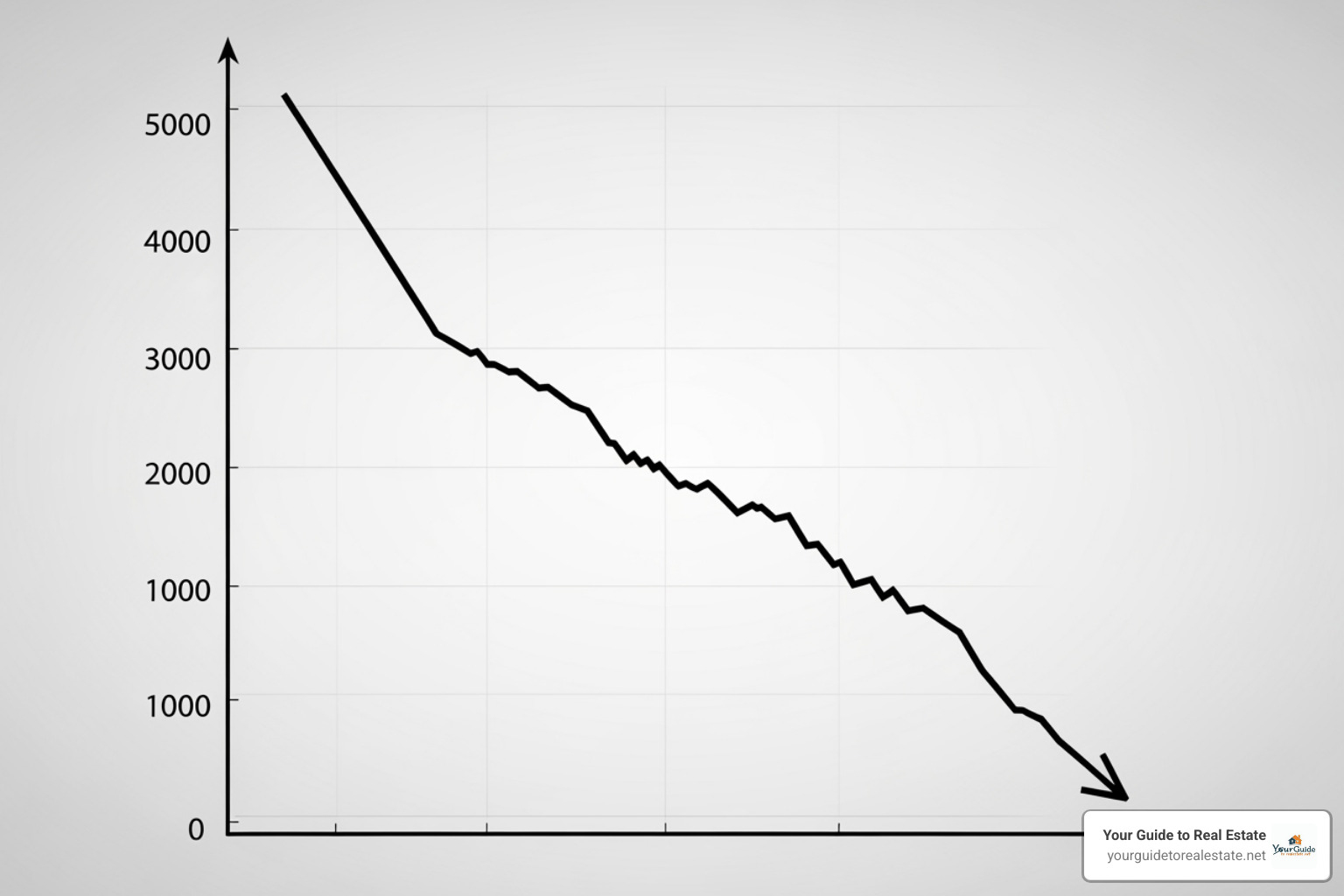
Understanding the “SALT Torpedo” Effect
The math behind this torpedo effect is frankly shocking. When you lose deductions while your income goes up, you get hit twice – and the result is an artificially high effective tax rate that can catch taxpayers completely off guard.
Let’s walk through a real example that shows just how brutal this can be. Say you’re earning $500,000 and claiming $40,000 in SALT deductions along with $35,000 in other itemized deductions. Your taxable income would be $425,000. Now imagine your income jumps to $600,000. Suddenly, your SALT deduction drops back to $10,000, so your total itemized deductions fall to $45,000. Your new taxable income? A whopping $555,000.
Here’s the kicker: that extra $100,000 in income actually increased your taxable income by $130,000. If you’re in the 35% federal tax bracket, you’re looking at an extra $45,500 in taxes. That means you’re effectively paying a 45.5% marginal rate on income in that danger zone – way higher than the normal 35% bracket.
Tax expert Jeff Levine perfectly captured this problem when he explained the torpedo effect on LinkedIn, warning that many taxpayers will be caught completely by surprise.
CPA Robert Keebler also weighed in with his own analysis, noting how this marginal tax rate increase creates a hidden tax trap that requires serious planning to steer.
If your income hovers anywhere near this range, you’ll want to work closely with a tax advisor. Smart tax planning strategies might include timing income recognition, managing Roth conversions carefully, or postponing large capital gains that could push you into the torpedo zone. The key is knowing it’s coming before it hits.
3. Who Benefits and Who Gets Left Behind?
The latest salt deduction news paints a clear picture of who comes out ahead – and it’s not everyone. The reality is that this tax change primarily helps a specific group of taxpayers, while leaving most Americans exactly where they were before.
Six-figure households in high-tax states are the big winners. If you’re earning a comfortable income in places like New York, California, New Jersey, or Connecticut, and you’re already itemizing your deductions, this change could put real money back in your pocket. We’re talking about potential federal tax savings of up to $10,000 for those who can take advantage of the full $40,000 SALT deduction.
But here’s the catch that might surprise you: most taxpayers won’t see a penny of benefit from this higher cap. Why? It all comes down to that standard deduction we mentioned earlier.
A whopping 90% of taxpayers claimed the standard deduction%2C%20Table%201.2) in recent years. Unless your total itemized deductions – including SALT, mortgage interest, charitable contributions, and medical expenses – exceed your standard deduction amount, the higher SALT cap doesn’t help you at all.
The numbers tell the story clearly. Before the SALT cap existed, taxpayers earning more than $100,000 accounted for 91% of all SALT deduction claims. This has always been a benefit that flows primarily to higher earners, and the new changes don’t alter that fundamental reality.
There’s another wrinkle to consider: the Alternative Minimum Tax (AMT). While the Tax Cuts and Jobs Act significantly reduced how many people get hit by the AMT, it can still limit the benefit of itemized deductions for some very high earners. It’s one more layer of complexity that shows why tax planning matters so much.
The Latest Salt Deduction News for Homeowners
For homeowners, especially those of us who follow real estate markets closely, this salt deduction news has some important implications. Property taxes are often the biggest piece of the SALT deduction puzzle, and in many desirable markets, those bills can easily hit five figures.
Think about it this way: if you’re a homeowner in a high-property-tax area and your annual property tax bill is $25,000, the old $10,000 cap meant you could only deduct less than half of that expense. Now, you might be able to deduct the entire amount, plus state income taxes on top of it.
This effectively reduces the true cost of homeownership for those who qualify. When we’re helping clients understand the financial picture of buying in different markets – whether they’re looking at the Dallas real estate market or considering a move to a higher-tax state – this deduction can be a significant factor in the overall equation.
But let’s be honest about what this is. Critics often call the SALT deduction an “upper-middle-class political perk,” and there’s truth to that characterization. It doesn’t help the average American family, and it can seem unfair that higher earners get this tax break while others don’t.
For the homeowners and real estate investors we work with, though, understanding this deduction is crucial for smart financial planning. It’s not the only piece of the puzzle – factors like the Social Security 2025 COLA Increase also affect household budgets – but it’s an important one that can influence real estate decisions and long-term financial strategy.
The key is knowing whether you’re in the group that benefits or the much larger group that doesn’t. Your tax situation, income level, and where you live all play a role in determining which side of this divide you fall on.
4. Latest Salt Deduction News: Impact on Businesses and States
The latest salt deduction news brings interesting twists for business owners and state governments, though not always in the ways you might expect. While individual taxpayers celebrate the higher SALT cap, the business world faces a more complex picture.
Here’s what didn’t change: The One Big Beautiful Bill Act left pass-through entities like S corporations and partnerships in the same position they were before. These businesses still deal with the original SALT cap rules when it comes to how they handle state and local income taxes.
But here’s where it gets clever. Over the past few years, more than 30 states got creative with something called Pass-Through Entity Taxes, or PTETs. Think of these as workarounds that let the business itself pay state income taxes directly. This bypasses the individual SALT cap entirely – whether it’s the old $10,000 limit or the new $40,000 one.

For many business owners, these state-level solutions have been a lifeline. The new federal changes don’t eliminate the need for these strategies – they’re still valuable tools in the tax planning toolbox.
From a state government perspective, don’t expect dramatic changes to tax policies. Most experts agree that states won’t suddenly raise or lower their tax rates just because of this temporary federal adjustment. The consensus is that these SALT changes are “unlikely to have any meaningful impact on state or local fiscal policies or politics.”
Business Implications and Unresolved Issues
The business world hoped for more clarity from the new legislation, but some thorny issues remain unresolved. The biggest missed opportunity? Addressing the complex web of state tax nexus concerns, particularly around Public Law 86-272.
This decades-old law creates a “safe harbor” for out-of-state businesses. If your only activity in a state is soliciting orders for tangible personal property, you’re generally protected from that state’s income tax. Sounds simple, right? Not quite.
In our digital age, interpreting what counts as “soliciting orders” has become incredibly complex. Does having a website count? What about online customer service? The One Big Beautiful Bill Act could have provided much-needed updates to these rules, but it didn’t.
This leaves businesses operating across state lines still navigating a maze of regulations. Even with more than 30 states offering PTET workarounds, companies must carefully manage their multi-state tax obligations.
For real estate investors and business owners in our industry, this means continued vigilance. While individual taxpayers got their temporary relief, the business side of tax planning remains as complex as ever. It’s another reminder that expert guidance isn’t just helpful – it’s essential for navigating these intricate tax waters successfully.
5. Historical Context and Future Outlook
To truly appreciate the latest salt deduction news, we need to understand where this whole thing started. The SALT deduction isn’t some recent political invention – it’s actually been around since the very beginning of our federal income tax system, dating back to 1913.
The original idea made perfect sense. Why should you pay federal taxes on money you’ve already sent to your state and local governments? It felt like double taxation, and lawmakers wanted to prevent that unfair burden. For over a century, this principle guided federal tax policy.
For decades, the SALT deduction was unlimited. If you itemized and paid $50,000 in state and local taxes, you could deduct the full amount. This was especially valuable during the 1990s when the “Pease limitation” created some restrictions for high earners, but the core benefit remained largely intact.
Then came 2017 and the Tax Cuts and Jobs Act (TCJA), which changed everything. The $10,000 cap wasn’t just a minor adjustment – it was a dramatic shift that hit certain taxpayers hard, particularly those in high-tax states.

The TCJA’s reasoning was straightforward, even if controversial. Revenue generation was a big factor – the unlimited SALT deduction was costing the federal government around $100 billion annually. Targeting high earners was another goal, since 91% of SALT deductions went to taxpayers earning over $100,000. Some also hoped it would discourage high state taxes by making them more painful for residents.
The political response was swift and fierce. Representatives from high-tax states formed what became known as the “SALT caucus,” lobbying relentlessly to restore the deduction. Their efforts finally paid off with the One Big Beautiful Bill Act, though the victory came with a hefty price tag.
The federal deficit impact is substantial. The current temporary increase is projected to cost around $140 billion over 10 years just for the SALT changes alone. The entire One Big Beautiful Bill Act adds an estimated $3.2 trillion to deficits over a decade. These numbers fuel ongoing political debate about whether the benefits justify the costs.
The Future of the SALT Deduction
Here’s where the latest salt deduction news gets interesting – and a bit uncertain. The current $40,000 cap is temporary, set to expire in 2030. When that happens, we’re right back to the $10,000 limit unless Congress acts again.
This temporary nature virtually guarantees future political battles. The same arguments that raged during the TCJA debates will resurface as 2030 approaches. Supporters will emphasize avoiding double taxation and supporting state and local governments. Critics will counter that it primarily benefits wealthy taxpayers and worsens income inequality.
The debate often breaks down along geographic lines. High-tax states like California, New York, and New Jersey see the deduction as essential fairness. Lower-tax states often view it as subsidizing their higher-tax neighbors’ spending choices.
For real estate professionals and property owners, this uncertainty creates planning challenges. Should you factor the higher SALT cap into long-term investment decisions? How do you plan for 2030 and beyond when the rules might change again?
At Your Guide to Real Estate, we’ve seen how tax law changes can ripple through real estate markets. Just as we track developments like the WEP Repeal that affects retirement planning, we monitor tax reforms that impact property ownership costs.
The key takeaway? Use this temporary window wisely. If you’re in a position to benefit from the higher SALT cap, factor it into your real estate and tax planning strategies. But don’t count on it lasting forever. The political winds that brought us this increase could just as easily blow it away when 2030 arrives.
Frequently Asked Questions about the 2025 SALT Deduction Changes
Let’s tackle the most common questions we’re hearing about the latest salt deduction news and what these changes mean for your tax situation.
What is the new SALT deduction limit for 2025?
The big news is that the SALT deduction limit jumps to $40,000 for most taxpayers in 2025 – that’s four times the previous $10,000 cap! If you’re married and filing separately, your limit is $20,000.
But here’s the catch: this generous increase isn’t available to everyone. The deduction starts phasing out once your Modified Adjusted Gross Income (MAGI) hits $500,000, and it’s completely gone by $600,000. So while the headline number sounds great, the reality is more nuanced.
Will I benefit from the higher SALT cap?
This is probably the most important question, and honestly, the answer might surprise you. Most taxpayers won’t see any benefit from this change, even though it sounds like great news.
Here’s why: you need to itemize your deductions to claim the SALT deduction at all. That means your total itemized deductions (including state and local taxes, mortgage interest, charitable donations, and medical expenses) must exceed your standard deduction. With the standard deduction also increasing in 2025, this becomes an even higher bar to clear.
The numbers tell the story. 90% of taxpayers claimed the standard deduction in recent years, which means they won’t benefit from any SALT changes. The people who do benefit are typically six-figure households in high-tax states who pay substantial property taxes and state income taxes.
If you’re wondering whether you’ll benefit, ask yourself: Do I itemize? Do I live in a high-tax state? Do my total state and local taxes exceed $10,000? If you answered yes to all three, then this change could save you real money.
What is the “SALT torpedo”?
The “SALT torpedo” sounds dramatic, and frankly, it is. This refers to what happens to taxpayers earning between $500,000 and $600,000 in Modified Adjusted Gross Income. Within this income range, the SALT deduction benefit disappears rapidly through a 30% phase-out rate.
Here’s what makes it a “torpedo”: as your income rises in this bracket, you’re not just paying regular income tax on the additional earnings. You’re also losing deduction benefits, which effectively creates a much higher tax rate than you’d expect. Some taxpayers could face effective marginal rates of 45% or higher on income in this range.
It’s called a torpedo because it can hit unexpectedly. Many taxpayers don’t realize they’re entering this zone until they’re already there. If your income hovers around these levels, careful tax planning becomes essential to avoid getting torpedoed by this provision.
The bottom line? While the higher SALT cap makes headlines, the reality is more complex. Most taxpayers won’t benefit, some will see meaningful savings, and a specific group of high earners might face an unpleasant surprise. Understanding where you fit in this picture is key to making smart tax and real estate decisions.
Conclusion
The latest salt deduction news brings a complex mix of opportunities and challenges that will reshape tax planning for millions of Americans in 2025. We’ve walked through five major updates that every taxpayer should understand, from the welcome relief of a quadrupled SALT cap to the surprising “torpedo” effect that could catch high earners off guard.
The temporary increase to $40,000 offers genuine relief for homeowners in high-tax states, potentially saving thousands in federal taxes for those who itemize. But the new income phase-out between $500,000 and $600,000 creates an unexpected tax trap that requires careful planning to avoid.
Who wins and who doesn’t is pretty clear cut. Six-figure households in places like California, New York, and New Jersey who pay substantial property and state income taxes stand to benefit most. Meanwhile, the 90% of taxpayers who take the standard deduction likely won’t see their tax bills change at all.
Business owners still face the same complex web of state tax rules, though the existing Pass-Through Entity Tax workarounds remain valuable tools. And the historical context reminds us that this is just the latest chapter in a century-long debate about fairness, federalism, and who should pay what.
For homeowners and real estate investors, these changes go beyond simple tax savings. The increased SALT deduction can make homeownership more affordable in high-tax markets, potentially influencing where you buy, when you sell, and how you structure your investments. Property taxes that once felt like a burden may now provide meaningful federal tax benefits again.
At Your Guide to Real Estate, we know that tax law changes like these can feel overwhelming. That’s exactly why we focus on providing clear, practical guidance that helps you make smart real estate decisions. Whether you’re buying your first home or building a property portfolio, understanding how tax changes affect your bottom line is crucial for long-term success.
The 2030 expiration date means we’ll likely see more salt deduction news and political battles ahead. But for now, take time to understand how these 2025 updates might impact your specific situation. Consider talking with a tax professional about whether itemizing makes sense for you, especially if you’re a homeowner in a high-tax area.
These changes highlight why staying informed about both tax policy and real estate trends is so important for building wealth through property. For more insights into how market conditions might affect your investment decisions, Check out our housing market forecast to see what experts are predicting for the year ahead.