

Understanding Judgment Liens and Their Impact on Property Ownership
What is a judgement lien? A judgment lien is a legal claim placed on your property by a creditor after they’ve won a lawsuit against you for an unpaid debt. It’s a powerful debt collection tool that allows the creditor to secure their claim against your real estate, personal property, or both until you pay what you owe.
Quick Answer:
- What it is: A court-ordered claim on property resulting from an unpaid debt
- How it happens: Creditor sues you, wins a judgment, then files it with your county recorder
- What it affects: Your home, land, and sometimes personal property like vehicles
- How long it lasts: Typically 10-20 years, depending on your state
- Main impact: You can’t sell or refinance without paying off the lien first
Imagine you’re ready to sell your home, but during the title search, you find a judgment lien from a lawsuit you lost years ago. That lien now sits like a public mark on your property, and you can’t complete the sale until it’s resolved. This scenario plays out more often than you might think.
A judgment lien differs from a mortgage or other voluntary liens in one critical way: you didn’t agree to it. It’s nonconsensual, meaning the creditor placed it on your property through the court system without your permission. Once recorded in government files, it becomes part of the public record and attaches to your property automatically.
For anyone buying, selling, or owning real estate, understanding judgment liens is essential. They can cloud your property title, block refinancing attempts, and complicate transactions. Banks and title companies search for these liens before approving loans or transfers, making them a significant obstacle to normal real estate activities.
The good news? There are legal ways to address judgment liens, from paying off the debt to negotiating settlements or even challenging the lien’s validity. But first, you need to understand exactly what you’re dealing with.
What is a judgement lien terms to learn:
- what property is exempt from eminent domain
- real estate valuation
- what does contingent mean in real estate
What is a Judgment Lien and How is it Obtained?
Think of a judgment lien as the final step in a creditor’s quest to collect money you owe. It starts with a lawsuit and ends with a legal claim attached to your property—a claim that won’t go away until the debt is settled.
What is a judgement lien in practical terms? It’s what happens when a creditor wins a court case against you and then takes that victory one step further by filing it as a public record against your property. This transforms a court decision from a piece of paper into a real obstacle that can block your ability to sell or refinance.
The process isn’t automatic, though. A creditor can’t just snap their fingers and attach a lien to your home. They have to follow specific legal steps, and understanding these steps can help you see how serious the situation becomes when a debt goes unpaid.
For context on how liens work more broadly, check out our guide on Understanding Liens on Real Estate. And if you want to understand the legal framework behind property claims, our Real Estate Law Basics article breaks it down clearly.
The Legal Process for a Creditor
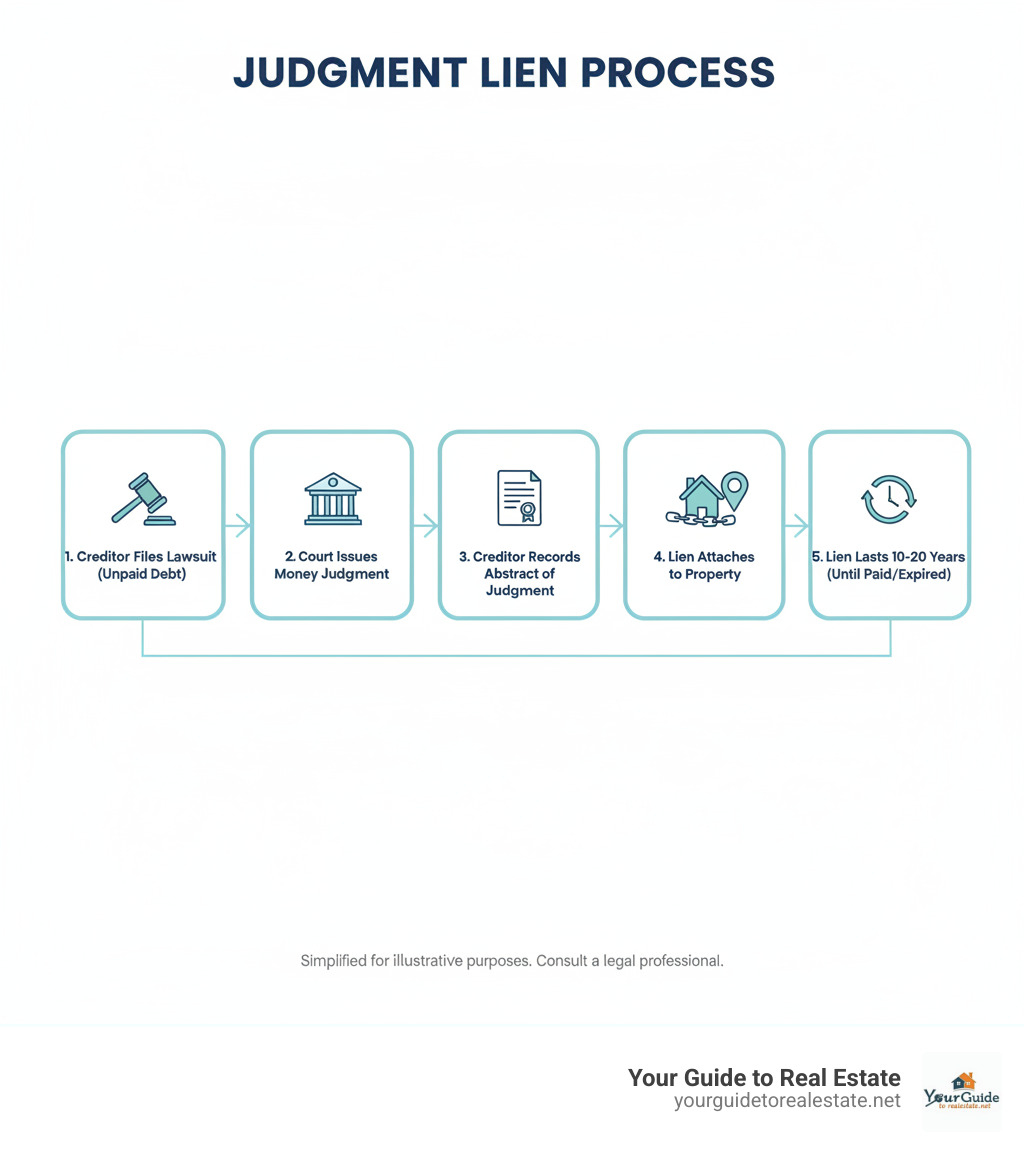
Getting a judgment lien on someone’s property takes time and legal effort. Here’s the path a creditor must follow:
Winning a lawsuit comes first. When you owe money and don’t pay, a creditor can sue you in civil court. This could be for credit card debt, medical bills, personal loans, or even damages from a car accident. If the creditor proves their case, the judge issues what’s called a “money judgment”—a formal court order stating exactly how much you owe, including the original debt, interest, and sometimes attorney fees and court costs.
But here’s the thing: just because a creditor wins in court doesn’t mean they automatically get paid. That judgment is essentially a legal IOU. To turn it into something more powerful, they need to create a lien.
Filing an “Abstract of Judgment” is the next critical step. This document summarizes the court’s decision—who owes what to whom. The creditor prepares this abstract and gets ready to make it official.

Recording with the county recorder’s office makes it real. In most states, the creditor takes that Abstract of Judgment to the county recorder’s office (sometimes called the land records office) where you own property and files it there. The moment it’s recorded, boom—you’ve got a judgment lien on all your real estate in that county. In California, for example, this filing creates what’s called a “general lien” that automatically attaches to every piece of real property you own in that county.
Creating a public notice is the final result. Once recorded, the judgment lien becomes part of the public record. Anyone can find it—and more importantly, anyone who needs to find it will. Title companies, potential buyers, mortgage lenders—they all search these records before completing transactions. That public notice protects the creditor’s interest and ensures you can’t secretly sell or refinance without addressing the debt first.
According to Cornell Law School’s legal definition, a judgment lien is “a claim on a debtor’s property created via a judgment against a defendant who fails to pay a debt. It creates a security interest in the debtor’s property until the obligation to the creditor is satisfied.”
What is a judgement lien compared to other liens?
Not all liens are created equal. Understanding what is a judgement lien becomes much clearer when you see how it differs from other types of claims on property.
The biggest distinction? You never agreed to a judgment lien. It’s nonconsensual—forced on you by a court ruling. Compare that to a mortgage, which you voluntarily accept when you buy a house. You sign papers, you agree to the terms, and you pledge your home as collateral. That’s a consensual lien.
Judgment liens are also involuntary. They happen to you, not with you. A mechanic’s lien works the same way—if a contractor does work on your house and doesn’t get paid, they can file a lien without your permission. Tax liens fall into this category too.
Another key difference is whether a lien is general or specific. A judgment lien is typically a general lien, meaning it attaches to all your real property in the county where it’s filed—and sometimes even your personal property. It’s like a blanket that covers everything you own in that area. A mortgage or mechanic’s lien, on the other hand, is specific to one particular property.
| Feature | Judgment Lien | Mechanic’s Lien | Mortgage Lien |
|---|---|---|---|
| Origin | Involuntary; arises from a court judgment | Involuntary; arises from unpaid work/materials on property | Voluntary; arises from agreement for a loan (e.g., home purchase) |
| Consent | Nonconsensual; debtor does not agree to it | Nonconsensual; property owner may not agree to it | Consensual; debtor agrees to it as collateral |
| Property Type | General; typically applies to all real property in a county (and sometimes personal property) | Specific; applies only to the property where work was done | Specific; applies only to the property purchased with the loan |
| Purpose | Secure payment of a court-awarded debt | Secure payment for services/materials provided | Secure repayment of a loan (e.g., home loan) |
| How it’s Filed | Abstract of Judgment filed with county recorder | Notice of Lien filed with county recorder | Mortgage or Deed of Trust recorded with county recorder |
When you understand these differences, you can see why judgment liens are particularly tricky. Unlike a mortgage that you knowingly took on, a judgment lien can surprise you years later when you’re trying to sell or refinance. And unlike a mechanic’s lien that only affects one property, a judgment lien can cast a wide net over everything you own in a county.
For a deeper look at the various claims that can affect your property, our Types of Liens Explained guide covers all the bases. You can also find the official legal definition of a judgment lien at Cornell Law’s Legal Information Institute.
The Scope and Impact of a Judgment Lien
Once a creditor records a judgment lien against your property, it’s like a financial storm cloud that settles over your assets and refuses to leave. Understanding what is a judgement lien means recognizing that this isn’t just paperwork—it’s a legal claim that can fundamentally change your relationship with your property and your financial future.
The moment that Abstract of Judgment gets filed with your county recorder, the lien attaches itself to your property like a barnacle on a ship’s hull. It doesn’t transfer ownership to the creditor, but it does give them a legal stake in your property that must be satisfied before you can freely use that asset. This attachment happens automatically and becomes part of the public record for anyone to see.

For property owners facing this situation, it can feel overwhelming. The lien essentially gives the creditor a legal right to your property’s value, creating what title companies call a “cloud on title.” This cloud makes it nearly impossible to sell or refinance until the debt is addressed. We’ve seen countless homeowners find liens during what should have been routine transactions, turning simple sales into complicated negotiations. That’s why we created resources like How to Protect Your Assets from Creditors to help you understand your options before problems arise.
What Property Can Be Affected?
A judgment lien doesn’t discriminate much when it comes to your assets. The reach of these liens can be surprisingly broad, touching different types of property depending on where you live and how the creditor pursues collection.
Real property takes the biggest hit. When a creditor files that Abstract of Judgment with your county recorder’s office, the lien immediately attaches to all real estate you own in that county. This includes your primary home, vacation properties, undeveloped land, rental properties, and even commercial buildings. If you own it and it’s real estate in that county, the lien has its hooks in it.
Here’s something that catches many people off guard: in most states, a judgment lien also attaches to property you acquire after the lien is recorded. This is called “after-acquired property.” Let’s say you don’t own any real estate when the lien is filed, but six months later you inherit a house from a relative or finally save enough for that down payment. In many jurisdictions, that existing lien automatically attaches to your new property the moment you take ownership. The creditor doesn’t need to do anything additional—the lien just follows you to your new asset.
Personal property can also be affected, though the process is usually more complicated. Creditors can place liens on vehicles by filing with your state’s Department of Motor Vehicles. They can also target other valuable personal property like boats, equipment, or business assets by filing what’s called a UCC lien with the Secretary of State’s office. However, enforcing these liens on personal property is trickier than real estate liens. Items without formal titles are harder to track, and many personal items simply don’t have enough value to make collection worthwhile for the creditor.
Geography matters too. A judgment lien recorded in one county only affects property in that county. If you own a house in Los Angeles County and a cabin in San Bernardino County, the creditor needs to record the Abstract of Judgment in both counties to create liens on both properties. This gives debtors with property in multiple locations a bit more complexity to steer, but it also means creditors need to be thorough in their filing to protect their interests across jurisdictions.
Duration, Renewal, and Financial Effects
The timeline of a judgment lien is measured in years, not months, and the financial impact compounds over time like interest in a savings account—except you’re the one paying.
Most judgment liens last between 10 and 20 years, depending on whether you’re dealing with state or federal courts. In federal court, a judgment lien remains effective for 20 years unless you satisfy the debt. Many states follow a 10-year timeline. California, for example, gives judgment liens a 10-year lifespan. That’s a decade where this claim sits on your property, visible to anyone who searches the public records.
But here’s the kicker: these liens can be renewed. Just when you think you might see the light at the end of the tunnel, creditors in most states can extend the lien for another full term. In California, that 10-year lien can be renewed for another 10 years, potentially keeping it alive for two decades. Federal courts allow creditors to renew for an additional 20 years by filing a notice of renewal before the initial period expires, assuming the court approves. This means a judgment lien can theoretically haunt your property for a significant portion of your adult life.
The debt grows while you wait. Interest accrues on judgment liens at rates set by state law, which means the amount you owe isn’t static. Every month that passes, the balance climbs higher. What started as a $15,000 judgment might balloon to $20,000 or more over several years, depending on the interest rate your state allows.
Your credit takes a hit, even though the lien itself doesn’t appear on your credit report anymore. The credit bureaus stopped including civil judgments on credit reports in recent years, but don’t let that fool you into thinking there’s no credit impact. The underlying debt that led to the judgment, the collection accounts, the late payments, and the lawsuit itself all create a trail of financial damage that creditors and lenders can see. Your credit score suffers from the events surrounding the judgment, making it harder to get approved for new loans, credit cards, or even reasonable insurance rates.
The most immediate problem is what happens when you try to use your property. Want to sell your house and move to a new city? The title search will reveal the judgment lien, and the buyer’s lender will refuse to proceed until it’s cleared. Hoping to refinance and take advantage of lower interest rates? The mortgage company will require you to satisfy the lien first, since they need to be in first position. Even a simple home equity line of credit becomes complicated when there’s a judgment lien clouding your title.
This “cloud on title” effectively freezes your ability to leverage your property’s value until you deal with the lien. For many homeowners, their property represents their largest asset and their primary source of wealth. A judgment lien locks that wealth away, preventing you from accessing it when you need it most.
Enforcing and Removing a Judgment Lien
Once you understand what is a judgement lien, the next natural questions are: What can creditors actually do with it? And if you’re on the receiving end, how can you make it go away? The answers aren’t always simple, but they’re crucial for both sides of the equation.
A judgment lien gives creditors real power, but it’s not an instant money machine. They still need to take specific legal steps to collect. And for property owners? While a lien can feel overwhelming, there are concrete paths to resolution. Our guide on How to Remove a Lien from Your Property dives deeper into these strategies.
How Creditors Enforce Payment
Having a judgment lien on your property doesn’t mean the creditor can just show up and take your house. But it does give them several legal avenues to collect what they’re owed.
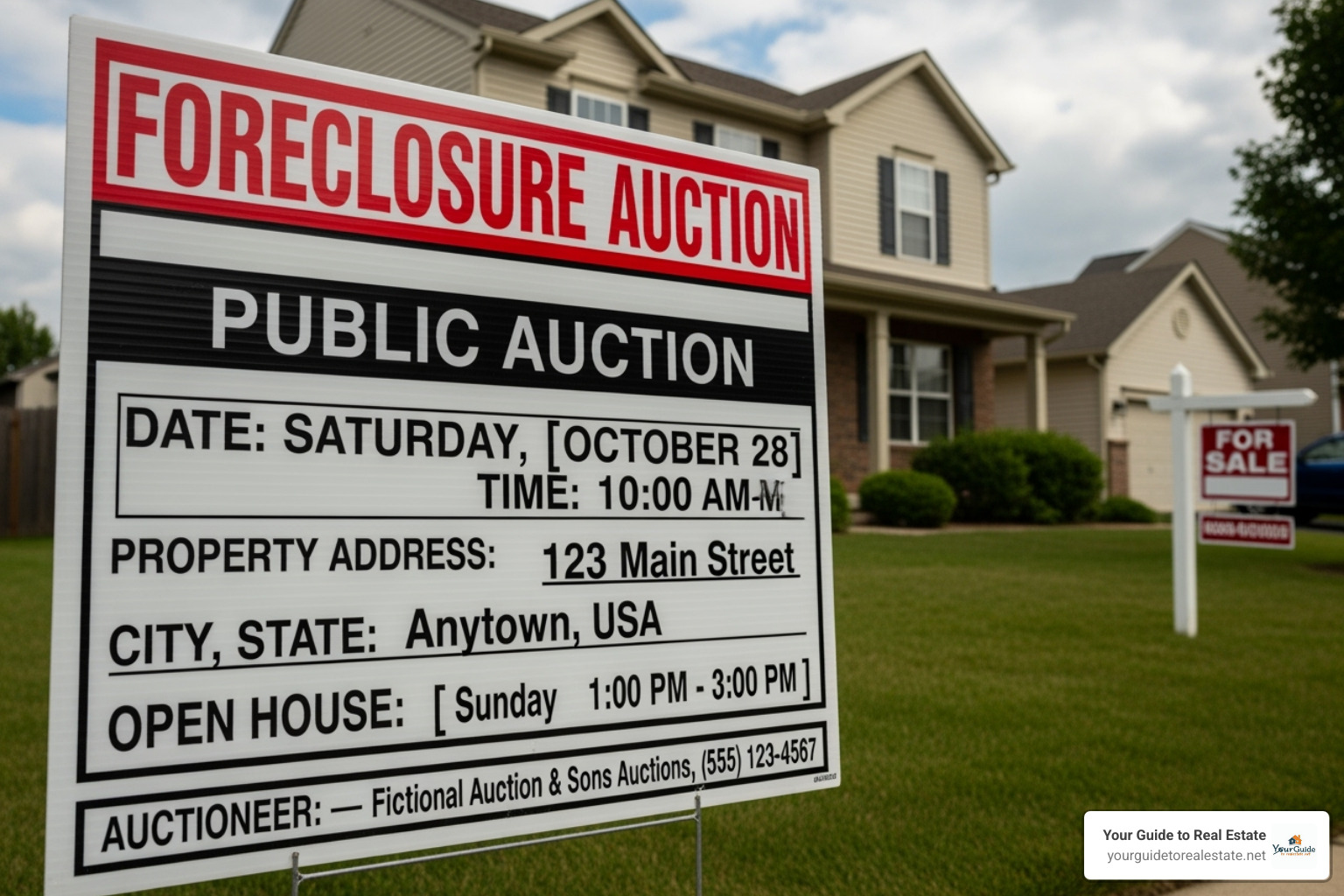
The most serious option is forcing a property sale. If you don’t voluntarily satisfy the debt, a creditor can ask the court for permission to sell your property at auction. This isn’t a quick or cheap process for them—it involves court proceedings, legal fees, and time. But when large sums are at stake, creditors pursue it.
When a forced sale is approved, it typically happens through a sheriff’s sale or execution sale. Your property goes to auction, and the proceeds pay off the judgment creditor. Here’s where it gets complicated: if you have a mortgage or other superior liens, those get paid first. The creditor with the judgment only gets what’s left over.
In California and many other states, the rules become even stricter if there’s a dwelling on the property. The California Courts self-help guide explains that the court must supervise the process. If it’s your primary residence, there’s additional regulation and oversight. In fact, for consumer debt (like credit cards or medical bills), forcing the sale of someone’s home is generally prohibited in most jurisdictions. You can read more about these processes in An Overview of the Home Foreclosure Process and our article on Foreclosure Process Explained.
A property levy is another enforcement tool—this is the actual legal seizure of property to satisfy the debt. While a lien creates the claim, a levy is the action of taking the property itself.
Beyond property-related enforcement, creditors can also pursue wage garnishment or bank account levies. These aren’t directly tied to the property lien, but they stem from the same underlying judgment. So even if your home is protected, your paycheck might not be.
Options for Removing a Judgment Lien
If you’re dealing with a judgment lien on your property, your main goal is probably getting rid of it. The good news? There are several legitimate ways to make that happen.
Paying the debt in full is the most straightforward solution. Once you pay the creditor everything owed—including the original judgment amount, any accrued interest, and court costs—they’re legally required to release the lien. After payment, the creditor must file a “Satisfaction of Judgment” or “Release of Lien” with the same county recorder’s office where they originally filed the lien. This document officially clears your property title. Make absolutely sure this gets filed and recorded properly. Without it, the lien can still appear on title searches.
What if you can’t afford the full amount? Negotiating a settlement might be your best bet. Creditors sometimes accept less than what’s owed, especially if they think full collection is unlikely or they want to avoid further legal expenses. If you reach a settlement, get everything in writing. The agreement must explicitly state that the lien will be released when you pay the negotiated amount. Our Debt Consolidation Loan Guide might offer alternative ways to manage the debt.
Filing for bankruptcy can sometimes eliminate a judgment lien without paying the full amount. Both Chapter 7 and Chapter 13 bankruptcy may allow you to “avoid” the lien, particularly if it impairs your homestead exemption. This is complex territory that requires professional legal guidance.
You might also be able to challenge the validity of the lien itself. If the creditor filed it improperly, obtained the judgment through fraud, or if there are procedural errors, you can petition the court to remove or “vacate” the lien. This requires solid evidence and usually legal representation.
Finally, if a creditor doesn’t renew the lien before it expires (typically after 10-20 years, depending on your state), it becomes unenforceable. However, most creditors are diligent about renewals, so counting on this isn’t a reliable strategy.
The key takeaway? A judgment lien isn’t permanent or unbeatable. With the right approach—whether that’s payment, negotiation, legal challenge, or bankruptcy protection—you can clear your property title and move forward.
Debtor Rights and Legal Defenses
If you’re facing a judgment lien, it’s easy to feel powerless. But here’s something important to remember: debtors have rights. State and federal laws provide real protections that can shield your assets and give you leverage to fight back against improperly placed liens. Understanding these safeguards is just as crucial as knowing what is a judgement lien in the first place.
The legal landscape can feel overwhelming, especially when you’re worried about losing your home or other assets. If you’re considering more drastic options, our guide on Bankruptcy and Real Estate can help you understand how bankruptcy might affect your property situation.
What is a judgement lien’s limit? Understanding Exemptions
Not everything you own can be taken to satisfy a debt. That’s where exemptions come in—they’re legal protections that ensure you can keep certain assets, even when a judgment lien is placed against you. Think of them as a financial safety net that prevents you from losing everything.
Homestead exemptions are your first line of defense for protecting your primary residence. These vary dramatically depending on where you live. Texas, for example, offers unlimited homestead protection, meaning creditors generally can’t force the sale of your primary home to satisfy a judgment. Other states are more modest—California protects anywhere from $30,000 to over $600,000 in home equity, depending on factors like age, marital status, and income level.
Here’s an interesting detail: in California, when a creditor records an Abstract of Judgment, it actually “freezes” your homestead exemption at that moment. This can work in your favor if property values are rising, as your protected equity amount is locked in at the recording date.
The practical effect of homestead exemptions is significant. If your home has $100,000 in equity and your state protects $75,000 under its homestead exemption, there’s only $25,000 available to satisfy the judgment (and that’s before considering any superior liens like mortgages). If the judgment is less than the available equity after exemptions, or if the costs of forcing a sale would exceed what the creditor could recover, they might not pursue it at all.
Personal property exemptions extend beyond your home. Most states protect a portion of your wages from garnishment, ensuring you can still pay for basic necessities. Retirement accounts like 401(k)s and IRAs typically enjoy strong federal protection under ERISA. You can usually keep necessary household items, a certain amount of equity in your vehicle (so you can get to work), and tools you need for your profession.
The key word here is state-specific. What’s protected in Oklahoma City looks different from Dallas, and both differ from Los Angeles or Miami. These aren’t small differences—they can determine whether you keep your home or lose it. That’s why consulting with a local attorney who understands your state’s exemption laws is so valuable.
Challenging the Validity of a Lien
A judgment lien isn’t automatically bulletproof just because it’s been recorded. Creditors must follow strict legal procedures, and when they don’t, you have grounds to challenge the lien’s validity.
Improper filing procedures are more common than you might think. Maybe the creditor filed the Abstract of Judgment in the wrong county, or perhaps they didn’t properly serve you with notice of the lawsuit in the first place. These procedural errors matter. Just as a contractor who misses the deadline for filing a mechanic’s lien can have it removed, a creditor who fails to follow proper procedures may find their judgment lien is unenforceable.
Vacating the original judgment strikes at the heart of the problem. The lien is only as strong as the judgment it’s based on. If you can prove the original judgment was obtained through fraud, that you never received proper notice of the lawsuit, or that there were other serious legal problems with the case, you can petition the court to vacate (nullify) that judgment. When the judgment falls, the lien falls with it.
Sometimes the problem is simply expired statute of limitations. While judgment liens can often be renewed, creditors sometimes drop the ball. If they fail to renew within the required timeframe (typically before the initial 10 or 20 years expires), the lien becomes unenforceable. You can then petition the court to officially remove it from your property records.
Lien avoidance in bankruptcy offers powerful relief for those who file for bankruptcy protection. This is where things get technical but potentially very beneficial. In bankruptcy, you may be able to “avoid” or “strip off” certain judgment liens, particularly when they impair your exemptions. For instance, if a judgment lien was recorded within 90 days of your bankruptcy filing, or if it prevents you from fully using your homestead exemption, the bankruptcy court might remove it entirely—even if you haven’t paid the underlying debt.
Chapter 7 and Chapter 13 bankruptcy each offer different mechanisms for dealing with liens, and the rules are complex. This isn’t a DIY situation. An experienced bankruptcy attorney can evaluate whether lien avoidance is possible in your specific circumstances and help you steer the process. The result, though, can be life-changing: keeping your home while eliminating the lien that threatened it.
Frequently Asked Questions about Judgment Liens
We know that dealing with a judgment lien can feel overwhelming, and you probably have questions swirling around in your head. Let’s walk through some of the most common concerns we hear from property owners just like you.
Can a judgment lien prevent me from selling my house?
Yes, it absolutely can—and this is one of the most frustrating situations homeowners face. When a judgment lien is recorded against your property, it creates what real estate professionals call a “cloud on title.” Think of it like a warning flag that shows up whenever someone checks your property’s legal history.
Here’s what happens when you try to sell: a potential buyer’s title company will perform a thorough title search before closing. When they find the judgment lien, they’ll hit the brakes. Title companies are in the business of ensuring clean, insurable titles, and they simply won’t issue a title insurance policy with an unresolved lien hanging over the property.
The practical reality is that the lien must be paid from the sale proceeds before the transaction can close. Your real estate attorney or title company will typically handle this by paying off the lien at closing, deducting that amount from what you’d otherwise receive. If your sale proceeds aren’t enough to cover the lien along with your mortgage and other closing costs, you might need to bring money to the table or negotiate with the creditor for a reduced payoff amount.
Does a judgment lien appear on my credit report?
This is where things get a bit surprising. No, civil judgments—including judgment liens—are no longer included on credit reports. Since July 2017, the three major credit bureaus (Equifax, Experian, and TransUnion) stopped reporting these public records due to concerns about accuracy and fairness.
But before you breathe a sigh of relief, there’s an important catch. While the judgment lien itself won’t show up on your credit report, the original debt and late payments that led to the judgment can absolutely devastate your credit score. Those unpaid bills, collection accounts, and payment delinquencies remain on your report, typically for seven years.
Plus, lenders and other financial institutions don’t rely solely on credit reports. Many conduct separate public records searches that will uncover the judgment lien anyway. So even though it’s not on your credit report, it’s still very much a public record that can affect your financial opportunities.
What is lien priority and why does it matter?
Lien priority might sound like legal jargon, but it’s actually a straightforward concept that can have huge financial implications. It’s the pecking order that determines who gets paid first from a property sale—and who might not get paid at all if there’s not enough money to go around.
The basic rule is beautifully simple: “first in time, first in right.” If your first mortgage was recorded in 2012 and a judgment lien was recorded in 2018, the mortgage holder stands at the front of the line. They’ll be paid in full from any sale proceeds before the judgment creditor sees a single dollar.
This priority system becomes critically important in foreclosure situations or forced sales. Imagine your home sells for $300,000, but you owe $280,000 on your first mortgage. After closing costs, there might only be $15,000 left. If there’s a judgment lien for $25,000, that creditor will only receive $15,000, and the remaining $10,000 of their claim goes unsatisfied.
However, there are some powerful exceptions to the “first in time” rule. Tax liens often have super-priority, meaning they can jump ahead of other liens regardless of when they were recorded. The IRS explains this concept thoroughly in their guide Understanding a Federal Tax Lien. Federal, state, and local tax authorities have special collection powers that can override the normal priority rules.
Understanding lien priority helps you grasp the real-world impact of a judgment lien on your property. If you have substantial equity beyond your mortgage, a judgment creditor has strong leverage to collect. But if you have little equity, the creditor might struggle to collect anything through a forced sale, which could make them more willing to negotiate a settlement.
Conclusion
If you’ve made it this far, you now have a solid grasp of what is a judgement lien and how it can affect your property and financial life. We’ve walked through a lot together—from understanding that a judgment lien is an involuntary, court-ordered claim that creditors place on your property after winning a lawsuit, to seeing how it creates a very real and public encumbrance on your assets.
We’ve explored how these liens are obtained through the legal process, how they differ from other types of liens like mortgages or mechanic’s liens, and most importantly, how they can impact your day-to-day life. A judgment lien can last for 10-20 years, potentially renewable for even longer, and while it won’t show up on your credit report anymore, it absolutely appears in public records where anyone searching your property title will find it.
The reality is that a judgment lien can make selling or refinancing your home incredibly difficult—it clouds your title and must typically be satisfied before any transaction can proceed. But here’s what we want you to remember: you’re not powerless. There are legitimate ways to address and remove a judgment lien. Paying the debt in full is the most straightforward path, but negotiating a settlement, challenging the lien’s validity, or even utilizing bankruptcy protections are all viable options depending on your situation. And don’t forget about the exemptions—homestead protections and other state-specific safeguards exist precisely to help people in difficult financial circumstances.
The single most important takeaway we can offer you is this: never ignore legal notices. Whether it’s a lawsuit summons, a notice of judgment, or any communication from a creditor or the court, addressing these matters promptly is crucial. The longer you wait, the more complicated and expensive the situation typically becomes. Proactive financial management and staying informed about your rights and obligations can save you significant stress and money down the road.
At Your Guide to Real Estate, we’re committed to providing you with the proven framework and stress-free guidance you need to steer every aspect of property ownership successfully. Understanding liens is just one piece of the puzzle, but it’s an important one. Whether you’re buying your first home, considering an investment property, or dealing with financial challenges, knowledge truly is your best asset.
If you’re ready to take the next step in understanding your property’s value and market position, we’re here to help. Get expert help with your property’s market analysis and find what your real estate is truly worth in today’s market.